The U.S. Can No Longer Control Latin America, So They Took Maduro

marsbit2026-01-05 tarihinde yayınlandı2026-01-05 tarihinde güncellendi

Özet

US influence over Latin America is waning, as evidenced by the recent US military operation to extract Venezuelan President Maduro. For decades, the US maintained control through three key financial tools: debt, dollarization, and sanctions. In the 1980s, Latin America’s foreign debt reached 50% of GDP, but today it stands at just 20%, partly due to China’s rise as a major lender and trading partner since the 2000s. Countries like Brazil and Argentina used commodity-driven revenue to pay off IMF debts and reduce dependency. Dollarization, once a means of control, has evolved into “de-Americanized dollarization”—people use the dollar for stability but reject US political influence. Meanwhile, extreme sanctions, such as those imposed on Venezuela, backfired. Instead of crushing resistance, they spurred the growth of a parallel financial ecosystem. This new system includes: - Stablecoins like USDT, used for 80% of Venezuela’s oil revenue - Local fintech platforms (e.g., Brazil’s Pix and Nubank) serving millions - Non-dollar trade channels, such as currency swaps with China - A thriving underground economy and crypto markets US policies—like proposed taxes on remittances and Wall Street’s “de-risking”—have unintentionally accelerated this shift. As the US tightens control, dollar usage becomes more decentralized, echoing the historical decline of the British pound. The very tools meant to enforce dominance are now fueling its erosion.

In the 1980s, Latin America's total external debt accounted for nearly 50% of its GDP. This metric was once a scale used by Washington to measure loyalty and control over this backyard.

Today, that number has dropped to 20%.

However, this 22-percentage-point difference does not mean that the people of Latin America are becoming wealthier day by day. To no longer be subject to others' currencies and rules, they are still struggling within the old order and paying a heavy price for it.

This is a contest about "control" versus "loss of control." The United States has attempted to grasp the economic lifeline of this continent through debt, currency, and sanctions. Yet, when this control is pushed to its limit, the system inevitably ignites an endogenous force of resistance.

Three Weapons of U.S. Financial Control Over Latin America

For over half a century, the financial empire of the United States has ruled Latin America primarily with three highly effective weapons.

The first weapon is debt. This is the empire's oldest colonial tool and its most effective instrument of financial governance.

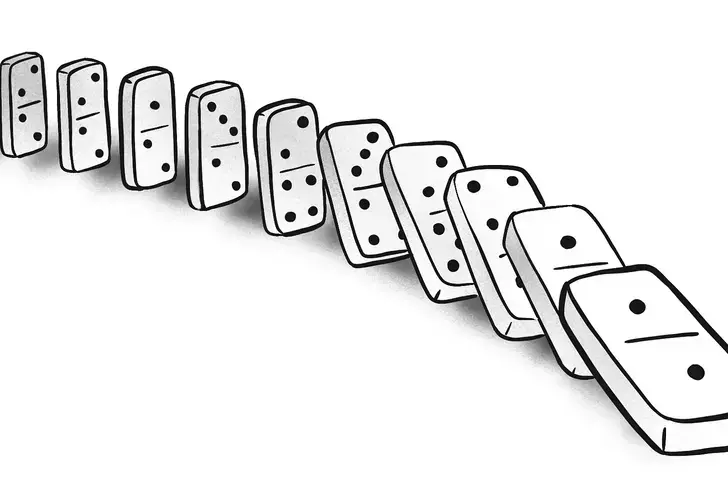
On August 12, 1982, a plea for help from Mexico's Finance Minister was the trigger for the Latin American debt crisis. As Mexico declared its inability to repay $80 billion in external debt, the first domino fell. Brazil, Argentina, and Venezuela subsequently tumbled into the quagmire of default.

Then, a "creditors' alliance" composed of the U.S. Treasury, the Federal Reserve, and the IMF stepped in. The救命钱 they offered was exorbitantly expensive; each aid package came with extremely苛刻的附加条件 attached.

This was the later infamous Washington Consensus, which forced these countries to slash government spending, sell off state-owned assets, and completely open their domestic markets and capital controls.

It was an era when the U.S. could decide a nation's destiny for the next decade with a single check. Debt became a rope tightened around the necks of Latin American countries, with the other end always held by the Americans. Behind every aid package, the price of power was already clearly marked.

The second weapon is dollarization.

When debt control wasn't彻底 enough, a more extreme solution was pushed forward: simply abolish your national currency and directly use the U.S. dollar.

First, the U.S., through prior debt harvesting, induced foreign exchange depletion and hyperinflation in these countries, creating a physiological fear of the local currency among the populace. Then, Washington's think tanks began a large-scale舆论 campaign promoting "monetary stability," packaging the dollar as the only safe haven from turmoil.

And when providing emergency loans, the U.S. would often暗示 or even明示 that only by adopting the dollar could they obtain long-term financial credit endorsement. In 2000, on the brink of social unrest, Ecuador was forced to abandon its currency; shortly after, El Salvador, Panama, and others followed suit.

This is a very霸道 logic: if a country doesn't even have its own currency, its economic sovereignty is essentially in a state of trusteeship. Abandoning the national currency is equivalent to handing over the keys to your house. From then on, your inflation rate, your interest rates, can only be decided by others.

The third weapon is sanctions. This is the final, and most destructive, heavy weapon,专门 used against those who attempt to脱离轨道 and challenge the existing order.

Taking Venezuela as an example, the U.S. has imposed over 900 sanctions against it, involving 209 key individuals,几乎封死了 this country's every生存空间.

Venezuela is actually incredibly rich, literally "rolling in oil." Its oil reserves are as high as 303 billion barrels, even more than Saudi Arabia's. But the problem is, much of this oil is extra-heavy, like asphalt, with extremely high extraction difficulty. It requires external capital, technology, and diluents to turn it into money.

U.S. sanctions精准地切断 these lifelines, leaving Venezuela sitting on the "world's largest oil vault" unable to monetize it. The result is that Venezuela's oil production plummeted from 3 million barrels per day to a low of less than 500,000 barrels within just seven years.

It wasn't until early 2026, when U.S. forces, citing "narcoterrorism" and related criminal charges, conducted a military operation in Venezuela to take away Maduro, and Trump announced that major oil companies would take over and invest tens of billions of dollars to repair infrastructure, that the sanctions blade finally completed its closed loop.

First, use sanctions to completely paralyze a country's liquidity, then, under the banner of "management and repair," enter the ruins with tens of billions of dollars in hand, completing the re-harvesting of the global energy landscape.

Debt, dollarization, and sanctions—these three shackles constituted the U.S.'s half-century-long financial blockade of Latin America. This net was once impermeable, stretching from Mexico City to Buenos Aires.

Three Variables

Now, a series of variables are eroding the foundation of imperial hegemony. The three once-infallible weapons are failing amidst the changing logic of global博弈.

The loosening of the debt shackle began in the first decade of the 21st century. The biggest variable behind it is China.

In 2001, China joined the WTO, initiating a decade-long supercycle for commodities. Latin America, as a major global supplier of raw materials, became the biggest beneficiary of this feast.

Brazil's iron ore, Chile's copper, Argentina's soybeans—all flowed continuously to the East, exchanged for unprecedented foreign exchange accumulation. This accumulation gave Latin American countries breathing room and the底气 to break free from the IMF's束缚.

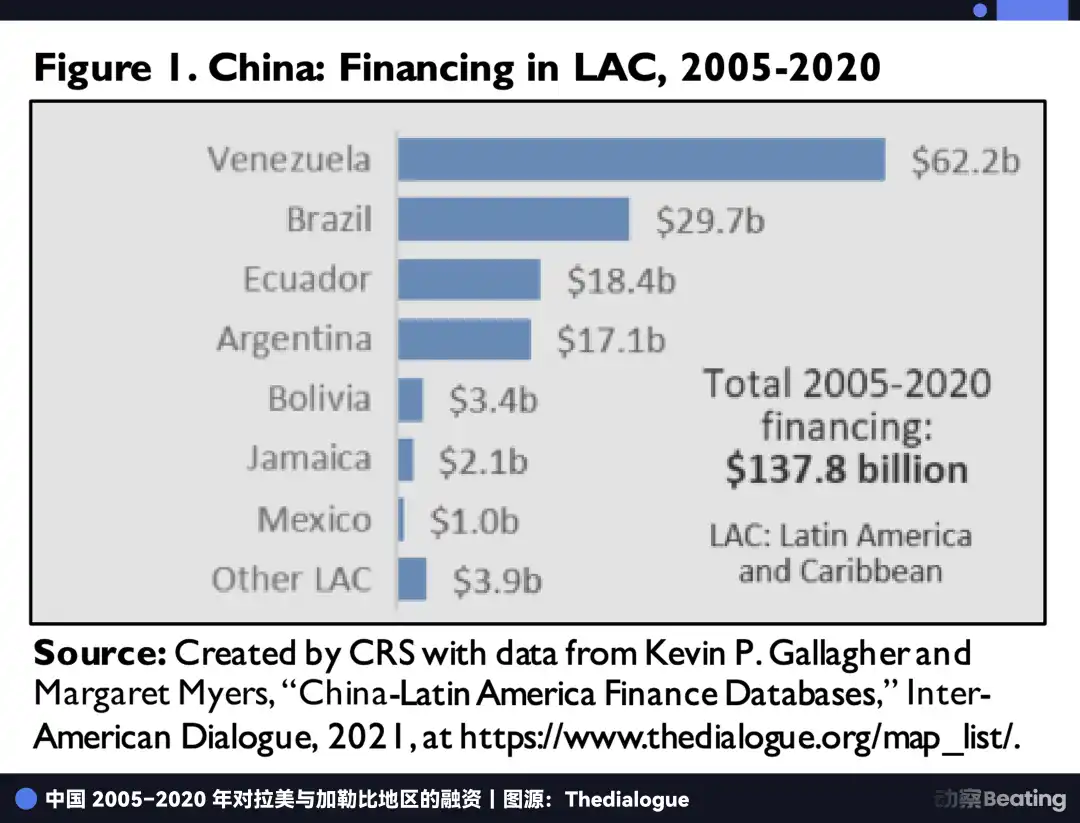
In 2005, Brazil and Argentina successively announced the early repayment of all debts owed to the IMF. From 2005 to 2020, China provided Latin America with over $137 billion in loans without political conditions attached.

Venezuela received $62 billion of this, with other major recipients including Brazil, Ecuador, and Argentina. These "oil-for-loans" agreements helped build much-needed infrastructure and gave these countries more bargaining chips when negotiating with Western creditors.
At the same time, Washington soon discovered it could not control these countries' economic policies through dollarization. The Latin American people hold U.S. dollars en masse to hedge against the collapse of their national currencies, not out of admiration for the "American Dream." In the streets and alleys of Latin America, the dollar is彻底剥离 of its political color, reduced to a purely financial tool—a reliable hard currency that won't turn into worthless paper tomorrow.

This is the so-called "de-Americanized dollarization."

People need the stability of the dollar but reject Washington's rules. The dollar is becoming a global, neutral measure of value, much like gold. It belongs to the world, no longer solely to the U.S. government.

When large volumes of dollar transactions spontaneously operate outside the official monitoring system, Washington finds that while it can still print money, it is increasingly difficult to manipulate the economic lifelines of other countries through monetary leverage.

As both debt and dollarization gradually lost their effectiveness, the U.S. opted for more激进 sanctions.

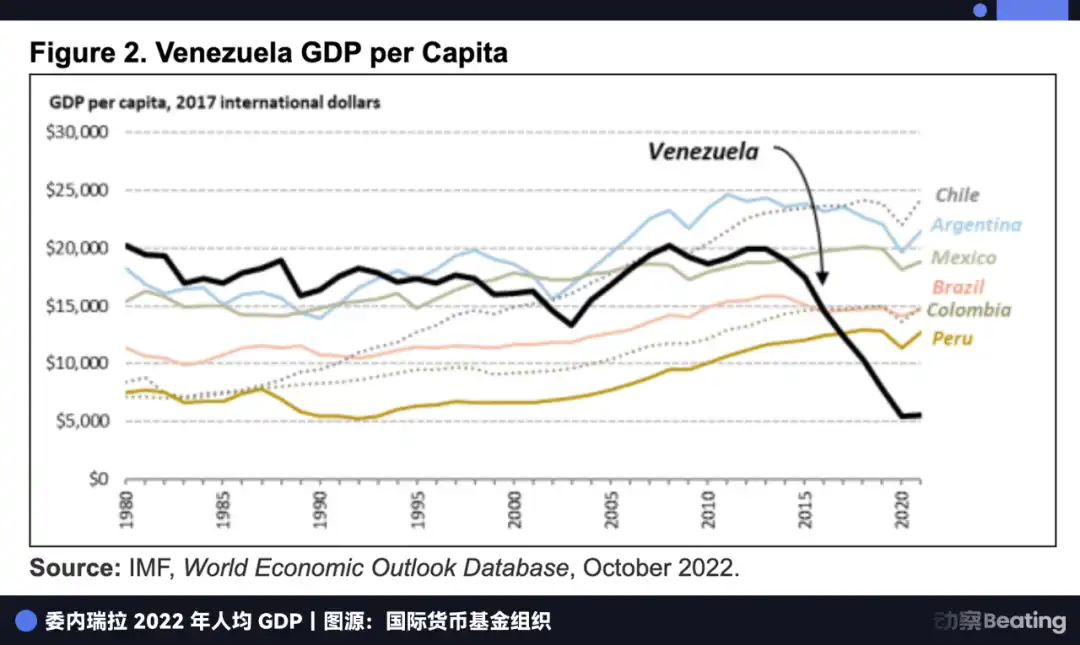
On one hand, internal governance failures and corruption in Venezuela led to the collapse of its economic pillar, with the national currency becoming worthless due to hyperinflation. On the other hand, external sanctions directly caused its GDP to shrink by about 75%. It was precisely this sense of suffocation from internal and external troubles that催生 a parallel financial ecosystem完全独立于 the dollar闭环之外.
Meanwhile, to avoid the risk of sky-high U.S. fines, global major banks initiated a so-called "de-risking" movement,主动切断 business dealings with Latin America. According to a report by the Atlantic Council, over 21 banks in the Caribbean lost correspondent banking relationships, with some countries even losing the ability to handle basic dollar trade and remittances from emigrants.

This defensive financial exclusion did not reinforce the existing hegemony; instead, it pushed more innocent individuals and businesses into the emerging parallel financial ecosystem.

The Parallel Financial Ecosystem Outside the Iron Curtain

In this博弈 over financial sovereignty and survival instinct, Latin America's parallel financial ecosystem is being woven from four forces—stablecoins, local Fintech, non-U.S. trade channels, and the underground economy—into a network不受 Washington's will左右.

In Latin America, stablecoins are no longer just investment or speculation chips.

Taking Venezuela as an example, to evade sanctions, the official government established a shadow financial network. By December 2025, about 80% of this country's oil revenue was collected in the form of the stablecoin USDT.

Furthermore, according to intelligence, through a channel spanning Turkey and the UAE for gold refining and over-the-counter transactions, Venezuela may have secretly amassed Bitcoin reserves worth up to $60 billion, a holding size comparable to MicroStrategy's.

However, this channel bypassing the SWIFT system, crossing Turkey and the UAE for gold and cryptocurrency, while technically evading sanctions, also became a key point of entry for Washington's accusations of involvement in illegal fund flows and support for drug trafficking due to its极高的隐蔽性.

For ordinary Latin Americans, when traditional bank accounts were frozen due to sanctions, they stopped paying attention to the繁冗 and politically charged instructions of the settlement systems, instead directly moving funds across borders via blockchain.

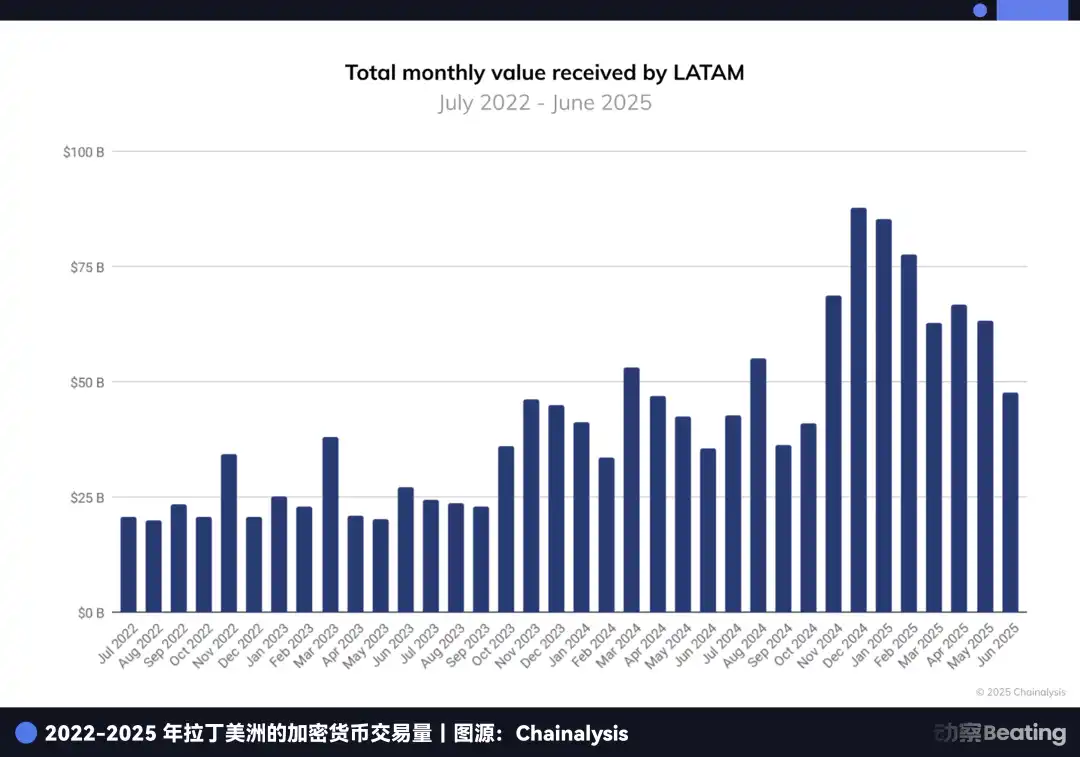
According to Chainalysis data, between 2022 and 2025, cryptocurrency transaction volume in Latin America approached $1.5 trillion. In Brazil, over 90% of transactions were related to stablecoins.
Compared to Manhattan bankers accustomed to俯瞰 from on high, local Fintech companies care more about the soil under their feet and具体的生计. In Brazil, for instance, even though only 60 million people have credit cards, the user base of the central bank-led Pix payment system surged to 170 million.

In 2024, Pix's total transaction volume reached $3.8 trillion, 1.7 times Brazil's GDP. Behind this data lies资金周转效率 pushed to the extreme.

Meanwhile, digital banking giant Nubank grew its user base from 1.3 million to 114 million in just eight years, capturing over 60% of Brazil's adult population, and recorded nearly $2 billion in net profit in 2024.

Payment giant Mercado Pago swept across Latin America with $142 billion in payment volume, while remittance market newcomer Bitso硬生生 tore a 4% share of the U.S.-Mexico remittance market from traditional giants like Western Union.

Additionally, non-dollar channels and the underground economy have converged. The $5 billion currency swap between Argentina and China, and the ongoing推进 of local currency settlement between China and Brazil, are becoming a symmetrical choice against the backdrop of great power博弈. This脱钩 from the top down is granting Latin American trade a form of breathing room independent of the dollar.

On the streets of Argentina, a black market exchange rate known as the "Dólar Blue" has become the全民的经济晴雨表. Its huge gap with the official rate赤裸裸地揭示了 the bankruptcy of official credit and has催生 countless street currency exchange vendors called "arbolitos" (little trees) and "cuevas cripto" (crypto caves)专门 trading USDT.

The穿透力 of stablecoins, the渗透率 of local Fintech, the strategic choices of non-U.S. channels, and the野蛮生长 of the underground economy共同编织 this financial network that摆脱 centralized control.

Who is Handing Over the Knife?

Any species' breakthrough requires not only an internal will to survive but also often a剧烈催化 from the external environment. The driving force behind the rise of Latin America's parallel financial system恰恰 comes from the U.S., which is trying to defend the old order.

A series of operations by Washington not only failed to stifle the sprouts of the new order but instead provided the most ample nourishment for its expansion.

The first push came from politicians'强行征用 of financial channels.

The Trump administration once proposed a 1% tax on remittances sent from the U.S. This might seem like a minor抽成, but against the backdrop of Latin America's annual remittances exceeding $150 billion, it was enough to shake the lifelines of tens of millions of low-income families.

Remember, in traditional financial channels, sending $200 to Latin America would incur fees of $6~8 just from giants like Western Union.

This additional 1% tax became the last straw that broke the camel's back. This tax slip sent an extremely dangerous signal to every laborer: traditional remittance channels are not only expensive but can also become pawns in political games at any time.

Trump might have thought he was building a financial wall, but客观上 he驱赶 tens of millions of users to flee the old system and collectively rush into the embrace of stablecoins and local Fintech. When the cost of survival is pushed to the limit by politics, users will migrate at an unprecedented speed.

The second push stems from a severe撕裂 among Wall Street elites regarding利益分配.

As mentioned earlier, to comply with increasingly strict anti-money laundering regulations, Wall Street giants initiated a "de-risking" movement,主动切断 business ties with "high-risk areas" like Latin America. JPMorgan Chase, as early as 2014, closed tens of thousands of Latin American client accounts citing "excessive risk."

By the end of 2025, JPMorgan Chase, on one hand, froze the bank accounts of two stablecoin companies operating in Venezuela, BlindPay and Kontigo, playing the role of the dollar system's most loyal "gatekeeper." On the other hand, it was疯狂囤积 physical precious metals to hedge against dollar risk.

Public data shows that JPMorgan Chase has become the world's largest holder of physical silver. More intriguingly, JPMorgan moved large amounts of silver from a deliverable state to a non-deliverable state.

This means this silver, while sitting in warehouses, is no longer allowed to be used to fulfill futures contract deliveries. In other words, JPMorgan is taking these "chips" off the gambling table and locking them away in its own rarely seen backyard.

While the dollar hegemony is still effective, these Wall Street elites use the rules to maximize their financial control; but at the same time, they are also preparing for the eventual collapse of this system. JPMorgan is both the number one maintainer of the existing dollar system and its biggest "internal short."

Thus, the more the U.S. tries to tighten the dollar's reins, the more the dollar leaps over the wall in a wild manner, seeking safer pastures. When core players within a system start preparing escape routes for the post-dollar era, this control inevitably moves towards its opposite.

The Curse of Hegemony

This dilemma of "control" versus "loss of control" is not unique to this era. If we look back to the foggy 19th century, in the long river of financial history, we can hear a distant and similar echo—the decline of the British pound.

In that long century, the pound sterling was the undisputed world currency. But when a currency truly belongs to the whole world, it no longer完全 belongs to its home country.

To output pounds to the world, Britain was forced to maintain a chronic trade deficit. This cost directly led to the hollowing out of its manufacturing industry and the慢性衰落 of its national power. In 1931, after experiencing three severe runs on the pound, Britain was forced to abandon the gold standard, and pound hegemony fell from grace.

The British Empire learned a lesson with a century of tuition: the more you try to use currency status to harvest the world, the more you accelerate the透支 of its vitality.

Today, the U.S. dollar is stepping into the same dilemma.

The more Washington tries to use the dollar as a weapon, employing sanctions, taxes, and harsh regulations to encircle and suppress, the more likely the dollar is to加速离家出走. You are明修栈道 (feigning movement in one direction), while the populace is暗渡陈仓 (advancing secretly another way).

Stablecoins, local Fintech, non-U.S. trade channels, the野蛮生长 underground economy... all these various choices are essentially隐秘路径 for the dollar to escape Washington's control.

From the近乎执念囤积 of physical gold by central banks in recent years to the关门落锁 of top financial capital on physical assets, this collective choice is shifting the global financial center of gravity back towards the era of hard assets.

This transformation is not happening amidst the total collapse of the old empire, but is being spontaneously deconstructed by hundreds of millions of tiny individuals and enterprises in the apparent prosperity of the present-day U.S.

The echo of history is already circling over Washington, its sound clearly audible.

İlgili Sorular

QWhat are the three main financial weapons the United States has historically used to exert control over Latin America, according to the article?

AThe three main financial weapons are debt, dollarization, and sanctions.

QHow did China's entry into the WTO in 2001 impact Latin America's ability to manage its debt, as described in the text?

AIt triggered a decade-long supercycle in commodities, making Latin America, as a major supplier of raw materials, a huge beneficiary. This influx of foreign exchange allowed countries like Brazil and Argentina to pay off their IMF debts early and gain leverage in negotiations with Western creditors.

QWhat is the term used in the article to describe the phenomenon where the Latin American populace uses the U.S. dollar for its stability but rejects Washington's political rules?

ADe-Americanized dollarization.

QWhat specific action by the Trump administration in 2026 is cited as the culmination of the U.S. sanctions strategy against Venezuela?

AA military operation to 'take away' (capture) President Maduro on charges related to 'drug terrorism' and criminal indictments, followed by an announcement that major oil companies would take over and invest billions to repair infrastructure.

QThe article draws a historical parallel between the current situation of the U.S. dollar and the decline of a previous global currency. Which currency is it?

AThe British Pound Sterling.

İlgili Okumalar

İşlemler

Spot
Futures

Popüler Makaleler

$S$ Nedir

SPERO'yu Anlamak: Kapsamlı Bir Genel Bakış SPERO'ya Giriş İnovasyonun manzarası gelişmeye devam ederken, web3 teknolojilerinin ve kripto para projelerinin ortaya çıkışı dijital geleceği şekillendirmede önemli bir rol oynamaktadır. Bu dinamik alanda dikkat çeken projelerden biri SPERO, $$s$$ olarak adlandırılmaktadır. Bu makale, SPERO hakkında ayrıntılı bilgi toplamak ve sunmak amacıyla, meraklılar ve yatırımcıların web3 ve kripto alanlarındaki temellerini, hedeflerini ve yeniliklerini anlamalarına yardımcı olmayı amaçlamaktadır. SPERO,$$s$$ Nedir? SPERO,$$s$$, kripto alanında merkeziyetsizlik ve blok zinciri teknolojisi ilkelerini kullanarak etkileşimi, faydayı ve finansal kapsayıcılığı teşvik eden bir ekosistem yaratmayı amaçlayan benzersiz bir projedir. Proje, kullanıcıların yenilikçi finansal çözümler ve hizmetler sunarak eşler arası etkileşimleri yeni yollarla kolaylaştırmayı hedeflemektedir. SPERO,$$s$$'nin temel amacı, bireyleri güçlendirmek ve kripto para alanındaki kullanıcı deneyimini artıran araçlar ve platformlar sağlamaktır. Bu, daha esnek işlem yöntemlerini mümkün kılmayı, topluluk odaklı girişimleri teşvik etmeyi ve merkeziyetsiz uygulamalar (dApp'ler) aracılığıyla finansal fırsatlar yaratmayı içermektedir. SPERO,$$s$$'nin temel vizyonu kapsayıcılık etrafında dönmekte olup, geleneksel finansal sistemlerdeki boşlukları kapatmayı ve blok zinciri teknolojisinin faydalarından yararlanmayı hedeflemektedir. SPERO,$$s$$'nin Yaratıcısı Kimdir? SPERO,$$s$$'nin yaratıcısının kimliği bir miktar belirsizdir, çünkü kurucusu(ları) hakkında ayrıntılı arka plan bilgisi sağlayan sınırlı kamuya açık kaynaklar bulunmaktadır. Bu şeffaflık eksikliği, projenin merkeziyetsizlik taahhüdünden kaynaklanabilir—birçok web3 projesinin paylaştığı bir etik anlayışı, bireysel tanınmanın yerine kolektif katkıları önceliklendirmektedir. Topluluk ve onun kolektif hedefleri etrafında tartışmaları merkezileştirerek, SPERO,$$s$$, belirli bireyleri öne çıkarmadan güçlendirme özünü taşımaktadır. Bu nedenle, SPERO'nun etik anlayışını ve misyonunu anlamak, tek bir yaratıcının kimliğini belirlemekten daha önemlidir. SPERO,$$s$$'nin Yatırımcıları Kimlerdir? SPERO,$$s$$, kripto sektöründe yeniliği teşvik etmeye adanmış girişim sermayedarlarından melek yatırımcılara kadar çeşitli yatırımcılar tarafından desteklenmektedir. Bu yatırımcıların odak noktası genellikle SPERO'nun misyonuyla uyumlu olup, toplumsal teknolojik ilerlemeyi, finansal kapsayıcılığı ve merkeziyetsiz yönetimi vaat eden projeleri önceliklendirmektedir. Bu yatırımcı temelleri, yalnızca yenilikçi ürünler sunan projelere değil, aynı zamanda blok zinciri topluluğuna ve ekosistemlerine olumlu katkılarda bulunan projelere de ilgi duymaktadır. Bu yatırımcıların desteği, SPERO,$$s$$'yi hızla gelişen kripto projeleri alanında dikkate değer bir rakip haline getirmektedir. SPERO,$$s$$ Nasıl Çalışır? SPERO,$$s$$, onu geleneksel kripto para projelerinden ayıran çok yönlü bir çerçeve kullanmaktadır. İşte benzersizliğini ve yeniliğini vurgulayan bazı temel özellikler: Merkeziyetsiz Yönetim: SPERO,$$s$$, kullanıcıların projenin geleceğiyle ilgili karar alma süreçlerine aktif olarak katılmalarını sağlayan merkeziyetsiz yönetim modellerini entegre etmektedir. Bu yaklaşım, topluluk üyeleri arasında sahiplik ve hesap verebilirlik duygusunu teşvik etmektedir. Token Kullanımı: SPERO,$$s$$, ekosistem içinde çeşitli işlevler sunmak üzere tasarlanmış kendi kripto para token'ını kullanmaktadır. Bu token'lar, işlemleri, ödülleri ve platformda sunulan hizmetlerin kolaylaştırılmasını sağlayarak genel etkileşimi ve faydayı artırmaktadır. Katmanlı Mimari: SPERO,$$s$$'nin teknik mimarisi, modülerlik ve ölçeklenebilirliği destekleyerek projenin evrimi sırasında ek özelliklerin ve uygulamaların sorunsuz bir şekilde entegrasyonuna olanak tanımaktadır. Bu uyum sağlama yeteneği, sürekli değişen kripto manzarasında geçerliliği sürdürmek için hayati öneme sahiptir. Topluluk Katılımı: Proje, işbirliği ve geri bildirim teşvik eden mekanizmalar kullanarak topluluk odaklı girişimlere vurgu yapmaktadır. Güçlü bir topluluk oluşturarak, SPERO,$$s$$, kullanıcı ihtiyaçlarını daha iyi karşılayabilir ve piyasa trendlerine uyum sağlayabilir. Kapsayıcılığa Odaklanma: Düşük işlem ücretleri ve kullanıcı dostu arayüzler sunarak, SPERO,$$s$$, daha önce kripto alanında yer almamış bireyler de dahil olmak üzere çeşitli bir kullanıcı tabanını çekmeyi hedeflemektedir. Bu kapsayıcılık taahhüdü, erişilebilirlik yoluyla güçlendirme misyonuyla uyumludur. SPERO,$$s$$ Zaman Çizelgesi Bir projenin tarihini anlamak, gelişim yolculuğu ve kilometre taşları hakkında kritik bilgiler sağlar. Aşağıda, SPERO,$$s$$'nin evriminde önemli olayları haritalayan önerilen bir zaman çizelgesi bulunmaktadır: Kavram Geliştirme ve Fikir Aşaması: SPERO,$$s$$'nin temelini oluşturan ilk fikirler, blok zinciri endüstrisindeki merkeziyetsizlik ve topluluk odaklılık ilkeleriyle yakından uyumlu olarak geliştirildi. Proje Beyaz Kağıdının Yayınlanması: Kavramsal aşamayı takiben, SPERO,$$s$$'nin vizyonunu, hedeflerini ve teknolojik altyapısını ayrıntılı bir şekilde açıklayan kapsamlı bir beyaz kağıt yayımlandı ve topluluk ilgisini ve geri bildirimini toplamak amacıyla sunuldu. Topluluk Oluşturma ve Erken Katılımlar: Projenin hedefleri etrafında tartışmalar yürüterek destek toplamak ve erken benimseyenler ile potansiyel yatırımcılar için bir topluluk oluşturmak amacıyla aktif iletişim çabaları gerçekleştirildi. Token Üretim Etkinliği: SPERO,$$s$$, yerel token'larını erken destekçilere dağıtmak ve ekosistem içinde başlangıç likiditesini sağlamak amacıyla bir token üretim etkinliği (TGE) gerçekleştirdi. İlk dApp'in Yayınlanması: SPERO,$$s$$ ile ilişkili ilk merkeziyetsiz uygulama (dApp) faaliyete geçti ve kullanıcıların platformun temel işlevleriyle etkileşimde bulunmalarını sağladı. Sürekli Gelişim ve Ortaklıklar: Projenin tekliflerine sürekli güncellemeler ve iyileştirmeler yapılmakta olup, blok zinciri alanındaki diğer oyuncularla stratejik ortaklıklar, SPERO,$$s$$'yi rekabetçi ve gelişen bir oyuncu haline getirmiştir. Sonuç SPERO,$$s$$, web3 ve kripto paranın finansal sistemleri devrim niteliğinde dönüştürme ve bireyleri güçlendirme potansiyelinin bir kanıtıdır. Merkeziyetsiz yönetime, topluluk katılımına ve yenilikçi tasarlanmış işlevselliğe olan bağlılığıyla, daha kapsayıcı bir finansal manzaraya doğru bir yol açmaktadır. Hızla gelişen kripto alanındaki herhangi bir yatırımda olduğu gibi, potansiyel yatırımcılar ve kullanıcılar, SPERO,$$s$$ içindeki devam eden gelişmelerle ilgili olarak kapsamlı bir araştırma yapmaları ve düşünceli bir şekilde katılmaları teşvik edilmektedir. Proje, kripto endüstrisinin yenilikçi ruhunu sergileyerek, sayısız olasılığını keşfetmeye davet etmektedir. SPERO,$$s$$'nin yolculuğu hala devam ederken, temel ilkeleri, teknoloji, finans ve birbirimizle etkileşim biçimimizi etkileyebilir.

89 Toplam GörüntülenmeYayınlanma 2024.12.17Güncellenme 2024.12.17

$S$ Nedir

AGENT S Nedir

Agent S: Web3'te Otonom Etkileşimin Geleceği Giriş Web3 ve kripto para dünyasında sürekli gelişen manzarada, yenilikler bireylerin dijital platformlarla etkileşim biçimlerini sürekli olarak yeniden tanımlıyor. Bu tür öncü projelerden biri olan Agent S, açık ajans çerçevesi aracılığıyla insan-bilgisayar etkileşimini devrim niteliğinde değiştirmeyi vaat ediyor. Otonom etkileşimlerin yolunu açarak, Agent S karmaşık görevleri basitleştirmeyi ve yapay zeka (AI) alanında dönüştürücü uygulamalar sunmayı hedefliyor. Bu detaylı inceleme, projenin karmaşıklıklarına, benzersiz özelliklerine ve kripto para alanındaki etkilerine dalacaktır. Agent S Nedir? Agent S, bilgisayar görevlerinin otomasyonunda üç temel zorluğu ele almak üzere özel olarak tasarlanmış çığır açıcı bir açık ajans çerçevesidir: Alan Spesifik Bilgi Edinimi: Çerçeve, çeşitli dış bilgi kaynaklarından ve iç deneyimlerden akıllıca öğrenir. Bu çift yönlü yaklaşım, alan spesifik bilgi açısından zengin bir veri havuzu oluşturmasını sağlar ve görev yürütmedeki performansını artırır. Uzun Görev Ufukları Üzerinde Planlama: Agent S, karmaşık görevlerin verimli bir şekilde parçalanmasını ve yürütülmesini kolaylaştıran deneyim artırımlı hiyerarşik planlama kullanır. Bu özellik, çoklu alt görevleri etkili ve verimli bir şekilde yönetme yeteneğini önemli ölçüde artırır. Dinamik, Homojen Olmayan Arayüzlerle Başlama: Proje, ajanlar ve kullanıcılar arasındaki etkileşimi geliştiren yenilikçi bir çözüm olan Ajan-Bilgisayar Arayüzü'ni (ACI) tanıtmaktadır. Çok Modlu Büyük Dil Modellerini (MLLM'ler) kullanarak, Agent S çeşitli grafik kullanıcı arayüzlerini sorunsuz bir şekilde gezinebilir ve manipüle edebilir. Bu öncü özellikler aracılığıyla, Agent S, makinelerle insan etkileşimini otomatikleştirmede karşılaşılan karmaşıklıkları ele alan sağlam bir çerçeve sunarak, AI ve ötesinde birçok uygulama için zemin hazırlıyor. Agent S'nin Yaratıcısı Kimdir? Agent S'nin kavramı temelde yenilikçi olsa da, yaratıcısı hakkında spesifik bilgiler belirsizliğini koruyor. Yaratıcı şu anda bilinmiyor, bu da projenin yeni aşamasını veya kurucu üyeleri gizli tutma stratejik tercihini vurguluyor. Anonimlikten bağımsız olarak, odak çerçevenin yetenekleri ve potansiyeli üzerinde kalıyor. Agent S'nin Yatırımcıları Kimlerdir? Agent S, kriptografik ekosistemde oldukça yeni olduğundan, yatırımcıları ve finansal destekçileri hakkında ayrıntılı bilgiler açıkça belgelenmemiştir. Projeyi destekleyen yatırım temelleri veya organizasyonları hakkında kamuya açık bilgilerdeki eksiklik, finansman yapısı ve gelişim yol haritası hakkında sorular doğuruyor. Destekleyicilerin anlaşılması, projenin sürdürülebilirliğini ve potansiyel pazar etkisini değerlendirmek için kritik öneme sahiptir. Agent S Nasıl Çalışır? Agent S'nin temelinde, çeşitli ortamlarda etkili bir şekilde çalışmasını sağlayan son teknoloji bir sistem yatmaktadır. İşleyiş modeli birkaç ana özellik etrafında inşa edilmiştir: İnsan Benzeri Bilgisayar Etkileşimi: Çerçeve, bilgisayarlarla etkileşimleri daha sezgisel hale getirmeyi amaçlayan gelişmiş AI planlaması sunar. Görev yürütmedeki insan davranışını taklit ederek, kullanıcı deneyimlerini yükseltmeyi vaat eder. Anlatı Belleği: Yüksek düzeyde deneyimlerden yararlanmak için kullanılan Agent S, görev geçmişlerini takip etmek amacıyla anlatı belleğini kullanarak karar verme süreçlerini geliştirir. Episodik Bellek: Bu özellik, kullanıcılara adım adım rehberlik sağlayarak, çerçevenin görevler gelişirken bağlamsal destek sunmasına olanak tanır. OpenACI Desteği: Yerel olarak çalışabilme yeteneği ile Agent S, kullanıcıların etkileşimleri ve iş akışları üzerinde kontrol sağlamasına olanak tanır ve Web3'ün merkeziyetsiz felsefesiyle uyumlu hale gelir. Dış API'lerle Kolay Entegrasyon: Çeşitli AI platformlarıyla uyumluluğu ve çok yönlülüğü, Agent S'nin mevcut teknolojik ekosistemlere sorunsuz bir şekilde entegre olmasını sağlar ve geliştiriciler ile organizasyonlar için cazip bir seçenek haline getirir. Bu işlevsellikler, Agent S'nin kripto alanındaki benzersiz konumuna katkıda bulunarak, karmaşık, çok aşamalı görevleri minimum insan müdahalesi ile otomatikleştirir. Proje geliştikçe, Web3'teki potansiyel uygulamaları dijital etkileşimlerin nasıl gelişeceğini yeniden tanımlayabilir. Agent S'nin Zaman Çizelgesi Agent S'nin gelişimi ve kilometre taşları, önemli olaylarını vurgulayan bir zaman çizelgesinde özetlenebilir: 27 Eylül 2024: Agent S'nin kavramı, “Bilgisayarları İnsan Gibi Kullanan Açık Bir Ajans Çerçevesi” başlıklı kapsamlı bir araştırma makalesi ile tanıtıldı ve projenin temelini sergiledi. 10 Ekim 2024: Araştırma makalesi arXiv'de kamuya açık olarak yayınlandı ve çerçevenin derinlemesine bir incelemesini ve OSWorld benchmark'ına dayalı performans değerlendirmesini sundu. 12 Ekim 2024: Agent S'nin yetenekleri ve özellikleri hakkında görsel bir içgörü sağlayan bir video sunumu yayımlandı ve potansiyel kullanıcılar ve yatırımcılarla daha fazla etkileşim sağlandı. Bu zaman çizelgesindeki işaretler, sadece Agent S'nin ilerlemesini değil, aynı zamanda şeffaflık ve topluluk katılımına olan bağlılığını da göstermektedir. Agent S Hakkında Ana Noktalar Agent S çerçevesi gelişmeye devam ederken, birkaç ana özellik öne çıkmakta ve yenilikçi doğasını ve potansiyelini vurgulamaktadır: Yenilikçi Çerçeve: İnsan etkileşimine benzer bir bilgisayar kullanımı sağlamak üzere tasarlanan Agent S, görev otomasyonuna yeni bir yaklaşım getiriyor. Otonom Etkileşim: GUI aracılığıyla bilgisayarlarla otonom olarak etkileşim kurabilme yeteneği, daha akıllı ve verimli hesaplama çözümlerine doğru bir sıçrama anlamına geliyor. Karmaşık Görev Otomasyonu: Sağlam metodolojisi ile karmaşık, çok aşamalı görevleri otomatikleştirerek süreçleri daha hızlı ve daha az hata payı ile gerçekleştirebilir. Sürekli İyileştirme: Öğrenme mekanizmaları, Agent S'nin geçmiş deneyimlerden öğrenmesini sağlar ve sürekli olarak performansını ve etkinliğini artırır. Çok Yönlülük: OSWorld ve WindowsAgentArena gibi farklı işletim ortamlarında uyumlu olması, geniş bir uygulama yelpazesine hizmet edebilmesini sağlar. Agent S, Web3 ve kripto alanında kendini konumlandırırken, etkileşim yeteneklerini artırma ve süreçleri otomatikleştirme potansiyeli, AI teknolojilerinde önemli bir ilerlemeyi temsil etmektedir. Yenilikçi çerçevesi aracılığıyla, Agent S dijital etkileşimlerin geleceğini örneklemekte ve çeşitli sektörlerde kullanıcılar için daha sorunsuz ve verimli bir deneyim vaat etmektedir. Sonuç Agent S, AI ve Web3'ün birleşiminde cesur bir sıçramayı temsil ediyor ve teknoloji ile etkileşim biçimimizi yeniden tanımlama kapasitesine sahip. Henüz erken aşamalarında olmasına rağmen, uygulama olanakları geniş ve çekici. Kritik zorlukları ele alan kapsamlı çerçevesi ile Agent S, otonom etkileşimleri dijital deneyimin ön plana çıkmasına taşımayı hedefliyor. Kripto para ve merkeziyetsizlik alanlarına daha derinlemesine girdikçe, Agent S gibi projelerin teknoloji ve insan-bilgisayar işbirliğinin geleceğini şekillendirmede önemli bir rol oynayacağı kesin.

450 Toplam GörüntülenmeYayınlanma 2025.01.14Güncellenme 2025.01.14

AGENT S Nedir

S Nasıl Satın Alınır

HTX.com’a hoş geldiniz! Sonic (S) satın alma işlemlerini basit ve kullanışlı bir hâle getirdik. Adım adım açıkladığımız rehberimizi takip ederek kripto yolculuğunuza başlayın. 1. Adım: HTX Hesabınızı OluşturunHTX'te ücretsiz bir hesap açmak için e-posta adresinizi veya telefon numaranızı kullanın. Sorunsuzca kaydolun ve tüm özelliklerin kilidini açın. Hesabımı Aç2. Adım: Kripto Satın Al Bölümüne Gidin ve Ödeme Yönteminizi SeçinKredi/Banka Kartı: Visa veya Mastercard'ınızı kullanarak anında Sonic (S) satın alın.Bakiye: Sorunsuz bir şekilde işlem yapmak için HTX hesap bakiyenizdeki fonları kullanın.Üçüncü Taraflar: Kullanımı kolaylaştırmak için Google Pay ve Apple Pay gibi popüler ödeme yöntemlerini ekledik.P2P: HTX'teki diğer kullanıcılarla doğrudan işlem yapın.Borsa Dışı (OTC): Yatırımcılar için kişiye özel hizmetler ve rekabetçi döviz kurları sunuyoruz.3. Adım: Sonic (S) Varlıklarınızı SaklayınSonic (S) satın aldıktan sonra HTX hesabınızda saklayın. Alternatif olarak, blok zinciri transferi yoluyla başka bir yere gönderebilir veya diğer kripto para birimlerini takas etmek için kullanabilirsiniz.4. Adım: Sonic (S) Varlıklarınızla İşlem YapınHTX'in spot piyasasında Sonic (S) ile kolayca işlemler yapın.Hesabınıza erişin, işlem çiftinizi seçin, işlemlerinizi gerçekleştirin ve gerçek zamanlı olarak izleyin. Hem yeni başlayanlar hem de deneyimli yatırımcılar için kullanıcı dostu bir deneyim sunuyoruz.

1.3k Toplam GörüntülenmeYayınlanma 2025.01.15Güncellenme 2025.03.21

S Nasıl Satın Alınır

Tartışmalar

HTX Topluluğuna hoş geldiniz. Burada, en son platform gelişmeleri hakkında bilgi sahibi olabilir ve profesyonel piyasa görüşlerine erişebilirsiniz. Kullanıcıların S (S) fiyatı hakkındaki görüşleri aşağıda sunulmaktadır.

活动图片