Author: BiBi News
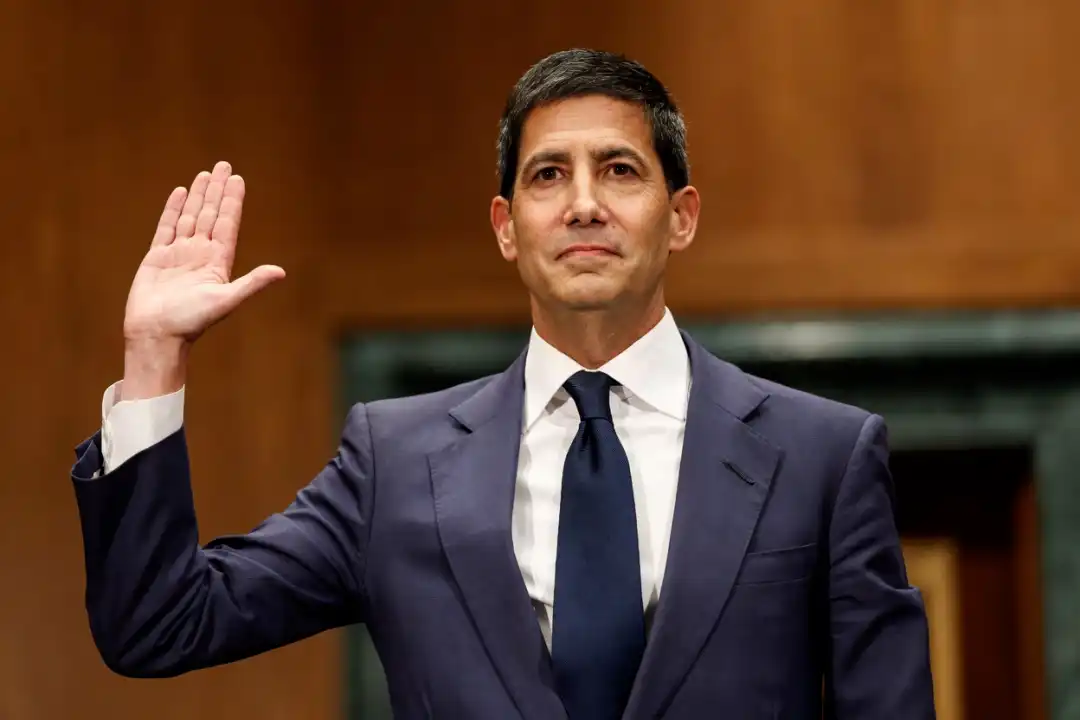
On April 21, 2026, Kevin Warsh's financial disclosure documents were released ahead of the start of his confirmation hearing.
His investment portfolio totals over $130 million. If confirmed, he would be the wealthiest Federal Reserve Chair in history. His current holdings include direct positions in the DeFi lending protocol Compound, derivatives platforms dYdX and Lighter, and the public blockchains Solana, Optimism, Blast, and Zero Gravity.
This marks the first public appearance of the candidate for Fed Chair nominated by Trump, returning to the center of policy after 15 years. Beyond his commitment to divest these holdings, the market is more concerned with how he will lead the Fed through the three major challenges he himself has outlined in his upcoming term.
Can the Premise for Rate Cuts Hold?
From 2006 to 2011, during his five years as a Fed Governor, Warsh was notoriously an inflation-first advocate.
Even at the height of the financial crisis, when unemployment exceeded 10%, he issued 13 public warnings about upside inflation risks during FOMC meetings.
In 2010, he was the most vocal opponent of the second round of quantitative easing (QE2). His resignation from the Fed in 2011 was in opposition to unlimited asset purchases.
But a shift began in May 2025. In a public interview, he stated: "We are at the frontier of AI use cases; everything touched by technology will become cheaper."
By November, in a Wall Street Journal column, he directly defined AI as a significant disinflationary force, capable of boosting productivity and enhancing U.S. competitiveness.
From late 2025 to early 2026, he repeatedly emphasized in various podcasts and interviews that AI is "the most productivity-enhancing wave of our lifetimes," and bluntly stated: if the Fed waits for official data to confirm the productivity gains before acting, it will be "too late."
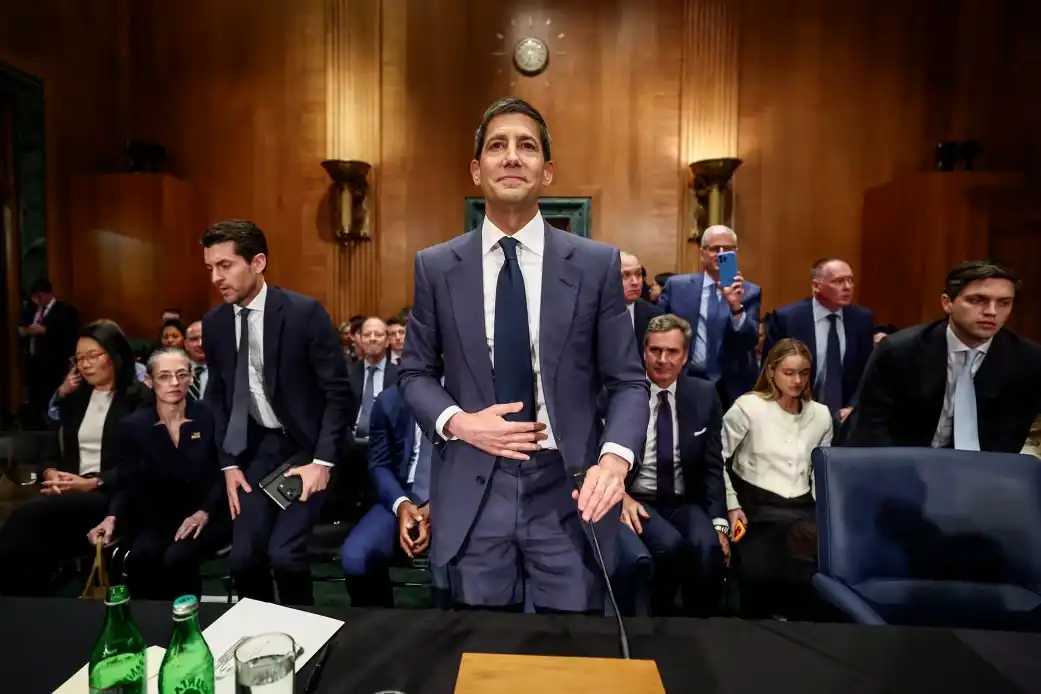
Democratic Senator Elizabeth Warren attacked him during the hearing using the term "flip-flop," suggesting he was迎合 (catering to) Trump.
Warsh countered by citing Alan Greenspan's case from the 1990s: from 1995 to 2000, U.S. nonfarm labor productivity grew at an average annual rate of 2.5%, nearly double the 1.4% of the previous eight years; output per hour in the nonfinancial business sector averaged growth of 3.5%.
At that time, the labor market was extremely tight, with unemployment hitting multi-decade lows, yet core inflation remained stable below 2%, not surging alongside economic growth. Greenspan chose not to tighten policy hastily, ultimately achieving both economic growth and price stability.
Warsh believes he is making the same judgment now—AI is the internet of this cycle.
However, this judgment is facing severe pressure from reality. The March 2026 CPI rose 3.3% year-on-year, higher than February's 2.4%, marking the highest level since May 2024; core CPI rose 2.6% year-on-year. The situation in Iran pushed up energy prices, with gasoline prices rising 18.9% month-on-month and fuel oil rising 44.2%, contributing directly to the largest single-month increase in overall inflation since June 2022.
He acknowledged during the hearing that current inflation data means "there is still work to be done," while refusing to provide any specific rate path or timeline.
The Eroded Independence
At the start of the hearing, Warren used the term "puppet" in her opening statement, citing Trump's social media post from the previous week that "rates will come down once Kevin is in," and repeatedly pressed: Have you promised the President a specific interest rate path? Can you resist pressure from the White House to cut rates if inflation rises again?
Warsh's response was: The President has never asked him to preset, promise, or fix any rate decision in any conversation, and he would not make such promises.
He stated that independence is not an automatic legal firewall but something the Fed earns by adhering to price stability and avoiding overreach. If the Fed persistently makes mistakes and constantly oversteps, the skepticism from the public and politicians is a justified cost; independence is eroded from within, and political pressure is merely an external factor.
The inflation of 2021-2022, in his characterization, was not a simple misjudgment but the result of the Fed using its credibility to endorse fiscal expansion and actively blurring the line between monetary and fiscal policy. This, he said, is the real crisis of independence—not caused by Trump, but by the Fed itself.
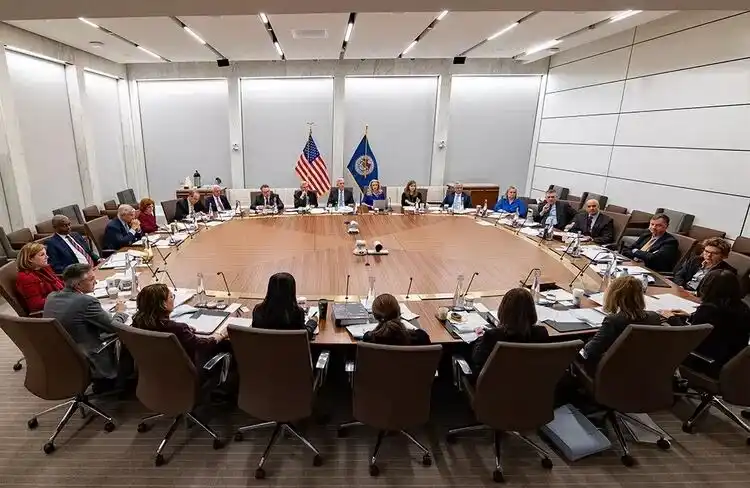
This logic was formed as early as 2010. He gave a speech titled "An Ode to Independence" that year, and it has reappeared in Hoover Institute interviews and Wall Street Journal columns since, centering on the same core judgment: the greatest threat to the Fed comes not from external political pressure, but from its own gradual ceding of institutional space.
The test of independence doesn't only come from Trump himself. Republican Senator Thom Tillis announced during the hearing that he would delay his support for Warsh's confirmation. The reason wasn't questioning Warsh personally, but rather that the Justice Department is currently conducting a criminal investigation into incumbent Chair Powell, nominally related to cost overruns in the Fed headquarters renovation.
Both Powell and a federal judge believe this is political pressure targeting monetary policy. Tillis's stance is that proceeding with confirmation under this shadow means the entire process is politically tainted. This implies Warsh's confirmation timeline is stalled, unrelated to his answers during the hearing.
Can Balance Sheet Reduction and Rate Cuts Be Advanced Simultaneously?
Warsh's views on the balance sheet were formed when he left the Fed in 2011 and have been his most stable position over the past fifteen years.
He used the word "bloated" to describe the Fed's current balance sheet of approximately $6.7 trillion. QE evolved from a temporary emergency measure during the 2008 financial crisis into a semi-permanent tool for the following decade-plus. This evolution brought two structural consequences:
The boundary between monetary and fiscal policy became blurred, with the Fed effectively assuming some fiscal functions; Large-scale asset purchases systematically inflated financial asset prices, benefiting those holding stocks and real estate, while ordinary households did not reap equivalent benefits.
Therefore, this balance sheet must be significantly reduced, while emphasizing that any reduction must be cautious, orderly, and fully communicated to avoid unnecessary market shocks.
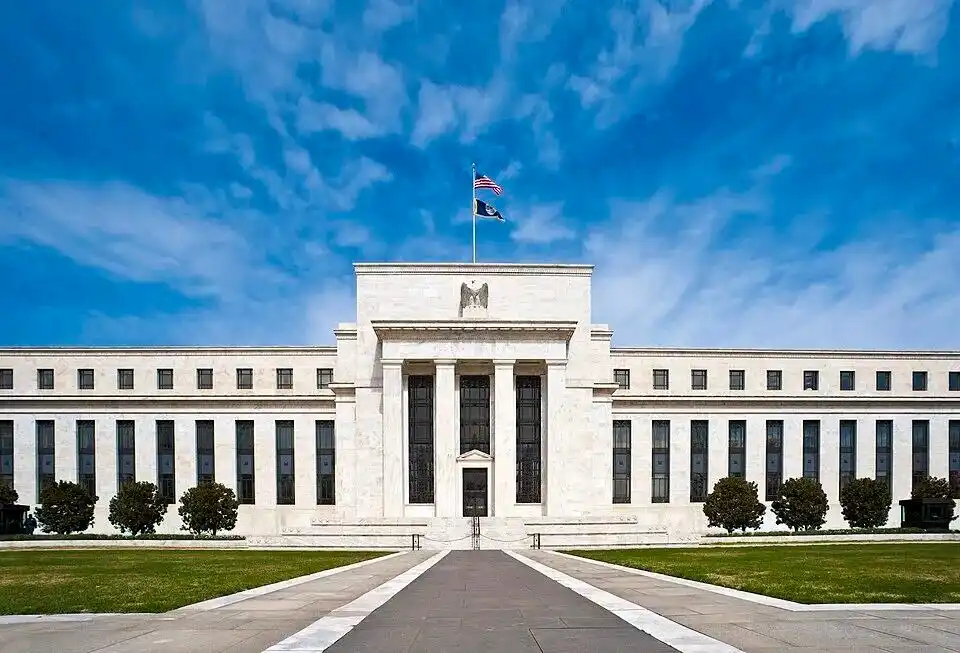
This presents a combination that makes the market uneasy: he might simultaneously advance balance sheet reduction (quantitative tightening, QT) and interest rate cuts, withdrawing liquidity from the balance sheet side while sending easing signals through rates, both acting on market pricing at the same time.
His explanation is that interest rates should once again become the primary tool of monetary policy, while asset purchases return to their temporary crisis-era role—to put the misused tool away and let the right tool function again.
Following the hearing, U.S. Treasury yields rose, with the market pricing in the uncertainty of this mixed message through actual trading.
He also mentioned another specific reform during the hearing: wanting to launch a data project tracking billions of real-time price points to replace parts of the existing CPI statistical framework that rely on lagging sampling.
Reduce the frequency of officials' public forecasts of the rate path, because once a forecast is made, officials often stick to it even after the situation changes to maintain credibility, which is a source of sluggish response. He described his desired state for the FOMC as healthy internal debate, not marching to a pre-scripted, expected conclusion.
He used "regime change" to summarize this direction—a change in the entire policy regime, not just tweaking a couple of parameters.
He also mentioned that stablecoins and on-chain price data could become more real-time supplementary indicators to compensate for defects in the existing statistical framework.
This also reveals his deeper logic regarding crypto: not just an asset class that needs regulation, but also an information infrastructure that can be used to improve the quality of policy judgment. His $130 million holdings might also be understood from this perspective.






