The Real Progress and Investment Opportunities of Decentralized AI Computing Power Networks in 2026

marsbit2026-05-25 tarihinde yayınlandı2026-05-25 tarihinde güncellendi

Özet

In 2026, the AI compute market is marked by centralized GPU consolidation and a significant GPU shortage for smaller players. In this context, Decentralized Physical Infrastructure Networks (DePIN), valued at $9.4B+, have emerged as a viable, revenue-generating alternative. Leading protocols like Aethir ($150M ARR), io.net (130k+ GPUs), Akash, Bittensor, and Render are carving out distinct niches, moving beyond hype to deliver verifiable income primarily from non-crypto-native clients. The key advantage of decentralized GPU networks lies in serving latency-tolerant, cost-sensitive workloads like AI inference, fine-tuning, data preprocessing, and agent operations, offering substantial cost savings (45-80%) compared to major cloud providers. However, reliability variance, lack of robust SLAs, and fragmented tech stacks remain significant adoption hurdles. The sector is maturing with critical 2026 shifts: 1) Evolution of tokenomics towards demand-driven, revenue-linked models (e.g., Render's BME, io.net's IDE), and 2) Clearer enterprise adoption pathways, with traditional firms integrating decentralized compute. For new entrants, opportunities are now concentrated in specialized tooling layers (orchestration, verification, SLA management), vertical applications (e.g., bio-med, content generation), and innovative token designs tied to real usage, rather than generic GPU aggregation. The convergence with the emerging AI Agent economy presents a significant future growth vector.

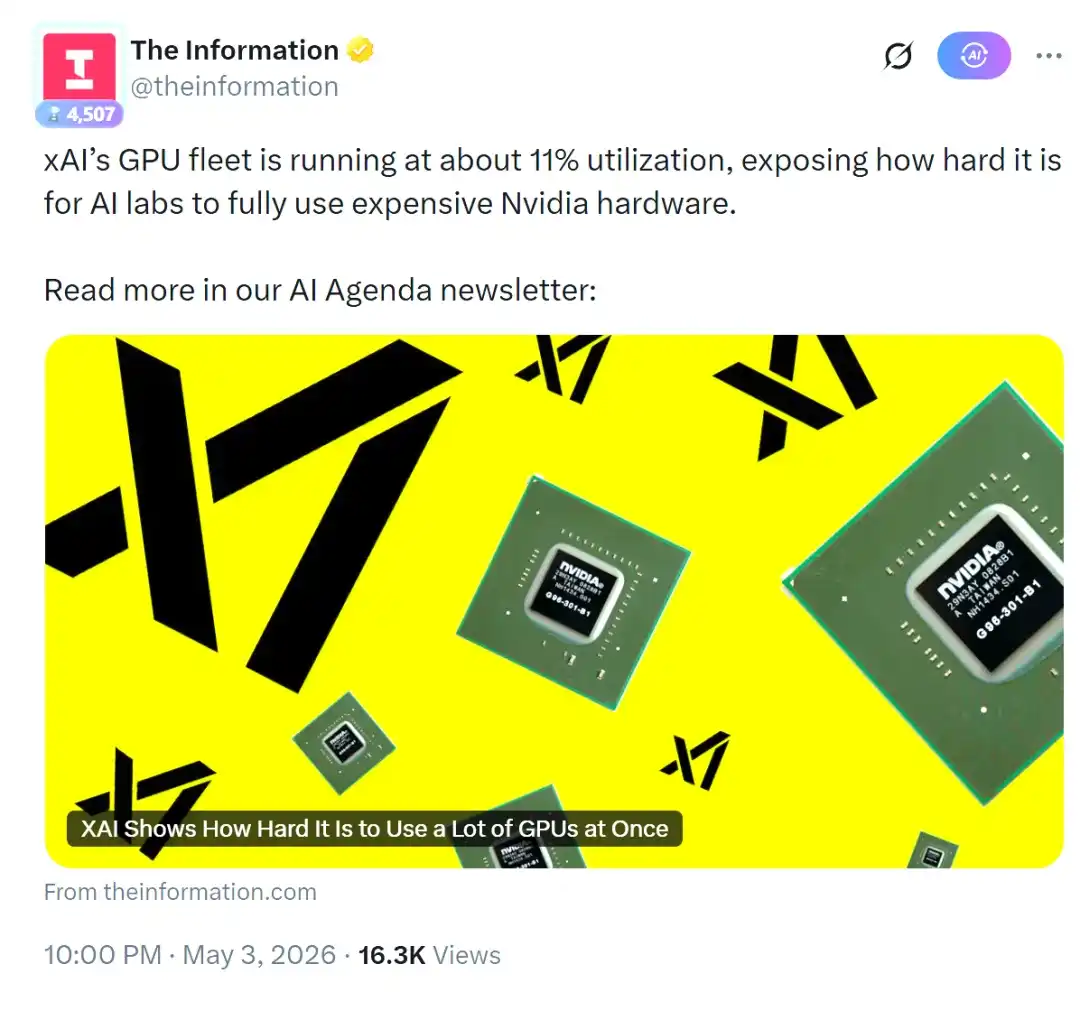
In 2026, the global AI computing power market has entered an extremely dynamic phase. On one hand, leading technology companies are consolidating GPU resources at an unprecedented pace. For example:

  • xAI's Colossus supercomputing cluster has aggregated 550,000 NVIDIA GPUs and is progressing toward the publicly stated roadmap goal of 1 million GPUs;
  • Project Stargate, initiated by OpenAI, Oracle, SoftBank, and others, has deployed over 450,000 NVIDIA GPUs in Texas, with a target total power of 1.2GW.
On the other hand, a large number of small and medium-sized AI startups and independent research teams are suffering from computing power shortages. AWS's H100 clusters experienced waiting periods of 8 to 12 months from 2023 to 2024, with cloud computing bills easily exceeding millions of dollars.

It is precisely in this context of severe supply shortage that the Decentralized Physical Infrastructure Networks (DePIN) track has rapidly emerged.

  • As of the end of March 2026, the total market capitalization of the DePIN track is approximately $9.423 billion, with nearly 250 active projects tracked by CoinGecko.
  • The sector reached a market cap high of about $19.2 billion in September 2025, achieving a year-on-year growth of approximately 270% compared to $5.2 billion in the same period of 2024.
  • More crucially, according to on-chain data aggregated by DeFiLlama and Dune Analytics, the annualized protocol revenue of decentralized GPU computing protocols exceeded $200 million in early 2026.

We have to admit that this sector has crossed a massive threshold that other crypto narratives have never achieved—it is generating real revenue from non-crypto-native clients.

I. Industry Panorama: From Fervent Narrative to Revenue Realization

In 2026, the DePIN computing power industry began to have verifiable revenue data, rather than just a stack of market cap tables and token emission schedules. Over the past two years, the sector has formed a clear hierarchical structure. The operational status of major protocols is shown in the following table:

Table 1: Key Data Comparison of Mainstream Decentralized Computing Networks in 2026
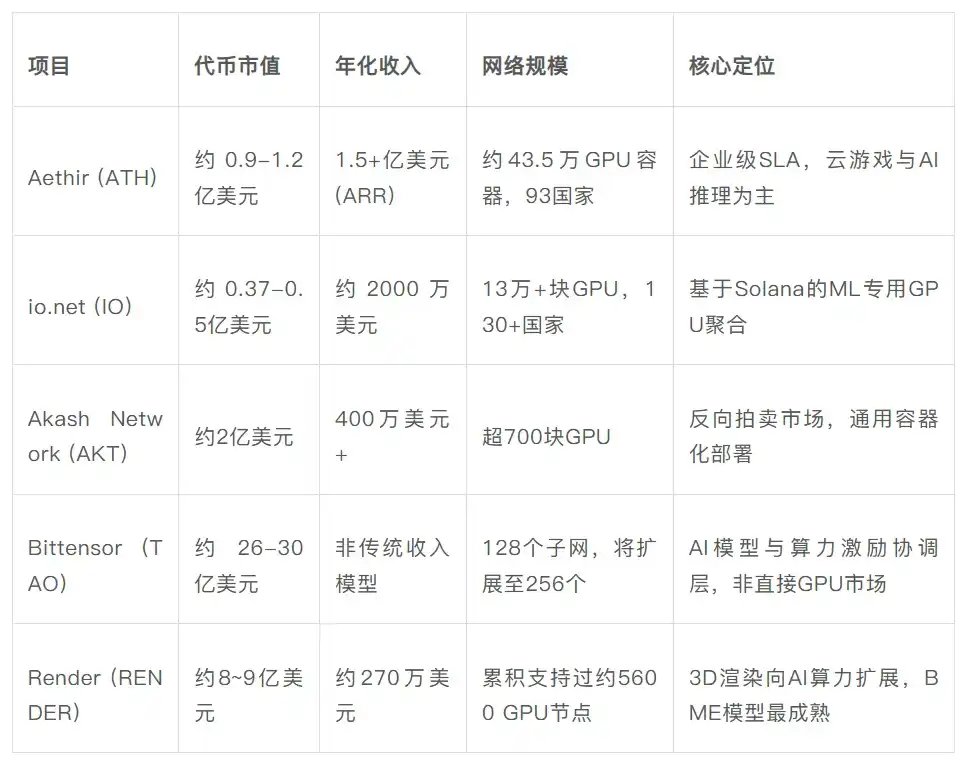
Data source: Official disclosures of each project, Messari quarterly reports, CoinMarketCap, CoinGecko / Coinbase. Data as of May 2026. Note: Bittensor does not have "protocol revenue" in the traditional sense—it is an AI model incentive coordination layer, rewarding participants via inflationary token issuance, with each subnet generating revenue independently.

As can be seen from the table above, these five protocols occupy different ecological positions.

  • Aethir leads in enterprise-level revenue, with an annualized recurring revenue of approximately $150 million. It is currently the protocol with the largest revenue scale in the decentralized computing track, serving clients including game studios, AI inference providers, and model training teams.
  • io.net focuses on orchestrating distributed ML computing clusters, covering over 130,000 GPU devices across more than 130 countries.
  • Akash has formed genuine price competition through its reverse auction pricing mechanism. Its Q1 2026 computing power expenditure broke a historical high of over $5 million, and the AKT token has risen over 72% year-to-date.
  • Bittensor is entirely different; it doesn't rent GPU hardware but incentivizes AI intelligence output itself, forming a decentralized machine intelligence market through 128 subnets.
  • Render started with 3D rendering, having cumulatively rendered over 67 million frames, and is now expanding into general AI computing.

II. Capability Boundaries: What Decentralized GPU Networks Can and Cannot Do

Decentralized GPU networks have long been caught between two extreme narratives: one side claims costs are only one-tenth of AWS's and will soon disrupt cloud computing; the other side believes distributed GPUs cannot support real AI workloads at all. Both judgments are biased.

The key to understanding this sector lies in confronting the structural characteristics of consumer-grade GPUs.

On one hand, the computing power supply of decentralized networks largely comes from consumer-grade GPUs, which have limited VRAM capacity, and inter-node bandwidth relies on home broadband. This inherently makes them unsuitable for synchronous training of frontier large models—such tasks require thousands of high-end GPUs to be interconnected with extremely low latency, a scenario designed for hyperscale clouds.

On the other hand, for workloads with higher latency tolerance and cost sensitivity, the cost-effectiveness advantage of decentralized networks is quite evident: parallel molecular screening in AI drug discovery, batch rendering for text-to-image and text-to-video, and large-scale data preprocessing pipelines are typical matching scenarios.

Furthermore, the continuous expansion of open-source models and the technological evolution of lightweight inference are systematically expanding the serviceable market for decentralized networks. An increasing number of models can run efficiently on a single or a few consumer-grade GPUs. The barriers to inference and fine-tuning are decreasing, which happens to be the most competitive range for decentralized networks.

Chart 2: Matching Relationship between AI Workloads and Computing Power Infrastructure
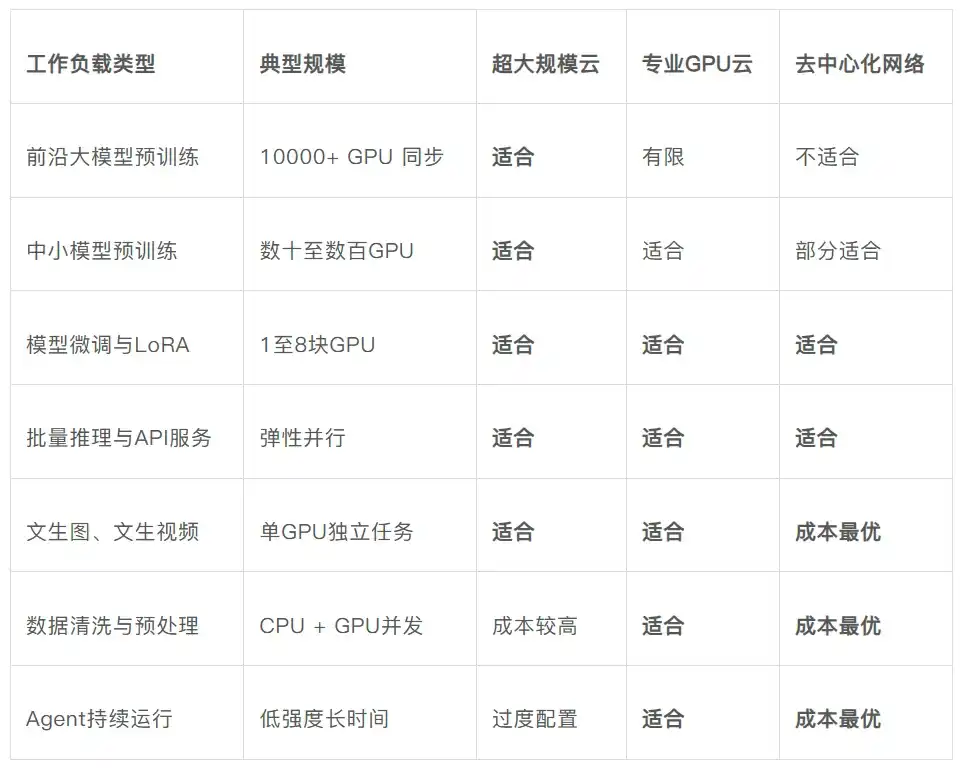
Data source: Compiled from Together AI's multi-node training report (January 2026), Dell LLM cluster network traffic technical documentation (December 2025), Cointelegraph industry analysis (January 2026).

Based on this, the real opportunity for decentralized GPUs concentrates on fragmented, distributed, and price-sensitive scenarios such as inference, fine-tuning, data preprocessing, and Agent continuous operation, rather than directly competing with hyperscale clouds in the frontier training market.

It is worth noting that from the perspective of current AI production environments, the proportion of training in total computing power consumption is now far lower than that of inference and Agent-like tasks, the latter being the main source of growth in computing power demand. This means that the market targeted by decentralized networks is not marginal in scale—it corresponds precisely to the largest and fastest-growing layer in the AI computing power demand structure.

III. Is the Price Advantage Real: Is It Really 60% Cheaper?

One reason decentralized computing power is highly sought after is the widely circulated claim of being "60% cheaper." This statement originates from a cost comparison between the two. The publicly listed price on the Akash Network website shows the hourly rental rate for an H100 GPU is approximately $1.33; after a price reduction of about 44% in June 2025, the per-GPU hourly rate for an AWS p5 instance (averaged across 8 cards) is about $3.93. This is the comparison most frequently cited in reports and the source of the claim "decentralized is over 60% cheaper."

Chart 3: H100 GPU Hourly Rental Price Comparison (Early 2026)
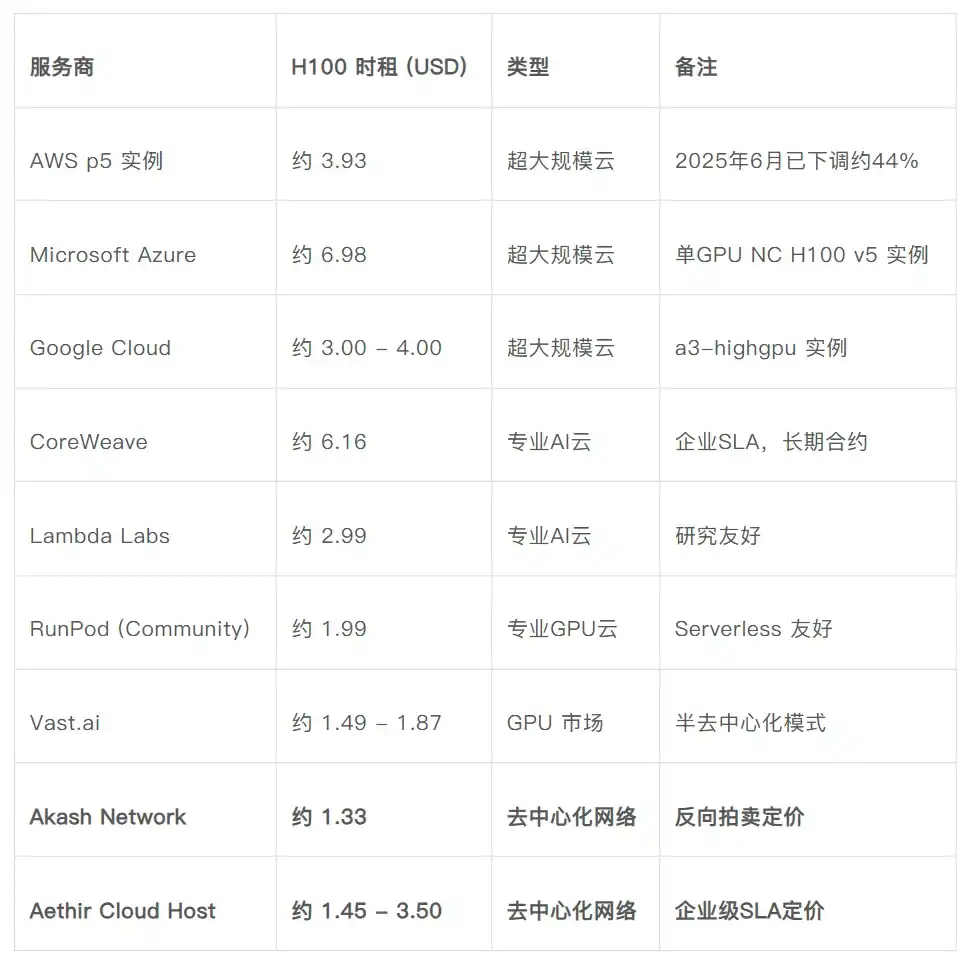
Data source: AWS, Azure, Google Cloud public pricing; Akash Network official website; Aethir official documentation; getdeploying.com (May 2026); IntuitionLabs' "H100 Rental Prices Compared" (May 2026); Silicon Data "H100 Price Spike" (January 2026).

The table above compares the price difference for H100 GPU rentals between centralized platforms and decentralized networks. The comparison leads to the following conclusions:

First, the price advantage of decentralized GPU networks over hyperscale clouds is real—approximately 60% lower compared to the AWS p5 average price, and can be as low as 75%~80% compared to single-GPU instances (AWS/Azure).

Second, compared to fully competitive professional GPU clouds (RunPod, Vast.ai), the price gap with decentralized GPU networks narrows to 15%~35%, and is basically flat in some scenarios.

Third, what truly constitutes differentiation are more structural attributes: no enterprise account required, no minimum usage commitment, on-demand start-stop, flexible geographical distribution of nodes, and no vendor lock-in—this is the real charm of decentralized GPUs.

However, one point that must be raised simultaneously is: Hidden costs cannot be ignored. The node stability of decentralized networks varies greatly. In production scenarios, redundant deployment or increased fault-tolerance mechanisms are needed. These additional costs erode the nominal price advantage to varying degrees. This is one of the main practical barriers facing large-scale enterprise adoption of decentralized GPUs in 2026.

IV. The Real Changes in the Sector in 2026

Based on existing data, the decentralized computing power sector is undergoing two observable deep-seated changes in 2026.

The first is the maturation of tokenomics. Early DePIN projects generally relied on inflationary token subsidies for hardware suppliers, a model with inherent flaws: falling token prices lead to shrinking supplier profits, supplier exits reduce network availability, which further depresses token prices, creating a vicious cycle. Between 2025 and 2026, leading projects have gradually shifted to new models that directly bind token mechanisms to real business volume.

Render Network's BME (Burn-Mint Equilibrium) model, established through RNP-001, requires creators to pay for rendering tasks at fiat prices. Payments are automatically converted to RENDER tokens and burned upon task completion. This mechanism has been operating for years.

io.net's original tokenomics relied on fixed emissions and price-sensitive supplier income, making it prone to a "death spiral." Its upcoming IDE (Incentive Dynamic Engine), slated for Q2 2026, will replace fixed emissions with a demand-driven model, stabilize supplier income pegged to the US dollar, and dynamically adjust token supply based on real-time revenue and token prices.

These two models differ in mechanism but share a common logic: linking token burning and minting to real computing power consumption and anchoring supplier income to the US dollar value. This is the first time decentralized infrastructure has a financial structural logic in token design comparable to traditional SaaS businesses.

The second is the gradual clarification of market entry paths. Early DePIN computing power networks almost exclusively served crypto-native teams, creating a natural market ceiling. Since 2025, several cases of traditional enterprises entering the decentralized computing power system through specific collaborations have emerged.
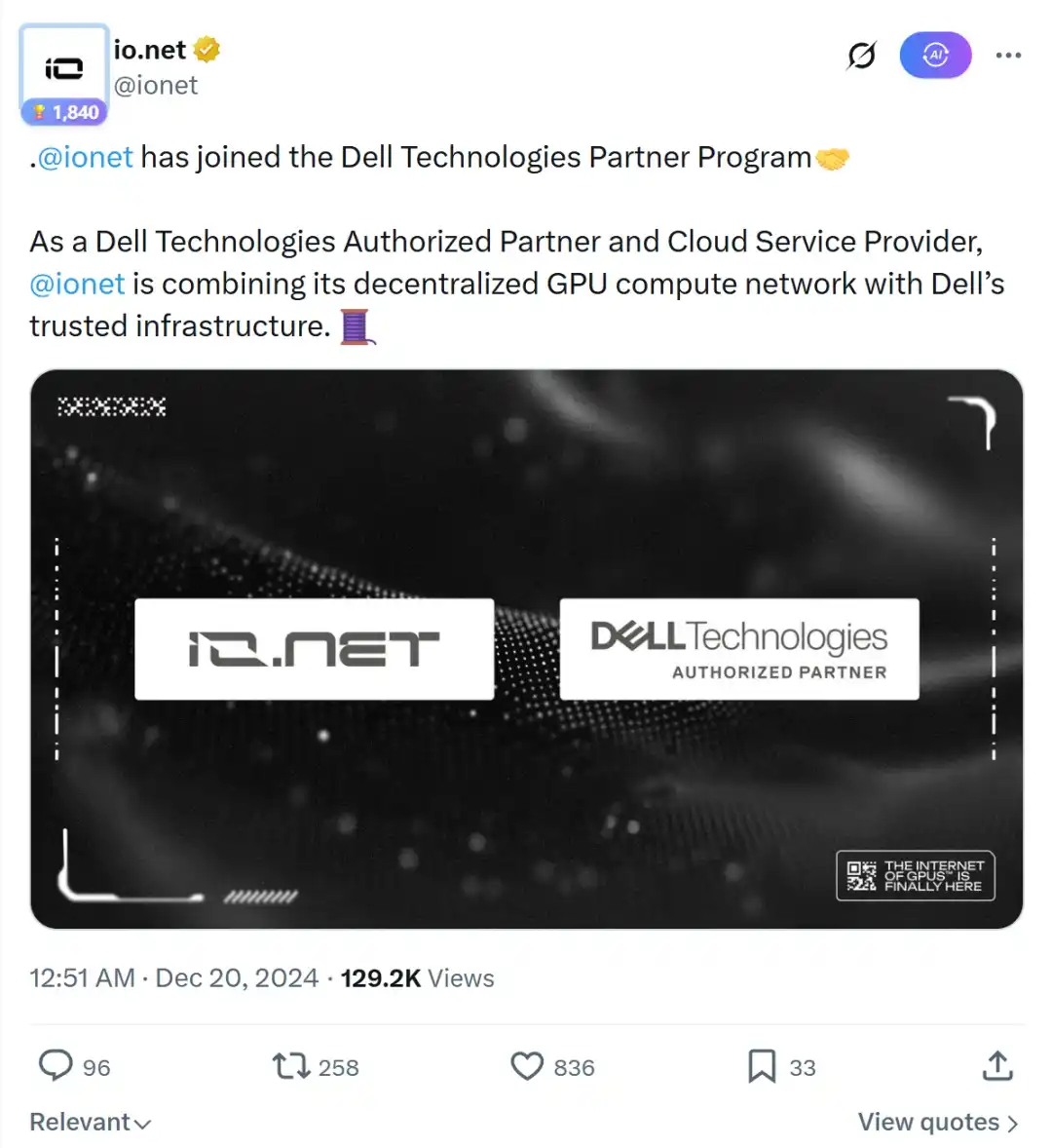
As early as December 2024, io.net joined the Dell Technologies Partner Program as an authorized partner and cloud service provider. The two sides will collaborate on marketing and demand development, enabling enterprise clients to integrate and deploy decentralized GPU computing power with Dell hardware. Prior to that, in April 2024, io.net established a partnership with the AI creative platform KREA, whose enterprise client list includes Nike, Apple, FC Barcelona, Publicis Group, and Meta. io.net provided KREA with NVIDIA A100-80GB GPU clusters at approximately one-third of the market average price.

Meanwhile, Aethir's over 150 paying enterprise clients are distributed across AI, Web3, and gaming sectors. Its Q3 2025 single-quarter revenue reached $39.8 million, with annualized revenue exceeding $147 million, covering scenarios such as AI inference, model training, and Agent platforms.

Regarding Akash, Venice.ai (a private, uncensored generative AI application) uses Akash GPUs to handle inference requests, and FLock.io (a federated learning platform) allows operators to deploy validator nodes on Akash. Both integrations were completed in 2024.

The common feature of the above cases is that non-crypto-native enterprises have begun to incorporate decentralized computing power into actual procurement and technical integration, moving beyond mere narrative levels. Although the number of cases is not vast, they represent a substantive breakthrough in market entry paths.

Chart 4: Key Metric Changes in the DePIN Computing Power Sector (2024 - 2026)
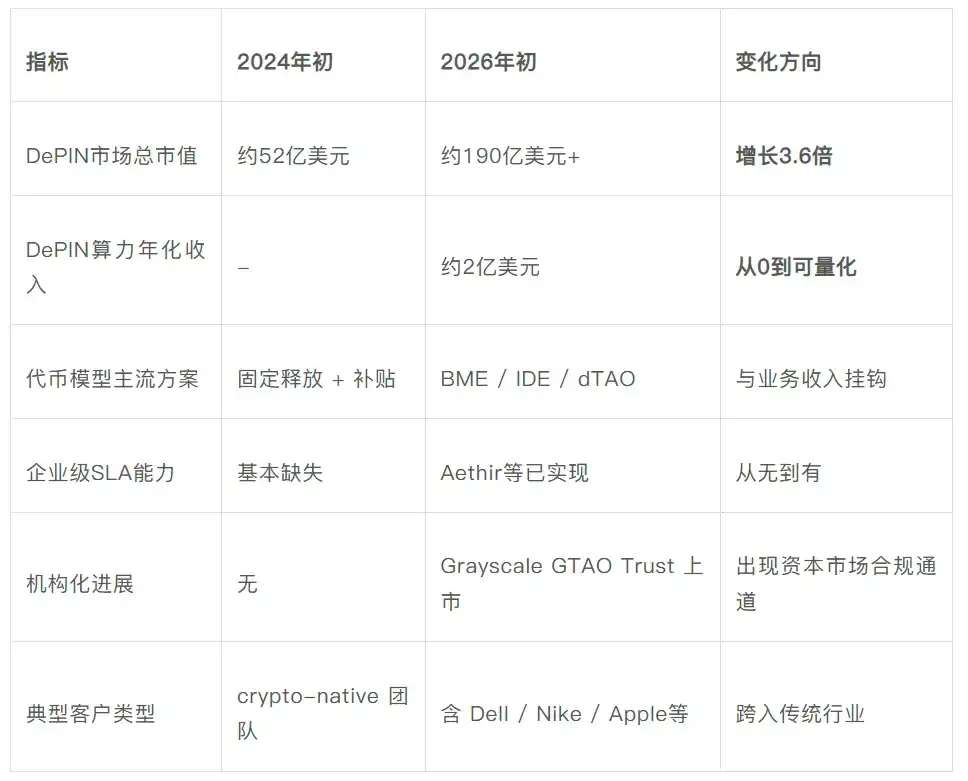
Data source: BlockEden "Decentralized GPU Networks 2026," "DePIN Revenue Inflection"; Yellow.com (May 2026); Messari project report series; CoinGecko "Top Bittensor Subnets" (April 2026).

However, it must also be admitted that: the decentralized computing power sector still faces significant unresolved core obstacles.

First, raw GPU quotes are indeed cheaper (offering discounts of 45-60%), but reliability variance often forces users to over-provision computing power, significantly eroding the nominal cost savings.

Second, enterprise adoption of decentralized computing power still faces difficulties, such as: orchestration challenges, difficulties in debugging distributed failures, and lack of enforceable SLA (Service Level Agreement) guarantees.

Third, the DePIN technology stack is highly fragmented—computing power, storage, verification, and data are scattered across different protocols. Developers must piece together multiple systems to complete production-level deployments, significantly increasing engineering costs.

An exception worth noting on the enterprise front is Aethir. Aethir maintains a 99.31% uptime across over 435,000 GPU containers, possesses enforceable enterprise-level SLAs, and is one of the few projects in the decentralized computing power sector currently capable of meeting enterprise contract-level service requirements.

Of course, the existence of these problems represents both current constraints and tangible gaps that project teams can concretely address.

V. Implications for Ecosystem Player Development Paths

For ecosystem players entering this sector in 2026, the aforementioned data points to several specific judgments:

First, avoid redundant construction of basic aggregation layers. io.net, Akash, and Aethir have already established GPU aggregation networks of considerable scale across different price points. New projects that merely enter as generic GPU aggregators, without significant differentiation—whether in geographic coverage, compliance qualifications, special hardware types, or vertical industry certifications—will find it difficult to establish sustainable advantages. Projects like Render (extending from rendering to AI computing) and Aethir (extending from cloud gaming to enterprise AI inference), which themselves have accumulated resources in specific scenarios, are more likely to gain initial users and differentiated pricing power than pure generic aggregation networks.

Second, tooling and middleware layers are more realistic entry points. Each of the aforementioned unresolved problems—reliability management, distributed debugging, SLA guarantees, cross-chain settlement, Agent-level computing power procurement, and reconciliation—corresponds to a tooling-type project that can stand independently.
  • Gensyn's Verde is an early example. It is a verification protocol specifically designed for machine learning in decentralized environments. Its core is a lightweight dispute arbitration system capable of pinpointing the first step in the training computation graph where the trainer and verifier diverge. Thus, only that single operation needs to be recomputed, not the entire task, significantly reducing verification overhead.
  • Other ideas include, for instance, what io.net proposed: utilizing the MCP protocol to enable AI Agents to directly procure and schedule computing resources without human KYC or enterprise accounts, thereby bypassing the onboarding barriers of traditional cloud services, which are unfriendly to autonomous Agents.

Building toolchains around these underlying protocols offers more clear-cut differentiation space than creating another GPU marketplace.

Third, opportunities at the vertical application layer are diverging. Specific scenarios such as AI biomedicine, AI image/video generation, AI Agent continuous operation, on-chain data analysis and backtesting, and privacy computing (combined with TEE) have different sensitivities to computing power cost, latency tolerance, and reliability requirements. Cases like the Templar subnet training the 72B-parameter Covenant model on Bittensor demonstrate that small-scale, task-specific training is feasible on decentralized networks; however, the subsequent team departure incident also indicates that the governance and team stability of vertical application projects are deeply tied to token market performance.

Fourth, tokenomics design has become a core barrier. Token models like BME and IDE, which are tied to real business volume, have become the de facto standard for the new generation of DePIN computing projects. The early path of releasing tokens first, attracting hardware to the network, and then promoting market cap to attract users has been proven unsustainable in the 2026 market environment. The token model design of new projects must answer from day one: where does the token demand side come from?

Fifth, a point needs to be added: the integration of decentralized GPU networks and the AI Agent economy has just begun in 2026. When the number of AI Agents experiences exponential growth in the next 12 to 18 months, the demand for decentralized computing power will no longer be an option for enterprise-level teams but the default entry point for non-human economic activities. This change is structurally compatible with decentralized computing power networks—the human KYC and enterprise account systems of traditional cloud services are unfriendly to Agents, while permissionless computing power markets can fill this gap.

VI. Observations from Go2Mars Research Institute

The state of decentralized GPU networks in 2026 is neither the "complete disruption of cloud computing" touted by proponents nor the "conceptual scam" claimed by skeptics. It has become a layer within the AI infrastructure stack with real revenue, clear capability boundaries, and is purchasable by enterprises—but its most suitable scenarios still concentrate in areas such as inference, fine-tuning, data preparation, and Agent continuous operation. The market for frontier foundational model training still belongs to hyperscale centralized clouds.

For ecosystem players, this means the opportunity window for the next 12 to 18 months is concentrated in three types of positions.

  • The first category is the tooling layer around the Agent economy and AI inference, including infrastructure for computing power orchestration, behavior verification, metering and billing, SLA guarantees, and cross-chain settlement.
  • The second category is the application layer tied to specific vertical industries, including cost-sensitive and latency-tolerant scenarios such as biomedicine, content generation, and on-chain data science.
  • The third category is the deep integration of next-generation tokenomics and enterprise-level payment paths, requiring direct binding of token demand side with real business volume.

The research institute team has recently engaged in in-depth cooperation with multiple AI × Crypto project teams in areas such as track positioning, technology path selection, token model design, market entry strategies, and VC connections. If a project team believes they are better suited to enter one of the three aforementioned positions, please feel free to contact us for further research and incubation support.

İlgili Sorular

QWhat is the current market state of decentralized GPU networks in 2026 according to the article, and what key metric indicates their real-world traction?

AIn 2026, the decentralized GPU network (DePIN) sector has matured from speculative narrative to a revenue-generating layer. The key metric indicating its real-world traction is that decentralized GPU computing protocols have achieved an annualized protocol revenue exceeding $200 million in early 2026, derived from non-crypto native customers.

QBased on the article's comparison, what are the main areas where decentralized GPU networks demonstrate true price advantages over centralized clouds, and what are the limitations?

AThe main price advantage is for on-demand H100 GPU rentals, where decentralized networks (e.g., Akash at ~$1.33/hr) can be ~60% cheaper than major cloud providers (e.g., AWS p5 at ~$3.93/hr) and up to 75-80% cheaper compared to single-GPU instances. The key limitation is the 'hidden cost' of variable node reliability, which necessitates redundant deployments and fault tolerance mechanisms, partially eroding the nominal price savings for production workloads.

QWhat are the two deep-seated changes the decentralized compute sector is undergoing in 2026, as highlighted in the article?

AThe two deep-seated changes are: 1) The maturation of token economics, with leading projects shifting to models that directly link token mint/burn mechanics to real compute consumption (e.g., Render's BME, io.net's planned IDE), anchoring provider revenue to USD value. 2) The clarification of market entry paths, with concrete examples of non-crypto native enterprises (like KREA's clients, Venice.ai, FLock.io) beginning to integrate and procure decentralized compute resources.

QWhat are the core unresolved challenges currently facing the decentralized compute sector, as per the article's analysis?

AThe core unresolved challenges are: 1) High variance in node reliability, forcing users to over-provision compute and eating into cost savings. 2) Enterprise adoption hurdles like orchestration difficulty, complex distributed debugging, and a lack of enforceable Service Level Agreements (SLAs). 3) A highly fragmented DePIN tech stack, requiring developers to integrate multiple protocols (compute, storage, verification) for production deployment, increasing engineering costs.

QFor ecosystem participants in 2026, what are the three primary opportunity areas identified by the Go2Mars Research Institute based on the sector's current state?

AThe three primary opportunity areas are: 1) The tooling layer around Agent economy and AI inference, including compute orchestration, behavior verification, metering/billing, SLA guarantees, and cross-chain settlement. 2) The application layer tied to specific verticals like biopharma, content generation, and on-chain data science, which are cost-sensitive and latency-tolerant. 3) The deep integration of next-generation token economics with enterprise payment pathways, ensuring token demand is directly tied to real business volume.

İlgili Okumalar

Understanding Bound in One Article: The "Multi-signature + Timelock" Escape Mechanism and the Off-Chain Matching Black Box

**Title**: Understanding Bound: The Escape Mechanism of "Multi-Sig + Time Lock" and the Off-Chain Matching Black Box **Summary**: Bound Exchange, evolved from the earlier radFi platform, introduces a novel approach to Bitcoin trading by combining self-custody security with exchange-like speed. Its core mechanism relies on a 2-of-2 multi-signature (multi-sig) address for user deposits. One private key is held by the user via a passkey, and the other is held by Bound. This setup requires both keys to sign any transaction, preventing Bound from unilaterally accessing user funds (non-custodial). To address the risk of Bound becoming unavailable, a 3-month timelock is integrated into the Bitcoin script. After this period, users can withdraw their assets with just their single signature, ensuring an escape hatch. For trading, Bound operates a concentrated liquidity AMM. However, as Bitcoin L1 lacks smart contracts, the AMM curve, liquidity management, and trade price calculations occur off-chain in Bound's backend database. On-chain Bitcoin transactions serve only as final settlement receipts for pre-determined amounts. This creates a centralization point: the critical sequence of trade execution—which determines the exact price along the curve for each order—is managed off-chain by Bound in a non-transparent "black box." While the 2-of-2 setup protects user本金 (principal), the pricing and ordering of trades introduce potential operational MEV risks, as the order processing is invisible and unverifiable on-chain. In practice, users can also connect external wallets (like Unisat) for fully self-custodied trading, but this requires manually signing every transaction. The platform currently supports deposits of BTC and Runes only.

marsbit5 dk önce

Understanding Bound in One Article: The "Multi-signature + Timelock" Escape Mechanism and the Off-Chain Matching Black Box

marsbit5 dk önce

Technology Has No Barriers, 24/7 Trading is the Key to Hyperliquid's Success

The article argues that Hyperliquid's competitive edge lies not in technological superiority but in its 24/7 trading model, which fundamentally challenges traditional finance's fixed market hours. Based in Singapore with an 11-person team, Hyperliquid has generated significant revenue and trading volume. Its core advantage is the ability to facilitate trading continuously, including during weekends when major exchanges like the CME are closed. This was demonstrated when Hyperliquid listed a SpaceX pre-IPO perpetual contract on a Sunday, allowing the market to price the company hours before traditional institutions opened. This disruption has drawn regulatory scrutiny from traditional giants like CME and ICE, who cite risks like lack of KYC and market manipulation. However, the article suggests their concern stems from Hyperliquid eroding the "time monopoly" of established markets. The piece contrasts Hyperliquid's synthetic derivatives—pure price-betting contracts with no underlying asset or centralized issuer—with other models like PreStocks (dependent on real股权) and Ondo (licensed but targetable). Hyperliquid's code-based, decentralized structure makes it resilient to takedowns, even if founders face legal action. Ultimately, the author concludes that while it raises legitimate regulatory questions, Hyperliquid's "unforgeable" competitive barrier is the time advantage of non-stop trading, a feature legacy systems cannot replicate.

marsbit11 dk önce

Technology Has No Barriers, 24/7 Trading is the Key to Hyperliquid's Success

marsbit11 dk önce

New Information Laundering in Prediction Markets: How Secrets Blend into Investment Signals

"The New Information Laundering in Prediction Markets: How Secrets Infiltrate Investment Signals In late February 2026, nine linked anonymous wallets on Polymarket placed over 80 bets on specific details of a US-Iran war, winning over $2.4 million with a 98% win rate. This exemplifies 'information laundering'—a destructive flaw inherent to prediction markets. These markets function by aggregating trader supply and demand on an order book to set prices, which represent collective probability estimates. This makes them valuable real-time sentiment indicators for institutions. However, the system cannot distinguish between public information and stolen secrets. Confidential information enters one end, and 'clean' market prices—bearing no trace of their illicit origin—emerge from the other. For example, an insider knowing of an imminent strike can buy contracts at low odds, pushing the price up and disguising the secret as a savvy market signal, then profit massively when the event occurs. Analysts can sometimes uncover these schemes due to the blockchain's transparency, as seen with Bubblemaps. Paradoxically, this same transparency can inadvertently broadcast secrets to adversarial observers, providing them with low-cost intelligence. Current laws, like insider trading regulations focused on corporate information, fail to address this issue, especially concerning events like military actions with no 'issuer.' Jurisdictional challenges are amplified as platforms operate offshore, easily bypassing national bans with VPNs. Recent US congressional investigations and proposed bills aim to ban war betting and trading on non-public information by officials. The core issue is that information laundering is not a bug but a feature: a market that perfectly converts knowledge into price will inherently reward those with the best information, including those who obtained it illicitly. As prediction markets grow, potentially reaching hundreds of billions in volume, society must confront whether it can tolerate a machine that profitably transforms its most guarded secrets into public, tradable numbers."

链捕手20 dk önce

New Information Laundering in Prediction Markets: How Secrets Blend into Investment Signals

链捕手20 dk önce

Trump’s Dual Pressure: When the Iran Deal Meets the Midterm Elections

U.S. President Donald Trump’s efforts to negotiate a deal with Iran are triggering a political backlash within his own Republican Party, as the approach of midterm elections intensifies internal divisions. Reports of a potential agreement—involving a temporary ceasefire, phased sanctions relief, and the unfreezing of Iranian assets in exchange for discussions on Tehran diluting or transferring its stockpile of highly enriched uranium—have drawn sharp criticism from GOP hawks. Key allies like Senators Lindsey Graham and Ted Cruz warned that such concessions could allow Iran to recuperate, undermine recent U.S. military gains, and ultimately strengthen a hostile regime. The dispute highlights a broader political struggle for Trump, who must reconcile his "America First" posture with diplomatic compromise while facing a tough electoral landscape. With Republicans fighting to maintain control of Congress and Trump’s approval ratings declining, the Iran deal has quickly become a test of party loyalty and perceived toughness. Public sparring between Trump aides and critics—including former Secretary of State Mike Pompeo—underscores the internal pressure. While Secretary of State Marco Rubio defended Trump’s historically hardline stance, skeptics like Senator Thom Tillis questioned the logic of any deal that leaves nuclear materials in Iran. The outcome now hinges on whether Trump can persuade his party’s hardliners to accept a negotiated exit.

marsbit23 dk önce

Trump’s Dual Pressure: When the Iran Deal Meets the Midterm Elections

marsbit23 dk önce

İşlemler

Spot
Futures

Popüler Makaleler

GROK AI Nedir

Grok AI: Web3 Döneminde Konuşma Teknolojisini Devrim Niteliğinde Yenilik Giriş Hızla gelişen yapay zeka alanında, Grok AI, ileri teknoloji ve kullanıcı etkileşimi alanlarını birleştiren dikkate değer bir proje olarak öne çıkıyor. Ünlü girişimci Elon Musk'ın liderliğindeki xAI tarafından geliştirilen Grok AI, yapay zeka ile etkileşim şeklimizi yeniden tanımlamayı hedefliyor. Web3 hareketi devam ederken, Grok AI, karmaşık sorgulara yanıt vermek için konuşma yapay zekasının gücünden yararlanmayı amaçlıyor ve kullanıcılara sadece bilgilendirici değil, aynı zamanda eğlenceli bir deneyim sunuyor. Grok AI Nedir? Grok AI, kullanıcılarla dinamik bir şekilde etkileşimde bulunmak üzere tasarlanmış sofistike bir konuşma yapay zeka sohbet botudur. Birçok geleneksel yapay zeka sisteminin aksine, Grok AI, genellikle uygunsuz veya standart yanıtların dışında kabul edilen daha geniş bir sorgu yelpazesini benimsemektedir. Projenin temel hedefleri şunlardır: Güvenilir Akıl Yürütme: Grok AI, bağlamsal anlayışa dayalı mantıklı yanıtlar sağlamak için sağduyu akıl yürütmeyi vurgular. Ölçeklenebilir Denetim: Araç yardımı entegrasyonu, kullanıcı etkileşimlerinin hem izlenmesini hem de kalite için optimize edilmesini sağlar. Resmi Doğrulama: Güvenlik en önemli önceliktir; Grok AI, çıktılarının güvenilirliğini artırmak için resmi doğrulama yöntemlerini entegre eder. Uzun Bağlam Anlayışı: AI modeli, kapsamlı konuşma geçmişini saklama ve hatırlama konusunda mükemmel bir performans sergileyerek anlamlı ve bağlamsal olarak farkında tartışmaların yapılmasını kolaylaştırır. Saldırgan Dayanıklılık: Manipüle edilmiş veya kötü niyetli girdilere karşı savunmalarını geliştirmeye odaklanarak, Grok AI kullanıcı etkileşimlerinin bütünlüğünü korumayı hedefler. Özünde, Grok AI sadece bir bilgi alma cihazı değil; dinamik diyalogu teşvik eden, etkileyici bir konuşma partneridir. Grok AI'nın Yaratıcısı Grok AI'nın arkasındaki beyin, otomotiv, uzay yolculuğu ve teknoloji gibi çeşitli alanlarda yenilikle özdeşleşen Elon Musk'tır. Yapay zeka teknolojisini faydalı yollarla geliştirmeye odaklanan xAI çatısı altında, Musk'ın vizyonu, yapay zeka etkileşimlerinin anlaşılmasını yeniden şekillendirmeyi amaçlıyor. Liderlik ve temel etik, Musk'ın teknolojik sınırları zorlamaya olan bağlılığı tarafından derinden etkilenmektedir. Grok AI'nın Yatırımcıları Grok AI'yi destekleyen yatırımcılarla ilgili spesifik detaylar sınırlı kalmakla birlikte, projenin kuluçka merkezi olan xAI'nin, esasen Elon Musk tarafından kurulduğu ve desteklendiği kamuya açık bir şekilde kabul edilmektedir. Musk'ın önceki girişimleri ve mülkleri, Grok AI'nın güvenilirliğini ve büyüme potansiyelini daha da artıran sağlam bir destek sağlar. Ancak, şu anda Grok AI'yı destekleyen ek yatırım fonları veya kuruluşlarıyla ilgili bilgiye kolayca erişim sağlanamamaktadır; bu da potansiyel gelecekteki keşif alanını işaret etmektedir. Grok AI Nasıl Çalışır? Grok AI'nın operasyonel mekanikleri, kavramsal çerçevesi kadar yenilikçidir. Proje, benzersiz işlevselliklerini kolaylaştıran birkaç son teknoloji ürünü teknolojiyi entegre eder: Sağlam Altyapı: Grok AI, konteyner orkestrasyonu için Kubernetes, performans ve güvenlik için Rust ve yüksek performanslı sayısal hesaplama için JAX kullanılarak inşa edilmiştir. Bu üçlü, sohbet botunun verimli çalışmasını, etkili bir şekilde ölçeklenmesini ve kullanıcılara zamanında hizmet vermesini sağlar. Gerçek Zamanlı Bilgi Erişimi: Grok AI'nın ayırt edici özelliklerinden biri, X platformu (önceden Twitter olarak biliniyordu) aracılığıyla gerçek zamanlı verilere erişim yeteneğidir. Bu yetenek, yapay zekaya en son bilgilere erişim sağlar ve diğer yapay zeka modellerinin gözden kaçırabileceği zamanında yanıtlar ve öneriler sunmasına olanak tanır. İki Etkileşim Modu: Grok AI, kullanıcılara “Eğlenceli Mod” ve “Normal Mod” arasında seçim yapma imkanı sunar. Eğlenceli Mod, daha eğlenceli ve mizahi bir etkileşim tarzı sağlarken, Normal Mod, kesin ve doğru yanıtlar vermeye odaklanır. Bu çok yönlülük, çeşitli kullanıcı tercihlerine hitap eden özelleştirilmiş bir deneyim sağlar. Özünde, Grok AI performansı etkileşimle birleştirerek, hem zenginleştirici hem de eğlenceli bir deneyim yaratmaktadır. Grok AI'nın Zaman Çizelgesi Grok AI'nın yolculuğu, gelişim ve dağıtım aşamalarını yansıtan önemli dönüm noktalarıyla işaretlenmiştir: İlk Geliştirme: Grok AI'nın temel aşaması, modelin ilk eğitim ve ince ayarının yapıldığı yaklaşık iki ay boyunca gerçekleşmiştir. Grok-2 Beta Yayını: Önemli bir ilerleme olarak, Grok-2 beta duyurulmuştur. Bu sürüm, sohbet etme, kodlama ve akıl yürütme yetenekleriyle donatılmış iki versiyon—Grok-2 ve Grok-2 mini—sunmuştur. Halka Açık Erişim: Beta geliştirmesinin ardından, Grok AI X platformu kullanıcılarına sunulmuştur. Telefon numarasıyla doğrulanan ve en az yedi gün aktif olan hesap sahipleri, sınırlı bir versiyona erişim sağlayarak teknolojiyi daha geniş bir kitleye ulaştırmaktadır. Bu zaman çizelgesi, Grok AI'nın kuruluşundan kamu etkileşimine kadar sistematik büyümesini kapsar ve sürekli iyileştirme ve kullanıcı etkileşimine olan bağlılığını vurgular. Grok AI'nın Ana Özellikleri Grok AI, yenilikçi kimliğine katkıda bulunan birkaç ana özelliği kapsamaktadır: Gerçek Zamanlı Bilgi Entegrasyonu: Güncel ve ilgili bilgilere erişim, Grok AI'yı birçok statik modelden ayırarak, etkileyici ve doğru bir kullanıcı deneyimi sağlar. Çeşitli Etkileşim Tarzları: Farklı etkileşim modları sunarak, Grok AI çeşitli kullanıcı tercihlerine hitap eder ve yapay zeka ile konuşurken yaratıcılığı ve kişiselleştirmeyi teşvik eder. Gelişmiş Teknolojik Altyapı: Kubernetes, Rust ve JAX kullanımı, projeye güvenilirlik ve optimal performans sağlamak için sağlam bir çerçeve sunar. Etik Tartışma Dikkati: Görüntü üreten bir işlevin dahil edilmesi, projenin yenilikçi ruhunu sergiler. Ancak, aynı zamanda tanınabilir figürlerin saygılı bir şekilde tasvir edilmesi ve telif hakkı ile ilgili etik konuları da gündeme getirir—bu, yapay zeka topluluğunda süregelen bir tartışmadır. Sonuç Konuşma yapay zekası alanında öncü bir varlık olarak Grok AI, dijital çağda dönüştürücü kullanıcı deneyimlerinin potansiyelini kapsar. xAI tarafından geliştirilen ve Elon Musk'ın vizyoner yaklaşımıyla yönlendirilen Grok AI, gerçek zamanlı bilgiyi gelişmiş etkileşim yetenekleriyle birleştirir. Yapay zekanın neler başarabileceği konusunda sınırları zorlamayı hedeflerken, etik konulara ve kullanıcı güvenliğine odaklanmayı sürdürmektedir. Grok AI, sadece teknolojik ilerlemeyi değil, aynı zamanda Web3 manzarasında yeni bir konuşma paradigmasını da temsil eder ve kullanıcılara hem yetkin bilgi hem de eğlenceli etkileşim sunma vaadinde bulunur. Proje gelişmeye devam ederken, teknolojinin, yaratıcılığın ve insan benzeri etkileşimin kesişim noktasında nelerin başarılabileceğinin bir kanıtı olarak durmaktadır.

355 Toplam GörüntülenmeYayınlanma 2024.12.26Güncellenme 2024.12.26

GROK AI Nedir

ERC AI Nedir

Euruka Tech: $erc ai ve Web3'teki Hedefleri Üzerine Bir Genel Bakış Giriş Blockchain teknolojisi ve merkeziyetsiz uygulamaların hızla gelişen manzarasında, her biri benzersiz hedefler ve metodolojilerle yeni projeler sıkça ortaya çıkmaktadır. Bu projelerden biri, kripto para ve Web3 alanında faaliyet gösteren Euruka Tech'tir. Euruka Tech'in, özellikle $erc ai token'ının ana odak noktası, merkeziyetsiz teknolojinin büyüyen yeteneklerinden yararlanmak için tasarlanmış yenilikçi çözümler sunmaktır. Bu makale, Euruka Tech'in kapsamlı bir genel görünümünü, hedeflerini, işlevselliğini, yaratıcısının kimliğini, potansiyel yatırımcılarını ve Web3'teki daha geniş bağlam içindeki önemini keşfetmeyi amaçlamaktadır. Euruka Tech, $erc ai Nedir? Euruka Tech, Web3 ortamının sunduğu araçlar ve işlevsellikleri kullanan bir proje olarak tanımlanmaktadır ve operasyonlarında yapay zekayı entegre etmeye odaklanmaktadır. Projenin çerçevesine dair spesifik detaylar biraz belirsiz olsa da, kullanıcı etkileşimini artırmayı ve kripto alanındaki süreçleri otomatikleştirmeyi amaçlamaktadır. Proje, yalnızca işlemleri kolaylaştırmakla kalmayıp, aynı zamanda yapay zeka aracılığıyla öngörücü işlevsellikleri de entegre eden merkeziyetsiz bir ekosistem yaratmayı hedeflemektedir; bu nedenle token'ının adı $erc ai'dir. Amaç, büyüyen Web3 alanında daha akıllı etkileşimleri ve verimli işlem işleme süreçlerini kolaylaştıran sezgisel bir platform sunmaktır. Euruka Tech'in Yaratıcısı Kimdir, $erc ai? Şu anda, Euruka Tech'in arkasındaki yaratıcı veya kurucu ekip hakkında bilgi verilmemiştir ve bu durum biraz belirsizdir. Bu veri eksikliği, ekibin geçmişi hakkında bilgi sahibi olmanın genellikle blockchain sektöründe güvenilirlik oluşturmak için gerekli olduğu endişelerini doğurmaktadır. Bu nedenle, somut detaylar kamuya sunulana kadar bu bilgiyi bilinmeyen olarak sınıflandırdık. Euruka Tech'in Yatırımcıları Kimlerdir, $erc ai? Benzer şekilde, Euruka Tech projesinin yatırımcıları veya destekleyen organizasyonları hakkında mevcut araştırmalarla kolayca sağlanan bir bilgi yoktur. Euruka Tech ile etkileşimde bulunmayı düşünen potansiyel paydaşlar veya kullanıcılar için kritik bir unsur, kurumsal finansal ortaklıklar veya saygın yatırım firmalarından gelen destekle sağlanan güvencedir. Yatırım ilişkileri hakkında açıklamalar olmadan, projenin finansal güvenliği veya sürdürülebilirliği hakkında kapsamlı sonuçlar çıkarmak zordur. Bulunan bilgilere paralel olarak, bu bölüm de bilinmeyen durumundadır. Euruka Tech, $erc ai Nasıl Çalışır? Euruka Tech için detaylı teknik spesifikasyonların eksik olmasına rağmen, yenilikçi hedeflerini göz önünde bulundurmak önemlidir. Proje, yapay zekanın hesaplama gücünden yararlanarak kripto para ortamında kullanıcı deneyimini otomatikleştirmeyi ve geliştirmeyi hedeflemektedir. AI'yi blockchain teknolojisiyle entegre ederek, Euruka Tech otomatik ticaret, risk değerlendirmeleri ve kişiselleştirilmiş kullanıcı arayüzleri gibi özellikler sunmayı amaçlamaktadır. Euruka Tech'in yenilikçi özü, kullanıcılar ile merkeziyetsiz ağların sunduğu geniş olanaklar arasında kesintisiz bir bağlantı yaratma hedefinde yatmaktadır. Makine öğrenimi algoritmaları ve AI kullanarak, ilk kez kullanıcı zorluklarını en aza indirmeyi ve Web3 çerçevesindeki işlem deneyimlerini düzene sokmayı amaçlamaktadır. AI ve blockchain arasındaki bu simbiyoz, $erc ai token'ının önemini vurgulamakta ve geleneksel kullanıcı arayüzleri ile merkeziyetsiz teknolojilerin gelişmiş yetenekleri arasında bir köprü işlevi görmektedir. Euruka Tech, $erc ai Zaman Çizelgesi Maalesef, Euruka Tech hakkında mevcut olan sınırlı bilgiler nedeniyle, projenin yolculuğundaki önemli gelişmeler veya kilometre taşları hakkında detaylı bir zaman çizelgesi sunamıyoruz. Genellikle bir projenin evrimini haritalamak ve büyüme eğrisini anlamak için değerli olan bu zaman çizelgesi şu anda mevcut değildir. Önemli olaylar, ortaklıklar veya işlevsel eklemeler hakkında bilgiler belirgin hale geldikçe, güncellemeler kesinlikle Euruka Tech'in kripto alanındaki görünürlüğünü artıracaktır. Diğer “Eureka” Projeleri Üzerine Açıklama Birden fazla projenin ve şirketin “Eureka” benzeri bir isimlendirmeye sahip olduğunu belirtmek önemlidir. Araştırmalar, robotlara karmaşık görevler öğretmeye odaklanan NVIDIA Research'ten bir AI ajanı gibi girişimleri, ayrıca eğitim ve müşteri hizmetleri analitiğinde kullanıcı deneyimini geliştiren Eureka Labs ve Eureka AI'yi tanımlamıştır. Ancak, bu projeler Euruka Tech'ten farklıdır ve hedefleri veya işlevleri ile karıştırılmamalıdır. Sonuç Euruka Tech, $erc ai token'ı ile birlikte, Web3 manzarasında umut verici ancak şu anda belirsiz bir oyuncuyu temsil etmektedir. Yaratıcısı ve yatırımcıları hakkında detaylar açıklanmamış olsa da, yapay zekayı blockchain teknolojisiyle birleştirme konusundaki temel hedefi ilgi odağı olmaktadır. Projenin, gelişmiş otomasyon aracılığıyla kullanıcı etkileşimini teşvik etme konusundaki benzersiz yaklaşımları, Web3 ekosistemi ilerledikçe onu farklı kılabilir. Kripto piyasası gelişmeye devam ederken, paydaşların Euruka Tech etrafındaki gelişmelere dikkat etmeleri önemlidir; belgelenmiş yeniliklerin, ortaklıkların veya tanımlanmış bir yol haritasının gelişimi, önümüzdeki dönemde önemli fırsatlar sunabilir. Şu an itibarıyla, Euruka Tech'in potansiyelini ve rekabetçi kripto manzarasındaki konumunu açığa çıkarabilecek daha somut içgörüler beklemekteyiz.

328 Toplam GörüntülenmeYayınlanma 2025.01.02Güncellenme 2025.01.02

ERC AI Nedir

DUOLINGO AI Nedir

DUOLINGO AI: Dil Öğrenimini Web3 ve AI İnovasyonu ile Entegre Etmek Teknolojinin eğitimi yeniden şekillendirdiği bir çağda, yapay zeka (AI) ve blok zinciri ağlarının entegrasyonu dil öğrenimi için yeni bir ufuk açmaktadır. DUOLINGO AI ve ona bağlı kripto para birimi $DUOLINGO AI ile tanışın. Bu proje, önde gelen dil öğrenme platformlarının eğitimsel yeteneklerini merkeziyetsiz Web3 teknolojisinin faydalarıyla birleştirmeyi hedefliyor. Bu makale, DUOLINGO AI'nın temel yönlerini, hedeflerini, teknolojik çerçevesini, tarihsel gelişimini ve gelecekteki potansiyelini incelerken, orijinal eğitim kaynağı ile bu bağımsız kripto para girişimi arasındaki netliği korumaktadır. DUOLINGO AI Genel Görünümü DUOLINGO AI'nın temelinde, öğrenicilerin dil yeterliliğinde eğitimsel kilometre taşlarına ulaşmaları için kriptografik ödüller kazanabilecekleri merkeziyetsiz bir ortam oluşturma hedefi yatmaktadır. Akıllı sözleşmeler uygulayarak, proje beceri doğrulama süreçlerini ve token tahsislerini otomatikleştirmeyi amaçlamakta, şeffaflık ve kullanıcı sahipliğini vurgulayan Web3 ilkelerine uymaktadır. Model, dil edinimindeki geleneksel yaklaşımlardan ayrılarak, token sahiplerinin kurs içeriği ve ödül dağıtımları üzerinde iyileştirmeler önermesine olanak tanıyan topluluk odaklı bir yönetişim yapısına dayanmaktadır. DUOLINGO AI'nın bazı dikkat çekici hedefleri şunlardır: Oyunlaştırılmış Öğrenme: Proje, dil yeterlilik seviyelerini temsil etmek için blok zinciri başarıları ve değiştirilemez tokenleri (NFT'ler) entegre ederek, katılımcıları motive eden dijital ödüller sunmaktadır. Merkeziyetsiz İçerik Üretimi: Eğitmenler ve dil meraklılarının kendi kurslarını katkıda bulunmalarına olanak tanıyarak, tüm katkıda bulunanların fayda sağladığı bir gelir paylaşım modeli oluşturmaktadır. AI Destekli Kişiselleştirme: Gelişmiş makine öğrenimi modellerini kullanarak, DUOLINGO AI dersleri bireysel öğrenme ilerlemesine uyacak şekilde kişiselleştirmekte, köklü platformlarda bulunan uyarlamalı özelliklere benzer bir deneyim sunmaktadır. Proje Yaratıcıları ve Yönetişim Nisan 2025 itibarıyla, $DUOLINGO AI'nın arkasındaki ekip takma isimler kullanmaktadır; bu, merkeziyetsiz kripto para alanında sıkça görülen bir uygulamadır. Bu anonimlik, bireysel geliştiricilere odaklanmak yerine kolektif büyümeyi ve paydaş katılımını teşvik etmek amacıyla tasarlanmıştır. Solana blok zincirinde dağıtılan akıllı sözleşme, geliştiricinin cüzdan adresini not etmekte, bu da yaratıcıların kimliğinin bilinmemesine rağmen işlemlerle ilgili şeffaflık taahhüdünü simgelemektedir. Yol haritasına göre, DUOLINGO AI, Merkeziyetsiz Otonom Organizasyon (DAO) haline gelmeyi hedeflemektedir. Bu yönetişim yapısı, token sahiplerinin özellik uygulamaları ve hazine tahsisleri gibi kritik konularda oy kullanmalarına olanak tanımaktadır. Bu model, çeşitli merkeziyetsiz uygulamalarda bulunan topluluk güçlendirme ethosu ile uyumlu olup, kolektif karar verme sürecinin önemini vurgulamaktadır. Yatırımcılar ve Stratejik Ortaklıklar Şu anda, $DUOLINGO AI ile bağlantılı olarak kamuya açık tanımlanabilir kurumsal yatırımcılar veya risk sermayedarları bulunmamaktadır. Bunun yerine, projenin likiditesi esas olarak merkeziyetsiz borsa (DEX) kaynaklıdır ve bu, geleneksel eğitim teknolojisi şirketlerinin finansman stratejileriyle keskin bir zıtlık oluşturmaktadır. Bu tabandan gelen model, merkeziyetsizliğe olan bağlılığını yansıtan topluluk odaklı bir yaklaşımı işaret etmektedir. DUOLINGO AI, beyaz kitabında, kurs tekliflerini zenginleştirmeyi amaçlayan belirsiz “blok zinciri eğitim platformları” ile işbirlikleri kurmayı planladığını belirtmektedir. Belirli ortaklıklar henüz açıklanmamış olsa da, bu işbirlikçi çabalar, blok zinciri yeniliğini eğitim girişimleri ile birleştirmeyi amaçlayan bir stratejiyi ima etmektedir ve çeşitli öğrenme yollarında erişimi ve kullanıcı katılımını genişletmektedir. Teknolojik Mimari AI Entegrasyonu DUOLINGO AI, eğitimsel tekliflerini geliştirmek için iki ana AI destekli bileşen içermektedir: Uyarlanabilir Öğrenme Motoru: Bu sofistike motor, kullanıcı etkileşimlerinden öğrenmekte olup, büyük eğitim platformlarından gelen özel modellere benzer. Belirli öğrenici zorluklarını ele almak için ders zorluğunu dinamik olarak ayarlamakta ve zayıf alanları hedeflenmiş alıştırmalarla pekiştirmektedir. Konuşma Ajanları: GPT-4 destekli sohbet botlarını kullanarak, DUOLINGO AI kullanıcıların simüle edilmiş konuşmalara katılmalarına olanak tanıyarak, daha etkileşimli ve pratik bir dil öğrenme deneyimi sunmaktadır. Blok Zinciri Altyapısı $DUOLINGO AI, Solana blok zincirinde inşa edilmiş kapsamlı bir teknolojik çerçeve kullanmaktadır: Beceri Doğrulama Akıllı Sözleşmeleri: Bu özellik, yeterlilik testlerini başarıyla geçen kullanıcılara otomatik olarak token ödülleri vermekte, gerçek öğrenim sonuçları için teşvik yapısını güçlendirmektedir. NFT Rozetleri: Bu dijital tokenler, öğrenicilerin kurslarının bir bölümünü tamamlamak veya belirli becerileri ustalaşmak gibi ulaştıkları çeşitli kilometre taşlarını simgelemekte ve bunları dijital olarak takas etmelerine veya sergilemelerine olanak tanımaktadır. DAO Yönetişimi: Token sahibi topluluk üyeleri, anahtar öneriler üzerinde oy kullanarak yönetişime katılabilir, bu da kurs teklifleri ve platform özelliklerinde yeniliği teşvik eden katılımcı bir kültürü kolaylaştırmaktadır. Tarihsel Zaman Çizelgesi 2022–2023: Kavramsallaştırma DUOLINGO AI için temel, dil öğrenimindeki AI ilerlemeleri ile blok zinciri teknolojisinin merkeziyetsiz potansiyeli arasındaki sinerjiyi vurgulayan bir beyaz kağıdın oluşturulmasıyla başlar. 2024: Beta Lansmanı Sınırlı bir beta sürümü, popüler dillerdeki teklifleri tanıtarak, erken kullanıcıları token teşvikleri ile ödüllendirir ve projenin topluluk katılım stratejisinin bir parçası olarak sunulmaktadır. 2025: DAO Geçişi Nisan ayında, tokenlerin dolaşıma girmesiyle tam bir ana ağ lansmanı gerçekleşir ve topluluk, Asya dillerine ve diğer kurs gelişmelerine olası genişlemeler hakkında tartışmalara başlar. Zorluklar ve Gelecek Yönelimleri Teknik Engeller Hırslı hedeflerine rağmen, DUOLINGO AI önemli zorluklarla karşı karşıyadır. Ölçeklenebilirlik, AI işleme ile merkeziyetsiz bir ağı sürdürme maliyetleri arasında denge kurma konusunda sürekli bir endişe kaynağıdır. Ayrıca, merkeziyetsiz bir teklif arasında kaliteli içerik üretimi ve moderasyonu sağlamak, eğitim standartlarını koruma konusunda karmaşıklıklar yaratmaktadır. Stratejik Fırsatlar İleriye dönük olarak, DUOLINGO AI, akademik kurumlarla mikro yeterlilik ortaklıkları kurma potansiyeline sahiptir ve dil becerilerinin blok zinciri ile doğrulanmış onaylarını sağlamaktadır. Ayrıca, çapraz zincir genişlemesi, projenin daha geniş kullanıcı tabanlarına ve ek blok zinciri ekosistemlerine erişim sağlamasına olanak tanıyabilir, böylece birlikte çalışabilirliğini ve erişimini artırabilir. Sonuç DUOLINGO AI, yapay zeka ve blok zinciri teknolojisinin yenilikçi bir birleşimini temsil etmekte olup, geleneksel dil öğrenim sistemlerine topluluk odaklı bir alternatif sunmaktadır. Takma isimli geliştirme süreci ve ortaya çıkan ekonomik modeli bazı riskler taşısa da, projenin oyunlaştırılmış öğrenme, kişiselleştirilmiş eğitim ve merkeziyetsiz yönetişim konusundaki taahhüdü, Web3 alanında eğitim teknolojisi için bir yol haritası aydınlatmaktadır. AI gelişmeye devam ederken ve blok zinciri ekosistemi evrim geçirirken, DUOLINGO AI gibi girişimler, kullanıcıların dil eğitimi ile etkileşim biçimlerini yeniden tanımlayabilir, toplulukları güçlendirebilir ve yenilikçi öğrenme mekanizmaları aracılığıyla katılımı ödüllendirebilir.

341 Toplam GörüntülenmeYayınlanma 2025.04.11Güncellenme 2025.04.11

DUOLINGO AI Nedir

Tartışmalar

HTX Topluluğuna hoş geldiniz. Burada, en son platform gelişmeleri hakkında bilgi sahibi olabilir ve profesyonel piyasa görüşlerine erişebilirsiniz. Kullanıcıların AI (AI) fiyatı hakkındaki görüşleri aşağıda sunulmaktadır.

活动图片