The real crypto adoption shows on Tuesday morning payments

cointelegraph2025-12-17 tarihinde yayınlandı2025-12-17 tarihinde güncellendi

Özet

Although cryptocurrency ownership is widespread with over 560 million global users, only a small fraction actually use crypto for everyday payments. Most treat it as an investment rather than a medium of exchange. True adoption, the article argues, should be measured by behavioral metrics like time-to-first-spend, weekly active payers, and low decline rates—not just wallet counts. Kolo, an all-in-one crypto app, is presented as a solution aiming to bridge this gap. It combines a multi-network wallet with a Visa card integrated into Apple Pay and Google Pay, allowing users to spend crypto seamlessly at millions of merchants. The platform processes over 460,000 payments, primarily for routine expenses like groceries, dining, and subscriptions. It features quick onboarding, compliance with regulations, and offers Bitcoin cashback to incentivize spending. The core idea is that real adoption happens when crypto becomes a frictionless part of daily life, operating invisibly in the background of normal transactions.

Sponsored Content

Crypto occupies a stable place in global finance. A 2024 report from payments firm Triple-A estimates that approximately 562 million people worldwide own digital currencies, accounting for around 6.8% of the global population.

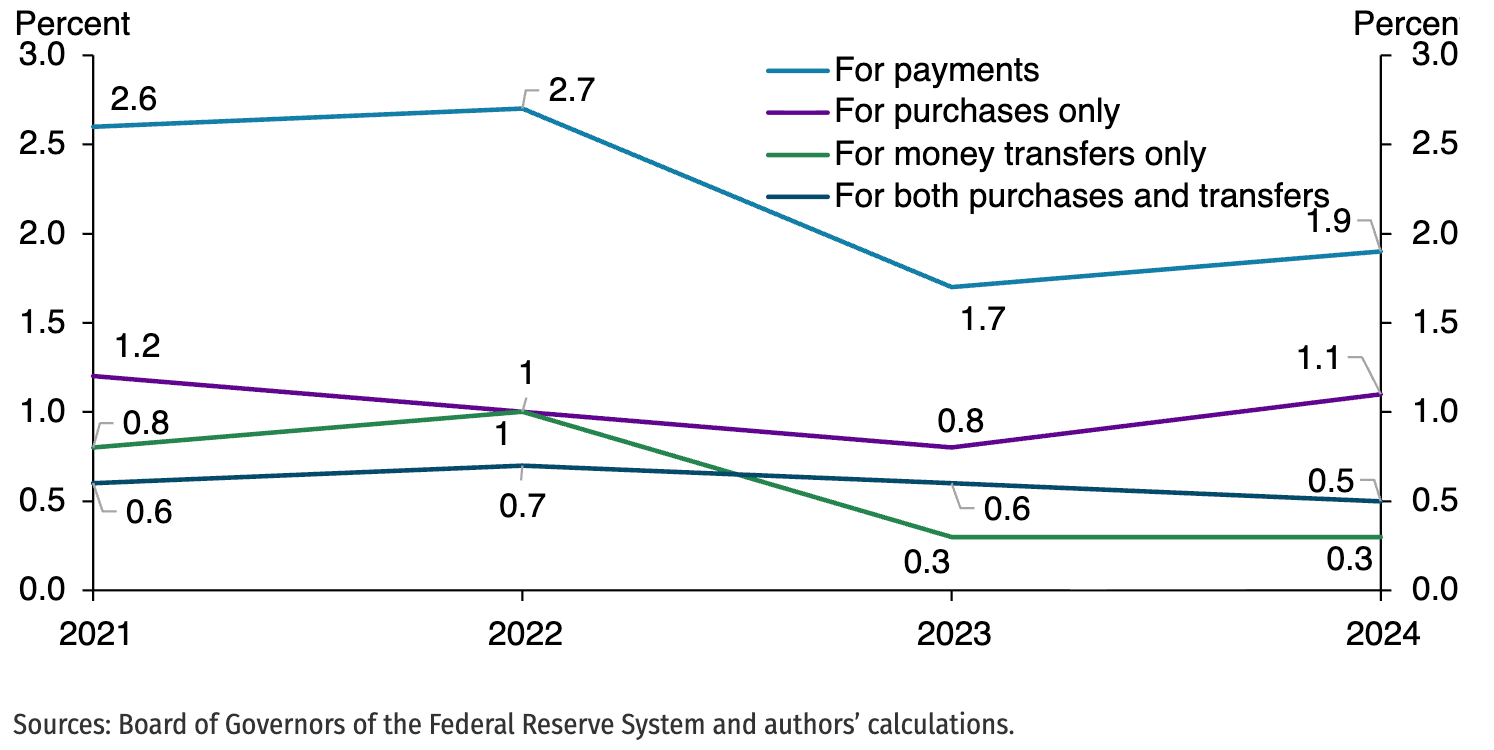
Yet payment behavior grows slowly. Research from the Federal Reserve Bank of Kansas City indicates that less than 2% of US consumers use cryptocurrency for payments, such as purchases or money transfers. Many people hold crypto as an investment or as a way to move value between services, and they still reach for bank cards at the supermarket.
Loyalty programs move in the opposite direction. A 2024 market intelligence report expects the global loyalty market to reach about $151 billion in 2024 and to grow toward roughly $215 billion by 2028.

When will the large base of crypto holders and the significant pool of loyalty spend begin to show up as simple weekday payments for groceries, rides and subscriptions?

Why wallet counts hide that answer

Projects usually point to easy success markers. Teams report the number of wallets, the number of cards they have issued and the amount of value in custody. These figures describe potential access, and they look strong on a slide, yet they fail to show whether people treat crypto as everyday money. A single enthusiast can create several wallets, keep balances on multiple exchanges and hold cards from more than one provider.

A tighter group of behavioral metrics gives a clearer view. Time-to-first-spend tracks how quickly new users complete a first successful payment after onboarding. Weekly active payers count people who make at least one payment in a week, and they highlight spending on groceries, transport or subscriptions. Fail and decline rate shows how many attempted payments fail at checkout, and it exposes gaps between onchain balances, offchain settlement and issuer risk rules.

Together, these three metrics form a product brief for builders. The ecosystem needs services that shorten time-to-first-spend, raise weekly active payer numbers and keep decline rates low at the places where people already shop.

What weekday spending looks like

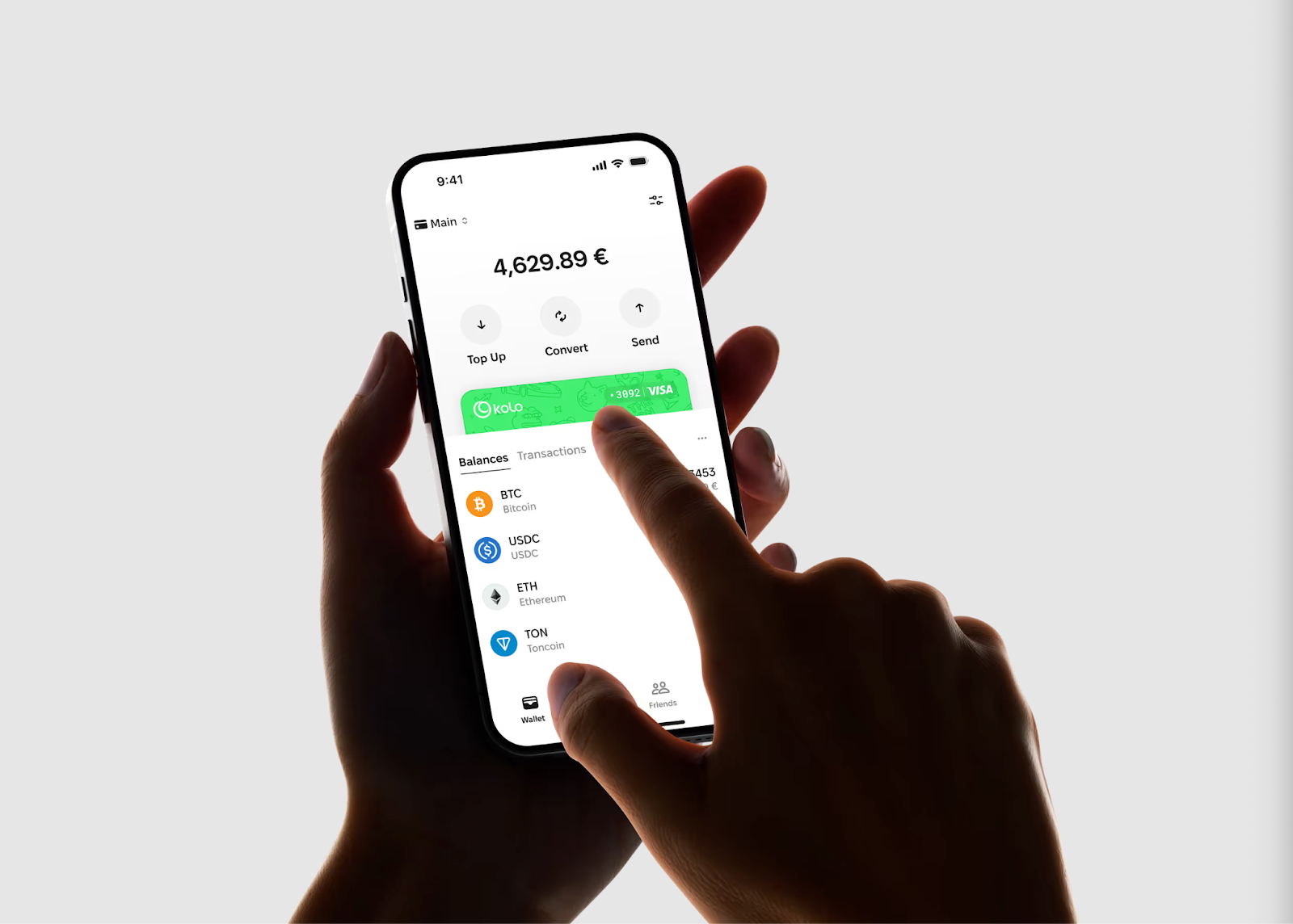
All-in-one crypto app Kolo offers a single solution to that brief. Kolo is a payment layer that bridges digital assets with everyday spending through a multi-network wallet and a Visa card that works with Apple Pay and Google Pay.

The newly launched Kolo Card has introduced a virtual Visa card that allows users to pay with cryptocurrency at millions of merchants and receive up to 5% cashback in Bitcoin (BTC). Users can pay for services such as Amazon, Instagram, Telegram, Netflix or Steam wherever Apple Pay or Google Pay is accepted.

Kolo has more than 100,000 wallets and around 50,000 monthly users. Most Kolo Card transactions fall into familiar spending categories such as restaurants, supermarkets, transport and digital subscriptions, with over 460,000 payments processed.

The typical Kolo transaction looks like a coffee run, a grocery top-up or a streaming renewal. Users move funds into the wallet, and they see that they can handle routine expenses with crypto in the background. That pattern matches the idea of weekly active payers.

Turning wallets into weekday payments

Kolo aligns its experience with these behavioral metrics. The product aims to help new users move from signup to the first successful payment in one flow and to keep using the card every week for familiar purchases. During checkout, the cryptocurrency is converted to the local currency with a single tap on the phone or smart watch of the user.

Key features include:

  • A digital wallet across 11 networks

  • Kolo Card for Apple Pay and Google Pay at millions of merchants

  • One-minute Know Your Customer (KYC) that unlocks the card and payment features

  • More than 15 different payment methods, including PIX, MPESA and many others

  • Up to 5% Bitcoin cashback that grows a BTC balance on every purchase

This structure aims for a short time-to-first-spend. A user can download the app, complete KYC in about a minute, receive a Kolo Card and start using it in under two minutes. They no longer need to move funds through multiple intermediaries.
Source: Kolo

Compliance and infrastructure sit at the core of that journey. Kolo operates with MiCA alignment and Travel Rule compliance, and it includes Anti-Money Laundering (AML) protections. These foundations help the team lower fail and decline rates because the card, the wallet and the back-end settlement share the same rules and risk view.

“For everyday users, stablecoins’ rise as a universal way to store and move value simply removes friction. Digital money finally exists in a digital form that feels natural,” said Pavel Luchkovskyi, CEO of Kolo, adding:

“Kolo just connects to this new layer: if someone holds a digital dollar or any virtual asset, they should be able to use it for regular payments as easily as tapping a card. And once that becomes normal, that’s when real adoption shows up.”

Kolo also uses rewards to reinforce everyday behavior. The Bitcoin cashback model links offchain payments to onchain savings. Users pay for ordinary purchases at physical or digital merchants, and they grow a BTC stack in parallel.

Rethinking success in the age of crypto payments

The story of crypto adoption often highlights wallet milestones and price charts. Another picture emerges when teams track how many people tap a phone on a Tuesday morning and complete a smooth crypto-backed payment.

Time-to-first-spend, weekly active payers and fail or decline rates give that picture structure. These metrics encourage builders and investors to treat UX, on-ramp design and merchant coverage as central levers for growth.

Kolo shows how this mindset looks in a live product. The company brings together a hybrid wallet, a globally accepted card, a variety of payment rails and Bitcoin rewards in one experience that fits existing payment habits. Cryptocurrency runs behind the scenes while users focus on their everyday lives.

İlgili Okumalar

a16z: AI's 'Amnesia', Can Continuous Learning Cure It?

The article "a16z: AI's 'Amnesia' – Can Continual Learning Cure It?" explores the limitations of current large language models (LLMs), which, like the protagonist in the film *Memento*, are trapped in a perpetual present—unable to form new memories after training. While methods like in-context learning (ICL), retrieval-augmented generation (RAG), and external scaffolding (e.g., chat history, prompts) provide temporary solutions, they fail to enable true internalization of new knowledge. The authors argue that compression—the core of learning during training—is halted at deployment, preventing models from generalizing, discovering novel solutions (e.g., mathematical proofs), or handling adversarial scenarios. The piece introduces *continual learning* as a critical research direction to address this, categorizing approaches into three paths: 1. **Context**: Scaling external memory via longer context windows, multi-agent systems, and smarter retrieval. 2. **Modules**: Using pluggable adapters or external memory layers for specialization without full retraining. 3. **Weights**: Enabling parameter updates through sparse training, test-time training, meta-learning, distillation, and reinforcement learning from feedback. Challenges include catastrophic forgetting, safety risks, and auditability, but overcoming these could unlock models that learn iteratively from experience. The conclusion emphasizes that while context-based methods are effective, true breakthroughs require models to compress new information into weights post-deployment, moving from mere retrieval to genuine learning.

marsbit1 saat önce

a16z: AI's 'Amnesia', Can Continuous Learning Cure It?

marsbit1 saat önce

Can a Hair Dryer Earn $34,000? Deciphering the Reflexivity Paradox in Prediction Markets

An individual manipulated a weather sensor at Paris Charles de Gaulle Airport with a portable heat source, causing a Polymarket weather market to settle at 22°C and earning $34,000. This incident highlights a fundamental issue in prediction markets: when a market aims to reflect reality, it also incentivizes participants to influence that reality. Prediction markets operate on two layers: platform rules (what outcome counts as a win) and data sources (what actually happened). While most focus on rules, the real vulnerability lies in the data source. If reality is recorded through a specific source, influencing that source directly affects market settlement. The article categorizes markets by their vulnerability: 1. **Single-point physical data sources** (e.g., weather stations): Easily manipulated through physical interference. 2. **Insider information markets** (e.g., MrBeast video details): Insiders like team members use non-public information to trade. Kalshi fined a剪辑师 $20,000 for insider trading. 3. **Actor-manipulated markets** (e.g., Andrew Tate’s tweet counts): The subject of the market can control the outcome. Evidence suggests Tate’sociated accounts coordinated to profit. 4. **Individual-action markets** (e.g., WNBA disruptions): A single person can execute an event to profit from their pre-placed bets. Kalshi and Polymarket handle these issues differently. Kalshi enforces strict KYC, publicly penalizes insider trading, and reports to regulators. Polymarket, with its anonymous wallet-based system, has historically been more permissive, arguing that insider information improves market accuracy. However, it cooperated with authorities in the "Van Dyke case," where a user traded on classified government information. The core paradox is reflexivity: prediction markets are designed to discover truth, but their financial incentives can distort reality. The more valuable a prediction becomes, the more likely participants are to influence the event itself. The market ceases to be a mirror of reality and instead shapes it.

marsbit2 saat önce

Can a Hair Dryer Earn $34,000? Deciphering the Reflexivity Paradox in Prediction Markets

marsbit2 saat önce

İşlemler

Spot
Futures

Popüler Makaleler

WL Nedir

I. Proje TanıtımıWorldLand, Ethereum ekosistemini geliştirmek için tasarlanmış, Ethereum'un L2 veya yan zinciridir.II. Token Bilgileri1) Temel BilgilerToken adı: WL (WorldLand)III. İlgili BağlantılarWeb sitesi:https://worldland.foundation/Keşif Araçları:https://bscscan.com/address/0x8aaB31fbc69C92fa53f600910Cf0f215531F8239Sosyal Medya:https://x.com/WorldLand_space Not: Proje tanıtımı, resmi proje ekibi tarafından yayımlanan veya sağlanan materyallerden gelmektedir, yalnızca referans amaçlıdır ve yatırım tavsiyesi niteliği taşımaz. HTX, ortaya çıkan doğrudan veya dolaylı kayıplardan sorumluluk kabul etmez.

161 Toplam GörüntülenmeYayınlanma 2026.03.28Güncellenme 2026.03.28

WL Nedir

WL Nasıl Satın Alınır

HTX.com’a hoş geldiniz! WorldLand (WL) satın alma işlemlerini basit ve kullanışlı bir hâle getirdik. Adım adım açıkladığımız rehberimizi takip ederek kripto yolculuğunuza başlayın. 1. Adım: HTX Hesabınızı OluşturunHTX'te ücretsiz bir hesap açmak için e-posta adresinizi veya telefon numaranızı kullanın. Sorunsuzca kaydolun ve tüm özelliklerin kilidini açın. Hesabımı Aç2. Adım: Kripto Satın Al Bölümüne Gidin ve Ödeme Yönteminizi SeçinKredi/Banka Kartı: Visa veya Mastercard'ınızı kullanarak anında WorldLand (WL) satın alın.Bakiye: Sorunsuz bir şekilde işlem yapmak için HTX hesap bakiyenizdeki fonları kullanın.Üçüncü Taraflar: Kullanımı kolaylaştırmak için Google Pay ve Apple Pay gibi popüler ödeme yöntemlerini ekledik.P2P: HTX'teki diğer kullanıcılarla doğrudan işlem yapın.Borsa Dışı (OTC): Yatırımcılar için kişiye özel hizmetler ve rekabetçi döviz kurları sunuyoruz.3. Adım: WorldLand (WL) Varlıklarınızı SaklayınWorldLand (WL) satın aldıktan sonra HTX hesabınızda saklayın. Alternatif olarak, blok zinciri transferi yoluyla başka bir yere gönderebilir veya diğer kripto para birimlerini takas etmek için kullanabilirsiniz.4. Adım: WorldLand (WL) Varlıklarınızla İşlem YapınHTX'in spot piyasasında WorldLand (WL) ile kolayca işlemler yapın.Hesabınıza erişin, işlem çiftinizi seçin, işlemlerinizi gerçekleştirin ve gerçek zamanlı olarak izleyin. Hem yeni başlayanlar hem de deneyimli yatırımcılar için kullanıcı dostu bir deneyim sunuyoruz.

207 Toplam GörüntülenmeYayınlanma 2026.03.28Güncellenme 2026.03.28

WL Nasıl Satın Alınır

BASED Nasıl Satın Alınır

HTX.com’a hoş geldiniz! Based (BASED) satın alma işlemlerini basit ve kullanışlı bir hâle getirdik. Adım adım açıkladığımız rehberimizi takip ederek kripto yolculuğunuza başlayın. 1. Adım: HTX Hesabınızı OluşturunHTX'te ücretsiz bir hesap açmak için e-posta adresinizi veya telefon numaranızı kullanın. Sorunsuzca kaydolun ve tüm özelliklerin kilidini açın. Hesabımı Aç2. Adım: Kripto Satın Al Bölümüne Gidin ve Ödeme Yönteminizi SeçinKredi/Banka Kartı: Visa veya Mastercard'ınızı kullanarak anında Based (BASED) satın alın.Bakiye: Sorunsuz bir şekilde işlem yapmak için HTX hesap bakiyenizdeki fonları kullanın.Üçüncü Taraflar: Kullanımı kolaylaştırmak için Google Pay ve Apple Pay gibi popüler ödeme yöntemlerini ekledik.P2P: HTX'teki diğer kullanıcılarla doğrudan işlem yapın.Borsa Dışı (OTC): Yatırımcılar için kişiye özel hizmetler ve rekabetçi döviz kurları sunuyoruz.3. Adım: Based (BASED) Varlıklarınızı SaklayınBased (BASED) satın aldıktan sonra HTX hesabınızda saklayın. Alternatif olarak, blok zinciri transferi yoluyla başka bir yere gönderebilir veya diğer kripto para birimlerini takas etmek için kullanabilirsiniz.4. Adım: Based (BASED) Varlıklarınızla İşlem YapınHTX'in spot piyasasında Based (BASED) ile kolayca işlemler yapın.Hesabınıza erişin, işlem çiftinizi seçin, işlemlerinizi gerçekleştirin ve gerçek zamanlı olarak izleyin. Hem yeni başlayanlar hem de deneyimli yatırımcılar için kullanıcı dostu bir deneyim sunuyoruz.

222 Toplam GörüntülenmeYayınlanma 2026.03.30Güncellenme 2026.03.30

BASED Nasıl Satın Alınır

Tartışmalar

HTX Topluluğuna hoş geldiniz. Burada, en son platform gelişmeleri hakkında bilgi sahibi olabilir ve profesyonel piyasa görüşlerine erişebilirsiniz. Kullanıcıların A (A) fiyatı hakkındaki görüşleri aşağıda sunulmaktadır.

活动图片