The Playground of Whales: Why Retail Investors Are Fleeing DeFi

marsbit2026-01-27 tarihinde yayınlandı2026-01-27 tarihinde güncellendi

Özet

The article "Whales' Playground: Why Retail Investors Are Fleeing DeFi" argues that the era of decentralized finance as a tool for financial democratization has ended. Despite lower transaction costs due to Layer 2 solutions and reduced Ethereum gas fees, retail participation is declining. Key reasons include: - **Low Gas Trap**: Cheap transactions have turned DeFi into a high-effort, low-reward "digital factory," where users perform repetitive tasks for minimal airdrop rewards. - **Unpredictable Rules**: Projects frequently change terms retroactively (e.g., altering tokenomics, adding lock-ups, or labeling users as "sybils"), violating the "code is law" principle and eroding trust. - **Lock-up Traps**: High APY incentives often lock users’ funds long-term, while whales and insiders exit early, leaving retail investors exposed to token devaluation. - **Risk-Reward Mismatch**: Low returns (5-10%) come with high risks like smart contract exploits, phishing, depegging, and rug pulls, making DeFi less attractive than holding core assets like Bitcoin. The conclusion urges retail investors to protect capital, avoid futile interactions, and seek better opportunities elsewhere, as DeFi has become a playground dominated by whales and manipulative projects.

Author: Chen Xiaomeng

The era of DeFi that once championed financial empowerment has, in reality, come to an end.

A few years ago, we were complaining that the几十dollar Gas fees on the Ethereum mainnet were blocking retail investors. Now, Layer 2 has become a ghost chain, and even the mainnet's Gas fees have dropped to almost negligible levels after upgrades.

The barrier is gone. We expected a狂欢of retail investors, but instead, we got a silent mass exodus.

Why? Because everyone has finally come to their senses:

In this market, we take on the stress of selling cocaine, but only earn the profits of selling flour.

I. The Low Gas Trap: From Noble Chain to Electronic Factory
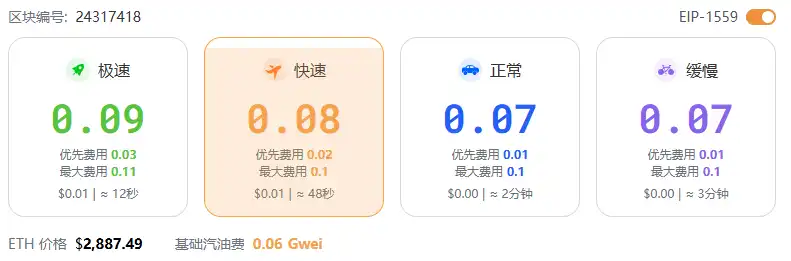
When Gas was expensive, it at least helped filter out low-quality interactions, forcing you to carefully consider every move. Now that Gas is cheap, DeFi has turned into a massive electronic assembly line.

Because interaction costs are low, projects assume you should perform a massive number of interactions. So, for that tiny potential airdrop expectation, retail investors are forced to become skilled laborers on the chain: cross-chain, swap, stake, provide LP... mechanically repeating these actions hundreds of times a day.

But this doesn't lead to higher returns. Instead, low Gas has become a tool for projects to infinitely inflate their activity metrics.

This is on-chain manual labor.

II. The Capricious Dictator: Code is No Longer Law

"Code is Law" was once DeFi's most captivating narrative. But now, DeFi protocols not only have backdoors in their code, but the teams' words are also a sickle随时waiting to fall.

This is the most hated pain point for retail investors today—the uncertainty of the rules.

Project teams have long learned how to be ruthless. They invented impossible-to-fulfill "points systems," like carrots dangling in front of a donkey, luring you to constantly invest money and time. After you've diligently grinded for half a year, eagerly awaiting the payout, the team suddenly issues an announcement:

  • "For the fairness of the community, we will strictly crack down on Sybil attacks."

  • "Our VE model needs to be modified."

  • "For the development of the community, we have added a 45-day cooldown period."

Yesterday you were their early supporter; today, because your IP address changed slightly or your funds were held for one day less, you are labeled a Sybil. The right to interpret the rules belongs solely to the project team—they change them as they please.

This feeling is like going to work for a boss who promised daily wages. After you finish the job, the boss suddenly announces: "For the long-term development of the company, we're withholding your pay. We'll see how you perform next year."

In traditional business, this is called fraud; in DeFi, it's called DAO governance.

III. The Locked-In Prisoner: Capital Hunting Under High APY
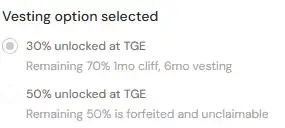
To maintain token prices, DeFi protocols are now extremely keen on locking users' funds. Various Ve models keep emerging, often requiring locks of one year, two years, or even four years.

Projects lure you with extremely tempting APY. It looks like high returns, but the outcome is already written:

  • Liquidity dries up: Your principal is locked, unable to move.

  • Whales front-run: Project teams, early investors, and whales often have special vesting schedules or can hedge their profits off-chain.

  • Price tanks to zero: When you can finally unlock, you find that while you earned a 50% return in token terms, the price has already dropped by 90%.

The essence of locking is retail investors using their liquidity to help whales cash out. You covet the interest; they eye your principal.

IV. Extreme Mismatch of Risk and Reward

Let's do some realistic math.

Current DeFi protocols, excluding those shady projects that might rug pull at any moment, offer stablecoin yields of only around 5% - 10% for mainstream ones. This seems higher than banks, but what are the risks behind it?

  • Smart contract vulnerabilities: Hackers could drain the pool at any time.

  • Front-end hijacking: Phishing sites are everywhere.

  • Depegging risk: Algorithmic stablecoins or bridged assets can go to zero instantly.

  • Project Rug Pull: Even projects with billions in TVL can disappear overnight with the funds.

Earning a 5% return while bearing a 100% risk of losing your principal. This is a classic case of high risk for low reward. This yield doesn't even cover the mental distress fee from the constant anxiety during operations. In comparison, simply buying and holding Bitcoin, or even using centralized exchange理财products, offers far better value than折腾on-chain.

Conclusion: Refuse to Become On-Chain Fuel

DeFi's innovation has stalled, but its harvesting tactics have evolved.

At this stage, for most retail investors with less than $100,000, DeFi has lost its golden attribute. It is no longer a wilderness full of opportunities, but a playground carefully designed by whales and unscrupulous project teams.

Every button, every rule, every lock-up suggestion here is designed to诱you into handing over your chips.

So, the best strategy now might be just one: Admit that current DeFi truly isn't working. Stop those meaningless interactions. Stop locking up funds for meager returns. Protect your principal. Convert it into truly valuable core assets, and then watch coldly as the whales fight amongst themselves.

Stop being an on-chain laborer. Your time and capital deserve a better place.

İlgili Sorular

QWhy are retail investors leaving DeFi despite lower transaction fees?

ARetail investors are leaving because low fees have turned DeFi into a high-effort, low-reward environment where they perform repetitive tasks for minimal returns, while project owners exploit the system to inflate engagement metrics without fair compensation.

QHow do DeFi projects change rules arbitrarily, and what impact does this have?

ADeFi projects frequently alter rules, such as modifying tokenomics, adding lock-up periods, or labeling users as sybils, which creates uncertainty and distrust, making investors feel cheated after investing time and resources based on initial promises.

QWhat risks do investors face with high APY lock-up schemes in DeFi?

AInvestors risk illiquidity, front-running by whales, and significant token price depreciation, often resulting in capital losses despite high nominal yields, as locked assets become vulnerable to market manipulations and project failures.

QHow does risk-reward mismatch discourage participation in DeFi?

AWith stablecoin yields around 5-10%, investors bear risks like smart contract hacks, front-end attacks, stablecoin depegging, and rug pulls, making the potential returns insufficient to justify the high probability of total capital loss compared to safer alternatives like Bitcoin or centralized exchanges.

QWhat is the author's recommended strategy for retail investors in the current DeFi landscape?

AThe author advises retail investors to stop futile interactions and lock-ups, preserve capital, and allocate it to core assets like Bitcoin, avoiding DeFi's exploitative structures dominated by whales and predatory projects.

İlgili Okumalar

The Billionaires Behind the Most Expensive Midterm Election in History

"The Most Expensive Midterm Elections and Their Billionaire Backers" This analysis details the unprecedented scale of spending in the 2026 midterm elections, highlighting the key billionaire donors shaping the political landscape. Jeff Yass, founder of Susquehanna International Group, has contributed over $81 million, ranking third among individual donors behind George Soros ($102.6M) and Elon Musk ($84.8M). Yass is a major donor to Trump's MAGA Inc. and supports school choice and various candidates. Overall, federal committees have raised over $4.7 billion this cycle, with political ad spending projected to reach $10.8 billion. Republican-aligned groups are significantly out-raising their Democratic counterparts. "Dark money" from undisclosed sources continues to grow. The core stakes involve control of Congress and policy direction for Trump's final term. Donors are also motivated by specific issues: Sergey Brin and Chris Larsen are funding opposition to a proposed California wealth tax and supporting crypto-friendly policies. Other top donors include OpenAI's Greg Brockman and his wife Anna ($50M total to MAGA Inc. and an AI-focused PAC), Richard Uihlein ($45.3M to conservative causes), venture capitalists Marc Andreessen and Ben Horowitz (each over $44M to crypto/AI PACs and MAGA Inc.), Miriam Adelson ($42.6M to GOP leadership PACs), Paul Singer ($33.9M), and Diane Hendricks ($25.8M to MAGA Inc.). The article notes that the peak fundraising period is still ahead, with major primaries approaching.

marsbitŞimdi

The Billionaires Behind the Most Expensive Midterm Election in History

marsbitŞimdi

The Largest IPO in History Is Approaching, Surpassing SpaceX, 28 Years of AI Self-Iteration, Countdown to Intelligence Explosion

"Anthropic Nears Trillion-Dollar IPO, Fueled by Explosive Growth and 2028 'Intelligence Explosion' Warning Anthropic is considering a deal valuing the AI company near $1 trillion, potentially leading to one of the largest IPOs ever and surpassing SpaceX. Its revenue has skyrocketed, with Annual Recurring Revenue (ARR) reaching $45 billion in May 2026—a 500% increase in just five months. This vertical growth curve is attributed to its key products, Claude Code and Cowork, dominating AI coding and enterprise collaboration. Beyond commercial success, co-founder Jack Clark issued a pivotal warning in an interview: there is a greater than 50% chance that by the end of 2028, AI systems will achieve recursive self-improvement—the ability to autonomously build a 'better version' of themselves, initiating an 'intelligence explosion.' This prophecy underpins the company's astronomical valuation, as the market prices in the potential for transformative and disruptive AI. Further signaling its ambition, Anthropic formed a $1.5 billion joint venture with Goldman Sachs and Blackstone, aiming to disrupt traditional consulting firms like McKinsey by deploying Claude AI for complex strategic work. This move tests AI's capacity to replace high-level cognitive labor, a precursor to its predicted autonomous evolution. The narrative presents a dual future: unprecedented economic opportunity alongside significant risks like economic restructuring and security threats. Anthropic's meteoric rise and Clark's 2028 prediction frame the coming years as a countdown to a potential technological singularity."

marsbit12 dk önce

The Largest IPO in History Is Approaching, Surpassing SpaceX, 28 Years of AI Self-Iteration, Countdown to Intelligence Explosion

marsbit12 dk önce

Has Hook Summer Really Arrived? sato, Lo0p, FLOOD Ignite the New Narrative of Uniswap v4

"Hook Summer" Arrives? Sato, Lo0p, FLOOD Ignite Uniswap v4 Narrative Amidst a slight market recovery, attention within the Ethereum ecosystem has shifted to Meme coins built on Uniswap v4's Hook protocol. Following ASTEROID, tokens like sato, sat1, Lo0p, and FLOOD have become market focal points, with market caps ranging from millions to tens of millions, bringing concentrated liquidity to a narrative-dry market. Uniswap v4 Hooks are "plugin smart contracts" that allow developers to inject custom logic at key points in a liquidity pool's lifecycle (initialization, adding/removing liquidity, swaps, etc.), making the AMM programmable. Recent representative projects include: * **sato**: Market cap peaked over $38M; uses a v4 curve mechanism for minting/burning, locking ETH as reserve. * **sat1**: Market cap briefly exceeded $10M, positioning as an "optimized sato," but later declined significantly. * **Lo0p**: Market cap neared $6.6M; a "lending AMM protocol" allowing users to borrow ETH against deposited LO0P tokens without immediate selling pressure. * **FLOOD**: Market cap approached $6M; channels trading reserves into Aave v3 to generate yield, which is retained in the pool. The emergence of these Hook-based tokens could drive long-term growth for the Uniswap ecosystem by attracting users and liquidity to v4 pools. Combined with Uniswap's activated fee switch (partially used to burn UNI), the long-term outlook for UNI appears positive. However, short-term UNI price appreciation is not directly guaranteed. Factors include the sustainability and lifecycle of these new tokens, their price volatility, overall market conditions, and regulatory pressures. Currently, Uniswap v4's TVL ($595M) lags behind v3 and v2, indicating Hook adoption still requires time to mature. In summary, the Hook ecosystem serves as "long-term nourishment" for UNI, but acts more as a "catalyst" than a direct "booster" in the short term. Note: These are early-stage experimental tokens and may carry unknown risks.

marsbit37 dk önce

Has Hook Summer Really Arrived? sato, Lo0p, FLOOD Ignite the New Narrative of Uniswap v4

marsbit37 dk önce

İşlemler

Spot
Futures
活动图片