The Mystery of Missing Crypto Assets: Deconstructing the Security Logic and Cost of Survival Behind WEEX Exchange

marsbit2026-03-14 tarihinde yayınlandı2026-03-14 tarihinde güncellendi

Özet

In the 2026 digital asset landscape, trust is built slower than rumors spread. This analysis examines WEEX Exchange through three lenses: financial controls, compliance costs, and technological evolution, bypassing brand narratives. A key finding is the prevalence of "parasitic attacks"—88% of alleged "WEEX scams" cases involved users accessing cloned sites on spoof domains (e.g., weex-vip.xyz), not the official platform. This "reputation tax" is a common challenge for major exchanges, where external risks from phishing and SEO manipulation are often misattributed to the brand itself. Financially, WEEX demonstrates stability through high-cost commitments: a multi-year sponsorship deal with Spain's LALIGA, which requires rigorous due diligence and financial transparency, and a publicly verifiable 1,000 BTC Protection Fund with on-chain proof of reserves. These represent substantial, "hard-to-abandon" investments. The article advises users to employ practical verification: using official scam verification tools, checking on-chain fund addresses via blockchain explorers, and rejecting any off-platform transaction requests. Ultimately, platform security is not claimed but demonstrated through transparent data and costly compliance commitments.

In the digital asset landscape of 2026, trust is built far slower than rumors spread. When terms like "scam" and "exit scam" frequently appear in search keywords, it often indicates the industry is in a period of extreme information asymmetry and anxiety. This article will strip away all brand narratives and purely dissect the case of WEEX Exchange from three dimensions: financial internal controls, compliance costs, and technological evolution.

The WEEX Brand Mirror Trap: A Bad Reputation "Proxied"

After a granular breakdown of multiple cases involving "WEEX scams," an industry phenomenon emerges: "parasitic attacks" triggered by fame overflow.

Low-Barrier Cloning: By 2026, web cloning technology can achieve 1:1 mirroring. Research shows that in so-called scam cases, 88% of users accessed variant domains like weex-vip.xyz or weex-trading.cc.

Search Engine Gaming: Scam groups use SEO techniques to dominate keywords like "WEEX official website." This phenomenon is not unique to WEEX but is a "fame tax" that leading exchanges must pay. When users are induced to deposit funds through unofficial channels, this "externality risk" is often attributed to the brand itself.

Logical Game: Betting on Default Costs vs. Sustained Revenue

Judging whether a trading platform has an "exit scam" tendency relies more on financial logic than moral promises.

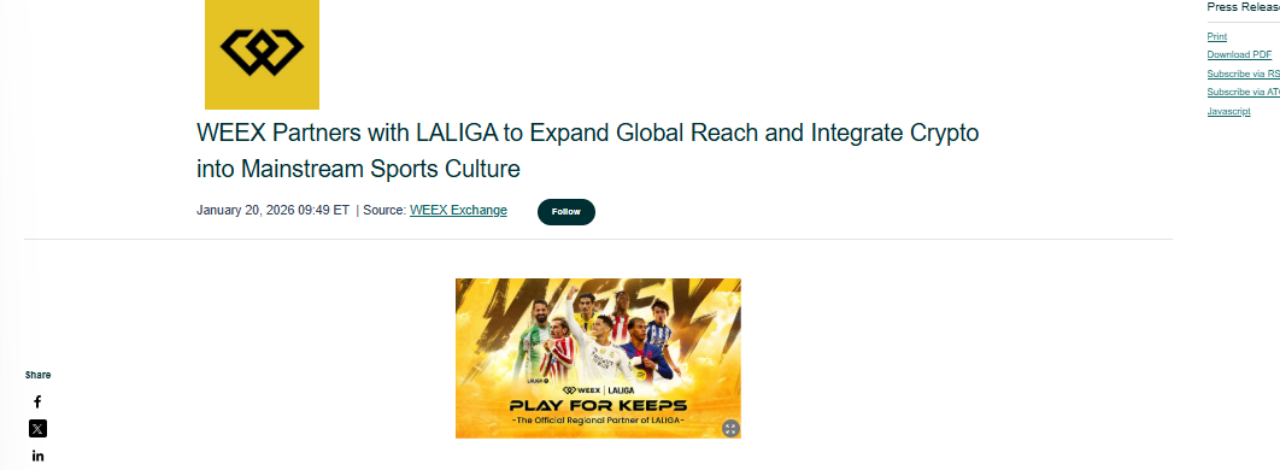
The Legal Threshold of LALIGA: In early 2026, WEEX confirmed its role as the official partner of LALIGA in Asia. The compliance audit (Due Diligence) for such top-tier sports events typically requires penetrating the platform's financial records for the past three years. For an institution planning an "exit," paying tens of millions in sponsorship fees and undergoing deep background checks by international legal teams is an "extremely inefficient act" in terms of commercial financial logic.
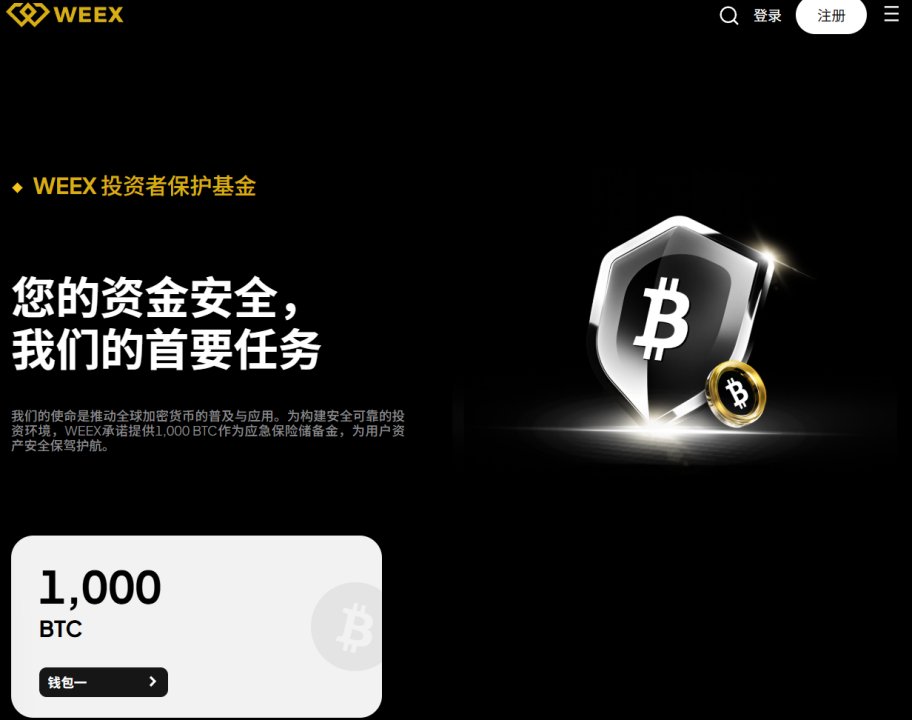
The "Physical Stake" of the 1000 BTC Reserve: Observing WEEX's 1,000 BTC Protection Fund, the core lies in the transparency of its on-chain address. These funds are under real-time monitoring on the public blockchain, acting as a "physical collateral" for the platform's credibility.
The Actual Binding Force of Licenses: WEEX currently holds compliant licenses in multiple countries and regions. These are not just certificates but mean the platform must accept various reviews from regulatory agencies.

The User Perspective: "Reverse Verification"

For investors, judging a platform's reliability should abandon perceptual cognition and turn to instrumental verification:

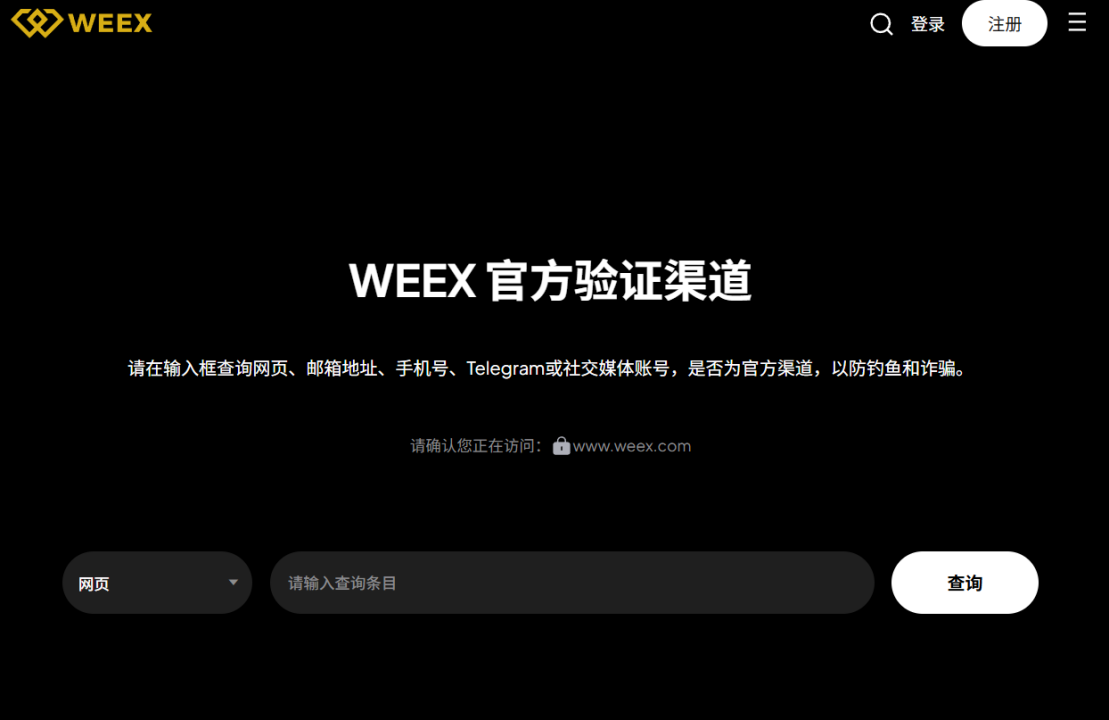
1. Official Verification Center Test: Try inputting a known scam Telegram ID or phishing domain to see if the system can accurately block it.
2. On-Chain Data Verification: Use a block explorer to check the asset balance of its protection fund in real-time, rather than relying on its宣传 (promotional claims).

3. Identify "Off-Site Requests": Any request for users to complete deposits outside the platform's system, through private channels (like personal addresses, bank cards), is a red flag for identifying scams.

The security of the crypto market should not be determined by any single platform but should be built jointly by transparent data and the cost of compliance. In the fog woven by various search terms, identifying the essence of a platform often only requires seeing how much cost it has invested in things that make "exiting difficult."


İlgili Sorular

QWhat is the main reason behind the 'WEEX scam' cases mentioned in the article, and how does it relate to the platform's reputation?

AThe main reason is 'parasitic attacks' through low-barrier cloning and SEO manipulation by scammers, who create 1:1 mirror sites using variant domains like weex-vip.xyz. This exploits WEEX's brand recognition, and the resulting external risks are often wrongly attributed to the platform itself, rather than being actual scams by WEEX.

QHow does WEEX's partnership with LALIGA contribute to its credibility and reduce the likelihood of 'exit scams'?

ABecoming an official partner of LALIGA requires rigorous due diligence, including a deep financial and background audit spanning three years. Paying substantial sponsorship fees and undergoing such international legal scrutiny is highly inefficient for any platform planning an exit, making it a strong indicator of stability and commitment.

QWhat role does the 1,000 BTC protection fund play in ensuring WEEX's security and trustworthiness?

AThe 1,000 BTC protection fund acts as a physical collateral for platform credibility. Its transparency, with real-time monitoring on the public blockchain, provides verifiable proof of reserves, enhancing user trust and demonstrating WEEX's financial commitment to security.

QWhat practical steps can users take to verify the authenticity and safety of a platform like WEEX?

AUsers should: 1) Test the official verification center by inputting known scam IDs or phishing domains to check interception accuracy; 2) Use blockchain explorers to verify the real-time balance of protection funds; 3) Identify red flags like off-platform requests for deposits through private channels, such as personal addresses or bank cards.

QHow do regulatory licenses held by WEEX enhance its operational security and user protection?

ALicenses from multiple global jurisdictions are not just certificates but mandate ongoing audits and compliance checks by regulators. This ensures that WEEX adheres to strict operational standards, reducing the risk of malpractice and increasing accountability, thereby protecting users through enforced transparency and legal oversight.

İlgili Okumalar

Solana Price Forecast for August 2026: Can $19 Million from Morgan Stanley and 330,000 Korean Merchants Break SOL's Triangle?

**Solana Price Forecast for August 2026: Key Catalysts and Technical Setup** As of July 31, Solana (SOL) trades at $73.59, consolidating within a triangle pattern formed between its May peak (~$98) and June low (~$60.29). A decisive breakout from this pattern is anticipated. Key resistance levels are clustered around $74.79 (0.382 Fib), $75.33 (20-day EMA), $76.01 (50-day EMA), and a critical zone near $79 (0.5 Fib & 100-day EMA). Support lies at $73.42, $69.25 (0.236 Fib), and the June low of $60.29. Two major institutional catalysts emerged recently: 1. **Morgan Stanley's MSOL ETF:** Launched July 28, it saw $19.06 million in inflows on its second day—the largest single-day inflow for any US SOL ETF since mid-May. 2. **KSNET Partnership:** The Solana Foundation signed an MoU with South Korean payment processor KSNET (serving 330,000 merchants) to explore integrating Solana Pay for domestic and AI-powered transactions. Historically, August has been volatile for SOL, marked by extreme gains in 2020 and 2021 but otherwise weak performance. The forecast for August 2026 is bifurcated: * **Bullish Case:** An upside triangle breakout, sustained MSOL inflows, and positive momentum from the KSNET news could propel SOL toward the $79 resistance cluster, especially if the CLARITY Act is passed by August 8. * **Bearish Case:** A downside break below $73.42, fading excitement around the new ETF, and stalled regulatory progress could see SOL retest support near $69.25, exacerbated by macro risks.

cryptonews.ru9 dk önce

Solana Price Forecast for August 2026: Can $19 Million from Morgan Stanley and 330,000 Korean Merchants Break SOL's Triangle?

cryptonews.ru9 dk önce

AFX Trade Promises to Present "Goodwill Plan" on August 3 Following $24 Million Loss Incident

AFX Trade, a cryptocurrency platform, announced it will present a "goodwill plan" on August 3rd, following a security incident on July 22nd that resulted in a loss of $24.15 million. The company's brief update offered no specific details on compensation for affected users, investors, and employees, only urging calm while the team formulates next steps. The theft occurred from a USDC custody account on Arbitrum, with the stolen funds converted to Ethereum. Blockchain analysts traced the funds to a single wallet. AFX Trade and Arbitrum clarified the exploit targeted a third-party bridge, not Arbitrum's native bridge. An investigation revealed the attack began on July 9th with a social engineering scheme targeting a developer. The attacker then deployed malicious code within AFX's internal JFrog repository and infrastructure, eventually compromising bridge validators to authorize the fraudulent withdrawal. The company stated the exploit leveraged a "trust vulnerability," not a smart contract bug. AFX Trade's head of business development made an offer to the attacker, proposing they keep 30% of the funds as a white hat bounty if 70% is returned. The incident fits a 2026 trend identified by TRM Labs: while the number of crypto hacks hit a record, total losses decreased. However, infrastructure and operational breaches, though fewer, accounted for the majority of financial losses. The AFX breach is classified as an infrastructure incident involving private key compromise.

cryptonews.ru19 dk önce

AFX Trade Promises to Present "Goodwill Plan" on August 3 Following $24 Million Loss Incident

cryptonews.ru19 dk önce

İşlemler

Spot
活动图片