The Guy Who Free-Solo Climbed Taipei 101 Yesterday Is a Spokesperson for a Trading Software

marsbit2026-01-26 tarihinde yayınlandı2026-01-26 tarihinde güncellendi

Özet

Alex Honnold, a 40-year-old professional rock climber, free-soloed Taipei 101—a 508-meter, 101-story skyscraper—in a live-streamed event watched by millions. Known for his historic free solo ascent of El Capitan documented in the Oscar-winning film *Free Solo*, Honnold is also a brand ambassador for TradingView, a popular financial charting and trading platform. The partnership, which began in 2021 under the slogan “Look first / Then leap,” may seem unusual at first. However, Honnold’s approach to risk aligns closely with prudent trading principles. He avoids uncertainty and emphasizes meticulous preparation, having spent nearly a decade planning his El Capitan climb and rehearsing each move repeatedly. He views fear not as a barrier to overcome, but as a signal that he isn’t yet prepared. His method is defined by extreme risk management: extensive practice, patience for ideal conditions, and eliminating unpredictability. This contrasts sharply with impulsive trading behaviors common in meme stocks and leverage trading, where decisions are often made without analysis or risk calculation. Ultimately, TradingView’s choice of Honnold symbolizes survival—the goal isn’t just to reach the top, but to do so safely and live to continue climbing. Similarly, in trading, long-term success depends on preparation, discipline, and managing risk, not blind courage.

Written by: Curry, Deep Tide TechFlow

Yesterday, millions of people worldwide watched a live stream: a man free-solo climbing Taipei 101.

No ropes, no protection, 508 meters, 101 floors. Netflix streamed it live for 1 hour and 31 minutes, and he successfully reached the top.
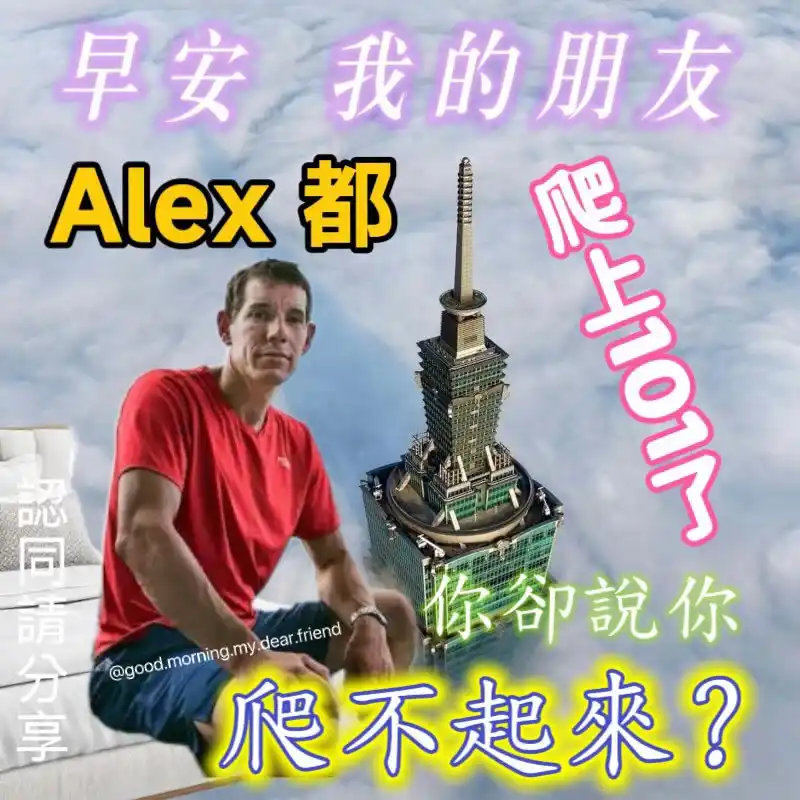
This man is Alex Honnold, 40 years old, a professional rock climber.

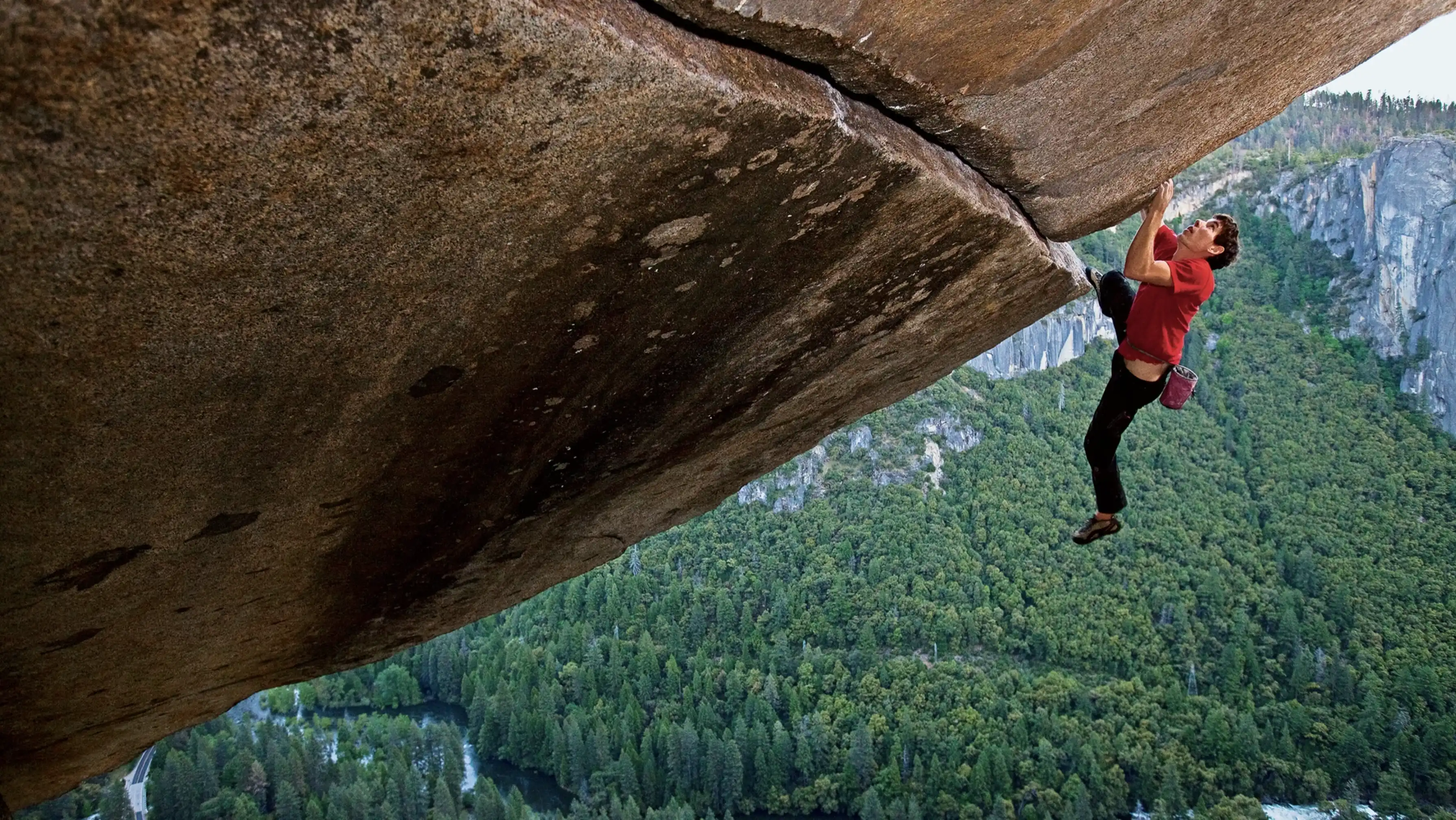
In 2017, he free-solo climbed El Capitan in Yosemite, a 900-meter-high granite rock face, without any protective equipment. The documentary Free Solo recorded this feat and won an Oscar.

The New York Times' review at the time called it: one of the greatest athletic achievements in human history.

But that's not what I want to talk about today.

I don't know if you noticed a detail: Alex Honnold is actually the spokesperson for the famous trading software TradingView, essential for trading stocks and crypto.

TradingView, used for chart analysis by traders in stocks, crypto, and forex, signed Alex in 2021 during a brand upgrade. The slogan at the time was "Look first / Then leap."

Look first, then leap.
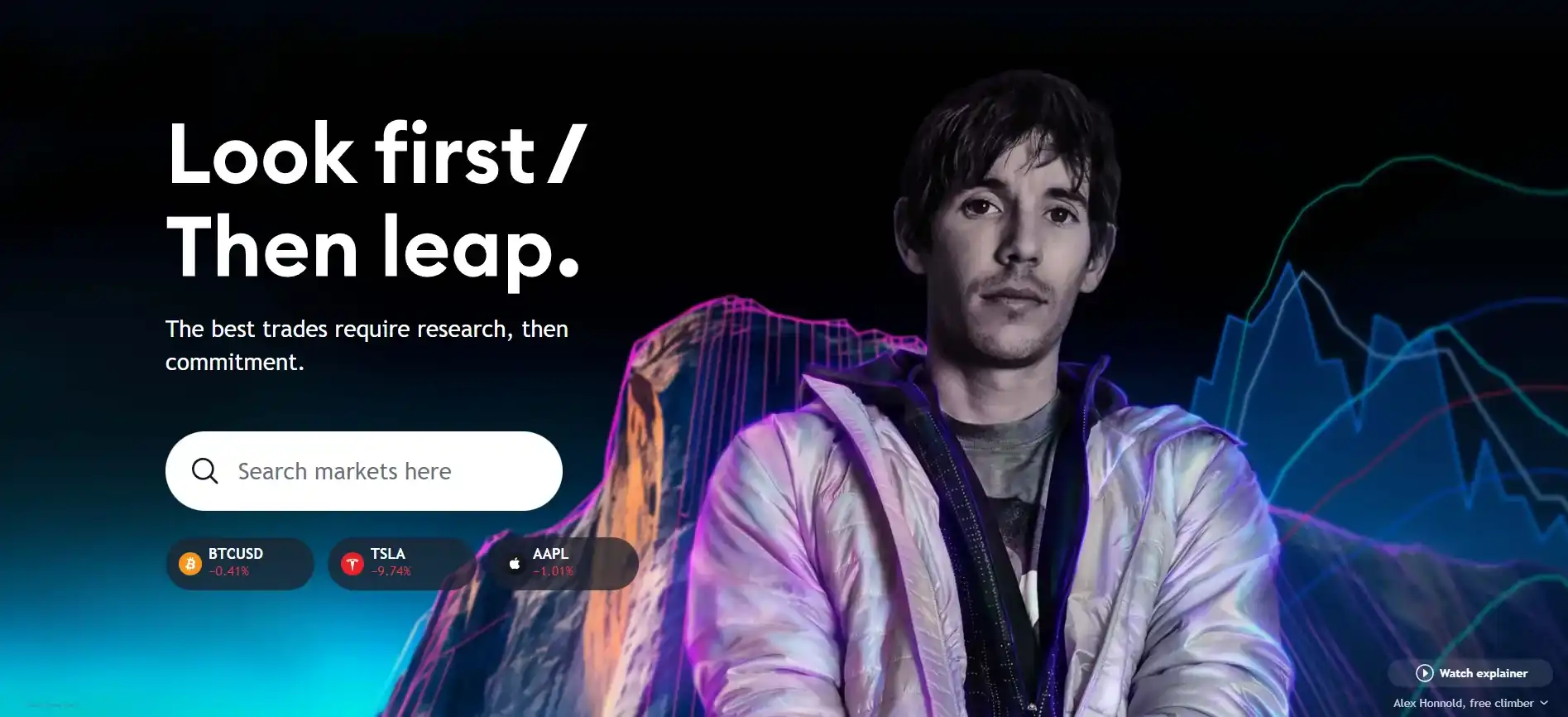
At first glance, it seems strange for a trading software to choose a free solo climber as a spokesperson.

What are they demonstrating—look at the K-line and then jump? But upon closer inspection, this cross-border choice of spokesperson is actually quite accurate.

Alex once discussed his understanding of "risk" in an interview with TradingView. He said:

"Risk to me means uncertainty, means rolling the dice to see the outcome. That's exactly what I try to avoid in climbing."

What Alex does, free solo climbing, more professionally called Free Solo, looks like an extreme sport, like risking his life.

But if you've seen the documentary of him climbing that 900-meter granite rock, you'll find that Alex's methodology is actually extremely conservative.

For that climb, he spent nearly a decade conceptualizing it and a year and a half in actual preparation. He climbed every section of the route dozens of times with ropes until he knew every handhold and foothold by heart, even with his eyes closed.

He carried a notebook with him, recording details of every critical move.
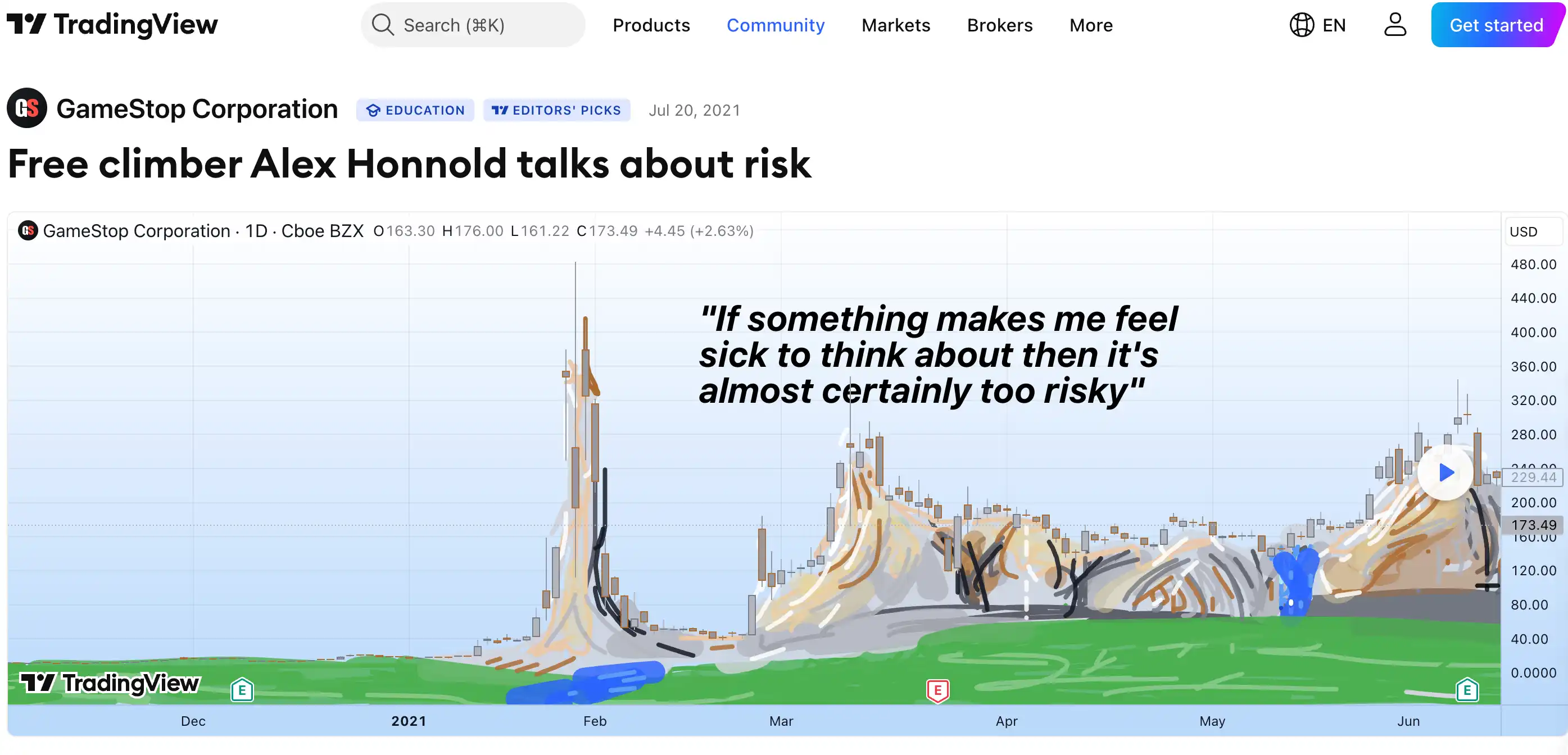
He has a saying that applies not just to climbing but probably to trading as well:

"If the thought of a move makes me feel nauseous, that means the risk is still too high, I'm not ready yet."

Fear is a signal, not an obstacle to overcome.

It was the same with this unprotected climb of Taipei 101. Before the live stream, he did a full rehearsal with ropes, testing every grip on every floor. The live stream, originally scheduled for the 23rd, was postponed to the 24th due to weather, and then from the 24th to the 25th.

Wait for the wind to stop, wait for the right conditions, then act.

What Alex Honnold does seems like one of the most dangerous things in the world—no protection, a fall if he slips—but the methodology behind it is极致 (ultimate) risk control:

Ten years of preparation, repeated rehearsals, waiting for conditions, rejecting uncertainty.

What many people do seems mundane: trading, opening contracts, buying a coin. But the methodology behind it might be much more radical than Alex's: jumping in at the sight of a social media signal, following a whale's purchase.

In the world of meme and contract trading, where gambling is rampant and being a second slow means missing out on gains, waiting seems like the enemy of making money. Let alone preparing for ten years, sometimes we haven't even calculated where our liquidation price is.

Alex says he tries to avoid rolling the dice.

But open any contract trading platform, and you'll find most people are rolling the dice, though we think we're analyzing.
That said, TradingView choosing Alex as a spokesperson might not be because he represents bravery or "extremeness."

But because he represents "surviving."

In an industry with an extremely high liquidation rate, surviving itself is the best advertisement. The ultimate goal of Free Solo is not reaching the summit; it's reaching the summit alive, coming down alive, and being able to climb again tomorrow.

The same goes for trading.

Alex Honnold could free-solo El Capitan not because he's brave, but because he knows more clearly than anyone else where every step lands.

He prepared for ten years.

What about you?

Note: Alex's spokesperson relationship with TradingView began in 2021. "Look first / Then leap" is TradingView's brand slogan. Alex's quote about risk is from an official TV interview.


İlgili Sorular

QWho is Alex Honnold and what is he famous for?

AAlex Honnold is a 40-year-old professional rock climber famous for free solo climbing, notably climbing the 900-meter El Capitan in Yosemite without any protective equipment, as documented in the Oscar-winning film 'Free Solo'.

QWhat is the connection between Alex Honnold and TradingView?

AAlex Honnold is a brand ambassador for TradingView, a popular financial charting and analysis platform. Their partnership began in 2021, with the brand slogan 'Look first / Then leap'.

QAccording to the article, what is Alex Honnold's philosophy on risk?

AAlex Honnold views risk as uncertainty, akin to rolling dice for an outcome, which is precisely what he strives to avoid in his climbing. His methodology is based on extreme risk control: extensive preparation, repeated rehearsals, waiting for ideal conditions, and eliminating uncertainty.

QHow does the article draw a parallel between Alex Honnold's climbing and trading?

AThe article contrasts Alex's methodical, risk-averse approach to climbing with the often reckless, impulsive behavior of many traders. It suggests that successful trading, like free soloing, is not about being fearless but about meticulous preparation and risk management to 'survive' and continue.

QWhat was the ultimate message about trading implied by using Alex Honnold as an endorser?

AThe ultimate message is that in a high-risk industry with a high rate of failure (like trading), the best advertisement is survival. The goal isn't just to make a successful trade ('reach the summit'), but to do so while managing risk so you can 'survive' and continue trading another day.

İlgili Okumalar

The AI Agent Era Accelerates Its Arrival: Questflow Defines a New Paradigm of Financial Intelligence with On-Chain AI Brokerage

The AI Agent era is accelerating, with the CB Insights AI 100 list highlighting global investment confidence. The focus has shifted from whether AI works to its speed of deployment and ability to manage complex workflows, with autonomous AI Agents driving this transformation. At the forefront is Questflow, a Singapore-based startup redefining financial intelligence through its on-chain AI brokerage. Unlike tools that merely provide data dashboards, Questflow deploys AI Agents that proactively scan markets, form judgments, and execute trades via a conversational interface—operating 24/7 without requiring manual confirmation for each decision. This embodies the new AI paradigm of agents capable of executing multi-step workflows autonomously. Questflow's mission is to democratize institutional-grade trading intelligence. Historically reserved for the ultra-wealthy, this capability is now accessible starting from just $1 through Questflow's "AI Clone + Copy Trade" model. The platform charges only a 1% execution fee, aligning its incentives directly with users and eliminating traditional management or performance fees. The timing is opportune, aligning with key trends identified by CB Insights: the scalable deployment of AI Agents, accelerated AI adoption in financial services, and the maturation of on-chain infrastructure. With robust liquidity on platforms like Hyperliquid and Polymarket, alongside advancements in AI reasoning and non-custodial wallet security, Questflow is positioned to merge the roles of broker, fund, and exchange into a single, accessible platform for millions.

链捕手16 dk önce

The AI Agent Era Accelerates Its Arrival: Questflow Defines a New Paradigm of Financial Intelligence with On-Chain AI Brokerage

链捕手16 dk önce

Why Pricing Social Interactions is Doomed to Fail?

Titled "Why Putting a Price on Social Interaction Is Doomed to Fail," this article critiques attempts to monetize social networks directly through SocialFi models, arguing their inevitable failure stems from a fundamental misunderstanding of media dynamics. Using Marshall McLuhan's theory of "hot" and "cold" media, the author posits that social networks are inherently "cold" media. Their value isn't contained in individual posts but is co-created through user participation, interpretation, and fragmented, ongoing interaction (e.g., replies, shares). This ambiguity and need for user involvement are core to their function. The article asserts that SocialFi projects like Friend.tech failed because introducing real-time, tradable financial pricing (a definitive "hot" signal) into this "cold" environment doesn't add a layer—it replaces the medium's essence. The unambiguous price signal overshadows and nullifies the nuanced, participatory social signal. Users become traders, not participants, and when speculative profits vanish, the underlying social ecosystem—never genuinely cultivated—collapses entirely. This principle extends beyond crypto. The author argues platforms like Twitter have gradually "heated up" through metrics (likes, retweets counts, algorithmically defined value), shifting users from participants to performers and eroding organic engagement. The solution isn't to abandon capital but to manage its entry point. Successful models like Substack, Patreon, or Bandcamp allow capital to "condense" at specific, isolated nodes (e.g., subscriptions, one-time payments) without permeating and "heating" every social interaction. They preserve the core "cold," participatory medium while enabling monetization at designated boundaries. The NFT boom and bust serves as a stark parallel: the ancient "cold" medium of collecting (valued for story, community, gradual accumulation) was rapidly destroyed by platforms that introduced real-time floor prices, rarity scores, and trading dashboards, transforming collectors into speculators and vaporizing cultural value when prices fell. The core lesson: "Liquidity equals heat." Injecting high liquidity and definitive pricing into a "cold" participatory medium doesn't optimize it; it fundamentally alters and destroys its value-creating mechanism. The future lies not in pricing every social gesture but in finding precise, non-invasive points for capital to condense without overheating the entire ecosystem.

marsbit24 dk önce

Why Pricing Social Interactions is Doomed to Fail?

marsbit24 dk önce

Jensen Huang's CMU Speech: In the AI Era, Don't Just Watch, Build

Jensen Huang, CEO of NVIDIA and a first-generation immigrant, delivered the commencement address to Carnegie Mellon University's class of 2026. He shared his personal journey from a humble background to founding NVIDIA, emphasizing resilience, learning from failure, and the responsibility that comes with leadership. Huang framed the present moment as the dawn of the AI revolution, a shift he believes is more profound than previous computing waves. He described AI as fundamentally resetting computing—moving from human-written software to machines that understand, reason, and use tools. This will create a new industry for generating intelligence and transform every sector. While acknowledging AI's potential to automate tasks and displace some jobs, Huang distinguished between the *tasks* of a job and its core *purpose*. He argued AI will augment human capability, not replace humans. The real risk, he stated, is not AI itself, but people being left behind by those who effectively use AI. He presented AI as a generational opportunity for massive infrastructure investment—in chip factories, data centers, energy grids, and advanced manufacturing—that could re-industrialize nations like the U.S. and bridge the digital divide by making computing and intelligent tools accessible to all. Huang called for a balanced approach: advancing AI safely and responsibly, establishing prudent policies, ensuring broad access, and encouraging universal participation. He urged the graduates not to fear the future but to engage with optimism and ambition, reminding them of CMU's motto, "My heart is in the work." His core message was clear: this is their moment to actively build and shape the AI-powered future, not merely observe it.

marsbit1 saat önce

Jensen Huang's CMU Speech: In the AI Era, Don't Just Watch, Build

marsbit1 saat önce

İşlemler

Spot
Futures
活动图片