The Guy Who Free-Solo Climbed Taipei 101 Yesterday Is a Spokesperson for a Trading Software

marsbit2026-01-26 tarihinde yayınlandı2026-01-26 tarihinde güncellendi

Özet

Alex Honnold, a 40-year-old professional rock climber, free-soloed Taipei 101—a 508-meter, 101-story skyscraper—in a live-streamed event watched by millions. Known for his historic free solo ascent of El Capitan documented in the Oscar-winning film *Free Solo*, Honnold is also a brand ambassador for TradingView, a popular financial charting and trading platform. The partnership, which began in 2021 under the slogan “Look first / Then leap,” may seem unusual at first. However, Honnold’s approach to risk aligns closely with prudent trading principles. He avoids uncertainty and emphasizes meticulous preparation, having spent nearly a decade planning his El Capitan climb and rehearsing each move repeatedly. He views fear not as a barrier to overcome, but as a signal that he isn’t yet prepared. His method is defined by extreme risk management: extensive practice, patience for ideal conditions, and eliminating unpredictability. This contrasts sharply with impulsive trading behaviors common in meme stocks and leverage trading, where decisions are often made without analysis or risk calculation. Ultimately, TradingView’s choice of Honnold symbolizes survival—the goal isn’t just to reach the top, but to do so safely and live to continue climbing. Similarly, in trading, long-term success depends on preparation, discipline, and managing risk, not blind courage.

Written by: Curry, Deep Tide TechFlow

Yesterday, millions of people worldwide watched a live stream: a man free-solo climbing Taipei 101.

No ropes, no protection, 508 meters, 101 floors. Netflix streamed it live for 1 hour and 31 minutes, and he successfully reached the top.
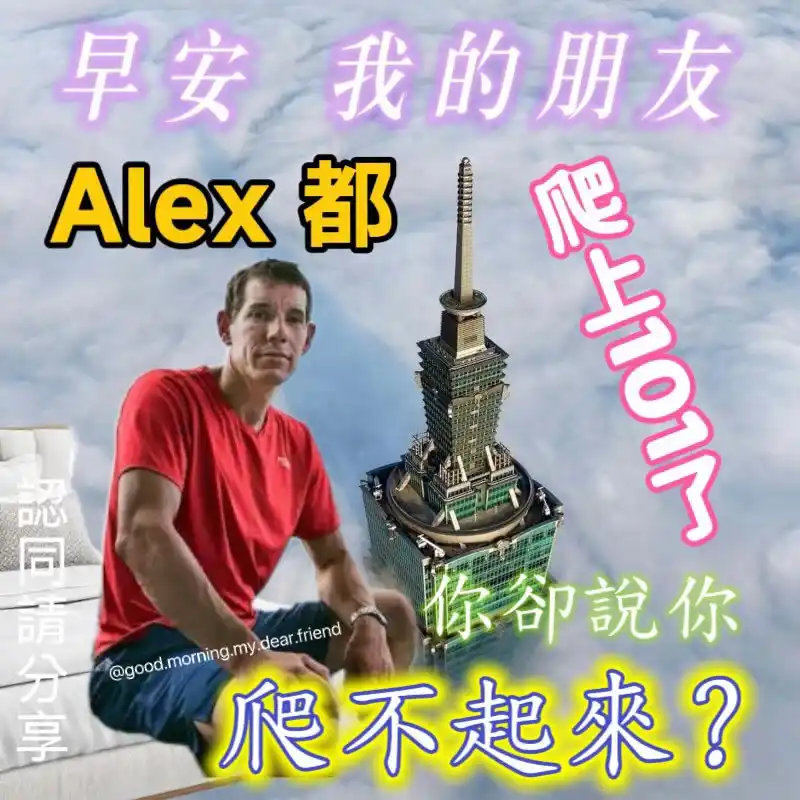
This man is Alex Honnold, 40 years old, a professional rock climber.

In 2017, he free-solo climbed El Capitan in Yosemite, a 900-meter-high granite rock face, without any protective equipment. The documentary Free Solo recorded this feat and won an Oscar.

The New York Times' review at the time called it: one of the greatest athletic achievements in human history.

But that's not what I want to talk about today.

I don't know if you noticed a detail: Alex Honnold is actually the spokesperson for the famous trading software TradingView, essential for trading stocks and crypto.

TradingView, used for chart analysis by traders in stocks, crypto, and forex, signed Alex in 2021 during a brand upgrade. The slogan at the time was "Look first / Then leap."

Look first, then leap.
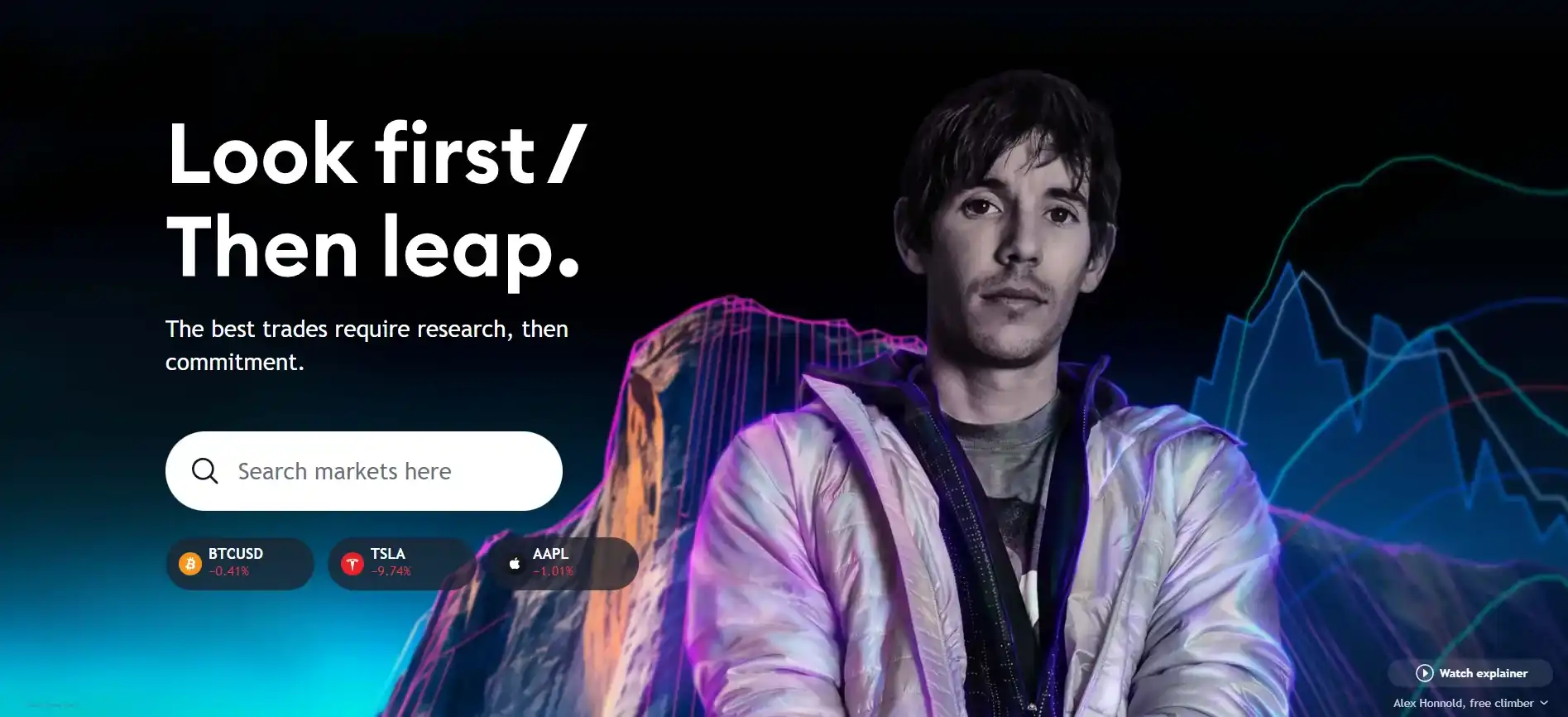
At first glance, it seems strange for a trading software to choose a free solo climber as a spokesperson.

What are they demonstrating—look at the K-line and then jump? But upon closer inspection, this cross-border choice of spokesperson is actually quite accurate.

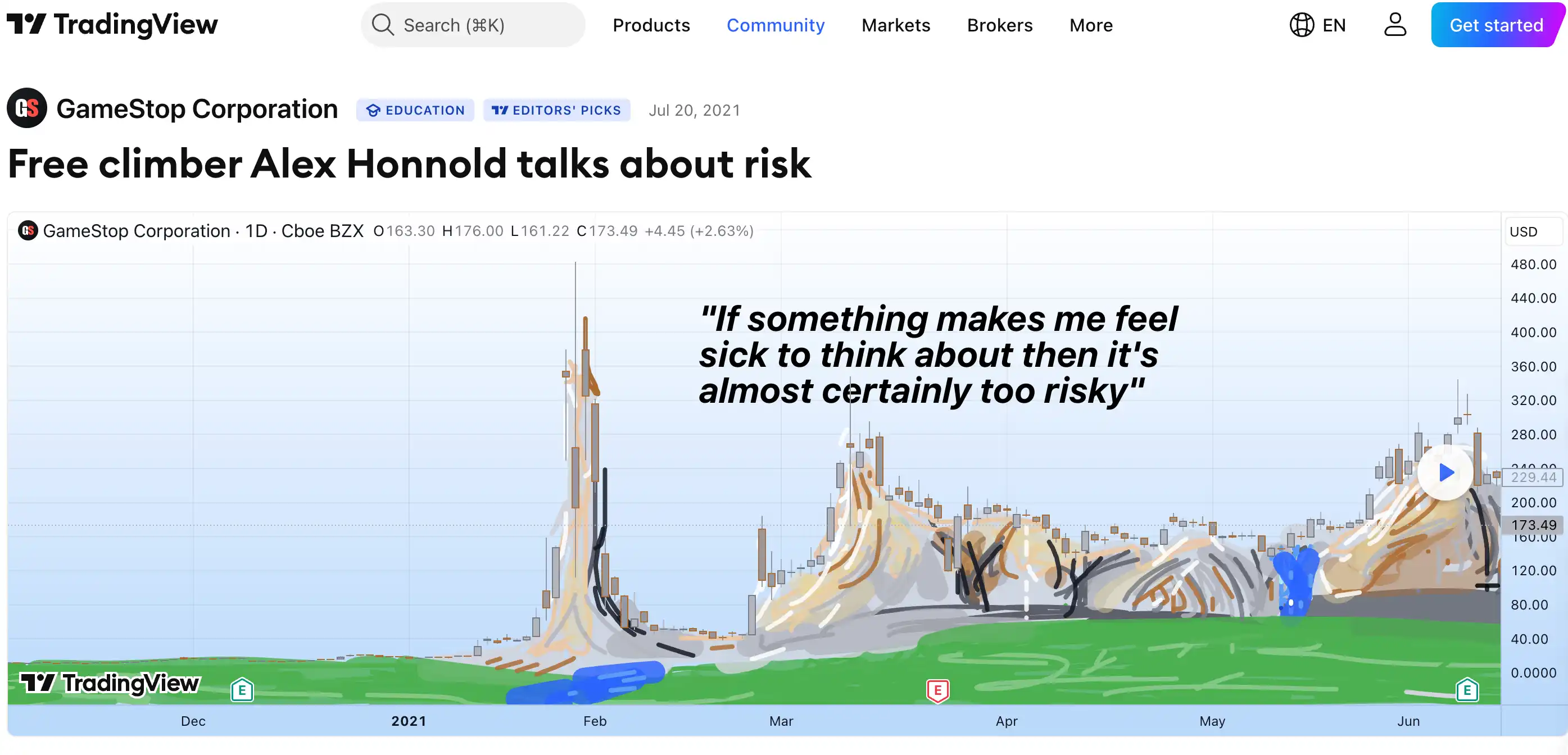
Alex once discussed his understanding of "risk" in an interview with TradingView. He said:

"Risk to me means uncertainty, means rolling the dice to see the outcome. That's exactly what I try to avoid in climbing."

What Alex does, free solo climbing, more professionally called Free Solo, looks like an extreme sport, like risking his life.

But if you've seen the documentary of him climbing that 900-meter granite rock, you'll find that Alex's methodology is actually extremely conservative.

For that climb, he spent nearly a decade conceptualizing it and a year and a half in actual preparation. He climbed every section of the route dozens of times with ropes until he knew every handhold and foothold by heart, even with his eyes closed.

He carried a notebook with him, recording details of every critical move.
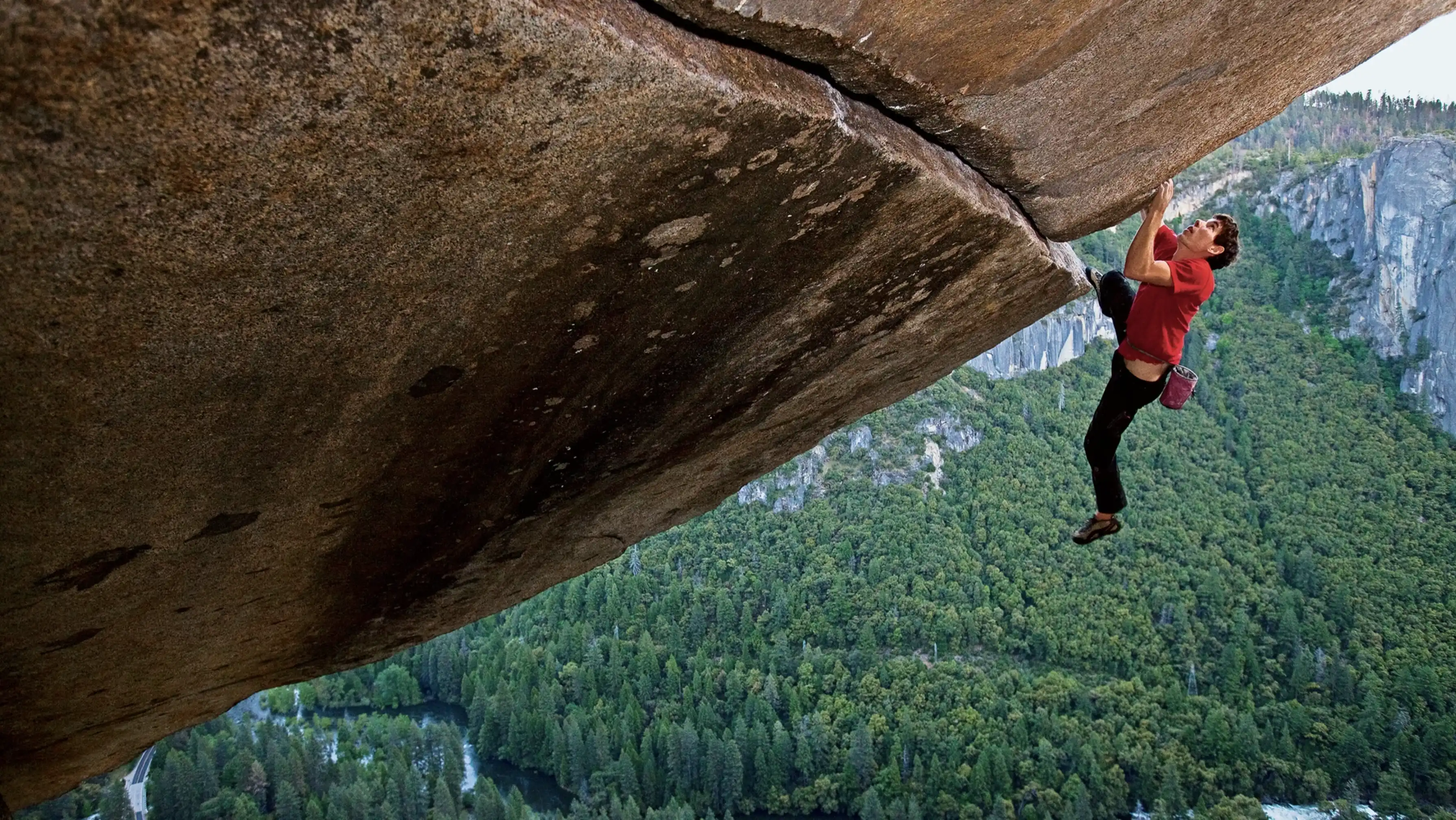
He has a saying that applies not just to climbing but probably to trading as well:

"If the thought of a move makes me feel nauseous, that means the risk is still too high, I'm not ready yet."

Fear is a signal, not an obstacle to overcome.

It was the same with this unprotected climb of Taipei 101. Before the live stream, he did a full rehearsal with ropes, testing every grip on every floor. The live stream, originally scheduled for the 23rd, was postponed to the 24th due to weather, and then from the 24th to the 25th.

Wait for the wind to stop, wait for the right conditions, then act.

What Alex Honnold does seems like one of the most dangerous things in the world—no protection, a fall if he slips—but the methodology behind it is极致 (ultimate) risk control:

Ten years of preparation, repeated rehearsals, waiting for conditions, rejecting uncertainty.

What many people do seems mundane: trading, opening contracts, buying a coin. But the methodology behind it might be much more radical than Alex's: jumping in at the sight of a social media signal, following a whale's purchase.

In the world of meme and contract trading, where gambling is rampant and being a second slow means missing out on gains, waiting seems like the enemy of making money. Let alone preparing for ten years, sometimes we haven't even calculated where our liquidation price is.

Alex says he tries to avoid rolling the dice.

But open any contract trading platform, and you'll find most people are rolling the dice, though we think we're analyzing.
That said, TradingView choosing Alex as a spokesperson might not be because he represents bravery or "extremeness."

But because he represents "surviving."

In an industry with an extremely high liquidation rate, surviving itself is the best advertisement. The ultimate goal of Free Solo is not reaching the summit; it's reaching the summit alive, coming down alive, and being able to climb again tomorrow.

The same goes for trading.

Alex Honnold could free-solo El Capitan not because he's brave, but because he knows more clearly than anyone else where every step lands.

He prepared for ten years.

What about you?

Note: Alex's spokesperson relationship with TradingView began in 2021. "Look first / Then leap" is TradingView's brand slogan. Alex's quote about risk is from an official TV interview.


İlgili Sorular

QWho is Alex Honnold and what is he famous for?

AAlex Honnold is a 40-year-old professional rock climber famous for free solo climbing, notably climbing the 900-meter El Capitan in Yosemite without any protective equipment, as documented in the Oscar-winning film 'Free Solo'.

QWhat is the connection between Alex Honnold and TradingView?

AAlex Honnold is a brand ambassador for TradingView, a popular financial charting and analysis platform. Their partnership began in 2021, with the brand slogan 'Look first / Then leap'.

QAccording to the article, what is Alex Honnold's philosophy on risk?

AAlex Honnold views risk as uncertainty, akin to rolling dice for an outcome, which is precisely what he strives to avoid in his climbing. His methodology is based on extreme risk control: extensive preparation, repeated rehearsals, waiting for ideal conditions, and eliminating uncertainty.

QHow does the article draw a parallel between Alex Honnold's climbing and trading?

AThe article contrasts Alex's methodical, risk-averse approach to climbing with the often reckless, impulsive behavior of many traders. It suggests that successful trading, like free soloing, is not about being fearless but about meticulous preparation and risk management to 'survive' and continue.

QWhat was the ultimate message about trading implied by using Alex Honnold as an endorser?

AThe ultimate message is that in a high-risk industry with a high rate of failure (like trading), the best advertisement is survival. The goal isn't just to make a successful trade ('reach the summit'), but to do so while managing risk so you can 'survive' and continue trading another day.

İlgili Okumalar

In Conversation with Ray Dalio: We Are Currently in an AI Bubble, with 1% of My Portfolio in Bitcoin

Ray Dalio, founder of Bridgewater Associates, warns in an interview that the current AI boom shows classic bubble characteristics, which could lead to significant economic downturns as seen in past cycles like 1929 or 2000. He explains that speculative enthusiasm, fueled by debt and overvaluation, often precedes a crash when rising rates or taxation force asset sales, causing widespread losses and recession. Dalio also outlines his "Big Cycle" theory, describing an approximate 80-year pattern where widening wealth gaps, massive government deficits, and shifting geopolitical power (like China's rise) create internal conflict and global instability. He emphasizes that we are in a late-cycle, transitional phase where traditional powers like the US and UK face decline. For personal wealth protection, Dalio advises diversification beyond cash into assets like stocks, bonds, real estate, and particularly gold, which he prefers over Bitcoin. While he holds about 1% of his portfolio in Bitcoin as a non-printable hard asset, he views gold as more secure from technological or governmental threats. Regarding AI's impact, Dalio believes it will disproportionately benefit capital owners, worsening inequality by replacing both physical and cognitive labor. He suggests that human intuition and emotional intelligence, combined with AI, will be key for future workers. On taxation, Dalio argues that wealth taxes are impractical and risk triggering asset sell-offs, reducing productive investment. He points to the UK as a cautionary example of debt, low productivity, and political strife. Geopolitically, Dalio foresees a more regionalized world, with the US showing weakness in prolonged conflicts like with Iran, akin to past imperial declines. The ideal outcome, he suggests, is coexisting powerful blocs (e.g., Americas, China-Asia Pacific) without major war.

marsbit10 dk önce

In Conversation with Ray Dalio: We Are Currently in an AI Bubble, with 1% of My Portfolio in Bitcoin

marsbit10 dk önce

Daily 7.2 Trillion KRW: Foreign Capital's Record Net Buying on Friday! Wall Street Says Headwinds for Korean Stock Fund Flows Have Subsided

South Korean stock market sees a dramatic shift in fund flows. On July 31, foreign investors made a record net purchase of approximately KRW 7.2 trillion in KOSPI stocks, marking a fundamental reversal from the persistent large-scale net outflows seen in previous months. This contributed to a significant narrowing of foreign net selling in July to KRW 9.8 trillion, down sharply from KRW 48.4 trillion in June and KRW 44.5 trillion in May. Simultaneously, domestic institutional pressure eased. South Korean pension funds and asset managers turned to a net buying position in July, purchasing KRW 1.0 trillion worth of KOSPI shares, contrasting with net sales in May and June. Market volatility is expected to be dampened by new financial regulations. Effective July 31, the Financial Services Commission tightened access for retail investors to single-stock leveraged ETFs by raising the minimum cash deposit requirement. Trading volumes for these products subsequently dropped to about 50% of their monthly average. Citigroup Research maintains its year-end KOSPI target of 10,000 points. The firm cites several supportive factors: the substantial easing of headwinds from capital outflows, a robust fundamental outlook for the semiconductor sector, historically low market valuations, strong economic fundamentals, and the potential for policy support from financial authorities if needed.

marsbit10 dk önce

Daily 7.2 Trillion KRW: Foreign Capital's Record Net Buying on Friday! Wall Street Says Headwinds for Korean Stock Fund Flows Have Subsided

marsbit10 dk önce

Thanks to Dice Rolls, Bitcoin Keys Are Stored Offline, But Not Everyone Will Do It

The article discusses using dice rolls to generate secure Bitcoin wallet seeds, providing entropy independent of potentially flawed hardware random number generators. It explains that each fair dice roll offers about 2.585 bits of entropy, with around 50 rolls needed for a standard 12-word seed phrase and 99+ recommended for higher security. This method gained attention after a vulnerability was revealed in some Coldcard hardware wallets, where a faulty firmware RNG (dating back to 2021) compromised generated keys. The analysis notes that while a dice-generated main seed was safe from this specific flaw, other Coldcard functions (like creating paper wallets, backup keys, or passwords) could still be vulnerable if they used the defective RNG. The piece argues that while dice-based entropy is technically robust, the manual process is error-prone, tedious, and unrealistic for most new users, who might make mistakes in recording or inputting rolls. It concludes that while manual entropy generation should remain an option for advanced users, the long-term goal is to develop reliable, user-friendly hardware and software that securely generates randomness without requiring specialized knowledge. Coldcard users are advised to check their firmware version and replace any secondary secrets (like paper wallet keys) created with vulnerable devices, while also considering multi-signature setups with devices from different manufacturers for added security.

cryptonews.ru5 saat önce

Thanks to Dice Rolls, Bitcoin Keys Are Stored Offline, But Not Everyone Will Do It

cryptonews.ru5 saat önce

İşlemler

Spot
活动图片




