The Future Outlook of Bitcoin

marsbit2026-08-09 tarihinde yayınlandı2026-08-09 tarihinde güncellendi

Özet

Bitcoin: A Mid-2026 Perspective Bitcoin analyst Will Clemente assesses the asset's outlook, arguing that despite a challenging period, it now presents a compelling long-term value opportunity. The current bear market, while less severe in peak drawdown than 2022, has been difficult due to a lack of clear catalysts, underperformance versus assets like gold, and persistent ETF outflows. However, key negative pressures are showing signs of abating. Digital Asset Treasuries (DATs), a major source of sell pressure during the bull market, are slowing accumulation or shifting strategies. While quantum computing remains a long-term concern, its risk is likely significantly priced in at current levels. Fundamentally, the Bitcoin network remains decentralized and healthy, with a robust global node distribution. Although hash rate has declined as miners pivot to AI/HPC, the network's difficulty adjustment ensures security, and the resilience suggests a diverse, non-public mining base. Valuation metrics indicate Bitcoin is in deeply undervalued territory. It is consolidating near its 2021 highs, below the 200-week EMA, with weekly RSI showing a bullish divergence from oversold levels. The MVRV ratio is at historically low levels, signaling the market's aggregate cost basis is near the current price. Long-term holders have resumed accumulation, and trading volume across spot, ETF, and derivatives markets has dried up to multi-year lows. Implied volatility is cheap, and futures basis i...

Author:Will Clemente,Bitcoin On-chain Analyst

Compiled by: Jiahuan, ChainCatcher

Hope everyone had a good summer. It's been a while since I last wrote a long piece about Bitcoin. In this article, I want to consolidate my thoughts on this asset, as well as some ideas that have gradually taken shape in my mind recently, discussing how to view and allocate Bitcoin going forward.

Last year, I basically shifted my personal focus on markets to commodities. The reason was, it had become evident that the crypto market was facing a supply glut, which weighed heavily on the entire market.

Meanwhile, apart from niche areas like Hyperliquid, the industry lacked sufficient innovation, at least compared to the active performance of other markets. Consequently, there was also a lack of demand to digest the massive supply.

I originally thought there was a window for Bitcoin strength late last year: small-cap stocks were surging, and gold had just experienced a strong run. But Bitcoin basically only staged a failed breakout – just a few days before October 10th – which was very disappointing.

In January this year, due to market behavior resembling the previous bear market we experienced in 2022, I further reduced my remaining Bitcoin exposure.

Frankly, this has not been a pleasant year to focus on Bitcoin, or the crypto market at large. Judging solely by the percentage decline from highs, this cycle has been milder than the last one, but in many ways, this bear market might be even harder to endure than 2022.

At least in 2022, you could clearly point to reasons for the market decline: rising rates, the cleansing of leverage and fraud, and the FTX collapse. Then you could say: 'If these factors could change, and by late 2022 the scope for further deterioration was clearly smaller than for improvement, then Bitcoin was likely a good long-term buy.'

But today, there is no similar logic, with Digital Asset Treasuries (DATs) and quantum computing risk perhaps being the few exceptions – which will be discussed later and, in my view, are finally starting to show some signs of repair.

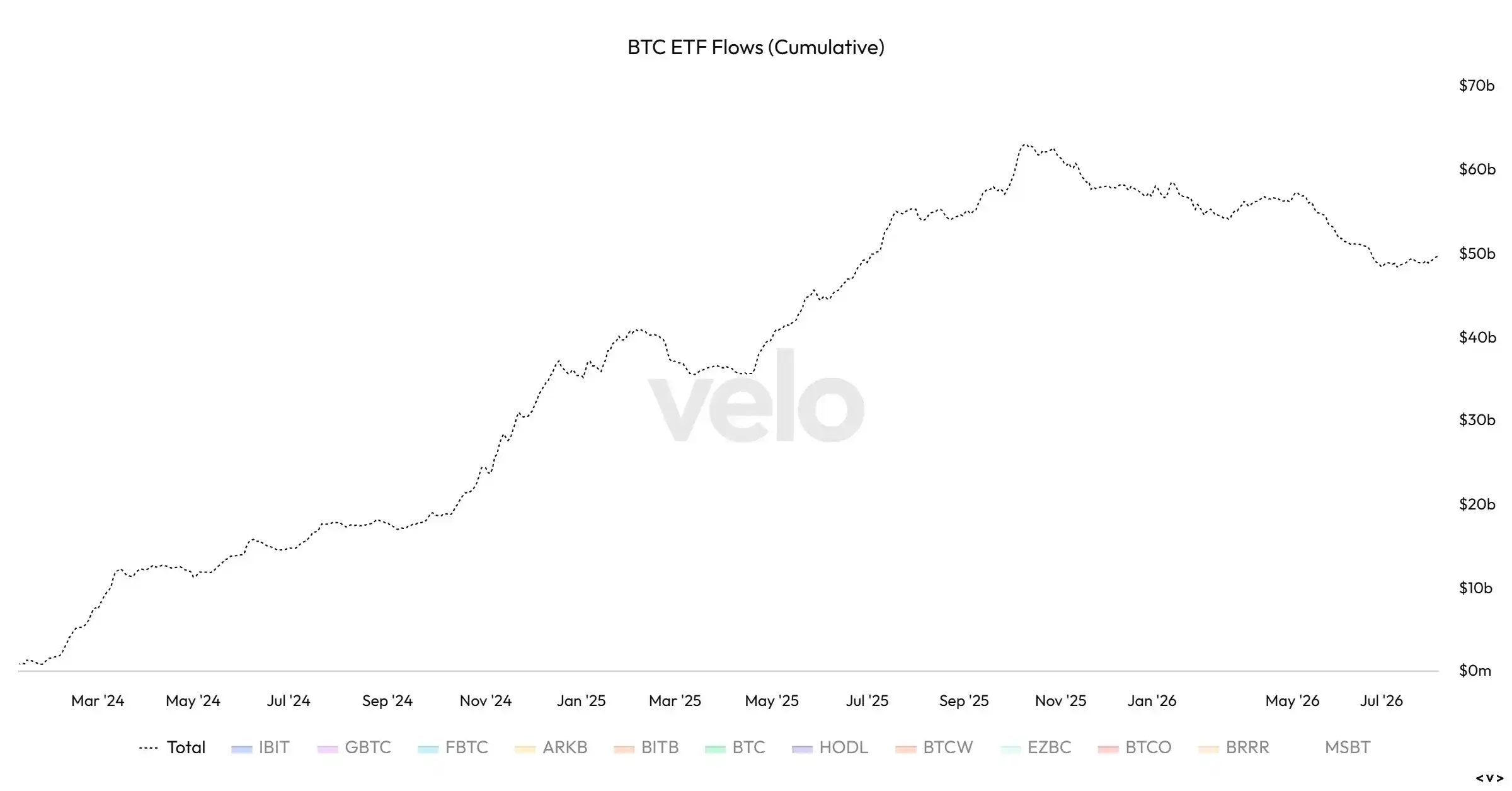
Bitcoin ETFs hold about $50 billion in assets. They set records for inflows at launch, only surpassed by memory ETFs earlier this year. Large financial institutions have also started launching related lending products.

Last year, driven by central bank reserve demand and the 'de-dollarization' narrative, gold performed exceptionally well; logically, that should have been Bitcoin's time to shine.

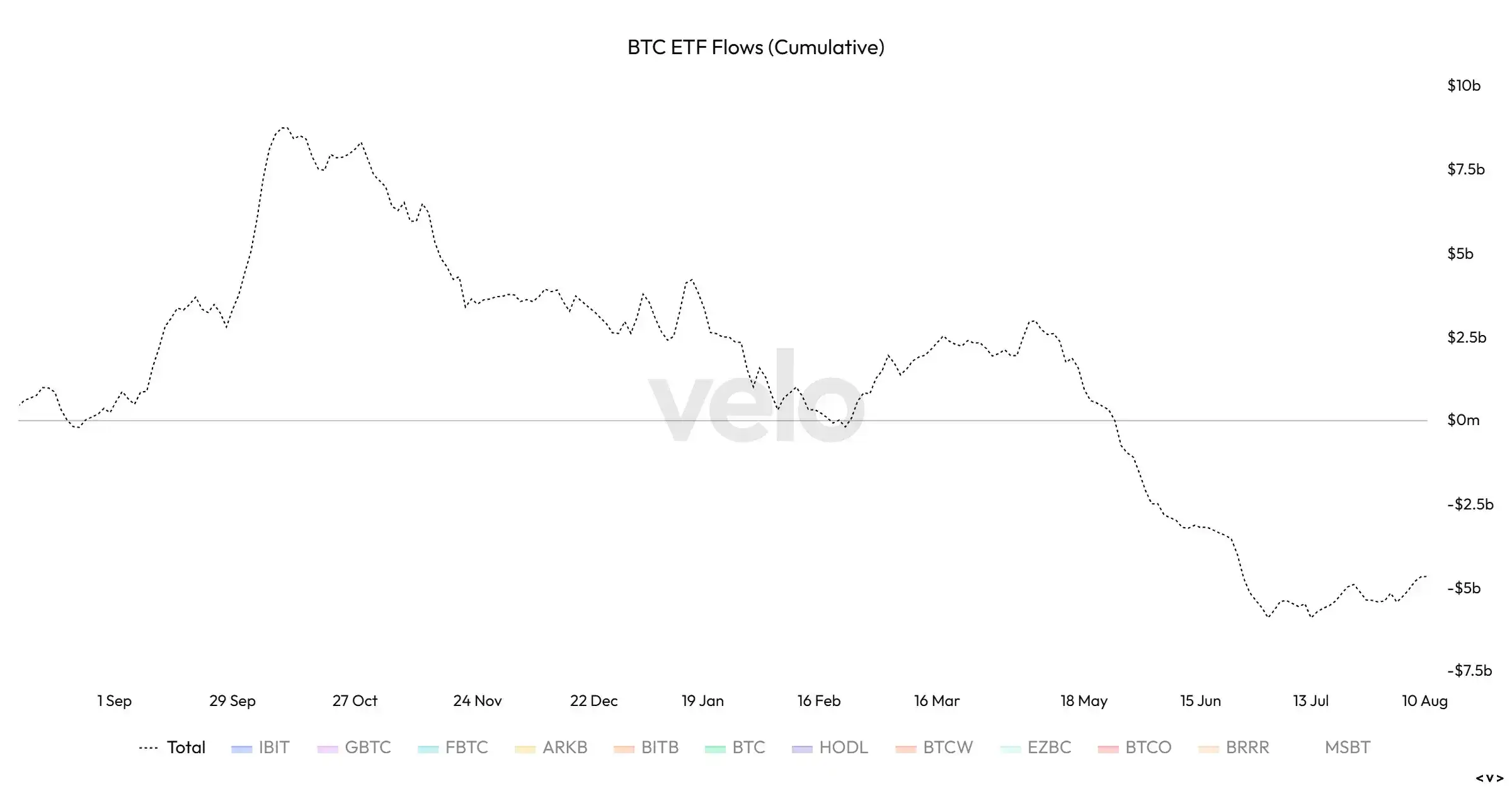
Now, almost any individual or institution wanting Bitcoin exposure has a channel to do so. It is precisely because of this that the contrast is particularly disappointing: Bitcoin ETFs have seen $5 billion in net outflows over the past year, while DRAM-related products attracted $10 billion in a month.
Network Health

When discussing Bitcoin's fundamentals, we are obviously not talking about traditional financial metrics, but observing the underlying state of the network itself. I won't go through every metric just for the sake of listing data, but there are two points I believe are truly important.

In an increasingly centralized world – state-led economies, state-influenced markets, combined with the possibly most powerful technological centralizing force we've ever seen from big tech – I truly believe 'decentralization' itself has value.

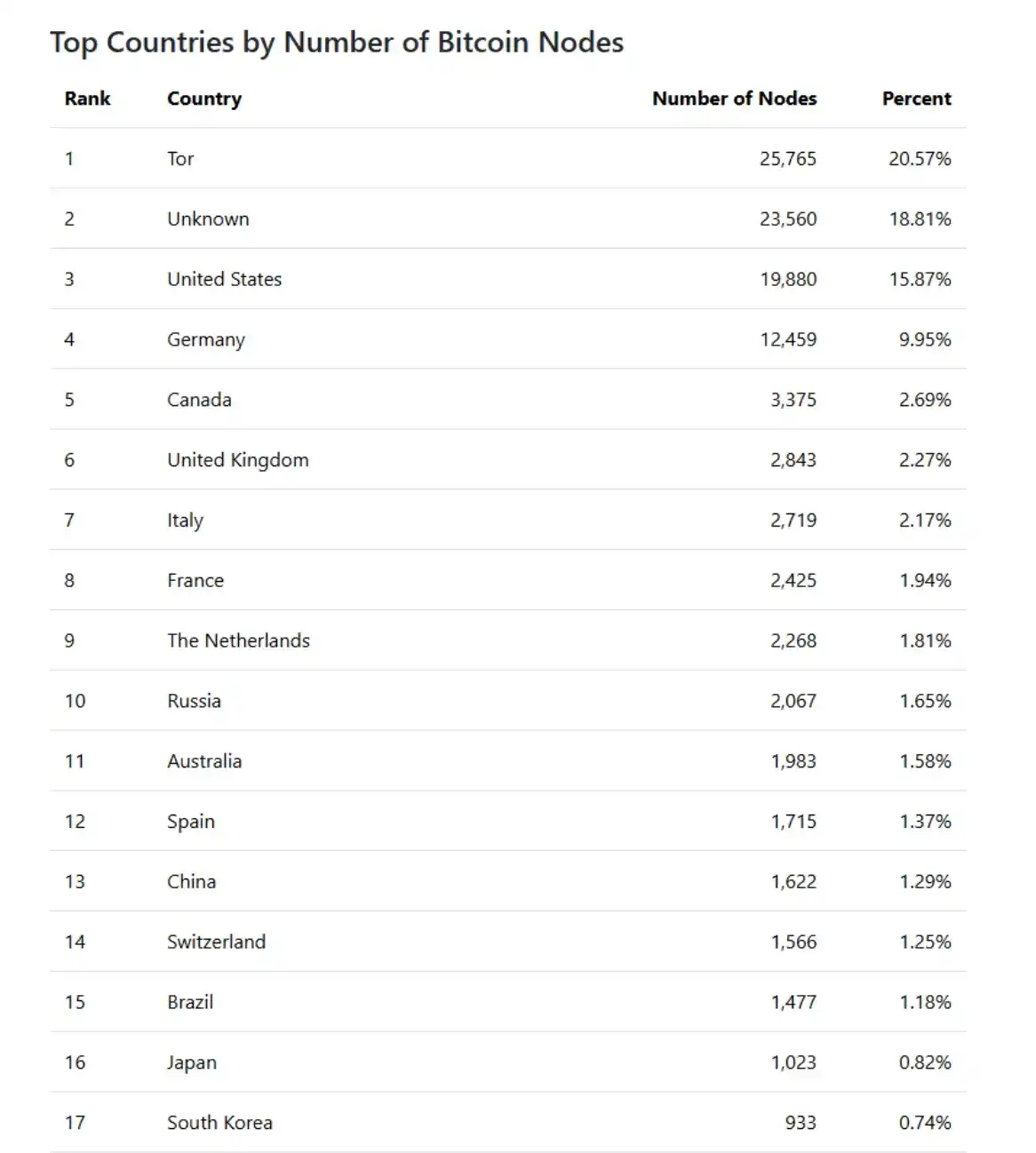
For those less familiar with Bitcoin's underlying mechanics, the network has both the widely known miners and nodes. Anyone can run a node. Nodes enforce rules and validate the network, while miners secure it through computational work backed by massive energy. Nodes are spread globally, and there are likely many more not easily tracked. The list below alone covers nearly 200 countries.
We can look at mining pools – though pools don't control individual miners within them – but it's difficult to track each independent miner like nodes. However, we can observe the total energy input supporting the network through hash rate.

From any perspective, Bitcoin's total network hash rate is declining. Post-2022, miner profit margins were squeezed due to increased competition and rising energy prices. More importantly, many miners began pivoting to Artificial Intelligence/High-Performance Computing (AI/HPC). So far, for public miners who have transitioned, this has proven a prudent business decision.

Bitcoin's performance lagged behind AI-related assets, while demand for computing power grew strongly, further reinforcing this trend. So, this can be interpreted both pessimistically and optimistically.

The pessimistic side: in terms of energy input securing the network, Bitcoin is technically less secure; meanwhile, as a digital commodity, the energy input value – i.e., the cost of production – supporting each unit of Bitcoin has also decreased.

It's worth noting, however, that the network itself is not in crisis due to its difficulty adjustment mechanism. The network automatically adjusts mining difficulty and reward conditions every two weeks based on hash rate levels. This mechanism incentivizes new miners to join and secure the network when competition decreases.

The optimistic side: despite almost every public miner we know pivoting to AI/HPC, the total hash rate has only retreated to mid-last-year levels. This suggests there may be more entities actually mining Bitcoin with access to cheap energy than some originally thought. Combined with node distribution data, the Bitcoin network remains decentralized and healthy.
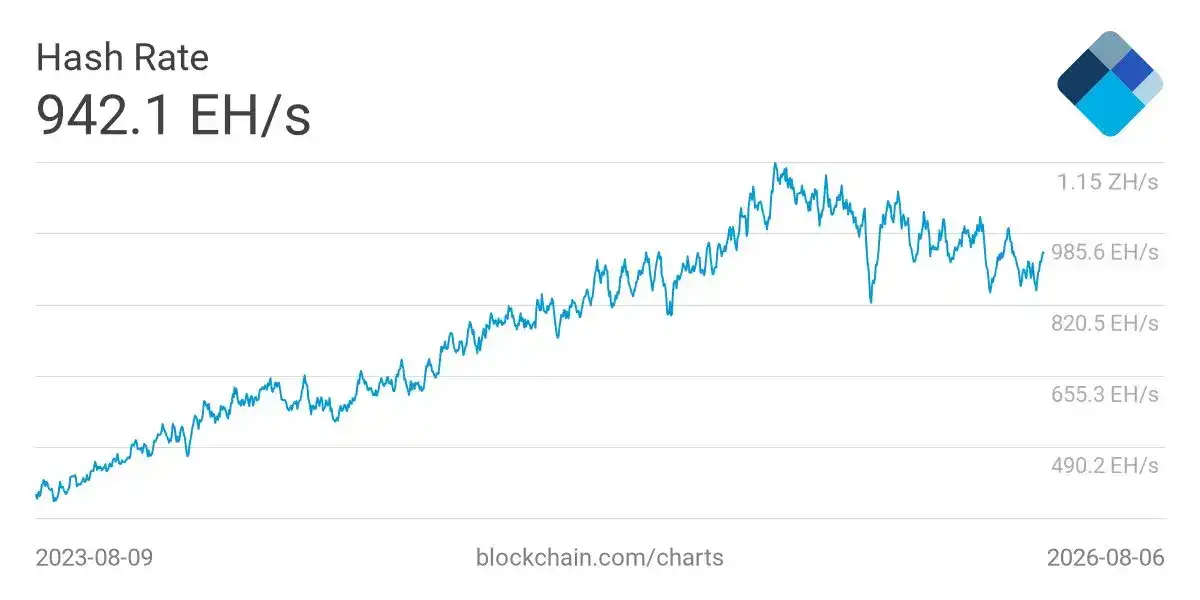
Overall, I think the Bitcoin network itself remains as decentralized and healthy as ever.

Valuation Methods and Current Metrics

Bitcoin obviously does not generate cash flows, but we can still compare its current valuation to historical market performance through several unique methods.

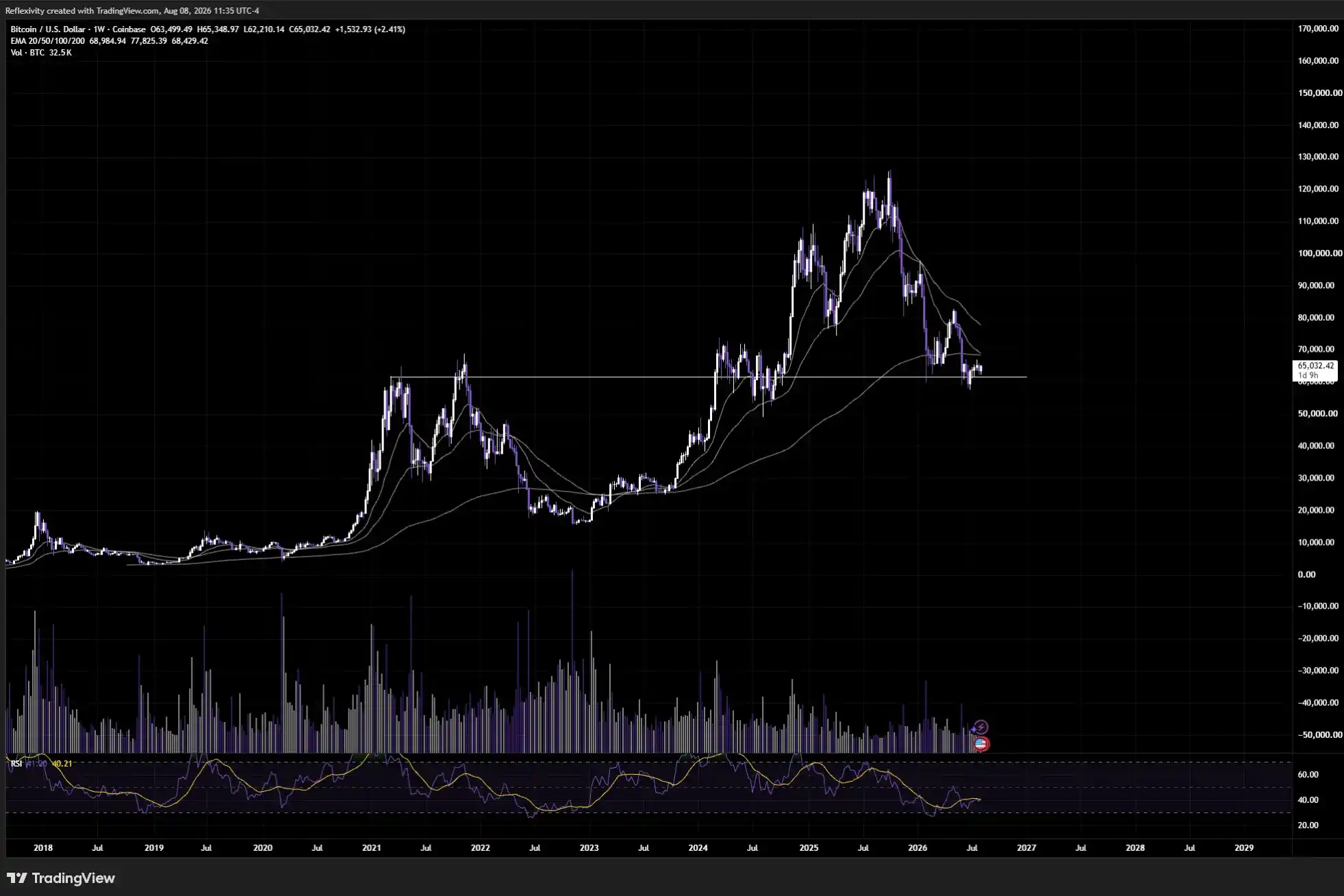
From a technical perspective, Bitcoin is currently consolidating near the 2021 all-time highs, slightly below the 200-week Exponential Moving Average (EMA). The weekly RSI is showing a bullish divergence emerging from oversold territory, with the last time reaching such oversold levels being at the depths of the previous bear market.

Historically, the 200-week moving average has been a decent basic threshold to start considering gradually accumulating Bitcoin spot positions.
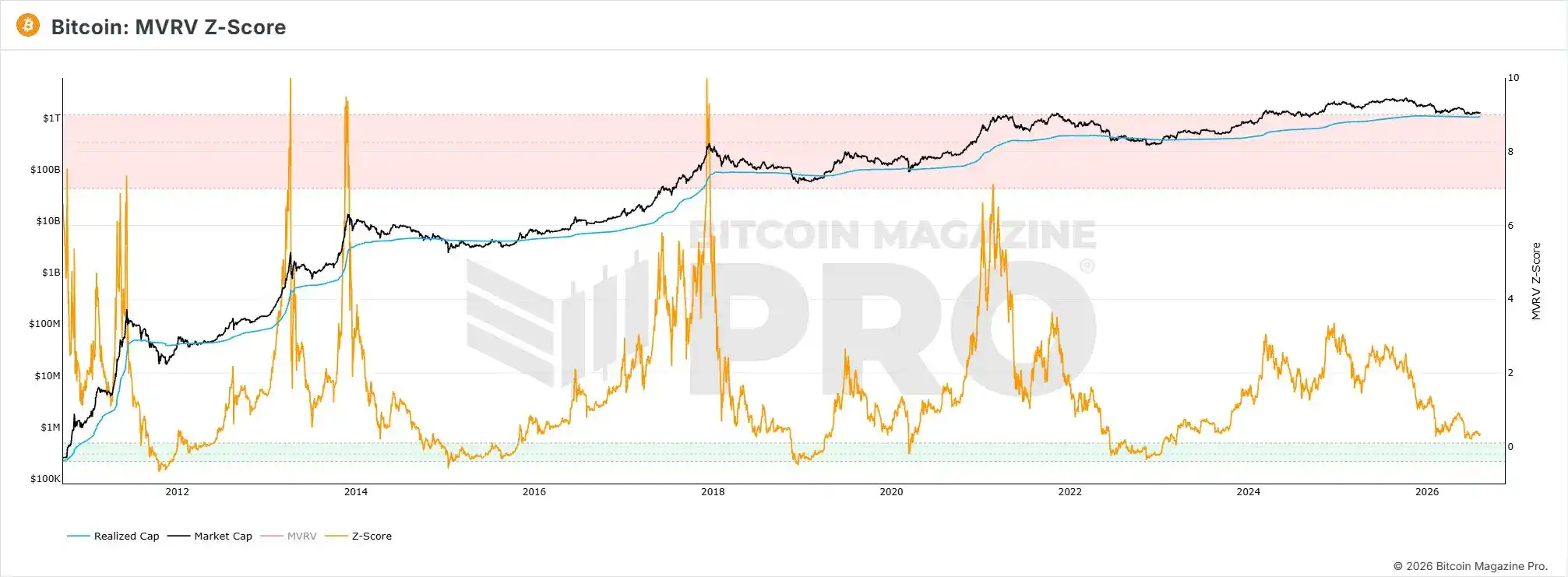
Among on-chain data-based valuation methods, one of the most effective metrics is the Market Value to Realized Value ratio (MVRV). It compares Bitcoin's current marginal trading price with the aggregated cost basis of the entire network; the latter is calculated based on the price when tokens last moved to a new wallet cluster.

When this ratio is high, it means the current marginal trading price is far above the network's average cost. There is a large amount of unrealized paper profit (PNL) in the market, giving many holders strong motivation to take profits.

When the ratio is below 0, it means that, on aggregate, market participants are sitting on paper losses. Historically, this has often marked a phase more suitable for accumulating positions.

You'll notice that in 2024–2025, this metric never truly reached the frenzied, blow-off top levels of the past. This reflects the gradual maturation of this asset class in recent years and the consequent contraction in volatility.

Considering that each bull market's metric peaks have been lower, and each bear market's deepest lows have been slightly higher, a reasonable conclusion might be that the market doesn't necessarily have to enter negative territory to bottom this time.

Buying the exact bottom is extremely difficult. The most important takeaway here is that Bitcoin is currently already in the lower historical valuation range.
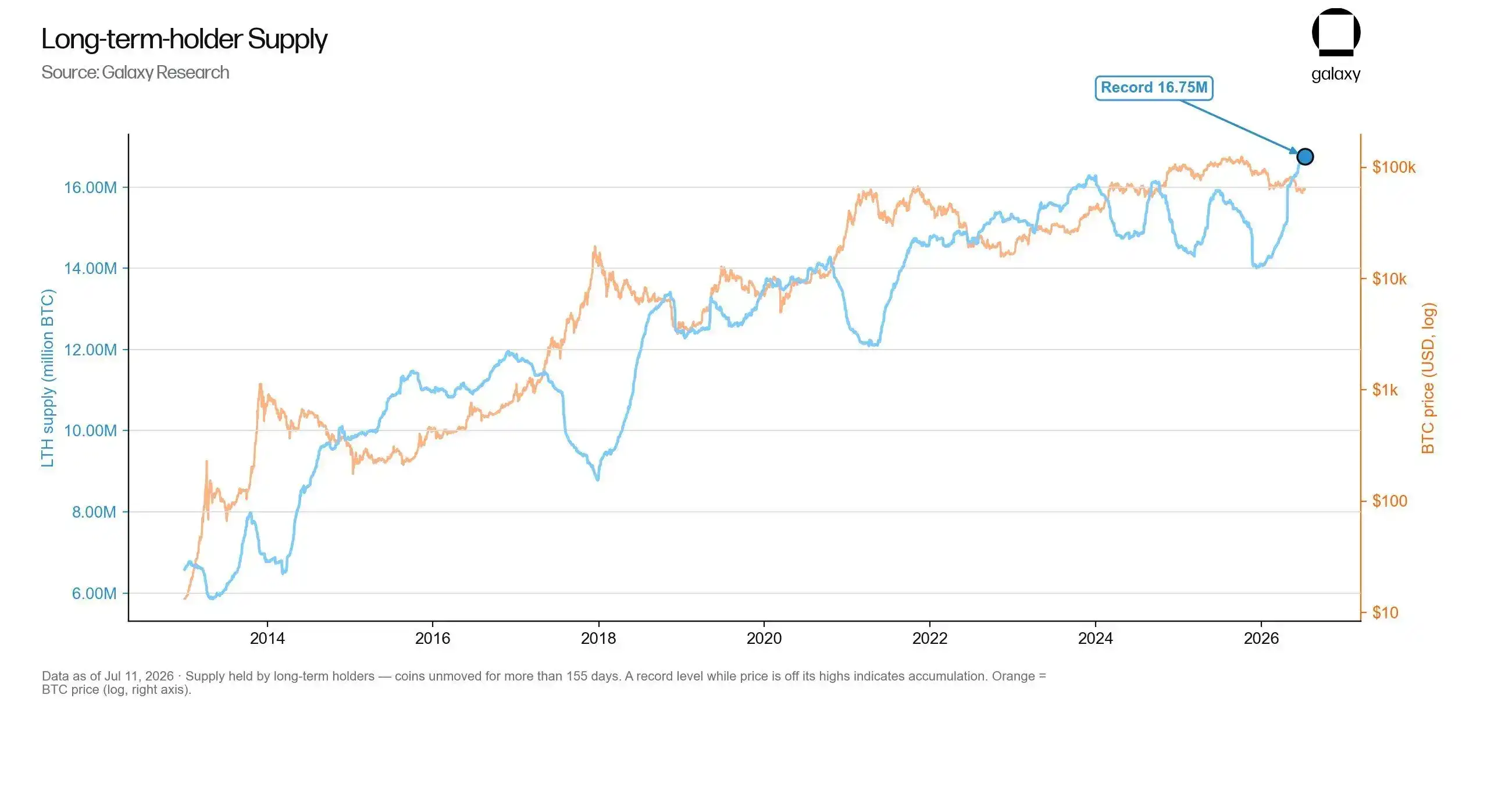
Long-term holders also seem to be accumulating quite actively. After a period of distribution in mid-to-late 2025, they have resumed adding to their holdings, indicating they see value at current prices.
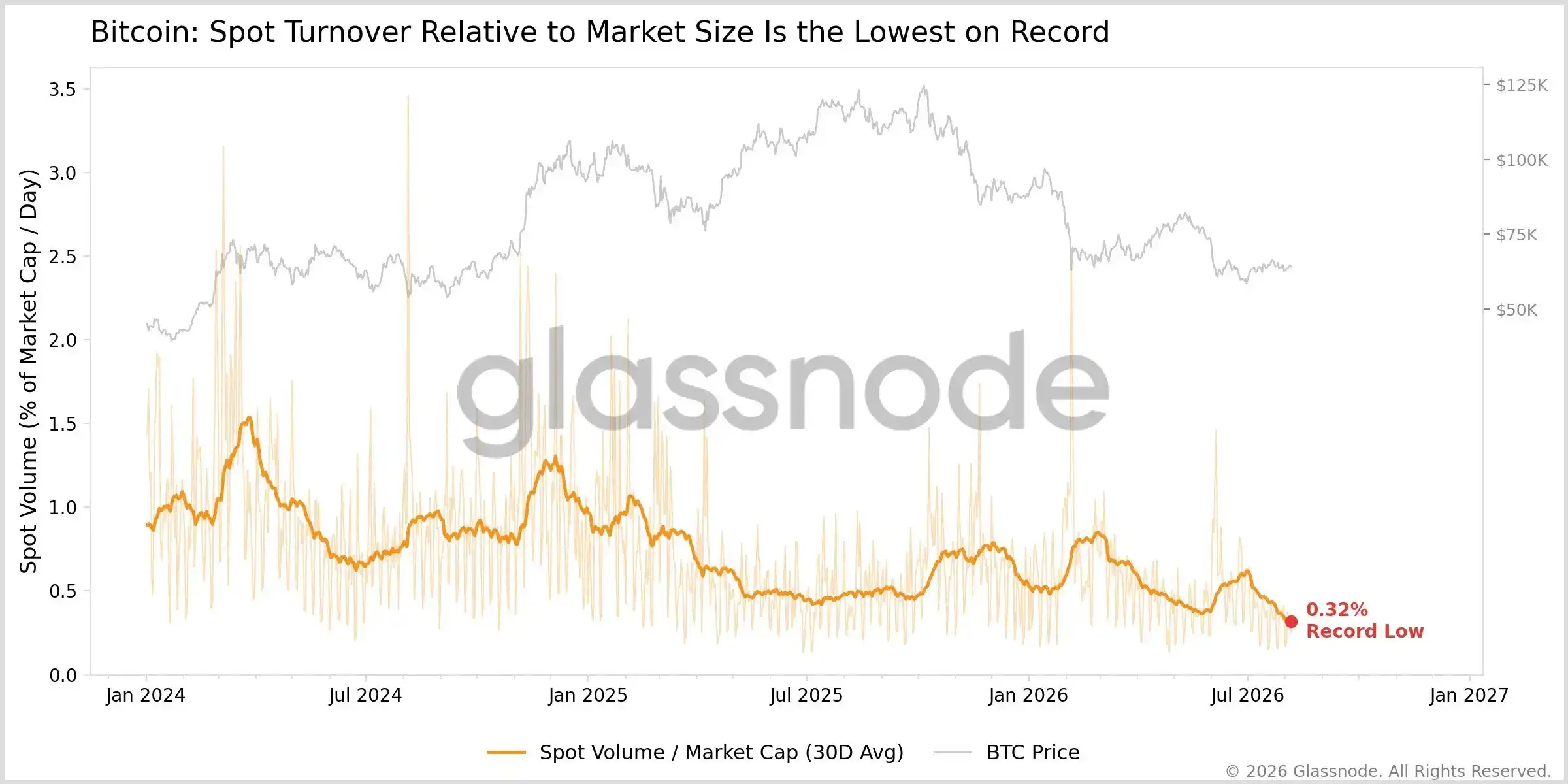
Trading volume has almost completely dried up. @n3ocortex made a great chart showing Bitcoin spot turnover relative to its market cap has fallen to historical lows. ETF and DAT trading volumes show a similar state.
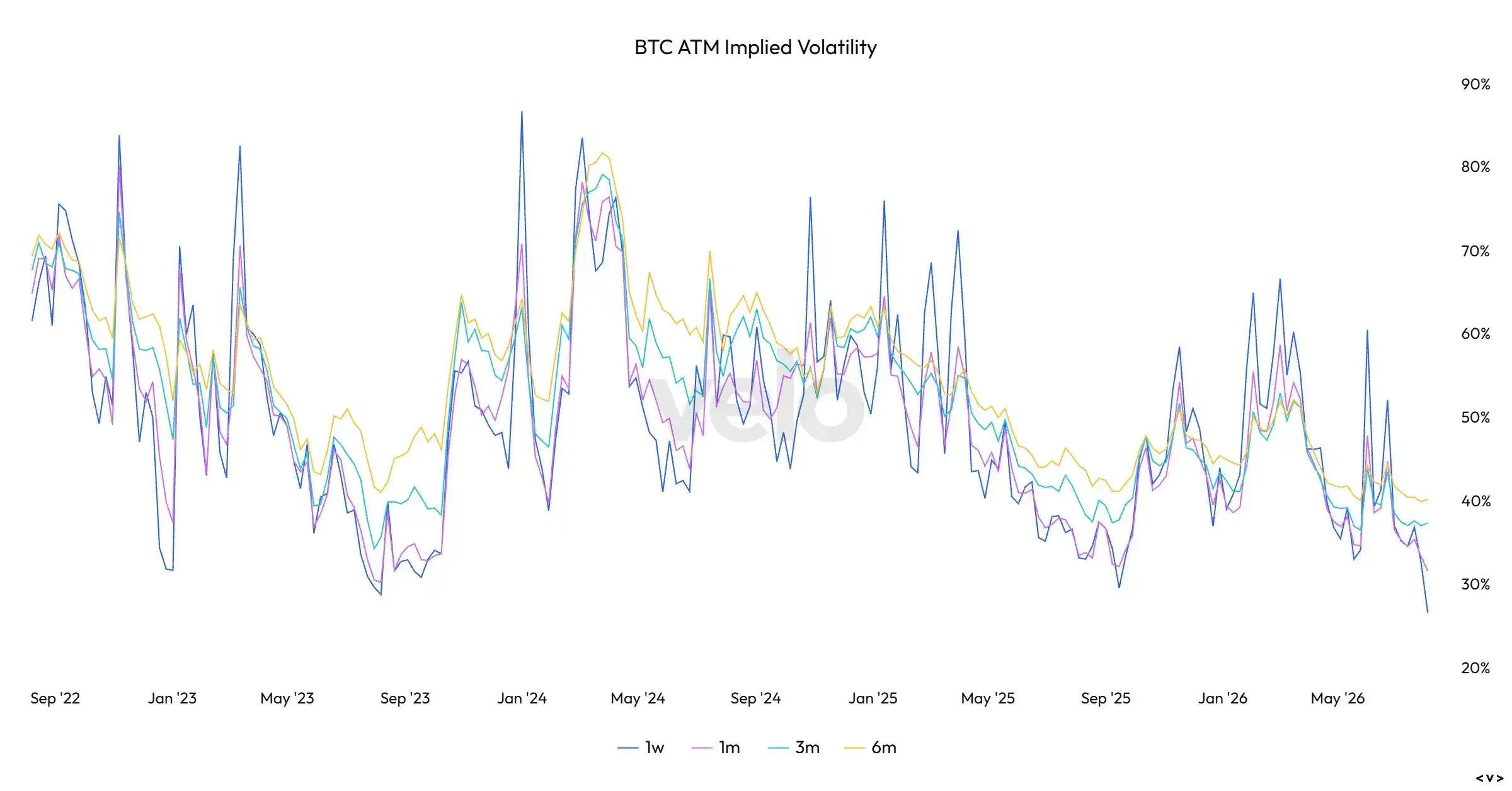
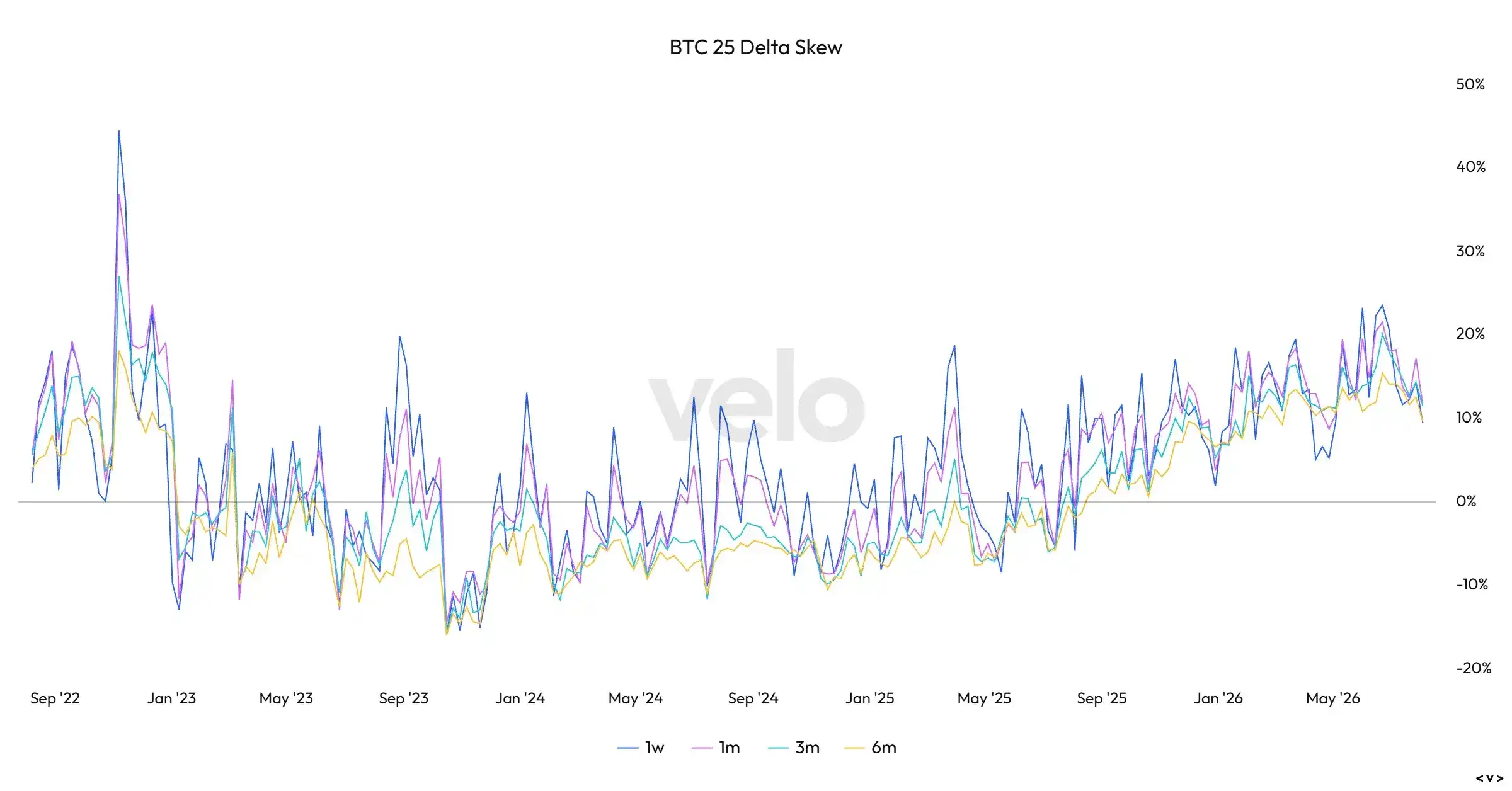
Near-term implied volatility in the options market has fallen to multi-year lows, meaning the market sees Bitcoin as 'dead money' with no near-term performance. Meanwhile, options skew data shows that over the past year, the only thing the market has been clearly interested in is buying more downside protection.
Finally, looking at the derivatives market: Bitcoin futures basis – the spread between futures contract prices and the Bitcoin spot price – has been declining for years, even struggling to reach levels comparable to US Treasury bill yields.

This indicates two things:

  1. Increasingly more funds are arbitraging Bitcoin futures basis;
  2. The market is not pricing in much of a premium for forward Bitcoin futures contracts relative to spot prices.
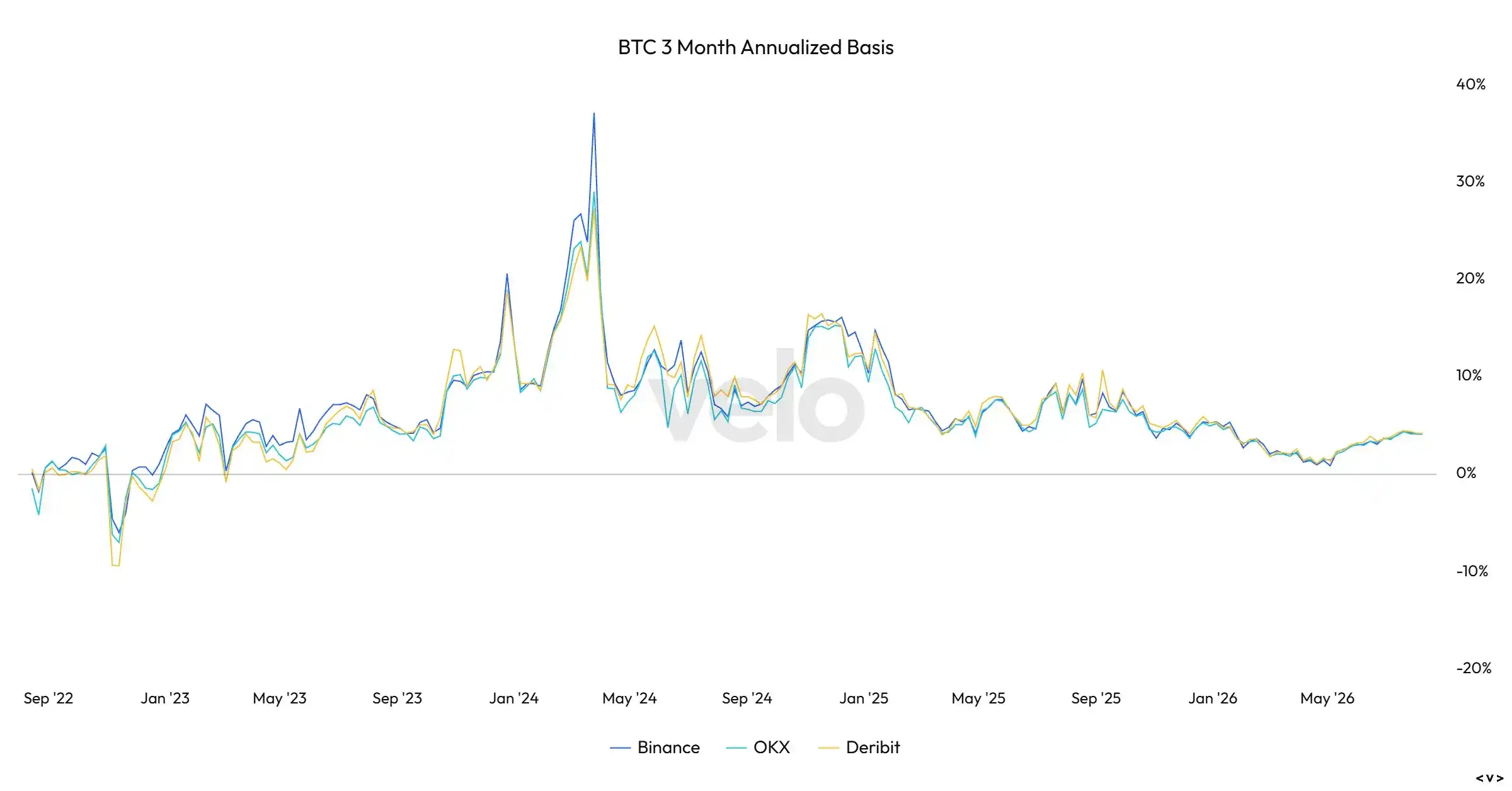
Putting these factors together, the objective picture is: the market is completely dead. Neither futures nor options traders are expressing bullish views, and they are pricing in continued flattening of Bitcoin volatility.

Meanwhile, multiple metrics show Bitcoin is entering deep value territory; long-term holders are accumulating again. This seems to contradict both trader sentiment and the trend of $5 billion in net outflows from Bitcoin ETFs over the past 52 weeks.

DATs and the Specter of 'Quantum Computing'

One of the biggest pressures on the market during the 2023–2025 bull run was Digital Asset Treasuries (DATs). At least in theory, the design logic of these vehicles was: to accumulate more Bitcoin by diluting common shareholders in a way that accretes per-share value, ultimately enhancing shareholder value.

However, after successes like Strategy and Japan's Metaplanet, competition intensified significantly as numerous similar companies emerged vying for return opportunities. Inflows into these vehicles were spread too thin, eventually leading to their narrowing premiums to Net Asset Value (NAV).

In recent months, we've seen multiple related news items: some treasuries have slowed their Bitcoin accumulation pace, some have started directly selling Bitcoin, and a few have even changed strategies altogether. I view these as positive signs of market self-repair.

Recently, even when Saylor announced selling Bitcoin, the price actually rose. According to information from Strategy's latest earnings call, the company is consolidating its capital structure and prioritizing STRC. This contrasts sharply with the previous pattern where 'announcing Bitcoin buys led to price declines.'

Looking ahead, I don't think DATs will exert the same degree of pressure on the market as they did 6–9 months ago, especially given Bitcoin is already down more than 50% from its highs.

I do believe quantum computing is a real concern, especially on a time horizon of five-plus years. In recent months, while assisting with investment analysis at STIX, I've interacted with a few quantum computing startups beginning to mature and spoken with people in the industry, giving me some understanding. Of course, I'm far from an expert.

My view is that this threat should be taken seriously. However, with Bitcoin at $60,000, down 50% from highs, and underperforming other assets, I think the current price has already priced in a significant portion of this risk.

From here on out, even in the most extreme doomsday scenarios, the direction of these widely discussed, publicly known concerns will likely only improve. The worse Bitcoin performs due to market concerns about quantum risk, the more incentive large holders, and institutions making money from Bitcoin trading, custody, and lending, have to push a cohort of developers to find and propose solutions.

This is similar to the ETF approval in the last cycle: the market trades ahead of the probability of the problem being solved. Therefore, once the risk is completely resolved, you cannot buy at extremely low prices anymore.

Potential Bullish Logic

Even if you think Bitcoin is probably now at a level suitable for long-term allocation, for medium-to-short-term capital allocators, opportunity cost remains an extremely important consideration: with a hot economy and truly worthwhile innovation opportunities for speculation and investment in the market, allocating capital to Bitcoin seems to miss out on a lot by comparison.

The core question that has persisted for months is: Since gold rose and high-beta stocks performed strongly this year without Bitcoin following, what would need to happen for Bitcoin to perform from now on?

As shown in previous charts, on-chain data indicates long-term holders are buying with considerable force. Meanwhile, DATs have seen capitulatory selling, and ETFs have brought significant net selling pressure.

Previous Bitcoin bear markets ended due to exhaustion of selling pressure, not necessarily requiring a catalyst that sparked massive new demand. At this point, if you were ever worried about DATs, quantum computing risks, or Bitcoin's underperformance, how many haven't sold and can continue selling at a pace exceeding the last 6–9 months?

Clearly, Bitcoin could still experience a sharp drop due to a sudden spike in asset correlation if macroeconomic or geopolitical turmoil occurs. But we are discussing a judgment on a higher time frame over the coming months.

I fully understand there is no clear catalyst currently. The 'Clarity' Act might be one, but I don't think it will significantly impact Bitcoin itself. However, market bottoms often look like this.

What you weigh is the probability of things getting worse relative to the expectations already priced into the current price. It's the opposite of judgment in a bull market: in a bull market, people assess the probability of reality being better than expected.

I'm not ruling out one last leg down sometime this year, but at this point, I think the market has priced in many of these risks over the past year.

A potential catalyst for Bitcoin could simply be stable, requirement-driven buying by large institutions. The initial Asset Under Management (AUM) growth of ETFs at launch was staggering, but we are long past the initial excitement phase. Since last October, total ETF AUM has been slowly declining.

One possible catalyst could be large asset management firms deciding to include a small, single-digit percentage Bitcoin allocation across their various investment portfolios. This would bring price-insensitive inflows to Bitcoin.

This might sound like clutching at straws for comfort, but Bitcoin's lack of clear correlation with multiple asset classes over the past year could indeed provide a reasonable basis for large management institutions, which often seek to diversify asset correlations and risk exposures, to allocate a small amount of Bitcoin.
Conclusion: How to Think About Allocation Going Forward

In short: I think Bitcoin is 'cheap,' though it could still take another leg down sometime this year. The network's fundamentals are broadly healthy. At this point, most risks have been priced in; those who would sell because of these risks have likely already sold. It's almost impossible to buy the exact bottom.

In my view, there are a few ways to allocate from here. Of course, this is not investment advice.

The simplest strategy is to consider gradually buying Bitcoin spot via dollar-cost averaging over the next few months. You could also wait for a final leg down or for the market to regain vitality and upward momentum before acting.

Another strategy is to start allocating now. Since implied volatility is very cheap, you can simultaneously use the options market to hedge against any final leg down that might shake you out of your position.

I haven't really pulled the trigger myself yet, but will likely start acting in some capacity soon.

I hope this article has provided some valuable thoughts and sparked discussion on how others are viewing these issues. Maybe the 'four-year cycle' proves we live in a simulation. Either way, the coming months look interesting for this orange coin.


Trend Kriptolar

İlgili Sorular

QAccording to the article, what are the two major factors that have been depressing the Bitcoin market and are now showing signs of improvement?

AAccording to the article, the two major factors are the selling pressure from Digital Asset Treasuries (DATs) and the perceived risk from quantum computing. The author states that both of these issues are finally starting to show signs of being repaired.

QWhat does the author conclude about the current health of the Bitcoin network itself?

AThe author concludes that the Bitcoin network remains as distributed and healthy as it ever has been. While mining hash rate has declined, the network's difficulty adjustment mechanism keeps it secure, and a wide, global distribution of nodes shows its decentralized nature is intact.

QBased on the MVRV (Market Value to Realized Value) metric discussed, what is the key conclusion about Bitcoin's current valuation?

AThe key conclusion is that Bitcoin is currently in the lower end of its historical valuation range. The MVRV ratio indicates that the market is largely in an unrealized loss position, which historically has been a favorable zone for accumulation, even if it may not necessarily need to turn negative to find a bottom in this cycle.

QWhat is the current sentiment reflected in Bitcoin's derivatives markets (futures and options), as described in the article?

AThe derivatives markets reflect complete apathy. Futures basis (the premium of futures over spot) has been declining for years. Options implied volatility is at multi-year lows, and skew data shows the market's only consistent interest has been in buying downside protection. This indicates traders are not expressing bullish views and are pricing in continued low volatility.

QWhat is one potential catalyst for Bitcoin mentioned by the author that involves large institutional asset managers?

AOne potential catalyst is large asset management institutions deciding to add a small, single-digit percentage allocation of Bitcoin to their various investment portfolios. This would create price-insensitive inflows, as Bitcoin's lack of correlation with other assets over the past year could serve as a rationale for diversification.

İlgili Okumalar

Grayscale Clarifies Whether the Cryptocurrency Market Growth-Promoting Clarity Act Will Be Passed This Year

Zach Pandl, the Research Director at Grayscale, stated that the passage of the CLARITY Act—legislation aimed at establishing a comprehensive regulatory framework for the crypto market in the U.S.—is unlikely to occur in Congress this year. According to Pandl, the Senate's tight schedule and the political climate in an election year make bipartisan agreement on the bill difficult. Pandl noted that the failure of the Clarity Act will not directly impact Bitcoin's role as a store of value, the operation of core blockchains, or the growth of stablecoin payments in the short term. The U.S. crypto sector has operated for nearly 17 years without such comprehensive market structure legislation. However, he warned that the absence of a clear regulatory framework could slow the influx of new investment and capital formation in the U.S. The proposed law aims to open new avenues for capital formation via blockchain, support the development of tokenized securities markets, and create a comprehensive oversight system for digital asset intermediaries, along with various consumer, investor, and software developer protections. Pandl believes federal regulators, particularly the SEC, will continue to fill regulatory gaps even without new legislation, issuing rules in areas like tokenized securities in the coming months. While significant progress has been made under the current administration regarding institutional custody, banking access, staking, and crypto ETPs, Pandl cautioned that without comprehensive market structure laws, much new investment and developer activity may shift outside the United States.

cryptonews.ru1 saat önce

Grayscale Clarifies Whether the Cryptocurrency Market Growth-Promoting Clarity Act Will Be Passed This Year

cryptonews.ru1 saat önce

Michael Saylor Identifies the Next Financial Opportunity Worth Billions

Michael Saylor, Executive Chairman of Strategy Inc. (Nasdaq: MSTR), identified digital credit as the next billion-dollar business opportunity in finance. In an August 7th post on X, he suggested entrepreneurs explore this category. Saylor's post included a chart showing the effective yields of four of Strategy's digital credit products as of 11:10 AM EDT. Leading was Stride Preferred Shares (STRD) with a 15.29% yield, followed by Stretch Preferred Shares (STRC) at 12.63%, Strike Preferred Shares (STRK) at 12.08%, and Strife Preferred Shares (STRF) at 10.38%. These preferred securities allow Strategy to raise capital from income-seeking investors, offering various dividend rates, risk levels, and positions in the company's capital structure. Strategy has developed a suite of preferred shares classified as digital credit instruments. For instance, the Stretch Preferred Shares (STRC) are perpetual, variable-rate securities. This approach applies established credit market structures to companies with digital asset-based balance sheets, connecting capital-seeking issuers with yield-seeking investors through Wall Street-like products. Saylor positioned these as a "digital credit stack," built upon but not backed by Strategy's bitcoin reserve, expanding the company's capital access while targeting yield-focused buyers. The billion-dollar potential lies in creating a scalable, replicable business model where issuers can raise capital via tailored income securities and investors can select products based on yield, risk, and capital priority. For Strategy, this model attracts capital from investors seeking income without direct bitcoin exposure, while the company maintains its broader bitcoin strategy. Growing dividend obligations have influenced how Strategy manages its bitcoin holdings and cash reserves, with the company selling some bitcoin to fund preferred share payments and build a USD reserve for liquidity.

cryptonews.ru1 saat önce

Michael Saylor Identifies the Next Financial Opportunity Worth Billions

cryptonews.ru1 saat önce

İşlemler

Spot

Popüler Makaleler

BITCOIN Nedir

HarryPotterObamaSonic10Inu (ERC-20)'yu ve Kripto Alanındaki Yerini Anlamak Son yıllarda, kripto para piyasası, hem ticaret yapanların hem de topluluk etkileşimi ve eğlence değeri arayanların ilgisini çeken meme coin'lerin popülaritesinde bir artış gördü. Bu benzersiz token'lar arasında, kripto para dokusuna kültürel referansları harmanlayan ilginç bir proje olan HarryPotterObamaSonic10Inu (ERC-20) bulunmaktadır. Bu makale, HarryPotterObamaSonic10Inu'nun temel yönlerini, mekanizmalarını, topluluk odaklı ethosunu ve daha geniş kripto manzarasıyla etkileşimini incelemektedir. HarryPotterObamaSonic10Inu (ERC-20) Nedir? Adından da anlaşılacağı gibi, HarryPotterObamaSonic10Inu, Ethereum blok zinciri üzerinde inşa edilen bir meme coin'dir ve ERC-20 standardı altında sınıflandırılmaktadır. Geleneksel kripto paraların pratik kullanılabilirlik veya yatırım potansiyeline odaklandığı durumların aksine, bu token eğlence değeri ve topluluğunun gücü üzerine kuruludur. Proje, bağlı kullanıcıların bir araya gelebileceği, fikirlerini paylaşabileceği ve çeşitli kültürel fenomenlerden ilham alan etkinliklere katılabileceği bir ortam yaratmayı hedeflemektedir. HarryPotterObamaSonic10Inu'nun dikkate değer özelliklerinden biri işlemlerde sıfır vergi olmasıdır. Bu çekici unsur, küçük ölçekli yatırımcıları caydırabilecek ek ücretlerden yoksun olarak ticareti ve topluluk katılımını teşvik etmeyi amaçlamaktadır. Coin'in toplam arzı bir milyar token olarak belirlenmiştir; bu, topluluk içinde önemli bir dolaşım sağlama niyetini göstermektedir. HarryPotterObamaSonic10Inu (ERC-20) Yaratıcısı HarryPotterObamaSonic10Inu'nun kökenleri bir miktar gizemlidir; yaratıcısı hakkında spesifik bilgilerin ne olduğu bilinmemektedir. Bu token'ın geliştirilmesi, belirli bir ekip veya açık bir plan eksikliği ile gerçekleşmiştir; bu durum, meme coin sektöründe oldukça yaygındır. Proje, topluluğunun heyecanı ve katılımına dayalı olarak organik bir şekilde ortaya çıkmıştır. HarryPotterObamaSonic10Inu (ERC-20) Yatırımcıları Dış yatırımlar ve destekler söz konusu olduğunda, HarryPotterObamaSonic10Inu da belirsiz kalmaktadır. Token, bilinen herhangi bir yatırım fonunu veya önemli bir kurumsal desteği listelememektedir. Bunun yerine, projenin can damarı, kolektif eylem ve kripto alanındaki katılım yoluyla büyüme ve sürdürülebilirlik sağlayan temel topluluğudur. HarryPotterObamaSonic10Inu (ERC-20) Nasıl Çalışır? Bir meme coin olarak, HarryPotterObamaSonic10Inu, genellikle varlık değerini yöneten geleneksel çerçevelerin dışında çalışmaktadır. Projenin nasıl çalıştığını tanımlayan birkaç özelliği vardır: Sıfır Vergi İşlemleri: İşlemlerde vergi ücreti olmadan, kullanıcılar gizli maliyet endişesi olmadan token'ı serbestçe alıp satabilirler. Topluluk Etkileşimi: Proje, topluluk etkileşimi üzerine kuruludur ve sosyal medya platformlarını kullanarak heyecan yaratarak katılımı kolaylaştırır. Tartışmalar, içerik paylaşımı ve katılım, projenin erişimini genişletmeye ve destekleyiciler arasında sadakat oluşturmaya yardımcı olan kritik unsurlardır. Pratik Kullanılabilirlik Yok: HarryPotterObamaSonic10Inu'nun mali ekosistem içinde somut bir kullanılabilirlik sunmadığı belirtilmelidir. Daha ziyade, eğlence ve topluluk etkinlikleri için bir token olarak sınıflandırılmaktadır. Kültürel Referans: Token, popüler kültürden unsurları zekice harmanlayarak ilgi çekmektedir ve hem meme meraklıları hem de kripto takipçileriyle bağlantı kurmaktadır. HarryPotterObamaSonic10Inu, meme coin'lerin, daha geleneksel kripto para projelerinden nasıl farklı çalıştığını örneklendirmektedir; bu projeler, utilitarist varlıklar yerine yenilikçi sosyal yapıların bir parçası olarak piyasaya girmektedir. HarryPotterObamaSonic10Inu (ERC-20) Zaman Çizelgesi HarryPotterObamaSonic10Inu'nun tarihi, birkaç dikkate değer kilometre taşı ile işaretlenmiştir: Oluşum: Token, birçok kripto meraklısının hayal gücünü yakalayan bir viral meme'den ortaya çıkmıştır. Spesifik yaratım tarihleri mevcut değildir ve bu onun organik yükselişini vurgulamaktadır. Borsa Listelemeleri: HarryPotterObamaSonic10Inu, topluluğun daha kolay erişim ve ticaret yapabilmesini sağlamak için çeşitli borsalarda yer bulmuştur. Topluluk Katılım İnisiyatifleri: Yarışmalar, sosyal medya kampanyaları ve hayranlar ile destekçilerden içerik üretimini içeren topluluk etkileşimini artırmayı amaçlayan devam eden etkinlikler. Gelecek Genişleme Planları: Projenin yol haritası, kültürel temalarına ilişkin bir NFT koleksiyonu, ticari ürünler ve bir e-ticaret sitesi başlatılmasını içermektedir; bu da topluluğun daha fazla katılımını sağlamayı ve ekosistemine daha fazla boyut kazandırmayı hedeflemektedir. HarryPotterObamaSonic10Inu (ERC-20) Hakkında Kilit Noktalar Topluluk Odaklı Doğası: Proje, kullanıcı katılımını geliştirme önceliği taşır ve böylece kullanıcıların sürecin en önünde yer almasını sağlar. Meme Coin Sınıflandırması: Eğlenceye dayalı kripto paranın doruk noktasıdır ve geleneksel yatırım araçlarından ayrılmaktadır. Bitcoin ile Doğrudan İlişki Yok: Ticker ismindeki benzeliğe rağmen, HarryPotterObamaSonic10Inu ayırt edicidir ve Bitcoin veya diğer yerleşik kripto paralarla herhangi bir ilişkisi yoktur. İşbirliğine Odaklanma: HarryPotterObamaSonic10Inu, sahipleri arasında işbirliği ve hikaye paylaşımı için bir alan oluşturmak üzere tasarlanmıştır ve bu da yaratıcılık ve topluluk bağlarını sağlamaktadır. Gelecek Beklentileri: Başlangıçta belirlendiği temalardan NFTs ve ticari ürünlere genişleme arzusu, projenin dijital kültürde daha ana akıma girebilmesi için bir yol haritası çizmektedir. Meme coin'ler, kripto para topluluğunun hayal gücünü çalmaya devam ederken, HarryPotterObamaSonic10Inu (ERC-20), kültürel bağları ve topluluk merkezli yaklaşımıyla öne çıkmaktadır. Geleneksel bir hizmet odaklı token modeliyle uyumlu olmasa da, özünde destekçileri arasında sağlanan neşe ve dostluğu vurgulayarak, giderek dijitalleşen bir çağda kripto paraların evrilen doğasını göstermektedir. Proje gelişmeye devam ettikçe, topluluk dinamiklerinin blockchain teknolojisi dünyasındaki seyrini nasıl etkilediğini izlemek önemli olacaktır.

2.5k Toplam GörüntülenmeYayınlanma 2024.04.01Güncellenme 2024.12.03

BITCOIN Nedir

BTC Nasıl Satın Alınır

HTX.com’a hoş geldiniz! Bitcoin (BTC) satın alma işlemlerini basit ve kullanışlı bir hâle getirdik. Adım adım açıkladığımız rehberimizi takip ederek kripto yolculuğunuza başlayın. 1. Adım: HTX Hesabınızı OluşturunHTX'te ücretsiz bir hesap açmak için e-posta adresinizi veya telefon numaranızı kullanın. Sorunsuzca kaydolun ve tüm özelliklerin kilidini açın. Hesabımı Aç2. Adım: Kripto Satın Al Bölümüne Gidin ve Ödeme Yönteminizi SeçinKredi/Banka Kartı: Visa veya Mastercard'ınızı kullanarak anında Bitcoin (BTC) satın alın.Bakiye: Sorunsuz bir şekilde işlem yapmak için HTX hesap bakiyenizdeki fonları kullanın.Üçüncü Taraflar: Kullanımı kolaylaştırmak için Google Pay ve Apple Pay gibi popüler ödeme yöntemlerini ekledik.P2P: HTX'teki diğer kullanıcılarla doğrudan işlem yapın.Borsa Dışı (OTC): Yatırımcılar için kişiye özel hizmetler ve rekabetçi döviz kurları sunuyoruz.3. Adım: Bitcoin (BTC) Varlıklarınızı SaklayınBitcoin (BTC) satın aldıktan sonra HTX hesabınızda saklayın. Alternatif olarak, blok zinciri transferi yoluyla başka bir yere gönderebilir veya diğer kripto para birimlerini takas etmek için kullanabilirsiniz.4. Adım: Bitcoin (BTC) Varlıklarınızla İşlem YapınHTX'in spot piyasasında Bitcoin (BTC) ile kolayca işlemler yapın.Hesabınıza erişin, işlem çiftinizi seçin, işlemlerinizi gerçekleştirin ve gerçek zamanlı olarak izleyin. Hem yeni başlayanlar hem de deneyimli yatırımcılar için kullanıcı dostu bir deneyim sunuyoruz.

8.6k Toplam GörüntülenmeYayınlanma 2024.12.12Güncellenme 2026.06.02

BTC Nasıl Satın Alınır

$BITCOIN Nedir

DİJİTAL ALTIN ($BITCOIN): Kapsamlı Bir Analiz DİJİTAL ALTIN ($BITCOIN) Tanıtımı DİJİTAL ALTIN ($BITCOIN), geleneksel değerli metallerin özelliklerini merkeziyetsiz teknolojilerin yeniliği ile birleştirmeyi amaçlayan Solana ağı üzerinde çalışan blockchain tabanlı bir projedir. Bitcoin ile aynı isme sahip olmasına rağmen, genellikle bir değer saklama aracı olarak algılandığı için “dijital altın” olarak anılmaktadır; DİJİTAL ALTIN, Web3 ortamında benzersiz bir ekosistem yaratmak için tasarlanmış ayrı bir tokendir. Hedefi, uygulanabilir bir alternatif dijital varlık olarak kendini konumlandırmaktır, ancak uygulamaları ve işlevleri ile ilgili ayrıntılar hala gelişmektedir. DİJİTAL ALTIN ($BITCOIN) Nedir? DİJİTAL ALTIN ($BITCOIN), Solana blockchain'inde kullanılmak üzere açıkça tasarlanmış bir kripto para tokenidir. Bitcoin'in yaygın olarak tanınan bir değer saklama rolü sağlamasının aksine, bu token daha geniş uygulamalara ve özelliklere odaklanıyor gibi görünmektedir. Dikkate değer yönler şunlardır: Blockchain Altyapısı: Token, yüksek hızlı ve düşük maliyetli işlemleri yönetme kapasitesi ile bilinen Solana blockchain'inde inşa edilmiştir. Arz Dinamikleri: DİJİTAL ALTIN'ın maksimum arzı 100 katrilyon token (100P $BITCOIN) ile sınırlıdır, ancak dolaşımdaki arzı ile ilgili ayrıntılar şu anda açıklanmamıştır. Kullanım Alanı: Kesin işlevler açıkça belirtilmemiş olsa da, token'ın merkeziyetsiz uygulamalar (dApps) veya varlık tokenizasyon stratejileri ile ilgili çeşitli uygulamalar için kullanılabileceğine dair işaretler bulunmaktadır. DİJİTAL ALTIN ($BITCOIN) Yaratıcısı Kimdir? Şu anda, DİJİTAL ALTIN ($BITCOIN) arkasındaki yaratıcıların ve geliştirme ekibinin kimliği bilinmemektedir. Bu durum, merkeziyetsiz finans ve meme coin fenomenleriyle uyumlu olan birçok yenilikçi proje arasında yaygındır. Böyle bir anonimlik, topluluk odaklı bir kültürü teşvik edebilirken, yönetişim ve hesap verebilirlik konusundaki endişeleri artırmaktadır. DİJİTAL ALTIN ($BITCOIN) Yatırımcıları Kimlerdir? Mevcut bilgiler, DİJİTAL ALTIN ($BITCOIN) için bilinen herhangi bir kurumsal destekçi veya önde gelen risk sermayesi yatırımı olmadığını göstermektedir. Proje, geleneksel finansman yolları yerine topluluk desteği ve benimsemeye odaklanan bir eşler arası modelde çalışıyor gibi görünmektedir. Faaliyetleri ve likiditesi esas olarak PumpSwap gibi merkeziyetsiz borsalarda (DEX'ler) yer almakta olup, bu da onun taban hareketine vurgu yapmaktadır. DİJİTAL ALTIN ($BITCOIN) Nasıl Çalışır DİJİTAL ALTIN ($BITCOIN) 'ın operasyonel mekanikleri, blockchain tasarımı ve ağ özellikleri temelinde açıklanabilir: Konsensüs Mekanizması: Solana'nın benzersiz tarih kanıtı (PoH) ile bir hisse kanıtı (PoS) modelini birleştirerek, proje ağın yüksek performansına katkıda bulunan verimli işlem doğrulamasını sağlar. Tokenomik: Belirli deflasyonist mekanizmalar kapsamlı bir şekilde detaylandırılmamış olsa da, geniş maksimum token arzı, henüz tanımlanmamış mikro işlemler veya niş kullanım durumlarına hitap edebileceğini ima etmektedir. Etkileşim: Solana'nın daha geniş ekosistemi ile entegrasyon potansiyeli bulunmaktadır; bu, çeşitli merkeziyetsiz finans (DeFi) platformlarını içermektedir. Ancak, belirli entegrasyonlarla ilgili ayrıntılar belirtilmemiştir. Önemli Olayların Zaman Çizelgesi DİJİTAL ALTIN ($BITCOIN) ile ilgili önemli kilometre taşlarını vurgulayan bir zaman çizelgesi: 2023: Token'ın Solana blockchain'inde ilk dağıtımı, sözleşme adresi ile işaretlenmiştir. 2024: DİJİTAL ALTIN, PumpSwap gibi merkeziyetsiz borsalarda işlem görmeye başladıkça görünürlük kazanır ve kullanıcıların bunu SOL karşısında ticaret yapmasına olanak tanır. 2025: Proje, topluluk odaklı etkileşimlere yönelik potansiyel ilgi ve ara sıra ticaret faaliyetleri görür, ancak şu ana kadar dikkate değer ortaklıklar veya teknik ilerlemeler belgelenmemiştir. Kritik Analiz Güçlü Yönler Ölçeklenebilirlik: Temel Solana altyapısı, yüksek işlem hacimlerini destekleyerek $BITCOIN'in çeşitli işlem senaryolarındaki faydasını artırabilir. Erişilebilirlik: Token başına potansiyel düşük ticaret fiyatı, perakende yatırımcıları çekebilir ve parçalı mülkiyet fırsatları sayesinde daha geniş katılımı kolaylaştırabilir. Riskler Şeffaflık Eksikliği: Kamuya açık olarak bilinen destekçilerin, geliştiricilerin veya bir denetim sürecinin olmaması, projenin sürdürülebilirliği ve güvenilirliği konusunda şüpheler doğurabilir. Piyasa Volatilitesi: Ticaret faaliyeti büyük ölçüde spekülatif davranışa dayanmakta olup, bu da yatırımcılar için önemli fiyat dalgalanmalarına ve belirsizliklere yol açabilir. Sonuç DİJİTAL ALTIN ($BITCOIN), hızla gelişen Solana ekosisteminde ilginç ama belirsiz bir proje olarak ortaya çıkmaktadır. “Dijital altın” anlatısını kullanmaya çalışırken, Bitcoin'in değer saklama rolünden ayrılması, amaçlanan faydasının ve yönetişim yapısının daha net bir şekilde tanımlanması gerekliliğini vurgulamaktadır. Gelecekteki kabul ve benimseme, mevcut belirsizliklerin giderilmesine ve operasyonel ile ekonomik stratejilerinin daha açık bir şekilde tanımlanmasına bağlı olacaktır. Not: Bu rapor, Ekim 2023 itibarıyla mevcut olan sentezlenmiş bilgileri kapsamaktadır ve araştırma döneminin ötesinde gelişmeler yaşanmış olabilir.

453 Toplam GörüntülenmeYayınlanma 2025.05.13Güncellenme 2025.05.13

$BITCOIN Nedir

Tartışmalar

HTX Topluluğuna hoş geldiniz. Burada, en son platform gelişmeleri hakkında bilgi sahibi olabilir ve profesyonel piyasa görüşlerine erişebilirsiniz. Kullanıcıların BTC (BTC) fiyatı hakkındaki görüşleri aşağıda sunulmaktadır.

活动图片