The FBI Launched a Coin, and It's More Legitimate Than Half of the Crypto Projects Out There

marsbit2026-05-21 tarihinde yayınlandı2026-05-21 tarihinde güncellendi

Özet

In an undercover operation dubbed "Operation Token Mirrors," the FBI created a fake cryptocurrency project called NexFundAI on Ethereum to expose widespread market manipulation. Posing as a project team, FBI agents approached several market-making firms—including Gotbit, ZM Quant, CLS Global, and MyTrade—to artificially inflate trading volume. All firms agreed without questioning the project's legitimacy, with one founder admitting on tape that they profited by ensuring retail investors lost money. The investigation, spanning two years and three continents, led to charges against 28 individuals and the seizure of over $25 million in crypto assets. Key cases involved firms like Saitama, which allegedly manipulated its token to a $7.5 billion market cap using coordinated buying and market makers, and Lillian Finance, which promoted a fraudulent charity narrative. Evidence included internal spreadsheets tracking fake versus real trading volume and Telegram chats discussing manipulation tactics. The FBI's fake project website now warns visitors about its investigative purpose and offers a victim compensation portal. Ironically, within 24 hours of the DOJ's announcement, a copycat token based on NexFundAI's contract was launched, netting its creator over $127,000—highlighting how quickly such schemes are replicated in the crypto space.

Author: Curry, Shenchao TechFlow

Two years ago, FBI agents pretended to be the founding team of an investment project at the "intersection of AI and finance," launched a token called NexFundAI on Ethereum, complete with an official website, whitepaper, and business plan, looking no different from any legitimate project on the market.

Then they approached market makers to provide liquidity.
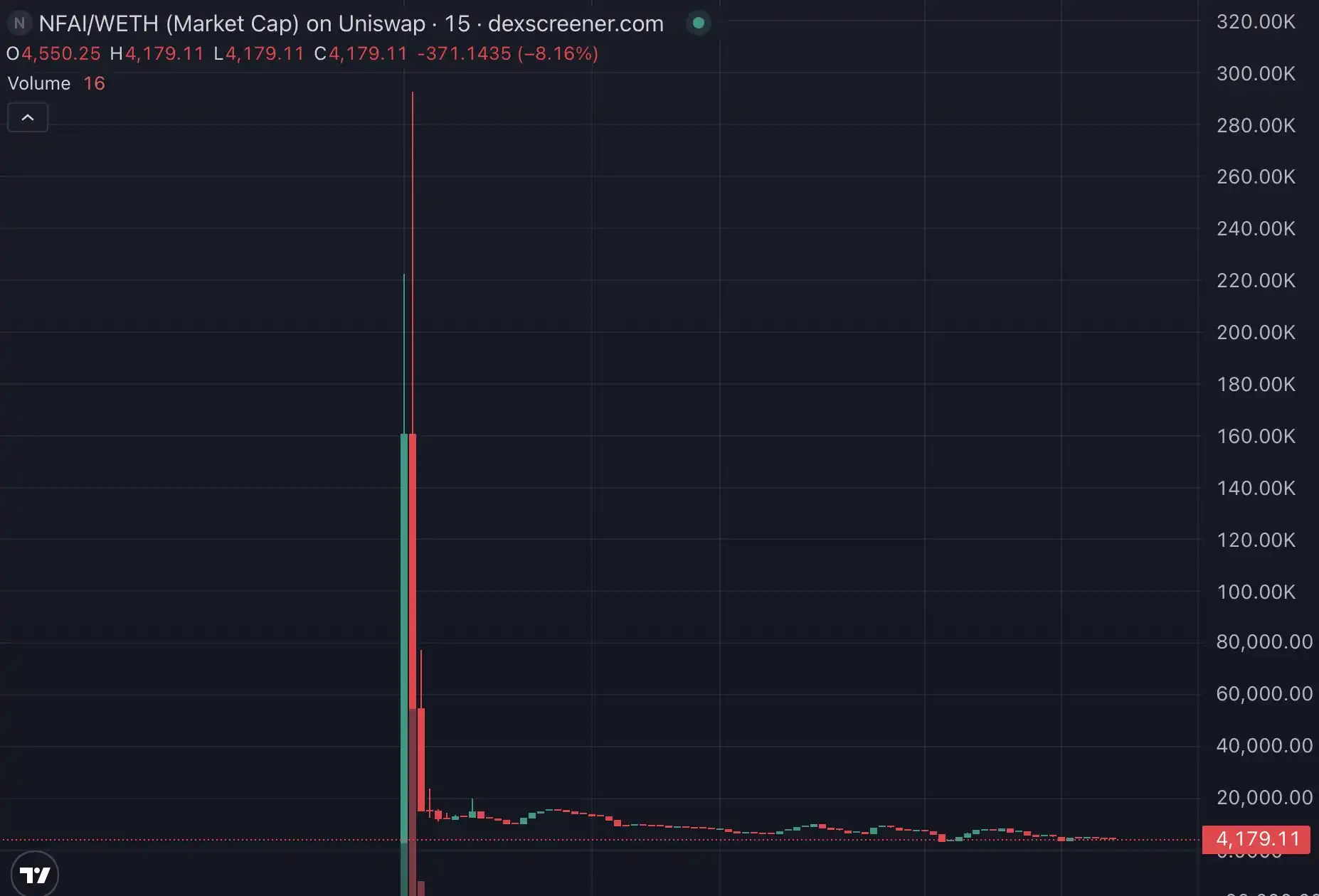
One function of market makers is sometimes to help project teams boost trading volume. The industry term is "volume support," which translates to volume manipulation.

The undercover FBI agents contacted several well-known market makers in the industry one by one, stating upfront: we have a new project and need someone to help boost the trading volume.

According to the indictment released by the U.S. Department of Justice, every single one said, okay.

No one asked if the project was compliant, no one asked if the token had any real utility, no one asked if this was illegal. According to court documents released by the U.S. Department of Justice, four market makers—Gotbit, ZM Quant, CLS Global, MyTrade—all took the job.

During a meeting with an undercover agent, the founder of one of these firms, on a recording device, referred to himself as the "mastermind." He explained in detail how his company used bots to simultaneously place buy and sell orders to create fake trading volume, and how to make the price chart look like a rollercoaster to lure retail investors to jump in.

Then he said something that the FBI recorded verbatim. According to Cointelegraph quoting the indictment, he said:

We have to make them lose money for us to make money.

"Them" refers to retail investors.

The operation was code-named Operation Token Mirrors. According to a U.S. Department of Justice announcement on October 9, 2024, the first batch of 18 people were charged, with over $25 million in crypto assets seized. According to an IRS announcement on March 30 of this year, a second batch of 10 people were charged, with three extradited to the U.S. from Singapore.

Two years, three continents, 28 people. This is the largest market manipulation enforcement action in cryptocurrency history. And it's not over yet.

A Price Quote

How did these market makers operate?

According to the indictment released by the U.S. Department of Justice, Gotbit's founder, Andriunin, maintained a spreadsheet within the company with two columns of data side by side: one labeled "Created Volume" and the other "Market Volume."

To translate, one column was the fake volume they generated themselves, the other was the actual trading happening in the market.

In a 2019 interview with CoinDesk, while still a sophomore at Moscow State University, this 20-year-old was already explaining in detail on camera how he wrote code to create fake volume and helped clients get their tokens onto CoinMarketCap's trending lists. According to the CoinDesk article, he himself said this business was "not entirely ethical."

After the interview aired, he didn't receive any subpoenas; instead, he gained five new clients.

By the time of his arrest in 2024, Gotbit had been operating for six years, serving projects worldwide. According to the U.S. Department of Justice's sentencing announcement, Andriunin was ultimately sentenced to 8 months in prison, Gotbit was ordered to dissolve, and approximately $23 million in crypto assets were forfeited.

Gotbit wasn't the cheapest.

According to a price quote from another market maker disclosed in the indictment, the cost of generating $1 million in daily trading volume was about $200. According to Cointelegraph citing court documents, an employee of ZM Quant explained to an FBI undercover agent on a recorded call: "We use one to two thousand wallets, trading ten times per hour, or ten times per minute, to reach the target volume."

Each transaction cost about $3.

And CLS Global went even further. According to SEC investigation documents, this company registered in the UAE used 30 wallets to execute 740 wash trades, creating nearly $600,000 in fake trading volume, accounting for 98% of the total trading volume of the fake token NexFundAI created by the FBI during that period.

$7.5 Billion of Thin Air

Market makers are tools; the people hiring them are the main actors.

According to the U.S. Department of Justice indictment, the biggest client exposed by this FBI sting operation was called Saitama, a crypto company registered in Massachusetts in 2021, with a peak market cap reportedly reaching $7.5 billion.

What does $7.5 billion mean? It was larger than many legitimate publicly traded companies on Nasdaq at the time.

But how did that number come about, according to the indictment? Starting in July 2021, Saitama's management coordinated actions in a Telegram group, using multiple wallets to place small buy orders, creating the illusion of "a large influx of new buyers."

According to Telegram chat logs cited in the indictment, a core member explained the purpose of the operation: "We want these small buys to look like more buyers, that’s the plan."

The chat logs also included "PUMP IT" emojis and GIFs they sent to each other to confirm buys and celebrate when retail investors followed.
According to the same indictment, Saitama then paid market makers including ZM Quant and Gotbit to conduct large-scale wash trading on exchanges like BitMart and LBank. After the market cap was inflated, the management quietly sold their own tokens, cashing out tens of millions of dollars. According to a DOJ announcement, Saitama's CEO was arrested in the UK, and five former and current employees were charged, with three pleading guilty.

Saitama wasn't the only one.

According to the same indictment, a project called Lillian Finance was founded by 48-year-old Bradley Beatty from Florida. This person publicly claimed to be a defense contractor, stated he had spoken before Congress on cryptocurrency issues, and promised that part of the token sale proceeds would go to charity to help children receive medical care.

According to the indictment, all these claims were fabricated. Beatty pocketed the profits meant for charity.

Defense contractor, congressional speech, children's medical charity—you just need to weave a compelling enough narrative and hire a market maker to paint a pretty price chart, and that's enough to attract some people to FOMO.

Looking back at these cases, what feels most unsettling isn't how sophisticated the scams were, but rather, how crude they were.

The FBI's Coin Was Pretty Legit

After the operation concluded, the FBI did one more thing.

According to a U.S. Department of Justice announcement, the NexFundAI website is still up, but now with a banner at the top that reads: "This website was created under the direction of the Federal Bureau of Investigation as part of an investigation into cryptocurrency fraud and market manipulation." Below the banner is a link to the full DOJ indictment.

The FBI also specifically opened a victim registration channel. According to the DOJ announcement, anyone who lost money on NexFundAI or related tokens can fill out a form to apply for compensation and legal protection.

The FBI launched a token, proactively disclosed information after the operation ended, and even opened a compensation channel for those who lost money; compared to the projects caught in this sting, the process was arguably much more legitimate.

The most absurd part is yet to come.

According to a report by blockchain analytics firm TRM Labs, within 24 hours of the DOJ announcement, someone cloned the FBI's NexFundAI smart contract and launched a copycat token. This person started with about $2,300, cashed out over 52 ETH within 24 hours, worth approximately $127,000 at the time.

The FBI used a fake token to prove market maker manipulation; the day the news broke, someone used the same tactic to launch a new meme and make another profit. Law enforcement took two years, but the market digested and absorbed the entire event in two hours, by launching yet another new shitcoin.

So next time you see a meme coin suddenly skyrocketing, you might want to think about whether it's a performance or real trading.

Of course, it could also be the FBI.

İlgili Sorular

QAccording to the article, what was the primary tactic used by the 'market makers' exposed in the FBI sting operation?

AThey used automated bots or a network of wallets to place simultaneous buy and sell orders, creating fake trading volume to make a project appear more active and legitimate, thereby attracting real investors.

QWhat was the name of the fake project the FBI created, and what action did they take regarding its website after the operation concluded?

AThe fake project was called NexFundAI. After the operation, the FBI added a prominent banner to its website explaining it was a law enforcement investigation tool and provided links to official documents and a victim compensation form.

QWhich major project with a peak claimed valuation of $75 billion was implicated as a major client of the exposed market makers? What was the alleged method they used to inflate its value?

AThe project was Saitama. Its management allegedly coordinated through Telegram groups to place numerous small buy orders from multiple wallets, creating the illusion of widespread organic buying demand to pump the price before selling their own holdings.

QWhat ironic event occurred shortly after the Department of Justice announced the results of 'Operation Token Mirrors'?

AWithin 24 hours, someone cloned the NexFundAI smart contract and launched a copycat memecoin. Starting with about $2,300, the creator cashed out over 52 ETH (approx. $127,000 at the time), demonstrating the very market behavior the operation aimed to expose.

QWhat specific, self-incriminating quote from one of the market maker founders did the FBI record and highlight in the article?

AThe founder said, 'We have to make them lose money for us to make money,' where 'them' referred to retail investors.

İlgili Okumalar

AI PC Battle: Bet on the Toll Booth, Not the Camp

**Title:** The AI PC Battle: Don't Bet on Sides, Bet on the Tollbooth **Summary:** The AI PC competition is moving beyond simple "x86 vs. Arm" narratives. The core investment thesis should focus on identifying which players can sustain margins, cash flow, and pricing power throughout the upgrade cycle, rather than backing a particular architecture. The opportunity is analyzed in three layers: 1. **The Advanced Foundry Tollbooth:** TSMC is positioned to collect "tolls" regardless of which chip designer wins, due to its dominant ~70% share in advanced semiconductor manufacturing, which is essential for high-end AI PC chips. 2. **Compute & Platform Spillover:** AMD represents an offensive in the x86 CPU+GPU space, while NVIDIA leverages its GPU and CUDA software stack dominance. Both benefit from the demand for increased local AI compute. 3. **Architecture Diffusion & Turnaround Plays:** ARM and Intel offer potential for significant upside (elasticity), but investments here require stricter discipline due to higher execution risks and competitive challenges. The industry is transitioning from concept to shipment validation. While short-term forecasts for AI PC adoption have been revised down slightly due to tariffs and procurement delays, the long-term trend towards AI becoming a standard PC feature remains intact. The key driver for upgrade cycles will be whether compelling enterprise applications (e.g., privacy-sensitive computing, low-latency inference) emerge beyond consumer-focused features like meeting summarization. Investment strategy should prioritize companies with platform-level advantages and recurring revenue streams. TSMC offers high certainty as the foundational tollbooth. AMD presents a strong offensive play within the established ecosystem. ARM and Intel are higher-risk, higher-potential-reward turnaround bets. The report cautions against chasing short-term hype and emphasizes a disciplined, long-term approach focused on buying ecosystem strength and cash-flow certainty after market enthusiasm subsides. **Key Risks:** Underwhelming AI PC applications slowing upgrade cycles; slow improvement in Windows on Arm compatibility; macro/tariff impacts on PC demand; potential advanced node supply-demand mismatches affecting TSMC; high overall AI sector valuations making stocks vulnerable to a risk-off shift in markets.

marsbit17 dk önce

AI PC Battle: Bet on the Toll Booth, Not the Camp

marsbit17 dk önce

Ten-Thousand-Word Analysis: From $10 to $290, MRVL Wins the Entire AI Era by 'Not Making GPUs'

Marvell Technology's stock price surged from under $10 in 2016 to a record $290 in June 2026, fueled not by making GPUs, but by dominating AI infrastructure connectivity. This analysis argues the market misvalues MRVL as merely a smaller Broadcom in custom AI chips, overlooking its true, unique position. Marvell's core strength lies in enabling high-speed data flow for AI clusters through three interconnected businesses. First, it holds a commanding ~70% market share in high-speed optical DSPs (essential for data center light modules), a deep-moat business with accelerating growth. Second, its custom AI chip design business serves hyperscalers like AWS, Microsoft, and Google, with a significant revenue pipeline despite lower margins. Third, stable cash flows come from Ethernet switch chips and enterprise storage controllers. Together, they form a full-stack "AI data movement" platform. CEO Matt Murphy's transformative leadership since 2016, involving strategic divestments, key acquisitions (like Inphi for optical DSPs), and securing long-term agreements with major cloud providers, repositioned the company. A pivotal $2 billion strategic investment from NVIDIA in 2026 underscored Marvell's critical role in the AI ecosystem, particularly through collaborations like NVLink Fusion. While Marvell faces risks—including client concentration (losing the Amazon Trainium3 design), lower-margin business mix, competitive threats, insider selling, and complex supply chains—its fundamentals remain strong. The optical interconnect moat is widening with the acquisition of Celestial AI (photonics fabric), and financial metrics show accelerating revenue growth and operating leverage. With a PEG ratio suggesting undervaluation relative to its growth, the thesis is that the market undervalues Marvell's monopolistic position in AI "plumbing" while overemphasizing its competitive custom chip segment. The story transcends investing, symbolizing how in any complex system—from the internet to AI—the value of "connection" ultimately surpasses that of individual "nodes."

marsbit46 dk önce

Ten-Thousand-Word Analysis: From $10 to $290, MRVL Wins the Entire AI Era by 'Not Making GPUs'

marsbit46 dk önce

AI Relay Stations Spark Heated Debate on Zhihu: Behind Cheap Tokens, What Are Users Really Worried About?

A discussion on Zhihu about "AI relay stations" shifted the niche developer topic of "cheap tokens" into broader user awareness. Users moved beyond simply questioning the legitimacy of these services to focus on practical concerns: Where do cheap tokens truly come from? Is the model being accessed the real one? Can relay stations see prompts, code, and API keys? For occasional users, are the risks worth it? The core debate centered less on price and more on trust. A primary worry is model authenticity—the risk of "model swapping," where users paying for a premium model might be routed to a cheaper one, creating an information asymmetry. Others argued that cost comparisons matter; while cheaper than official pay-as-you-go APIs, relay stations may not be the lowest-cost option versus subscriptions, domestic models, or free tiers, making user needs assessment crucial. Speculation about token sources ranged from legitimate bulk discounts to gray-area methods like account sharing or exploiting regional pricing. This opacity makes risk assessment difficult for users. Data security emerged as a critical concern, especially for enterprise use. When processing sensitive information like code, contracts, or client data, the inability to verify a relay station's data handling, retention, or access policies poses significant compliance and confidentiality risks. The evolving consensus suggests relay stations can be used cautiously for low-sensitivity, disposable tasks (e.g., summarizing public info, simple translation). However, they should not be the default for sensitive, professional, or production workflows involving proprietary data, Agents, or automated systems. Recommendations include avoiding large prepayments, not relying on a single service, using test prompts to monitor quality, anonymizing data where possible, and keeping official channels as backups. Ultimately, the discussion framed tokens not just as a billing unit but as a measure of real cost encompassing price, model integrity, data security, and service stability. The popularity of relay stations highlights user demand for affordable access, but the debate underscores a key trade-off: the savings from cheap tokens may come at the price of trust, transparency, and control over one's data and AI experience.

marsbit1 saat önce

AI Relay Stations Spark Heated Debate on Zhihu: Behind Cheap Tokens, What Are Users Really Worried About?

marsbit1 saat önce

In-Depth Research Report on TradFi: The Convergence Wave of Crypto and Traditional Finance

In 2026, the crypto industry is undergoing a profound infrastructure-level transformation—TradFi assets are migrating on-chain at an unprecedented pace. According to CoinGecko's Q1 2026 report, the total value locked (TVL) of tokenized real-world assets (RWA) has surpassed $31 billion, a nearly 4x increase from $7.8 billion at the beginning of 2025, with the sector’s aggregate market capitalization reaching $19.3 billion. Among these, the market cap of tokenized stocks surged from $2 million to $486 million, with Q1 spot trading volume reaching $15.1 billion—a single quarter already surpassing the entire second half of 2025. RWA perpetual contract Q1 trading volume reached a staggering $524.8 billion, far exceeding the $313 billion for all of 2025. Meanwhile, BlackRock's BUIDL fund has reached $2.3 billion in scale and has filed for two new tokenized funds, signaling that the world's largest asset manager's tokenization strategy is evolving from pilot to product suite expansion. HTX, as a core participant in the crypto exchange sector, officially launched TradFi perpetual futures products including NVDA, AAPL, MSFT, META, and SPY in 2026, enabling crypto users to gain 24/7 trading access to core U.S. equities. Boston Consulting Group predicts that global tokenized asset scale could reach $16 trillion by 2030, while McKinsey offers a conservative estimate of approximately $2 trillion. The on-chain migration of TradFi assets is no longer a "future narrative" but a structural transformation unfolding in real time, as crypto exchanges evolve from single crypto asset trading platforms toward "multi-asset-class trading infrastructure."

HTX Learn1 saat önce

In-Depth Research Report on TradFi: The Convergence Wave of Crypto and Traditional Finance

HTX Learn1 saat önce

İşlemler

Spot
Futures

Popüler Makaleler

F Nasıl Satın Alınır

HTX.com’a hoş geldiniz! Synfutures (F) satın alma işlemlerini basit ve kullanışlı bir hâle getirdik. Adım adım açıkladığımız rehberimizi takip ederek kripto yolculuğunuza başlayın. 1. Adım: HTX Hesabınızı OluşturunHTX'te ücretsiz bir hesap açmak için e-posta adresinizi veya telefon numaranızı kullanın. Sorunsuzca kaydolun ve tüm özelliklerin kilidini açın. Hesabımı Aç2. Adım: Kripto Satın Al Bölümüne Gidin ve Ödeme Yönteminizi SeçinKredi/Banka Kartı: Visa veya Mastercard'ınızı kullanarak anında Synfutures (F) satın alın.Bakiye: Sorunsuz bir şekilde işlem yapmak için HTX hesap bakiyenizdeki fonları kullanın.Üçüncü Taraflar: Kullanımı kolaylaştırmak için Google Pay ve Apple Pay gibi popüler ödeme yöntemlerini ekledik.P2P: HTX'teki diğer kullanıcılarla doğrudan işlem yapın.Borsa Dışı (OTC): Yatırımcılar için kişiye özel hizmetler ve rekabetçi döviz kurları sunuyoruz.3. Adım: Synfutures (F) Varlıklarınızı SaklayınSynfutures (F) satın aldıktan sonra HTX hesabınızda saklayın. Alternatif olarak, blok zinciri transferi yoluyla başka bir yere gönderebilir veya diğer kripto para birimlerini takas etmek için kullanabilirsiniz.4. Adım: Synfutures (F) Varlıklarınızla İşlem YapınHTX'in spot piyasasında Synfutures (F) ile kolayca işlemler yapın.Hesabınıza erişin, işlem çiftinizi seçin, işlemlerinizi gerçekleştirin ve gerçek zamanlı olarak izleyin. Hem yeni başlayanlar hem de deneyimli yatırımcılar için kullanıcı dostu bir deneyim sunuyoruz.

206 Toplam GörüntülenmeYayınlanma 2024.12.21Güncellenme 2026.06.02

F Nasıl Satın Alınır

Tartışmalar

HTX Topluluğuna hoş geldiniz. Burada, en son platform gelişmeleri hakkında bilgi sahibi olabilir ve profesyonel piyasa görüşlerine erişebilirsiniz. Kullanıcıların F (F) fiyatı hakkındaki görüşleri aşağıda sunulmaktadır.

活动图片













