The FBI Launched a Coin, and It's More Legitimate Than Half of the Crypto Projects Out There

marsbit2026-05-21 tarihinde yayınlandı2026-05-21 tarihinde güncellendi

Özet

In an undercover operation dubbed "Operation Token Mirrors," the FBI created a fake cryptocurrency project called NexFundAI on Ethereum to expose widespread market manipulation. Posing as a project team, FBI agents approached several market-making firms—including Gotbit, ZM Quant, CLS Global, and MyTrade—to artificially inflate trading volume. All firms agreed without questioning the project's legitimacy, with one founder admitting on tape that they profited by ensuring retail investors lost money. The investigation, spanning two years and three continents, led to charges against 28 individuals and the seizure of over $25 million in crypto assets. Key cases involved firms like Saitama, which allegedly manipulated its token to a $7.5 billion market cap using coordinated buying and market makers, and Lillian Finance, which promoted a fraudulent charity narrative. Evidence included internal spreadsheets tracking fake versus real trading volume and Telegram chats discussing manipulation tactics. The FBI's fake project website now warns visitors about its investigative purpose and offers a victim compensation portal. Ironically, within 24 hours of the DOJ's announcement, a copycat token based on NexFundAI's contract was launched, netting its creator over $127,000—highlighting how quickly such schemes are replicated in the crypto space.

Author: Curry, Shenchao TechFlow

Two years ago, FBI agents pretended to be the founding team of an investment project at the "intersection of AI and finance," launched a token called NexFundAI on Ethereum, complete with an official website, whitepaper, and business plan, looking no different from any legitimate project on the market.

Then they approached market makers to provide liquidity.
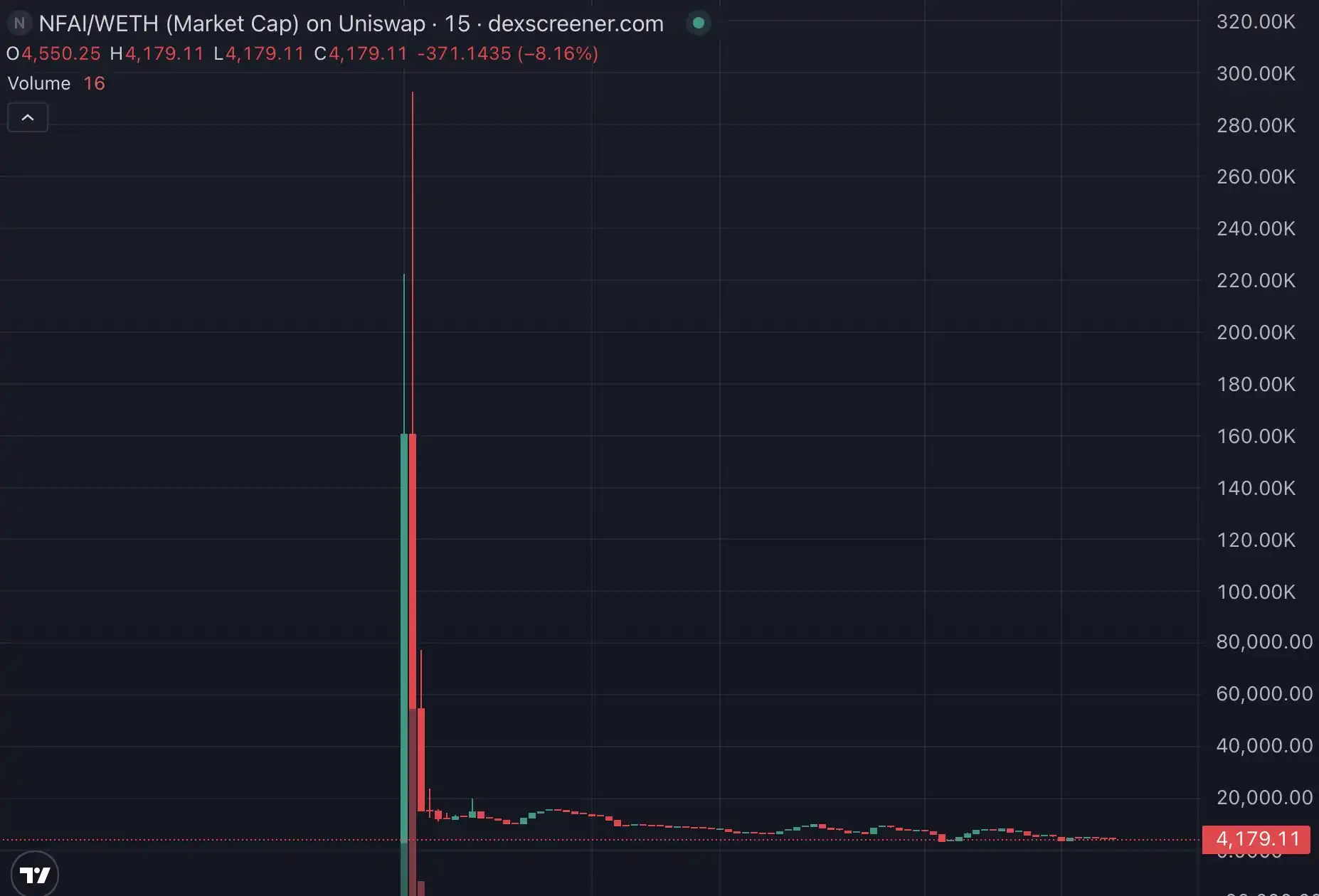
One function of market makers is sometimes to help project teams boost trading volume. The industry term is "volume support," which translates to volume manipulation.

The undercover FBI agents contacted several well-known market makers in the industry one by one, stating upfront: we have a new project and need someone to help boost the trading volume.

According to the indictment released by the U.S. Department of Justice, every single one said, okay.

No one asked if the project was compliant, no one asked if the token had any real utility, no one asked if this was illegal. According to court documents released by the U.S. Department of Justice, four market makers—Gotbit, ZM Quant, CLS Global, MyTrade—all took the job.

During a meeting with an undercover agent, the founder of one of these firms, on a recording device, referred to himself as the "mastermind." He explained in detail how his company used bots to simultaneously place buy and sell orders to create fake trading volume, and how to make the price chart look like a rollercoaster to lure retail investors to jump in.

Then he said something that the FBI recorded verbatim. According to Cointelegraph quoting the indictment, he said:

We have to make them lose money for us to make money.

"Them" refers to retail investors.

The operation was code-named Operation Token Mirrors. According to a U.S. Department of Justice announcement on October 9, 2024, the first batch of 18 people were charged, with over $25 million in crypto assets seized. According to an IRS announcement on March 30 of this year, a second batch of 10 people were charged, with three extradited to the U.S. from Singapore.

Two years, three continents, 28 people. This is the largest market manipulation enforcement action in cryptocurrency history. And it's not over yet.

A Price Quote

How did these market makers operate?

According to the indictment released by the U.S. Department of Justice, Gotbit's founder, Andriunin, maintained a spreadsheet within the company with two columns of data side by side: one labeled "Created Volume" and the other "Market Volume."

To translate, one column was the fake volume they generated themselves, the other was the actual trading happening in the market.

In a 2019 interview with CoinDesk, while still a sophomore at Moscow State University, this 20-year-old was already explaining in detail on camera how he wrote code to create fake volume and helped clients get their tokens onto CoinMarketCap's trending lists. According to the CoinDesk article, he himself said this business was "not entirely ethical."

After the interview aired, he didn't receive any subpoenas; instead, he gained five new clients.

By the time of his arrest in 2024, Gotbit had been operating for six years, serving projects worldwide. According to the U.S. Department of Justice's sentencing announcement, Andriunin was ultimately sentenced to 8 months in prison, Gotbit was ordered to dissolve, and approximately $23 million in crypto assets were forfeited.

Gotbit wasn't the cheapest.

According to a price quote from another market maker disclosed in the indictment, the cost of generating $1 million in daily trading volume was about $200. According to Cointelegraph citing court documents, an employee of ZM Quant explained to an FBI undercover agent on a recorded call: "We use one to two thousand wallets, trading ten times per hour, or ten times per minute, to reach the target volume."

Each transaction cost about $3.

And CLS Global went even further. According to SEC investigation documents, this company registered in the UAE used 30 wallets to execute 740 wash trades, creating nearly $600,000 in fake trading volume, accounting for 98% of the total trading volume of the fake token NexFundAI created by the FBI during that period.

$7.5 Billion of Thin Air

Market makers are tools; the people hiring them are the main actors.

According to the U.S. Department of Justice indictment, the biggest client exposed by this FBI sting operation was called Saitama, a crypto company registered in Massachusetts in 2021, with a peak market cap reportedly reaching $7.5 billion.

What does $7.5 billion mean? It was larger than many legitimate publicly traded companies on Nasdaq at the time.

But how did that number come about, according to the indictment? Starting in July 2021, Saitama's management coordinated actions in a Telegram group, using multiple wallets to place small buy orders, creating the illusion of "a large influx of new buyers."

According to Telegram chat logs cited in the indictment, a core member explained the purpose of the operation: "We want these small buys to look like more buyers, that’s the plan."

The chat logs also included "PUMP IT" emojis and GIFs they sent to each other to confirm buys and celebrate when retail investors followed.
According to the same indictment, Saitama then paid market makers including ZM Quant and Gotbit to conduct large-scale wash trading on exchanges like BitMart and LBank. After the market cap was inflated, the management quietly sold their own tokens, cashing out tens of millions of dollars. According to a DOJ announcement, Saitama's CEO was arrested in the UK, and five former and current employees were charged, with three pleading guilty.

Saitama wasn't the only one.

According to the same indictment, a project called Lillian Finance was founded by 48-year-old Bradley Beatty from Florida. This person publicly claimed to be a defense contractor, stated he had spoken before Congress on cryptocurrency issues, and promised that part of the token sale proceeds would go to charity to help children receive medical care.

According to the indictment, all these claims were fabricated. Beatty pocketed the profits meant for charity.

Defense contractor, congressional speech, children's medical charity—you just need to weave a compelling enough narrative and hire a market maker to paint a pretty price chart, and that's enough to attract some people to FOMO.

Looking back at these cases, what feels most unsettling isn't how sophisticated the scams were, but rather, how crude they were.

The FBI's Coin Was Pretty Legit

After the operation concluded, the FBI did one more thing.

According to a U.S. Department of Justice announcement, the NexFundAI website is still up, but now with a banner at the top that reads: "This website was created under the direction of the Federal Bureau of Investigation as part of an investigation into cryptocurrency fraud and market manipulation." Below the banner is a link to the full DOJ indictment.

The FBI also specifically opened a victim registration channel. According to the DOJ announcement, anyone who lost money on NexFundAI or related tokens can fill out a form to apply for compensation and legal protection.

The FBI launched a token, proactively disclosed information after the operation ended, and even opened a compensation channel for those who lost money; compared to the projects caught in this sting, the process was arguably much more legitimate.

The most absurd part is yet to come.

According to a report by blockchain analytics firm TRM Labs, within 24 hours of the DOJ announcement, someone cloned the FBI's NexFundAI smart contract and launched a copycat token. This person started with about $2,300, cashed out over 52 ETH within 24 hours, worth approximately $127,000 at the time.

The FBI used a fake token to prove market maker manipulation; the day the news broke, someone used the same tactic to launch a new meme and make another profit. Law enforcement took two years, but the market digested and absorbed the entire event in two hours, by launching yet another new shitcoin.

So next time you see a meme coin suddenly skyrocketing, you might want to think about whether it's a performance or real trading.

Of course, it could also be the FBI.

İlgili Sorular

QAccording to the article, what was the primary tactic used by the 'market makers' exposed in the FBI sting operation?

AThey used automated bots or a network of wallets to place simultaneous buy and sell orders, creating fake trading volume to make a project appear more active and legitimate, thereby attracting real investors.

QWhat was the name of the fake project the FBI created, and what action did they take regarding its website after the operation concluded?

AThe fake project was called NexFundAI. After the operation, the FBI added a prominent banner to its website explaining it was a law enforcement investigation tool and provided links to official documents and a victim compensation form.

QWhich major project with a peak claimed valuation of $75 billion was implicated as a major client of the exposed market makers? What was the alleged method they used to inflate its value?

AThe project was Saitama. Its management allegedly coordinated through Telegram groups to place numerous small buy orders from multiple wallets, creating the illusion of widespread organic buying demand to pump the price before selling their own holdings.

QWhat ironic event occurred shortly after the Department of Justice announced the results of 'Operation Token Mirrors'?

AWithin 24 hours, someone cloned the NexFundAI smart contract and launched a copycat memecoin. Starting with about $2,300, the creator cashed out over 52 ETH (approx. $127,000 at the time), demonstrating the very market behavior the operation aimed to expose.

QWhat specific, self-incriminating quote from one of the market maker founders did the FBI record and highlight in the article?

AThe founder said, 'We have to make them lose money for us to make money,' where 'them' referred to retail investors.

İlgili Okumalar

Warsh's First Day in Office, Markets Deliver a 'Wake-up Call': Rate Hike Expected This Year

On his first day in office, newly inaugurated Federal Reserve Chairman Warsh received a stark market warning, with expectations now fully pricing in a 25-basis-point interest rate hike this year. The shift was triggered by hawkish remarks from Fed Governor Waller, who stated that inflation is now the key policy "driver" and that the odds of a hike or cut are evenly split. This sent short-term Treasury yields higher. Waller signaled a significant pivot in his stance, citing disappointing inflation and labor data. He suggested removing "easing bias" language from Fed statements and did not rule out future rate increases if inflation fails to recede, though he noted immediate action isn't warranted without signs of unanchored inflation expectations. Chairman Warsh faces immediate pressure at his first FOMC meeting in June. With the preferred inflation gauge at a three-year high, analysts warn that failing to hike could be interpreted as an implicit easing of policy. The geopolitical situation in the Middle East is adding to existing price pressures. The market's expectation for a hike contrasts sharply with earlier forecasts for multiple cuts. While long-term Treasury yields have been contained by lower energy prices recently, analysts note they remain under structural upward pressure. Warsh's swearing-in at the White House highlights political scrutiny over Fed independence. However, the market has made it clear that inflation is the most urgent challenge, leaving the new chairman little time to settle in.

marsbit3 saat önce

Warsh's First Day in Office, Markets Deliver a 'Wake-up Call': Rate Hike Expected This Year

marsbit3 saat önce

Has Microsoft Lost Its Way in the AI Race, and Can Copilot Bring It Back on Track?

Microsoft, once seen as an early AI frontrunner due to its investment in OpenAI, is navigating a strategic shift amid increased competition. Its initial reliance on OpenAI’s GPT models has been complicated by OpenAI’s growing ambitions as a direct competitor, rapid advancements from rivals like Claude and Gemini, and the disruptive rise of AI agents, which challenge its traditional SaaS business model. These factors contributed to stock declines and slower-than-expected adoption of its flagship Copilot products. In response, CEO Satya Nadella has taken a hands-on role in product development, signaling the urgency of change. Microsoft is pivoting from a model-centric strategy to a "model-agnostic" enterprise platform approach. It aims to become the foundational layer connecting various AI models—from OpenAI, Anthropic, or its own new "Superintelligence" team—with enterprise workflows, data, security, and cloud services. Recent organizational changes merged consumer and enterprise Copilot teams to accelerate innovation, exemplified by new products like Copilot Tasks and Copilot Cowork. However, this transformation comes at a high cost. Microsoft faces massive capital expenditures, potentially reaching ~$190 billion by 2026, to support AI infrastructure. While its platform strategy shows early signs of traction with growing Azure AI revenue, it must balance startup-like agility with the reliability expected by enterprise clients. The core challenge is no longer being the sole AI winner but defending its position as the essential enterprise software entry point amidst rapid technological commoditization and the shift towards always-on AI agents.

marsbit4 saat önce

Has Microsoft Lost Its Way in the AI Race, and Can Copilot Bring It Back on Track?

marsbit4 saat önce

Why Haven't Forex Stablecoins Taken Off?

Why FX Stablecoins Never Took Off: A Path Forward via Synthetic FX Despite the explosive growth of stablecoin-powered digital banking, which has seen ~$6B in VC investment and a 24x surge in crypto card spending in under a year, a major limitation persists: these banks are essentially dollar-only accounts. This leaves 95-99% of global accounts, which are denominated in non-USD currencies, underserved. Attempts to create native foreign currency (FX) stablecoins (like EURC) have largely failed, with total FX stablecoin TVL at ~$600M compared to $400B for USD stablecoins—a 700x gap. These FX tokens face critical challenges: fragile pegs due to low liquidity, limited exchange/FinTech acceptance, poor on/off-ramps, complex regional compliance, and a chicken-and-egg adoption problem. The article argues that the solution lies not in competing with entrenched USD stablecoin networks (USDT/USDC), but in adopting a synthetic FX model inspired by traditional finance. Specifically, it advocates for Mark-to-Market Non-Deliverable Forwards (NDFs)—cash-settled FX derivatives that allow users to maintain underlying USD stablecoin holdings while having their account balance and P&L denominated in a foreign currency. This approach offers key advantages: strong oracle-based pegs, retention of deep USD stablecoin liquidity and yield, superior on/off-ramps, scalability to any currency with a reliable feed, and capital efficiency. It mirrors how modern institutional FX markets operate. Primary use cases for on-chain NDFs include: 1. **Digital Banks/Wallets:** Enabling multi-currency accounts for international users without leaving the USD stablecoin ecosystem, boosting deposits and retention. 2. **FX Carry Trade Vaults:** Offering access to sovereign interest rate differentials (e.g., earning yield on BRL) in a more stable and scalable format than crypto-native products like Ethena. 3. **Global Enterprise Payments:** Allowing merchants to receive payments in local currency equivalents while settling in USD stablecoins, similar to services offered by Stripe for fiat. The conclusion is that synthetic FX, not native FX stablecoins, is the viable path to integrating foreign exchange into the growing stablecoin digital banking landscape, potentially unlocking the next phase of institutional DeFi and multi-trillion-dollar global adoption.

链捕手4 saat önce

Why Haven't Forex Stablecoins Taken Off?

链捕手4 saat önce

İşlemler

Spot
Futures

Popüler Makaleler

F Nasıl Satın Alınır

HTX.com’a hoş geldiniz! Synfutures (F) satın alma işlemlerini basit ve kullanışlı bir hâle getirdik. Adım adım açıkladığımız rehberimizi takip ederek kripto yolculuğunuza başlayın. 1. Adım: HTX Hesabınızı OluşturunHTX'te ücretsiz bir hesap açmak için e-posta adresinizi veya telefon numaranızı kullanın. Sorunsuzca kaydolun ve tüm özelliklerin kilidini açın. Hesabımı Aç2. Adım: Kripto Satın Al Bölümüne Gidin ve Ödeme Yönteminizi SeçinKredi/Banka Kartı: Visa veya Mastercard'ınızı kullanarak anında Synfutures (F) satın alın.Bakiye: Sorunsuz bir şekilde işlem yapmak için HTX hesap bakiyenizdeki fonları kullanın.Üçüncü Taraflar: Kullanımı kolaylaştırmak için Google Pay ve Apple Pay gibi popüler ödeme yöntemlerini ekledik.P2P: HTX'teki diğer kullanıcılarla doğrudan işlem yapın.Borsa Dışı (OTC): Yatırımcılar için kişiye özel hizmetler ve rekabetçi döviz kurları sunuyoruz.3. Adım: Synfutures (F) Varlıklarınızı SaklayınSynfutures (F) satın aldıktan sonra HTX hesabınızda saklayın. Alternatif olarak, blok zinciri transferi yoluyla başka bir yere gönderebilir veya diğer kripto para birimlerini takas etmek için kullanabilirsiniz.4. Adım: Synfutures (F) Varlıklarınızla İşlem YapınHTX'in spot piyasasında Synfutures (F) ile kolayca işlemler yapın.Hesabınıza erişin, işlem çiftinizi seçin, işlemlerinizi gerçekleştirin ve gerçek zamanlı olarak izleyin. Hem yeni başlayanlar hem de deneyimli yatırımcılar için kullanıcı dostu bir deneyim sunuyoruz.

192 Toplam GörüntülenmeYayınlanma 2024.12.21Güncellenme 2025.03.21

F Nasıl Satın Alınır

Tartışmalar

HTX Topluluğuna hoş geldiniz. Burada, en son platform gelişmeleri hakkında bilgi sahibi olabilir ve profesyonel piyasa görüşlerine erişebilirsiniz. Kullanıcıların F (F) fiyatı hakkındaki görüşleri aşağıda sunulmaktadır.

活动图片