The Endgame of DATs: Liquidation or Self-Rescue

比推2026-02-17 tarihinde yayınlandı2026-02-17 tarihinde güncellendi

Özet

The article "When DAT Wrapper Cracks" examines the crisis facing Digital Asset Trusts (DATs), which were once popular for boosting stock prices by holding cryptocurrencies. Initially, DATs operated a "financial flywheel": they bought crypto, issued overvalued shares at a premium to NAV (Net Asset Value), used proceeds to buy more crypto, and repeated the cycle. However, with the crypto market down over 45% in four months, most DATs now trade at a discount to their crypto holdings, breaking this mechanism. DATs face operational costs, financing expenses, and legal fees. Without the premium, they can't raise cheap capital by issuing shares, and investors question why they should pay for indirect crypto exposure when direct options are cheaper. While some, like MicroStrategy, have cash reserves and operational businesses to weather the downturn, newer DATs (e.g., BitMine Immersion, Forward Industries) lack sufficient reserves or revenue streams. They rely on staking income, but this doesn't cover fiat obligations like salaries and interest payments. The survival of DATs now depends on their ability to manage dilution, debt, and operational efficiency. Some may need to diversify into cash-generating assets or face liquidation. The bear market will test which DATs can adapt and survive without the premium narrative.

Original Title: When DAT Wrapper Cracks

Author: Prathik Desai

Compiled and Edited by: BitpushNews


Over a year ago, becoming a digital asset treasury seemed like an easy decision for many companies seeking to boost their stock prices.

Some Microsoft shareholders rallied, urging the board to evaluate the benefits of incorporating some Bitcoin into its balance sheet. They even mentioned Strategy (formerly MicroStrategy), the largest publicly traded Bitcoin DAT.

At that time, there was a financial flywheel attracting everyone to follow suit.

Buy large amounts of BTC/ETH/SOL. Watch the stock price exceed the value of these assets. Issue more shares at a premium. Use the proceeds to buy more cryptocurrency. Rinse and repeat. This financial flywheel supporting publicly traded stocks seemed nearly perfect, enough to tempt investors. They paid over two dollars for just one dollar's worth of indirect Bitcoin exposure. Those were crazy times.

But time tests the best strategies and flywheels.

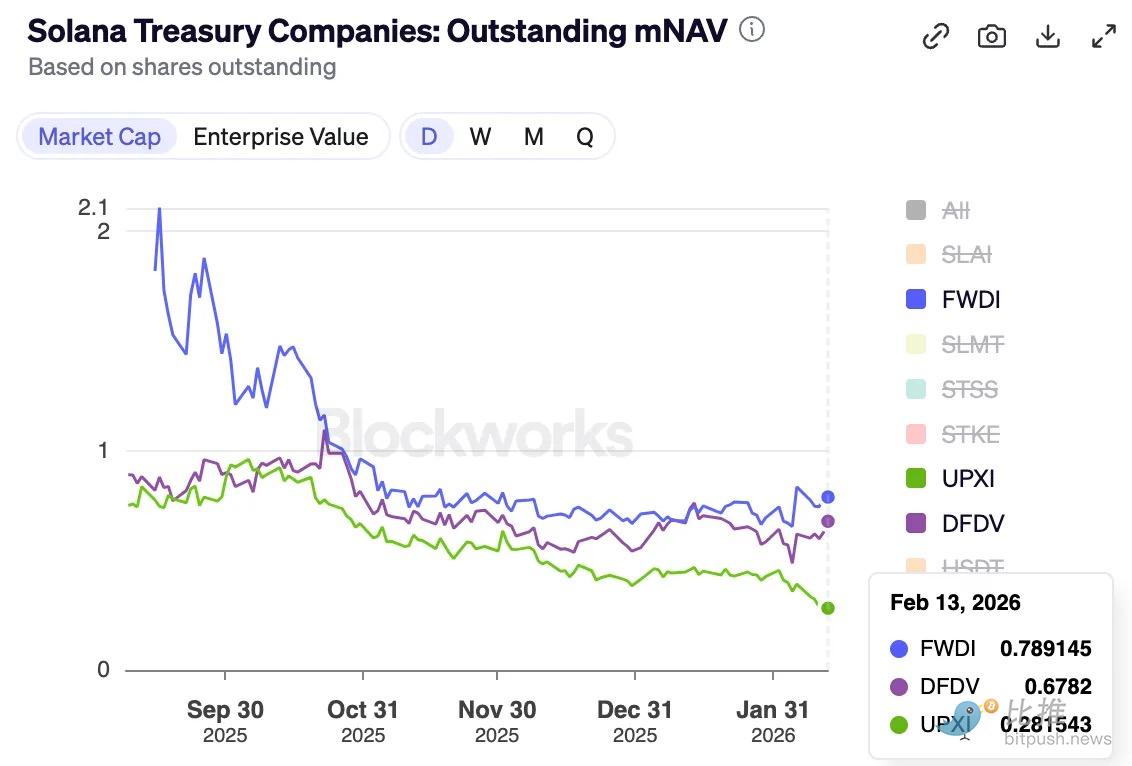
Today, as the total crypto market capitalization has evaporated over 45% in the past four months, the market cap to net asset value ratio for most of these wrapper companies has fallen below 1. This indicates the market values these DAT companies below the value of their crypto treasuries. This changes how the financial flywheel operates.

Because a DAT is not just a wrapper for assets. In most cases, it is a company with operational overhead, financing costs, legal and operational expenses. In the era of mNAV premiums, DATs funded their cryptocurrency purchases and operational costs by selling more shares or raising more debt. But in the era of mNAV discounts, this flywheel breaks down.

In today's analysis, I will show you what sustained mNAV discounts mean for DATs and whether they can survive the crypto bear market.
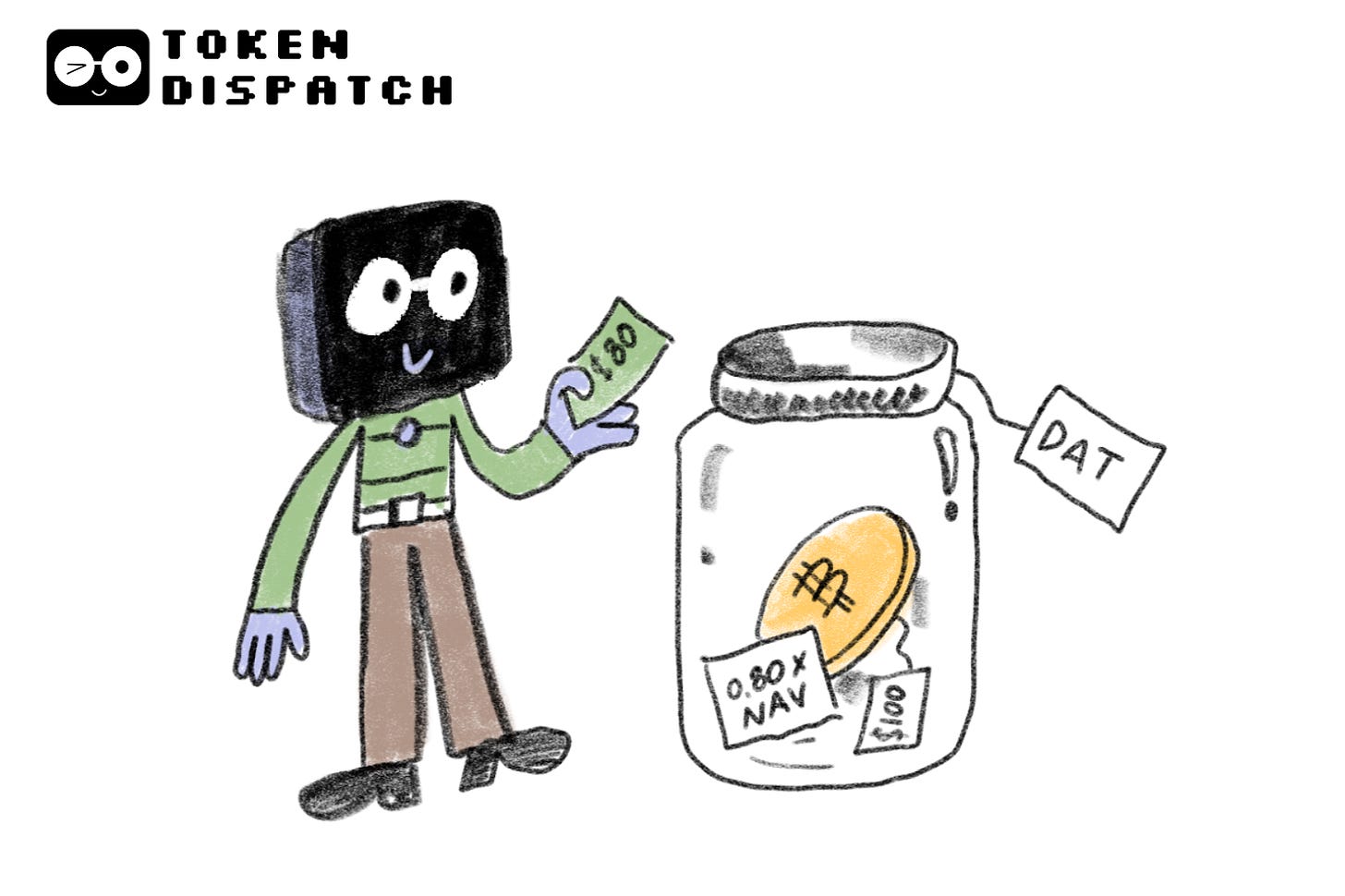
Between 2024 and 2025, over 30 companies rushed to transform into DATs. They built treasuries around blue-chip coins like Bitcoin, ETH, and SOL, and even meme coins.

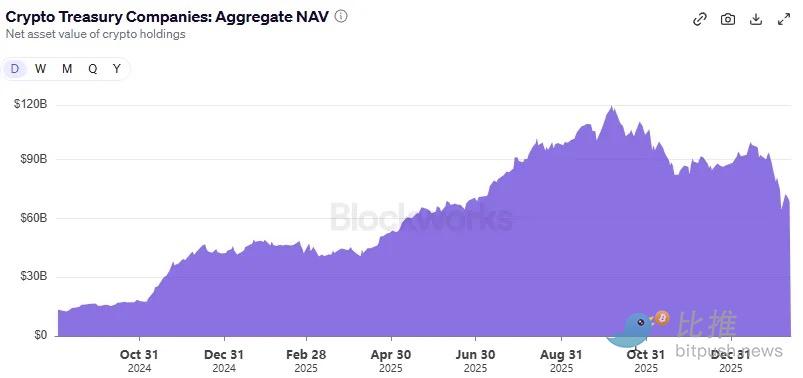
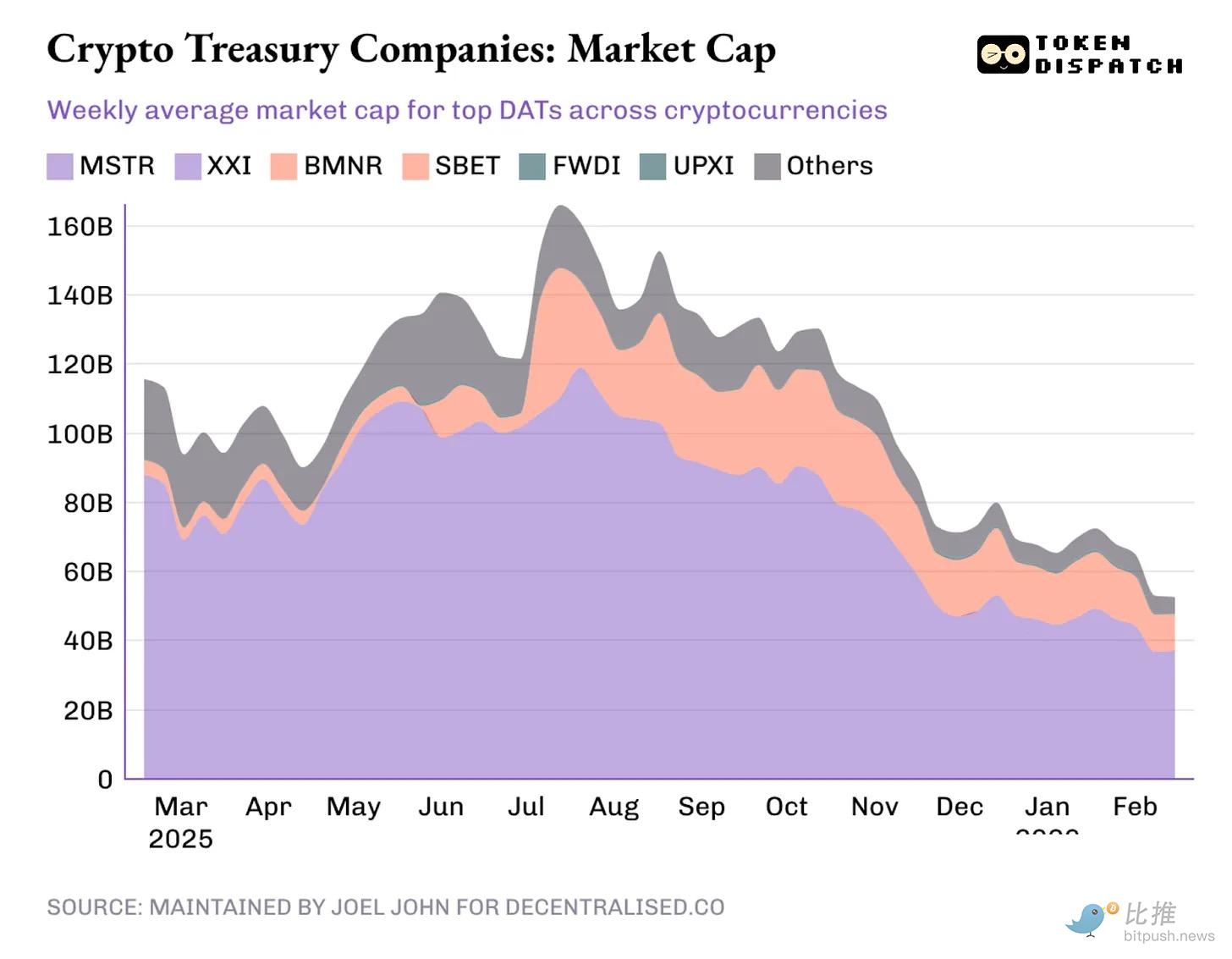
At their peak on October 7, 2025, DATs held cryptocurrencies worth $118 billion, with a total market capitalization of over $160 billion for these companies. Today, DATs hold cryptocurrencies worth $68 billion, while their discounted total market cap is just over $50 billion.
All their fates hinge on one thing: their ability to wrap assets and weave a story that makes the wrapper's value exceed the asset's value. This difference becomes the premium.

The premium itself became the product. If the stock traded at 1.5 times mNAV, a DAT could sell $1 worth of stock, then buy $1.5 worth of crypto asset exposure, and describe the transaction as "value-accretive." Investors were willing to pay the premium because they believed the DAT could continue selling shares at a premium and use the proceeds to accumulate more cryptocurrency, thereby increasing the crypto assets per share over time.
@Decentralised.Co

The problem is, the premium doesn't last forever. Once the market stops paying extra for this wrapper, the "sell stock to buy more crypto" flywheel gets stuck.

When the stock no longer trades at 1.5 times its asset value, each new share issued buys less cryptocurrency. The premium is no longer a tailwind but becomes a discount.

Over the past year, the stock prices of leading BTC, ETH, and SOL DATs have fallen more than the cryptocurrencies themselves.
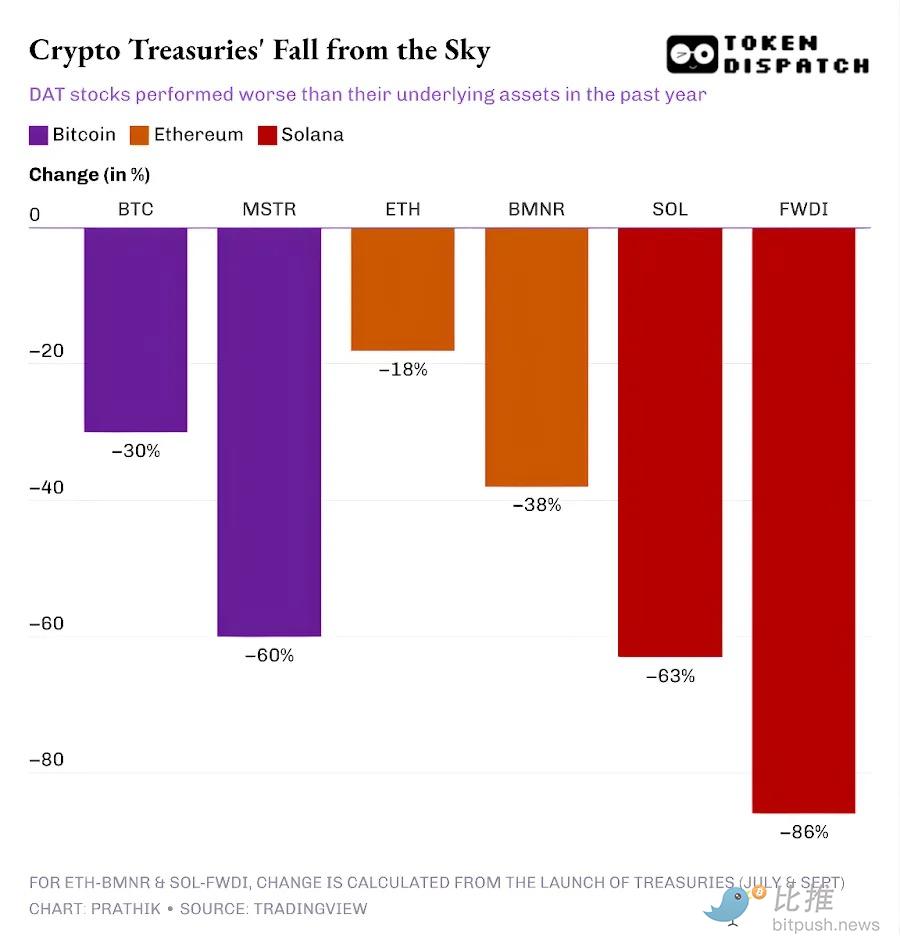
Once the premium of the stock relative to the underlying asset disappears, investors naturally ask why they shouldn't just buy the cryptocurrency directly elsewhere, such as on decentralized or centralized exchanges, or through exchange-traded funds, at a cheaper price.

Matt Levine from Bloomberg raised an important question: If DATs are trading below net asset value, let alone at a premium, why don't investors force the company to liquidate its crypto treasury or buy back shares?

Many DATs, including the sector leader Strategy, have tried to convince investors that they will hold the cryptocurrency through the bear market cycle, waiting for the return of the premium era. But I see a more critical issue. If DATs cannot raise additional funds for the foreseeable long term, where do they get the money to sustain operations? These DATs have bills and salaries to pay.

Strategy is an exception for two reasons.

  • It reportedly holds $2.25 billion in reserves, enough to cover its dividend and interest obligations for about 2.5 years. This is important because Strategy no longer relies solely on zero-coupon convertible bonds to raise funds. It has also issued preferred instruments that require paying substantial dividends.
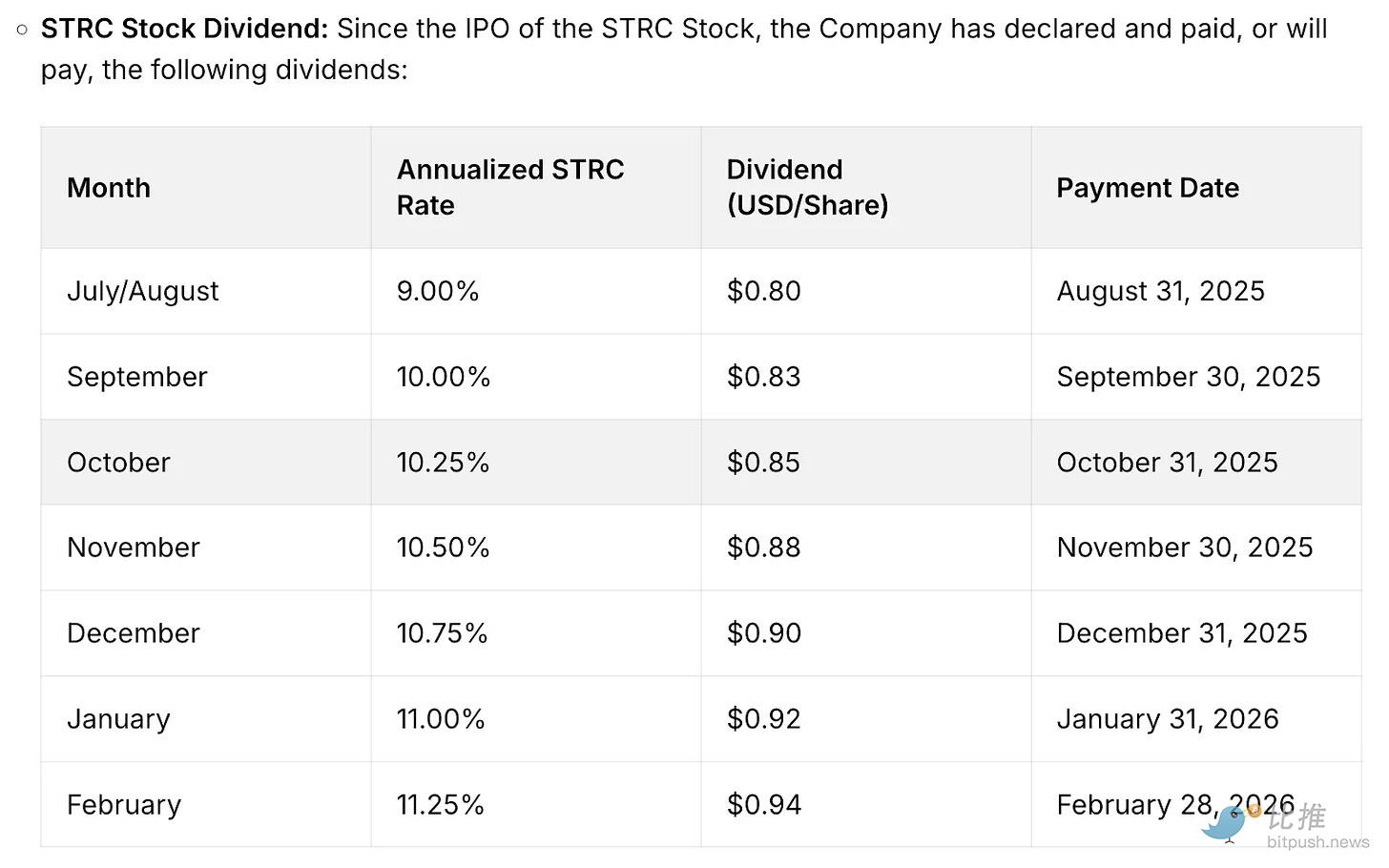
  • It also has an operating business, however small, that still generates recurring revenue. In Q4 2025, Strategy reported total revenue of $123 million and gross profit of $81 million. Although Strategy's net profit can fluctuate significantly due to mark-to-market changes in crypto asset prices each quarter, its business intelligence division is its only tangible source of cash flow.

But this still doesn't make Strategy's strategy foolproof. The market can still punish its stock—as has happened over the past year—and weaken Strategy's ability to continue raising funds at low cost.

While Strategy might weather the crypto bear market, the newer DATs that lack sufficient reserves or operating businesses to cover their inevitable expenses will feel the pressure.

This distinction is even more pronounced among ETH DATs.

The largest Ethereum-based DAT—BitMine Immersion, has a marginal operating business supporting its ETH treasury. In the quarter ended November 30, 2025, BMNR reported total revenue of $2.293 million, including consulting, leasing, and staking revenue.

Its balance sheet shows the company holds digital assets worth $10.56 billion and cash equivalents of $887.7 million. BMNR's operations resulted in a net negative cash flow of $228 million. All its cash needs were met by issuing new shares.

Last year, as BMNR's stock traded at an mNAV premium for most of the year, raising funds was relatively easy. But over the past six months, its mNAV has dropped from 1.5 to about 1.

So what happens when the stock no longer trades at a premium? Issuing more shares at a discount could lower the ETH price per share, making it less attractive to investors than buying ETH directly from the market.

This explains why BitMine said last month it would invest $200 million to acquire shares in Beast Industries, a private company owned by YouTube creator Jimmy "MrBeast" Donaldson. The company said it would "explore ways to collaborate on DeFi initiatives."

ETH and SOL DATs might also argue that staking income—something BTC DATs cannot boast—could help them sustain operations during a market crash. But this still doesn't solve the problem of meeting the company's cash flow obligations.

Even with staking rewards (accrued in cryptocurrencies like ETH or SOL), as long as these rewards are not converted into fiat currency, DATs cannot use them to pay salaries, audit fees, listing costs, and interest. Companies must either have sufficient fiat revenue or sell or re-mortgage their treasury assets to meet cash needs.

This is evident in the largest SOL-holding DAT—Forward Industries.

FWDI reported a net loss of $586 million in Q4 2025, despite earning $17.381 million in staking and related income.

Management clearly stated that its "existing cash balance and working capital are sufficient to meet our liquidity needs for at least until February 2027."

FWDI also disclosed an active capital raising strategy, including at-the-market stock offerings, buybacks, and a tokenization experiment. However, if the mNAV premium does not exist long-term, all these attempts may fail to manage its wrapper price.
The Path Forward

At the core of last year's DAT frenzy was the speed of asset accumulation and the ability to raise funds by issuing shares at a premium. As long as the wrapper could trade at a premium, DATs could continue converting expensive equity into more crypto assets per share and call it "beta." Investors also pretended the only risk was the asset price itself.

But the premium doesn't last forever. Crypto cycles can turn it into a discount. I wrote about this issue shortly after the 10/10 liquidation event last year, when I first observed the premium decline.

However, this bear market will prompt DATs to assess whether they should continue to exist once their wrapper no longer trades at a premium.

One way to resolve this dilemma is for companies to enhance their operational efficiency, supplementing their DAT strategy with a business that generates positive cash flow or surplus reserves. This is because when the DAT story can no longer attract investors in a bear market, a regular corporate story will determine its survival.

If you've read the article "Strategy & Marathon: Belief and Power," you'll recall why Strategy has remained standing through multiple crypto cycles. However, the new batch of companies, including BitMine, Forward Industries, SharpLink, and Upexi, cannot rely on the same strength.

Their current attempts with staking yields and weak operating businesses might crumble under market pressure unless they consider other options to cover real-world obligations.

We observed this with ETHZilla, an Ethereum treasury company that sold about $115 million worth of ETH holdings last month and bought two jet engines. The DAT then leased the engines to a major airline and hired Aero Engine Solutions to manage them for a monthly fee.

Going forward, people will evaluate not only the digital asset accumulation strategy but also the conditions under which it can survive. In the ongoing DAT cycle, only companies that can manage dilution, liabilities, fixed obligations, and trading liquidity will weather the market downturn.


Twitter:https://twitter.com/BitpushNewsCN

Bitpush TG Discussion Group:https://t.me/BitPushCommunity

Bitpush TG Subscription: https://t.me/bitpush

Original article link:https://www.bitpush.news/articles/7612658

İlgili Sorular

QWhat is the core financial mechanism that initially drove the success of Digital Asset Treasuries (DATs), and why has it broken down?

AThe core mechanism was a financial flywheel where DATs bought cryptocurrencies, saw their stock trade at a premium to the asset value (mNAV > 1), issued more stock at that premium, and used the proceeds to buy more crypto, repeating the cycle. This broke down because the crypto bear market caused the mNAV for most DATs to fall below 1 (a discount), making it dilutive and unattractive to issue new shares to raise funds.

QAccording to the analysis, what are the two key reasons that make MicroStrategy an exception among DATs and potentially able to survive a prolonged crypto bear market?

AFirst, it reported holding $2.25 billion in reserves, enough to cover its dividend and interest obligations for about 2.5 years. Second, it has an operational business (its commercial intelligence division) that generates recurring revenue and positive gross profit, providing a tangible source of cash flow separate from its crypto holdings.

QHow does the article differentiate between the challenges faced by BTC DATs and those holding ETH or SOL?

AWhile all DATs face the core problem of the broken financial flywheel, ETH and SOL DATs can point to staking rewards as a potential source of income, which BTC DATs cannot. However, the article argues that this is insufficient because staking rewards are earned in crypto and cannot directly pay for real-world operating expenses like salaries and fees unless converted to fiat, which may require selling assets.

QWhat potential solution does the article suggest for DATs to survive when their shares trade at a discount to their net asset value (mNAV < 1)?

AThe article suggests that DATs need to improve their operational efficiency by supplementing their crypto strategy with a business that generates positive cash flow or a surplus of reserve funds. This shifts the investment story from purely being a crypto wrapper to being a conventional company that can survive based on its operational merits during a bear market.

QWhat specific real-world example does the article provide of a DAT attempting to pivot its strategy to generate cash flow beyond crypto staking?

AThe article cites the example of ETHZilla, an Ethereum treasury company that sold approximately $115 million worth of ETH and used the proceeds to purchase two jet engines. It then leased these engines to a major airline and hired a management company to handle them for a monthly fee, creating a new stream of operational, fiat-based revenue.

İlgili Okumalar

Trade.xyz's Rebase Refusal Sparks Controversy, On-Chain Pre-IPO Market Faces Major Pricing Test

The debate surrounding Trade.xyz's refusal to adjust its SPCX (SpaceX pre-IPO) perpetual contract pricing amid updated share count revelations highlights a key challenge for on-chain pre-IPO markets. While several centralized exchanges (CEXs) paused and repriced their contracts after SpaceX's filing showed a ~10% increase in total shares, Trade.xyz maintained its market-driven pricing logic, which tracks expected per-share price sentiment rather than fundamental valuation metrics like market cap. This discrepancy triggered cross-platform arbitrage and caused leveraged long positions on Trade.xyz to suffer significant losses, as the platform's HIP-3 architecture lacks a native "Rebase" mechanism to neutrally adjust all user positions following such corporate actions. The incident underscores the difficulty for decentralized perpetual exchanges (Perp DEXs) to implement Rebase—a process CEXs handle by centrally pausing markets and adjusting ledger data. On-chain, this requires complex smart contract modifications, increasing gas costs, complexity, and potential attack surfaces. While some DEXs have managed similar adjustments, Trade.xyz's current design does not natively support it, though the team is reportedly exploring solutions for future events like stock splits. Ultimately, the controversy serves as a critical case study for the nascent on-chain pre-IPO sector, raising questions about price discovery reliability, transparent rule disclosure, and the readiness of DeFi infrastructures to handle traditional corporate actions as real-world assets (RWAs) gain traction.

marsbit9 dk önce

Trade.xyz's Rebase Refusal Sparks Controversy, On-Chain Pre-IPO Market Faces Major Pricing Test

marsbit9 dk önce

The 'Middle Eastern Prince' Swindles a Wealthy Woman: Renting Planes and Rolls-Royces, Scamming 120 Million Over Three Years

Two brothers who posed as "Middle Eastern princes" have been sentenced in the United States to 24 and 23 years in prison, respectively, and ordered to pay over $21.2 million in restitution and back taxes. Over three years, they fraudulently obtained approximately $21 million, primarily by promoting fictitious investment projects, including a non-existent cryptocurrency mining operation in a former General Electric industrial park in East Cleveland. The brothers, aged 42 and 33, created elaborate personas: one claimed to be a wealthy royal family heir and the city's "International Economic Advisor," while the other posed as a hedge fund manager with expertise from watching the TV show *Billions*. They bolstered their image by renting luxury cars and private jets and cultivating a relationship with a local mayor's chief of staff, who provided official-looking documents and government event access. A significant portion of the victims' funds, about $18 million, came from a single Chinese investor, a woman from Sichuan with experience in Bitcoin mining. The brothers also defrauded several women, including one former girlfriend. Their scheme unraveled when the primary investor discovered her $6 million worth of mining equipment had been sold off. The case highlights a trend of impostors using fabricated "Middle Eastern royal" identities to target wealthy individuals. Similar incidents include a "Dubai prince" who recently promoted a $500 million family office in Hong Kong and a Colombian man who impersonated a Saudi prince for decades in the US before being caught and sentenced in 2019.

marsbit24 dk önce

The 'Middle Eastern Prince' Swindles a Wealthy Woman: Renting Planes and Rolls-Royces, Scamming 120 Million Over Three Years

marsbit24 dk önce

a16z Partner: Being in the Flow of Capital Is the True Moat

A16z Partner: Standing in the Cash Flow is the True Moat Historically, many of the strongest companies built their moats by positioning themselves within "cash flows"—facilitating value creation and transfer in a network and taking a cut. The more value flows, the larger they grow. Crypto is the first modern technology natively built for this. With open ledgers, programmable settlement, and stablecoins enabling internet-speed global value transfer, it allows startups to inherit network effects from day one. Well-designed tokens align users, developers, and the protocol towards network growth, distributing value to contributors. This model isn't new (e.g., railroads, Visa, Google, AWS) but Crypto democratizes it. It lets entrepreneurs target areas with high inefficiency and profit extraction—like traditional finance's payments, custody, FX, and settlement—to compress costs, increase speed, and redistribute value by standing in the new flow. The opportunity extends beyond finance to emerging markets like GPU/compute, AI training data, energy, and space, where new, programmable infrastructure can be built without legacy constraints. Key questions for founders: Are you already in the cash flow? Does your revenue scale 10x with network activity? Where is profit extraction highest relative to value created in your market? The strategy is clear: compress the old cost structure, position yourself in the new value stream, and let the network compound.

marsbit51 dk önce

a16z Partner: Being in the Flow of Capital Is the True Moat

marsbit51 dk önce

Capturing 15 Top-Tier Zero-Day Vulnerabilities: A Consensus Protocol Debug Agent Framework Built by 0G Lab in Collaboration with Teams from NUS, PKU, and BUPT

"Agents Capture 15 Critical Zero-Day Bugs: 0G Lab's Multi-Agent Framework Automates Debugging in Consensus Protocols" Distributed consensus protocols are notoriously difficult to debug due to complex, intertwined states. A novel framework, Agora, developed by 0G Labs with researchers from NUS, Peking University, and Beijing University of Posts and Telecommunications, tackles this by fusing deep domain expertise with a collaborative multi-agent LLM architecture. Agora moves beyond the limitations of single LLMs and traditional testing like fuzzing. It employs three specialized agents: an Orchestrator for global state, a Strategy agent for generating attack scenarios using distributed systems knowledge, and a TestGen agent that creates executable tests. A core innovation is its efficient "Succinct Memory & Communication" mechanism and a dynamic test harness. This allows the system to translate abstract hypotheses into concrete tests across languages like Go and Rust, run them, capture failures, and refine the approach in a closed loop—all with minimal token overhead. In rigorous evaluations on production-level protocols including Raft, EPaxos, and components from etcd and Sui, Agora discovered 15 previously unknown deep logic bugs (e.g., execution divergence, liveness violations). In stark contrast, powerful standalone LLMs like GPT-5.2 and Claude 4.5 found zero such bugs. Agora achieved this with a high precision of 73.9% and at an average cost of only about $40 per bug found. The framework demonstrates high generalizability. Its decoupled design allows the "Multi-Agent + Hypothesis-Driven Testing" paradigm to be applied to other complex domains like database concurrency control, OS kernels, and Web3 smart contract auditing. By enabling efficient, automated detection of deep logic flaws, Agora points the way for AI-powered security in critical infrastructure, aligning with the growing trends of agentic systems and automated quality control.

marsbit54 dk önce

Capturing 15 Top-Tier Zero-Day Vulnerabilities: A Consensus Protocol Debug Agent Framework Built by 0G Lab in Collaboration with Teams from NUS, PKU, and BUPT

marsbit54 dk önce

İşlemler

Spot
Futures
活动图片