The Door to Offshore Stablecoins Quietly Closes Amid the Vision of RMB Internationalization

比推2026-02-12 tarihinde yayınlandı2026-02-12 tarihinde güncellendi

Özet

China's recent regulatory crackdown has effectively closed the door on offshore issuance of yuan-pegged stablecoins, dealing a significant blow to Hong Kong’s ambitions to become a digital asset hub. The new rules, announced on February 7, explicitly prohibit domestic institutions from issuing digital tokens overseas without approval, citing concerns over monetary sovereignty. This move dashes earlier market expectations of a policy thaw in China’s stance toward digital assets, particularly after PBOC Governor Pan Gongsheng’s earlier comments about the yuan challenging dollar dominance. Industry observers note that the tightening was foreshadowed as early as August 2024, when Chinese authorities began restricting stablecoin-related research and promotional events. The latest policy removes any ambiguity around private yuan stablecoin issuance and reinforces capital control priorities. As a result, firms that had planned to apply for stablecoin licenses in Hong Kong—including Ant Group and JD.com—are now expected to focus solely on Hong Kong dollar-pegged stablecoins, if they proceed at all. Market data reflects the dampening effect: open interest in Bitcoin perpetual futures has fallen roughly 50% since October, and investors have withdrawn approximately $3.3 billion from U.S. Ethereum ETFs since last fall. The regulatory shift underscores the fundamental tension between China’s capital controls and the borderless nature of crypto innovation, forcing industry players to con...

Author: Suvashree Ghosh, Bloomberg

Compiled by: Saoirse, Foresight News


Editor's Note: Recently, the global cryptocurrency market has continued to slump, and China has once again tightened regulations on cryptocurrencies and stablecoins, explicitly prohibiting the issuance of RMB-pegged stablecoins overseas without approval, directly impacting the progress of Hong Kong's digital asset hub construction. This article focuses on the market reaction and industry impact after the policy implementation, revealing the core contradiction between capital controls and crypto innovation. Against the backdrop of intensified industry reshuffling and accelerated capital withdrawal, the crypto sector is returning to pragmatic development. The regulatory boundaries and future direction are worth continuous attention.
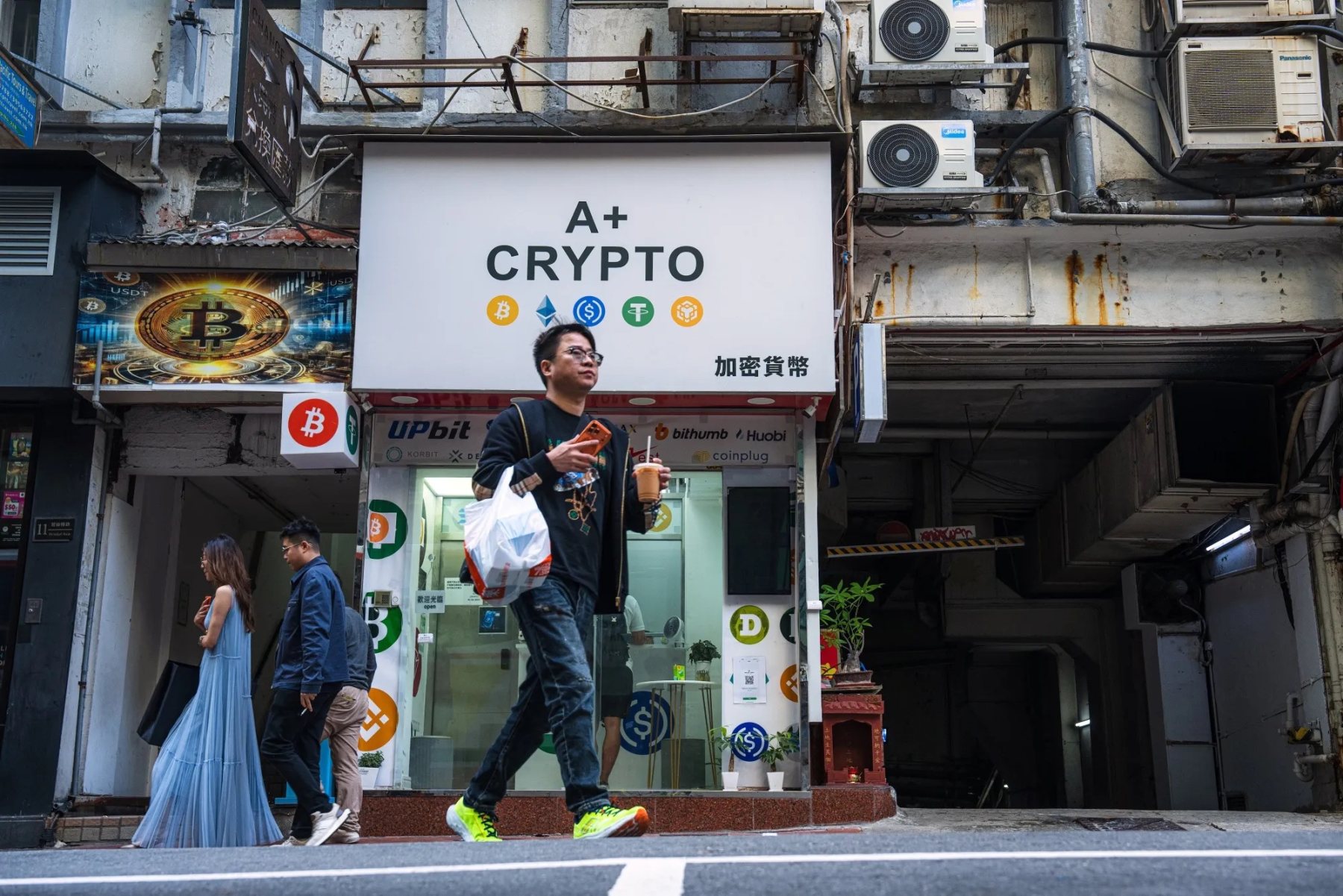
November 26, 2025, a cryptocurrency exchange storefront in Hong Kong. Photo: Lam Yik/Bloomberg

Setback in the Digital Realm

Last year, an increasing number of crypto industry commentators believed that China's stance on the digital asset sector might be softening.

After People's Bank of China Governor Pan Gongsheng proposed the vision that the RMB has the potential to challenge the dominance of the US dollar, market talk of a "policy thaw" kept emerging.

But on February 7th, all these expectations came to an abrupt halt.

Amid the latest round of cryptocurrency crash, China tightened regulations on cryptocurrencies and the tokenization of physical assets, prohibiting domestic institutions from issuing digital tokens overseas and banning the issuance of RMB-pegged stablecoins abroad without approval. Officials stated this move was to prevent monetary sovereignty risks.

Angela Ang, Head of APAC Policy and Strategic Partnerships at blockchain intelligence firm TRM Labs, said: "China's attitude towards stablecoins has been tentative at best and has cooled significantly in recent months."

She stated that the central bank's latest announcement "completely dashes any hope for the launch of an offshore RMB stablecoin in the short term — certainly not in Hong Kong, and most likely not elsewhere either."

For Hong Kong and its years-long goal of building a digital asset hub, this is a major setback.

In June last year, Hong Kong's Secretary for Financial Services and the Treasury, Christopher Hui, had said that, subject to regulatory requirements, the possibility of pegging Hong Kong stablecoins to the RMB was not ruled out. It is now widely believed that he will shut this door completely.

Surge in USD Stablecoin Supply During Trump Administration
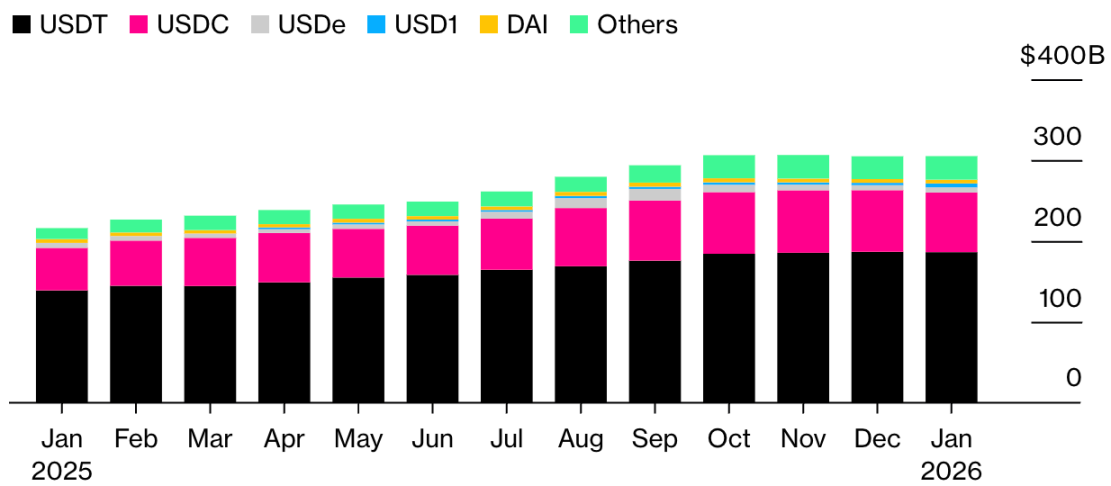
Source: Artemis Analytics

As Angela Ang mentioned, signals of this regulatory tightening had already emerged.

As early as last August, China had required local securities firms and related institutions to stop publishing stablecoin research reports and hosting related promotional seminars to curb overheated market sentiment.

Patrick Tan, General Counsel at blockchain intelligence firm ChainArgos, said last week's policy announcement "removes the uncertainty hanging over the market regarding the private issuance of RMB stablecoins. Issuers now know exactly where the red lines are."

Entities applying for licenses can only focus on issuing stablecoins pegged to the Hong Kong dollar.

Bloomberg News previously reported that up to 50 companies in Hong Kong planned to apply for stablecoin licenses last year, including tech giants Ant Group and JD.com. But according to an October report by the Financial Times, these companies were forced to suspend their stablecoin plans after intervention from Beijing.

Ant Group and JD.com did not respond to requests for comment.

As of this Tuesday, Hong Kong had issued licenses to 11 cryptocurrency exchanges, while approving 62 companies to conduct digital asset trading for clients. The list includes China-backed institutions such as CMB International Securities Limited, Guotai Junan Securities (Hong Kong) Limited, and Tinful Futures Limited.

But industry players worry that without access to the RMB, the entire setup might be in vain.

"The issue was never about Hong Kong's regulatory framework, but always about whether China would tolerate RMB-denominated instruments circulating outside its control," Patrick Tan said, adding, "Capital controls and stablecoin liberalization are fundamentally incompatible."

Market Data Continues to Weaken

Bitcoin Perpetual Futures Open Interest Continues to Decline
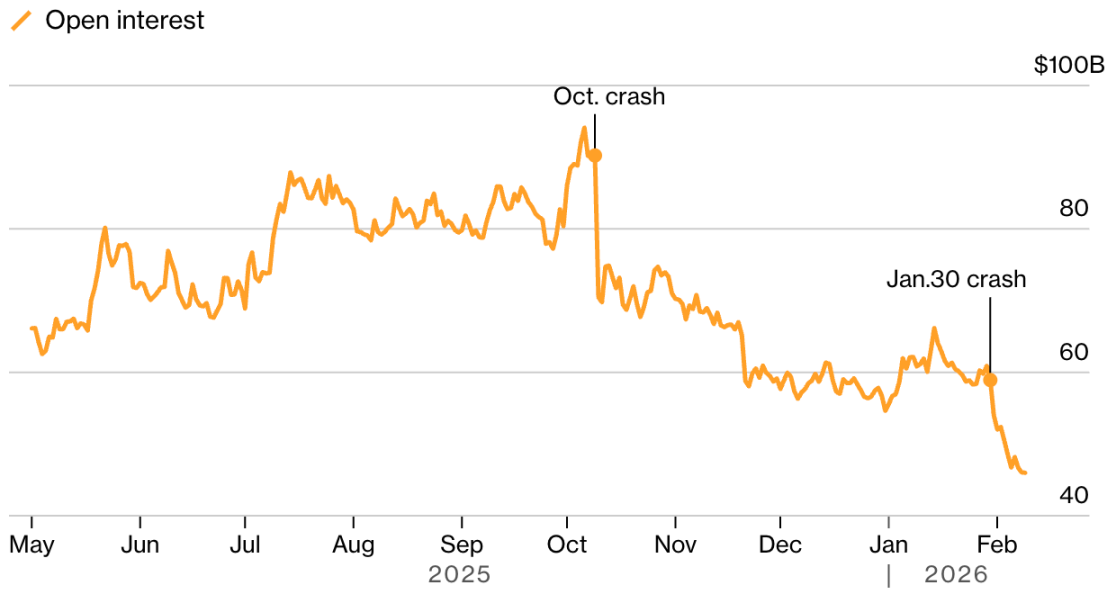
Source: Coinglass

Bitcoin perpetual futures open interest has failed to rebound since starting to decline last October, highlighting the lack of confidence supporting this rally. Data from Coinglass shows it has fallen by about 50% from the October high.

Capital Outflow: $3.3 Billion

Data compiled by Bloomberg Intelligence shows that investors have withdrawn approximately $3.3 billion from US Ethereum ETFs since the crash in early October, with over $500 million withdrawn this year. Data shows that Ethereum ETF assets have fallen below $13 billion, the lowest level since last July.

Industry Perspectives

"The market is consolidating around what actually works. Even well-funded crypto-native VCs are pivoting heavily into fintech, stablecoin businesses, and prediction markets; it's hard to get attention for anything else."

— Santiago Roel Santos, Founder and CEO of crypto private equity firm Inversion

Venture capital funds in the crypto industry are shifting their focus to better-performing areas, such as stablecoin infrastructure, on-chain prediction markets, and expanding into related adjacent fields.


Twitter:https://twitter.com/BitpushNewsCN

BitPush TG Discussion Group:https://t.me/BitPushCommunity

BitPush TG Subscription: https://t.me/bitpush

Original link:https://www.bitpush.news/articles/7611508

İlgili Sorular

QWhat was the key regulatory change announced by China regarding stablecoins on February 7th?

AChina tightened regulations on cryptocurrencies and tokenization of real-world assets, prohibiting domestic institutions from issuing digital tokens overseas and banning the issuance of RMB-pegged stablecoins abroad without approval to prevent monetary sovereignty risks.

QHow did Angela Ang from TRM Labs describe China's attitude towards stablecoins and the possibility of offshore RMB stablecoins?

AAngela Ang stated that China's attitude towards stablecoins was tentative at best and had cooled in recent months, and the announcement completely dashed any hopes of launching offshore RMB stablecoins in the near future, especially in Hong Kong and likely elsewhere.

QWhat impact did the new regulations have on Hong Kong's ambitions to become a digital asset hub?

AThe new regulations were a significant setback for Hong Kong's goal of becoming a digital asset hub, as they effectively closed the door on the possibility of issuing RMB-pegged stablecoins, forcing companies to focus only on Hong Kong dollar-pegged stablecoins.

QAccording to Patrick Tan from ChainArgos, what is the fundamental conflict between capital controls and stablecoin liberalization?

APatrick Tan stated that capital controls and stablecoin liberalization are fundamentally incompatible, as the issue was never about Hong Kong's regulatory framework but whether China would tolerate RMB-denominated instruments circulating outside its control.

QWhat trend did Santiago Roel Santos, CEO of Inversion, observe in crypto venture capital investments?

ASantiago Roel Santos noted that crypto-native venture capital firms are consolidating around areas that actually work, such as stablecoin infrastructure and on-chain prediction markets, and are expanding into adjacent areas, while other sectors struggle to attract attention.

İlgili Okumalar

The Value Distribution of Stablecoins

**Summary: The Value Distribution of Stablecoins** The article argues that stablecoins are evolving from mere trading tools into broader channels for dollar access. It divides the stablecoin ecosystem into four layers to analyze how value is distributed: 1. **Issuance Layer:** Mints stablecoins, holds reserve assets, and captures the spread between reserve yield and user costs (e.g., Tether, Circle). This layer currently earns the largest profit margin. 2. **Infrastructure Layer:** Connects stablecoins to the traditional financial system, handling fiat on/off-ramps, banking integration, compliance (KYC/AML), and asset management (e.g., Bridge, BVNK). This is the "unglamorous" but critical work, building the essential bridges between crypto and real-world finance. 3. **Acquiring/Distribution Layer:** Integrates stablecoins into merchant systems, manages payment flows, and provides enterprise financial software (e.g., Stripe, Coinbase). They act as the access point for businesses. 4. **Application Layer:** The end-users and businesses that ultimately use stablecoins for payments, settlements, or as a store of value. They benefit from convenience but have little pricing power. The core thesis is that while the issuance layer currently dominates profits, the often-overlooked **infrastructure layer holds significant long-term potential**. The real challenge and barrier to mass adoption is not the on-chain transfer of stablecoins (which is simple), but the complex "last mile" integration into existing business workflows, banking systems, and regulatory frameworks across different countries. Companies in this layer are currently in a "land grab" phase, investing heavily to build networks, secure bank partnerships, and establish compliance pathways. While their position is currently pressured by the profitable issuers above and distribution platforms below, the article suggests that if stablecoins become a default financial rail for businesses, the infrastructure providers who have done the hard work of integration will ultimately gain strong pricing power and become entrenched, essential players.

marsbit5 saat önce

The Value Distribution of Stablecoins

marsbit5 saat önce

The Value Distribution of Stablecoins

The Value Distribution of Stablecoins The article argues that stablecoins are evolving from a mere trading tool into a broad "dollar channel." It analyzes the industry's value chain through four layers: 1. **Issuance Layer (e.g., Tether, Circle):** The top layer that mints stablecoins, holds reserve assets, and captures the thickest interest rate spread. 2. **Infrastructure Layer (e.g., Bridge, BVNK):** Connects stablecoins to the traditional financial system, handling critical but complex "dirty work" like fiat on/off-ramps, banking integration, compliance (KYC/AML), and cross-border settlement. 3. **Acquiring/Distribution Layer (e.g., Stripe, Coinbase):** Embeds stablecoins into merchant systems, manages payment flows, and integrates with enterprise software. 4. **Application Layer:** End-users and businesses that ultimately use stablecoins for payments, settlement, or storing value. The author posits that while the issuance layer currently captures the most profit, the most overlooked and potentially critical layer is infrastructure. The core challenge for stablecoin adoption isn't the on-chain transfer (which is simple), but bridging the gap between blockchain and the real-world financial system. This involves solving practical problems for businesses: fiat conversion, reconciliation, tax handling, and user onboarding. Infrastructure companies are currently in a difficult "land-grab" phase—building networks, securing banking relationships, and achieving compliance country-by-country. They face pressure from both the profitable issuance layer above and distribution platforms below. However, the author suggests this layer is building a crucial moat. Once stablecoins become a default business rail, the infrastructure players who have done the hard work of integration may gain significant, durable value and pricing power.

链捕手5 saat önce

The Value Distribution of Stablecoins

链捕手5 saat önce

İşlemler

Spot
Futures
活动图片





