The dollar is weakening – The next crypto rally might start from Japan

ambcrypto2026-04-07 tarihinde yayınlandı2026-04-07 tarihinde güncellendi

Özet

The article discusses how the weakening US dollar, combined with Japan's rising bond yields, could trigger the next cryptocurrency rally. Japan's 10-year bond yield has reached a multi-decade high of 2.42%, signaling persistent inflation and potential monetary tightening by the Bank of Japan. This has caused the yen to stabilize after a period of weakness, impacting the JPY/USD pair. Concurrently, cooling US Treasury yields are contributing to a softer US Dollar Index (DXY). Historically, a weaker dollar leads investors to rotate capital from traditional safe-haven assets into riskier ones like crypto, seeking higher returns. Analysts, including Peter Schiff, suggest an overvalued dollar could be a key catalyst for capital flowing into crypto markets. The convergence of these factors—rising Japanese yields reshaping global capital flows and a softening dollar—creates a favorable macro environment for a potential crypto market rally.

The ongoing West Asia crisis is still creating ripple effects across global markets. And Japan is becoming a clear case study.

Data from Trading Economics shows Japan’s 10-year bond yield climbing to 2.42%, the highest level in nearly three decades.

Rising yields point to persistent inflation pressure, leaving the Bank of Japan with little room to cut rates. Instead, markets are slowly starting to price in the possibility of further tightening.

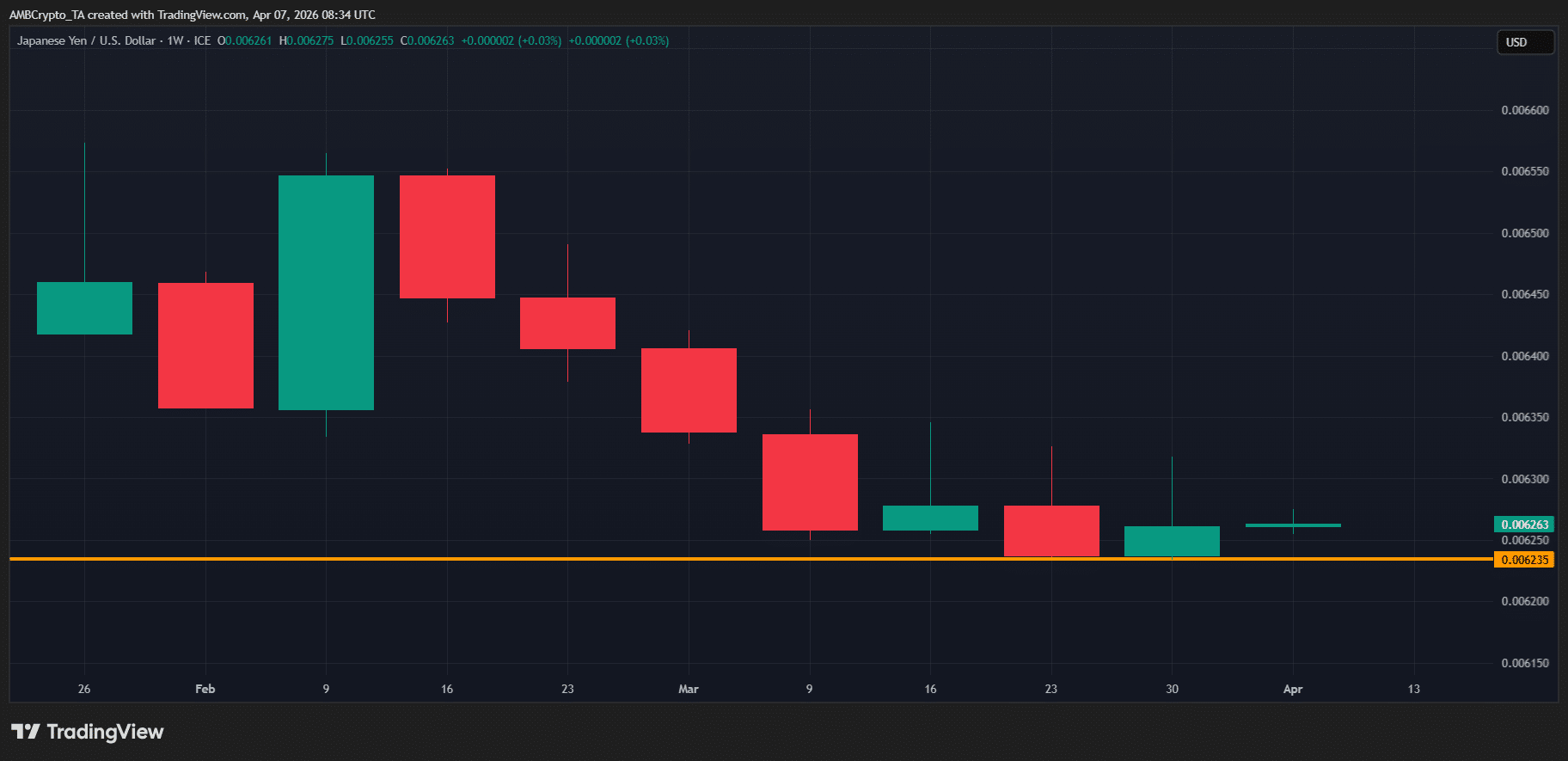
Notably, the currency market is already reacting. Throughout most of March, the JPY/USD pair moved into consolidation, and a similar structure is now forming in April, potentially signaling a local bottom.

For crypto markets, this is a macro signal worth paying attention to.
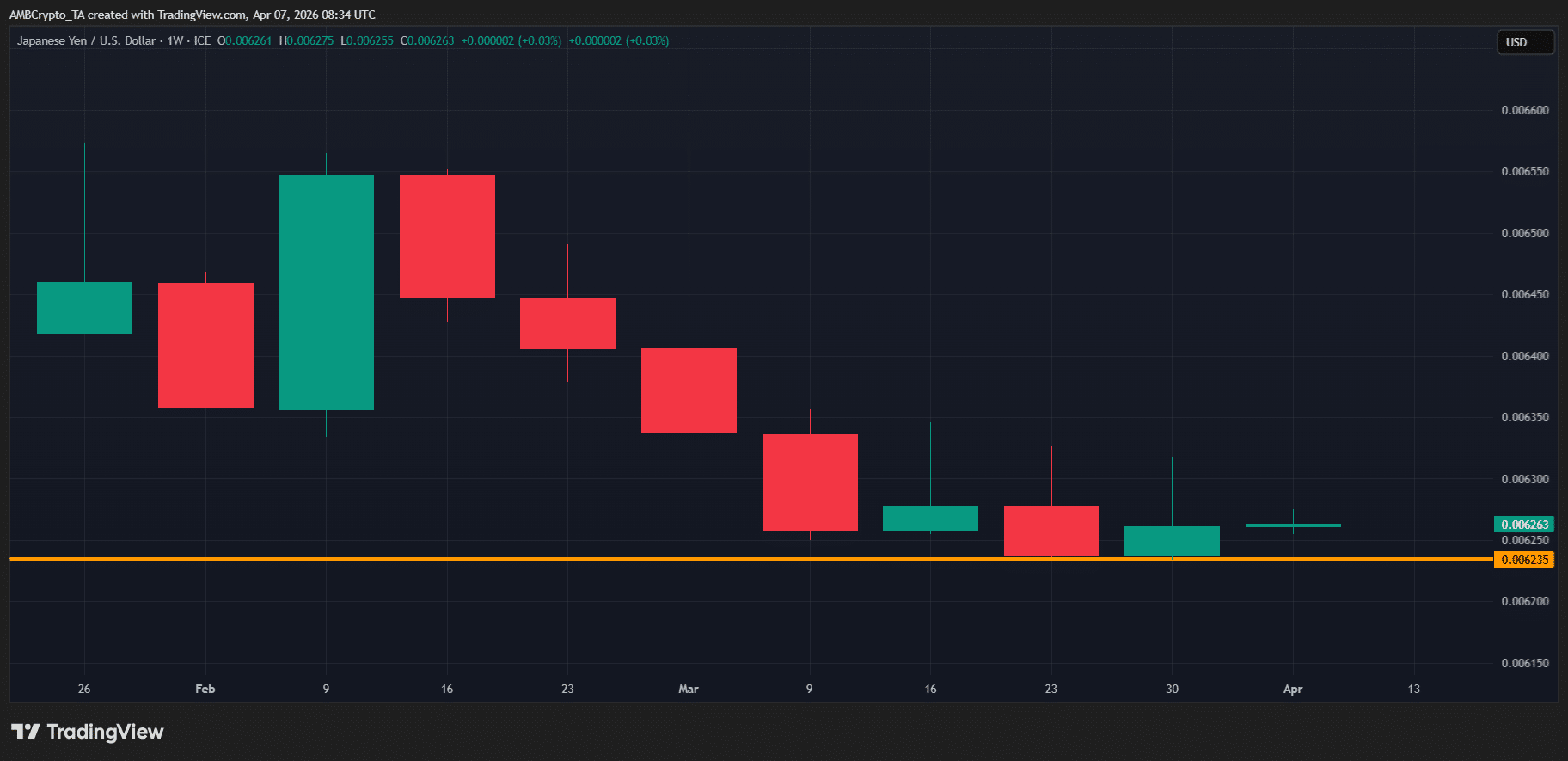
Source: TradingView (JPY/USD)

From a technical standpoint, rising bond yields usually point to capital rotating toward traditional safe-haven assets as investors prepare for tighter monetary conditions and the possibility of further rate hikes.

At the same time, the choppy behavior in the JPY/USD pair reflects the aftereffect of this adjustment phase.

In simple terms, the yen appears to be transitioning from sustained weakness into a stabilization phase. However, the bigger takeaway for crypto is what this means for the U.S. Dollar Index (DXY).

Historically, periods of dollar weakness have triggered capital rotation into risk assets, as yields from traditional safe havens become less competitive compared to the faster upside potential seen in equities and crypto.

Naturally, that raises a key question: Could a weaker dollar give crypto the macro tailwind it needs to break through the current FUD?

Analysts point to an overvalued dollar as crypto’s catalyst

U.S. Treasury yields are cooling off, and the dollar is starting to reflect it.

According to Trading Economics, the 10-year U.S. Treasury yield has dropped nearly 3% from its late-March peak of 4.43%, the highest level since July 2025.

This pullback highlights how ongoing geopolitical tensions have weighed on inflation and put the Fed in a tricky spot. The cooldown, however, now points to a shift in market expectations, with investors starting to price in a softer monetary stance.

Notably, the impact is showing up in markets. The DXY is down 0.35% this week after topping 100, while the total crypto market cap has rallied 3.5% since kicking off April’s run.

Taken together, this reinforces Peter Schiff’s point: An overvalued dollar can act as a catalyst for capital rotation into risk assets, including crypto.
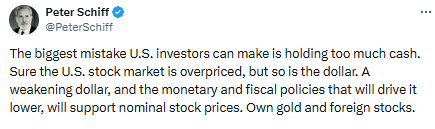
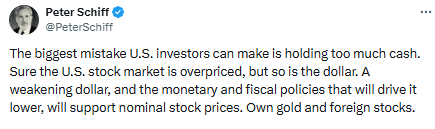
Source: X

In this context, Japan’s yield jumping to a multi-year high starts to carry real weight. Economically, rising Japanese yields are starting to shift global capital flows, as investors rotate into the yen and Japanese bonds, reshaping liquidity patterns.

When combined with a softening dollar, this setup becomes even more significant, creating conditions that could support inflows into risk assets like crypto.

For investors, this is a key macro signal to watch closely, highlighting where capital might flow next.


Final Summary

  • Japan’s multi-year high yields are reshaping capital flows, creating favorable conditions for crypto.
  • An overvalued dollar, as Peter Schiff highlights, can act as a key catalyst driving crypto inflows.


İlgili Sorular

QWhat is the significance of Japan's 10-year bond yield reaching 2.42%?

AJapan's 10-year bond yield climbing to 2.42% is the highest level in nearly three decades, indicating persistent inflation pressure and limiting the Bank of Japan's ability to cut rates, with markets starting to price in further monetary tightening.

QHow is the currency market, specifically the JPY/USD pair, reacting to these economic conditions?

AThe JPY/USD pair moved into consolidation throughout most of March and is forming a similar structure in April, which potentially signals a local bottom and a transition of the yen from sustained weakness into a stabilization phase.

QAccording to the article, what historical relationship exists between the U.S. dollar and risk assets like crypto?

AHistorically, periods of dollar weakness have triggered capital rotation into risk assets, as yields from traditional safe havens become less competitive compared to the faster upside potential seen in equities and crypto.

QWho is cited as pointing out that an overvalued dollar can act as a catalyst for crypto, and what evidence supports this view?

APeter Schiff is cited, and the evidence includes the DXY dropping 0.35% after topping 100 while the total crypto market cap rallied 3.5%, indicating a shift in capital flows.

QWhat is the combined effect of Japan's rising yields and a softening U.S. dollar, according to the analysis?

AThe combination of Japan's multi-year high yields shifting global capital flows and a softening U.S. dollar creates significant conditions that could support inflows into risk assets like cryptocurrency.

İlgili Okumalar

Goldman Sachs: July Smashes Through Crowded Trades, U.S. Stock Bull Market Not Broken but Harder to Navigate

Goldman Sachs: July Sees Crowded Trades Unwound, U.S. Bull Market Intact but Getting Tougher. The U.S. stock market in July did not see an index-level crash, but rather a significant unwinding of speculative positions. While the S&P 500 remained stable—trading within a narrow 3.5% range and staying within 2% of its high—underlying market dynamics were volatile. Heavily crowded trades, particularly in high-momentum tech, AI-linked stocks, and Asian strategies, faced severe pressure and forced deleveraging. Data indicates this was a meaningful cleanse, not a minor adjustment. Global tech exposure saw its largest sell-off in over five years, leverage in Korean equity ETFs plummeted, and Goldman's prime brokerage recorded the largest gross exposure reduction since late 2022. Leverage on momentum factors among fundamental long/short clients fell to the 28th percentile of its one-year range. The AI trade narrative shifted from pure potential to a focus on tangible returns. While Meta failed to show clear AI monetization, Microsoft and Amazon provided evidence that massive capital expenditure is translating into scalable revenue and product growth, preventing a blanket sell-off of the AI sector. The Federal Reserve's more opaque communication style and volatility in long-end Treasury yields have introduced new friction, particularly for rate-sensitive growth and tech stocks. The broader outlook for U.S. equities remains favorable, supported by a strong economy, robust earnings, and substantial AI capital expenditure. However, risk/reward is no longer cheap, and the market's upward elasticity has weakened. The Nasdaq 100's trajectory—up 12% year-to-date despite significant pullbacks—illustrates that the bull trend persists but the path is becoming more difficult. The key lesson from July is that the market no longer rewards crowded, highly leveraged trades, requiring more disciplined and liquid portfolio approaches.

marsbit1 saat önce

Goldman Sachs: July Smashes Through Crowded Trades, U.S. Stock Bull Market Not Broken but Harder to Navigate

marsbit1 saat önce

Interview with Robinhood Executive: Meme + Tokenized US Stocks as "Barbell" Customer Acquisition Strategy, All Business Lines Achieve Hundreds of Millions in Revenue

Interview with Robinhood executive Johann Kerbrat reveals the company's "barbell" customer acquisition strategy for its new Robinhood Chain, combining meme tokens with tokenized stocks. Three weeks after mainnet launch, the chain has seen over $3B in weekly DEX volume and 105M transactions. Kerbrat explains the logic behind the permissionless chain: meme tokens attract DeFi users, while tokenized real-world assets (RWA), currently over 90 US stocks and ETFs accessible in 120+ countries, serve global users. The goal is to bring Robinhood's 27 million funded accounts on-chain by simplifying DeFi with a user-friendly interface, exemplified by features like Robinhood Earn which offers yield without requiring wallet management. Built on Arbitrum's technology stack for its speed, low cost, and Ethereum's security, the chain focuses on financial products like Earn, spot trading, and perpetuals. Kerbrat downplays direct competition with platforms like Base, emphasizing the goal of expanding the overall market for on-chain assets. He details selective partnerships (e.g., Morpho, Lighter) based on compliance, unique UX, and differentiation. While regulatory clarity is pending for US perpetuals, the expansion continues via Bitstamp in Europe. Finally, Kerbrat positions Robinhood as a "super app" integrating stocks, options, crypto, banking, and AI trading, with all major business lines generating hundreds of millions in revenue. For the chain, current priority is driving adoption over maximizing gas fee revenue.

marsbit3 saat önce

Interview with Robinhood Executive: Meme + Tokenized US Stocks as "Barbell" Customer Acquisition Strategy, All Business Lines Achieve Hundreds of Millions in Revenue

marsbit3 saat önce

İşlemler

Spot
活动图片