The Devoured Middle Ground: Will Web3's Endgame Become Just Another Wall Street Table?

marsbit2026-01-09 tarihinde yayınlandı2026-01-09 tarihinde güncellendi

Özet

The article "The Devoured Middle Ground: Will Web3 End Up as Just Another Wall Street Table?" argues that the initial revolutionary vision of Web3—decentralizing finance and replacing traditional systems like Nasdaq with blockchain—is being overtaken by traditional finance (TradFi). A pivotal moment occurred on November 10, 2023, when CME's Bitcoin futures open interest surpassed Binance's, signaling a shift in liquidity and influence. The core issue is asymmetric "compliance cost": TradFi institutions (e.g., CME, BlackRock) can easily enter crypto by listing Bitcoin derivatives with minimal marginal cost, leveraging existing infrastructure, licenses, and regulatory relationships. In contrast, crypto-native firms face insurmountable barriers when attempting to tokenize traditional assets like stocks, due to prohibitive regulatory requirements, securities laws, and compliance risks—exemplified by FTX's failure. The approval of Bitcoin ETFs in 2024 accelerated this trend, enabling large institutional players (pension funds, hedge funds) to gain exposure without direct crypto custody concerns. Liquidity and pricing power are shifting from offshore, less-regulated exchanges to compliant TradFi venues. Crypto is being stripped of its ideological attributes and reduced to a pure, volatile financial asset within traditional portfolios. The conclusion is that Web3's financial layer, especially secondary trading, will likely be absorbed into TradFi, with blockchain remaining primar...

Author: Max.s

For a long time, many natives of the crypto world have been intoxicated by a grand narrative: Web3 will launch a revolution against Web2. By moving Nasdaq stocks onto the blockchain and replacing the NYSE's matching engine with smart contracts, they believe they can ultimately reshape global finance with RWA (Real World Assets).

Watching the constantly flickering K-line charts, we need to remember this date when looking back: November 10, 2023. On this day, due to strong market expectations for the approval of the first spot cryptocurrency ETF, institutional funds massively entered through compliant channels, causing a surge in open interest on CME and surpassing Binance.

CME data that day: Open interest reached approximately 111,100 BTC, with a notional value of about $4.08 billion (accounting for roughly 24.7% of the total network open interest at the time).

Binance data: Open interest was approximately 103,800 BTC, with a notional value of about $3.8 billion.

We must admit a harsh reality: This will be a one-sided devouring!

Look at the chart below
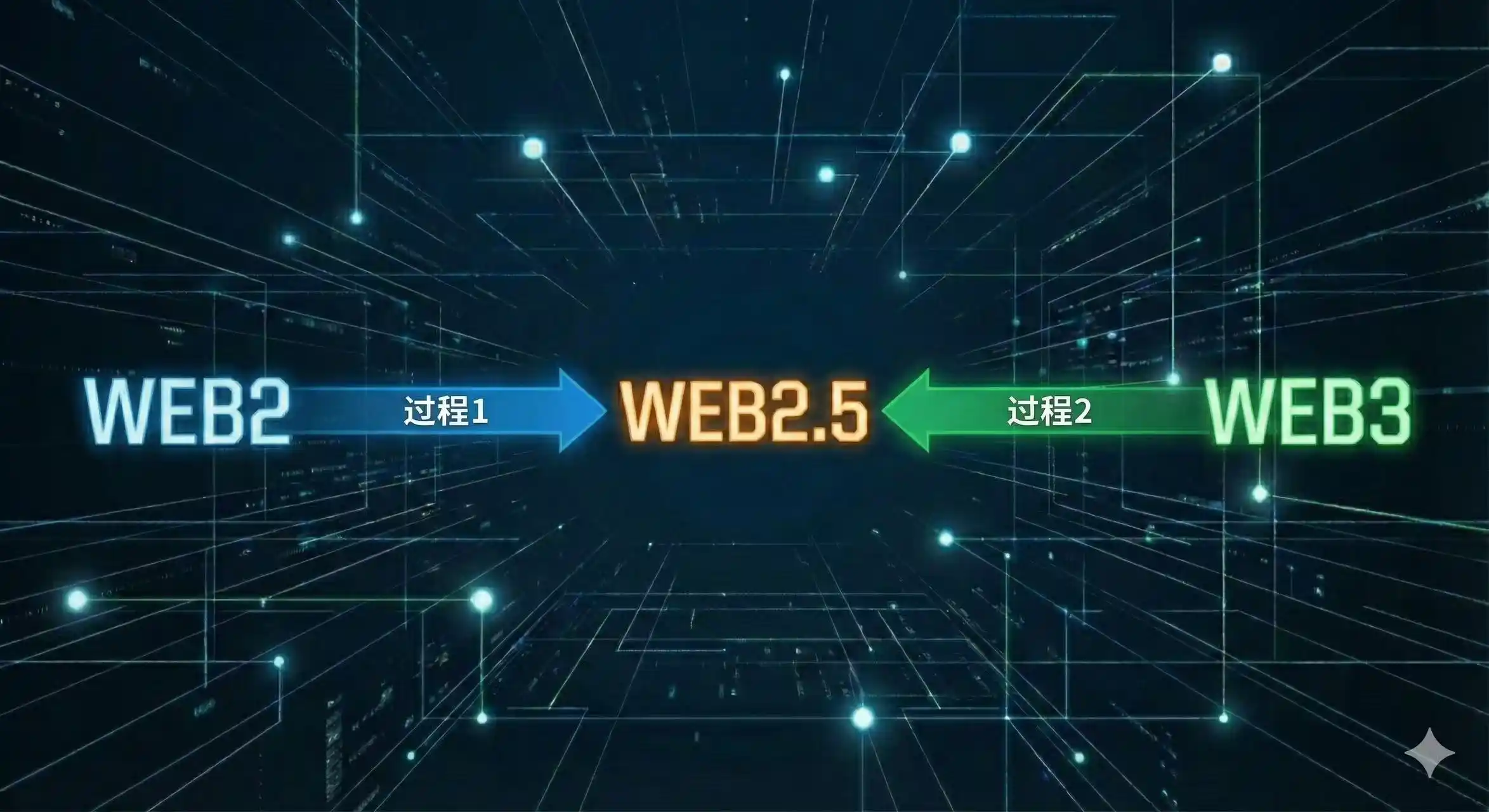
Process 1 in the chart represents the expansion of traditional finance (TradFi) into the crypto space, such as CME listing futures and BlackRock launching ETFs. Process 2 represents the penetration of crypto finance into traditional assets, such as tokenized U.S. stocks and RWA.

The current market gives a clear answer: Process 1 is advancing irresistibly, while Process 2 is struggling to make progress. The core of this difference lies not in technology, but in a "compliance cost"-induced dimensional打击 (dimensional strike/attack) on liquidity.

n

Why can Wall Street giants easily cut into the heart of the crypto circle, while we find it difficult to attack their城池 (strongholds/cities)?

Marginal cost in economics can explain everything.

For CME, CBOE (Chicago Board Options Exchange), EUREX (Eurex Exchange), or SGX (Singapore Exchange), the marginal cost of listing Bitcoin derivatives is almost zero.

These financial behemoths possess clearing licenses that have been operational for decades, extremely mature risk control models, and dedicated network lines connecting to the world's top hedge funds. For them, Bitcoin is just another ticker code after gold, crude oil, and soybeans. They don't need to rewrite underlying code, rehire compliance teams, or even re-educate clients. They just need to file a document with the CFTC (Commodity Futures Trading Commission), adjust some parameters, and a new, compliant market capable of carrying trillions in liquidity is born.

In contrast, look at Process 2. When crypto exchanges attempt to "tokenize U.S. stocks," they face an insurmountable chasm.

Remember FTX's once-proud equity tokens? That was not only one of the triggers for its downfall but also an original sin in the eyes of regulators. For a crypto-native platform to compliantly allow users to buy Tesla stock with USDT, it needs to obtain securities broker licenses, clearing licenses, resolve cross-jurisdictional securities law conflicts, and implement extremely complex KYC/AML processes. The compliance cost here is not linear; it's exponential.

For crypto-native enterprises, this is a war that was over before it even began. Traditional finance is not only inherently compliant; they are the rule-makers themselves.

Why is compliance cost so important? Because compliance directly determines safety, and safety determines the entry threshold for capital.

Retail investors in the crypto market often misunderstand the source of "liquidity." True liquidity doesn't come from the few thousand U in散户 (retail investors') hands; it comes from pension funds, endowment funds, sovereign wealth funds, and large market makers.

These behemoths face extremely strict Fiduciary Duty. This explains why the approval of the Bitcoin spot ETF in 2024 became a historic turning point.

Before the ETF, a traditional family office wanting to allocate Bitcoin had to go through extremely complex approvals: Who manages the private keys? What if the exchange explodes? How is auditing done? ETFs and CME futures perfectly solve this problem: no need to manage private keys, no need to trust offshore exchanges, everything is done within a U.S. stock account.

The record-high open interest in CME's Bitcoin futures is not driven by retail speculation, but by Wall Street institutions engaging in basis trading and risk hedging. Top high-frequency trading firms like Jump Trading and Jane Street have lower latency in CME's server rooms than on AWS.

As CBOE plans to re-enter the crypto derivatives market, and as SGX and EUREX begin laying out compliant derivatives channels in Asia and Europe, we see a clear trend: The pricing power of crypto assets is shifting from offshore, unregulated exchanges (like the early BitMEX, or some current offshore CEXs) to regulated traditional financial exchanges.

Just as crude oil futures don't require the owner to actually transport crude oil, future crypto finance won't require investors to actually use decentralized wallets.

In this process, cryptocurrency itself is stripped of its "currency" payment attributes, stripped of its "censorship-resistant" ideology, and refined into a pure, highly volatile financial instrument. It is packed into ETF capsules, bundled into futures contracts, and stuffed into traditional 60/40 asset allocation portfolios.

The conclusion seems inevitable: Web3 finance (especially the secondary market part) will most likely be integrated into Web2 finance, becoming a trading category within traditional finance.

This might sound unpleasant to crypto purists, but it is precisely a sign of the asset's maturity.

The future landscape might look like this: The underlying blockchain technology (Web3) will still be responsible for asset generation and title verification, like BTC mining. But in the vast financial superstructure of trading, clearing, and derivatives, the Web2 giants, with their low-cost compliance advantages, will still occupy the main seats at the table.

For investors, seeing this clearly is crucial. Where the liquidity is, the Alpha is. And right now, liquidity is irreversibly flowing back to those in suits.

İlgili Sorular

QWhat was the significant event on November 10, 2023, that marked a shift in institutional crypto investment?

AOn November 10, 2023, due to strong expectations of the approval of the first cryptocurrency spot ETF, institutional funds massively entered through compliant channels, causing CME's open interest to surge and surpass Binance.

QWhy can traditional financial institutions like CME easily enter the crypto market, while crypto exchanges struggle to tokenize traditional assets?

ATraditional financial institutions have near-zero marginal costs due to existing licenses, mature risk models, and established networks, whereas crypto exchanges face exponentially high compliance costs, regulatory hurdles, and complex legal challenges when attempting to tokenize assets like stocks.

QWhat does the shift in Bitcoin's open interest from Binance to CME indicate about market dynamics?

AThe shift indicates that pricing power for crypto assets is moving from offshore, less regulated exchanges to regulated traditional financial exchanges, driven by institutional participation and compliance advantages.

QHow do Bitcoin ETFs and CME futures lower the barrier for traditional capital to enter the crypto market?

AThey eliminate the need for institutions to manage private keys, trust offshore exchanges, or handle complex audits, allowing seamless investment through traditional stock accounts and meeting strict fiduciary duties.

QWhat is the author's conclusion about the future relationship between Web3 and traditional finance?

AThe author concludes that Web3 financial markets, especially secondary trading, will likely be absorbed into traditional finance, becoming a regulated asset class, with blockchain underlying asset generation but traditional institutions dominating trading and derivatives.

İlgili Okumalar

Where Is the AI Infrastructure Industry Chain Stuck?

The AI infrastructure (AI Infra) industry chain is facing unprecedented systemic bottlenecks, despite the rapid emergence of applications like DeepSeek and Seedance 2.0. The surge in global computing demand has exposed critical constraints across multiple layers of the supply chain—from core manufacturing equipment and data center cabling to specialty materials and cleanroom facilities. Key challenges include four major "walls": - **Memory Wall**: High-bandwidth memory (HBM) and DRAM face structural shortages as AI inference demand outpaces training, with new capacity not expected until 2027. - **Bandwidth Wall**: Data transfer speeds lag behind computing power, causing multi-level bottlenecks in-chip, between chips, and across data centers. - **Compute Wall**: Advanced chip manufacturing, reliant on EUV lithography and monopolized by ASML, remains the fundamental constraint, with supply chain fragility affecting production. - **Power Wall**: While energy demand from data centers is rising, power supply is a solvable near-term challenge through diversified energy infrastructure. Expansion is further hindered by shortages in testing equipment, IC substrates (critical for GPUs and seeing price hikes over 30%), specialty materials like low-CTE glass fiber, and high-end cleanroom facilities. Connection technologies are evolving, with copper cables resurging for short-range links due to cost and latency advantages, while optical solutions dominate long-range scenarios. Innovations like hollow-core fiber and advanced PCB technologies (e.g., glass substrates, mSAP) are emerging to meet bandwidth needs. In summary, AI Infra bottlenecks are multidimensional, spanning compute, memory, bandwidth, power, and supply chain logistics. Advanced chip manufacturing remains the core constraint, while substrate, material, and equipment shortages present immediate challenges. The industry is moving toward hybrid copper-optical solutions and accelerated domestic supply chain development.

marsbit14 dk önce

Where Is the AI Infrastructure Industry Chain Stuck?

marsbit14 dk önce

Autonomy or Compatibility: The Choice Facing China's AI Ecosystem Behind the Delay of DeepSeek V4

DeepSeek V4's repeated delay in early 2026 has sparked global discussions on "de-CUDA-ization" in AI. The highly anticipated trillion-parameter open-source model is undergoing deep adaptation to Huawei’s Ascend chips using the CANN framework, representing China’s first systematic attempt to run a core AI model outside the CUDA ecosystem. This shift, however, comes with significant engineering challenges. While the model uses a MoE architecture to reduce computational load, it places extreme demands on memory bandwidth, chip interconnects, and system scheduling—areas where NVIDIA’s mature CUDA ecosystem currently excels. Migrating to Ascend introduces complexities in hardware topology, communication latency, and software optimization due to CANN’s relative immaturity compared to CUDA. The move highlights a broader strategic dilemma: short-term compatibility with CUDA offers practical benefits and faster adoption, as seen in CANN’s efforts to emulate CUDA interfaces. Yet, long-term over-reliance on compatibility risks inheriting CUDA’s limitations and stifling native innovation. If global AI shifts away from transformer-based architectures, strict compatibility could lead to technological obsolescence. Despite these challenges, DeepSeek V4’s eventual release could demonstrate the viability of a full domestic AI stack and accelerate CANN’s ecosystem growth. However, true technological independence will require building an original software-hardware paradigm beyond compatibility—a critical task for China’s AI ambitions in the next 3-5 years.

marsbit32 dk önce

Autonomy or Compatibility: The Choice Facing China's AI Ecosystem Behind the Delay of DeepSeek V4

marsbit32 dk önce

How Blockchain Fills the Identity, Payment, and Trust Gaps for AI Agents?

AI Agents are rapidly evolving into autonomous economic participants, but they face critical gaps in identity, payment, and trust infrastructure. They currently lack standardized ways to prove who they are, what they are authorized to do, and how they should be compensated across different environments. Blockchain technology is emerging as a solution to these challenges by providing a neutral coordination layer. Public ledgers offer auditable credentials, wallets enable portable identities, and stablecoins serve as a programmable settlement layer. A key bottleneck is the absence of a universal identity standard for non-human entities—akin to "Know Your Agent" (KYA)—which would allow Agents to operate with verifiable, cryptographically signed credentials. Without this, Agents remain fragmented and face barriers to interoperability. Additionally, as AI systems take on governance roles, there is a risk that centralized control over models could undermine decentralized governance in practice. Cryptographic guarantees on training data, prompts, and behavior logs are essential to ensure Agents act in users' interests. Stablecoins and crypto-native payment rails are becoming the default for Agent-to-Agent commerce, enabling seamless, low-cost transactions for AI-native services. These systems support permissionless, programmable payments without traditional merchant onboarding. Finally, as AI scales, human oversight becomes impractical. Trust must be built into system architecture through verifiable provenance, on-chain attestations, and decentralized identity systems. The future of Agent economies depends on cryptographically enforced accountability, allowing users to delegate tasks with clearly defined constraints and transparent operation logs.

marsbit1 saat önce

How Blockchain Fills the Identity, Payment, and Trust Gaps for AI Agents?

marsbit1 saat önce

İşlemler

Spot
Futures
活动图片