The Creator of Kling Returns to Alibaba and Builds Another Dark Horse

marsbit2026-04-13 tarihinde yayınlandı2026-04-13 tarihinde güncellendi

Özet

The article discusses the rise of HappyHorse-1.0, an AI video generation model developed by Alibaba, which topped the Artificial Analysis leaderboard in both text-to-video and image-to-video categories in April 2026. The model was created under the leadership of Zhang Di, who returned to Alibaba in November 2025 after working at Kuaishou, where he led the development of the Kling model. HappyHorse is open-source and commercially available, similar to Alibaba's Qwen model. Zhang Di's background includes extensive experience in large-scale data systems and machine learning at Alibaba and Kuaishou, which contributed to the rapid development of HappyHorse within just five months. The model uses a 15-billion-parameter transformer architecture with native multimodal training, supporting multiple languages and lip-sync capabilities. It also focuses on reducing inference time and cost, making it practical for commercial use. The primary application of HappyHorse is in e-commerce, where it can generate product videos to enhance user engagement and conversion rates by creating contextual and personalized content. This aligns with Alibaba's strengths in commerce, advertising, and data feedback loops. The model's success with open-source approach contrasts with challenges faced by closed-source models like OpenAI's Sora (shut down due to high costs) and ByteDance's Seedance 2.0 (paused over copyright issues). HappyHorse represents a strategic move for Alibaba to integrate AI video gene...

By | Alphabet AI

The AI video track has been a bit cold lately. Seedance 2.0 is embroiled in copyright disputes, and OpenAI shut down Sora, casting a shadow over this field.

Right at this moment, Alibaba brought out a dark horse.

In April 2026, HappyHorse-1.0 surged to the top of the Artificial Analysis leaderboard, outperforming rivals like ByteDance and Kuaishou in both text-to-video and image-to-video (without audio) tracks.

Zhang Di returned to Alibaba in November 2025, taking up the position of Head of Taotian Group's Future Life Laboratory and reporting directly to Zheng Bo, CTO of Alimama.

This means that from Zhang Di's return to making a name for himself, only about 5 months passed.

The key point is that, like Alibaba's Qwen, HappyHorse released a commercially usable open-source version.

What is Qwen's status in Alibaba now? It is Alibaba Group's core general-purpose large model foundation, the absolute core carrier of its AI strategy. Everything Alibaba does now is centered around Qwen.

Therefore, the significance of HappyHorse to Alibaba might be far more than just a model that tops leaderboards to show off technology.

However, before understanding Alibaba's intentions, we should first talk about who Zhang Di is.

01 From Alibaba to Kuaishou and Back to Alibaba

Zhang Di graduated from Shanghai Jiao Tong University with a degree in Computer Science, completing a combined bachelor's and master's program. After graduating in 2010, he joined Alibaba, where he was long responsible for Alimama's big data and machine learning engineering architecture.

Alimama focuses on advertising, recommendation, search, and conversion, which involve large-scale data, massive distribution, and complex engineering systems. These things might not sound as exciting as large models, but they are precisely the places that later trained AI talent for Chinese internet companies.

Many people who can truly turn models into products did not purely come from laboratories. They earlier underwent training in systems like search, recommendation, advertising, and content distribution.

Let me give you a few examples to make this clear. Google CEO Sundar Pichai started out working on the search bar and YouTube content recommendations. Microsoft CEO Satya Nadella initially developed the Bing search engine and Microsoft's advertising system at Microsoft.

Because these systems process vast amounts of user behavior daily and require models to run stably in real business scenarios. They don't allow engineers to create just a flashy demo; they force you to build something truly useful, while constantly balancing latency, cost, effectiveness, and feedback.

Zhang Di's ten years at Alibaba were largely spent in such an environment. At that time, the outside world hadn't yet started calling everything large models, but Alibaba internally already had a training ground centered around data, algorithms, and engineering.

In 2020, Zhang Di left Alibaba for Kuaishou.

At that time, short video platforms had already moved from traffic competition to technology competition. Zhang Di served at Kuaishou as Vice President of Technology, Head of the Large Model and Multimedia Technology Team, and later led the underlying architecture R&D and application deployment of the Kling large model.

Kling's significance to Kuaishou is very substantial.

Kling enabled Kuaishou to upgrade from a past "content distribution platform" to a "content production infrastructure provider," building a complete closed loop of "creative generation - video production - one-click distribution - traffic monetization - data iteration."

In April 2025, Kuaishou established the Kling AI Division and upgraded it to a first-level department reporting directly to CEO Cheng Yixiao, on par with the main short video business.

Therefore, when he briefly joined Bilibili in September 2025 and returned to Alibaba two months later, this move could hardly be seen as just ordinary talent mobility.

Bilibili needs video technology, and Alibaba also needs video technology, but Alibaba's needs are more complex.

For Kuaishou, doing video generation is essentially about distribution. But if Alibaba does video generation, it involves many more linked aspects: e-commerce, advertising, live streaming, cloud services, and overseas merchants.

As mentioned earlier, after returning to Alibaba in November 2025, Zhang Di took up the position of Head of Taotian Group's "Future Life Laboratory" at level P11.

Arranged this way, it still has a strong Alibaba flavor. It didn't simply place the video model in a pure research department; instead, its position is closer to Taotian, a transaction scene.

In other words, from its conception, HappyHorse was a product emphasizing deployment and bound to Alibaba's existing ecosystem.

Five months later, HappyHorse appeared.

This speed was indeed fast. Alibaba gave Zhang Di a new business scenario and team, and he once again打通 (opened up) the video model route.

He neither started from scratch in AI video nor simply parachuted into Alibaba from outside.

His career path is like a line that went out and came back. He learned how large-scale commercial systems operate at Alibaba, then went to Kuaishou to turn video generation into a product, and then returned to Alibaba to integrate this capability into a larger commercial machine.

Many companies are scrambling for large model talent, but the scarce individuals are often those who can simultaneously understand models, business, and organization.

There are many people who solely know how to train models, and many who solely know how to talk strategy. The difficulty lies in finding someone who knows where every step from the technical route, to architecture design, to training and inference, to the product outlet, and finally to being used by merchants and users, might get stuck.

HappyHorse pushed Zhang Di back into the spotlight and also gave Alibaba's relatively dispersed AI narrative over the past few years a more concrete entry point through a person.

02 How an Open-Source Model Defeated Closed-Source Giants

The point that truly drew attention to HappyHorse is that it won too suddenly.

On the video generation track, overseas there are Runway, Pika, Luma, Google's Veo; domestically there are ByteDance's Seedance and Kuaishou's Kling. Alibaba wasn't even on the list.

So when HappyHorse first topped the charts, people were even more willing to believe it was a model developed by some startup than to believe it was an Alibaba model.

HappyHorse is in the first tier in both text-to-video and image-to-video tracks, with an Elo rating of 1333 for text-to-video and 1392 for image-to-video.

The Artificial Analysis leaderboard itself changes with user blind tests, and the scores on subsequent pages have been updated, but it indeed outperformed a group of earlier famous closed-source models in user preference tests.

This is actually quite unusual. Generally speaking, video generation is one of the directions that consumes the most money, data, and computing power.

Closed-source large companies can hide data, model details, inference systems, and product experience within their platforms, continuously iterating internally.

Open-source models face more practical limitations. Their parameters must be public, inference must be runnable, the community must be able to reproduce them, and the effects must withstand横向比较 (horizontal comparison).

So before HappyHorse appeared, most open-source video models were toys. The output videos weren't stable enough, and characters often experienced drift.

HappyHorse has 15 billion parameters, a 40-layer unified self-attention Transformer architecture, and jointly models text, video, and audio三种模态 (three modalities) tokens放入 (placed into) the same sequence.

This approach is very similar to Qwen, which also explains why Zhang Di managed to produce HappyHorse in just 5 months—it reused the high-quality native multimodal training methods left by Qwen.

Non-native multimodal video generation models like Sora often experience issues like characters' mouths moving but the sound being half a beat late. Sometimes character expressions are rich, but the tone is wrong. Characters might also move before the sound is emitted.

The reason for HappyHorse's high rating lies in its solution to this problem through native multimodality.

HappyHorse natively supports lip synchronization for multiple languages including English, Mandarin, Cantonese, Japanese, Korean, German, French, etc. Its word error rate is also compared with同类开源模型 (similar open-source models).

Why did Zhang Di do this? My understanding is that if Alibaba wants video generation technology to enter advertising, e-commerce, short dramas, education, and live streaming, it cannot rely solely on pretty pictures.

It must be able to speak, to dub, to make sound and picture成立 (hold true) simultaneously.

Another key point is cost and speed.

HappyHorse takes about 38 seconds to generate a 5-second 1080p video on a single H100 GPU and uses DMD-2 distillation technology to compress the denoising steps to 8.

This is an unavoidable hurdle for the commercialization of video generation. No matter how good the model effect is, if generating a short video costs too much or takes too long, it's hard to enter merchants' daily workflows.

Merchants won't wait half a day for each product, nor will they pay过高成本 (excessive costs) for dozens of test materials.

So the significance of HappyHorse is not just "able to generate," but also its attempt to push generation speed and inference costs into the usable range.

For developers, open source means they can self-host, fine-tune, and integrate it into their own products. For platforms, open source also brings more community feedback.

The progress of a closed-source model mainly relies on the internal team of the company. An open-source model will be subjected to各种奇怪测试 (various strange tests) by developers. Problems are exposed quickly, and improvement directions increase.

The Artificial Analysis video arena uses user preference voting. Often, it doesn't just look at a single technical indicator but rather at which of two videos users prefer.

Of course, Zhang Di cannot be too proud yet; topping the chart once does not mean leading forever.

Competitors won't stand still. HappyHorse has now only won one public test, not the entire war.

If HappyHorse were just a model that can刷榜 (top leaderboards), its significance would be limited. But if it can become the video generation foundation commonly used by Alibaba Cloud and Taotian's business, it will become an entry point.

Therefore, the most interesting part of HappyHorse defeating closed-source giants is not just the领先分数 (leading scores). What is truly worth paying attention to is that it allowed Alibaba to find a way to re-enter the video generation game.

It didn't first make a C-end user APP, nor did it only do internal demos. Instead, it directly subjected the open-source model to industry-wide scrutiny.

This victory might not last long, but Zhang Di changed the external perception of Alibaba's capabilities in video generation models.

The new question becomes: where does Alibaba plan to use this capability?

03 The Significance of HappyHorse for Alibaba

The most direct landing point for HappyHorse is e-commerce.

In the past, when people talked about AI video, they最容易想到 (most easily thought of) film, television, short dramas, advertising blockbusters, and creator tools. Admittedly, these are all substantial markets, but they are still some distance from Alibaba's main business.

Alibaba's strength does not lie in building a video community itself, nor in having ordinary users open an AI video APP daily to kill time. Alibaba's real advantage is that it holds China's most concentrated collection of商品 (products),商家 (merchants),交易 (transactions), and广告系统 (advertising systems).

This is also why many people care that HappyHorse was born in Taotian Group's "Future Life Laboratory."

Taotian deals daily with how merchants sell goods, how products are seen, why users click in, and why they place orders. Placing HappyHorse here naturally makes people think: can it improve商品内容生产 (product content production) efficiency? Can it improve conversion? Can it help the platform do more business?

For an ordinary merchant, video content has always been a hassle.

To shoot a 30-second product video, you need to find a scene, find a模特 (model), set up lighting, edit, and dub. Big brands can hire teams, but small and medium-sized merchants often have to make do on their own.

Many product selling points are not complicated; the problem is that no one films them. They look very ordinary against a white background, but once placed in a specific scene, users realize what they can be used for.

Recently overseas, the solar fountain pump product sold out. It was originally just a small garden item, and the effect was so-so. But after being packaged by AI video as a bird bath, fish pond, and children's bathtub with cool water-spraying toys, everyone went crazy for it.
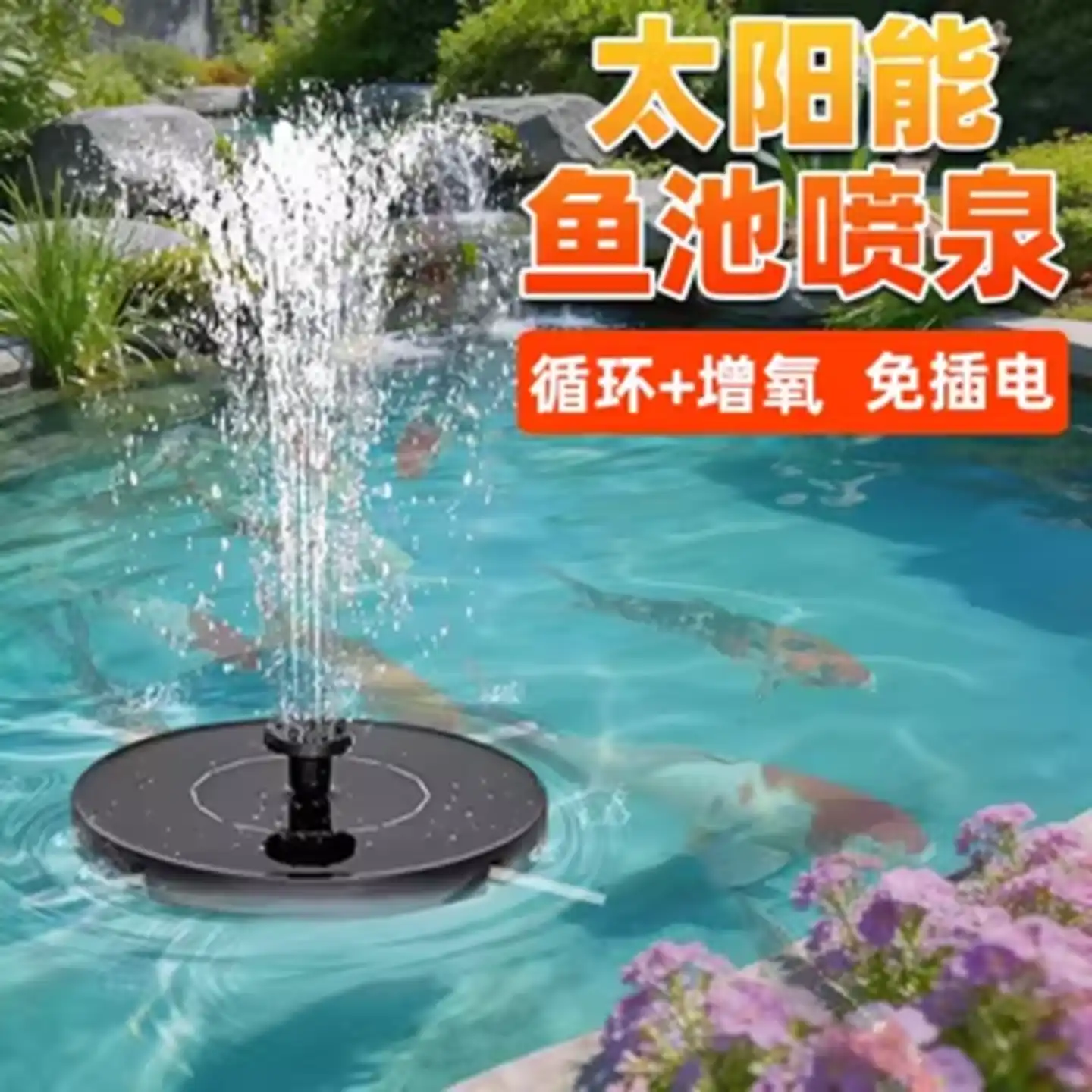
AI didn't change the product itself, but it changed the way users understand the product. It turned "functional description" into "usage scenario."

This正好击中 (hits right at) the pain point of e-commerce content.

Product pages filled with parameters未必有耐心看 (users may not have the patience to read); hosts talking for a long time未必相信 (users may not believe). But a十几秒 (ten-plus second) video, if it can clearly explain the scene, the conversion efficiency might be much higher.

More importantly, AI videos can be generated in batches. Merchants can generate children's version, family version, holiday version, outdoor version for the same product, or generate different languages, different characters, and different scenes for different countries.

This is more significant for Alibaba than simply making a video generation tool. Whether it's Taobao or Tmall,上面都有大量商家 (there are a large number of merchants on them), and also a large amount of product data and transaction feedback.

If an AI video tool only knows how to generate pretty pictures, it will quickly become a material software. If it can know in what场景 (scenes) this product is more likely to be clicked, what copy is more likely to lead to add-to-cart, what video's first few seconds are more likely to retain users, it will approach being part of an e-commerce operating system.

What Alibaba has more than other video generation model companies is precisely this反馈闭环 (feedback loop).

Product images, detail pages, reviews, Q&A, search terms, click-through rates, add-to-cart rates, refund reasons, live stream dwell time—these things seem fragmented but are all fuel for training e-commerce content capabilities.

If HappyHorse接入 (connects to) these feedbacks, it can evolve from "helping merchants generate a video" to "helping merchants generate videos more likely to sell goods."

面向淘天 (Facing Taotian), it can handle主图视频 (main image videos),商品场景短片 (product scenario short films),直播切片 (live stream clips),虚拟主播 (virtual hosts), and营销素材 (marketing materials).

In the past, when a merchant launched a new product, they might only upload a few pictures, at most shooting a rough short video. In the future, they can give the product images, selling points, reviews, and audience tags to the system, let the system generate multiple different versions of videos, and then use real投放 (placement) and成交数据 (transaction data) to筛选出 (filter out) the more effective one.

If this process runs smoothly, platform content supply will increase significantly, and the content threshold for small and medium-sized merchants will also decrease.

However, AI video带货 (product placement) also has risks. It can amplify selling points but can also amplify illusions. A fountain pump喷得很高 (sprays very high) in an AI video might not achieve that effect in reality.

Alibaba's opportunity should not be to allow merchants to use AI to create dreams. The focus should be on product parameters,实拍素材 (real-shot materials), buyer reviews, and platform auditing (platform auditing) to keep generated content within boundaries.

In late March, OpenAI announced the shutdown of the Sora standalone application and related APIs. The reason is realistic: video generation burns too much money, user retention cannot support the cost, and OpenAI needs to put computing power back into coding, enterprise services, and robotics directions.

Sora fell on the commercial account.

ByteDance also encountered trouble on another front. Although Seedance 2.0's effects are also fierce, due to copyright issues, ByteDance paused the global release of Seedance 2.0.

The stronger the model is trained, the easier it is to step into the mire of copyright,肖像权 (portrait rights), and training data.

Looking back at HappyHorse, led by Zhang Di, it has a clear commercial scenario. Moreover, the product images, merchant materials, real-shot videos, and transaction feedback in Alibaba's hands are naturally more suitable for controlled generation than影视IP (film and TV IP).

Therefore, the value of HappyHorse is not only in the leaderboard. It found a more stable landing point for AI video.


Trend Kriptolar

İlgili Sorular

QWho is Zhang Di and what is his role in the development of HappyHorse?

AZhang Di is a computer science graduate from Shanghai Jiao Tong University who worked at Alibaba for a decade, later joining Kuaishou to lead the development of the Kling model. He returned to Alibaba in November 2025 as the head of Taotian Group's Future Life Laboratory, where he led the development of the HappyHorse video generation model.

QWhat makes HappyHorse stand out in the AI video generation field according to the article?

AHappyHorse stands out because it topped the Artificial Analysis leaderboard in both text-to-video and image-to-video categories, uses a native multimodal architecture for better lip-sync and audio-video alignment, and is open-source with commercial use allowed, enabling faster iteration and community feedback.

QHow does HappyHorse address the challenges of cost and speed in video generation?

AHappyHorse reduces generation time and cost by requiring about 38 seconds to generate a 5-second 1080p video on a single H100 GPU and employing DMD-2 distillation technology to compress the denoising steps to just 8 steps, making it more feasible for commercial use.

QWhat is the primary application scenario for HappyHorse within Alibaba's ecosystem?

AThe primary application for HappyHorse is in e-commerce, particularly within Taotian Group, where it is used to generate product videos, marketing materials, virtual hosts, and live stream clips to enhance product presentation, improve conversion rates, and lower content production barriers for merchants.

QWhat are some risks associated with AI-generated video content in e-commerce, and how might Alibaba mitigate them?

ARisks include misleading exaggerations of product features and potential copyright issues. Alibaba can mitigate these by leveraging product parameters, actual product images, buyer reviews, and platform auditing mechanisms to ensure generated content remains accurate and trustworthy.

İlgili Okumalar

Manus Buyback Plan Emerges: Chinese Investors Plan to Repurchase Equity with $2 Billion, Path to Hong Kong IPO Becomes Clearer

According to a report by The Information, early Chinese investors of Manus, including Tencent, Sequoia Capital China, and ZhenFund, are planning to repurchase the company from Meta for $2 billion—the same price Meta paid in its acquisition last December. This move is a direct response to the Chinese government's prohibition of the foreign acquisition in April. As part of the repurchase plan, Manus is considering establishing a Sino-foreign joint venture within China. This structure is seen as a way to ensure regulatory compliance for its Chinese investors and to pave the way for a future IPO in Hong Kong. Notably, U.S. investor Benchmark will not participate in the buyback, which will concentrate ownership even more among Chinese capital. Since its acquisition by Meta, Manus's business has grown rapidly, with its annualized revenue run rate reportedly increasing four-to-fivefold to $400-$500 million in roughly six months. This strong growth underpins the investors' willingness to repurchase at the original price. Financially, the forced unwinding of the deal may benefit the early investors, allowing them to regain equity at a cost far below the company's current implied valuation, with the added prospect of an independent future listing. However, specific terms of the repurchase, including funding proportions and the joint venture's equity structure, are still under negotiation. This "repurchase-joint venture-Hong Kong IPO" approach could serve as a reference model for other Chinese AI startups navigating cross-border M&A regulations.

marsbit16 dk önce

Manus Buyback Plan Emerges: Chinese Investors Plan to Repurchase Equity with $2 Billion, Path to Hong Kong IPO Becomes Clearer

marsbit16 dk önce

STRC Loses Peg by 11%, Can Strategy's Perpetual Motion Machine Keep Running?

The article discusses the significant and concerning depegging of MicroStrategy's (MSTR) preferred stock, STRC. Designed to trade near its $100 target par value, STRC has recently fallen sharply, reaching a low of $83.26 and closing at $88.59, representing an over 11% discount. STRC is a core component of MicroStrategy's financial strategy. As a perpetual preferred stock, it allows the company to raise capital through an "at-the-market" (ATM) issuance program without diluting common shareholders (MSTR). This capital is primarily used to purchase Bitcoin, creating a "capital flywheel": issuing STRC → raising cash → buying BTC → increasing net assets → supporting STRC's value. The flywheel's operation depends on STRC maintaining its $100 price. To enforce this, MicroStrategy employs a dynamic dividend mechanism, recently raising the rate to 11.5% and increasing payout frequency. However, this has failed to halt the depegging, indicating market concerns extend beyond yield. Analysts cite two main reasons. First, technical factors like forced liquidations from leveraged arbitrage trades may have exacerbated the sell-off. Second, and more fundamentally, is waning confidence in MicroStrategy's financial resilience. A JPMorgan report highlighted the company's limited cash relative to its ~$1.7 billion annual dividend obligation, raising liquidity concerns. While MicroStrategy counters that its massive Bitcoin holdings provide decades of coverage, this argument relies on the potential need to sell BTC—a departure from its long-standing "never sell" narrative. The company's recent sale of a small amount of Bitcoin for "testing," despite being framed as minor, has intensified these fears. The persistent depegging threatens to cripple MicroStrategy's primary funding channel. If STRC remains discounted, the company's ability to fund further Bitcoin purchases weakens. Should cash reserves dwindle while financing is constrained, the market may increasingly price in the risk of MicroStrategy becoming a forced seller of Bitcoin to meet obligations. This shift from a major marginal buyer to a potential seller could pose significant downside risk to the broader Bitcoin market.

链捕手25 dk önce

STRC Loses Peg by 11%, Can Strategy's Perpetual Motion Machine Keep Running?

链捕手25 dk önce

Behind the AI Scorecards Lies a Chinese 'Question Setter'

Behind the AI scorecards that dominate industry discussions—benchmarks like MMLU-Pro, MMMU, and MMMU-Pro—stands a Chinese-Canadian researcher: Wenhu Chen. As an assistant professor at the University of Waterloo and founder of the TIGER Lab, Chen has become a key "exam-setter" for evaluating large language and multimodal models. Chen first gained broader recognition with MMLU-Pro, a more challenging and stable update to the popular MMLU benchmark. As top models like OpenAI’s o3 began achieving near-perfect scores on the original MMLU, it became difficult to distinguish their true capabilities. MMLU-Pro introduced more complex reasoning questions, expanded answer choices, and filtered out ambiguous or simple items, effectively reintroducing differentiation among state-of-the-art models. His work on MMMU addressed the evaluation of multimodal models, requiring them to integrate visual information (like charts, diagrams, or tables) with textual knowledge across diverse academic subjects. Even the strongest models initially scored only around 56-59%, highlighting significant room for improvement in genuine multimodal reasoning. MMMU-Pro further refined this by preventing models from bypassing visual cues. Chen’s research focus has long been on complex information understanding and reasoning. His background—including a PhD at UC Santa Barbara, research at Google/DeepMind on Gemini, and now a role in Meta’s superintelligence lab—provides deep insight into model development and their potential weaknesses. His TIGER Lab also builds models (e.g., for video understanding and generation), ensuring his evaluation benchmarks are grounded in practical challenges. While AI headlines often spotlight company leaders and product launches, Chen’s work exemplifies the critical, behind-the-scenes contributions of researchers crafting the rigorous standards that define and drive progress in AI capabilities.

marsbit1 saat önce

Behind the AI Scorecards Lies a Chinese 'Question Setter'

marsbit1 saat önce

İşlemler

Spot
Futures

Popüler Makaleler

GROK AI Nedir

Grok AI: Web3 Döneminde Konuşma Teknolojisini Devrim Niteliğinde Yenilik Giriş Hızla gelişen yapay zeka alanında, Grok AI, ileri teknoloji ve kullanıcı etkileşimi alanlarını birleştiren dikkate değer bir proje olarak öne çıkıyor. Ünlü girişimci Elon Musk'ın liderliğindeki xAI tarafından geliştirilen Grok AI, yapay zeka ile etkileşim şeklimizi yeniden tanımlamayı hedefliyor. Web3 hareketi devam ederken, Grok AI, karmaşık sorgulara yanıt vermek için konuşma yapay zekasının gücünden yararlanmayı amaçlıyor ve kullanıcılara sadece bilgilendirici değil, aynı zamanda eğlenceli bir deneyim sunuyor. Grok AI Nedir? Grok AI, kullanıcılarla dinamik bir şekilde etkileşimde bulunmak üzere tasarlanmış sofistike bir konuşma yapay zeka sohbet botudur. Birçok geleneksel yapay zeka sisteminin aksine, Grok AI, genellikle uygunsuz veya standart yanıtların dışında kabul edilen daha geniş bir sorgu yelpazesini benimsemektedir. Projenin temel hedefleri şunlardır: Güvenilir Akıl Yürütme: Grok AI, bağlamsal anlayışa dayalı mantıklı yanıtlar sağlamak için sağduyu akıl yürütmeyi vurgular. Ölçeklenebilir Denetim: Araç yardımı entegrasyonu, kullanıcı etkileşimlerinin hem izlenmesini hem de kalite için optimize edilmesini sağlar. Resmi Doğrulama: Güvenlik en önemli önceliktir; Grok AI, çıktılarının güvenilirliğini artırmak için resmi doğrulama yöntemlerini entegre eder. Uzun Bağlam Anlayışı: AI modeli, kapsamlı konuşma geçmişini saklama ve hatırlama konusunda mükemmel bir performans sergileyerek anlamlı ve bağlamsal olarak farkında tartışmaların yapılmasını kolaylaştırır. Saldırgan Dayanıklılık: Manipüle edilmiş veya kötü niyetli girdilere karşı savunmalarını geliştirmeye odaklanarak, Grok AI kullanıcı etkileşimlerinin bütünlüğünü korumayı hedefler. Özünde, Grok AI sadece bir bilgi alma cihazı değil; dinamik diyalogu teşvik eden, etkileyici bir konuşma partneridir. Grok AI'nın Yaratıcısı Grok AI'nın arkasındaki beyin, otomotiv, uzay yolculuğu ve teknoloji gibi çeşitli alanlarda yenilikle özdeşleşen Elon Musk'tır. Yapay zeka teknolojisini faydalı yollarla geliştirmeye odaklanan xAI çatısı altında, Musk'ın vizyonu, yapay zeka etkileşimlerinin anlaşılmasını yeniden şekillendirmeyi amaçlıyor. Liderlik ve temel etik, Musk'ın teknolojik sınırları zorlamaya olan bağlılığı tarafından derinden etkilenmektedir. Grok AI'nın Yatırımcıları Grok AI'yi destekleyen yatırımcılarla ilgili spesifik detaylar sınırlı kalmakla birlikte, projenin kuluçka merkezi olan xAI'nin, esasen Elon Musk tarafından kurulduğu ve desteklendiği kamuya açık bir şekilde kabul edilmektedir. Musk'ın önceki girişimleri ve mülkleri, Grok AI'nın güvenilirliğini ve büyüme potansiyelini daha da artıran sağlam bir destek sağlar. Ancak, şu anda Grok AI'yı destekleyen ek yatırım fonları veya kuruluşlarıyla ilgili bilgiye kolayca erişim sağlanamamaktadır; bu da potansiyel gelecekteki keşif alanını işaret etmektedir. Grok AI Nasıl Çalışır? Grok AI'nın operasyonel mekanikleri, kavramsal çerçevesi kadar yenilikçidir. Proje, benzersiz işlevselliklerini kolaylaştıran birkaç son teknoloji ürünü teknolojiyi entegre eder: Sağlam Altyapı: Grok AI, konteyner orkestrasyonu için Kubernetes, performans ve güvenlik için Rust ve yüksek performanslı sayısal hesaplama için JAX kullanılarak inşa edilmiştir. Bu üçlü, sohbet botunun verimli çalışmasını, etkili bir şekilde ölçeklenmesini ve kullanıcılara zamanında hizmet vermesini sağlar. Gerçek Zamanlı Bilgi Erişimi: Grok AI'nın ayırt edici özelliklerinden biri, X platformu (önceden Twitter olarak biliniyordu) aracılığıyla gerçek zamanlı verilere erişim yeteneğidir. Bu yetenek, yapay zekaya en son bilgilere erişim sağlar ve diğer yapay zeka modellerinin gözden kaçırabileceği zamanında yanıtlar ve öneriler sunmasına olanak tanır. İki Etkileşim Modu: Grok AI, kullanıcılara “Eğlenceli Mod” ve “Normal Mod” arasında seçim yapma imkanı sunar. Eğlenceli Mod, daha eğlenceli ve mizahi bir etkileşim tarzı sağlarken, Normal Mod, kesin ve doğru yanıtlar vermeye odaklanır. Bu çok yönlülük, çeşitli kullanıcı tercihlerine hitap eden özelleştirilmiş bir deneyim sağlar. Özünde, Grok AI performansı etkileşimle birleştirerek, hem zenginleştirici hem de eğlenceli bir deneyim yaratmaktadır. Grok AI'nın Zaman Çizelgesi Grok AI'nın yolculuğu, gelişim ve dağıtım aşamalarını yansıtan önemli dönüm noktalarıyla işaretlenmiştir: İlk Geliştirme: Grok AI'nın temel aşaması, modelin ilk eğitim ve ince ayarının yapıldığı yaklaşık iki ay boyunca gerçekleşmiştir. Grok-2 Beta Yayını: Önemli bir ilerleme olarak, Grok-2 beta duyurulmuştur. Bu sürüm, sohbet etme, kodlama ve akıl yürütme yetenekleriyle donatılmış iki versiyon—Grok-2 ve Grok-2 mini—sunmuştur. Halka Açık Erişim: Beta geliştirmesinin ardından, Grok AI X platformu kullanıcılarına sunulmuştur. Telefon numarasıyla doğrulanan ve en az yedi gün aktif olan hesap sahipleri, sınırlı bir versiyona erişim sağlayarak teknolojiyi daha geniş bir kitleye ulaştırmaktadır. Bu zaman çizelgesi, Grok AI'nın kuruluşundan kamu etkileşimine kadar sistematik büyümesini kapsar ve sürekli iyileştirme ve kullanıcı etkileşimine olan bağlılığını vurgular. Grok AI'nın Ana Özellikleri Grok AI, yenilikçi kimliğine katkıda bulunan birkaç ana özelliği kapsamaktadır: Gerçek Zamanlı Bilgi Entegrasyonu: Güncel ve ilgili bilgilere erişim, Grok AI'yı birçok statik modelden ayırarak, etkileyici ve doğru bir kullanıcı deneyimi sağlar. Çeşitli Etkileşim Tarzları: Farklı etkileşim modları sunarak, Grok AI çeşitli kullanıcı tercihlerine hitap eder ve yapay zeka ile konuşurken yaratıcılığı ve kişiselleştirmeyi teşvik eder. Gelişmiş Teknolojik Altyapı: Kubernetes, Rust ve JAX kullanımı, projeye güvenilirlik ve optimal performans sağlamak için sağlam bir çerçeve sunar. Etik Tartışma Dikkati: Görüntü üreten bir işlevin dahil edilmesi, projenin yenilikçi ruhunu sergiler. Ancak, aynı zamanda tanınabilir figürlerin saygılı bir şekilde tasvir edilmesi ve telif hakkı ile ilgili etik konuları da gündeme getirir—bu, yapay zeka topluluğunda süregelen bir tartışmadır. Sonuç Konuşma yapay zekası alanında öncü bir varlık olarak Grok AI, dijital çağda dönüştürücü kullanıcı deneyimlerinin potansiyelini kapsar. xAI tarafından geliştirilen ve Elon Musk'ın vizyoner yaklaşımıyla yönlendirilen Grok AI, gerçek zamanlı bilgiyi gelişmiş etkileşim yetenekleriyle birleştirir. Yapay zekanın neler başarabileceği konusunda sınırları zorlamayı hedeflerken, etik konulara ve kullanıcı güvenliğine odaklanmayı sürdürmektedir. Grok AI, sadece teknolojik ilerlemeyi değil, aynı zamanda Web3 manzarasında yeni bir konuşma paradigmasını da temsil eder ve kullanıcılara hem yetkin bilgi hem de eğlenceli etkileşim sunma vaadinde bulunur. Proje gelişmeye devam ederken, teknolojinin, yaratıcılığın ve insan benzeri etkileşimin kesişim noktasında nelerin başarılabileceğinin bir kanıtı olarak durmaktadır.

400 Toplam GörüntülenmeYayınlanma 2024.12.26Güncellenme 2024.12.26

GROK AI Nedir

ERC AI Nedir

Euruka Tech: $erc ai ve Web3'teki Hedefleri Üzerine Bir Genel Bakış Giriş Blockchain teknolojisi ve merkeziyetsiz uygulamaların hızla gelişen manzarasında, her biri benzersiz hedefler ve metodolojilerle yeni projeler sıkça ortaya çıkmaktadır. Bu projelerden biri, kripto para ve Web3 alanında faaliyet gösteren Euruka Tech'tir. Euruka Tech'in, özellikle $erc ai token'ının ana odak noktası, merkeziyetsiz teknolojinin büyüyen yeteneklerinden yararlanmak için tasarlanmış yenilikçi çözümler sunmaktır. Bu makale, Euruka Tech'in kapsamlı bir genel görünümünü, hedeflerini, işlevselliğini, yaratıcısının kimliğini, potansiyel yatırımcılarını ve Web3'teki daha geniş bağlam içindeki önemini keşfetmeyi amaçlamaktadır. Euruka Tech, $erc ai Nedir? Euruka Tech, Web3 ortamının sunduğu araçlar ve işlevsellikleri kullanan bir proje olarak tanımlanmaktadır ve operasyonlarında yapay zekayı entegre etmeye odaklanmaktadır. Projenin çerçevesine dair spesifik detaylar biraz belirsiz olsa da, kullanıcı etkileşimini artırmayı ve kripto alanındaki süreçleri otomatikleştirmeyi amaçlamaktadır. Proje, yalnızca işlemleri kolaylaştırmakla kalmayıp, aynı zamanda yapay zeka aracılığıyla öngörücü işlevsellikleri de entegre eden merkeziyetsiz bir ekosistem yaratmayı hedeflemektedir; bu nedenle token'ının adı $erc ai'dir. Amaç, büyüyen Web3 alanında daha akıllı etkileşimleri ve verimli işlem işleme süreçlerini kolaylaştıran sezgisel bir platform sunmaktır. Euruka Tech'in Yaratıcısı Kimdir, $erc ai? Şu anda, Euruka Tech'in arkasındaki yaratıcı veya kurucu ekip hakkında bilgi verilmemiştir ve bu durum biraz belirsizdir. Bu veri eksikliği, ekibin geçmişi hakkında bilgi sahibi olmanın genellikle blockchain sektöründe güvenilirlik oluşturmak için gerekli olduğu endişelerini doğurmaktadır. Bu nedenle, somut detaylar kamuya sunulana kadar bu bilgiyi bilinmeyen olarak sınıflandırdık. Euruka Tech'in Yatırımcıları Kimlerdir, $erc ai? Benzer şekilde, Euruka Tech projesinin yatırımcıları veya destekleyen organizasyonları hakkında mevcut araştırmalarla kolayca sağlanan bir bilgi yoktur. Euruka Tech ile etkileşimde bulunmayı düşünen potansiyel paydaşlar veya kullanıcılar için kritik bir unsur, kurumsal finansal ortaklıklar veya saygın yatırım firmalarından gelen destekle sağlanan güvencedir. Yatırım ilişkileri hakkında açıklamalar olmadan, projenin finansal güvenliği veya sürdürülebilirliği hakkında kapsamlı sonuçlar çıkarmak zordur. Bulunan bilgilere paralel olarak, bu bölüm de bilinmeyen durumundadır. Euruka Tech, $erc ai Nasıl Çalışır? Euruka Tech için detaylı teknik spesifikasyonların eksik olmasına rağmen, yenilikçi hedeflerini göz önünde bulundurmak önemlidir. Proje, yapay zekanın hesaplama gücünden yararlanarak kripto para ortamında kullanıcı deneyimini otomatikleştirmeyi ve geliştirmeyi hedeflemektedir. AI'yi blockchain teknolojisiyle entegre ederek, Euruka Tech otomatik ticaret, risk değerlendirmeleri ve kişiselleştirilmiş kullanıcı arayüzleri gibi özellikler sunmayı amaçlamaktadır. Euruka Tech'in yenilikçi özü, kullanıcılar ile merkeziyetsiz ağların sunduğu geniş olanaklar arasında kesintisiz bir bağlantı yaratma hedefinde yatmaktadır. Makine öğrenimi algoritmaları ve AI kullanarak, ilk kez kullanıcı zorluklarını en aza indirmeyi ve Web3 çerçevesindeki işlem deneyimlerini düzene sokmayı amaçlamaktadır. AI ve blockchain arasındaki bu simbiyoz, $erc ai token'ının önemini vurgulamakta ve geleneksel kullanıcı arayüzleri ile merkeziyetsiz teknolojilerin gelişmiş yetenekleri arasında bir köprü işlevi görmektedir. Euruka Tech, $erc ai Zaman Çizelgesi Maalesef, Euruka Tech hakkında mevcut olan sınırlı bilgiler nedeniyle, projenin yolculuğundaki önemli gelişmeler veya kilometre taşları hakkında detaylı bir zaman çizelgesi sunamıyoruz. Genellikle bir projenin evrimini haritalamak ve büyüme eğrisini anlamak için değerli olan bu zaman çizelgesi şu anda mevcut değildir. Önemli olaylar, ortaklıklar veya işlevsel eklemeler hakkında bilgiler belirgin hale geldikçe, güncellemeler kesinlikle Euruka Tech'in kripto alanındaki görünürlüğünü artıracaktır. Diğer “Eureka” Projeleri Üzerine Açıklama Birden fazla projenin ve şirketin “Eureka” benzeri bir isimlendirmeye sahip olduğunu belirtmek önemlidir. Araştırmalar, robotlara karmaşık görevler öğretmeye odaklanan NVIDIA Research'ten bir AI ajanı gibi girişimleri, ayrıca eğitim ve müşteri hizmetleri analitiğinde kullanıcı deneyimini geliştiren Eureka Labs ve Eureka AI'yi tanımlamıştır. Ancak, bu projeler Euruka Tech'ten farklıdır ve hedefleri veya işlevleri ile karıştırılmamalıdır. Sonuç Euruka Tech, $erc ai token'ı ile birlikte, Web3 manzarasında umut verici ancak şu anda belirsiz bir oyuncuyu temsil etmektedir. Yaratıcısı ve yatırımcıları hakkında detaylar açıklanmamış olsa da, yapay zekayı blockchain teknolojisiyle birleştirme konusundaki temel hedefi ilgi odağı olmaktadır. Projenin, gelişmiş otomasyon aracılığıyla kullanıcı etkileşimini teşvik etme konusundaki benzersiz yaklaşımları, Web3 ekosistemi ilerledikçe onu farklı kılabilir. Kripto piyasası gelişmeye devam ederken, paydaşların Euruka Tech etrafındaki gelişmelere dikkat etmeleri önemlidir; belgelenmiş yeniliklerin, ortaklıkların veya tanımlanmış bir yol haritasının gelişimi, önümüzdeki dönemde önemli fırsatlar sunabilir. Şu an itibarıyla, Euruka Tech'in potansiyelini ve rekabetçi kripto manzarasındaki konumunu açığa çıkarabilecek daha somut içgörüler beklemekteyiz.

369 Toplam GörüntülenmeYayınlanma 2025.01.02Güncellenme 2025.01.02

ERC AI Nedir

DUOLINGO AI Nedir

DUOLINGO AI: Dil Öğrenimini Web3 ve AI İnovasyonu ile Entegre Etmek Teknolojinin eğitimi yeniden şekillendirdiği bir çağda, yapay zeka (AI) ve blok zinciri ağlarının entegrasyonu dil öğrenimi için yeni bir ufuk açmaktadır. DUOLINGO AI ve ona bağlı kripto para birimi $DUOLINGO AI ile tanışın. Bu proje, önde gelen dil öğrenme platformlarının eğitimsel yeteneklerini merkeziyetsiz Web3 teknolojisinin faydalarıyla birleştirmeyi hedefliyor. Bu makale, DUOLINGO AI'nın temel yönlerini, hedeflerini, teknolojik çerçevesini, tarihsel gelişimini ve gelecekteki potansiyelini incelerken, orijinal eğitim kaynağı ile bu bağımsız kripto para girişimi arasındaki netliği korumaktadır. DUOLINGO AI Genel Görünümü DUOLINGO AI'nın temelinde, öğrenicilerin dil yeterliliğinde eğitimsel kilometre taşlarına ulaşmaları için kriptografik ödüller kazanabilecekleri merkeziyetsiz bir ortam oluşturma hedefi yatmaktadır. Akıllı sözleşmeler uygulayarak, proje beceri doğrulama süreçlerini ve token tahsislerini otomatikleştirmeyi amaçlamakta, şeffaflık ve kullanıcı sahipliğini vurgulayan Web3 ilkelerine uymaktadır. Model, dil edinimindeki geleneksel yaklaşımlardan ayrılarak, token sahiplerinin kurs içeriği ve ödül dağıtımları üzerinde iyileştirmeler önermesine olanak tanıyan topluluk odaklı bir yönetişim yapısına dayanmaktadır. DUOLINGO AI'nın bazı dikkat çekici hedefleri şunlardır: Oyunlaştırılmış Öğrenme: Proje, dil yeterlilik seviyelerini temsil etmek için blok zinciri başarıları ve değiştirilemez tokenleri (NFT'ler) entegre ederek, katılımcıları motive eden dijital ödüller sunmaktadır. Merkeziyetsiz İçerik Üretimi: Eğitmenler ve dil meraklılarının kendi kurslarını katkıda bulunmalarına olanak tanıyarak, tüm katkıda bulunanların fayda sağladığı bir gelir paylaşım modeli oluşturmaktadır. AI Destekli Kişiselleştirme: Gelişmiş makine öğrenimi modellerini kullanarak, DUOLINGO AI dersleri bireysel öğrenme ilerlemesine uyacak şekilde kişiselleştirmekte, köklü platformlarda bulunan uyarlamalı özelliklere benzer bir deneyim sunmaktadır. Proje Yaratıcıları ve Yönetişim Nisan 2025 itibarıyla, $DUOLINGO AI'nın arkasındaki ekip takma isimler kullanmaktadır; bu, merkeziyetsiz kripto para alanında sıkça görülen bir uygulamadır. Bu anonimlik, bireysel geliştiricilere odaklanmak yerine kolektif büyümeyi ve paydaş katılımını teşvik etmek amacıyla tasarlanmıştır. Solana blok zincirinde dağıtılan akıllı sözleşme, geliştiricinin cüzdan adresini not etmekte, bu da yaratıcıların kimliğinin bilinmemesine rağmen işlemlerle ilgili şeffaflık taahhüdünü simgelemektedir. Yol haritasına göre, DUOLINGO AI, Merkeziyetsiz Otonom Organizasyon (DAO) haline gelmeyi hedeflemektedir. Bu yönetişim yapısı, token sahiplerinin özellik uygulamaları ve hazine tahsisleri gibi kritik konularda oy kullanmalarına olanak tanımaktadır. Bu model, çeşitli merkeziyetsiz uygulamalarda bulunan topluluk güçlendirme ethosu ile uyumlu olup, kolektif karar verme sürecinin önemini vurgulamaktadır. Yatırımcılar ve Stratejik Ortaklıklar Şu anda, $DUOLINGO AI ile bağlantılı olarak kamuya açık tanımlanabilir kurumsal yatırımcılar veya risk sermayedarları bulunmamaktadır. Bunun yerine, projenin likiditesi esas olarak merkeziyetsiz borsa (DEX) kaynaklıdır ve bu, geleneksel eğitim teknolojisi şirketlerinin finansman stratejileriyle keskin bir zıtlık oluşturmaktadır. Bu tabandan gelen model, merkeziyetsizliğe olan bağlılığını yansıtan topluluk odaklı bir yaklaşımı işaret etmektedir. DUOLINGO AI, beyaz kitabında, kurs tekliflerini zenginleştirmeyi amaçlayan belirsiz “blok zinciri eğitim platformları” ile işbirlikleri kurmayı planladığını belirtmektedir. Belirli ortaklıklar henüz açıklanmamış olsa da, bu işbirlikçi çabalar, blok zinciri yeniliğini eğitim girişimleri ile birleştirmeyi amaçlayan bir stratejiyi ima etmektedir ve çeşitli öğrenme yollarında erişimi ve kullanıcı katılımını genişletmektedir. Teknolojik Mimari AI Entegrasyonu DUOLINGO AI, eğitimsel tekliflerini geliştirmek için iki ana AI destekli bileşen içermektedir: Uyarlanabilir Öğrenme Motoru: Bu sofistike motor, kullanıcı etkileşimlerinden öğrenmekte olup, büyük eğitim platformlarından gelen özel modellere benzer. Belirli öğrenici zorluklarını ele almak için ders zorluğunu dinamik olarak ayarlamakta ve zayıf alanları hedeflenmiş alıştırmalarla pekiştirmektedir. Konuşma Ajanları: GPT-4 destekli sohbet botlarını kullanarak, DUOLINGO AI kullanıcıların simüle edilmiş konuşmalara katılmalarına olanak tanıyarak, daha etkileşimli ve pratik bir dil öğrenme deneyimi sunmaktadır. Blok Zinciri Altyapısı $DUOLINGO AI, Solana blok zincirinde inşa edilmiş kapsamlı bir teknolojik çerçeve kullanmaktadır: Beceri Doğrulama Akıllı Sözleşmeleri: Bu özellik, yeterlilik testlerini başarıyla geçen kullanıcılara otomatik olarak token ödülleri vermekte, gerçek öğrenim sonuçları için teşvik yapısını güçlendirmektedir. NFT Rozetleri: Bu dijital tokenler, öğrenicilerin kurslarının bir bölümünü tamamlamak veya belirli becerileri ustalaşmak gibi ulaştıkları çeşitli kilometre taşlarını simgelemekte ve bunları dijital olarak takas etmelerine veya sergilemelerine olanak tanımaktadır. DAO Yönetişimi: Token sahibi topluluk üyeleri, anahtar öneriler üzerinde oy kullanarak yönetişime katılabilir, bu da kurs teklifleri ve platform özelliklerinde yeniliği teşvik eden katılımcı bir kültürü kolaylaştırmaktadır. Tarihsel Zaman Çizelgesi 2022–2023: Kavramsallaştırma DUOLINGO AI için temel, dil öğrenimindeki AI ilerlemeleri ile blok zinciri teknolojisinin merkeziyetsiz potansiyeli arasındaki sinerjiyi vurgulayan bir beyaz kağıdın oluşturulmasıyla başlar. 2024: Beta Lansmanı Sınırlı bir beta sürümü, popüler dillerdeki teklifleri tanıtarak, erken kullanıcıları token teşvikleri ile ödüllendirir ve projenin topluluk katılım stratejisinin bir parçası olarak sunulmaktadır. 2025: DAO Geçişi Nisan ayında, tokenlerin dolaşıma girmesiyle tam bir ana ağ lansmanı gerçekleşir ve topluluk, Asya dillerine ve diğer kurs gelişmelerine olası genişlemeler hakkında tartışmalara başlar. Zorluklar ve Gelecek Yönelimleri Teknik Engeller Hırslı hedeflerine rağmen, DUOLINGO AI önemli zorluklarla karşı karşıyadır. Ölçeklenebilirlik, AI işleme ile merkeziyetsiz bir ağı sürdürme maliyetleri arasında denge kurma konusunda sürekli bir endişe kaynağıdır. Ayrıca, merkeziyetsiz bir teklif arasında kaliteli içerik üretimi ve moderasyonu sağlamak, eğitim standartlarını koruma konusunda karmaşıklıklar yaratmaktadır. Stratejik Fırsatlar İleriye dönük olarak, DUOLINGO AI, akademik kurumlarla mikro yeterlilik ortaklıkları kurma potansiyeline sahiptir ve dil becerilerinin blok zinciri ile doğrulanmış onaylarını sağlamaktadır. Ayrıca, çapraz zincir genişlemesi, projenin daha geniş kullanıcı tabanlarına ve ek blok zinciri ekosistemlerine erişim sağlamasına olanak tanıyabilir, böylece birlikte çalışabilirliğini ve erişimini artırabilir. Sonuç DUOLINGO AI, yapay zeka ve blok zinciri teknolojisinin yenilikçi bir birleşimini temsil etmekte olup, geleneksel dil öğrenim sistemlerine topluluk odaklı bir alternatif sunmaktadır. Takma isimli geliştirme süreci ve ortaya çıkan ekonomik modeli bazı riskler taşısa da, projenin oyunlaştırılmış öğrenme, kişiselleştirilmiş eğitim ve merkeziyetsiz yönetişim konusundaki taahhüdü, Web3 alanında eğitim teknolojisi için bir yol haritası aydınlatmaktadır. AI gelişmeye devam ederken ve blok zinciri ekosistemi evrim geçirirken, DUOLINGO AI gibi girişimler, kullanıcıların dil eğitimi ile etkileşim biçimlerini yeniden tanımlayabilir, toplulukları güçlendirebilir ve yenilikçi öğrenme mekanizmaları aracılığıyla katılımı ödüllendirebilir.

415 Toplam GörüntülenmeYayınlanma 2025.04.11Güncellenme 2025.04.11

DUOLINGO AI Nedir

Tartışmalar

HTX Topluluğuna hoş geldiniz. Burada, en son platform gelişmeleri hakkında bilgi sahibi olabilir ve profesyonel piyasa görüşlerine erişebilirsiniz. Kullanıcıların AI (AI) fiyatı hakkındaki görüşleri aşağıda sunulmaktadır.

活动图片