The CLARITY Act Enters a Critical Review Today: What You Should Focus On?

marsbit2026-05-14 tarihinde yayınlandı2026-05-14 tarihinde güncellendi

Özet

The CLARITY Act (Digital Asset Market Clarity Act), a landmark bill to establish a regulatory framework for cryptocurrencies, enters a crucial committee markup in the U.S. Senate Banking Committee. While it has a significant chance of advancing to a full Senate vote, its path is narrowing with over 130 proposed amendments. Key tensions surround the bill: whether stablecoin rewards constitute unfair competition for bank deposits, if the legislation genuinely protects investors or merely enables industry expansion, and the push from Democrats to include ethics provisions related to the Trump family's crypto dealings. Banking lobbyists strongly oppose the stablecoin reward compromise, and with the summer recess and midterm elections approaching, the window for passage is tightening. Prediction markets currently assign about a 60% probability of the bill becoming law this year.

Editor's Note: On May 14th, at 10:30 AM Eastern Time (10:30 PM Beijing Time) today, the U.S. Senate Banking Committee will conduct a committee review of the "Cryptocurrency Market Structure Act" (known as the CLARITY Act). This is a critical step in the legislative process. If passed, the CLARITY Act will advance to a full Senate vote.

The committee's official website shows that this Executive Session has been scheduled on the agenda. Previously, Senate Banking Committee Chairman Tim Scott, along with Cynthia Lummis and Thom Tillis, released the latest version of the market structure bill text on May 12th. They stated its goal is to provide "clear rules" for digital assets, protect ordinary investors, combat illicit financial activities, and keep financial innovation within the United States.

This article is from Fortune, focusing on the political maneuvers on the eve of the CLARITY Act's review by the Senate Banking Committee. The most noteworthy aspect is not whether the bill is "pro-crypto," but how, as it nears passage, it exposes three key tensions in U.S. crypto regulation: First, whether stablecoin yields are payment incentives or de facto deposit competition; Second, whether the crypto market structure legislation is protecting investors or opening an institutional pathway for industry expansion; Third, given the deep involvement of the Trump family in crypto businesses, whether ethical constraints must be simultaneously incorporated into the market structure reforms.

From the current situation, the CLARITY Act still has a relatively good chance of entering a full Senate vote, but its margin for error is narrowing. Fortune reports that members of the Senate Banking Committee have already submitted over 130 amendments before the review, with Elizabeth Warren alone proposing 44. Meanwhile, the banking industry is concerned that stablecoin reward mechanisms could siphon off bank deposits and has sent a large number of opposition letters to Senate offices.

Although the key Republican swing vote John Kennedy has indicated a tendency to support it, and the chance of the bill entering full Senate consideration remains high, with the summer recess and midterm elections approaching, the window for the CLARITY Act's passage is narrowing. Prediction markets have also lowered its probability of passing this year to about 60%.

Below is the original text:
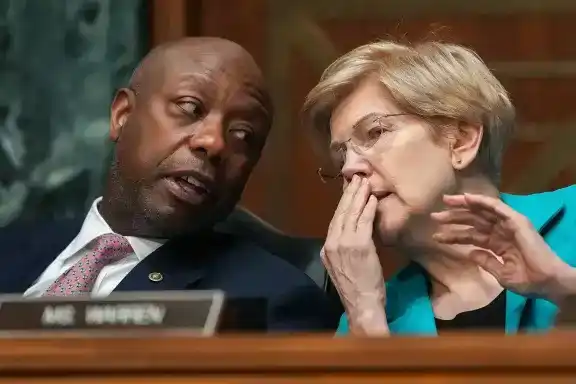
The CLARITY Act is a landmark bill aimed at establishing a regulatory framework for the U.S. crypto industry. The bill will begin its markup review process in a Senate committee starting Thursday. Its passing prospects have boosted investor sentiment, but there remain several significant hurdles to cross before Congress can send the bill to President Trump's desk.

CLARITY is short for the "Digital Asset Market Clarity Act." The bill passed the House of Representatives last year but encountered resistance in the Senate Banking Committee due to disputes between banks and stablecoin companies over whether and when rewards can be paid on stablecoin balances. Now, as senators prepare to propose amendments, Democrats are pushing to include ethical constraint clauses related to the Trump family's crypto businesses.

According to a copy of proposed amendments reviewed by Fortune, members of the Senate Banking Committee have submitted over 130 proposed amendments ahead of Thursday's markup, with Senator Elizabeth Warren alone submitting 44.

Some of the proposed amendments are minor, but others aim to advance the positions of the bill's opponents. These opponents include banking interests concerned that stablecoins could weaken the deposit base of banks, as well as those worried about ethical and national security risks accompanying the crypto industry's expansion.

"I think it will pass, based on the progress made in both chambers of Congress so far and the White House's support for this bill," Steve Yelderman, general counsel for the Ethereum-focused initiative Etherealize, told Fortune. "Having said that, this is Washington, and anything can happen."

Earlier this year, the CLARITY Act came close to entering a Senate Banking Committee markup, but Coinbase withdrew its support for the bill over a proposed ban on stablecoin rewards. Since then, Senator Thom Tillis (R-N.C.) and Senator Angela Alsobrooks (D-Md.) reached an agreement on the stablecoin yield issue. However, banking lobbying groups now complain that this compromise is too friendly to stablecoin companies. Reportedly, members of the American Bankers Association have sent over 8,000 letters to Senate offices criticizing this yield compromise.

A Senate aide told Fortune that during tomorrow's markup, Senate Banking Committee Chairman Tim Scott (R-S.C.) is expected to emphasize protecting "ordinary people," safeguarding national security, and keeping crypto innovation in the United States as the main goals of the CLARITY Act. Another Senate aide said Democrats are expected to focus on the ethical issues raised by President Trump's numerous crypto connections.

"Democrats are increasingly concerned that if ethics provisions are not included in the version of the bill marked up by the Banking Committee, they may not be included later," the staffer said. They added that Democrats are focused on addressing the issue of the Trump family profiting from cryptocurrencies within the market structure legislation. Republicans and Democrats have met several times this week to discuss how to add ethics clauses to the CLARITY Act.

For now, the bill's chances of reaching a full Senate vote remain significant. A key Republican who had previously been hesitant about the CLARITY Act in the Banking Committee, Senator John Kennedy of Louisiana, told Semafor he plans to support the bill. However, with the summer recess and midterm elections approaching, the margin for error for the CLARITY Act remains quite limited. Traders on Polymarket have become less optimistic about the bill's prospects this week. The prediction market currently puts the probability of the bill passing this year at 60%.


İlgili Sorular

QWhat is the CLARITY Act and what is its primary goal?

AThe CLARITY Act refers to the 'Digital Asset Market Clarity Act'. It is a landmark bill aimed at establishing a regulatory framework for the crypto industry in the U.S., with the primary goal of providing clear rules for digital assets while protecting retail investors, combating illicit finance, and keeping financial innovation in the United States.

QWhy was the progression of the CLARITY Act in the Senate Banking Committee previously stalled?

AThe bill's progress in the Senate Banking Committee was previously stalled due to disputes between banks and stablecoin companies over the question of whether and when stablecoin balances could pay rewards.

QWhat are the key tensions in U.S. crypto regulation highlighted by the CLARITY Act's progress?

AThe article highlights three key tensions: 1) Whether stablecoin rewards are a payment incentive or a form of indirect deposit competition; 2) Whether the crypto market structure legislation protects investors or opens a regulatory pathway for industry expansion; 3) Whether market structure reform must incorporate ethical constraints given the deep involvement of the Trump family in crypto businesses.

QWhat is one major concern Democrats are trying to address with proposed amendments to the CLARITY Act?

ADemocrats are trying to address ethical concerns by pushing to incorporate ethical constraint clauses related to the Trump family's crypto business profits into the market structure legislation.

QAccording to prediction markets, what is the current estimated probability of the CLARITY Act passing in 2025?

AAccording to the prediction market Polymarket, the estimated probability of the CLARITY Act passing in 2025 is currently around 60%.

İlgili Okumalar

Annual Salary of Millions Competing for Electricians, Meta Rushes to Open Its Own Technical School

The AI boom is facing an unexpected bottleneck: a severe shortage of skilled construction workers and electricians. As tech giants like Meta, OpenAI, and Alphabet race to build massive data centers—such as OpenAI's $16 billion "Stargate" project—they are hitting a critical labor wall. The U.S. needs an estimated 130,000 more electricians, 240,000 construction workers, and 150,000 supervisors by 2030 for AI infrastructure alone, but tens of thousands of electrician jobs go unfilled each year. While AI companies offer high premiums, with electricians earning up to $280,000 annually, worker scarcity still causes massive losses—delays on a single project can cost $14.2 million per month. The complexity of building AI data centers, which require immense power (equivalent to powering hundreds of thousands of homes), sophisticated electrical systems, and advanced liquid cooling solutions, demands highly skilled technicians who are in short supply. To combat this, companies are investing heavily in training. Meta has committed $115 million to a free training school offering tuition, housing, and stipends, targeting 5,000 new workers. OpenAI is partnering with unions to secure skilled labor. These efforts are paying off, with a significant rise in Gen Z interest in trade schools over college. However, the power demands are staggering. AI data centers are driving a rapid surge in electricity consumption, projected to account for up to 12% of U.S. power use by 2028 and raising costs for consumers. Furthermore, the construction boom is project-based, leading to a potential future glut of trained workers once building peaks, which could depress wages industry-wide. The race for AI supremacy now depends as much on skilled hands as on advanced chips.

marsbit32 dk önce

Annual Salary of Millions Competing for Electricians, Meta Rushes to Open Its Own Technical School

marsbit32 dk önce

OpenAI No Longer Sells Its Most Expensive Model for Profit

OpenAI is shifting its business strategy away from promoting its most expensive, flagship models for every task. Recent price cuts—80% for GPT-5.6 Luna and 20% for Terra—signal a deeper change: the company now actively advises users that many tasks don't require the most powerful model. Instead, OpenAI recommends a tiered approach: use the high-end GPT-5.6 Sol for complex planning and analysis, then delegate execution to cheaper models like Luna. This mirrors moves by Anthropic, which recently launched Claude Opus 5 at half the price of its top model, Fable 5. Both companies are de-emphasizing flagship models as primary revenue drivers, using them instead for brand prestige and technological showcases. The industry is entering a "mass-market" phase, similar to automotive, where high-volume, cost-effective models handle daily operations and drive scale. OpenAI's price reductions are partly enabled by AI models themselves optimizing underlying code and infrastructure, creating a self-reinforcing cycle of efficiency gains and cost reduction. Competition is shifting from "who is smartest" to "who offers the best value." The goal is no longer selling individual models but fostering widespread API adoption and ecosystem lock-in. By making AI calls cheap and ubiquitous, companies like OpenAI aim to become the indispensable, utility-like infrastructure powering automated workflows—the "water and electricity" of software, quietly embedded everywhere.

marsbit32 dk önce

OpenAI No Longer Sells Its Most Expensive Model for Profit

marsbit32 dk önce

Will the Fed Definitely Raise Interest Rates in September? How Will Crypto and U.S. Stocks Withstand the Pressure?

The market's expectation for a September Fed rate hike surged dramatically in early August, jumping from under 50% to over 80% within a week. This shift followed a contentious July FOMC meeting, where a 9-3 vote to hold rates revealed growing dissent from hawkish members advocating for an immediate hike to combat persistent inflation. The primary catalyst for this repricing is rising oil prices, driven by renewed geopolitical tensions around the Strait of Hormuz, which threaten global supply. Energy costs directly influence inflation metrics, making the upcoming July CPI report (due August 12th) a critical data point. If it shows inflation reaccelerating, the probability of a September hike will solidify. For Bitcoin and crypto assets, this is typically bearish news. Bitcoin continues to behave as a high-beta, liquidity-sensitive risk asset. A rate hike raises the opportunity cost of holding non-yielding assets and could drive capital toward money markets, pressuring crypto prices in the short term. However, historical patterns suggest that if a hike is perceived as the end of a tightening cycle rather than the start, any negative price impact may be brief. U.S. stocks, particularly crypto-linked equities like Coinbase and growth-oriented tech stocks, are also vulnerable. Higher rates increase discount rates in valuation models, putting pressure on high-multiple companies. This coincides with a pivotal tech earnings season where investor focus has shifted from massive AI capital expenditure to tangible revenue and cash flow generation. Companies with negative cash flow and weak growth narratives could face heightened volatility if borrowing costs rise in September. In summary, a September Fed hike has evolved into a mainstream market scenario. Key factors to watch are oil prices, the July CPI report, and Fed communications, which will determine the final decision and its impact on volatile crypto and equity markets.

marsbit42 dk önce

Will the Fed Definitely Raise Interest Rates in September? How Will Crypto and U.S. Stocks Withstand the Pressure?

marsbit42 dk önce

İşlemler

Spot
活动图片




