The Bustle Belongs to the 'Epsteins', Saylor Just Wants to Hoard Coins

比推2026-02-02 tarihinde yayınlandı2026-02-02 tarihinde güncellendi

Özet

The article discusses Michael Saylor, founder of MicroStrategy (now Strategy), in the context of the recently released Epstein documents. Saylor was mentioned in a 2010 email from Epstein's PR agent, Peggy Siegal, who described him as a socially awkward "zombie-like" figure who was difficult to engage with at a high-society dinner party. This perceived social ineptitude, a liability in elite circles, is presented as a key strength in his role as a Bitcoin maximalist. Saylor’s company is the largest corporate holder of Bitcoin, with 712,647 BTC purchased at an average cost of $76,037. Despite recent market volatility pushing Bitcoin below his average buy price and causing a 60% drop in his company's stock, Saylor remains unwavering. His strategy is simple and relentless: buy Bitcoin consistently and never sell, a philosophy he summarizes as "More Orange." The piece argues that the very traits that made him an outsider in social settings—being "boring," unemotional, and immune to external noise—are the same traits that make him uniquely suited to his long-term, single-minded accumulation strategy. While cautioning that his corporate financial tools are not available to the average investor, the article concludes that in a noisy market, a "boring" and disciplined approach is often the most profitable, contrasting Saylor's current success with the downfall of many involved in the Epstein scandal.

Author: Curry, Deep Tide TechFlow

Original Title: The Bustle Belongs to the 'Epsteins', Saylor Just Wants to Hoard Coins


There's a reason why one person can hoard 710,000 Bitcoins.

Last Friday, the U.S. Department of Justice released documents related to the Epstein case, spanning 3 million pages. Politicians, billionaires, celebrities—a string of names are popping up from these materials. And the founder of Strategy (formerly MicroStrategy), Michael Saylor, is also in there.

However, Saylor's appearance is a bit special; he was at the table that was looked down upon.

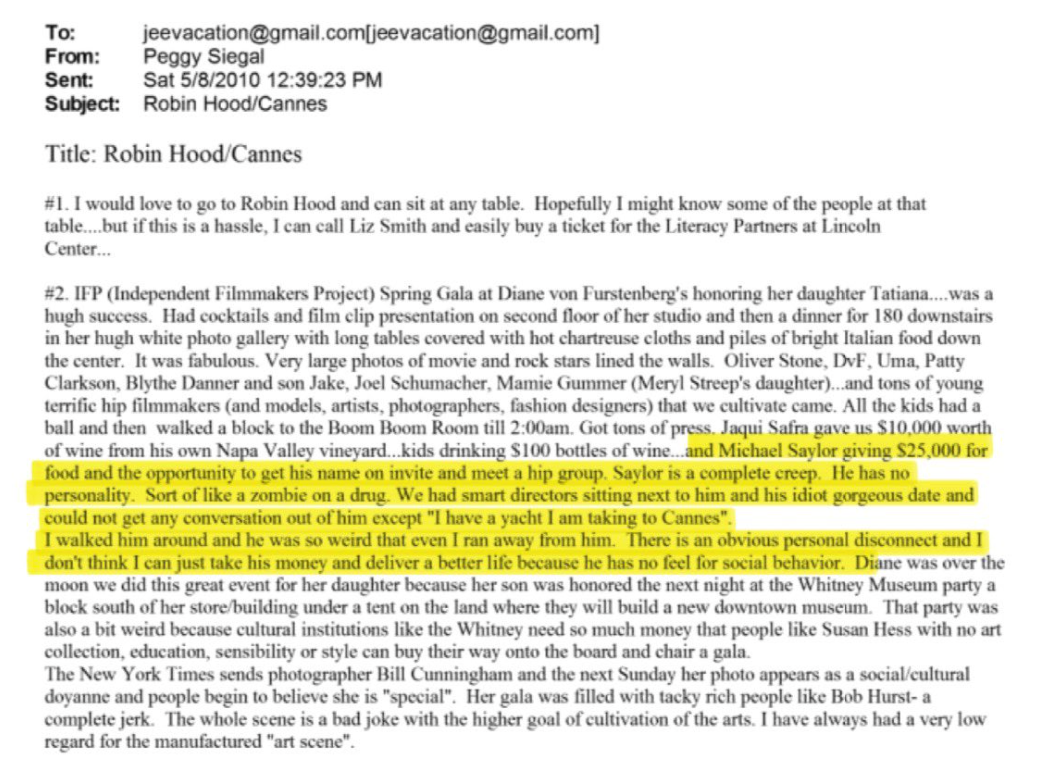
From the currently disclosed information, in 2010, Epstein's publicist Peggy Siegal once complained in a private email:

"There's a guy named Saylor who spent twenty-five thousand dollars on a dinner ticket, and I was responsible for socializing with him. But this guy was completely unapproachable, like a drugged zombie. I couldn't stand it and ran away halfway through."

Peggy's main job is as a Hollywood movie publicist, and her side hustle is helping Epstein organize dinners—essentially scouting for wealthy people to pull into the circle.

Socializing with the rich, helping them meet the right people at parties and dinners, ensuring they have a good time and spend their money comfortably. Having been in the business for decades, she's按理说 seen all kinds of billionaires.
But Saylor, she couldn't handle.

The reason wasn't that he had character flaws; it was that he was too dull. He paid to get in, sat there unable to chat, showed no interest in socializing at all.

Peggy's exact words were, "I don't even know if I can take his money, couldn't figure out how to handle him... He has no personality, completely ignorant of social etiquette."

Now that the Epstein case has exploded, people on the list are busy distancing themselves. Saylor, on the other hand, never managed to squeeze in back then.

Being overly boring and reclusive became a protective shield.

But when this "boredom" is placed in a different context, it's another story.

Saylor's company, Strategy (formerly MicroStrategy), is the publicly traded company holding the most Bitcoin globally. This January, when Bitcoin was still fluctuating around $90,000, they bought over 37,000 more Bitcoins, spending $3.5 billion.

Buying almost every week, rain or shine.

As of now, Strategy holds 712,647 Bitcoins, with an average cost of $76,037. And today, Bitcoin just fell below $76,000, meaning Saylor's position is right on the break-even line.

The market fear index hit a 20-week high, and the crypto world is filled with cries of despair. Strategy's stock price has also dropped 60% from its peak.
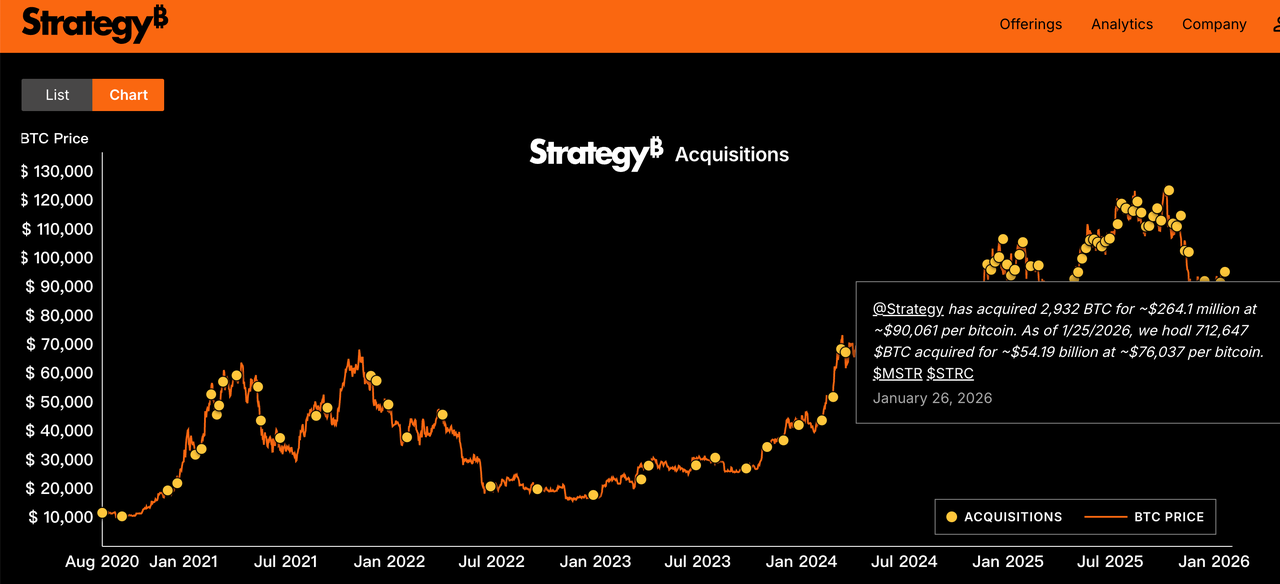
But Saylor tweeted "More Orange," implying he'll keep buying next week.

Back then, Peggy called him a zombie. Looking at it now, hoarding coins might just be a job for zombies.

No explanations, no timing the market, no getting off the ride. Feeling nothing from the outside world, and feeling good about oneself.

And while Peggy complained back then about not knowing how to help him spend money, Saylor has clearly found his way to spend it now: buying Bitcoin, all of it.

From that email, Saylor was an outsider in the world of fame and fortune. He couldn't sit still, couldn't chat, spent a night as if he never came. But such people are反而 steady in trading.

No need to socialize, no need to build relationships, no need to guess what others are thinking. Just focus on one thing, buy every week, and never sell.

Dull, uninteresting, insensitive to the outside world... These traits are flaws in social settings, but when it comes to hoarding coins, they might be a talent.

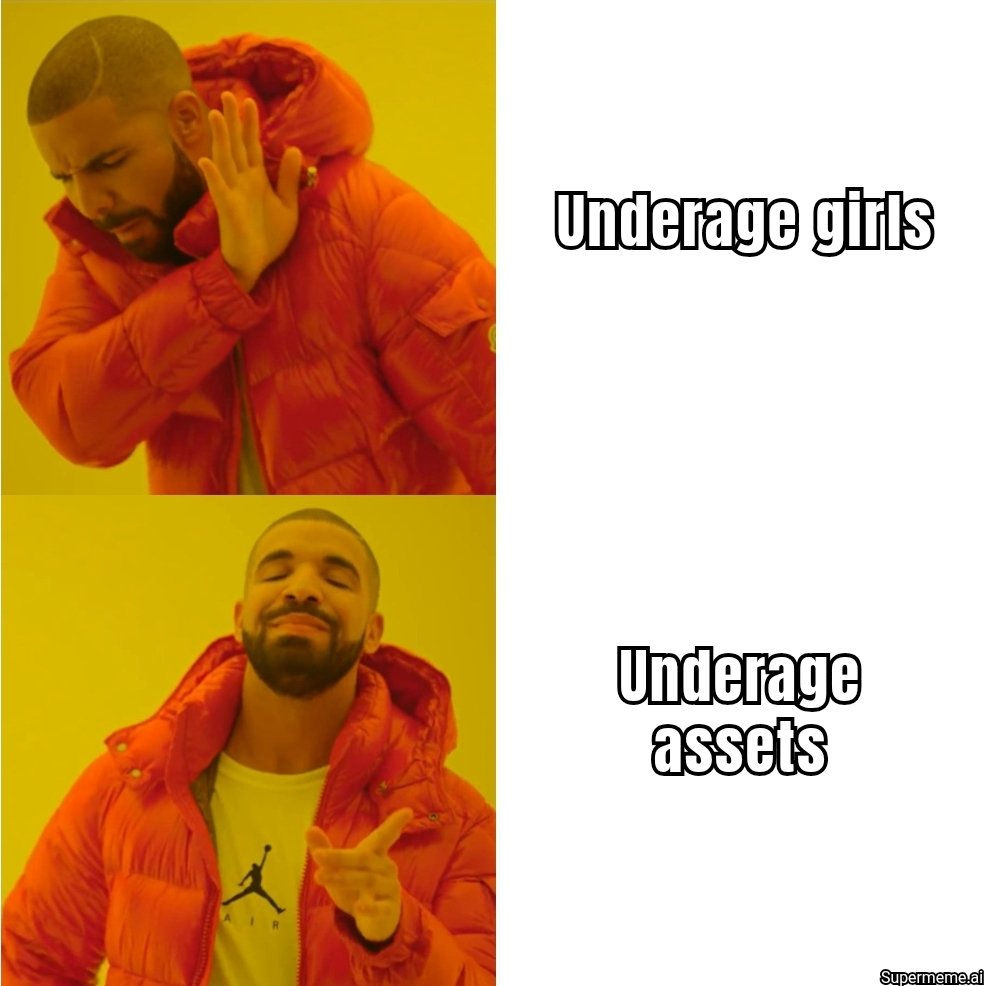
After this news spread, classic memes have already appeared on Twitter, roughly meaning that Saylor has no interest in underage girls but is extremely obsessed with underage assets (referring to young/early Bitcoin).
From a hindsight perspective, this exposure has, to some extent, also built a positive image for Saylor.

After the Epstein case broke out in 2019, Peggy, the publicist, had all her contracts canceled by clients like Netflix and FX, which basically ended her PR career; meanwhile, Saylor is now one of the world's largest Bitcoin holders.

The rejected one is still buying coins; the one who rejected him is already out of the game.

But to be fair, Saylor's current situation isn't that easy either.

The new Fed Chairman Warsh is hawkish, and the market expects he won't aggressively cut interest rates after taking office. Once interest rate expectations change, all kinds of assets worldwide come under pressure collectively.

Gold fell, silver fell, and Bitcoin fell even harder.

Coupled with tariff friction and tense U.S.-Europe relations, capital is starting to flow towards traditional safe-haven assets. The narrative of Bitcoin as "digital gold" is gradually fading.

If Bitcoin continues to fall, Strategy's ability to raise funds by issuing new shares will weaken, and the flywheel of coin-stock rotation could turn into a death spiral.

But Saylor really doesn't seem to care about any of this; this might be the other side of "boredom."

Ordinary investors can't do what Saylor does, not because they lack money, but because they are too "normal." Normal people read news, look at K-lines, see what others say. When the fear index soars, their hands start to itch, and their hearts start to ache.

Making decisions every day, each decision consuming willpower.

But in Saylor's strategy, there seems to be no "decision-making"环节. Buying is the only action; not selling is the only principle.

In his own words: "Bitcoin is the best asset ever invented by humanity, why would I sell?"

You can call this faith, or you can call it obsession. But from an execution perspective, the biggest advantage of this system is:

It doesn't require you to be smart; it only requires you to be boring.

Of course, this is not advice to imitate him. Saylor's底气 comes from being a publicly traded company—he can issue stock, borrow money. Ordinary people don't have these;模仿 his approach will most likely only lead to losses.

But there is one thing that might be worth learning from.

In investing, "fun" is often the source of losses.

Frequent trading, chasing hot trends, following news, using leverage... these behaviors that make investing "fun" are precisely the enemies of returns.

And the strategies that truly make money are often so boring they make people want to sleep.

Saylor's case is a bit extreme, but the logic holds. In a market full of noise, "boredom" might be the rarest ability.

Those who were socially adept at the parties back then are now either distancing themselves, under investigation, or have completely disappeared.

Perhaps, hoarding coins and being a person share the same principle:

Don't linger in lively places; boring things are worth doing long-term.


Twitter:https://twitter.com/BitpushNewsCN

Bitpush TG Discussion Group:https://t.me/BitPushCommunity

Bitpush TG Subscription: https://t.me/bitpush

Original link:https://www.bitpush.news/articles/7608011

İlgili Sorular

QWhy was Michael Saylor described as a 'zombie on drugs' in the context of the Epstein scandal?

AHe was described that way by Epstein's PR Peggy Siegal because he was extremely dull, unable to engage in conversation, and showed no interest in socializing at the dinner party he paid $25,000 to attend.

QHow many bitcoins does Saylor's company Strategy currently hold, and what is their average cost basis?

AStrategy currently holds 712,647 bitcoins with an average cost basis of $76,037.

QWhat is Saylor's investment strategy regarding Bitcoin according to the article?

AHis strategy is to buy Bitcoin almost every week without selling, following a simple principle of continuous accumulation regardless of market conditions.

QHow did the market conditions and new Fed Chair affect Bitcoin and Strategy's position?

AThe new Fed Chair's hawkish stance reduced expectations for aggressive rate cuts, putting pressure on assets like Bitcoin. Bitcoin's price briefly fell below Strategy's average cost, and the company's stock price declined by 60% from its peak.

QWhat broader investment lesson does the article draw from Saylor's approach?

AThe article suggests that in investing, 'boring' strategies—like consistent buying without frequent decisions—often outperform 'interesting' behaviors such as frequent trading, chasing trends, and using leverage, which are typically detrimental to returns.

İlgili Okumalar

In Jinjiang, Fujian, a Storage Super Unicorn Lies Quiet

In Fujian's Jinjiang, a city known for sportswear, lies a quiet semiconductor giant: Fujian Jinhua Integrated Circuit Co. (JHICC). Once a promising domestic DRAM manufacturer alongside Yangtze Memory and ChangXin Memory Technologies (CXMT), its journey was derailed in 2018 when the U.S. placed it on an Entity List and filed criminal charges for alleged trade secret theft. This halted production for years. A turning point came in February 2024 when a U.S. federal court found JHICC not guilty. However, it had lost crucial time. While CXMT soared to become a top-valued A-share company in 2024, JHICC, with an estimated valuation of 80 billion RMB, was just restarting. Its current output is primarily customized DDR4 chips, not the advanced DDR5/HBM demanded for AI, but it still benefits from the broader memory chip upcycle. JHICC's story is tied to Chen Zhengkun, a veteran engineer who left Micron to lead the venture. Founded in 2016 with state-backed funding, JHICC partnered with Taiwan's UMC to develop DRAM technology. Rapid progress was cut short by the U.S. actions, which Micron initiated, partly due to its heavy reliance on the Chinese market. Post-sanctions, Chen's team worked to rebuild the production line with reduced reliance on U.S. technology. According to its records, JHICC achieved small-scale production and revenue growth under immense pressure. It now focuses on the stable "niche" DRAM market (e.g., TVs, routers) with a monthly capacity of ~40,000 wafers, aiming for 60,000 by 2026. It holds over 1,000 patents but remains on the Entity List. For Jinjiang, investing in JHICC was a bold industrial leap. The local government provided unwavering financial and logistical support during the crisis, helping the company survive. JHICC has become the anchor for a growing local semiconductor cluster. Though its scale lags behind domestic peers, JHICC's persistence symbolizes a hard-won foothold in a global market long dominated by Samsung, SK Hynix, and Micron. Having missed one boom, it seeks a place in the new AI-driven memory supercycle.

marsbit8 dk önce

In Jinjiang, Fujian, a Storage Super Unicorn Lies Quiet

marsbit8 dk önce

Must-Watch Events Next Week|CLARITY Act Could Face Senate Vote; SpaceX, Circle to Report Earnings (8.3-8.9)

**Summary: Key Events and Developments to Watch (August 3-9)** The upcoming week is marked by significant financial disclosures, key legislative deadlines, and notable product updates. **Major Financial Events:** Several companies are scheduled to release their Q2 2026 earnings. American Bitcoin (ABTC) will report on August 3, followed by SpaceX and Hut 8 Mining Corp. on August 4, and Circle on August 5. Notably, a significant portion of SpaceX shares (up to 12% of total shares) will be unlocked on August 6 following their earnings release. **Key Legislative Deadline:** The U.S. Senate faces an August 7 deadline to secure 60 votes for the CLARITY Act, a bipartisan bill aiming to establish a federal regulatory framework for cryptocurrencies. The Senate may hold a full vote on the bill during the week. **Economic Data:** The U.S. July Non-Farm Payrolls report will be released on August 7, providing crucial labor market data. **Technology & Product Updates:** * **Shutdowns:** DeFi portfolio tracker Zapper and wallet app Ctrl Wallet will cease operations on August 3. * **Upgrades:** LayerZero will deprecate its v1 relayers on August 3. XRP Ledger's new version 3.3.0, featuring five new functions, is expected next week. * **AI:** Elon Musk announced that the advanced Grok 4.6 AI model is set for release around August 7. * **Bitcoin:** The BIP-110 forced signaling for a potential Bitcoin network change is scheduled to begin around August 8. **Other Notable Events:** Chinese robotics firm Unitree Tech has set its preliminary price inquiry for its IPO for August 5. South Korean exchange Upbit will delist AQT and AERGO tokens on August 3.

marsbit2 saat önce

Must-Watch Events Next Week|CLARITY Act Could Face Senate Vote; SpaceX, Circle to Report Earnings (8.3-8.9)

marsbit2 saat önce

İşlemler

Spot
活动图片





