Tether Freezes $182 Million in One Day: Is USDT Still a Neutral Currency?

marsbit2026-01-14 tarihinde yayınlandı2026-01-14 tarihinde güncellendi

Özet

Tether, the issuer of USDT, froze approximately $182 million worth of USDT in a single day across five wallets on the Tron blockchain, marking one of its largest single-day enforcement actions. The frozen funds are widely suspected to belong to the Venezuelan government, potentially representing oil revenue, and the action is believed to have been conducted in coordination with U.S. authorities. This event has raised significant concerns about USDT’s role as a neutral financial tool, particularly in developing and sanctioned regions like Venezuela, where the stablecoin has become deeply embedded in the economy. Reports indicate that up to 80% of Venezuela’s oil revenue may be received in cryptocurrencies like USDT, creating a direct channel between its oil trade and the crypto economy. However, this incident demonstrates that Tether is willing to comply with law enforcement, even at the risk of undermining its reputation as a censorship-resistant alternative to traditional finance. The situation has drawn comparisons to the Euroclear moment, where frozen Russian assets sparked concerns about the safety of foreign-held euro-denominated assets. Similarly, Tether’s actions may lead international users to reconsider the perceived neutrality and safety of stablecoins. While Tether has maintained its peg so far, sustained outflows or loss of trust could pose existential risks to its offshore business model. The event underscores Tether’s growing role in global finance—and its vul...

Editor's Note: Tether's freezing of approximately $182 million USDT on the Tron chain has been regarded by some analysts as its "Euroclear moment"—that is, when a financial infrastructure originally seen as a neutral channel begins cooperating with law enforcement to freeze assets, it ceases to be just a stablecoin and becomes part of the boundaries of power.

This article delves into the controversy surrounding funds related to Venezuela, discussing how this event may impact USDT's narrative as a "dollar alternative" in the Global South and sanctioned regions, while redefining the perception of risks associated with stablecoins.

Below is the original text:
The biggest news this week was Tether's freezing of about $182 million USDT across five wallet addresses on the Tron chain in a single day, marking one of its largest single-day actions to date.

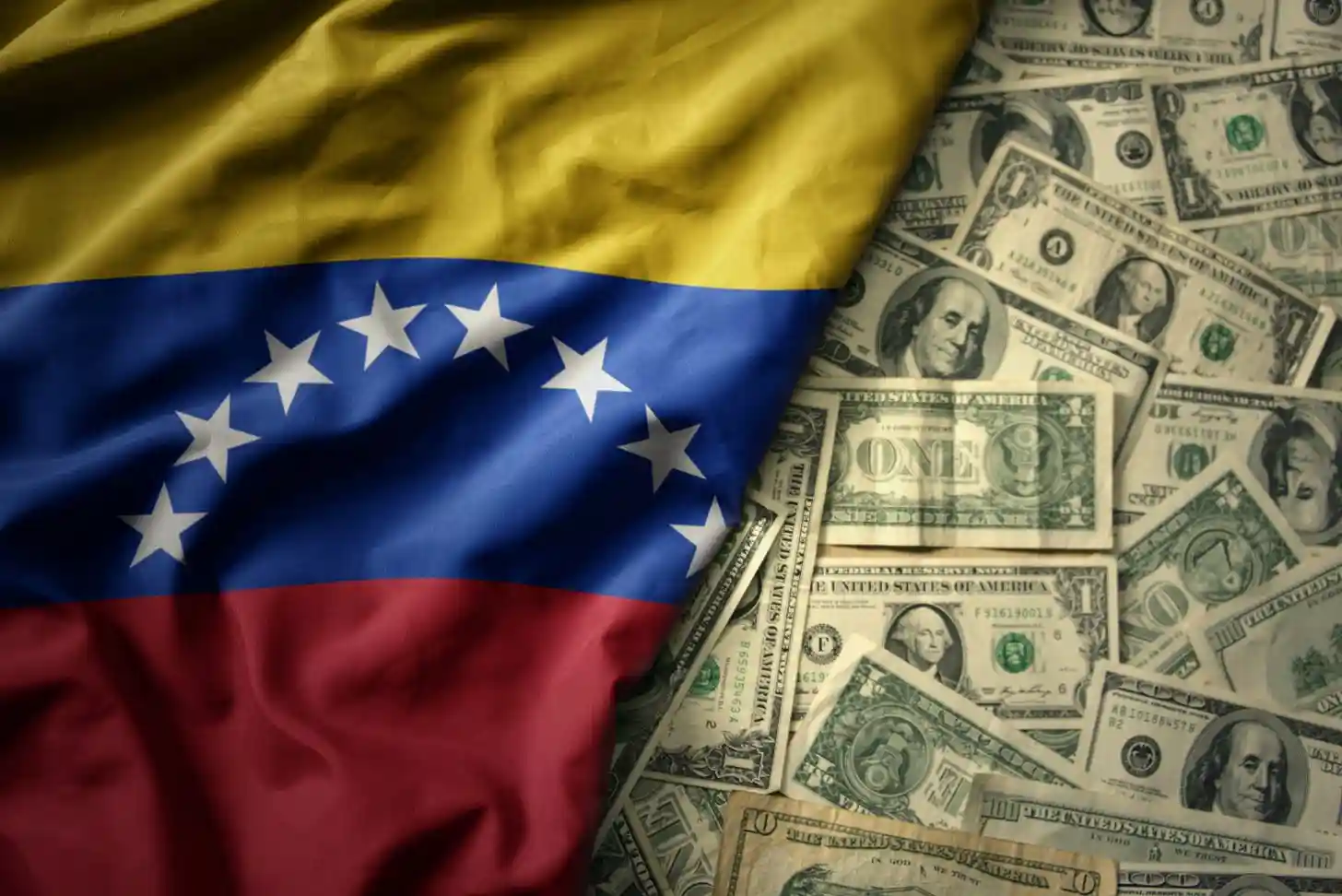
There is speculation that these assets may belong to the Venezuelan government, and Tether—long seen as a "safe haven for illicit fund flows"—is now seizing (or freezing) sovereign assets at the behest of the U.S. government.

What we can confirm so far is that this operation was indeed carried out under compliance and law enforcement procedures. Although officials have not confirmed that these addresses hold "Venezuelan oil revenues," analysts and on-chain observers widely interpret the situation as such.

Online discussions also suggest that some of the frozen funds may overlap with wallet addresses used for Venezuela-related activities. Given the country's heavy reliance on USDT, such speculation is not unfounded.

According to The Wall Street Journal, Venezuela's oil trade is deeply intertwined with Tether stablecoins. The report cited a podcast by Venezuelan economist Asdrúbal Oliveros, who mentioned that stablecoins have established a "direct channel" between Venezuela's economy and the crypto world, primarily driven by the oil industry.

In the podcast, Oliveros pointed out that nearly 80% of the country's oil revenues are being received in the form of cryptocurrencies or stablecoins. He added that this large-scale inflow of digital assets has made USDT a recurring keyword in Venezuela's commercial exchanges and corporate operations.

However, Oliveros also emphasized that the government faces difficulties converting these crypto assets into liquidity usable in the real economy, as the process requires a series of compliance reviews. This has left substantial funds "locked" on-chain. As a result, Venezuela's oil revenues are not flowing back into the domestic economy, impacting the official exchange rate and causing it to soar.

Oliveros further suggested that the Venezuelan government has not been professional in managing its cryptocurrency and stablecoin wealth. He mentioned that due to overreliance on individual wallets and a lack of internal compliance processes or regular reconciliation mechanisms, some wallets' seed phrases/private keys may have been mishandled or even lost amid managerial chaos.

An Existential Question?

If the frozen funds are indeed confirmed to belong to Venezuela, the pressing question for everyone is: How will this impact Tether's reputation as an "alternative monetary system" in developing countries, especially in regions with financial instability or under international sanctions?

On Tuesday, at the launch of Bytetree's new Bitcoin + gold combined exposure ETN product, BOLD, on the London Stock Exchange, prominent figures in London's crypto and gold investment circles speculated that this event could deliver a strong blow to stablecoins, with repercussions extending even further.

Bitcoin investor, advocate, and comedian Dominic Frisby (also a vocal supporter of digital privacy) told The Peg that he was not surprised this event would—much like the discussions around the "formal seizure of Russian assets held by Euroclear"—make international sovereign investors uneasy about euro/dollar-denominated assets, potentially triggering panic among crypto capital.

Although Tether is often portrayed as "lacking regulation, high-risk, and non-compliant," over the past year, the stablecoin giant has not concealed its increasingly close cooperation with global law enforcement agencies, even as it maintains its base in the relatively regulation-light, crypto-friendly El Salvador.

Tether CEO Paolo Ardoino told The Peg in October that Tether is the only stablecoin and crypto company that regularly collaborates with the U.S. Department of Justice (DoJ) and has also integrated the FBI and the U.S. Secret Service into its cooperation framework.

"We froze Garantex's (a Russian exchange) assets with them," he said, confirming the action while also noting that Tether is expanding its presence in commodity-related supply chain financial markets.

According to The Wall Street Journal, blockchain monitoring company TRM Labs has a partnership with Tether to help track illegal activities involving USDT on the Tron chain. TRM Labs' global policy head Ari Redbord told the media that the role of stablecoins in Venezuelan society is complex: "They (stablecoins) can be a lifeline for civilians, but they can also become tools for evasion under sanctions pressure."

This statement underscores a core reality: USDT, as a financial lifeline, is deeply embedded in Venezuela's economy, helping ordinary people combat hyperinflation. At the same time, its technology can be exploited by bad actors to move funds, raising concerns about sanctions compliance.

However, Tether has now demonstrated that when addresses are flagged for sanctions or illegal associations, it is willing to freeze USDT on networks like TRON. In other words, even if stablecoins serve as critical financial infrastructure locally, they are not exempt from human enforcement.

More importantly, this action comes after a recent policy "slam on the brakes" in Brussels (EU): After years of posturing, planning, and legal preparations, the EU ultimately hesitated at the final step of "explicitly seizing frozen Russian assets," fearing it would weaken the appeal of euro-denominated assets to international investors.

Thus, the signal to markets and nations may be that storing funds in stablecoins like Tether might be riskier than holding official assets.

Whether this reality will pose an "existential threat" to Tether's offshore business model in the coming weeks or months remains to be seen. But within crypto circles, a strong view is spreading: international investors may never look at stablecoins the same way again.

At the very least, this incident shows that the influence of the so-called "Donroe Doctrine" is no longer confined to geopolitics and national gamesmanship but is entering the core of global financial markets. And from any perspective, Tether is at the very center of this sphere of influence.

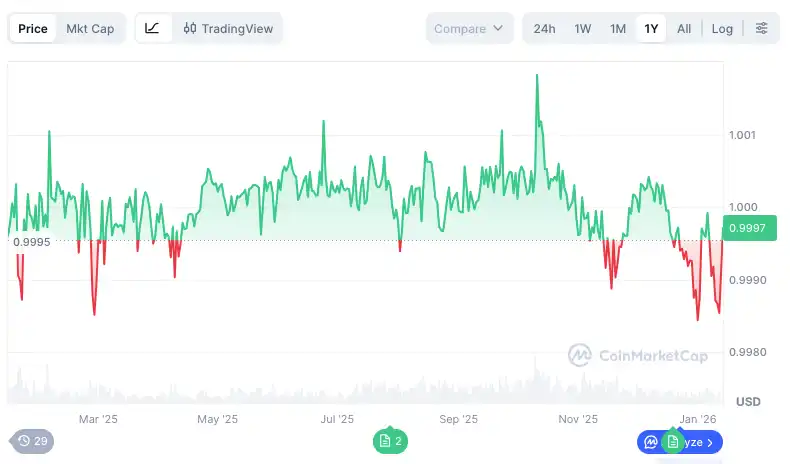
So far, aside from minor fluctuations over the past month, Tether's peg has remained stable. The real pressure signal would be a significant slowdown in inflows—or, more dangerously, a shift from net inflows to net outflows.

Tether's next reserve attestation is expected to be released in late January or early February.
İlgili Sorular

QWhat was the significance of Tether freezing $182 million USDT on the Tron network, and why is it being compared to the 'Euroclear moment'?

ATether's freezing of $182 million USDT is significant because it represents one of its largest single-day actions and is seen by analysts as its 'Euroclear moment.' This term refers to a financial infrastructure, originally perceived as a neutral channel, beginning to cooperate with law enforcement to freeze assets. This action shifts Tether's role from merely a stablecoin to becoming part of the power boundary, impacting its narrative as a neutral monetary tool.

QHow is USDT deeply embedded in Venezuela's economy, particularly in the oil trade?

AUSDT is deeply embedded in Venezuela's economy, with nearly 80% of the country's oil revenues being received in cryptocurrencies or stablecoins. This digital asset inflow has made USDT a key term in commercial exchanges and business operations. However, converting these crypto assets into usable liquidity for the real economy requires compliance reviews, often leaving funds locked on-chain and not reintegrated into the domestic economy, affecting official exchange rates.

QWhat are the potential risks to Tether's reputation as an 'alternative monetary system' in developing countries following this freezing event?

AThe freezing event poses a potential risk to Tether's reputation as an 'alternative monetary system' in developing countries, especially those with financial instability or under international sanctions. If the frozen funds are confirmed to belong to Venezuela, it could undermine trust in USDT as a reliable financial lifeline, as it demonstrates that stablecoins are not exempt from human enforcement actions and may be subject to geopolitical pressures.

QHow does Tether's cooperation with global law enforcement agencies, such as the DOJ and FBI, influence its operational dynamics?

ATether's cooperation with global law enforcement agencies, including the DOJ and FBI, shows its commitment to compliance and tracking illegal activities. For instance, Tether has worked with these agencies to freeze assets linked to entities like Garantex, a Russian exchange. This collaboration enhances its legitimacy but also highlights that USDT transactions are monitorable and actionable, affecting its perception as a decentralized or neutral asset.

QWhat broader implications does this event have for the stability and future of stablecoins like USDT in the global financial system?

AThis event has broader implications for stablecoins like USDT, suggesting that they may carry higher risks than official assets due to their susceptibility to enforcement actions. It could lead to reduced inflows or even net outflows, challenging Tether's offshore business model. The situation indicates that geopolitical doctrines, such as the 'Donroe Doctrine,' are influencing global financial markets, with Tether at the center, potentially altering how international investors view stablecoins.

İlgili Okumalar

STRC Breaks Below $95: Why Does It Continue to Depeg? Is There Default Risk?

"STRC Falls Below $95: Why the Persistent Depegging and Is There Default Risk?" The article discusses the recent decline in the price of STRC, a perpetual preferred stock issued by Strategy (MSTR) designed to trade around a $100 par value. As of publication, STRC traded at $94.65, raising market concerns. STRC is described as a high-yield cash flow product, offering an 11.50% annual dividend paid monthly. Its "preferred" status grants it priority over common stock for dividends and in liquidation. Key reasons cited for the price depegging include: 1. **Bitcoin's Price Drop:** MSTR's assets are heavily tied to Bitcoin (BTC), which fell over 21% from its recent high, pressuring all Strategy-related products. 2. **Competitive Pressure:** Rival Strive Asset Management's similar product, SATA, offers daily dividends and has maintained its $100 par value with a ~13% yield. In response, Strategy has proposed changing STRC's dividend frequency from monthly to bi-weekly, pending shareholder vote. 3. **Technical Selling:** A break below $100 may have triggered algorithmic selling and stop-losses, exacerbating the decline. Regarding default risk, the analysis suggests it is currently low. Strategy founder Michael Saylor confirmed the June 2026 dividend rate remains at 11.50% with no cuts or suspensions. The company's massive reserve of 843,706 BTC provides a significant backstop for its obligations. Industry opinions are mixed. Some analysts view the BTC holdings as reliable support for dividends, while critics like Peter Schiff warn of potential dividend cuts leading to price crashes and lawsuits. Others highlight inflation risk and the company's ability to reduce dividends without a formal default. In summary, STRC's drop is attributed to BTC volatility, competition, and technical factors. While immediate default risk appears contained, the product faces challenges from market conditions and competitive dynamics.

marsbit2 dk önce

STRC Breaks Below $95: Why Does It Continue to Depeg? Is There Default Risk?

marsbit2 dk önce

AI Trading Cools, South Korean Stocks Plunge 1.8%, Spot Gold Rises 1%, Bitcoin Dives

A sell-off in AI-related stocks, triggered by Broadcom's disappointing earnings forecast, sent shockwaves through global markets. South Korea's KOSPI led Asia's decline, plunging 1.8% as the risks from concentrated chip stock gains and surging leveraged investments came to the fore. The tech-heavy Nasdaq 100 futures fell 0.5% following Broadcom's 14% after-hours plunge, which signaled a slower-than-expected transition to AI clients. This pullback extended Wall Street's weakness, halting the S&P 500's nine-day rally amid hawkish Fed signals and renewed Middle East tensions. South Korean authorities convened an emergency meeting, pledging "immediate measures" against market volatility and warning of record-high stock margin debt. The adjustment rippled across assets: Bitcoin fell to around $64,000, its lowest since February, while safe-haven gold rose 1% on bargain hunting. Oil prices dipped on Middle East ceasefire news. Market analysts noted the sell-off was driven by profit-taking after massive gains, particularly in chip stocks like Samsung and SK Hynix, which now dominate the KOSPI. Wall Street banks are divided on Korea's outlook, with Goldman Sachs raising its target while Citigroup and others warn of overvaluation and a potential bubble. Bridgewater's Ray Dalio noted that great technological shifts often create bubbles. Meanwhile, Fed officials' hints at potential future rate hikes added to the cautious mood ahead of key U.S. jobs data.

华尔街日报29 dk önce

AI Trading Cools, South Korean Stocks Plunge 1.8%, Spot Gold Rises 1%, Bitcoin Dives

华尔街日报29 dk önce

Seeking Alpha's Hot Article: Why Might the U.S. Stock Market Crash in June?

In a recent Seeking Alpha article, financial professor and analyst Damir Tokic argues that the US stock market may be poised for a significant crash in June 2026. The core thesis centers on a "mega-bubble" in equities, particularly within the technology sector, which has driven the S&P 500 to near-record valuations, with a Shiller P/E ratio exceeding 40—a level comparable to the 2000 dot-com bubble. Tokic identifies two primary catalysts for a potential collapse. First, he points to unsustainable market exuberance fueled by what he terms the "Trump Stimulus"—massive AI capital expenditure by tech giants, which he believes is politically driven and cannot last. Second, and more urgently, he highlights the escalating Iran war as a critical threat. The ongoing closure of the Strait of Hormuz has created a severe global energy supply crunch. Strategic petroleum reserves are projected to hit critically low operational levels by June, potentially causing oil prices to spike above $200 per barrel and triggering a severe, supply-driven inflationary shock. This scenario, Tokic warns, would force the Federal Reserve's hand. Despite currently maintaining a dovish bias, the Fed would likely be compelled to officially pivot to a hawkish stance at its June FOMC meeting to combat soaring inflation and bond yields. He contends that such a shift—or even a failure to act, which would destroy Fed credibility—could be the trigger that punctures the market bubble. The resulting downturn, he concludes, could rival the bear markets of 2000 and 2008, advising investors to prepare for a major correction.

marsbit51 dk önce

Seeking Alpha's Hot Article: Why Might the U.S. Stock Market Crash in June?

marsbit51 dk önce

AI PC Battle: Bet on the Toll Booth, Not the Camp

**Title:** The AI PC Battle: Don't Bet on Sides, Bet on the Tollbooth **Summary:** The AI PC competition is moving beyond simple "x86 vs. Arm" narratives. The core investment thesis should focus on identifying which players can sustain margins, cash flow, and pricing power throughout the upgrade cycle, rather than backing a particular architecture. The opportunity is analyzed in three layers: 1. **The Advanced Foundry Tollbooth:** TSMC is positioned to collect "tolls" regardless of which chip designer wins, due to its dominant ~70% share in advanced semiconductor manufacturing, which is essential for high-end AI PC chips. 2. **Compute & Platform Spillover:** AMD represents an offensive in the x86 CPU+GPU space, while NVIDIA leverages its GPU and CUDA software stack dominance. Both benefit from the demand for increased local AI compute. 3. **Architecture Diffusion & Turnaround Plays:** ARM and Intel offer potential for significant upside (elasticity), but investments here require stricter discipline due to higher execution risks and competitive challenges. The industry is transitioning from concept to shipment validation. While short-term forecasts for AI PC adoption have been revised down slightly due to tariffs and procurement delays, the long-term trend towards AI becoming a standard PC feature remains intact. The key driver for upgrade cycles will be whether compelling enterprise applications (e.g., privacy-sensitive computing, low-latency inference) emerge beyond consumer-focused features like meeting summarization. Investment strategy should prioritize companies with platform-level advantages and recurring revenue streams. TSMC offers high certainty as the foundational tollbooth. AMD presents a strong offensive play within the established ecosystem. ARM and Intel are higher-risk, higher-potential-reward turnaround bets. The report cautions against chasing short-term hype and emphasizes a disciplined, long-term approach focused on buying ecosystem strength and cash-flow certainty after market enthusiasm subsides. **Key Risks:** Underwhelming AI PC applications slowing upgrade cycles; slow improvement in Windows on Arm compatibility; macro/tariff impacts on PC demand; potential advanced node supply-demand mismatches affecting TSMC; high overall AI sector valuations making stocks vulnerable to a risk-off shift in markets.

marsbit1 saat önce

AI PC Battle: Bet on the Toll Booth, Not the Camp

marsbit1 saat önce

İşlemler

Spot
Futures

Popüler Makaleler

ONE Nasıl Satın Alınır

HTX.com’a hoş geldiniz! Harmony (ONE) satın alma işlemlerini basit ve kullanışlı bir hâle getirdik. Adım adım açıkladığımız rehberimizi takip ederek kripto yolculuğunuza başlayın. 1. Adım: HTX Hesabınızı OluşturunHTX'te ücretsiz bir hesap açmak için e-posta adresinizi veya telefon numaranızı kullanın. Sorunsuzca kaydolun ve tüm özelliklerin kilidini açın. Hesabımı Aç2. Adım: Kripto Satın Al Bölümüne Gidin ve Ödeme Yönteminizi SeçinKredi/Banka Kartı: Visa veya Mastercard'ınızı kullanarak anında Harmony (ONE) satın alın.Bakiye: Sorunsuz bir şekilde işlem yapmak için HTX hesap bakiyenizdeki fonları kullanın.Üçüncü Taraflar: Kullanımı kolaylaştırmak için Google Pay ve Apple Pay gibi popüler ödeme yöntemlerini ekledik.P2P: HTX'teki diğer kullanıcılarla doğrudan işlem yapın.Borsa Dışı (OTC): Yatırımcılar için kişiye özel hizmetler ve rekabetçi döviz kurları sunuyoruz.3. Adım: Harmony (ONE) Varlıklarınızı SaklayınHarmony (ONE) satın aldıktan sonra HTX hesabınızda saklayın. Alternatif olarak, blok zinciri transferi yoluyla başka bir yere gönderebilir veya diğer kripto para birimlerini takas etmek için kullanabilirsiniz.4. Adım: Harmony (ONE) Varlıklarınızla İşlem YapınHTX'in spot piyasasında Harmony (ONE) ile kolayca işlemler yapın.Hesabınıza erişin, işlem çiftinizi seçin, işlemlerinizi gerçekleştirin ve gerçek zamanlı olarak izleyin. Hem yeni başlayanlar hem de deneyimli yatırımcılar için kullanıcı dostu bir deneyim sunuyoruz.

365 Toplam GörüntülenmeYayınlanma 2024.12.12Güncellenme 2026.06.02

ONE Nasıl Satın Alınır

Tartışmalar

HTX Topluluğuna hoş geldiniz. Burada, en son platform gelişmeleri hakkında bilgi sahibi olabilir ve profesyonel piyasa görüşlerine erişebilirsiniz. Kullanıcıların ONE (ONE) fiyatı hakkındaki görüşleri aşağıda sunulmaktadır.

活动图片