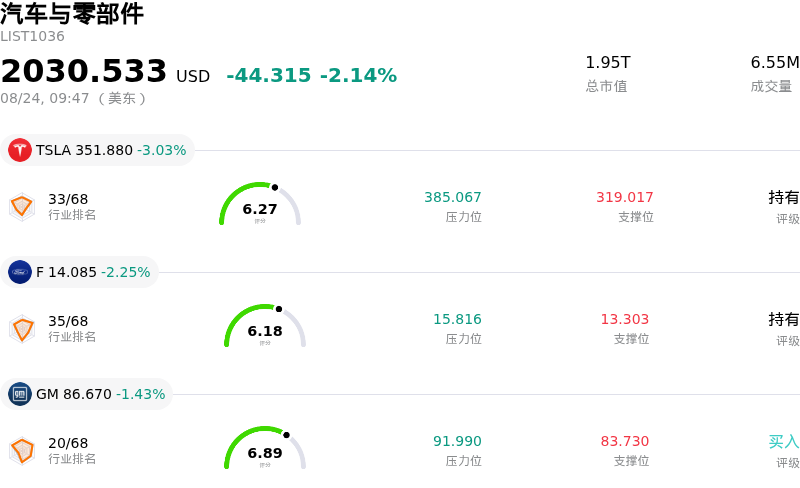
Tesla (TSLA) opened down 3.03%, while the Automobile & Parts sector was down 2.14%. The company's performance underperformed the sector. The top three stocks by sector trading volume were Tesla (TSLA), down 3.03%; Ford Motor Co (F), down 2.25%; and General Motors (GM), down 1.43%.
What drove Tesla (TSLA) stock lower today?
Tesla's stock faced selling pressure, with intraday volatility intensifying, driven primarily by significant regulatory news from China. The electric vehicle maker announced a voluntary recall of nearly 3 million imported and domestically produced vehicles to address functional issues with the electronic door handles in severe collisions and to enhance the driver monitoring system performance via an over-the-air (OTA) software update. As China is a core growth engine and one of Tesla's key production bases, this large-scale regulatory action sparked fresh concerns about its operational front. The news triggered immediate profit-taking, especially given the stock's strong gains in the previous trading session fueled by the approval of its commercial robotaxi deployment in Nevada.
Beyond the immediate recall news, institutional investors continued to digest the company's aggressive capital allocation strategy amid its push to maintain margin discipline. As management accelerates investment in AI computing infrastructure, data centers, and autonomous vehicle manufacturing, Tesla's full-year capital expenditure expectations have risen substantially. While crucial to the long-term investment thesis for the Cybercab and robotics businesses, these capital commitments come at a time when competitive pricing dynamics are pressuring near-term margins in the automotive and energy segments. Consequently, market participants are closely scrutinizing whether elevated spending will constrain free cash flow and short-term profitability, thereby exacerbating investor hesitancy during the market pullback.
From a broader market perspective, the day's decline reflects the ongoing tug-of-war between Tesla's elevated tech-premium valuation and its recent automotive business execution risks. While milestones in autonomous driving regulation and fleet testing reinforce its long-term structural growth narrative, lofty valuation multiples leave the stock particularly sensitive to operational friction and geopolitical regulatory scrutiny. As institutional investors weigh the long-term software revenue optionality against current auto gross margin trends and global compliance costs, the stock remains prone to sharp intraday swings whenever headline risks offset recent bullish momentum.
Tesla (TSLA) Technical Analysis
From a technical perspective for Tesla (TSLA), the MACD(12,26,9) value is 11.849, indicating a neutral state; the RSI value is 53.314, also indicating a neutral state; and the Williams%R value is 25.667, indicating a buy state. Pay attention.
Tesla (TSLA) Media Sentiment
Regarding Tesla (TSLA)'s company sentiment heat, the current heat is 53, indicating a stable state. In terms of market sentiment direction for the company, the current sentiment index is in a neutral state.

Tesla (TSLA) Fundamental Analysis
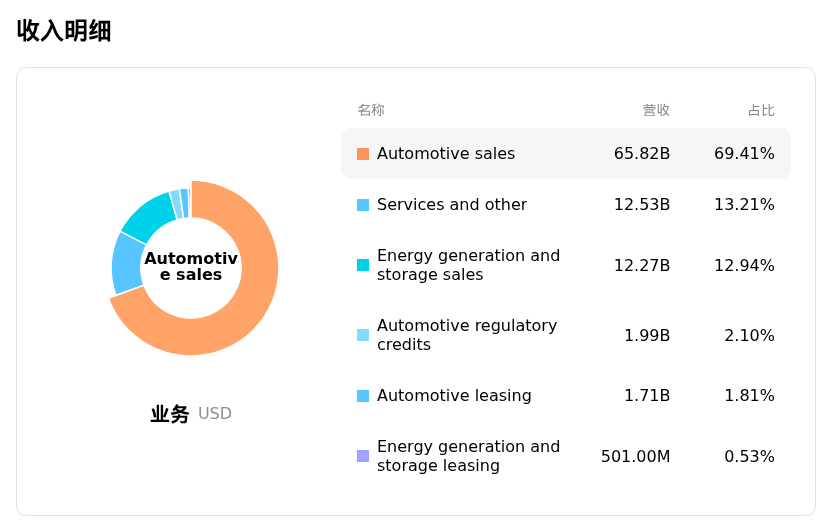
Tesla (TSLA) operates in the Automobile & Parts industry. The latest annual operating revenue is $94.83B, ranking 6th in the industry. Net profit is $3.79B, ranking 2nd in the industry.
More Details on Tesla (TSLA)
Regulatory Scrutiny & Safety Recalls in China: Tesla is embroiled in a massive safety recall involving nearly 3 million Model 3, Y, S, and X vehicles in China over emergency door handle mechanism hazards and driver attention monitoring system issues, heightening its regulatory risks in this critical international market.
Rising Capex & Cash Burn: Institutional analysts have voiced concerns over cash flow risks as operating margins remain compressed in the single digits while the 2026 capex guidance exceeds $25 billion to fund yet-to-revenue AI infrastructure and robotics projects.
Skepticism Over Autonomy & Cybercab Milestones: Wall Street analysts, including GLJ Research which has a Sell rating, caution that the upcoming Cybercab reveal is merely a marketing campaign for an unproven fleet model, warning that actual Full Self-Driving (FSD) safety data does not justify the stock's high valuation multiples.
Corporate Governance & Equity Dilution Risks: SEC filings and ongoing market discussion about potential mergers or integrations involving Elon Musk-affiliated entities create uncertainty for Tesla shareholders regarding capital allocation and equity dilution.