Terraform’s $40B Collapse Back in Spotlight as Jane Street Faces Insider Trading Lawsuit

bitcoinist2026-02-24 tarihinde yayınlandı2026-02-24 tarihinde güncellendi

Özet

Terraform Labs' $40 billion collapse is back in the spotlight as Jane Street faces an insider trading lawsuit. The complaint, filed by Terraform's bankruptcy administrator, alleges the trading giant used confidential information to avoid losses and hasten the ecosystem's downfall in May 2022. It claims Jane Street obtained non-public details through a former Terraform intern and executed trades minutes after Terraform secretly removed 150 million UST from a liquidity pool, before the information was public. Jane Street denies the allegations, blaming Terraform's management for the collapse. The case could set a precedent for oversight of institutional trading and information asymmetry in crypto markets.

Nearly four years after one of crypto’s most destructive failures erased tens of billions of dollars in value, the collapse of Terraform Labs has returned to the courtroom.

A new lawsuit filed in a U.S. federal court accuses trading giant Jane Street of insider trading tied to the 2022 downfall of the Terra ecosystem, a case that could reshape how institutional trading activity in digital asset markets is scrutinized.

The complaint was filed by the court-appointed administrator overseeing Terraform Labs’ bankruptcy, alleging the firm used confidential information to trade ahead of key market events, avoid losses, and hasten the collapse of its algorithmic stablecoin system.
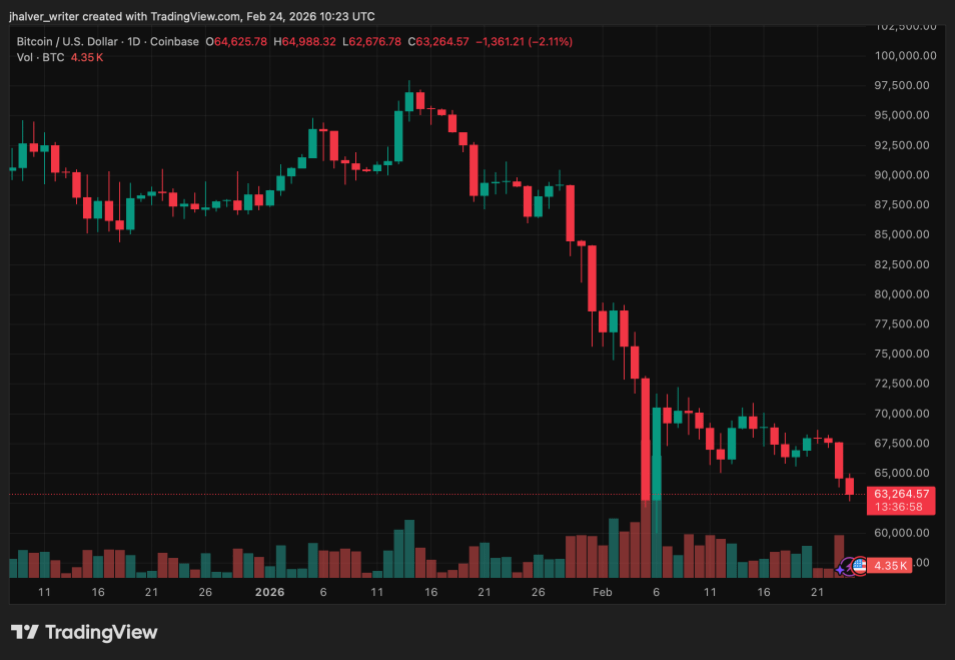
BTC's price trends to the downside on the daily chart. Source: BTCUSD on Tradingview 

Allegations of Insider Trading During Terra’s Final Days

According to the lawsuit, Jane Street obtained material non-public information through contacts within Terraform. The filing claims that a former Terraform intern working at the trading firm helped establish private communication channels that allegedly became a source of sensitive operational details.

Central to the case is a series of transactions on May 7, 2022, days before TerraUSD lost its dollar peg. Terraform quietly removed 150 million TerraUSD from Curve’s 3pool liquidity pool, a move that had not yet been disclosed publicly. Less than ten minutes later, a wallet linked to Jane Street allegedly withdrew 85 million TerraUSD from the same pool.

The administrator argues that this timing allowed the firm to unwind large exposures and position trades before panic spread across the market. The lawsuit claims these actions intensified liquidity stress and contributed to the rapid loss of confidence that followed.

Jane Street has strongly denied the accusations, describing the lawsuit as baseless and arguing that Terraform’s own management, not outside traders, was responsible for investor losses.

Revisiting the $40 Billion Crypto Meltdown

Terraform’s collapse remains one of the defining crises in cryptocurrency history. When TerraUSD lost its peg in May 2022, its sister token Luna entered a death spiral that wiped out roughly $40 billion in market value within days.

The fallout triggered widespread liquidations and contributed to broader industry instability, later exposing weaknesses across several crypto firms.

Terraform filed for bankruptcy in 2024, while Kwon later pleaded guilty to criminal charges and received a prison sentence. The current lawsuit follows earlier legal action against another trading firm, signaling an ongoing effort to recover funds for creditors.

Broader Implications for Crypto Market Oversight

The case spotlights growing concerns about information asymmetry in markets often promoted as decentralized. Regulators have increasingly focused on trading practices, market manipulation, and the role of large liquidity providers in digital assets.

If the allegations are proven, the lawsuit could set an important precedent for how proprietary trading firms interact with crypto projects and handle non-public information. Even if unsuccessful, the legal battle reopens unresolved questions about accountability during major crypto failures.

Cover image from ChatGPT, BTCUSD on Tradingview

İlgili Sorular

QWhat is the new lawsuit against Jane Street about, and how is it connected to the Terraform Labs collapse?

AThe lawsuit accuses Jane Street of insider trading tied to the 2022 collapse of the Terra ecosystem. It alleges the firm used confidential, non-public information obtained through contacts within Terraform Labs to trade ahead of key market events, avoid losses, and hasten the downfall of its algorithmic stablecoin system.

QWhat specific event on May 7, 2022, is central to the insider trading allegations against Jane Street?

AThe lawsuit centers on Terraform Labs quietly removing 150 million TerraUSD from Curve’s 3pool liquidity pool, a move not yet public. Less than ten minutes later, a wallet linked to Jane Street allegedly withdrew 85 million TerraUSD from the same pool, allowing the firm to unwind exposures before panic spread.

QHow did Jane Street respond to the allegations in the lawsuit?

AJane Street has strongly denied the accusations, describing the lawsuit as baseless. The firm argues that Terraform’s own management, not outside traders, was responsible for the investor losses.

QWhat were the broader consequences of the Terraform Labs collapse in May 2022?

AThe collapse erased roughly $40 billion in market value within days as TerraUSD lost its peg and its sister token Luna entered a death spiral. The fallout triggered widespread liquidations, contributed to broader industry instability, and exposed weaknesses in several crypto firms.

QWhat potential broader implications for the crypto market does this lawsuit highlight?

AThe case spotlights concerns about information asymmetry in decentralized markets. It could set a precedent for how proprietary trading firms interact with crypto projects and handle non-public information, raising questions about accountability and market oversight during major crypto failures.

İlgili Okumalar

Polymarket's "2028 Presidential Election" Volume King Is... LeBron James???

An article from Odaily Planet Daily, authored by Azuma, discusses a peculiar phenomenon observed on the prediction market platform Polymarket regarding the "2028 US Presidential Election" event. Despite having a real-time probability of less than 1%, unlikely candidates such as NBA star LeBron James (with $48.41 million in trading volume), celebrity Kim Kardashian ($33.84 million), and even ineligible figures like Elon Musk ($23.14 million) and New York City Mayor Zohran Mamdani ($18.39 million) account for approximately 70% of the total trading volume. In contrast, high-probability candidates like Vice President JD Vance ($10.58 million), California Governor Gavin Newsom ($15.71 million), and Secretary of State Marco Rubio ($9.32 million) have significantly lower trading activity. The article explains that this counterintuitive trend is not driven by irrational speculation but by rational strategies. Polymarket offers a 4% annualized holding reward for certain markets, including the 2028 election, to maintain long-term pricing accuracy. This yield exceeds the current 5-year US Treasury rate (3.98%), attracting large investors ("whales") to hold "NO" shares on low-probability candidates for risk-free returns. Additionally, some users utilize a platform feature that allows converting a set of "NO" shares into corresponding "YES" shares for better liquidity or pricing efficiency, rather than directly buying "YES" shares for their preferred candidates. Thus, the seemingly absurd trading activity is strategically motivated.

marsbit1 saat önce

Polymarket's "2028 Presidential Election" Volume King Is... LeBron James???

marsbit1 saat önce

Dialogue with ViaBTC CEO Yang Haipo: Is the Essence of Blockchain a Libertarian Experiment?

"ViaBTC CEO Yang Haipo: Blockchain as a Hardcore Libertarian Experiment" In a deep-dive interview, ViaBTC CEO Yang Haipo reframes the essence of blockchain, arguing it is not merely a new technology or infrastructure but a hardcore libertarian experiment. This experiment, born from the 2008 financial crisis and decades of cypherpunk ideology, tests a fundamental question: to what extent can freedom and self-organization exist without centralized trust? The discussion highlights the experiment's verified outcomes. On one hand, it has proven its core value of censorship resistance, providing critical financial lifelines for entities like WikiLeaks and individuals in hyperinflationary or sanctioned countries via tools like stablecoins. However, Yang points out a key paradox: the most successful product, USDT, is itself a centralized compromise, showing users prioritize a less-controlled pipeline over pure decentralization. On the other hand, the experiment has exposed the severe costs of this freedom—a "dark forest" without safeguards. Events like the collapses of LUNA, Celsius, and FTX, resulting in massive wealth destruction and prison sentences for founders, underscore the system's fragility and the inherent risks of an unregulated environment. Yang observes that despite decentralized protocols, human nature inevitably recreates centralized power structures, speculative frenzies, and narrative-driven cycles (from ICOs to Meme coins), where emotion and belonging often trump technological substance. Looking forward, he believes blockchain's future is significant but niche. Its real value lies in serving specific, real-world needs for financial sovereignty and bypassing traditional controls, not as a universal infrastructure replacing all centralized systems. For the average participant, Yang's crucial advice is to cultivate independent judgment. True freedom is not holding a crypto wallet, but possessing a mind resilient to groupthink and narrative hype in a high-risk, often irrational market.

marsbit1 saat önce

Dialogue with ViaBTC CEO Yang Haipo: Is the Essence of Blockchain a Libertarian Experiment?

marsbit1 saat önce

İşlemler

Spot
Futures

Popüler Makaleler

ONE Nasıl Satın Alınır

HTX.com’a hoş geldiniz! Harmony (ONE) satın alma işlemlerini basit ve kullanışlı bir hâle getirdik. Adım adım açıkladığımız rehberimizi takip ederek kripto yolculuğunuza başlayın. 1. Adım: HTX Hesabınızı OluşturunHTX'te ücretsiz bir hesap açmak için e-posta adresinizi veya telefon numaranızı kullanın. Sorunsuzca kaydolun ve tüm özelliklerin kilidini açın. Hesabımı Aç2. Adım: Kripto Satın Al Bölümüne Gidin ve Ödeme Yönteminizi SeçinKredi/Banka Kartı: Visa veya Mastercard'ınızı kullanarak anında Harmony (ONE) satın alın.Bakiye: Sorunsuz bir şekilde işlem yapmak için HTX hesap bakiyenizdeki fonları kullanın.Üçüncü Taraflar: Kullanımı kolaylaştırmak için Google Pay ve Apple Pay gibi popüler ödeme yöntemlerini ekledik.P2P: HTX'teki diğer kullanıcılarla doğrudan işlem yapın.Borsa Dışı (OTC): Yatırımcılar için kişiye özel hizmetler ve rekabetçi döviz kurları sunuyoruz.3. Adım: Harmony (ONE) Varlıklarınızı SaklayınHarmony (ONE) satın aldıktan sonra HTX hesabınızda saklayın. Alternatif olarak, blok zinciri transferi yoluyla başka bir yere gönderebilir veya diğer kripto para birimlerini takas etmek için kullanabilirsiniz.4. Adım: Harmony (ONE) Varlıklarınızla İşlem YapınHTX'in spot piyasasında Harmony (ONE) ile kolayca işlemler yapın.Hesabınıza erişin, işlem çiftinizi seçin, işlemlerinizi gerçekleştirin ve gerçek zamanlı olarak izleyin. Hem yeni başlayanlar hem de deneyimli yatırımcılar için kullanıcı dostu bir deneyim sunuyoruz.

255 Toplam GörüntülenmeYayınlanma 2024.12.12Güncellenme 2025.03.21

ONE Nasıl Satın Alınır

Tartışmalar

HTX Topluluğuna hoş geldiniz. Burada, en son platform gelişmeleri hakkında bilgi sahibi olabilir ve profesyonel piyasa görüşlerine erişebilirsiniz. Kullanıcıların ONE (ONE) fiyatı hakkındaki görüşleri aşağıda sunulmaktadır.

活动图片