The U.S. tax season is here, and there is some sigh of relief for crypto holders using centralized exchanges.
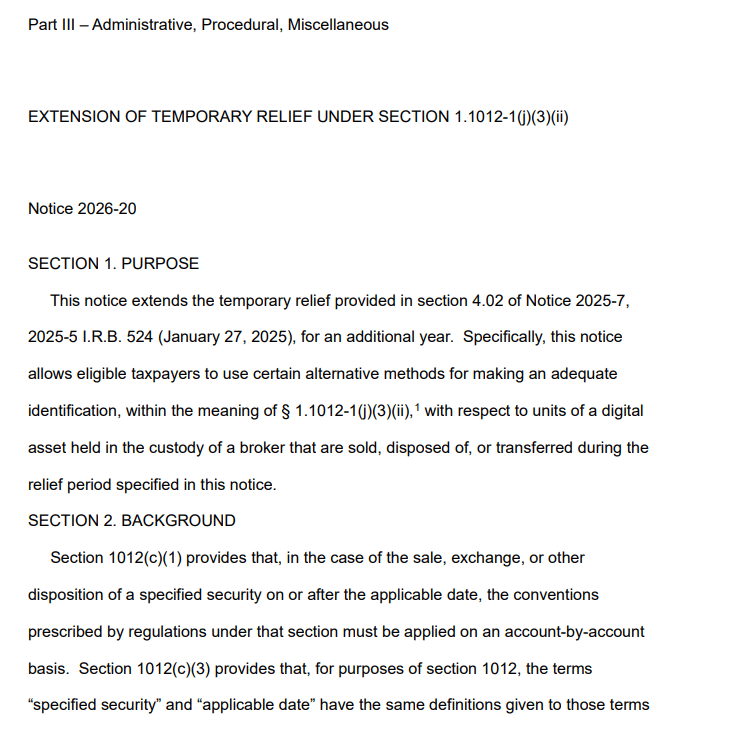
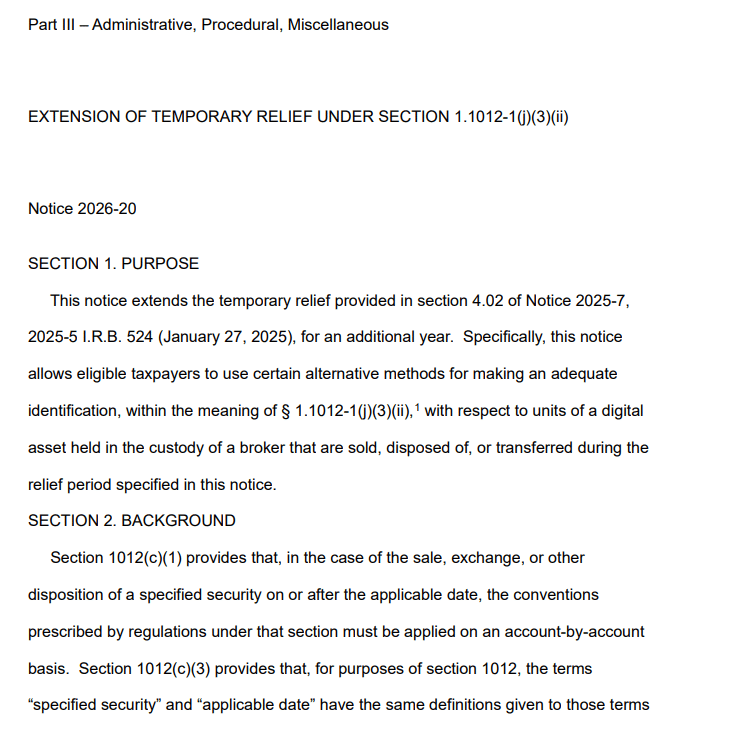
In its latest guidance, the U.S. Internal Revenue Service (IRS) gave crypto holders a free pass to use alternative methods to identify crypto sales for tax purposes instead of relying on their broker-submitted reports.
This is the second time the watchdog has extended the relief, and it could again help lower the tax bill for crypto investors. Initially, the agency mandated crypto exchanges to adopt the FIFO (first-in, first-out) method to track investors’ buy and sell prices for each coin.
For users, this meant that the oldest coins, which were acquired cheaply and have since appreciated significantly, should be reported first. This would result in a higher tax bill due to a higher capital gains tax.
With alternative reporting methods, however, you could include the most recently acquired coins that haven’t rallied much or are in the red.
U.S. crypto tax compliance burden
According to Shehan Chandrasekera, head of tax at Coin Tracker, the IRS guidance will offer incredible relief to investors, albeit with a few friction points.
He said,
The IRS just quietly saved crypto investors from a massive tax headache by issuing Notice 2026-20.
The temporary relief will be extended up to the end of 2026. But the move isn’t out of just goodwill from the taxman.
Its strict crypto reporting regime has a compliance burden on operators. Notably, crypto exchanges must report the cost basis for each coin bought by each investor to the IRS, along with other data.
At the same time, a duplicate of the report should be given to the customer or physically mailed if the customer hasn’t opted for digital copies. Most brokers have complained that this would be a massive operational burden.
To alleviate this, the agency opted for phased-in reports, starting with only gross proceeds or total crypto sales in reports submitted in 2025. For crypto assets bought in 2026, cost basis data was included in the submitted reports (Form 1099-DA).
Earlier this month, the IRS proposed scrapping physical copies sent to customers and making ‘electronic submission’ the default for tax reports.
Final Summary
- The IRS will allow crypto investors to use their reporting methods for crypto taxes until the end of the year, rather than relying on the strict broker-submitted reports.
- The move comes as the agency grapples with ways of lowering tax compliance burdens for crypto investors and brokers.