# Scaling İlgili Makaleler

HTX Haber Merkezi, kripto endüstrisindeki piyasa trendleri, proje güncellemeleri, teknoloji gelişmeleri ve düzenleyici politikaları kapsayan "Scaling" hakkında en son makaleleri ve derinlemesine analizleri sunmaktadır.

Actually, ETH Scaling is a Major Boon for L2s

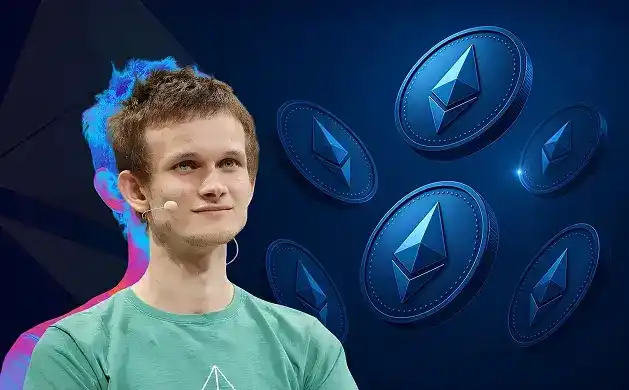
Vitalik Buterin's recent comments on Ethereum scaling have been misinterpreted. He did not declare Layer 2s (L2s) a failure but rather signaled a strategic shift: Ethereum is moving from a "rollup-centric" scaling model, where L2s were seen as simple replicas of the base layer, to one where the L1 itself undergoes aggressive scaling. L2s remain crucial, but their primary value proposition has evolved to be customization, not just cheap transactions. Two key developments drove this change. First, Ethereum's base layer is scaling faster than anticipated. After years of cautious progress to preserve decentralization, an ambitious new roadmap aims to drastically increase L1 throughput through a series of upgrades, including a higher gas limit, faster block times, parallel transaction processing, and a fundamental transition to a native zero-knowledge (zkEVM) architecture. This allows Ethereum to scale while maintaining its superior decentralization. Second, L2s have found product-market fit with institutions. Companies like Robinhood, Coinbase, and Kraken are building their own L2s because they need Ethereum's security and access to its liquidity, but also require control for regulatory compliance, custom fee structures, and operational flexibility. This creates a spectrum of L2s, from highly decentralized ones to more controlled, institutionally-focused chains—a reality Vitalik acknowledges is valid as long as marketing is honest. Crucially, scaling the L1 does not compete with L2s; it makes them better. A more powerful L1 means cheaper data availability and settlement costs for L2s, faster withdrawals, and quicker finality. The main unresolved challenge is liquidity fragmentation between L2s, which the Ethereum Foundation is prioritizing with new interoperability solutions for 2026. The narrative that Ethereum is abandoning L2s is incorrect. The ecosystem is maturing into a system with a radically scaling L1 at its core, surrounded by a flourishing ecosystem of specialized L2s.

marsbit03/15 03:20

Actually, ETH Scaling is a Major Boon for L2s

marsbit03/15 03:20

L1 Value Capture Shrinks Significantly, ETH, SOL, HYPE Struggle to Return to Price Peaks

This analysis examines the structural decline in fee-based revenue capture by Layer 1 (L1) blockchains, arguing that high transaction fees are systematically eroded by innovation, making them unsustainable as a primary valuation driver. Bitcoin’s fee spikes during congestion periods (e.g., 2017 and 2021 rallies) were rapidly mitigated by scaling solutions like SegWit, batching, and the Lightning Network. By 2025, daily fees fell to just $300k, under 1% of miner revenue, despite higher USD transaction volumes. Ordinals and Runes provided brief fee surges but were short-lived. Ethereum’s DeFi and NFT booms drove quarterly fees to $4.3 billion in late 2021. However, competing L1s and L2 rollups (e.g., Arbitrum, Optimism) diverted activity. The Dencun upgrade (EIP-4844) drastically reduced data costs for L2s, causing Ethereum’s L1 fee revenue to collapse by over 90% from its peak, falling below $15 million per quarter by late 2025. Solana’s revenue relies heavily on MEV and priority fees from memecoin trading, which peaked in early 2025. However, private AMMs (e.g., HumidiFi) and off-chain order flow (e.g., Hyperliquid’s HyperCore) have captured over 50% of DEX volume, reducing Solana’s MEV fees by more than 90% from their January 2025 highs. Hyperliquid currently dominates perps trading, earning $600 million in 2025, but its fee model (4.5 bps per trade) is vastly more expensive than traditional finance (e.g., CME). As institutional adoption grows, pressure to compress fees will intensify, challenging its token valuation. The report concludes that L1 tokens are increasingly weak as fee-capturing assets. Valuation drivers have shifted toward staking yields, ETF flows, RWA narratives, and macro liquidity—factors more tied to speculative demand than fundamental utility. Bitcoin remains an exception: its security depends not on fees but on continuous price appreciation to offset halvings, making its model uniquely fragile and narrative-dependent.

Odaily星球日报02/26 08:39

L1 Value Capture Shrinks Significantly, ETH, SOL, HYPE Struggle to Return to Price Peaks

Odaily星球日报02/26 08:39

Understanding Vitalik's Reflection on L2: Farewell to Fragmentation, Rectifying the Course Towards Native Rollup in the New Phase

Vitalik Buterin's recent reflections on Ethereum's scaling roadmap signal a significant shift: the original plan prioritizing L2s as the primary scaling solution is now considered outdated. Rather than abandoning L2s entirely, the new strategy refocuses on Ethereum L1 as the most secure settlement layer, while L2s are expected to pursue specialization and differentiation—offering unique features like privacy-focused virtual machines or AI-agent environments—instead of mere scalability. A key issue is the fragmentation caused by numerous L2s, many of which remain centralized (e.g., stuck at "Stage 1" with limited decentralization). This undermines Ethereum’s core values and splits liquidity. The community is now moving toward "Native Rollup" concepts, particularly Based Rollup, which integrates rollup logic directly into L1, using Ethereum validators for sequencing instead of independent, often centralized, sequencers. This enhances security, reduces fragmentation, and enables synchronous composability. To improve user experience, preconfirmations and fast L1 confirmation rules are proposed to reduce finality wait times from ~13 minutes to 15-30 seconds. Looking ahead, Ethereum’s evolution will emphasize account abstraction (simplifying user onboarding), privacy with ZK-EVM, and infrastructure for AI agents operating trustlessly on-chain. Ultimately, Vitalik’s critique is not a rejection of L2s but a correction—away from fragmentation and toward deeper integration with L1, reinforcing Ethereum as the foundational trust layer for the decentralized ecosystem.

marsbit02/21 10:33

Understanding Vitalik's Reflection on L2: Farewell to Fragmentation, Rectifying the Course Towards Native Rollup in the New Phase

marsbit02/21 10:33

活动图片