# Future of Work İlgili Makaleler

HTX Haber Merkezi, kripto endüstrisindeki piyasa trendleri, proje güncellemeleri, teknoloji gelişmeleri ve düzenleyici politikaları kapsayan "Future of Work" hakkında en son makaleleri ve derinlemesine analizleri sunmaktadır.

a16z: After AI Grants Humans Superpowers, Where Do We Go From Here?

A new paper titled "The Minimal Economics of AGI" explores the economic implications of AI automation, particularly as AI agents evolve from tools into collaborative partners capable of long-horizon tasks. The authors, Christian Catalini and Eddy Lazzarin, argue that the core economic divide will be between automation (tasks that can be measured and automated) and verification (tasks requiring human oversight, judgment, and contextual understanding). Key themes include: - The "coder’s curse": top experts training AI systems may inadvertently automate their own roles over time. - Three future human roles: directors (setting intent), verifiers (domain experts ensuring quality), and meaning-makers (creating cultural and social value). - Cryptocurrency and blockchain are positioned as critical for identity, provenance, and trust in a world flooded with AI-generated content. - Two potential economic outcomes: a "hollow economy" with systemic risk from under-verification, or an "augmented economy" where AI amplifies human potential and reduces costs for education, healthcare, and innovation. - The importance of small, agile teams leveraging AI for outsized impact, with crypto infrastructure enabling coordination at scale. The authors emphasize that AI acts as a force multiplier, granting individuals "superpowers," and urge a focus on verification, adaptability, and ambitious experimentation.

marsbit03/09 11:31

a16z: After AI Grants Humans Superpowers, Where Do We Go From Here?

marsbit03/09 11:31

Jack Dorsey's Company Is Laying Off 4,000 White-Collar Workers, Replaced by AI

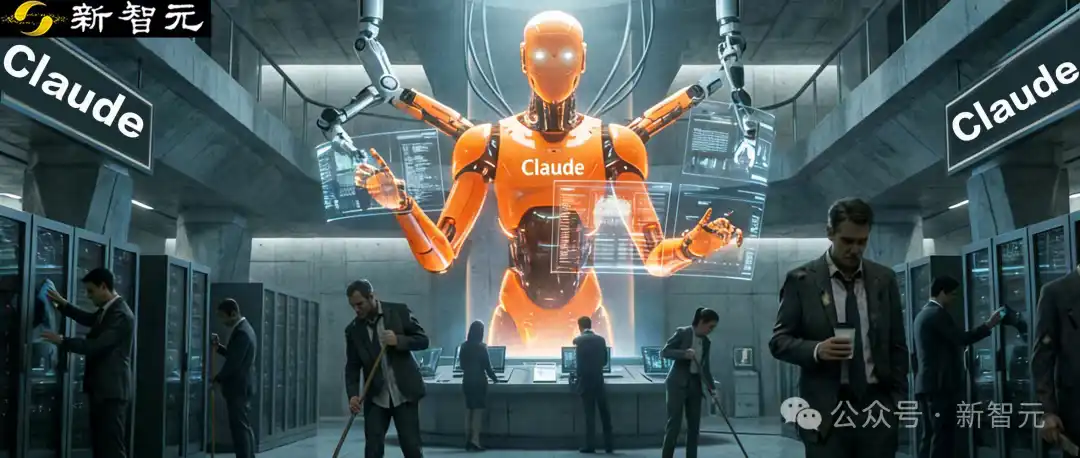
Jack Dorsey's fintech company Block has announced a major workforce reduction, cutting nearly 40% of its employees—around 4,000 roles—to streamline operations and transition toward a flatter, AI-centric organizational structure. Despite reporting growing revenue and profitability, and even raising its 2026 profit guidance to $12.2 billion, Block is proactively restructuring to adapt to rapid AI-driven changes in productivity. Dorsey emphasized that AI tools are fundamentally reshaping how companies operate, enabling exponential growth without proportional increases in staff. This move reflects a broader trend among tech firms like Salesforce, Amazon, and ASML, which have also cut jobs during growth phases by leveraging AI for efficiency. Notably, Block’s stock surged 20% following the announcement, adding nearly $6 billion in market value—effectively valuing each eliminated role at about $1.5 million in created enterprise value. The layoffs primarily affect white-collar roles, as AI excels at tasks involving information processing—a core function of many knowledge-economy jobs. Affected employees will receive severance including 20 weeks' base pay, additional compensation per year served, a $5,000 transition bonus, and six months of continued health insurance. The situation underscores how AI is disrupting traditional employment faster than expected, shifting focus toward reskilling and adaptation in the automated economy.

Odaily星球日报02/27 03:55

Jack Dorsey's Company Is Laying Off 4,000 White-Collar Workers, Replaced by AI

Odaily星球日报02/27 03:55

Former Twitter Co-founder's Sincere Layoff Letter: AI Can Do Your Job, You Can Go Now

Block, the financial technology company led by Twitter co-founder Jack Dorsey, saw its stock surge 25% after announcing plans to lay off nearly half its workforce—cutting 10,000 employees down to 6,000. The move added approximately $3 billion in market value, equating to about $750,000 per terminated employee. Dorsey attributed the cuts directly to AI, stating that “intelligence tools” enable smaller teams to achieve more with greater efficiency. He emphasized that the decision was intentional and immediate, avoiding prolonged uncertainty. Unlike typical corporate messaging that obscures layoffs with strategic jargon, Dorsey was explicit: AI can now do many jobs better and cheaper. The company had expanded rapidly during the pandemic, tripling in size since 2019. Now, much of that growth is being reversed under the banner of AI-driven efficiency. Dorsey’s approach mirrors actions taken by Elon Musk at Twitter (now X), but with a key difference: Block paired the layoffs with strong financial results and a clear AI transformation narrative, which investors rewarded. Internally, the transition has been turbulent. Employees were recently mandated to use AI tools and required to email Dorsey weekly summaries of their contributions—summaries he processed using AI. Many expressed low morale and job insecurity. Despite offering relatively generous severance, Dorsey’s blunt honesty underscores a harsh new truth: proficiency in AI or proving one’s value may not guarantee job security if companies prioritize cost-cutting through automation. Dorsey predicts most companies will follow suit within a year. For workers, the message is clear: as AI reshapes work, relying solely on a single employer carries increasing risk.

marsbit02/27 03:15

Former Twitter Co-founder's Sincere Layoff Letter: AI Can Do Your Job, You Can Go Now

marsbit02/27 03:15

Steam, Steel, and Infinite Intelligence

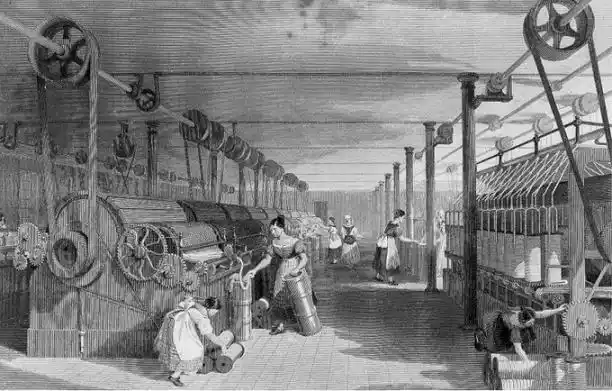
The article "Steam, Steel, and Infinite Mind" by Ivan Zhao, CEO of Notion, explores how AI is poised to become the defining technological material of our era, much like steel shaped the Gilded Age and semiconductors enabled the digital age. The author argues that while AI currently mimics past forms—like early films resembling stage plays or AI chatbots resembling search engines—it holds transformative potential. At the individual level, AI can elevate knowledge workers from "bicycles" to "cars," as seen with programmers who now use AI assistants to become dramatically more efficient. However, two key challenges remain: fragmented context across tools and the lack of verifiability in non-programming knowledge work. At the organizational level, AI acts like "steel" for companies, enabling them to scale without the inefficiencies of human communication as a bottleneck. It also parallels the steam engine, which initially replaced water wheels but later allowed entirely new factory designs. Most companies are still in the "water wheel stage," using AI within old workflows rather than reimagining operations around continuous, asynchronous intelligence. On an economic scale, AI could enable a shift from human-scale "Florence-like" organizations to AI-augmented "megacities" of knowledge work—larger, faster, and more complex, but also more powerful. The conclusion urges looking beyond the rearview mirror to imagine and build this new frontier of infinite intelligence.

marsbit12/29 04:56

Steam, Steel, and Infinite Intelligence

marsbit12/29 04:56

活动图片