# Automation İlgili Makaleler

HTX Haber Merkezi, kripto endüstrisindeki piyasa trendleri, proje güncellemeleri, teknoloji gelişmeleri ve düzenleyici politikaları kapsayan "Automation" hakkında en son makaleleri ve derinlemesine analizleri sunmaktadır.

Dialogue with MIT Economist: Don't Panic About 'AI Doomsday Theory', Verification Capability is a Scarce Resource

In a discussion with MIT economist Christian Catalini, the core argument is that the true scarcity in the AI economy is not intelligence but verification—the human capacity to check, judge, and confirm the correctness of AI outputs. Catalini explains that while automation costs are falling exponentially, verification remains constrained by human biological limits, at least for now. Entry-level jobs are most vulnerable, as AI can easily replicate tasks that rely on measurable, existing knowledge. However, even top experts are inadvertently training their own replacements by generating data that AI learns from—a phenomenon termed the "coder’s curse." Three roles will remain critical in the AI-driven economy: - **Directors**: Those who set intentions and steer AI agents toward goals, dealing with "unknown unknowns." - **Meaning Makers**: Individuals who create cultural, social, or narrative value based on human consensus and status games. - **Liability Underwriters**: Top-tier experts (e.g., lawyers, doctors) who assume responsibility for edge cases and final validation. Catalini advises against panic and encourages experimentation with AI tools to automate current roles and discover new opportunities. He emphasizes that uniquely human traits—like judgment in unmeasurable contexts—will retain value, and crypto-based verification infrastructure may play a key role in ensuring authenticity. The transition will be disruptive, but leveraging AI can amplify human potential exponentially.

marsbit4 saat önce

Dialogue with MIT Economist: Don't Panic About 'AI Doomsday Theory', Verification Capability is a Scarce Resource

marsbit4 saat önce

HTX Research Latest Report Deciphers OpenClaw: The Battle for Execution Entry and Huobi HTX's AI Strategic Path

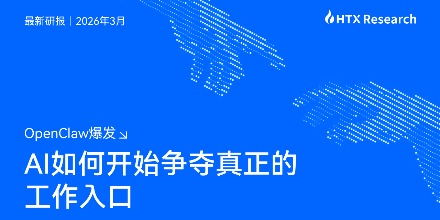
HTX Research, the analytical arm of Huobi HTX, has released a report titled "From the Rise of OpenClaw: How AI Begins to Compete for the True Work Interface." The report analyzes the emerging trend of AI evolving from a conversational tool into an execution layer, using the rapid growth of the open-source project OpenClaw as a key example. OpenClaw is a personal AI assistant that operates on a user's local device. It receives tasks through messaging platforms like WhatsApp, Telegram, Slack, and others, and can execute actions by integrating with files, browsers, calendars, email, and terminals. This signifies a major shift: AI is moving beyond answering questions to actively performing tasks, competing for the "execution interface" of the digital age. The report identifies five converging trends enabling this shift: sufficient model capability for multi-step tasks, the high frequency of messaging apps as a natural interface, open-source distribution, self-hosted models addressing data privacy, and a strong market need for small teams to achieve more with fewer resources. It highlights a particular fit in the Chinese market, where many small and medium teams operate on message-driven platforms like WeCom and Feishu. Some Chinese cities have already begun offering support policies to foster an OpenClaw ecosystem. However, the report also outlines three major hurdles for such tools to become reliable infrastructure: security risks (noting recent malware incidents), the need for robust governance and auditing, and the necessity for industry-specific templates to move beyond early adopters. Complementing this analysis, the report details Huobi HTX's own AI strategy. Rather than building an execution layer, HTX is focusing on becoming a "platform service entrance and ecosystem connector." Its proprietary AINFT product aggregates major AI models (OpenAI, Anthropic, Google) into a single access point for users, with crypto-native features like TronLink wallet sign-ins and a pay-as-you-go model instead of subscriptions. HTX's competitive strategy is differentiated by its focus on integrating AI directly into its trading platform. Its "HTX AI Skills" currently cover spot and futures trading execution, with plans to expand into market analysis, intelligence, and a built-in assistant, aiming to create a closed loop for user experience. In conclusion, while the move of AI into the execution layer is still in its early stages with significant challenges ahead, the direction is clear. The next phase of AI competition will extend beyond model performance to encompass control of interfaces, permission governance, and skill ecosystems. Huobi HTX's early布局 in this area presents a notable case study for how crypto platforms can integrate AI as a core, operational asset.

marsbit03/24 06:21

HTX Research Latest Report Deciphers OpenClaw: The Battle for Execution Entry and Huobi HTX's AI Strategic Path

marsbit03/24 06:21

Karpathy Diagnosed with "AI Psychosis"! Not Eating or Sleeping, 16 Hours a Day Raising Lobsters

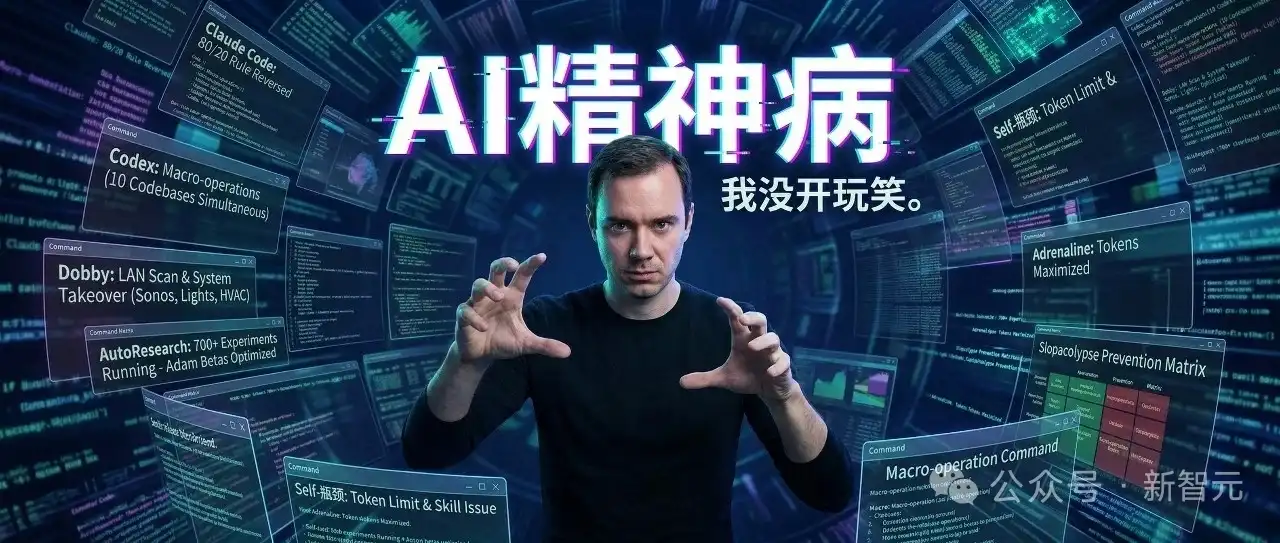
Andrej Karpathy recently revealed that he has developed what he calls "AI psychosis," an obsessive state where he spends up to 16 hours a day directing AI agents instead of writing code himself. In a podcast with Sarah Guo, he explained that his workflow has shifted from 80% hand-coding and 20% AI-assisted to the reverse, or even more extreme. He now manages multiple AI agents simultaneously, treating them as a team to execute tasks. Karpathy admitted that he’s become addicted to optimizing AI performance, constantly worrying about whether he’s using tokens efficiently or pushing the system to its limit. He highlighted the importance of an agent’s “personality,” noting that Claude Code feels more like a collaborative teammate compared to colder, more mechanical alternatives. He also shared practical applications, such as "Dobby," a Claude-based smart home agent that integrates and controls all his home devices through natural language, replacing six separate apps. In research, his "AutoResearch" project used AI to run 700 experiments, resulting in an 11% training speed improvement for an AI model—discovering optimizations he had missed as a human researcher. Despite the capabilities, Karpathy noted that AI agents still exhibit uneven performance—sometimes brilliant, other times childlike—due to limitations in reinforcement training. He predicts that 2026 will see a "slopacolypse," with AI generating vast amounts of mediocre content. His experience signals a broader shift: humans are becoming directors of AI systems rather than executors, navigating a new era of human-AI collaboration.

marsbit03/23 11:44

Karpathy Diagnosed with "AI Psychosis"! Not Eating or Sleeping, 16 Hours a Day Raising Lobsters

marsbit03/23 11:44

AI Wealth Tutorial: Start with NSFW, Then Sell Courses

The article "AI致富教程:先搞色色,再去卖课" (AI Money-Making Guide: Start with Adult Content, Then Sell Courses) explores how AI-generated content (AIGC) is being monetized, particularly through adult entertainment and low-barrier creative work, before ultimately shifting to selling instructional courses. A16Z’s report highlights a striking trend: in the U.S., user spending on OnlyFans surpassed combined spending on OpenAI and The New York Times. This reflects a broader pattern where “sexual appeal outperforms productivity.” Early adopters used tools like Midjourney and Stable Diffusion to create AI-generated virtual models, offering “girlfriend experiences” on platforms like Fanvue, where AI models now contribute significantly to revenue. Similarly, some turned to AI-generated children’s books, though market saturation and quality issues quickly diminished profitability. Both paths often lead to selling courses—packaging the “get-rich-quick” illusion to newcomers. However, the real barrier isn’t technical proficiency but aesthetic judgment: the ability to translate vague ideas into precise prompts. Those with design, photography, or writing backgrounds excel because they know what “good” looks like; others struggle even with advanced tools. The rise of AI also brings ethical and trust issues. Clients often reject AI-assisted work on principle, perceiving it as “unfair” or lacking human effort. Regulations now require AI-generated content labeling, but boundaries remain unclear—especially for hybrid human-AI creations. The core question isn’t just whether AI was used, but whether someone is genuinely accountable for the output. In summary, while AI lowers entry barriers for content creation, success still hinges on traditional skills like审美 (aesthetic sense), and the real money often moves from creating content to selling the dream of easy success.

marsbit03/23 10:52

AI Wealth Tutorial: Start with NSFW, Then Sell Courses

marsbit03/23 10:52

People Laid Off by AI Won't Disappear; They Will Become the Creators of the Next Economy

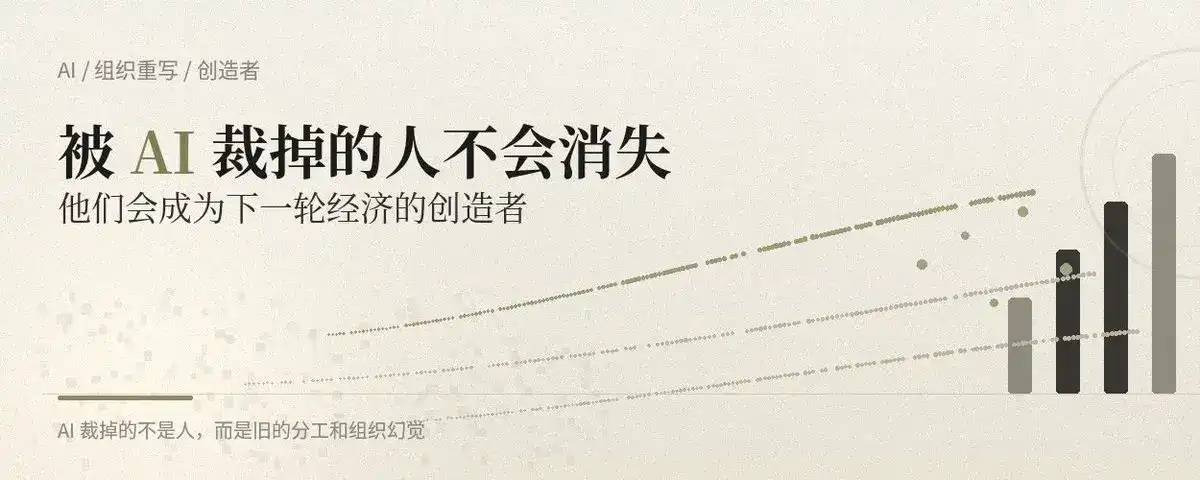
The article argues that the real question surrounding AI is not whether it will cause unemployment, but what happens to the people displaced. AI is replacing not humans, but the standardized, replicable, and automatable parts of human work. This follows historical patterns where technological revolutions, from stone tools to computers, made old skills obsolete and dissolved old structures—but humanity adapted and reorganized. The author draws a parallel to China’s large-scale layoffs during state-owned enterprise reforms 30 years ago, which initially seemed catastrophic but eventually fueled the growth of a new private economy, new companies, and new types of jobs. Engineers, though among the first impacted, are also positioned to recover fastest. Their systemic understanding and proximity to new productive forces make them ideal candidates to adapt and create in the new economy. More importantly, AI is reshaping companies themselves—reducing organizational bloat, communication costs, and bureaucracy. This enables smaller, more agile teams and empowers strong creators who may have previously struggled with management rather than innovation. The core issue is not job loss, but self-definition: will individuals wait to be reassigned by the old system, or use new tools to reorganize production? AI accelerates differentiation—eliminating some jobs, shattering illusions for some, and offering others a chance to leap forward. The author’s view is that AI is dismantling an entire generation’s belief in stable career paths. Those laid off won’t vanish; instead, many will reinvent themselves—transitioning from employees in old systems to creators of the next economy. Every productivity revolution淘汰 (eliminates) not people, but those who refuse to rewrite themselves. The first to accept this and start building the new world will succeed.

marsbit03/23 10:31

People Laid Off by AI Won't Disappear; They Will Become the Creators of the Next Economy

marsbit03/23 10:31

活动图片