Stripe in Talks to Acquire OpenRouter: Is AI the New Focus of Future Payment Landscape?

Foresight News2026-07-27 tarihinde yayınlandı2026-07-27 tarihinde güncellendi

Özet

Payment giant Stripe is reportedly in talks to acquire AI model routing platform OpenRouter, potentially valuing the startup at around $10 billion, according to The Wall Street Journal. This move follows Stripe's recent strategic push into AI and crypto infrastructure over the past 18 months, including the acquisitions of stablecoin company Bridge, wallet infrastructure provider Privy, and the launch of its Tempo blockchain with a Machine Payments Protocol. These steps aim to enable AI agents to autonomously handle payments and transactions. OpenRouter, founded by OpenSea co-founder Alex Atallah, aggregates over 300 models from more than 60 providers, handling billions of inference requests. Its integration would complement Stripe's existing AI agent infrastructure—covering ordering, payment, and settlement—creating a comprehensive pipeline for AI-driven commerce. Stripe's goal appears to be positioning itself as the default infrastructure layer for AI-to-user interactions, akin to "AWS for money." The deal is not yet finalized and faces potential competition or disruption. However, it highlights a broader trend where major players like Circle and Google are also developing payment protocols for AI agents. While current on-chain AI agent payment volume remains a tiny fraction of overall stablecoin settlements, the industry is betting on this nascent market to drive future growth and validate the synergy between AI and blockchain.


Author: Sanqing, Foresight News


On July 24, according to The Wall Street Journal, payment giant Stripe is in acquisition talks with AI model routing platform OpenRouter. The deal could be announced soon, but negotiations could still fall apart or another buyer might emerge. Sources familiar with the matter said the acquisition values OpenRouter at approximately $10 billion, a significant leap from its post-money valuation of $1.3 billion following a $113 million Series B funding round in May this year. OpenRouter's backers include a16z, Menlo Ventures, and CapitalG, a subsidiary of Google's parent company Alphabet.


On the surface, this deal is a pure AI infrastructure acquisition, but Stripe's identity has long extended beyond a simple credit card processor. Over the past year and a half, it has spent $1.1 billion to acquire stablecoin company Bridge, incubated its own stablecoin settlement blockchain Tempo, positioning itself as one of the most aggressive participants in global stablecoin infrastructure.


Prior to this, several large technology companies have approached OpenRouter seeking potential acquisitions. Stripe and OpenRouter already have business ties: OpenRouter has long used Stripe Invoicing, Stripe Tax, and Radar to handle its global billing and risk control. This rumored acquisition is, to some extent, a vertical integration of its own customer.


Stripe Covers It All: Payments, Wallets, Ordering, Settlement


In February 2025, Stripe completed its largest acquisition to date, spending $1.1 billion to acquire stablecoin infrastructure company Bridge, solving the problem of stablecoin on-ramps and off-ramps.


Four months later, Stripe acquired embedded wallet infrastructure provider Privy, which serves over 75 million accounts, addressing the issues of wallets and identity.


In late September of the same year, Stripe and OpenAI jointly launched the Agentic Commerce Protocol (ACP), introducing Instant Checkout within ChatGPT. Through a new payment primitive called "Shared Payment Token," it allows AI Agents to make purchases on behalf of users without accessing their real payment credentials, solving the problem of how AI Agents place orders.


In March 2026, the Tempo payment blockchain, incubated by Stripe and Paradigm, launched its mainnet, simultaneously releasing the Machine Payments Protocol (MPP). AI Agents can now autonomously complete small, high-frequency payments on Tempo using USDC, with controls like spending limits and merchant whitelists, eliminating the need for manual approval for each transaction. This solves the problem of how AI Agents pay.


At the end of June, Stripe, along with Visa, Mastercard, BlackRock, Coinbase, and over 140 other companies, joined the newly formed stablecoin alliance Open USD. This alliance, operated by the independent company Open Standard, has Bridge co-founder Zach Abrams as its CEO.


Viewed individually, each step is merely an "expansion of stablecoin business." But connecting the dots reveals that Stripe has integrated all the necessary steps for an AI Agent to complete a transaction—ordering, payment, settlement—into its business scope.


OpenRouter Completes AI Model Services and Billing


OpenRouter doesn't produce models; it is a "model routing" layer: it aggregates over 60 providers and 300+ models, helping developers compare prices, switch models, and automatically downgrade to backup models when one fails, charging approximately a 5% commission per call.


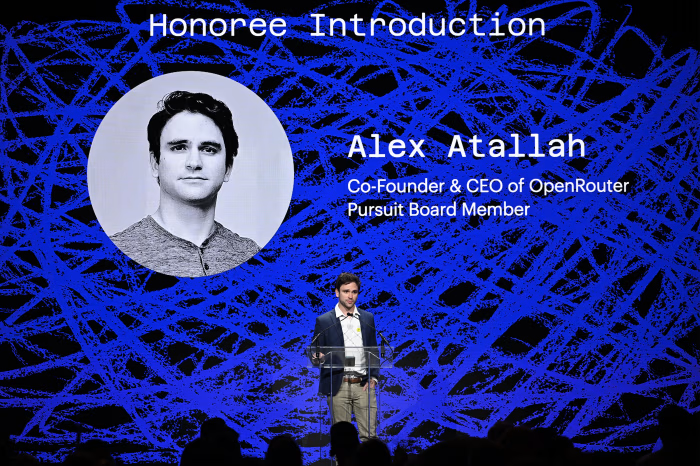
Its founder, Alex Atallah, is the co-founder and former CTO of the NFT marketplace OpenSea. According to data disclosed by OpenRouter, its annualized revenue reached $50 million by March 2026, a significant increase from $19 million at the end of 2025. It has over 1.5 million monthly active developers and processes inference requests in the tens of billions.


Tempo and MPP solve "how AI Agents pay," ACP solves "how AI Agents order," and OpenRouter adds "which model an AI Agent should call and how it should be billed."


Pieced together, these three layers mean that a single AI Agent task, from model selection and inference calls to the resulting commercial settlement, could theoretically all pass through Stripe's pipelines. This echoes the positioning publicly stated by its crypto business lead: "the AWS of money."


Such ambition is not unique to Stripe. Circle launched the Agent Stack for AI Agents in May, including Agent Wallets and the micro-payment tool Nanopayments; Google released the Agent Payments Protocol (AP2).


According to data from agenteconomy.to, the x402 protocol, led by Coinbase and deployed on Base, Solana, and other chains, had processed over 190 million on-chain transactions as of July 23. Building payment infrastructure for AI Agents is becoming a shared judgment among several giants.


But reality is stark. A report from crypto trading and research firm Keyrock in May showed that from May 2025 to April 2026, the total value of payments settled on-chain by AI Agents was approximately $73 million. In contrast, the annual stablecoin settlement volume was $46 trillion, with the former accounting for less than 0.01% of the latter. Current valuations are based more on narrative and early positioning, still far from achieving scale.


Stripe Aims for More Than Just a Routing Business


Financial analysis website FourWeekMBA, based on OpenRouter's official public token usage ranking data, noted that the token share of US-based models on OpenRouter's platform has fallen from about 70% in June 2025 to around 30% in June 2026, with Chinese open-source models like DeepSeek becoming the main drivers of call volume.


The deal is also far from finalized. The Wall Street Journal reported that negotiations could still break down or another buyer could intervene. Stripe itself is simultaneously involved in a joint bid with private equity firm Advent International to acquire PayPal, stretching its focus and capital.


But regardless of whether this deal ultimately materializes, Stripe's trajectory over the past 18 months is clear enough. It is no longer content with being the cashier of the AI era; it wants to become the default infrastructure provider on the connection chain between AI and users.


For the blockchain industry, the acquisition price itself may not be the most important aspect. What truly deserves attention is whether stablecoins can, via the AI Agent economy, find the first scalable machine-to-machine payment scenario, thereby validating the relevance and synergy between AI and blockchain.


İlgili Sorular

QWhat is the main subject of the potential acquisition reported by The Wall Street Journal on July 24th?

AThe main subject is the potential acquisition of AI model router platform OpenRouter by the payment giant Stripe.

QHow does the reported valuation of OpenRouter in this potential deal compare to its valuation from its Series B funding round in May?

AThe reported acquisition values OpenRouter at approximately $10 billion, which is a significant increase from its $1.3 billion post-money valuation after its $113 million Series B round in May.

QWhat three key problems for AI Agent transactions has Stripe addressed through its recent acquisitions and protocol developments, according to the article?

AStripe has addressed three key problems: 1) How AI Agents place orders (via the Agentic Commerce Protocol with OpenAI). 2) How AI Agents make payments (via the Machine Payments Protocol on the Tempo blockchain). 3) Which model an AI Agent should call and how to bill for it (a gap that OpenRouter would fill).

QWhat major shift in model usage on OpenRouter's platform does the data from FourWeekMBA indicate?

AThe data indicates a major shift where the token share of U.S. models on OpenRouter's platform has dropped from about 70% in June 2025 to about 30% in June 2026, with Chinese open-source models like DeepSeek becoming the main drivers of call volume.

QWhat does the article suggest is the broader significance of Stripe's acquisition strategy and the development of AI Agent payment infrastructure for the blockchain industry?

AThe article suggests the broader significance is whether stablecoins can find their first scaled use case for machine-to-machine payments through the AI Agent economy, thereby validating the synergy and connection between AI and blockchain technology.

İlgili Okumalar

From South Korea to the United States: Blue-Collar Jobs Are Becoming Increasingly Popular, Thanks to AI

AI is reshaping the labor market's value proposition. The traditional four-year college degree is losing its appeal as a guaranteed career path, while skilled blue-collar trades like electricians, welders, and plumbers are experiencing historic demand and wage premiums. This shift is driven by dual pressures: AI's displacement of certain white-collar roles and a booming need for physical infrastructure and data center construction. Data confirms the trend. In the U.S., vocational school revenue surged, and a significant portion of recent layoffs are AI-related. Surveys show a majority of Gen Z adults plan to pursue blue-collar work, citing better job security against AI automation. Vocational education interest has exploded recently. Experts cite a psychological shift as younger generations seek tangible, AI-resistant careers and avoid high student debt. In many cases, salaries for skilled trades now match or exceed those requiring a bachelor's degree. In South Korea, semiconductor vocational high schools boast near-total employment, with graduates securing high-paying roles at companies like Samsung. The shortage is structural, exacerbated by a retiring baby boomer workforce and massive infrastructure projects. Companies like JPMorgan Chase, Meta, and Lowe's are investing heavily in training programs. However, overcoming historical stigma and a "perception gap" around trade careers remains a key challenge to closing the talent gap.

marsbit41 dk önce

From South Korea to the United States: Blue-Collar Jobs Are Becoming Increasingly Popular, Thanks to AI

marsbit41 dk önce

Qualcomm: AI Hype Subsides, When Will Smartphones Emerge from the Gloom?

Qualcomm reported its Q3 FY2026 results (ending June 2026), with revenue of $9.95B, down 4% YoY but above expectations. Gross margin declined to 53.1%, pressured by rising costs across manufacturing and memory. Key business segments showed mixed performance: Handset revenue fell 19.6% YoY to $5.09B, dragged by an 11% decline in non-Apple Android shipments and weaker high-end mix. Conversely, Automotive revenue surged 61% to $1.59B, and IoT grew 9% to $1.83B. Core operating profit dropped 41% YoY due to margin compression and higher expenses. Management's Q4 FY2026 guidance projects revenue of $9.7B-$10.5B, in line with consensus, but Non-GAAP EPS guidance of $2.05-$2.25 fell short of expectations. Amidst persistent weakness in its core handset market, Qualcomm is pursuing growth in AI, focusing on Edge AI (smartphones, PCs, automotive) and Data Center AI. Its data center strategy includes four pillars: AI accelerators (e.g., AI200), commercial CPUs (Dragonfly C1000), custom silicon, and connectivity solutions. While these initiatives initially boosted its stock, concerns over AI capital expenditure sustainability have since erased those gains. The company targets $5B in data center revenue for FY2027 and $15B for FY2029. The report concludes that with the traditional handset business still under pressure, the data center opportunity is currently viewed as a longer-term option, and a more conservative valuation based on core operations may be warranted until AI contributions materialize.

marsbit46 dk önce

Qualcomm: AI Hype Subsides, When Will Smartphones Emerge from the Gloom?

marsbit46 dk önce

From TPU to Self-Evolving Agents: How Jeff Dean Predicts the Next Step in AI

At the 2026 YC Startup School, Jeff Dean outlined his vision for AI's next phase, shifting focus from simply scaling models to building intelligent, autonomous systems. He believes AI's progress is no longer just about creating smarter models, but about integrating them into systems capable of long-term, iterative work, automated experimentation, and continuous learning. This evolution moves the competition from "who has the bigger model" to "who can best organize intelligence." Dean suggests AI capabilities are now comparable to a junior engineer, enabling the automation of complex workflows. However, the true challenge and opportunity lie in managing these AI "workers" at scale. He emphasizes the importance of **context engineering**—structuring tools, memory, and feedback loops—over raw model power. For startups, this means building deep expertise in niche domains where general models currently fail (near 0-1% success rates), leveraging proprietary data, specialized tools, and domain-specific evaluators. A recurring theme is re-examining fundamental constraints. Dean's past work, like moving Google's search index to memory or creating the TPU, stemmed from questioning outdated assumptions about hardware and cost. He sees similar inflection points today, particularly in **specialized inference hardware** to drastically reduce latency and energy consumption for real-time Agent operation. Notably, he points out that in modern AI systems, the dominant cost is often not computation but **data movement**. Reliable, long-running Agents require robust system design, borrowing concepts from distributed computing like checkpointing, state management, and parallel exploration to handle failures and maintain progress over days or weeks. As AI automates execution, the scarcest human skills will shift to **defining clear specifications**, **judging what problems are worth solving** (taste), and designing effective feedback loops. Ultimately, Dean's framework prioritizes understanding the problem deeply, identifying the true bottlenecks, and systematically building closed-loop systems where AI can not only perform tasks but also improve AI itself.

marsbit46 dk önce

From TPU to Self-Evolving Agents: How Jeff Dean Predicts the Next Step in AI

marsbit46 dk önce

İşlemler

Spot
活动图片




