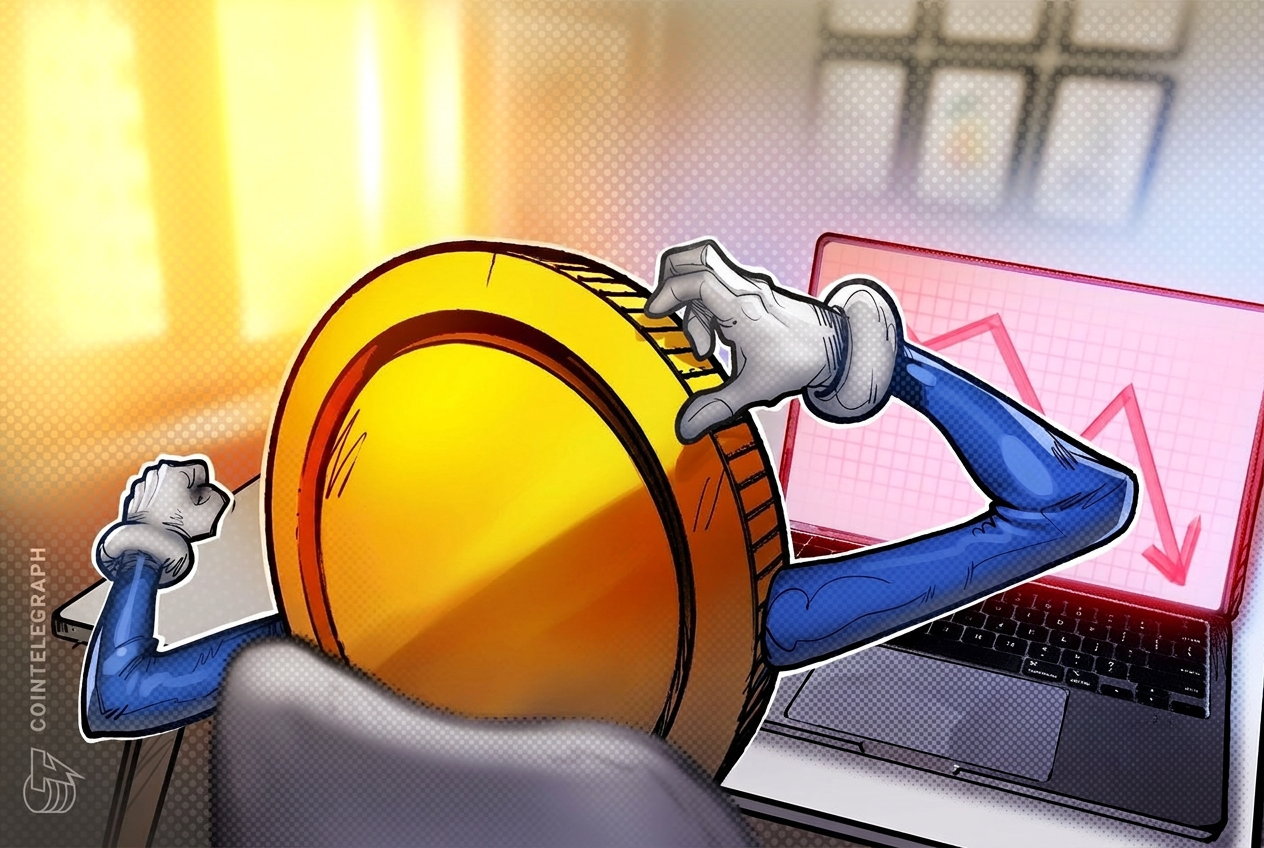
Stablecoins Are Becoming a Bank Run Risk — and Banks Know It

ccn.com2026-02-01 tarihinde yayınlandı2026-02-01 tarihinde güncellendi

Özet

Stablecoins, initially designed as digital dollar equivalents, are now seen as a potential risk for bank runs, prompting regulatory and market responses. In Washington, policymakers are debating legislation that could restrict features like rewards to prevent stablecoins from becoming deposit alternatives, which banks fear could drain hundreds of billions from their funding base. Meanwhile, stablecoins are increasingly used as payment infrastructure, with major firms like Visa and Stripe integrating them into settlement systems. The core conflict revolves around whether stablecoins should remain payment tools or evolve into deposit-like products, balancing innovation against financial stability concerns. Global jurisdictions like the EU and Hong Kong are already implementing regulatory frameworks, increasing pressure on the U.S. to act.

Stablecoins, digital assets designed to track the United States dollar, were supposed to be boring.

A dollar token. A digital cashier’s check. A way to move money without taking a view on the price of Bitcoin (BTC).

Now they are being treated as something else entirely: a live test of who gets to “own” dollars in motion, and whether banks can keep deposits from leaking out of the system.

That tension is showing up in two places at once.

In Washington, stablecoin policy has become a legislative traffic jam, with the White House reportedly convening senior banking and crypto executives to find a path forward on crypto market structure.

In markets, stablecoins are behaving less like a crypto niche and more like payments infrastructure, as major financial and fintech firms put stablecoin settlement and stablecoin payments into production tooling.

The fight looks technical—licensing, reserves, redemption rights, disclosure. The emotional core is not technical at all.

It is deposits.

Try Our Recommended Crypto Exchanges
Sponsored
Disclosure
We sometimes use affiliate links in our content, when clicking on those we might receive a commission at no extra cost to you. By using this website you agree to our terms and conditions and privacy policy.
"}' data-trk="67adf8d4f12aaec7e4808bf5" href="https://links.ccn.com/links?code=693291aa4a5bcb62319448b2" rel="nofollow" target="_blank">
Bitget<\/h3>"}' data-trk="67adf8d4f12aaec7e4808bf5" href="https://links.ccn.com/links?code=693291aa4a5bcb62319448b2" rel="nofollow" target="_blank">

Bitget

promotions
New user rewards up to 6,200 USDT.<\/strong>"}' data-trk="67adf8d4f12aaec7e4808bf5" href="https://links.ccn.com/links?code=693291aa4a5bcb62319448b2" rel="nofollow" target="_blank"> New user rewards up to 6,200 USDT.
Coins
88
Claim Offer
"}' data-trk="6899b9831836d97539c51aa6" href="https://links.ccn.com/links?code=693293fa4a5bcb6231949c97" rel="nofollow" target="_blank">
Bitunix<\/h3>"}' data-trk="6899b9831836d97539c51aa6" href="https://links.ccn.com/links?code=693293fa4a5bcb6231949c97" rel="nofollow" target="_blank">

Bitunix

promotions
Receive up to $100,000 worth of exclusive gifts for newcomers upon registration.<\/strong>"}' data-trk="6899b9831836d97539c51aa6" href="https://links.ccn.com/links?code=693293fa4a5bcb6231949c97" rel="nofollow" target="_blank"> Receive up to $100,000 worth of exclusive gifts for newcomers upon registration.
Coins
151
Claim Offer
"}' data-trk="68f8c175c334f42ea614a1a4" href="https://links.ccn.com/links?code=693294144a5bcb623194a054" rel="nofollow" target="_blank">
BTCC<\/h3>"}' data-trk="68f8c175c334f42ea614a1a4" href="https://links.ccn.com/links?code=693294144a5bcb623194a054" rel="nofollow" target="_blank">

BTCC

promotions
Get up to 10,055 USDT when you register, verify, and make the first deposit and the first trades.<\/strong>"}' data-trk="68f8c175c334f42ea614a1a4" href="https://links.ccn.com/links?code=693294144a5bcb623194a054" rel="nofollow" target="_blank"> Get up to 10,055 USDT when you register, verify, and make the first deposit and the first trades.
Coins
162
Claim Offer
Explore All Offers

Washington Tries To Break the Stablecoin Logjam

The immediate hook is political: Reuters reported the White House is set to meet with executives from major banks and crypto firms as lawmakers attempt to revive a market-structure bill that has bogged down amid open conflict between the two sectors.

The argument is about what stablecoins are allowed to become.

Banks have pushed for hard constraints on anything that makes a stablecoin feel like a better bank account, especially “rewards,” a loose category that can include issuer-paid interest, platform incentives, or yield passed through from third parties.

Crypto firms, by contrast, see restrictions on rewards as protectionism dressed up as stability policy.

In other words, the U.S. is trying to decide whether stablecoins stay in the payments lane, or graduate into a deposit-like product at scale.

Why “Rewards” Are a Red Line for Banks

Banks are not being subtle about the threat model.

A stablecoin that pays something—even indirectly—starts to compete with deposits on the feature most consumers actually care about: “Why should my dollars sit here instead of there?”

Deposits are not just a customer relationship. They are a core funding base. Banks use them to finance lending and to manage liquidity.

If deposits migrate into stablecoins, banks either shrink their balance sheets or pay up to keep customers, both of which can tighten credit and raise funding costs.

Standard Chartered put a number on the scenario in a Reuters-cited note: stablecoins could pull around $500 billion from U.S. bank deposits by the end of 2028, with regional banks most exposed.

The point is not that the figure is destiny. It is that the industry now has a “bank run” narrative with a plausible magnitude attached to it.

Rewards matter because they change behavior. A zero-yield token is easier to frame as a payments tool. A token with incentives starts to look like a money-market substitute that happens to settle 24/7.

A Bank Run, but in One Click

Traditional bank runs are slow until they are not. Stablecoin runs are designed to be fast from the start.

If users decide they would rather hold tokenized dollars than bank deposits, they do not need a branch, a wire, or business hours.

They can convert and move value instantly, any time of day, often inside the same app they already use to trade or pay.

That is the stability anxiety: not simply that money can leave, but that it can leave all at once, in a single interface, with almost no friction.

This is also why reserve composition and redemption mechanics keep returning to the center of policy debates.

A stablecoin’s promise is simple—“$1 in, $1 out”—but keeping that promise under stress depends on how liquid the reserves really are, and how quickly redemptions can be honored.

Research has also started to quantify spillovers.

A 2025 BIS working paper found stablecoin flows can move short-term U.S. Treasury yields, with outflows producing larger yield effects than inflows—an asymmetry that matters in a stress event.

Stablecoins Are Also Becoming a Payments Network

Stablecoins are scaling as settlement rails.

A Bitget Wallet onchain finance report said stablecoins processed roughly $33 trillion in on-chain settlement while total supply grew more than 50% to about $308 billion.

It frames the growth as a post-clarity wave, with regulatory frameworks rolling out across the U.S., EU, and Hong Kong, and it points to a shift in usage.

USDC is overtaking USDT in annual transaction volume, a sign the flow mix is trending toward institutional and B2B settlement rather than retail trading.

Even if you discount headline numbers, the direction is hard to miss: stablecoins are no longer “crypto plumbing.” They are increasingly payments plumbing.

That dual identity is why the policy fight is so sharp.

If stablecoins are a settlement network, policymakers worry about oversight, consumer protection, and illicit finance controls.

If stablecoins are also a deposit alternative, policymakers worry about bank funding, credit creation, and run dynamics.

Both can be true.

Payment Giants Are Quietly Building the Rails

The most consequential adoption stories are not always the loudest. They are the integrations that make stablecoins disappear behind familiar payment experiences.

Visa has been expanding stablecoin settlement, including a push to bring stablecoin settlement capabilities into the U.S. and a broader effort to position stablecoins inside institutional payments workflows.

Stripe, meanwhile, has been rolling out stablecoin payment capabilities, including support aimed at recurring or subscription-style payments, starting with USDC-based flows in initial implementations.

This is what scares banks in a slower, more structural way. A consumer does not need to “adopt crypto” for stablecoins to drain deposits.

They just need a wallet or a checkout flow that makes stablecoin settlement feel like a better version of what they already do.

When stablecoins become the invisible settlement layer, “crypto adoption” turns into “payments modernization,” and the center of gravity shifts.

Stablecoin Regulation Is Getting Clearer Elsewhere

The U.S. is not legislating in a vacuum.

Other jurisdictions have moved ahead with stablecoin regimes that set baselines for reserves, licensing, governance, and disclosure.

  • In the EU, the Markets in Crypto-Assets Regulation (MiCA) phased rollout made stablecoin-related rules applicable before the broader crypto service-provider framework, pushing issuers toward more formal compliance expectations.
  • In Hong Kong, the Hong Kong Monetary Authority (HKMA) describes a licensing regime for fiat-referenced stablecoin issuers under the Stablecoins Ordinance, implemented from Aug. 1, 2025.
  • Global standard setters have also been explicit. The Financial Stability Board’s high-level recommendations call for consistent regulation and oversight of global stablecoin arrangements, specifically because of the financial stability risk they can pose at scale.

That global momentum matters for U.S. politics.

Crypto firms can argue, credibly, that if the U.S. blocks product features too aggressively, activity will route around it.

Banks can argue, credibly, that if the U.S. allows deposit-like stablecoins without bank-grade oversight, it invites instability.

The Real Question: Who Earns the Spread on Digital Dollars?

Underneath the slogans is a very old fight in a very new outfit: who earns the economics of money?

Banks earn on the spread between what deposits cost them and what loans or assets return.

Stablecoin issuers earn on the return from reserves (often Treasuries) net of operational costs, and sometimes share economics with platforms that distribute the coins.

At scale, that is not a side business. It is a parallel model for capturing monetary plumbing profits.

That is why banks keep returning to the same line: stablecoins should not become deposit substitutes without deposit-like regulation.

That is also why crypto firms keep returning to their line: stablecoins are an upgrade to payments and should not be kneecapped to protect incumbents.

What To Watch Next

Three practical signals matter more than rhetoric:

  • How “rewards” gets defined. A narrow ban can be sidestepped via third-party incentives. A broad ban may push activity offshore or into less transparent structures.
  • Reserve and redemption standards. In stress, the mechanics matter more than the marketing.
  • Whether stablecoin settlement becomes normal business infrastructure. Visa and Stripe moving from pilots to repeatable tooling is not about hype—it is about habit formation in payments.

Stablecoins are not just “crypto money.” They are a redesign of how dollars move, and a contest over whether bank deposits remain the default place those dollars live.

And banks, very clearly, are acting like they know it.

İlgili Sorular

QWhy are stablecoins considered a bank run risk according to the article?

AStablecoins are considered a bank run risk because they can facilitate the rapid and frictionless movement of funds out of traditional bank deposits. If users decide to hold tokenized dollars instead of bank deposits, they can convert and move value instantly, 24/7, potentially causing a large-scale, rapid withdrawal of deposits that could tighten credit and raise funding costs for banks.

QWhat is the core emotional and non-technical issue at the heart of the stablecoin policy debate in Washington?

AThe core emotional and non-technical issue is deposits. The debate is fundamentally about who gets to 'own' dollars in motion and whether banks can prevent deposits from leaking out of the traditional banking system into stablecoins.

QHow do 'rewards' for stablecoin holders pose a threat to traditional banks?

ARewards, which can include issuer-paid interest or platform incentives, make stablecoins compete directly with bank deposits on a key feature consumers care about: earning a return. This can incentivize users to move their money out of bank accounts and into stablecoins, eroding the core funding base that banks use for lending and liquidity management.

QWhat major financial companies are integrating stablecoins into their payment systems, as mentioned in the article?

AVisa and Stripe are major financial companies integrating stablecoins. Visa is expanding stablecoin settlement capabilities for institutional payments, while Stripe is rolling out stablecoin payment features, including support for recurring subscriptions, starting with USDC.

QAccording to the article, what is the estimated potential impact on U.S. bank deposits from stablecoins by 2028?

AAccording to a note from Standard Chartered cited in the article, stablecoins could pull around $500 billion from U.S. bank deposits by the end of 2028, with regional banks being the most exposed to this risk.

İlgili Okumalar

Humanity Loses $31 Million in Attack, Token Price Plummets 90% Due to a Single Private Key

On June 9th, the digital identity project Humanity Protocol suffered a major security breach resulting in over $31 million in losses. According to on-chain analyst Specter, hundreds of wallets holding the project's H token were drained. The attack was confirmed by founder Terence Kwok to be caused by the compromise of a foundation member's private key. As a precaution, users are advised to avoid interacting with Humanity's cross-chain bridge or liquidity pools. The incident caused the H token price to crash over 90%, from around $0.70 to a low of $0.052, wiping its market cap from $2 billion to approximately $35.7 million. The attacker allegedly minted 100 million new H tokens and is selling them for BNB. This breach adds to existing controversies surrounding Humanity Protocol. Founded in 2024, it aimed to verify human users via palm-print biometrics and zero-knowledge proofs. However, a leaked conversation in 2025 revealed that only about 1 million of its 9 million claimed Human IDs had completed biometric verification, suggesting 88% might be bots. Furthermore, the project has faced allegations of being a repackaged product from a Chinese access control vendor, raising privacy and authenticity concerns. Founder Terence Kwok's previous venture, Tink Labs, a hotel smartphone startup that raised $170 million, failed and entered bankruptcy in 2020 after burning through its funding. The current attack highlights the persistent critical issue of private key management in crypto. Unlike smart contract exploits, a private key compromise bypasses all on-chain security mechanisms. With no user compensation plan announced yet, this $31 million breach may be a final blow to the project's credibility, already weakened by previous controversies and a heavily depreciated token.

marsbit11 dk önce

Humanity Loses $31 Million in Attack, Token Price Plummets 90% Due to a Single Private Key

marsbit11 dk önce

MicroStrategy Will Not Die in This Downturn: Reflexivity, STRC Anchoring Back to Par, and the Self-Rescue Logic of "Sell Stock, Not Bitcoin"

This article analyzes the recent sharp decline in Bitcoin and MicroStrategy (MSTR), framing it as a targeted "reflexivity" attack. The trigger was MSTR using its cash reserves to buy back convertible notes, raising market concerns about a liquidity crisis. The playbook follows George Soros's principle: market expectations can shape reality. Fears that MSTR might be forced to sell BTC caused panic selling, lowering BTC's price and worsening MSTR's financial ratios, thus reinforcing the negative narrative. The author argues that MSTR's Structured Convertible (STRC), while falling in price, is a floating-rate security that will eventually return to par value (100). The price drop reflects the market demanding a higher yield due to perceived risk, but as a floating-rate instrument, its coupon can adjust, naturally pulling the price back to par over time. This is crucial for MSTR's continued ability to raise funds. The core thesis is that MSTR's best move to counter the attack is to **issue new equity (sell shares)**, not sell its Bitcoin holdings. While selling BTC would solve the immediate cash crunch, it would destroy the company's core investment thesis and premium. It would dilute the BTC per share, likely erase the market premium over its net asset value (mNAV > 1), and worsen its debt-to-asset ratio. Issuing shares while mNAV is high (e.g., 1.25x) allows MSTR to raise cash for reserves without harming shareholder value or the "perpetual accumulation" narrative. It improves the debt ratio and reassures STRC holders, breaking the negative reflexivity cycle. In conclusion, while MSTR could survive this episode even by selling BTC, doing so would fundamentally alter its investment proposition and weaken it for future cycles. The optimal, value-preserving strategy is to sell equity to rebuild reserves and maintain the long-term growth flywheel.

marsbit12 dk önce

MicroStrategy Will Not Die in This Downturn: Reflexivity, STRC Anchoring Back to Par, and the Self-Rescue Logic of "Sell Stock, Not Bitcoin"

marsbit12 dk önce

Humanity Loses $31 Million, a Private Key Causes Token Price to Plunge 90%

On June 9th, the digital identity project Humanity Protocol suffered a major security breach resulting in over $31 million stolen from hundreds of wallets holding its H token. The attack was caused by the compromise of a private key belonging to a foundation member, leading the team to advise users against interacting with its bridge or liquidity pools. Following the incident, the price of the H token plummeted by over 90%, from around $0.70 to a low of $0.052, wiping out a significant portion of its market capitalization. The attacker allegedly minted 100 million new H tokens and began selling them for BNB. Humanity Protocol, founded in 2024, aimed to verify human users through palm-print biometrics and zero-knowledge proofs on Polygon CDK. Despite raising $50 million across two funding rounds and achieving a unicorn valuation, the project faced prior controversies. Shortly after its June 2025 token launch, reports emerged that only about 1 million of its 9 million registered IDs had completed biometric verification, suggesting 88% might be bots. Furthermore, allegations surfaced that the project might be a rebranded "shell" of a Chinese access control company, raising concerns about data privacy and authenticity. The project's founder, Terence Kwok, has a controversial business history. His previous venture, Tink Labs, burned through $170 million in funding before collapsing in 2020. The breach highlights the persistent critical risk of private key management in crypto. With no user compensation plan detailed in the initial response, the incident deals a severe blow to trust in a project already struggling with credibility issues.

Foresight News33 dk önce

Humanity Loses $31 Million, a Private Key Causes Token Price to Plunge 90%

Foresight News33 dk önce

How to Conduct Deep Research Using Claude's Dynamic Workflows

The article "How to Use Claude's Dynamic Workflows for Deep Research" discusses overcoming the pitfalls of technical research, where both humans and AI can get overwhelmed by information, leading to vague conclusions. It introduces Claude Code's new "Dynamic Workflows" feature, which automatically designs and executes task-specific workflows before starting a task, unlike simpler "planning modes." This approach incorporates validation, result convergence, and adversarial verification from the outset. The core of Dynamic Workflows is six predefined scheduling patterns that address how to decompose tasks and synthesize results: 1. **Classify-and-Act (Routing):** An agent classifies the task and routes it to the most suitable specialist agent for execution. It's precise and efficient but struggles with ambiguous tasks. 2. **Fan-out & Merge:** The task is split into parallel, independent subtasks whose results are later merged. It's fast and isolates contexts but is more expensive and challenging to synthesize. 3. **Adversarial Verification:** Multiple "challenger" agents critique a worker agent's conclusion, requiring majority approval. This counters confirmation bias and self-assessment errors but relies on verifiable facts. 4. **Generate & Filter:** Multiple agents generate many candidate solutions, which are then filtered against a rubric to output only the best. It fosters diversity but depends heavily on the filter's quality. 5. **Tournament:** Multiple agents compete on the same task, with pairwise comparisons eliminating contestants over rounds to select the best. This offers stable relative judgment but is complex. 6. **Loop:** An agent iteratively attempts a task, learning from errors and adjusting until a stop condition is met. It handles tasks with unknown scope but risks infinite loops without proper design. The author compares their own custom deep-research system, which involved multi-agent analysis and deduplication but lacked goal-oriented convergence, to Claude's built-in workflow. The official workflow adds critical layers: initial problem decomposition, credibility assessment of sources, cross-agent voting to delete weak conclusions (not just averaging), and output tightly focused on the user's original goals and actionable recommendations. This structurally addresses common AI issues like goal drift, premature stopping, context pollution, and output bias. In summary, Dynamic Workflows represent a shift from smarter single conversations to a structured research process, compressing what used to require many dialogues into 3-4 interactions, albeit at higher token cost. The author notes remaining challenges for their specific domain (blockchain research): the need for fact-based verification over official documentation, depth in truly novel interdisciplinary thinking, the practical validation of proposed solutions, and tailoring information density to the audience.

marsbit43 dk önce

How to Conduct Deep Research Using Claude's Dynamic Workflows

marsbit43 dk önce

When LPs Teach Me Investment with Doubao: A Self-Narrative of a Private Equity GP Switching Careers

When LPs Use Doubao to Teach Investing: A Transition Story of a Private Equity GP AI is making life increasingly difficult for small private equity fund managers, as a former GP of an offshore dollar fund reveals. The fund, managing tens of millions in US stocks, outperformed the Nasdaq but struggled with fundraising. Its traditional Cayman SPC/BVI structure failed to attract major Asian LPs, who now prefer Hong Kong LPF or Singapore VCC frameworks. The rise of AI-powered quantitative strategies has further squeezed the space for funds like his, which relied on subjective, discretionary investing. AI tools have leveled the information playing field, empowering LPs—often high-net-worth individuals, entrepreneurs, or family offices—to analyze investments themselves using chatbots like Doubao. This has eroded trust in GPs' expertise, leading to more frequent challenges over investment decisions and even withdrawals, especially during market rallies when retail investors sometimes outperform funds. Friction arises not necessarily from AI's capabilities but from how LPs use it. Many rely on conversational AI for validation rather than rigorous analysis, sometimes receiving misleading or hallucinated advice. While AI democratizes research, effective investing still requires discerning real insight from plausible-sounding output. Ultimately, AI is unlikely to fully replace GPs. Asset management remains a trust-based service. However, the industry must adapt. The future may see "human私募" (private equity) learning from AI and focusing more on providing value beyond pure analysis—perhaps by mastering the emotional intelligence and trust-building that machines cannot replicate.

Odaily星球日报1 saat önce

When LPs Teach Me Investment with Doubao: A Self-Narrative of a Private Equity GP Switching Careers

Odaily星球日报1 saat önce

İşlemler

Spot
Futures

Popüler Makaleler

$BANK Nedir

Bank AI: Bankacılıkta Devrimsel Bir Adım Giriş Teknolojideki hızlı ilerlemelerin damgasını vurduğu bir çağda, Bank AI, yapay zeka (AI) ve bankacılık hizmetleri kesişiminde yer almaktadır. Bu yenilikçi proje, finansal manzarayı yeniden tanımlamayı, operasyonel verimliliği, güvenlik önlemlerini ve müşteri deneyimlerini AI'nin gücüyle geliştirmeyi hedefliyor. Bank AI yolculuğuna çıkarken, projenin içeriğine, operasyonel dinamiklerine, tarihsel bağlamına ve önemli kilometre taşlarına dalacağız. Bank AI Nedir? Bank AI, yapay zekanın çeşitli bankacılık operasyonlarına entegrasyonunu hedefleyen dönüştürücü bir girişimi temsil etmektedir. Bu proje, süreçleri otomatikleştirmek, risk yönetimi protokollerini geliştirmek ve kişiselleştirilmiş hizmetler aracılığıyla müşteri etkileşimini artırmak için AI'nin yeteneklerinden yararlanmaktadır. Bank AI'nin temel hedefleri şunlardır: Bankacılık Fonksiyonlarının Otomasyonu: AI teknolojilerini kullanarak, Bank AI rutin görevleri otomatikleştirmeyi, insan kaynakları üzerindeki yükü azaltmayı ve verimliliği artırmayı amaçlamaktadır. Geliştirilmiş Risk Yönetimi: Proje, dolandırıcılık ve diğer tehditlere karşı güvenlik önlemlerini güçlendirerek riski tahmin edip tanımlamak için AI algoritmalarını kullanmaktadır. Bankacılık Hizmetlerinin Kişiselleştirilmesi: Bank AI, müşteri verilerini ve davranışlarını analiz ederek, özel finansal ürünler ve hizmetler sunmaya odaklanmaktadır. Müşteri Deneyimini İyileştirme: Chatbotlar ve sanal asistanlar gibi AI destekli çözümlerin uygulanması, kullanıcıların daha insana yakın etkileşimler yaşamasını sağlamayı hedeflemekte, bankalarla etkileşim biçimlerini devrim niteliğinde değiştirmektedir. Bu hedeflerle, Bank AI, bankacılığı daha verimli, güvenli ve kullanıcı odaklı hale getiren önemli bir oyuncu olarak kendini konumlandırmaktadır. Bank AI'nin Yaratıcısı Kimdir? Bank AI'nin yaratıcısı hakkında detaylar bilinmemektedir. Bu nedenle, mevcut bilgilerde belirli bir kişi veya organizasyon tanımlanmamıştır. Projenin başlangıcı etrafındaki anonimlik soruları gündeme getirse de, bunun iddialı vizyonu ve hedefleri üzerinde bir olumsuz etkisi yoktur. Bank AI'nin Yatırımcıları Kimlerdir? Proje yaratıcılarında olduğu gibi, Bank AI'nin yatırımcıları veya destekleyen organizasyonları hakkında da özel bilgiler açıklanmamıştır. Bu bilgiler olmadan, projenin ilerlemesini destekleyen finansal destek ve kurumsal destek hakkında bir çerçeve çizmek zordur. Yine de, böyle yenilikçi bir alanda gelişimi sürdürmek için sağlam bir yatırım temelinin önemi büyüktür. Bank AI Nasıl Çalışır? Bank AI, geleneksel bankacılık çerçevelerinden ayıran benzersiz faktörlere odaklanarak birden fazla yenilikçi alanda faaliyet göstermektedir. İşte temel operasyonel özellikler: Otomasyon: Makine öğrenimi algoritmalarını uygulayarak, Bank AI bankalar içindeki çeşitli manuel süreçleri otomatikleştirir. Bu, operasyonel maliyetleri azaltır ve insan çalışanların daha stratejik faaliyetlere yönelmelerini sağlar. Gelişmiş Risk Yönetimi: Risk yönetimi uygulamalarına AI entegrasyonu, bankaların dolandırıcılık gibi potansiyel tehditleri doğru bir şekilde tahmin etme araçlarıyla donatılmasını sağlar, böylece müşteri bilgileri ve varlıkları güvence altına alınır. Özelleştirilmiş Finansal Tavsiyeler: Müşteri etkileşimlerinden sürekli olarak öğrenerek, AI sistemleri kullanıcı ihtiyaçlarının daha iyi anlaşılmasını sağlar ve finansal kararlar hakkında özelleştirilmiş tavsiyeler sunar. Geliştirilmiş Müşteri Etkileşimleri: AI destekli chatbotlar ve sanal asistanlar kullanarak, Bank AI daha etkileşimli bir müşteri deneyimi sunar, kullanıcıların sorularını hızlı bir şekilde çözmelerine imkan tanır, bekleme sürelerini azaltır ve memnuniyet seviyelerini artırır. Bu operasyonel özellikler, Bank AI'yi bankacılık sektöründe bir öncü olarak konumlandırmakta ve hizmet sunumu ile operasyonel mükemmeliyet için yeni standartlar belirlemektedir. Bank AI Zaman Çizelgesi Bank AI'nin gidişatını anlamak için tarihsel bağlamına bir göz atmak gerekmektedir. Aşağıda önemli kilometre taşlarını ve gelişmeleri vurgulayan bir zaman çizelgesi bulunmaktadır: 2010'ların Başları: AI entegrasyonunun bankacılık hizmetlerine olan ilgisi arttı, bankacılık kurumları potansiyel faydalarını tanımaya başladılar. 2018: Bankaların temel müşteri hizmetleri ve geliştirilmiş güvenlik yönetimi için risk yönetim sistemlerinde chatbotlar gibi AI araçları kullanmaya başlamasıyla AI teknolojilerinin uygulanmasında belirgin bir artış yaşandı. 2023: AI'nin karmaşıklığı artmaya devam etti ve belge işleme ile gerçek zamanlı yatırım analizi gibi daha karmaşık görevler için üretken AI devreye alındı. Bu yıl, AI teknolojisi sayesinde bankaların sahip olduğu yeteneklerde önemli bir sıçrama yaşandı. 2024-Güncel Durum: Bu yıl itibarıyla, Bank AI yükselişte, devam eden araştırmalar ve geliştirmeler bankacılık operasyonlarındaki yetenekleri daha da artırmaya hazırlanıyor. AI uygulamalarının sürekli araştırılması, heyecan verici gelişmelere işaret etmektedir. Bank AI Hakkında Anahtar Noktalar Bankacılıkta AI Entegrasyonu: Bank AI, bankacılık süreçlerini kolaylaştırmak ve kullanıcı deneyimlerini geliştirmek için yapay zekanın benimsenmesine odaklanmaktadır. Otomasyon ve Risk Yönetimi Vurgusu: Proje, rutin görevlerin yükünü azaltmayı amaçlarken, tahmine dayalı analizlerle güvenlik çerçevelerini geliştirmeye büyük önem vermektedir. Kişiselleştirilmiş Bankacılık Çözümleri: Müşteri verilerinden yararlanarak, Bank AI bireysel kullanıcı ihtiyaçlarına yönelik özelleştirilmiş bankacılık hizmetleri sunar. Gelişime Bağlılık: Bank AI, teknolojinin sürekli evrimi ile uyumlu olmasını sağlamak ve güncel kalmak için sürekli araştırma ve geliştirme çabalarına bağlı kalmaktadır. Sonuç Özetle, Bank AI bankacılık endüstrisinde önemli bir adımı temsil etmekte, yapay zekayı kullanarak operasyonel paradigmaları yeniden şekillendirmekte, güvenliği artırmakta ve müşteri memnuniyetini teşvik etmektedir. Yaratıcı ve yatırımcılar hakkındaki bilgi eksikliklerine rağmen, Bank AI'nin net hedefleri ve işlevsel mekanizmaları, devam eden evrimi için güçlü bir temel sunmaktadır. AI teknolojisi gelişmeye ve bankacılık sektörüyle birleşmeye devam ettikçe, Bank AI finansal hizmetlerin geleceğini önemli ölçüde etkilemeye hazır durumda, bankacılıkla olan anlayışımızı ve etkileşim biçimlerimizi geliştirmektedir.

145 Toplam GörüntülenmeYayınlanma 2024.04.06Güncellenme 2024.12.03

$BANK Nedir

BANK Nasıl Satın Alınır

HTX.com’a hoş geldiniz! Lorenzo Protocol (BANK) satın alma işlemlerini basit ve kullanışlı bir hâle getirdik. Adım adım açıkladığımız rehberimizi takip ederek kripto yolculuğunuza başlayın. 1. Adım: HTX Hesabınızı OluşturunHTX'te ücretsiz bir hesap açmak için e-posta adresinizi veya telefon numaranızı kullanın. Sorunsuzca kaydolun ve tüm özelliklerin kilidini açın. Hesabımı Aç2. Adım: Kripto Satın Al Bölümüne Gidin ve Ödeme Yönteminizi SeçinKredi/Banka Kartı: Visa veya Mastercard'ınızı kullanarak anında Lorenzo Protocol (BANK) satın alın.Bakiye: Sorunsuz bir şekilde işlem yapmak için HTX hesap bakiyenizdeki fonları kullanın.Üçüncü Taraflar: Kullanımı kolaylaştırmak için Google Pay ve Apple Pay gibi popüler ödeme yöntemlerini ekledik.P2P: HTX'teki diğer kullanıcılarla doğrudan işlem yapın.Borsa Dışı (OTC): Yatırımcılar için kişiye özel hizmetler ve rekabetçi döviz kurları sunuyoruz.3. Adım: Lorenzo Protocol (BANK) Varlıklarınızı SaklayınLorenzo Protocol (BANK) satın aldıktan sonra HTX hesabınızda saklayın. Alternatif olarak, blok zinciri transferi yoluyla başka bir yere gönderebilir veya diğer kripto para birimlerini takas etmek için kullanabilirsiniz.4. Adım: Lorenzo Protocol (BANK) Varlıklarınızla İşlem YapınHTX'in spot piyasasında Lorenzo Protocol (BANK) ile kolayca işlemler yapın.Hesabınıza erişin, işlem çiftinizi seçin, işlemlerinizi gerçekleştirin ve gerçek zamanlı olarak izleyin. Hem yeni başlayanlar hem de deneyimli yatırımcılar için kullanıcı dostu bir deneyim sunuyoruz.

716 Toplam GörüntülenmeYayınlanma 2025.05.09Güncellenme 2026.06.02

BANK Nasıl Satın Alınır

Tartışmalar

HTX Topluluğuna hoş geldiniz. Burada, en son platform gelişmeleri hakkında bilgi sahibi olabilir ve profesyonel piyasa görüşlerine erişebilirsiniz. Kullanıcıların BANK (BANK) fiyatı hakkındaki görüşleri aşağıda sunulmaktadır.

活动图片