Stablecoin usage up 600% – Is USDC taking the lead from USDT?

ambcrypto2026-03-23 tarihinde yayınlandı2026-03-23 tarihinde güncellendi

Özet

Stablecoin usage on the Ethereum network has grown significantly, with active addresses surging 600% from March 2025 to March 2026, indicating deeper integration beyond speculative trading into payments and cross-border transactions. A notable shift in market preference shows USD Coin (USDC) leading with a $4.5 billion supply increase, while Tether (USDT) experienced a $2 billion contraction, reflecting a move toward perceived regulatory clarity. Despite a slight decline in exchange reserves and net outflows of $485 million, the capital is being parked rather than fully exiting, reducing immediate sell pressure and supporting short-term market stability. Overall, stablecoin liquidity is consolidating rather than expanding, with total supply at $316.45 billion.

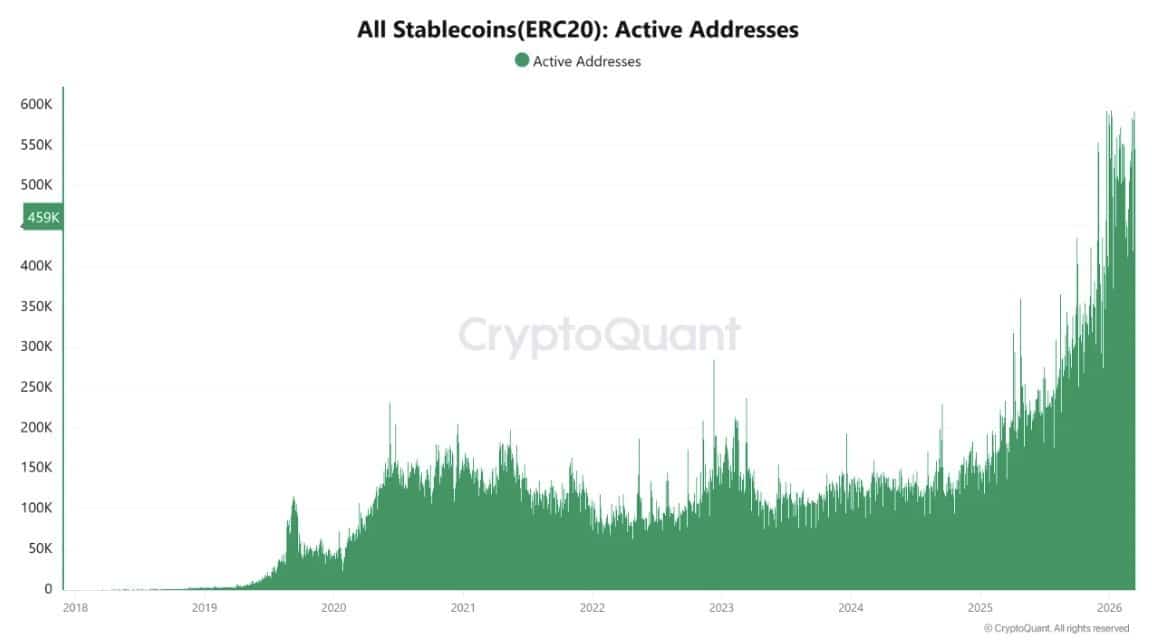
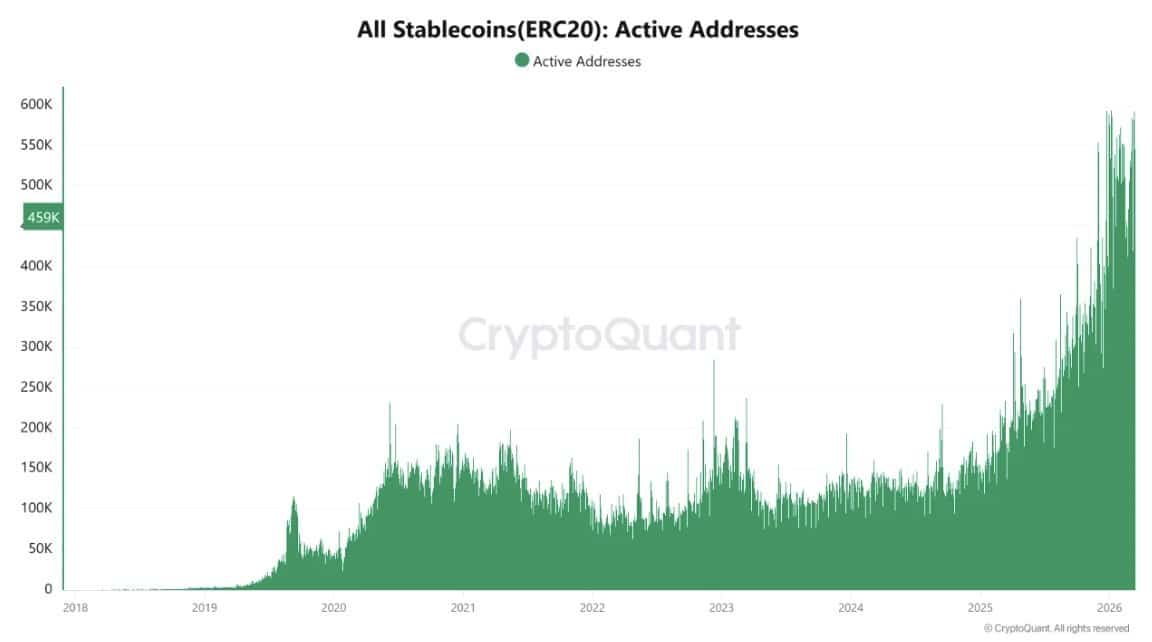
ERC20 stablecoin activity is undergoing a structural expansion, as active addresses surged from roughly 85,000 in March 2025 to nearly 600,000 in March 2026.

This 600% growth reflects more than temporary spikes, as activity has trended upward steadily since 2024. As participation broadens, the pattern shifts from isolated bursts to sustained usage, which suggests deeper integration across the network.
Source: CryptoQuant

At the same time, this rise signals a change in function.

Stablecoins are moving beyond DeFi trading pairs toward transactional infrastructure. As a result, flows increasingly reflect payments, settlements, and cross-border transfers rather than speculative positioning.

However, rising activity also implies higher dependency on stablecoin liquidity.

As usage concentrates around these assets, they become central to capital movement across markets. This dynamic suggests crypto liquidity is becoming more efficient, while also more sensitive to stablecoin-driven demand cycles.

Stablecoin flows shift as USDC gains dominance over USDT

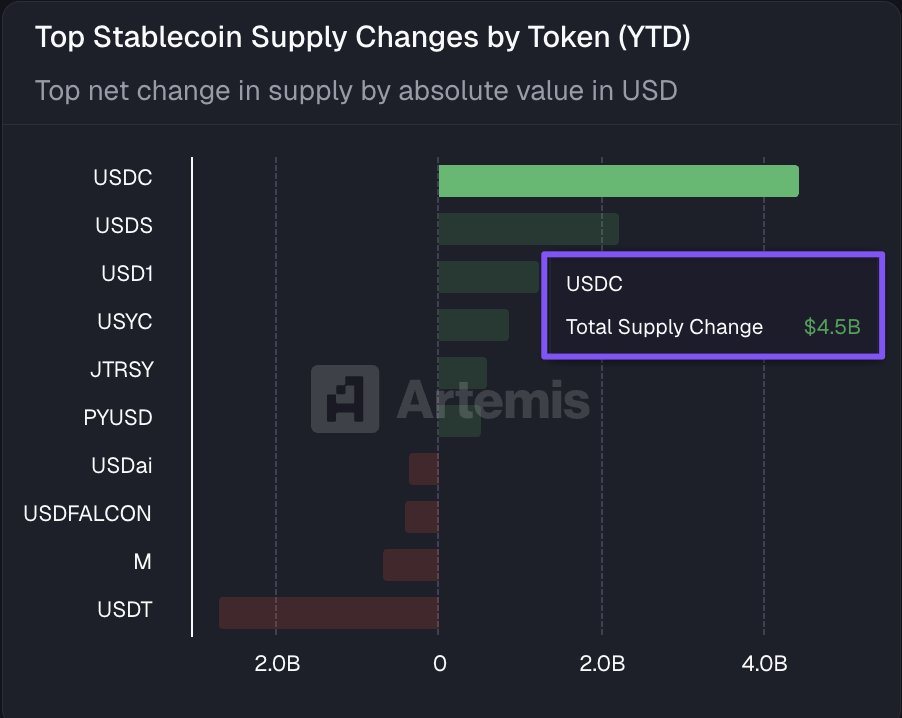
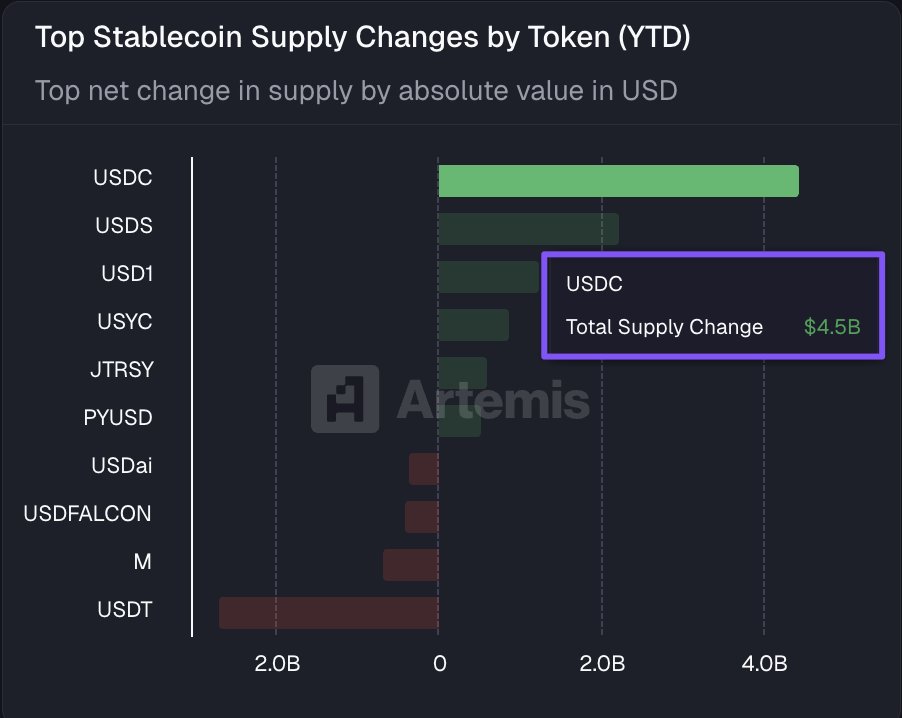
Stablecoin flows show a clear rotation in market preference, as USD Coin [USDC] leads supply expansion year-to-date.

USDC added $4.5 billion, marking the largest increase across all tracked assets. This rise reflects strong inflows during a volatile period.

Tether [USDT] moved in the opposite direction, with its supply contracting by roughly $2 billion, signaling capital outflows. As this divergence forms, it highlights a shift toward perceived stability and regulatory clarity.
Source: Artemis

This gap suggests growing usage beyond simple liquidity storage. As volumes expand, USDC strengthens its role in DeFi and payments infrastructure.

However, this concentration also implies that liquidity is becoming more centralized. As capital rotates, market dependence on fewer stablecoins increases, shaping how liquidity flows across the broader ecosystem.

Stablecoin flows show consolidation, not capitulation

Stablecoin flows reflect a cautious but balanced shift, as liquidity moves away from exchanges without fully exiting the market. Exchange Reserves stand at $65.37 billion, down 0.72% in 24 hours.

Net Outflows reached over $485 million, signaling movement toward self-custody. This suggests capital is being parked rather than actively deployed. However, this shift also reduces immediate sell pressure on exchanges, which can support price stability.

Total stablecoin supply sits at $316.45 billion, rising just 0.17% weekly. USDT grew 0.08% to $184.1 billion, while USDC fell 0.22% to $79.1 billion, showing mixed demand.

This balance implies liquidity is rotating rather than expanding, keeping markets stable in the short term while leaving momentum dependent on renewed capital deployment.


Final Summary

İlgili Sorular

QWhat was the percentage growth in active addresses for ERC20 stablecoins from March 2025 to March 2026?

A600%

QWhich stablecoin led the supply expansion year-to-date and by how much?

AUSD Coin (USDC) led the supply expansion, adding $4.5 billion.

QWhat was the change in Tether's (USDT) supply during the same timeframe?

ATether's (USDT) supply contracted by roughly $2 billion.

QWhat is the new primary function that stablecoins are moving towards, according to the article?

AStablecoins are moving beyond DeFi trading pairs toward transactional infrastructure, such as payments, settlements, and cross-border transfers.

QWhat was the total stablecoin supply and the 24-hour change in Exchange Reserves mentioned in the article?

AThe total stablecoin supply was $316.45 billion, and Exchange Reserves were $65.37 billion, down 0.72% in 24 hours.

İlgili Okumalar

A 'Overlooked' Market Event: Joint US-Japan-South Korea Intervention, Rare US Treasury Involvement, and Bessent's Quiet 'Market Rescue'?

Summary: The United States, Japan, and South Korea executed their largest coordinated foreign exchange intervention in nearly 30 years. The action targeted depreciation pressure on the Japanese yen and South Korean won. This move is seen as a significant effort by the US to stabilize the financial markets of its key allies and prevent the spillover of risks. Key details: * Japan reportedly intervened on July 30 using approximately 8.45 trillion yen (about $52.8 billion). South Korean authorities also intervened that day, selling dollars to support the won. * Notably, the US Treasury Department intervened directly in yen markets for the first time in roughly 30 years. The New York Fed, reportedly acting on behalf of the Treasury, sold euros to buy yen via Goldman Sachs and Morgan Stanley on July 31. Analysts view the use of the euro-yen pair as a way to alleviate yen pressure without adding selling pressure to the US dollar. * Prior to the action, the New York Fed conducted "rate checks" on both USD/JPY and EUR/JPY, a newer signaling tool that falls between verbal and physical intervention. The intervention is interpreted as going beyond traditional currency stabilization. Analysts, such as Michael Hartnett of Bank of America, suggest it resembles a "Price Keeping Operation" for the AI era. The core US objectives are perceived to be: 1. Preventing rapid yen depreciation from triggering a sharp rise in Japanese government bond yields. 2. Containing financial stress from spreading across Asian markets like South Korea and Japan. 3. Reducing the risk of disorderly capital flows impacting the US bond market. This coordinated action underscores the importance of Japan and South Korea as critical partners in the US semiconductor and AI supply chain. Stabilizing their financial markets is seen as vital to mitigating risks to the broader tech industry and the US market itself. The intervention coincides with market pressures, including the KOSDAQ index hitting a low since October 2022. While seen as a move to control volatility, some analysts caution it may not fundamentally reverse existing market trends.

marsbit5 dk önce

A 'Overlooked' Market Event: Joint US-Japan-South Korea Intervention, Rare US Treasury Involvement, and Bessent's Quiet 'Market Rescue'?

marsbit5 dk önce

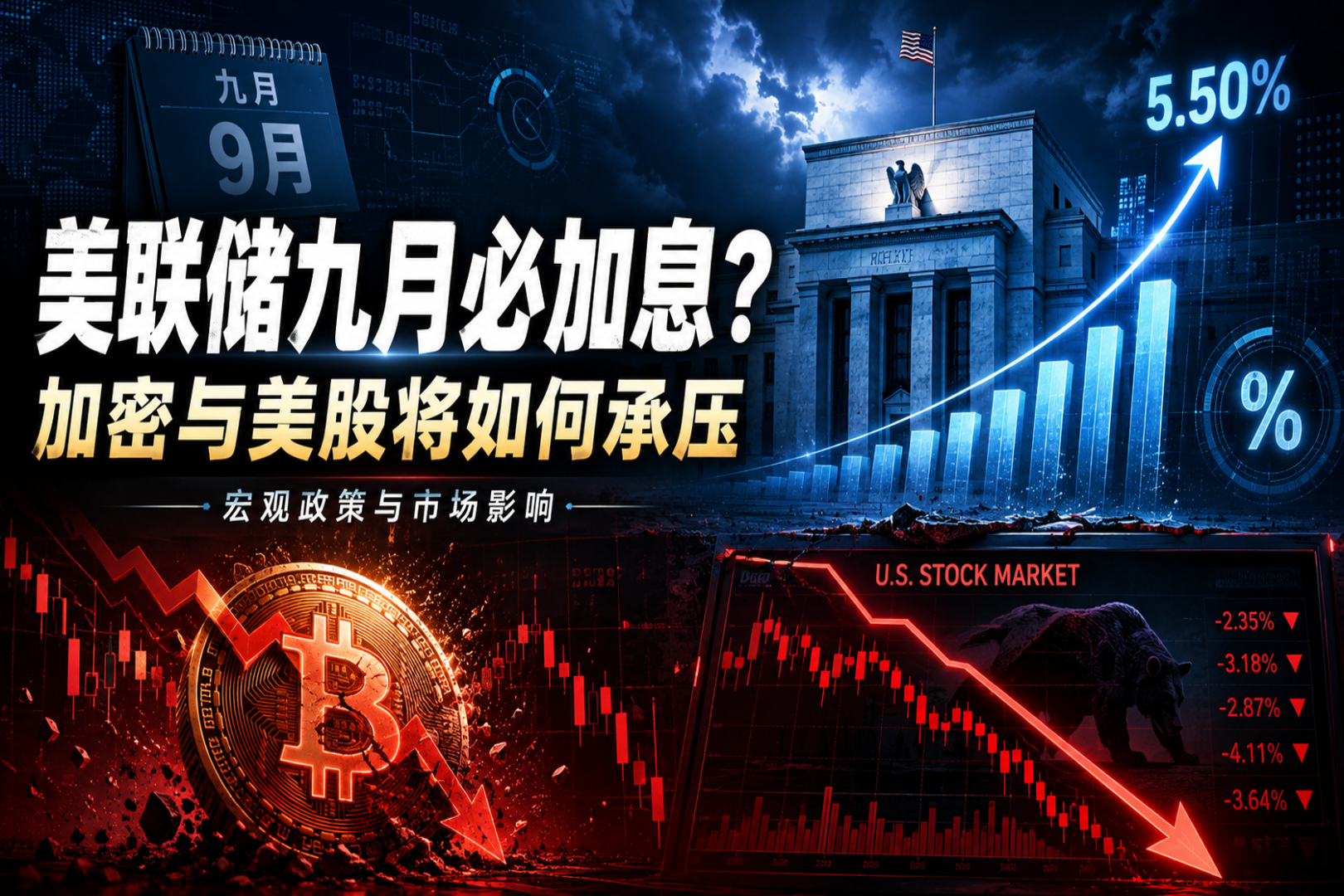
Will the Federal Reserve Definitely Raise Interest Rates in September? How Will Cryptocurrencies and US Stocks Bear the Pressure?

In early August 2024, market expectations for a September Federal Reserve rate hike surged dramatically, from below 50% to over 80%, driven by renewed inflation concerns. This shift followed a contentious July FOMC meeting where a 9-3 vote to hold rates revealed a growing hawkish faction advocating for an immediate hike, citing prolonged above-target inflation. The key catalyst is escalating conflict near the Strait of Hormuz, which has pushed oil prices up approximately 20% in July, threatening to reignite inflation. The next critical data point is the July CPI report on August 12th; a hot reading could solidify hike expectations. For crypto assets, particularly Bitcoin, this represents near-term pressure. Bitcoin continues to exhibit high-beta, risk-on characteristics, making it sensitive to tightening liquidity and higher opportunity costs. However, historical precedent suggests that if a hike is perceived as the cycle's end rather than its start, the negative impact may be brief, with markets quickly pivoting to anticipate future rate cuts. U.S. stocks, especially crypto-linked equities like Coinbase and high-valuation tech stocks, face amplified volatility. Higher rates increase discount rates in valuation models, pressuring growth stocks. This coincides with a pivotal tech earnings season where investor focus has shifted from massive AI capital expenditures to demonstrable revenue and cash flow generation. Companies with negative cash flows and weak growth narratives could see severe pressure if a September hike materializes, as financing costs would rise. Key indicators to watch include oil prices, upcoming inflation data, and Fed commentary at events like the Jackson Hole symposium.

Odaily星球日报5 dk önce

Will the Federal Reserve Definitely Raise Interest Rates in September? How Will Cryptocurrencies and US Stocks Bear the Pressure?

Odaily星球日报5 dk önce

From South Korea to the United States: Blue-Collar Jobs Are Becoming Increasingly Popular, Thanks to AI

AI is reshaping the labor market's value proposition. The traditional four-year college degree is losing its appeal as a guaranteed career path, while skilled blue-collar trades like electricians, welders, and plumbers are experiencing historic demand and wage premiums. This shift is driven by dual pressures: AI's displacement of certain white-collar roles and a booming need for physical infrastructure and data center construction. Data confirms the trend. In the U.S., vocational school revenue surged, and a significant portion of recent layoffs are AI-related. Surveys show a majority of Gen Z adults plan to pursue blue-collar work, citing better job security against AI automation. Vocational education interest has exploded recently. Experts cite a psychological shift as younger generations seek tangible, AI-resistant careers and avoid high student debt. In many cases, salaries for skilled trades now match or exceed those requiring a bachelor's degree. In South Korea, semiconductor vocational high schools boast near-total employment, with graduates securing high-paying roles at companies like Samsung. The shortage is structural, exacerbated by a retiring baby boomer workforce and massive infrastructure projects. Companies like JPMorgan Chase, Meta, and Lowe's are investing heavily in training programs. However, overcoming historical stigma and a "perception gap" around trade careers remains a key challenge to closing the talent gap.

marsbit1 saat önce

From South Korea to the United States: Blue-Collar Jobs Are Becoming Increasingly Popular, Thanks to AI

marsbit1 saat önce

İşlemler

Spot
活动图片



