SPCX Pre-Market Dips Below $150 IPO Price, But Don't Rush to Buy Yet

Odaily星球日报2026-06-23 tarihinde yayınlandı2026-06-23 tarihinde güncellendi

Özet

SpaceX's share price (SPCX) has fallen sharply, briefly dropping below its $150 IPO price in pre-market trading. The decline follows a catastrophic explosion during a Starship static fire test and was exacerbated by the company's announcement of a planned $20 billion bond issuance. This move, coming soon after its IPO raised $85.7 billion, raised concerns about SpaceX's cash burn rate and AI infrastructure spending surpassing expectations. The sell-off is also tied to a broader global pullback in AI-related stocks, with investors questioning the return on massive capital expenditures. Analysts note the initial IPO surge was largely driven by retail investor frenzy, which has now waned as sentiment turns cautious. With only about 5% of shares currently floating, the market is bracing for significant potential selling pressure when employee lock-up periods expire later this year. While some, like Cathie Wood's ARK Invest, remain long-term bullish on SpaceX's core ventures, other research firms argue the current stock price is driven by narrative rather than fundamentals and that future growth is already priced in. The next potential catalyst is the stock's possible inclusion in the Nasdaq 100 index in July.

Original | Odaily Planet Daily (@OdailyChina)

Author | Golem (@web 3_golem)
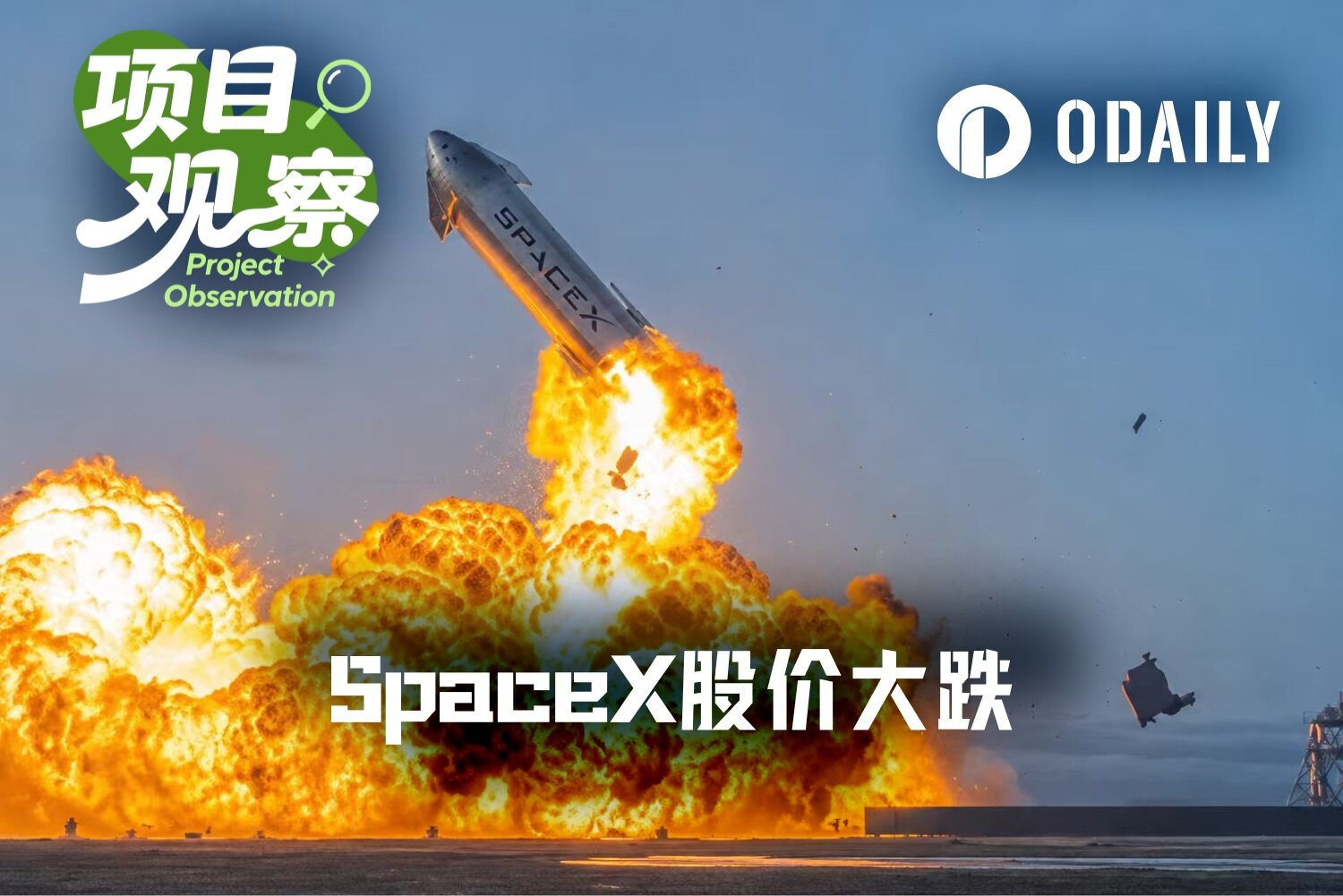
On the evening of June 18, SpaceX's Starship No. 36 exploded during its 10th static fire test, creating a huge fireball on-site. Fortunately, there were no casualties. This was SpaceX's most severe ground incident recently, with all test facilities damaged. Western media described it as a "catastrophic failure."

The "ripple effect" of this explosion quickly spread to the capital markets. From June 18 to present, SpaceX has fallen for three consecutive trading days. On June 22, it dropped over 16.43%, with its market value evaporating approximately $400 billion in a single day, setting the second-largest historical single-day market value loss record for a global company.

Worse still, SPCX has fallen below its IPO first-day closing price ($160.95). According to Hyperliquid data in after-hours trading, SPCX once dipped below the IPO opening price ($150). If it truly opens below $150 on June 23 when the U.S. stock market opens, it would mean all investors who bought and held SPCX in the secondary market would be at a loss.

Is this continuous decline due to a loss of investor confidence in SpaceX or short-term market sentiment correction? How will SpaceX's stock price move next? Odaily Planet Daily will provide a brief analysis in this article.

$20 Billion Bond Financing May Just Be the Trigger

The direct trigger for SPCX's drop of over 16% on June 22 was SpaceX's announcement that day to initiate its first senior unsecured bond offering. Although SpaceX's 8-K filing with the U.S. SEC did not disclose the specific issuance size, according to a Bloomberg report last week, SpaceX is planning a bond offering of at least $20 billion. SpaceX confirmed that the proceeds from this fundraising would be used to repay bridge loans, pay related fees, and for general corporate purposes. This bridge loan arose from SpaceX's acquisition of Musk's own company, xAI, in February this year.

However, conducting a bond financing less than two weeks after going public is not good news for investors. The additional interest expense from issuing bonds is a minor issue; it signifies that SpaceX still needs extra financing, which brings significant negative implications.

SpaceX had already raised $85.7 billion in its IPO, and according to disclosures, it also had approximately $100.8 billion in cash and cash equivalents on its books. This has become the latest point of attack for short-sellers. A company that just went public and has over $100 billion in cash on its books is now borrowing from the market again. This suggests that SpaceX's free cash flow has not yet materialized, and the cash burn rate of Starship and AI infrastructure capital expenditures have far exceeded market estimates.

CFRA Research, which has consistently given SpaceX a sell rating, also questioned the necessity of SpaceX's massive financing, commenting, "With Elon Musk, you never know what's going on in his mind."

Well-known tech hedge fund manager Dan Niles also posted on the X platform, stating that SpaceX's bond issuance and the compute power agreement with Reflection AI might remind investors that the market now has another ultra-large-scale AI competitor requiring massive financing. He had previously expressed concerns about its high valuation multiple times.

Impacted by the Global Pullback in AI Concept Stocks

The announcement of bond financing might only be the trigger for SpaceX's decline; its stock price pressure is also impacted by the global correction in AI concept stocks.

On June 23, not only did U.S. AI concept stocks close lower, but AI sectors in other global markets were also correcting. On June 23, South Korea's KOSPI became the worst-performing major Asian stock index, falling over 9%. The Korean stock market triggered a circuit breaker in the morning and continued to fall in the afternoon; SK Hynix and Samsung Electronics both dropped over 12%. Meanwhile, Hong Kong's AI leaders also plunged, with MINIMAX down 15% and Zhipu down over 9%. Mainland China's A-share four major indices also collectively fell in the morning session.

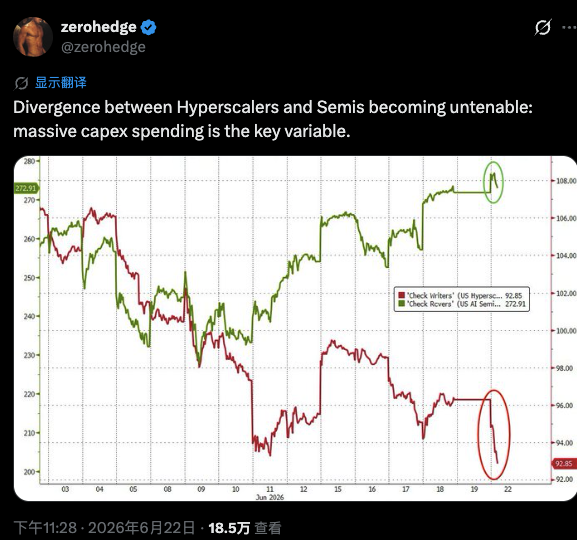
The global pullback in AI concept stocks is mainly because investors are beginning to worry that AI infrastructure investments are too large, while the commercial return cycle is too long. Whether capital expenditures will ultimately yield corresponding returns is a concern. SpaceX is also seen as one of the representative companies of this logic, with investment scale far outpacing the speed of commercial returns, naturally leading to a sharp drop in its stock price.

U.S. financial media zerohedge posted on the X platform on June 22, stating that the divergence between hyperscale cloud providers and semiconductors is intensifying, with massive capital expenditures being the key factor.
Retail Buying Dries Up, Lock-up Expiration Negative Anticipated Early

Since its listing, SpaceX has been the most popular stock among retail investors in the U.S. market. With initially less than 5% of shares floating, the SPCX stock price was essentially inflated by retail investors. According to Vanda Track statistics, retail investors net bought $405 million worth of SPCX in its first five trading days. Retail buying volume for SPCX had surpassed their combined buying volume of all other "Magnificent Seven" stocks during the same period—NVDA, MSFT, AMZN, META, GOOGL, and GOOG combined for only $278 million.

However, retail buying cannot serve as long-term support for SPCX's stock price. On the contrary, the more aggressive the initial retail buying, the faster the momentum dissipates once those who truly wanted to buy have done so and sentiment cools.

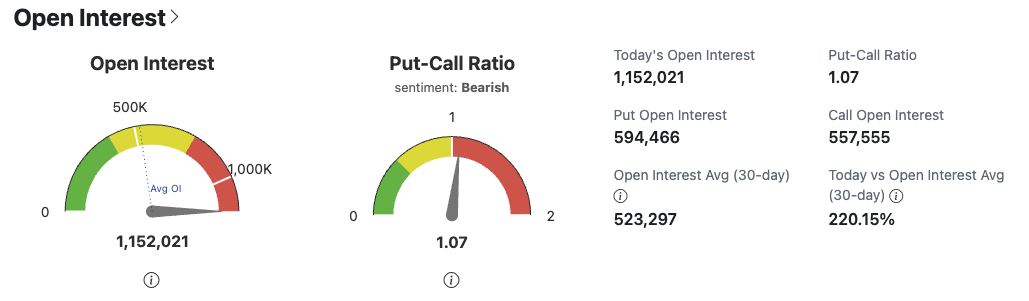
SpaceX options trading began on June 16, with bullish sentiment dominating initially. However, according to OptionCharts data, the current Put-Call Ratio for SPCX is 1.07. From a sentiment perspective, investors are already leaning neutral to bearish. While it's not a consensus bearish view yet, it at least proves that retail investors are starting to become timid.
This sharp decline in SPCX has occurred with only 5% of shares floating. What will happen to SPCX when the lock-up period expires? To some extent, the current stock decline is also an early realization of the negative impact from the lock-up expiration. Investors might be waiting to re-enter their positions after SpaceX's first round of share unlocks.

According to regulations, after SpaceX releases its Q2 earnings report in mid-August, 20% of shares will be unlocked. If the stock price rises 30% above the IPO price and meets this standard for 5 out of 10 trading days, an additional 10% can be unlocked.

22V Research strategist Jeff Jacobson stated that insiders might sell up to 44% of SpaceX shares before early September, which would increase the current float by approximately 900%.

SpaceX's next potential positive catalyst is its possible inclusion in the Nasdaq 100 index in July. However, due to three consecutive days of declines, investor panic regarding SpaceX has outweighed anticipation for this potential positive news.

Bull and Bear Arguments

Different from the first week of listing, the market's bearish view on SpaceX now dominates. The main bull and bear arguments are as follows.

Correction After Shorting Tools Become Available; Valuation Already Reflects Future Growth

On June 18, after SpaceX announced a $60 billion equity acquisition of Cursor, the well-known independent investment research firm Morningstar not only did not raise its expectations for SpaceX's AI business but further lowered its fair value estimate from the previous $63 to $62. They believe that, without substantive quarterly financial reports to support it, the current stock price is entirely driven by narrative.

Future Fund co-founder Gary Black previously pointed out that before SpaceX options trading began, SpaceX's trading logic was completely detached from fundamentals."It traded more like a meme stock than a fundamentally-driven company." Therefore, the current plunge is an inevitable correction after shorting tools became available.

On June 22, the major U.S. investment bank KeyBanc Capital Markets (KBCM) gave SPCX a Neutral rating. Although it did not provide a target price, its analysts stated that SpaceX's current valuation already fully reflects future growth, and the stock price could be halved. While there are long-term growth drivers, a lot of the positive news is already "priced in."

Cathie Wood Becomes a Firm SPCX Bull

Dusk witnesses devout believers. Cathie Wood-led ARK Invest is not only a Bitcoin bull but now also one of SpaceX's most steadfast bulls. On SpaceX's IPO day, ARK Invest aggressively bought approximately 3.3 million shares, with a holding value exceeding $500 million on that day. On June 22, the day SPCX plunged, ARK bought about 210,000 shares of SPCX (worth approximately $38.9 million) through several of its ETFs (including ARKK, ARKQ, etc.).

Previously, in 2024, ARK's model estimated SpaceX's enterprise value would reach $2.5 trillion by 2030, approaching $3.1 trillion in an optimistic scenario. At that time, ARK's model corresponded to a company that was not yet public, with a valuation of approximately $180-$350 billion. Now, SpaceX has successfully gone public, and its market value once approached ARK's model estimate from back then. ARK's decision to increase its position at this time perhaps reflects its long-term optimism towards SpaceX's disruptive innovations like reusable rockets, Starlink, and the space economy.


İlgili Sorular

QWhat is the main reason why the article advises caution against buying SPCX stock after its recent price drop?

AThe article advises caution primarily due to several concerning factors: a 'disastrous' Starship test explosion affecting investor sentiment, an unexpected $20 billion bond issuance so soon after the IPO suggesting significant ongoing cash burn, a global pullback in AI-related stocks, the exhaustion of initial strong retail investor buying momentum, and the upcoming threat of a massive increase in the public float as employee stock lock-ups expire.

QHow did the 'disastrous' Starship test failure on June 18th impact SpaceX's market value?

AThe Starship test explosion on June 18th contributed to a three-day decline in SpaceX's stock (SPCX). On June 22nd alone, SPCX fell over 16.43%, wiping out approximately $400 billion in market value, which the article states is the second-largest single-day market cap loss in corporate history.

QWhat did the announcement of a bond issuance reveal about SpaceX's financial situation, according to the article?

AThe announcement of a potential $20 billion bond issuance, coming less than two weeks after the $85.7 billion IPO and while the company reportedly had over $100 billion in cash, signaled to investors and critics that SpaceX's free cash flow is not yet positive. It suggested that the capital expenditure for Starship development and AI infrastructure is far exceeding initial market expectations.

QWhy is the upcoming employee stock lock-up period a significant concern for SPCX's stock price?

AThe lock-up expiration is a major concern because currently only about 5% of SpaceX's shares are publicly traded. Analysts cited in the article estimate that insiders could sell up to 44% of their shares after the lock-up, potentially increasing the public float by around 900%. This massive potential supply of new shares could put severe downward pressure on the stock price.

QWho is cited as a major institutional buyer of SPCX despite the recent sell-off, and what is their rationale?

ACathie Wood's ARK Invest is cited as a major institutional buyer. ARK purchased approximately 330,000 shares on the IPO day and bought an additional 210,000 shares during the significant sell-off on June 22nd. Their rationale, based on past models, is a long-term belief in the transformative potential of SpaceX's core businesses: reusable rockets, Starlink, and the broader space economy.

İlgili Okumalar

The Changing Landscape: What Are Crypto VCs Experiencing?

Title: The Shifting Landscape of Crypto Venture Capital The era of dedicated crypto venture capital funds is undergoing a significant transformation. Once essential for navigating the sector's complexity and high risk, these specialized funds are now facing an identity crisis as the market matures. This shift mirrors historical patterns in other specialized investment classes like cleantech and SPACs, where initial information advantages dissipate as technologies become mainstream and integrated into existing industry frameworks. The article argues that crypto is reaching a critical inflection point, transitioning from a "building phase" to an "integration phase." Major players like Stripe, BlackRock, and Visa now engage with crypto not for its novel mechanics but as a foundational financial infrastructure. Their needs—regulatory compliance, banking partnerships, distribution channels—align with traditional fintech, a domain easily understood by large, generalist funds like Sequoia and Founders Fund. This evolution creates a "barbell effect" within the VC landscape. On one end are massive, diversified platforms that can incorporate crypto as one vertical among many. On the other are small, nimble funds focused on niche, experimental projects. The middle ground—medium-sized dedicated crypto funds—is being squeezed out. Their typical fund size makes it impossible to generate sufficient returns solely from early-stage crypto bets, yet they cannot compete with giants for later-stage deals. Consequently, leading crypto-native firms like Paradigm and Framework Ventures are expanding into AI, robotics, and other sectors, driven partly by LP pressure for better returns amid a broader VC DPI crisis. Others, like Dragonfly and a16z, have narrowed their crypto focus predominantly to financial infrastructure like stablecoins, reframing the sector's core narrative. For crypto entrepreneurs, this consolidation presents challenges. While generalist funds offer larger checks and broader resources, crypto projects now compete fiercely with AI for attention and capital within these firms. Furthermore, the long-term, non-commercial foundational work that built the ecosystem—funded by dedicated crypto VCs—is less likely to attract generalist capital focused on direct returns. The conclusion is that "crypto investor" as a standalone category is becoming obsolete, akin to "internet investor." Crypto is becoming a baseline infrastructure layer. The future will see a barbell structure: large-scale growth financing handled by generalist funds, while pioneering, speculative projects are funded by small, specialized vehicles. The dedicated crypto funds of the 2017-2021 boom, which incubated core infrastructure, are giving way to this new, bifurcated reality.

Foresight News13 dk önce

The Changing Landscape: What Are Crypto VCs Experiencing?

Foresight News13 dk önce

As Consensus Accelerates, What Are Young Investors Betting On?

Title: As Consensus Forms Faster, What Are Young Investors Betting On? In the rapid evolution of tech investment, a new generation of young investors is navigating a landscape where AI, robotics, commercial aerospace, and quantum computing are advancing simultaneously. Traditional investment logic based on financial models is giving way to a need for deep technical understanding and the ability to act before industry consensus forms. An analysis of trends from the "WAIC FUTURE TECH" list of young investment leaders reveals key shifts in focus. The first major trend is the movement of AI from the digital screen into the physical world. Investment is shifting from large language models and chatbots towards embodied AI, robotics, AI hardware, and edge computing. While demonstrations generate excitement, the real challenge lies in achieving scalable, reliable, and cost-effective delivery in complex real-world environments like factories and logistics. Success depends not just on algorithms but on the integration of sensors, actuators, and control systems. Second, the competitive focus for large models is moving beyond raw capability toward building an "intelligence flywheel." The goal is to create self-reinforcing systems where user interaction generates data, improving the model, which in turn enhances the user experience and attracts more engagement. Companies that successfully embed AI into workflows to create these closed-loop systems can build lasting value that isn't easily erased by the next model upgrade. Third, facing a potential bottleneck in high-quality human-generated data, investors are looking at new underlying technologies. Reinforcement learning and self-play, as demonstrated by AlphaGo Zero, offer paths for AI to generate its own experience. Scientific foundation models, which aim to build general AI capabilities for fields like life sciences and materials discovery, represent a non-consensus direction that could unlock new frontiers of knowledge and data. Finally, in deep-tech areas like quantum computing, commercial aerospace, and space-based infrastructure, patient capital is essential. These fields have long, uncertain development and validation cycles involving complex engineering, supply chains, and regulations. Investment here requires a long-term view, focusing on foundational team capabilities and the eventual emergence of market demand, even if commercial returns are distant. Collectively, these trends illustrate how young investors are adapting to a new era. They are learning to make earlier, technically-informed judgments, balance hype with real-world viability, and provide the patient capital needed to build the deep-tech foundations of the future.

marsbit41 dk önce

As Consensus Accelerates, What Are Young Investors Betting On?

marsbit41 dk önce

Can Japan Buy Growth with AI? Will the Bond Market Believe It?

Japan's cabinet has introduced the 2026 Basic Policy on Economic and Fiscal Management and Reform, shifting its primary fiscal target. The new framework moves away from the traditional annual primary balance goal and instead prioritizes a stable reduction of the debt-to-GDP ratio. This change is tied to a strategy of increased "responsible proactive fiscal" spending, aiming to boost long-term growth through investments in strategic sectors like AI, semiconductors, energy, and robotics. The government estimates total public and private investment in 62 key technologies could exceed 370 trillion yen by 2040. The market reaction has been mixed and cautious. While equity markets may respond to policy signals, bond markets are focused on fiscal credibility. Concerns center on whether the weakening of the clear primary balance anchor could lead to looser fiscal discipline. If investors doubt that these strategic investments will generate sufficient productivity gains, tax revenue, and nominal growth to outpace rising interest costs, they may demand higher yields on Japanese Government Bonds (JGBs). Recent volatility in the yen and JGB yields, with the 10-year yield briefly reaching 2.9%, reflects this skepticism. The success of this new framework hinges on two factors: whether Japan can achieve a nominal growth rate consistently higher than its long-term interest rates, and whether future budgets demonstrate disciplined control over bond issuance. The government's narrative is that strategic investment is essential to break Japan's cycle of low growth, aging, and labor shortages. However, the bond market will continuously assess the credibility of this plan, pricing the risk that it may represent fiscal expansion rather than a viable growth strategy.

marsbit1 saat önce

Can Japan Buy Growth with AI? Will the Bond Market Believe It?

marsbit1 saat önce

İşlemler

Spot
活动图片




