Some Thoughts on This Trade During the Meta $1.4 Trillion Ruling

marsbit2026-08-20 tarihinde yayınlandı2026-08-20 tarihinde güncellendi

Özet

During a trial where Meta faces a potential penalty range from $400 million to $1.4 trillion—a difference of five orders of magnitude—the company's stock has underperformed the S&P 500 by roughly 8 percentage points, shedding about $110 billion in market value. The final amount will be determined solely by Judge Yvonne Gonzalez Rogers, as this is a bench trial with an advisory jury. While some might consider short-term options to bet on the ruling date, such a strategy is mathematically challenged and costly due to timing uncertainty and elevated implied volatility. A more fundamental view suggests Meta's current valuation, trading at approximately 16.9 times forward earnings—below its historical average—is applied to artificially depressed profits due to heavy AI infrastructure investments. Even a worst-case regulatory outcome, such as restrictions on data collection from teens, might be less severe than perceived, as Meta's core asset is its advertising monetization engine, not merely owning a young user base. The article contrasts this event with the Google Chrome remedy ruling, highlighting differences in legal posture and settlement dynamics. The author describes their analytical approach, which includes monitoring court dockets via automated tools, prediction markets, insider filings, and options flow to estimate ruling probabilities and timing, rather than relying on news summaries. The piece concludes that owning Meta stock at its current multiple offers a "free opt...

Author: Balder

Compiled by: TechFlow Deep Tide

Deep Tide TechFlow Introduction: A lawsuit where the potential fine spans five orders of magnitude and rests solely in the hands of a judge is causing Meta's market value to steadily bleed during the trial. The author isn't suggesting you chase lottery-ticket options on the ruling day. Instead, they dismantle why such strategies fail and point out what might be genuinely mispriced: Meta's earnings multiple and its advertising machine. For investors focused on tail risks and event-driven plays in tech giants, this piece offers a cooler, data-driven perspective.

Tuesday morning, Oakland. A California state lawyer stood before eight jurors and said two words to Meta:

“Profits won.”
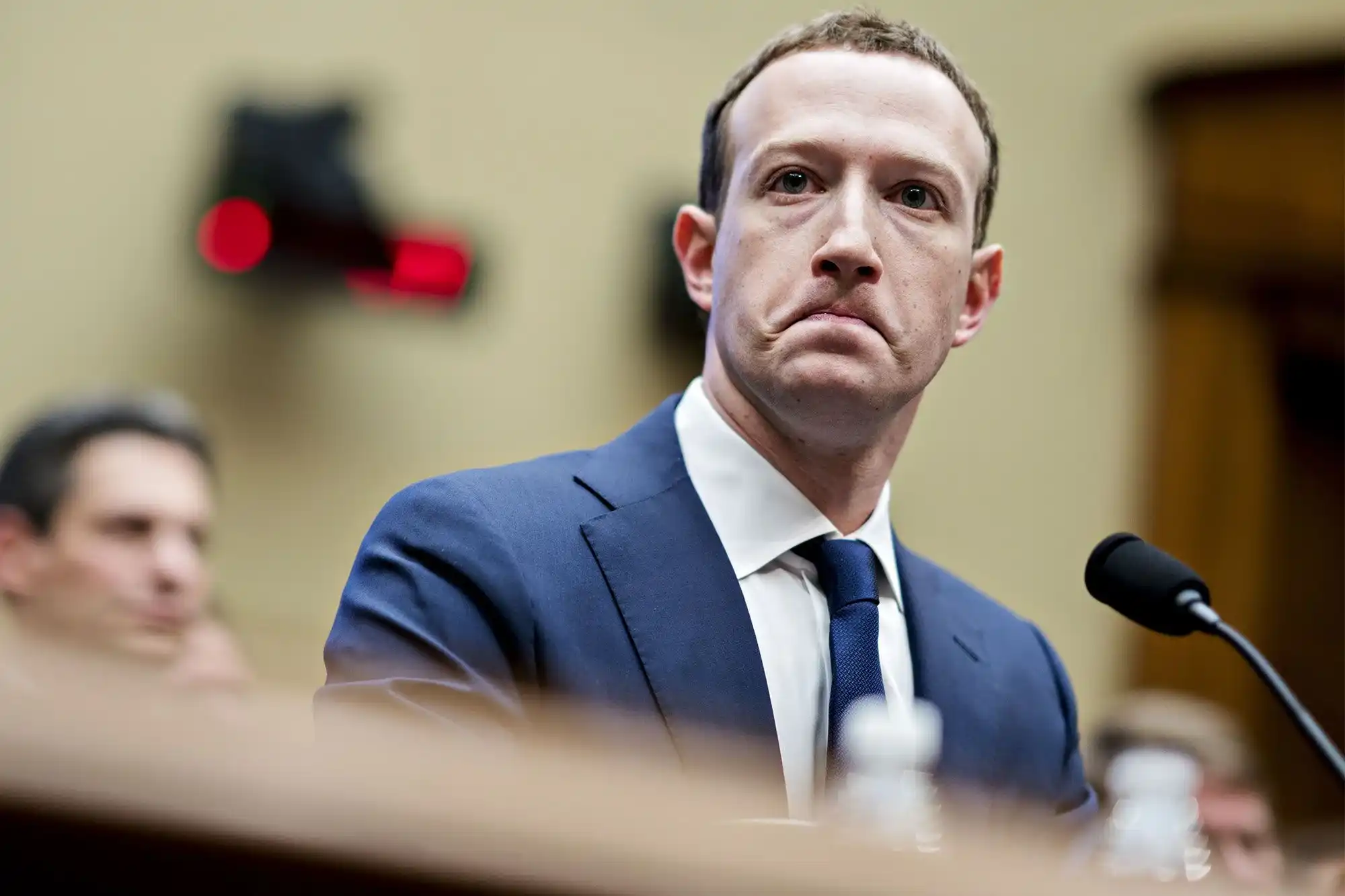
Behind those two words lies the largest fine ever sought in U.S. consumer protection history: up to $1.4 trillion.

Meta's counter-offer is $4 million.

That's a five-order-of-magnitude gap. It represents the largest valuation uncertainty hanging over any mega-cap stock on the planet right now. It will be resolved by one person, in one document, on one date that no one will announce.

The tape already tells a story
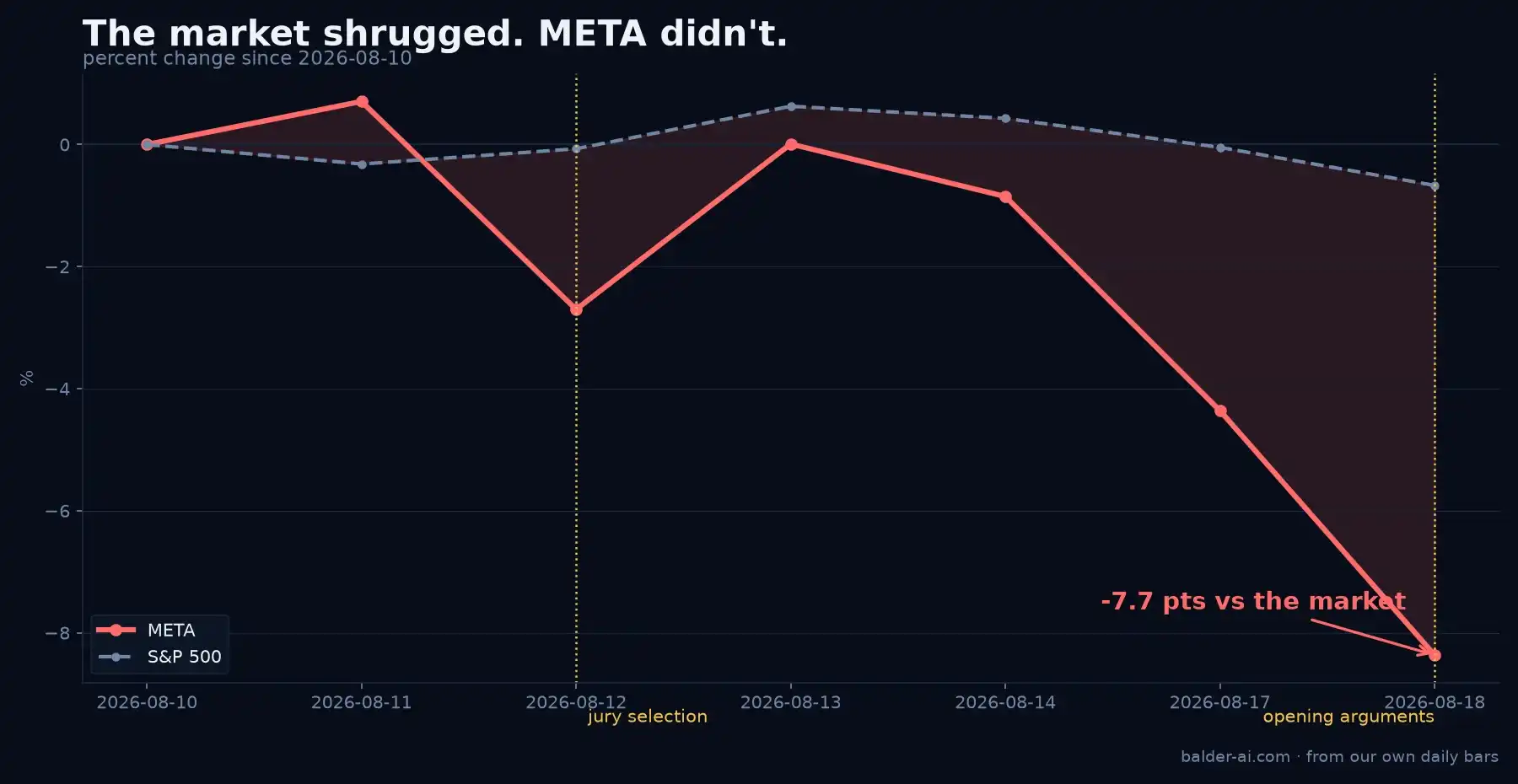
META vs. S&P 500 performance since jury selection

Since the last closing price before jury selection: META −8.4%. S&P 500 −0.7%.

This isn't a tech sell-off, nor is it rate volatility. Adjusting for the broader market, you see roughly 8 percentage points of pure, company-specific bleed—about $110 billion of value walking out the door over five trading sessions.

The market is voting. It just hasn't decided on the amount yet.

What's really being decided

State of California et al. v. Meta Platforms, Inc. (Case No. 4:23-cv-05448-YGR), part of MDL 3047, is being heard by Judge Yvonne Gonzalez Rogers in the U.S. District Court for the Northern District of California.

Four states filed under consumer protection laws. Twenty-nine more joined with federal child privacy claims. The allegation in one sentence: Instagram was designed to be addictive to minors, and Meta said one thing in public and another in private.

Here’s a detail almost no one has noticed.

This is an advisory jury. Those eight people aren't deciding the case. They only answer factual questions. Gonzalez Rogers decides liability and sets the amount herself.

Think about what that excludes. Normally, the market would wait for the jury verdict and price accordingly—that's a readable anchor. There’s no verdict anchor here. Just one judge, a blank space between $4 million and $1.4 trillion, and her signature.

She has already dismissed both ends: $4 million “wouldn't be a slap on the wrist,” and the trillion-dollar ask could seem unreasonable to the jury. The states' own lawyers have since floated that $200 billion might be more likely.

So the question isn't “will there be a fine.” The question is where it lands on a five-order-of-magnitude scale. And that document has only one reader.

The Google trade, and why only half of it fits
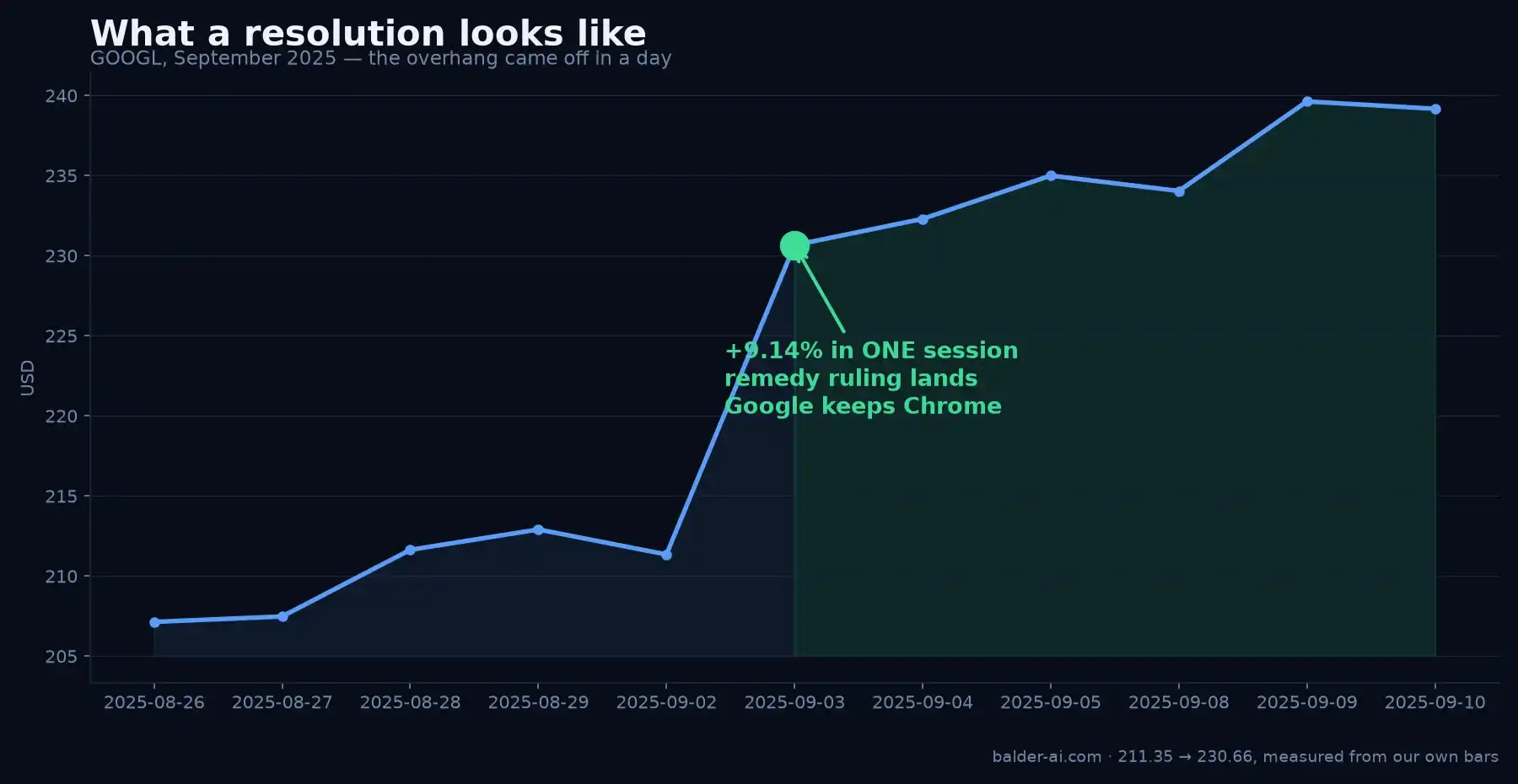
GOOGL, September 2025

September 3, 2025. Alphabet closed up 9.14% in a single day—in our charting, from $211.35 to $230.66. About $234 billion in market cap came back in one session because Judge Mehta's remedies ruling let Google keep Chrome. The feared outcome was taken off the table; the overhang cleared in one go.

That's the pattern. For a mega-cap stock under a legal shadow, the resolution itself is the event—not the testimony, not the closing arguments. It's the filing.

Now let me argue against my own analogy, because it fails in three places:

The posture is different. Mehta was ruling on remedies after liability was already decided. Oakland will decide liability and penalty together. The door is wider, and it swings both ways.

A settlement won't produce a number. Snap settled. TikTok settled during jury selection. Both were confidential. If Meta settles, you get a headline and a shrug, not a 9% up day.

It's not symmetrical. Google went up because the outcome was more lenient than the market had priced. A fine that comes in above the priced level shoves violently the other way.

I'm not telling you which way it will go. No one knows—probably including the judge herself.

So, about that 100x

Everyone wants to buy an expiring call on the ruling day, catch the move, and retire. Let me do this math out loud, because it's more interesting than the fantasy.

A six-week trial is about 30 trading days. The ruling lands on only one of them. And that date isn't announced.

Buying one lottery ticket every day and waiting:
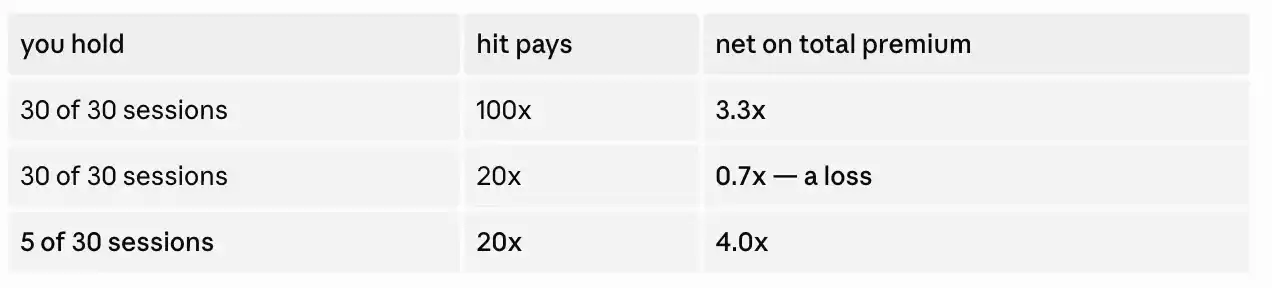
Contrast the last row with the first two.

Five well-chosen days, hitting 20x each, beats thirty days of buying, hitting 100x each.

The size of the payoff almost doesn't matter. The wrong days you have to carry are everything. And the “shotgun and pray” approach dies in two ways even if you're right about the direction. The ruling lands after the close or before the open, so your 0DTE option might expire the day before the move. Also, implied volatility facing a known pending event is already bid up. You're buying lottery tickets at retail.

Options on binary legal events mostly expire worthless. If you can't afford to lose the premium, this isn't a trade; it's a donation.

Why you don't actually need the ruling
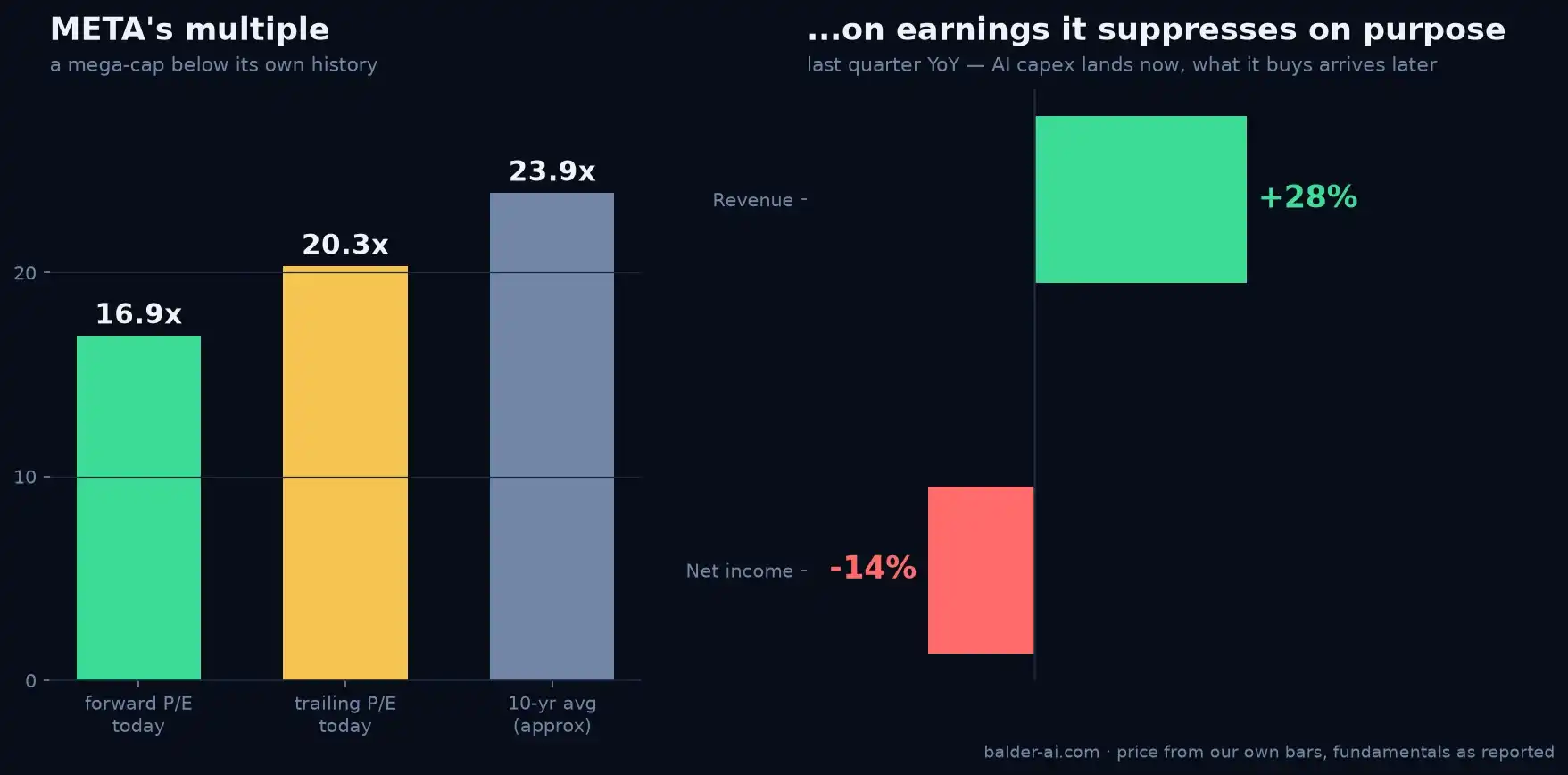
META's valuation multiple, and the earnings it's depressing

As of Monday's close, META traded at about 16.9x forward earnings, below its own ten-year average—and the trial has taken another 9% off since jury selection.

Now look at what those earnings are. Last quarter: revenue +28%, net income −14%.

Top line compounding, bottom line going backward because Meta is spending heavily on AI infrastructure and models. Capex hits the P&L now; the things it buys arrive later. So this 17x isn't 17x on harvested earnings. It's 17x on artificially depressed earnings. If those investments yield any return, the real multiple is even lower.

And the scariest-sounding outcome is less scary than it sounds.
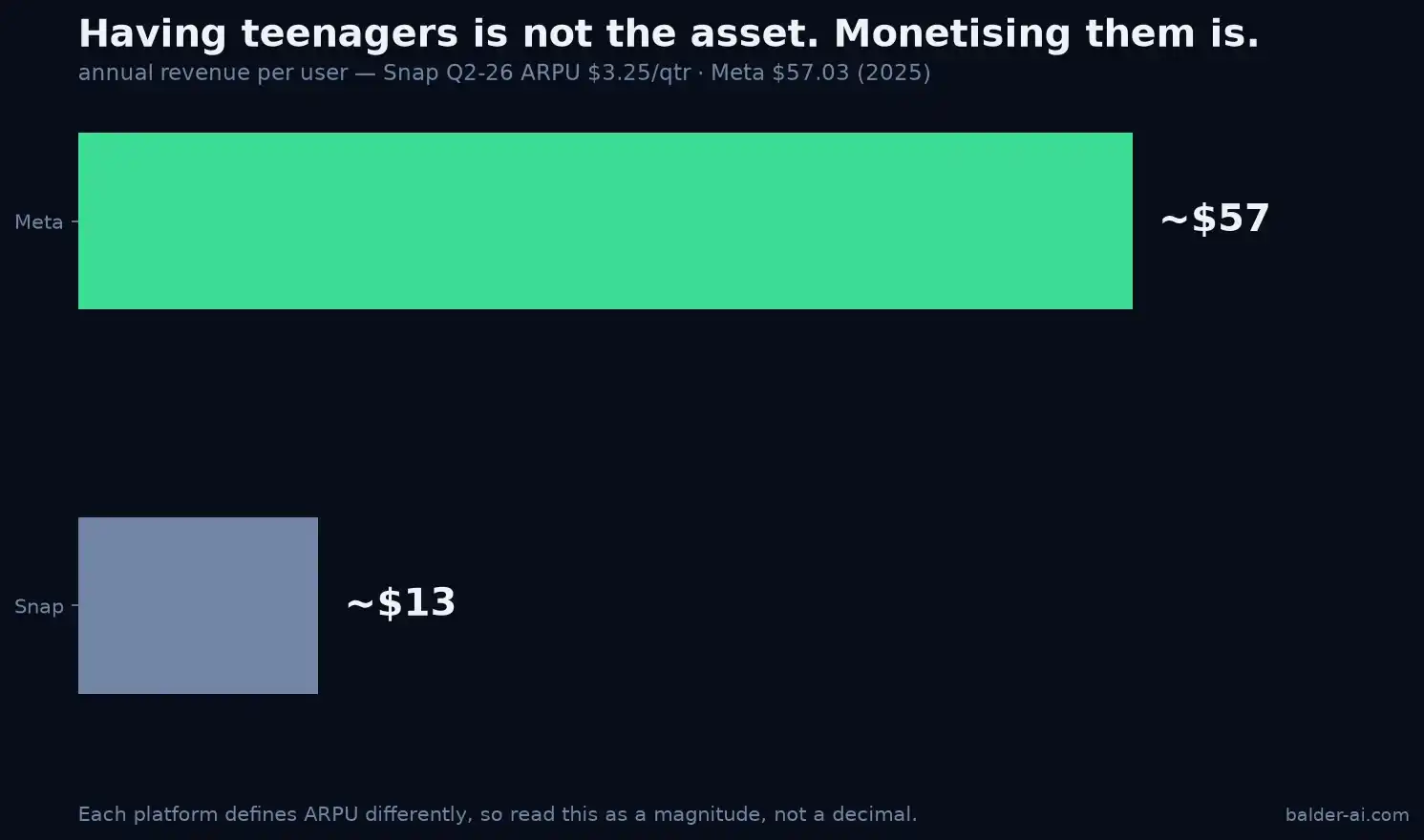
Owning teens isn't the asset

Suppose the court orders Meta to stop collecting data from users under 18 and rebuild the teen experience. How bad is that?

Snap owns those teens. Has for a decade. Snap's average revenue per user last quarter was $3.25—about $13 a year. Meta's figure is around $57. Snap spends nearly half what Meta does per daily active user and earns one-fifth the revenue per user.

Owning teens isn't the asset. The machine that turns attention into advertiser dollars is the asset. Teens are also the least valuable reach users—lowest revenue, lowest purchase intent.

So the cost to the short thesis is compliance, engineering, and some engagement. Not fatal for an advertising system serving ten million advertisers who have no comparable alternative.

This changes the nature of the trade.

A 1DTE call is a pure timing bet with no floor.

Owning a stock at 17x on depressed earnings,

means the ruling becomes a free option attached to the business—

it could revalue you in one session,

and costs nothing to hold if it doesn't.

These two aren't the same trade. One has a floor.

How I'm actually running this

One small thing illustrates everything.

I'm also tracking the Google ad tech remedies case before Judge Brinkema—

liability decided, only remedies left.

Every article says the ruling is expected “early 2026.”

I checked the docket: the last substantive filing was in June.

Since then, all routine procedural filings.

The ruling isn't out.

If you just read the news, you'd have been waiting since spring.

That's the difference between reading reports and reading the source.

But there's a problem with reading the source.

These two cases combined have 5,834 filings.

The Meta docket alone has 3,893, and court days mostly add more.

No human can read that.

No one sits down every morning,

scans every exhibit list, every interim appearance motion, every trial transcript across a dozen cases,

just to find the four that matter.

So I don't read. An agent loop reads.

That's the entire reason this workbench exists.

Every filing is read and classified the moment it's submitted—

is this routine procedure, or a key event?

A model turns four hundred words of legal boilerplate into one line of plain English,

and judges whether it changes anything.

“Scheduling order” and “Minute Entry: Jury Trial began August 18, 2026”

are not the same kind of event as an attorney withdrawal,

and a machine can tell at 3 a.m. and doesn't get bored.

Alongside that, a command-line tool.

Point it at any case, get live status in seconds—

what was filed, by whom, when,

and what's changed since I last looked.

That's how I know the Brinkema docket is quiet,

while every article says a ruling is imminent.

One command, not an afternoon.

Around that core, the methods I'm running and stress-testing:

Date estimation.

An unscheduled ruling isn't unknowable—it's a probability distribution.

Judges have patterns; cases have rhythms.

Recall the math: narrow thirty candidate days to five,

and mediocre returns become good returns.

Date estimation is this trade.

Prediction markets.

Before the FTC's antitrust case against Meta closed,

Polymarket priced an FTC win at nearly 12%.

Meta won—correct, public, ahead of time, and with a number.

I watch if these odds match what the stock is discounting

(when they diverge, one is wrong, and the gap is a position),

and if they move before any public filing.

Courts leak.

I'm not alleging anything improper;

conviction expectations show as price before news,

and that's free to see.

Insider filings.

Form 4 open market buys—executives spending personal cash—

and 13D holdings, scraped from EDGAR twice daily.

Grants and planned sales say nothing.

Cash buys during a trial do.

Options positioning.

Where implied volatility is being bought across expiries

tells you which dates the market thinks are important.

When that doesn't match my date estimates,

that's the interesting part.

Some of these won't survive reality—most research doesn't.

I'll publish what works and what fails,

just like I publish losing trades.

What you get

The live tracker is public: balder-ai.com/events—

cases, what each side is asking for,

and how the stock has moved since the open,

vs. the S&P 500, so you can see what isn't the market.

Full trade record, winners and losers, at balder-ai.com/record.

Each position is posted on entry and exit,

which is why it can't be edited after.

Members get plain-language case details,

my early estimates for when the ruling comes and what it says,

and alerts the moment important filings drop—

not a summary the next morning.

These two cases are just the start.

I'm building a pipeline of dated catalysts:

court decisions with rulings pending,

regulatory decisions with announced effective dates,

trial outcomes on the calendar,

contracts that land as filings.

The rule I set for myself—

if it doesn't have a date, a source I can verify, a bounded set of outcomes,

then it's not a catalyst; it's a story.

The number everyone cites is $1.4 trillion.

The number that actually matters is the one no one can see yet.

I'll read the docket every day until it appears.

balder-ai.com

Balder's Fable Picks · Dragon Qi List—each position posted on entry and exit.

Not investment advice.

İlgili Sorular

QWhat is the core uncertainty in the California et al. v. Meta Platforms case according to the article?

AThe core uncertainty is the specific penalty amount, which could range from Meta's suggested $4 million to the plaintiff's request of $1.4 trillion. This gap spans five orders of magnitude, and the final figure will be determined solely by Judge Yvonne Gonzalez Rogers.

QWhy does the author argue that buying short-term call options based on the verdict date is a flawed strategy?

AThe author argues this is flawed because the exact verdict date is unannounced, making it a lottery. Strategies buying options daily face high costs from elevated implied volatility and risk expiring worthless if the verdict lands after market close or before opening. The mathematical expectancy is poor compared to strategies that narrow down the probable date range.

QHow does the author view Meta's current valuation in relation to its earnings and the trial?

AThe author views Meta as trading at a depressed valuation of about 16.9x forward earnings, below its 10-year average, partly due to the trial's overhang. These earnings are artificially suppressed by heavy current investments in AI infrastructure, meaning the true price-to-earnings multiple for future potential earnings is even lower.

QAccording to the author, what is Meta's true valuable asset, and why is a potential penalty less damaging than it might seem?

AThe author states Meta's true valuable asset is not owning teen users but its 'machine that turns attention into advertiser dollars.' Therefore, a potential penalty restricting data collection from users under 18 would incur compliance and engineering costs but is not fatal to its core ad platform, which serves 10 million advertisers with few comparable alternatives.

QWhat is the author's primary method for tracking legal proceedings like the Meta case, and what is its key advantage?

AThe author uses an automated 'workbench' and command-line tools that read, classify, and summarize court filings in real-time as they are submitted. This provides a plain-English summary and identifies key events, offering a significant time advantage and more accurate situational awareness compared to relying on delayed news reports.

İlgili Okumalar

Is RWA Still Meaningful Without DeFi?

The article "Would RWA Still Matter Without DeFi?" argues that tokenizing real-world assets (RWA) alone, like putting a barcode on a container, is not transformative. True value emerges when these tokenized assets are integrated into decentralized finance (DeFi) ecosystems, enabling valuation, financing, hedging, trading, and loss management in a programmable, automated manner. Tokenization provides digital representation, but DeFi provides utility through leverage, liquidity, and composability. The core challenge lies in aligning the different "time clocks" of blockchain (fast, 24/7), traditional markets (limited hours), and asset redemption (slow processes), which creates liquidation risks and gaps. Effective RWA integration requires more than a token; it needs a full stack: legally enforceable rights, reliable data oracles, clear transfer rules, executable secondary liquidity, appropriate collateral parameters, and credible loss resolution paths. Liquidity is defined not by total value locked (TVL) but by the ability to exit a position under stress within a required timeframe. Risk management for RWAs must be modeled as a dependency graph, monitoring interconnected nodes like issuers, custodians, oracles, and liquidity pools for early warning signs beyond just price data. While tokenized government bonds serve as an initial "ping test," the future lies in more complex assets like computing power and energy, which require bespoke risk models. Tokenized stocks paired with perpetual futures present a major test, combining global equity ownership with crypto-native leverage, necessitating robust architectural safeguards like isolation and dynamic collateral rules. The conclusion is that without DeFi, RWA tokenization offers limited value—improving distribution and transparency. The significant opportunity arises when tokenized assets become functional components within open, programmable capital markets, where they can be used as collateral and facilitate complex financial strategies. The token is merely the barcode; the market operating system is the real machine.

marsbit18 dk önce

Is RWA Still Meaningful Without DeFi?

marsbit18 dk önce

Government Intervention in the Bond Market: What Does It Mean?

On August 19, 2026, the U.S. Treasury unexpectedly announced it would at least double the size of its long-term Treasury buyback operations, starting September 9. The move triggered an immediate market reaction, with the 30-year yield falling 9 basis points. This intervention came against a backdrop of the 30-year yield hitting a 19-year high of 5.34% the previous day, driven by persistent inflation, high oil prices, deteriorating U.S. fiscal health with public debt surpassing $40 trillion, and a global "buyers' strike" for long-dated bonds. Treasury buybacks involve the government repurchasing older, less liquid bonds from the market via reverse auctions to improve market functioning, not to reduce overall debt. While the action provided tactical relief and signaled the Treasury's willingness to intervene, analysts caution it does not address core structural issues: massive fiscal deficits, high borrowing needs, and fading demand from traditional buyers like foreign central banks. For investors, the announcement offered short-term support for long-duration bond ETFs and boosted assets like gold, which rose 2.7%. However, it's unlikely to significantly lower mortgage rates or alter the challenging environment for long-term bonds. The key takeaway is the distinction between a tactical market operation and the unresolved structural pressures that continue to push yields higher, requiring close monitoring of upcoming economic data, Treasury auctions, and potential signals of more aggressive policy measures.

marsbit22 dk önce

Government Intervention in the Bond Market: What Does It Mean?

marsbit22 dk önce

After 'Bessent Put', How Far Is the U.S. from Restarting QE?

Following an unscheduled announcement from the U.S. Treasury Department on August 19th, investor discussions have intensified regarding the potential for future policy interventions in long-term bond markets. The Treasury increased the maximum size of its regular buyback operations for 10-to-30 year bonds from $2 billion to $4 billion, citing a desire to improve liquidity. This move came shortly after a surge in long-term yields, with the 30-year Treasury yield briefly touching 5.34%. Market analysts, rather than focusing on the modest operational size, have interpreted the timing—outside the normal quarterly communication window—as a significant signal. The move has been dubbed the "Bessent Put," implying the market's growing expectation that Treasury officials, led by Deputy Secretary Josh Bessent, may act to prevent a disorderly rise in long-term borrowing costs. This perception represents a potential shift in the market's view of the government's "policy reaction function." The underlying pressures on long-term bonds are multifaceted, including large fiscal deficits, increased Treasury supply, a rise in corporate debt issuance for AI infrastructure (creating a "crowding out" effect), and uncertainty around foreign holdings, particularly from Japan. Geopolitical risks in the Middle East further complicate the policy landscape, potentially creating conflicting pressures between fighting inflation and managing financing costs. However, the article clarifies that this Treasury buyback program is distinct from Quantitative Easing (QE). It is a debt management operation, not a Federal Reserve balance sheet expansion. While the announcement opens the door for market speculation about more forceful tools like Yield Curve Control (YCC) or a return to QE, analysts note that conditions would need to deteriorate significantly for such measures to be implemented. For now, the "Bessent Put" reflects a change in market expectations about possible policy boundaries, not an imminent launch of new monetary stimulus.

marsbit22 dk önce

After 'Bessent Put', How Far Is the U.S. from Restarting QE?

marsbit22 dk önce

Is Stablecoin Really Necessary for Cross-border Payments?

"Is Stablecoin Truly Necessary for Cross-Border Payments? While stablecoins are often praised as superior for cross-border transfers—especially if the recipient desires crypto—their advantage is less clear in traditional cross-currency scenarios (e.g., USD to Mexican Peso). The existing correspondent banking system is slow and costly (≈15% fees) due to multiple intermediaries. Modern fintech solutions like Wise have dramatically improved this by using a netting model: they hold local currency pools and settle payments domestically, avoiding actual cross-border fund movement. This offers near-instant transfers with low, transparent fees (averaging ~0.52%). The 'stablecoin sandwich' model (convert fiat to stablecoin, transfer on-chain, convert to local fiat) offers similar user experience but doesn't inherently provide major cost or speed advantages over fintech. Its on-chain transfer is cheap, but fiat conversion spreads remain. Stablecoin's real innovation is 'unbundling' the cross-border payment stack. Instead of requiring a proprietary global network like Wise, businesses only need reliable on- and off-ramps in specific corridors. This lowers market entry barriers, fosters competition among local providers, and can drive down costs, particularly for niche or underserved corridors (e.g., US to Africa). While vertical integration may reoccur, the open, permissionless nature of the underlying blockchain layer makes monopolistic pricing difficult. The long-term benefit is the potential redistribution of value—previously captured as intermediary rents—to consumers through lower costs."

marsbit26 dk önce

Is Stablecoin Really Necessary for Cross-border Payments?

marsbit26 dk önce

Ethereum Finally 'Bounces Back'! ETH Returns to the Golden Line, What's Different About This Rally?

Ethereum has surged above $2,300, a level not seen in over three months, marking a significant recovery and technical breakthrough by reclaiming key resistance levels, including the weekly EMA50 for the first time in the current bear market. The rally has been fueled by a combination of factors: improved market risk appetite, positive regulatory sentiment, and a major short squeeze where over 88% of recent ETH liquidations were short positions. The ETH/BTC ratio has also broken its long-term downtrend, indicating renewed strength for Ethereum relative to Bitcoin. Fundamentally, Ethereum spot ETFs have shown strong inflows, outperforming their Bitcoin counterparts in recent months. Wall Street institutions like Morgan Stanley and JPMorgan have notably increased their ETH exposure, while several banks have added or expanded positions in ETH ETFs. On-chain fundamentals remain robust, with the proportion of staked ETH reaching a new all-time high of nearly 33.7%. Data indicates long-term holding sentiment, as small wallet holdings increased while large outflows were often directed towards staking or contracts, not selling. However, potential headwinds include declining staking yields and community debate over proposals to adjust staking rewards at high participation levels. The upcoming Glamsterdam upgrade, featuring improvements to validator exit efficiency, could enhance liquidity and further attract institutional stakers. While the rebound is supported by sentiment, capital flows, and fundamentals, its sustainability hinges on continued positive developments.

marsbit26 dk önce

Ethereum Finally 'Bounces Back'! ETH Returns to the Golden Line, What's Different About This Rally?

marsbit26 dk önce

İşlemler

Spot
活动图片