SoftBank CEO Masayoshi Son's New Trillion-Dollar "Gamble"

marsbit2026-06-25 tarihinde yayınlandı2026-06-25 tarihinde güncellendi

Özet

SoftBank founder Masayoshi Son is embroiled in a new trillion-dollar "bet" on Physical AI and humanoid robotics, even as his massive wager on OpenAI faces uncertainty ahead of its potential IPO. Recent reports reveal OpenAI's steep losses—$85 billion net loss by Q1 2026 and a $38.5 billion loss in 2025—casting doubt on its path to a trillion-dollar valuation. SoftBank, OpenAI's second-largest external shareholder with a planned 13% stake, stands to gain hugely if OpenAI succeeds. Undeterred, Son is already pushing forward with his next ambitious venture: consolidating SoftBank's AI and robotics assets into a new U.S.-based company named "Roze," targeting a $100 billion IPO as early as late 2026. This move aligns with his belief that Physical AI, merging AI cognition with robotic physical execution, is the next trillion-dollar frontier. Son's confidence stems from recent AI wins; SoftBank's stock surged and he briefly regained the title of Asia's richest person, largely due to OpenAI's soaring valuation. However, his aggressive strategy has raised internal concerns about over-reliance on OpenAI and strained finances. With competitors like Anthropic advancing rapidly and OpenAI's IPO timing uncertain, Son is racing to capitalize on the AI boom. His long-term vision for Physical AI includes a decade of investments in robotics, from Boston Dynamics to recent acquisitions like ABB's robotics unit, and a planned $1 trillion investment in U.S.-based AI robotics industrial parks. ...

On the eve of its IPO, OpenAI's successive exposures of financial crises have introduced new uncertainties into Masayoshi Son's trillion-dollar gamble.

On June 23, The Information reported that OpenAI's IPO filing indicated a net loss of approximately $85 billion for the first quarter of 2026, not yet including non-cash accounting expenses from warrant revaluations due to rising valuations. Its cost of revenue (the expenses required to run its AI models) alone reached $35 billion, about 75 times its capital expenditures.

Just a week earlier, veteran U.S. tech columnist and self-media figure Ed Zitron had also revealed that OpenAI's revenue for 2025 was $13.1 billion, with losses as high as $38.5 billion.

These figures directly impact Masayoshi Son's "trillion-dollar gamble." Son firmly believes OpenAI can become the world's highest-valued company. Currently valued at around $850 billion, the highest market cap belongs to Nvidia at $5 trillion.

To this end, SoftBank has deeply tied itself to OpenAI, with its stake expected to reach about 13%, second only to Microsoft's 27% among external shareholders. If OpenAI can go public with a trillion-dollar valuation, Masayoshi Son will achieve his second legendary milestone.

But now, with OpenAI's IPO chess game unsettled, Masayoshi Son has already begun his next "trillion-dollar gamble."

Not long ago, in an interview with CNBC, he asserted: "The next golden track to birth a 'trillion-dollar market cap company' will be Physical AI and humanoid robots."

For this new "trillion-dollar bet," Son has already begun to act, planning to bundle some of SoftBank's AI and robotics assets together for a separate listing.

According to the Financial Times, SoftBank is establishing a U.S.-based AI and robotics company named "Roze," expected to go public as early as the second half of 2026, targeting a valuation of $100 billion. Informed sources revealed that SoftBank will hold an analyst day event in Texas this July to promote the IPO.

He has won, and he has lost, but Masayoshi Son has never stopped. From his famous victory with Alibaba, to the disastrous failure of WeWork, to heavy bets on Arm and a massive gamble on OpenAI, his investments either yield astronomical profits or incur huge losses.

AI is one of the battlefields where Son has placed his heaviest bets. With OpenAI's valuation soaring past $850 billion, he stands atop the wave once more. But the 68-year-old Son clearly has no plans to stop there. With the OpenAI game still undecided, he is pushing his chips toward Physical AI and humanoid robots.

A

Why does Son dare to gamble again?

Because he has already tasted success with AI.

On June 1, SoftBank's stock price surged 14%, its total market value briefly exceeding 48 trillion yen, topping the list of Japanese listed companies by market cap. The day before, SoftBank had just announced plans to build AI data centers in France. And the day after, thanks to his bets on OpenAI and other AI ventures, Masayoshi Son returned to the top spot on Forbes' real-time billionaire list as Asia's richest person for the first time in over a decade, albeit only for a few days.

Undoubtedly, OpenAI is Son's biggest reliance for his return to the peak. Over the past two years, SoftBank's cumulative investment in OpenAI is expected to reach $64.6 billion, with a stake of approximately 13%.

Son has pinned his hopes on Sam Altman. For this high-stakes gamble, Son has become aggressive again, selling off some assets, including shares in Nvidia and T-Mobile US, and taking out loans collateralized by Arm shares.

Naturally, there have been doubters. Bloomberg, citing sources, reported that in the early stages of SoftBank's aggressive accumulation of OpenAI shares, internal executives asked Son: What would happen to SoftBank if OpenAI ultimately failed?

Son did not answer directly, only emphasizing his belief that Altman is leading "the most important technological change of this century." At last June's shareholder meeting, Son stated, "I believe OpenAI will eventually go public and become the world's highest-valued company."

The Financial Times also cited senior SoftBank sources saying that Son's engagement with Altman and OpenAI made some within the group uneasy and strained the group's balance sheet.

Another layer of concern within SoftBank is Son's excessive trust in Altman, which has led him to refrain from investing in other competing AI models.

This concern is not unfounded, as the competitive landscape for AI large model companies is changing rapidly.

In March 2025, when SoftBank planned a $40 billion investment in OpenAI, OpenAI was undoubtedly the highest-valued AI company at that time, at $300 billion. Anthropic's valuation was still under $100 billion then. However, the latter's catch-up speed has been extremely fast. A year later, in May 2026, Anthropic's valuation surpassed OpenAI's, approaching $1 trillion, and it filed for an IPO one step ahead.

Nevertheless, Son's attitude has been very firm, as evidenced by his subsequent continued investment in OpenAI.

Betting on OpenAI has indeed given Son a taste of success. According to SoftBank's 2025 financial report, the Vision Fund division gained approximately $46 billion in investment income in the year ending March 31, almost entirely from OpenAI's valuation surge.

But market conditions are ever-changing. SpaceX, which went public just half a month ago, has seen its market cap fall from a peak of $2.7 trillion, now approaching a drop below the $2 trillion mark.

For Son, delays breed risks; no one knows when the AI bubble might burst, so going public sooner is safer.

However, the situation remains unclear. Anthropic submitted its IPO filing a step ahead; OpenAI followed closely but has always been a step behind. According to The Information, OpenAI might go public in late August or early September.

Dan Ives, Global Head of Tech Research at Wedbush Securities, also pointed out, "Being first to the public market is crucial; the first person on the roadshow with investors has an advantage." Institutional traders believe the probability of OpenAI achieving this抢先 is only slightly above 32%.

With competitors closing in, OpenAI's hand is far from as strong as imagined. High costs, failure to meet revenue and growth targets, management changes, and successive exposures of financial crises have all cast a shadow over its IPO prospects.

However, for Son, risk is not a reason to stop betting. He has experienced more painful failures and won gambles through long waits.

In 2016, SoftBank acquired Arm for $32 billion. For years thereafter, this deal was considered one of Son's worst decisions, with IPO plans shelved and failed sale attempts. But Son waited until 2023, when Arm successfully went public. SoftBank holds a 90% stake; based on Arm's latest market cap of $440 billion, SoftBank's stake is worth over $390 billion.

For Son, aside from waiting now, the strategy is to "place bets on multiple tables simultaneously."

Thus, with the OpenAI game not yet concluded, he is already impatient to place his next bet, preparing to make a move in the Physical AI and humanoid robot赛道.

B

Actually, Son has been laying the groundwork for Physical AI and humanoid robots for over a decade. This is a more隐秘 and long-term line in his AI blueprint. Because Son believes AI will ultimately move from the digital world to physical reality.

As early as 2012, SoftBank acquired the French humanoid robot pioneer Aldebaran, forming SoftBank Robotics (SBRH) and launching the emotional interaction robot Pepper.

In 2017, SoftBank acquired Boston Dynamics from Alphabet. At the launch event in July that year, Son invited Boston Dynamics founder Marc Raibert to speak on stage. Raibert said he believed "robots will be bigger than the internet." Son responded, "We will change the world together. We'll put a lot of artificial intelligence into robots."

However, both acquisitions faced坎坷. Perhaps due to poor timing, Pepper was discontinued in 2020; Boston Dynamics was also sold to Hyundai Motor due to commercialization issues.

But Son did not give up; he just changed his approach. He shifted focus to industrial and logistics automation, such as investing in collaborative robot company Agile Robots, acquiring warehouse logistics robot company Berkshire Grey. Additionally, SoftBank invested in delivery robots for餐饮 hotels like擎朗智能, commercial cleaning robots like高仙机器人, and medical rehabilitation robots like傅利叶, focusing on robots with clear application scenarios.

It wasn't until the explosion of AI large models that humanoid robots returned to the spotlight. Silicon Valley giants纷纷入局: $39 billion-valued FigureAI has backing from Microsoft, Nvidia, Amazon, OpenAI; Skild AI has support from Nvidia, Bezos; Musk even claimed he would transform Tesla into a $25 trillion robot company.

Son struck again. In 2024, SoftBank led SkildAI's Series C funding, betting on the "general-purpose robot brain"; last October, SoftBank acquired ABB's robotics business for $5.4 billion, betting on physical robots, where the latter's robot manufacturing capabilities are more crucial.

This is not all.

Son's ambitions for humanoid robots are even greater. Last April, Son announced plans to invest $1 trillion in building multiple AI factory-equipped industrial parks in the U.S., focusing on promoting the large-scale application of humanoid robots in manufacturing. This investment scale far exceeds his involvement in the Stargate project, which has an initial investment of $500 billion.

With such a vast棋局 laid out by Son, it's not hard to understand why he wants to bundle SoftBank's AI and robotics assets for a separate listing, targeting the new trillion-dollar赛道.

Why is Son so obsessed with the "trillion-dollar gamble"?

This goes back many years. As early as 2017, while raising the $100 billion for SoftBank Vision Fund I, Son promised Saudi Crown Prince Mohammed bin Salman: "I will give you a $1 trillion gift: you invest $100 billion in my fund, and I will give you $1 trillion in returns."

Ultimately, the Saudi Public Investment Fund (PIF) invested $45 billion, becoming the largest LP of the SoftBank Vision Fund.

But to this day, Son has not fulfilled his initial trillion-dollar promise.
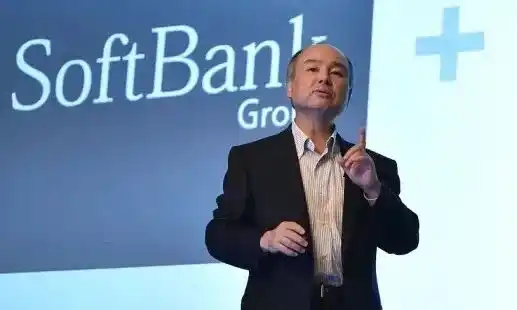
According to "AGBI (Arab Gulf Business Insight)" citing Bloomberg, in February last year, at a roundtable during the Saudi Public Investment Institute Forum in Miami, Son admitted: "I haven't been able to bring him (Mohammed bin Salman) a sufficiently substantial return yet. I still owe him this debt."

This "debt" became Son's motivation, and AI恰好 gave him hope for a comeback. Thus, it's easy to understand why Son dares to make huge bets on OpenAI, gamble heavily on AI, and even go all-in on global AI infrastructure.

In January last year, SoftBank, together with OpenAI and Oracle, planned a total investment of $500 billion to establish "Stargate," building AI data centers in the U.S.; this May, SoftBank announced plans to invest 75 billion euros in building AI data centers in France.

For this, Son once publicly challenged Musk. On June 23, at an internal SoftBank meeting, Son objected to Musk's "space data center" concept, stating that the outcome of the AI race would depend on computing power on Earth, and space data centers were of little value.

After all, computing power is crucial to Son's AI chess game. Computing power, models, chips—Son has gathered the core assets of the AI digital world. To bring AI into physical reality, there is one crucial component left: robots. Thus, Son quietly began preparing his next IPO target.

C

This is how Roze surfaced.

Roze's定位 aligns perfectly with Son's反复提及的 "Physical AI"—combining AI's cognitive abilities with robots' physical execution capabilities.

It is an AI infrastructure platform encompassing data centers, chips, and robotics. According to the Financial Times, Roze's core assets include the data center platform DigitalBridge acquired by SoftBank for $3 billion, chip company Ampere Computing acquired for $6.5 billion, and the robotics division of ABB acquired for $5.4 billion.

By bundling these assets together, Son is betting on "Physical AI," a new trillion-dollar赛道.

As the new trillion-dollar gamble begins,质疑 are again涌向 Son.

The Financial Times reported that despite Son's optimism, some within SoftBank are skeptical about Roze's IPO valuation ($100 billion) and proposed timeline. Some SoftBank executives consider this target overly ambitious, as it relies on rapid expansion of the data center business.

A company "hurriedly拼凑," rushing to go public,难免 seems仓促.

But Son cannot wait. The massive bets on AI are pushing SoftBank's leverage接近极限. A SoftBank insider stated that SoftBank needs to quickly sell or monetize assets to sustain its spending pace. Among these, OpenAI's IPO is a核心 part of Son's plan to reduce leverage.

Roze's上市 carries a similar mission. The investment in OpenAI alone exceeds $64.6 billion,加上 the Stargate project and the trillion-dollar humanoid robot parks—each is an astronomical sum. Son urgently needs Roze to go public to续上 ammunition for this AI gamble.

However, Roze's $100 billion valuation first faces a残酷 reality: at this stage, the valuation of humanoid robots overall is difficult to rise.

The highest-valued humanoid robot company, Figure AI, has a latest valuation of $39 billion, a 24-fold difference from Anthropic's nearly $1 trillion valuation.

One reason is that AI large models have established clear commercialization paths and foreseeable growth prospects. For example, Anthropic has annualized revenue of $47 billion. Figure AI hasn't reached that stage yet.

A deeper gap lies in the fact that Anthropic has重构 the existing industry格局, taking away most of the market share originally held by the traditional software industry. Humanoid robots, for now, are more like大型摇操玩具, let alone having a颠覆性 impact on industries.

The落地 of Physical AI also faces multiple现实困境, such as the割裂 between brain and body and unclear commercialization paths, all of which require time.

Son's plans are good, just somewhat太遥远. Looking back, we see he waited over a decade for Alibaba, seven years for Arm—each high-stakes gamble involved a long wait. Roze might be the same; the outcome and how long Son must wait remain to be seen.

References:

《SoftBank plans to list new AI and robotics company in the US》Financial Times

《Masayoshi Son's 300-Year Vision: SoftBank Swallows the World》Zhixiang Wang

《SoftBank CEO admits failing to deliver returns to PIF》AGBI

《SoftBank plans $1 trillion investment in U.S. AI robot parks》Nikkei Asia

《OpenAI to file IPO documents, aims for autumn listing, valuation could reach $1 trillion, SoftBank Group's stock price surges 20%》National Business Daily

《Explosive! OpenAI financial report leaked: lost 260 billion last year》Zhidongxi

This article is from the WeChat public account "字母榜" (ID: wujicaijing), author: Xue Yaping, editor: Wang Jing


Trend Kriptolar

İlgili Sorular

QWhat is the name of the new company that SoftBank is reportedly forming in the US to focus on AI and robotics, and what is its target valuation for IPO?

ASoftBank is reportedly forming a new company called 'Roze' in the US, focusing on AI and robotics, with a target IPO valuation of $100 billion.

QWhat is the main reason cited for Masayoshi Son launching a new 'trillion-dollar bet' on Physical AI and humanoid robots while the OpenAI investment is still pending?

AMasayoshi Son is launching a new 'trillion-dollar bet' on Physical AI and humanoid robots because he believes it is the next golden track to create a trillion-dollar market cap company, and he is diversifying his investments while awaiting OpenAI's IPO outcome.

QWhat significant internal concern about Masayoshi Son's investment strategy in OpenAI is mentioned in the article?

AA significant internal concern mentioned is that Masayoshi Son's excessive trust in Sam Altman and OpenAI led him not to invest in other competing AI models, which could be risky as the competitive landscape changes rapidly.

QWhat is the 'debt' or unfulfilled promise that motivates Masayoshi Son to pursue these massive AI investments, according to the article?

AAccording to the article, Masayoshi Son is motivated by an unfulfilled promise he made to Saudi Arabia's Crown Prince Mohammed bin Salman to deliver a $1 trillion return on the Public Investment Fund's $45 billion investment in the SoftBank Vision Fund.

QWhat are some of the major challenges or realities that the Physical AI and humanoid robot sector faces, which could impact Roze's ambitious valuation?

AMajor challenges include: the valuation gap compared to pure AI software companies (e.g., Anthropic's near-$1 trillion vs. Figure AI's $39 billion), unclear commercialization paths, the disconnection between AI 'brains' and physical robot 'bodies', and the fact that humanoid robots have not yet created a disruptive impact on existing industries.

İlgili Okumalar

Xing Bo Strikes Again: Last Time 'Critiquing' World Models, This Time It's Agents' Turn

Xing Bo, President of MBZUAI and professor at Carnegie Mellon University, along with co-authors Mingkai Deng and Jinyu Hou, has released a new paper, "Critique of Agent Model," critiquing the current state of artificial intelligence agents. The paper draws a crucial distinction between "agentic" systems, which rely on external toolchains, prompts, and workflows, and truly "agentive" systems capable of genuine autonomy driven by internal decision-making structures. To illustrate this, it references a real-world incident where an AI programming assistant, following an external prompt but lacking internalized judgment, caused a catastrophic data deletion. The authors propose a detailed analysis and a new framework, "Goal-Identity-Configurator" (GIC), for building truly autonomous agents. This framework systematically addresses five key dimensions where current "Agent" designs fall short: 1. **Goal:** Moving from step-by-step human instruction to a system capable of autonomously decomposing a single long-term goal and adapting sub-goals based on new information. 2. **Identity:** Evolving self-assessment updated by experience, rather than a static description in a system prompt. 3. **Decision Making:** Replacing textual Chain-of-Thought reasoning with "simulative reasoning" that uses a dedicated world model to predict real-world consequences before selecting actions. 4. **Cognitive Control:** Introducing a separate "System III" metacognitive module that dynamically decides when to deliberate, stick to a plan, or act quickly. 5. **Learning:** Enabling "continual autonomous learning," where the agent itself decides when to act, practice in simulation, or update its world model and self-perception. The GIC architecture integrates six components—a belief encoder, goal decomposer, identity evolver, configurator (System III), simulation-based planner (System II), and executor (System I)—to embody these principles. The paper argues that a growth path akin to pilot training (ground theory, simulator practice, real deployment) should be underpinned by a unified cognitive architecture, not separate workflows. On safety, the authors contend that the GIC framework's modular, explicit design enhances inspectability, allowing problematic behavior to be traced to specific components (e.g., flawed goal or poorly trained module) rather than emerging opaquely. However, they acknowledge that ultimate safety depends on correctly training these modules in the first place. In conclusion, the paper challenges the loose application of the term "Agent," asserting that task completion alone does not equal true autonomy. True autonomy requires goals, identity, and judgment to be genuinely internalized within the agent's architecture, not merely enforced by external scripts.

marsbit19 dk önce

Xing Bo Strikes Again: Last Time 'Critiquing' World Models, This Time It's Agents' Turn

marsbit19 dk önce

How Collector Crypt Uses 'Recirculating Buybacks' to Create an Illusion of Growth

Title: How Collector Crypt Creates a Growth Illusion with "Buyback Loops" Key Findings: Collector Crypt's (CC) net take rate has halved from 11.2% in Q3 2025 to 5.6% in Q2 2026, while GMV grew 4.7x. This growth is driven by higher-tier card packs ($250, $1,000, $2,500) which have lower platform dollar retention rates. The newly launched $2,500 Mythic tier captured 36.7% of June GMV within 13 days. Growth is fueled by a small cohort of high-spending, high-frequency wallets rather than broad user base expansion. The economic model faces pressure from three key areas: 1) **Shifting GMV Mix**: Pushing users towards larger, lower-retention card packs increases GMV but reduces overall profitability. 2) **Physical Redemptions**: Card redemptions for physical items remove reusable inventory from the system, creating costly replenishment needs. In May, redemptions consumed 41.6% of pre-redemption net income. Only 75 wallets drove redemptions in June. 3) **B2B/API Strategy**: Partner revenue remains negligible (cumulatively $1.83M) and dependent on CC for inventory, vaulting, and buyback services, failing to create a scalable, asset-light recurring revenue stream. The core product is a repetitive pack-buyback loop with limited secondary market activity and token value accrual. Sensitive modeling shows CC's economics turn negative when any two of the following pressures coincide: replenishment costs near market price, redemption rates exceeding 9%, or high-tier buyback rates around 93%. While CC operates in a large and growing collectibles market, its current growth levers—bigger packs, high buyback rates, and capital recycling by a few wallets—create a volume illusion without demonstrating sustainable collector engagement, deep secondary markets, or a viable path to improved margins. Future proof points include broadening collector participation, deepening secondary trading, and developing true asset-light B2B revenue channels.

Foresight News42 dk önce

How Collector Crypt Uses 'Recirculating Buybacks' to Create an Illusion of Growth

Foresight News42 dk önce

Grayscale's Latest Research: What is Solana's Next Growth Engine?

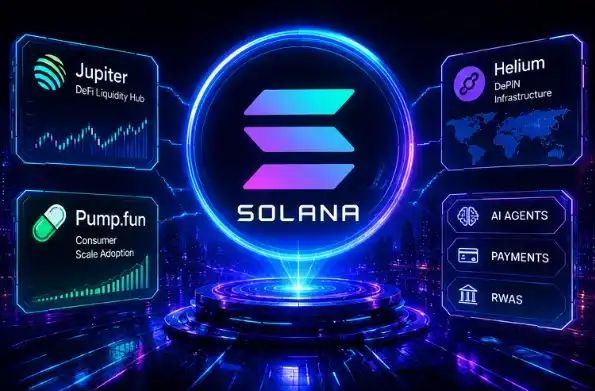
Grayscale's latest report, "Solana: Crypto's Financial Bazaar," signals a shift in how the market views Solana, moving beyond its high-performance and meme-centric reputation. The report frames Solana as an evolving application platform for large-scale economic activity, akin to a bustling digital marketplace. The analysis highlights that public chain competition has moved past raw throughput (TPS) to focus on genuine economic activity—daily users, transaction volume, and real revenue. Solana's metrics, such as over 1,000 dApps, 100M+ daily transactions, and ~4.3M daily active users, showcase this shift toward application-layer prosperity. The report identifies three key growth drivers: 1. **Jupiter**: Evolving from a DEX aggregator to a core liquidity hub and comprehensive financial platform for Solana's DeFi. 2. **Pump.fun**: Demonstrates Solana's capacity for consumer-scale applications, attracting millions of users and generating significant, sustainable revenue, validating network stability under high load. 3. **Helium & DePIN**: Represents expansion into real-world infrastructure, connecting blockchain to physical resources like wireless networks and positioning services, opening new long-term use cases. Solana Foundation's recent focus aligns with this broader vision, emphasizing AI Agents (for machine-to-machine transactions), payments, stablecoins, and Real-World Assets (RWA) to build a sustainable growth model beyond cyclical trends. While challenges remain—such as value capture for SOL and maintaining ecosystem sustainability beyond hot trends—institutional interest is growing due to Solana's maturing application business models, expanding payment/stablecoin ecosystem, and persistent developer activity. The competition is no longer about speed alone, but about which network can foster the most vibrant and valuable digital economy.

marsbit1 saat önce

Grayscale's Latest Research: What is Solana's Next Growth Engine?

marsbit1 saat önce

İşlemler

Spot

Popüler Makaleler

$S$ Nedir

SPERO'yu Anlamak: Kapsamlı Bir Genel Bakış SPERO'ya Giriş İnovasyonun manzarası gelişmeye devam ederken, web3 teknolojilerinin ve kripto para projelerinin ortaya çıkışı dijital geleceği şekillendirmede önemli bir rol oynamaktadır. Bu dinamik alanda dikkat çeken projelerden biri SPERO, $$s$$ olarak adlandırılmaktadır. Bu makale, SPERO hakkında ayrıntılı bilgi toplamak ve sunmak amacıyla, meraklılar ve yatırımcıların web3 ve kripto alanlarındaki temellerini, hedeflerini ve yeniliklerini anlamalarına yardımcı olmayı amaçlamaktadır. SPERO,$$s$$ Nedir? SPERO,$$s$$, kripto alanında merkeziyetsizlik ve blok zinciri teknolojisi ilkelerini kullanarak etkileşimi, faydayı ve finansal kapsayıcılığı teşvik eden bir ekosistem yaratmayı amaçlayan benzersiz bir projedir. Proje, kullanıcıların yenilikçi finansal çözümler ve hizmetler sunarak eşler arası etkileşimleri yeni yollarla kolaylaştırmayı hedeflemektedir. SPERO,$$s$$'nin temel amacı, bireyleri güçlendirmek ve kripto para alanındaki kullanıcı deneyimini artıran araçlar ve platformlar sağlamaktır. Bu, daha esnek işlem yöntemlerini mümkün kılmayı, topluluk odaklı girişimleri teşvik etmeyi ve merkeziyetsiz uygulamalar (dApp'ler) aracılığıyla finansal fırsatlar yaratmayı içermektedir. SPERO,$$s$$'nin temel vizyonu kapsayıcılık etrafında dönmekte olup, geleneksel finansal sistemlerdeki boşlukları kapatmayı ve blok zinciri teknolojisinin faydalarından yararlanmayı hedeflemektedir. SPERO,$$s$$'nin Yaratıcısı Kimdir? SPERO,$$s$$'nin yaratıcısının kimliği bir miktar belirsizdir, çünkü kurucusu(ları) hakkında ayrıntılı arka plan bilgisi sağlayan sınırlı kamuya açık kaynaklar bulunmaktadır. Bu şeffaflık eksikliği, projenin merkeziyetsizlik taahhüdünden kaynaklanabilir—birçok web3 projesinin paylaştığı bir etik anlayışı, bireysel tanınmanın yerine kolektif katkıları önceliklendirmektedir. Topluluk ve onun kolektif hedefleri etrafında tartışmaları merkezileştirerek, SPERO,$$s$$, belirli bireyleri öne çıkarmadan güçlendirme özünü taşımaktadır. Bu nedenle, SPERO'nun etik anlayışını ve misyonunu anlamak, tek bir yaratıcının kimliğini belirlemekten daha önemlidir. SPERO,$$s$$'nin Yatırımcıları Kimlerdir? SPERO,$$s$$, kripto sektöründe yeniliği teşvik etmeye adanmış girişim sermayedarlarından melek yatırımcılara kadar çeşitli yatırımcılar tarafından desteklenmektedir. Bu yatırımcıların odak noktası genellikle SPERO'nun misyonuyla uyumlu olup, toplumsal teknolojik ilerlemeyi, finansal kapsayıcılığı ve merkeziyetsiz yönetimi vaat eden projeleri önceliklendirmektedir. Bu yatırımcı temelleri, yalnızca yenilikçi ürünler sunan projelere değil, aynı zamanda blok zinciri topluluğuna ve ekosistemlerine olumlu katkılarda bulunan projelere de ilgi duymaktadır. Bu yatırımcıların desteği, SPERO,$$s$$'yi hızla gelişen kripto projeleri alanında dikkate değer bir rakip haline getirmektedir. SPERO,$$s$$ Nasıl Çalışır? SPERO,$$s$$, onu geleneksel kripto para projelerinden ayıran çok yönlü bir çerçeve kullanmaktadır. İşte benzersizliğini ve yeniliğini vurgulayan bazı temel özellikler: Merkeziyetsiz Yönetim: SPERO,$$s$$, kullanıcıların projenin geleceğiyle ilgili karar alma süreçlerine aktif olarak katılmalarını sağlayan merkeziyetsiz yönetim modellerini entegre etmektedir. Bu yaklaşım, topluluk üyeleri arasında sahiplik ve hesap verebilirlik duygusunu teşvik etmektedir. Token Kullanımı: SPERO,$$s$$, ekosistem içinde çeşitli işlevler sunmak üzere tasarlanmış kendi kripto para token'ını kullanmaktadır. Bu token'lar, işlemleri, ödülleri ve platformda sunulan hizmetlerin kolaylaştırılmasını sağlayarak genel etkileşimi ve faydayı artırmaktadır. Katmanlı Mimari: SPERO,$$s$$'nin teknik mimarisi, modülerlik ve ölçeklenebilirliği destekleyerek projenin evrimi sırasında ek özelliklerin ve uygulamaların sorunsuz bir şekilde entegrasyonuna olanak tanımaktadır. Bu uyum sağlama yeteneği, sürekli değişen kripto manzarasında geçerliliği sürdürmek için hayati öneme sahiptir. Topluluk Katılımı: Proje, işbirliği ve geri bildirim teşvik eden mekanizmalar kullanarak topluluk odaklı girişimlere vurgu yapmaktadır. Güçlü bir topluluk oluşturarak, SPERO,$$s$$, kullanıcı ihtiyaçlarını daha iyi karşılayabilir ve piyasa trendlerine uyum sağlayabilir. Kapsayıcılığa Odaklanma: Düşük işlem ücretleri ve kullanıcı dostu arayüzler sunarak, SPERO,$$s$$, daha önce kripto alanında yer almamış bireyler de dahil olmak üzere çeşitli bir kullanıcı tabanını çekmeyi hedeflemektedir. Bu kapsayıcılık taahhüdü, erişilebilirlik yoluyla güçlendirme misyonuyla uyumludur. SPERO,$$s$$ Zaman Çizelgesi Bir projenin tarihini anlamak, gelişim yolculuğu ve kilometre taşları hakkında kritik bilgiler sağlar. Aşağıda, SPERO,$$s$$'nin evriminde önemli olayları haritalayan önerilen bir zaman çizelgesi bulunmaktadır: Kavram Geliştirme ve Fikir Aşaması: SPERO,$$s$$'nin temelini oluşturan ilk fikirler, blok zinciri endüstrisindeki merkeziyetsizlik ve topluluk odaklılık ilkeleriyle yakından uyumlu olarak geliştirildi. Proje Beyaz Kağıdının Yayınlanması: Kavramsal aşamayı takiben, SPERO,$$s$$'nin vizyonunu, hedeflerini ve teknolojik altyapısını ayrıntılı bir şekilde açıklayan kapsamlı bir beyaz kağıt yayımlandı ve topluluk ilgisini ve geri bildirimini toplamak amacıyla sunuldu. Topluluk Oluşturma ve Erken Katılımlar: Projenin hedefleri etrafında tartışmalar yürüterek destek toplamak ve erken benimseyenler ile potansiyel yatırımcılar için bir topluluk oluşturmak amacıyla aktif iletişim çabaları gerçekleştirildi. Token Üretim Etkinliği: SPERO,$$s$$, yerel token'larını erken destekçilere dağıtmak ve ekosistem içinde başlangıç likiditesini sağlamak amacıyla bir token üretim etkinliği (TGE) gerçekleştirdi. İlk dApp'in Yayınlanması: SPERO,$$s$$ ile ilişkili ilk merkeziyetsiz uygulama (dApp) faaliyete geçti ve kullanıcıların platformun temel işlevleriyle etkileşimde bulunmalarını sağladı. Sürekli Gelişim ve Ortaklıklar: Projenin tekliflerine sürekli güncellemeler ve iyileştirmeler yapılmakta olup, blok zinciri alanındaki diğer oyuncularla stratejik ortaklıklar, SPERO,$$s$$'yi rekabetçi ve gelişen bir oyuncu haline getirmiştir. Sonuç SPERO,$$s$$, web3 ve kripto paranın finansal sistemleri devrim niteliğinde dönüştürme ve bireyleri güçlendirme potansiyelinin bir kanıtıdır. Merkeziyetsiz yönetime, topluluk katılımına ve yenilikçi tasarlanmış işlevselliğe olan bağlılığıyla, daha kapsayıcı bir finansal manzaraya doğru bir yol açmaktadır. Hızla gelişen kripto alanındaki herhangi bir yatırımda olduğu gibi, potansiyel yatırımcılar ve kullanıcılar, SPERO,$$s$$ içindeki devam eden gelişmelerle ilgili olarak kapsamlı bir araştırma yapmaları ve düşünceli bir şekilde katılmaları teşvik edilmektedir. Proje, kripto endüstrisinin yenilikçi ruhunu sergileyerek, sayısız olasılığını keşfetmeye davet etmektedir. SPERO,$$s$$'nin yolculuğu hala devam ederken, temel ilkeleri, teknoloji, finans ve birbirimizle etkileşim biçimimizi etkileyebilir.

141 Toplam GörüntülenmeYayınlanma 2024.12.17Güncellenme 2024.12.17

$S$ Nedir

AGENT S Nedir

Agent S: Web3'te Otonom Etkileşimin Geleceği Giriş Web3 ve kripto para dünyasında sürekli gelişen manzarada, yenilikler bireylerin dijital platformlarla etkileşim biçimlerini sürekli olarak yeniden tanımlıyor. Bu tür öncü projelerden biri olan Agent S, açık ajans çerçevesi aracılığıyla insan-bilgisayar etkileşimini devrim niteliğinde değiştirmeyi vaat ediyor. Otonom etkileşimlerin yolunu açarak, Agent S karmaşık görevleri basitleştirmeyi ve yapay zeka (AI) alanında dönüştürücü uygulamalar sunmayı hedefliyor. Bu detaylı inceleme, projenin karmaşıklıklarına, benzersiz özelliklerine ve kripto para alanındaki etkilerine dalacaktır. Agent S Nedir? Agent S, bilgisayar görevlerinin otomasyonunda üç temel zorluğu ele almak üzere özel olarak tasarlanmış çığır açıcı bir açık ajans çerçevesidir: Alan Spesifik Bilgi Edinimi: Çerçeve, çeşitli dış bilgi kaynaklarından ve iç deneyimlerden akıllıca öğrenir. Bu çift yönlü yaklaşım, alan spesifik bilgi açısından zengin bir veri havuzu oluşturmasını sağlar ve görev yürütmedeki performansını artırır. Uzun Görev Ufukları Üzerinde Planlama: Agent S, karmaşık görevlerin verimli bir şekilde parçalanmasını ve yürütülmesini kolaylaştıran deneyim artırımlı hiyerarşik planlama kullanır. Bu özellik, çoklu alt görevleri etkili ve verimli bir şekilde yönetme yeteneğini önemli ölçüde artırır. Dinamik, Homojen Olmayan Arayüzlerle Başlama: Proje, ajanlar ve kullanıcılar arasındaki etkileşimi geliştiren yenilikçi bir çözüm olan Ajan-Bilgisayar Arayüzü'ni (ACI) tanıtmaktadır. Çok Modlu Büyük Dil Modellerini (MLLM'ler) kullanarak, Agent S çeşitli grafik kullanıcı arayüzlerini sorunsuz bir şekilde gezinebilir ve manipüle edebilir. Bu öncü özellikler aracılığıyla, Agent S, makinelerle insan etkileşimini otomatikleştirmede karşılaşılan karmaşıklıkları ele alan sağlam bir çerçeve sunarak, AI ve ötesinde birçok uygulama için zemin hazırlıyor. Agent S'nin Yaratıcısı Kimdir? Agent S'nin kavramı temelde yenilikçi olsa da, yaratıcısı hakkında spesifik bilgiler belirsizliğini koruyor. Yaratıcı şu anda bilinmiyor, bu da projenin yeni aşamasını veya kurucu üyeleri gizli tutma stratejik tercihini vurguluyor. Anonimlikten bağımsız olarak, odak çerçevenin yetenekleri ve potansiyeli üzerinde kalıyor. Agent S'nin Yatırımcıları Kimlerdir? Agent S, kriptografik ekosistemde oldukça yeni olduğundan, yatırımcıları ve finansal destekçileri hakkında ayrıntılı bilgiler açıkça belgelenmemiştir. Projeyi destekleyen yatırım temelleri veya organizasyonları hakkında kamuya açık bilgilerdeki eksiklik, finansman yapısı ve gelişim yol haritası hakkında sorular doğuruyor. Destekleyicilerin anlaşılması, projenin sürdürülebilirliğini ve potansiyel pazar etkisini değerlendirmek için kritik öneme sahiptir. Agent S Nasıl Çalışır? Agent S'nin temelinde, çeşitli ortamlarda etkili bir şekilde çalışmasını sağlayan son teknoloji bir sistem yatmaktadır. İşleyiş modeli birkaç ana özellik etrafında inşa edilmiştir: İnsan Benzeri Bilgisayar Etkileşimi: Çerçeve, bilgisayarlarla etkileşimleri daha sezgisel hale getirmeyi amaçlayan gelişmiş AI planlaması sunar. Görev yürütmedeki insan davranışını taklit ederek, kullanıcı deneyimlerini yükseltmeyi vaat eder. Anlatı Belleği: Yüksek düzeyde deneyimlerden yararlanmak için kullanılan Agent S, görev geçmişlerini takip etmek amacıyla anlatı belleğini kullanarak karar verme süreçlerini geliştirir. Episodik Bellek: Bu özellik, kullanıcılara adım adım rehberlik sağlayarak, çerçevenin görevler gelişirken bağlamsal destek sunmasına olanak tanır. OpenACI Desteği: Yerel olarak çalışabilme yeteneği ile Agent S, kullanıcıların etkileşimleri ve iş akışları üzerinde kontrol sağlamasına olanak tanır ve Web3'ün merkeziyetsiz felsefesiyle uyumlu hale gelir. Dış API'lerle Kolay Entegrasyon: Çeşitli AI platformlarıyla uyumluluğu ve çok yönlülüğü, Agent S'nin mevcut teknolojik ekosistemlere sorunsuz bir şekilde entegre olmasını sağlar ve geliştiriciler ile organizasyonlar için cazip bir seçenek haline getirir. Bu işlevsellikler, Agent S'nin kripto alanındaki benzersiz konumuna katkıda bulunarak, karmaşık, çok aşamalı görevleri minimum insan müdahalesi ile otomatikleştirir. Proje geliştikçe, Web3'teki potansiyel uygulamaları dijital etkileşimlerin nasıl gelişeceğini yeniden tanımlayabilir. Agent S'nin Zaman Çizelgesi Agent S'nin gelişimi ve kilometre taşları, önemli olaylarını vurgulayan bir zaman çizelgesinde özetlenebilir: 27 Eylül 2024: Agent S'nin kavramı, “Bilgisayarları İnsan Gibi Kullanan Açık Bir Ajans Çerçevesi” başlıklı kapsamlı bir araştırma makalesi ile tanıtıldı ve projenin temelini sergiledi. 10 Ekim 2024: Araştırma makalesi arXiv'de kamuya açık olarak yayınlandı ve çerçevenin derinlemesine bir incelemesini ve OSWorld benchmark'ına dayalı performans değerlendirmesini sundu. 12 Ekim 2024: Agent S'nin yetenekleri ve özellikleri hakkında görsel bir içgörü sağlayan bir video sunumu yayımlandı ve potansiyel kullanıcılar ve yatırımcılarla daha fazla etkileşim sağlandı. Bu zaman çizelgesindeki işaretler, sadece Agent S'nin ilerlemesini değil, aynı zamanda şeffaflık ve topluluk katılımına olan bağlılığını da göstermektedir. Agent S Hakkında Ana Noktalar Agent S çerçevesi gelişmeye devam ederken, birkaç ana özellik öne çıkmakta ve yenilikçi doğasını ve potansiyelini vurgulamaktadır: Yenilikçi Çerçeve: İnsan etkileşimine benzer bir bilgisayar kullanımı sağlamak üzere tasarlanan Agent S, görev otomasyonuna yeni bir yaklaşım getiriyor. Otonom Etkileşim: GUI aracılığıyla bilgisayarlarla otonom olarak etkileşim kurabilme yeteneği, daha akıllı ve verimli hesaplama çözümlerine doğru bir sıçrama anlamına geliyor. Karmaşık Görev Otomasyonu: Sağlam metodolojisi ile karmaşık, çok aşamalı görevleri otomatikleştirerek süreçleri daha hızlı ve daha az hata payı ile gerçekleştirebilir. Sürekli İyileştirme: Öğrenme mekanizmaları, Agent S'nin geçmiş deneyimlerden öğrenmesini sağlar ve sürekli olarak performansını ve etkinliğini artırır. Çok Yönlülük: OSWorld ve WindowsAgentArena gibi farklı işletim ortamlarında uyumlu olması, geniş bir uygulama yelpazesine hizmet edebilmesini sağlar. Agent S, Web3 ve kripto alanında kendini konumlandırırken, etkileşim yeteneklerini artırma ve süreçleri otomatikleştirme potansiyeli, AI teknolojilerinde önemli bir ilerlemeyi temsil etmektedir. Yenilikçi çerçevesi aracılığıyla, Agent S dijital etkileşimlerin geleceğini örneklemekte ve çeşitli sektörlerde kullanıcılar için daha sorunsuz ve verimli bir deneyim vaat etmektedir. Sonuç Agent S, AI ve Web3'ün birleşiminde cesur bir sıçramayı temsil ediyor ve teknoloji ile etkileşim biçimimizi yeniden tanımlama kapasitesine sahip. Henüz erken aşamalarında olmasına rağmen, uygulama olanakları geniş ve çekici. Kritik zorlukları ele alan kapsamlı çerçevesi ile Agent S, otonom etkileşimleri dijital deneyimin ön plana çıkmasına taşımayı hedefliyor. Kripto para ve merkeziyetsizlik alanlarına daha derinlemesine girdikçe, Agent S gibi projelerin teknoloji ve insan-bilgisayar işbirliğinin geleceğini şekillendirmede önemli bir rol oynayacağı kesin.

637 Toplam GörüntülenmeYayınlanma 2025.01.14Güncellenme 2025.01.14

AGENT S Nedir

S Nasıl Satın Alınır

HTX.com’a hoş geldiniz! Sonic (S) satın alma işlemlerini basit ve kullanışlı bir hâle getirdik. Adım adım açıkladığımız rehberimizi takip ederek kripto yolculuğunuza başlayın. 1. Adım: HTX Hesabınızı OluşturunHTX'te ücretsiz bir hesap açmak için e-posta adresinizi veya telefon numaranızı kullanın. Sorunsuzca kaydolun ve tüm özelliklerin kilidini açın. Hesabımı Aç2. Adım: Kripto Satın Al Bölümüne Gidin ve Ödeme Yönteminizi SeçinKredi/Banka Kartı: Visa veya Mastercard'ınızı kullanarak anında Sonic (S) satın alın.Bakiye: Sorunsuz bir şekilde işlem yapmak için HTX hesap bakiyenizdeki fonları kullanın.Üçüncü Taraflar: Kullanımı kolaylaştırmak için Google Pay ve Apple Pay gibi popüler ödeme yöntemlerini ekledik.P2P: HTX'teki diğer kullanıcılarla doğrudan işlem yapın.Borsa Dışı (OTC): Yatırımcılar için kişiye özel hizmetler ve rekabetçi döviz kurları sunuyoruz.3. Adım: Sonic (S) Varlıklarınızı SaklayınSonic (S) satın aldıktan sonra HTX hesabınızda saklayın. Alternatif olarak, blok zinciri transferi yoluyla başka bir yere gönderebilir veya diğer kripto para birimlerini takas etmek için kullanabilirsiniz.4. Adım: Sonic (S) Varlıklarınızla İşlem YapınHTX'in spot piyasasında Sonic (S) ile kolayca işlemler yapın.Hesabınıza erişin, işlem çiftinizi seçin, işlemlerinizi gerçekleştirin ve gerçek zamanlı olarak izleyin. Hem yeni başlayanlar hem de deneyimli yatırımcılar için kullanıcı dostu bir deneyim sunuyoruz.

1.7k Toplam GörüntülenmeYayınlanma 2025.01.15Güncellenme 2026.06.02

S Nasıl Satın Alınır

Tartışmalar

HTX Topluluğuna hoş geldiniz. Burada, en son platform gelişmeleri hakkında bilgi sahibi olabilir ve profesyonel piyasa görüşlerine erişebilirsiniz. Kullanıcıların S (S) fiyatı hakkındaki görüşleri aşağıda sunulmaktadır.

活动图片