Social Capital CEO: From U.S. Stocks to SpaceX, How Equity Tokenization is Reshaping Capital Markets?

marsbit2026-03-07 tarihinde yayınlandı2026-03-07 tarihinde güncellendi

Özet

Chamath Palihapitiya discusses how equity tokenization is transforming capital markets by addressing structural limitations of traditional systems. The current stock market, valued at over $150 trillion, operates with restricted hours, relies on multiple intermediaries, and limits access to high-growth private companies. Tokenization introduces three key improvements: 24/7 trading to incorporate global information and demand, streamlined ownership reducing intermediaries and costs, and expanded access to private markets like SpaceX and OpenAI through SPV-based tokens. While these tokens offer economic exposure rather than direct ownership and lack standardization, they meet growing demand for private investments. The shift aligns with the rise of stablecoins and could save billions annually by modernizing infrastructure.

Original link:https://x.com/chamath/status/2029650649819009211

Original author:Chamath Palihapitiya

Compiled by: Ken, Chaincathcer

The modern stock market is built on infrastructure that predates the digital network by a long time.

The global stock market has a market capitalization of over $150 trillion, but trading hours are still limited, settlement still relies on multiple layers of intermediaries, and investment opportunities in many high-growth companies are still restricted to a small number of investors.

These structural limitations constrain how capital flows, who can participate, and the speed of ownership changes.

Market infrastructure providers are already exploring how to use tokenization to modernize the system. Institutions including the New York Stock Exchange, Nasdaq, and DTCC have begun developing tokenized equity and settlement infrastructure.

With the adoption of equity tokenization, these barriers are beginning to erode.

Since early 2025, the market capitalization of equity tokens has grown nearly 3.5 times, reflecting a broader shift towards the tokenization of real-world assets.
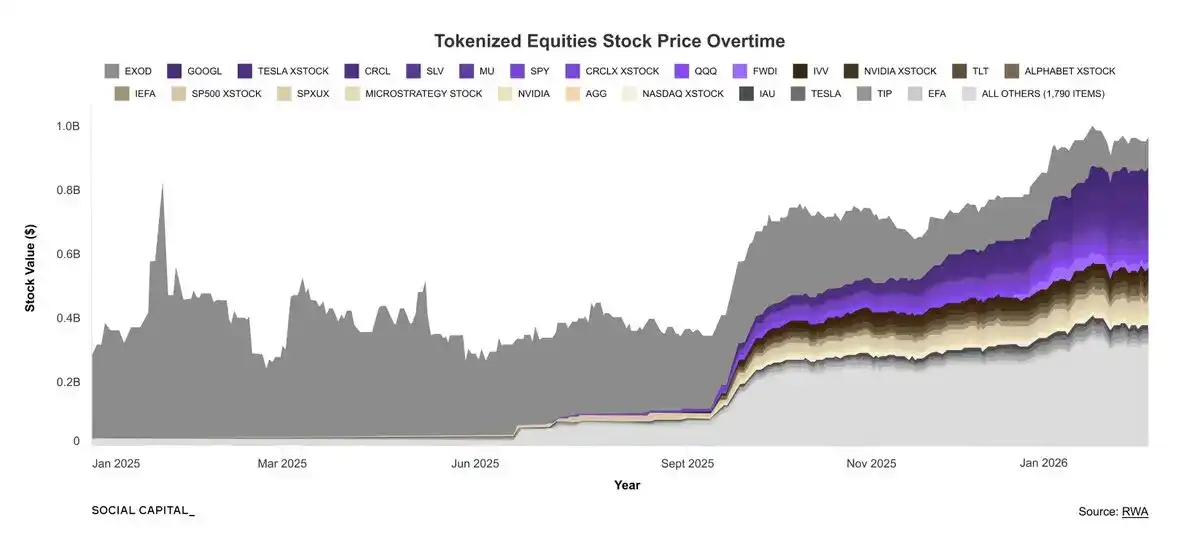
This expansion has occurred in parallel with the rise of stablecoins. These fiat-pegged tokens have grown more than tenfold in less than five years and have now become the primary settlement layer for on-chain financial activity:
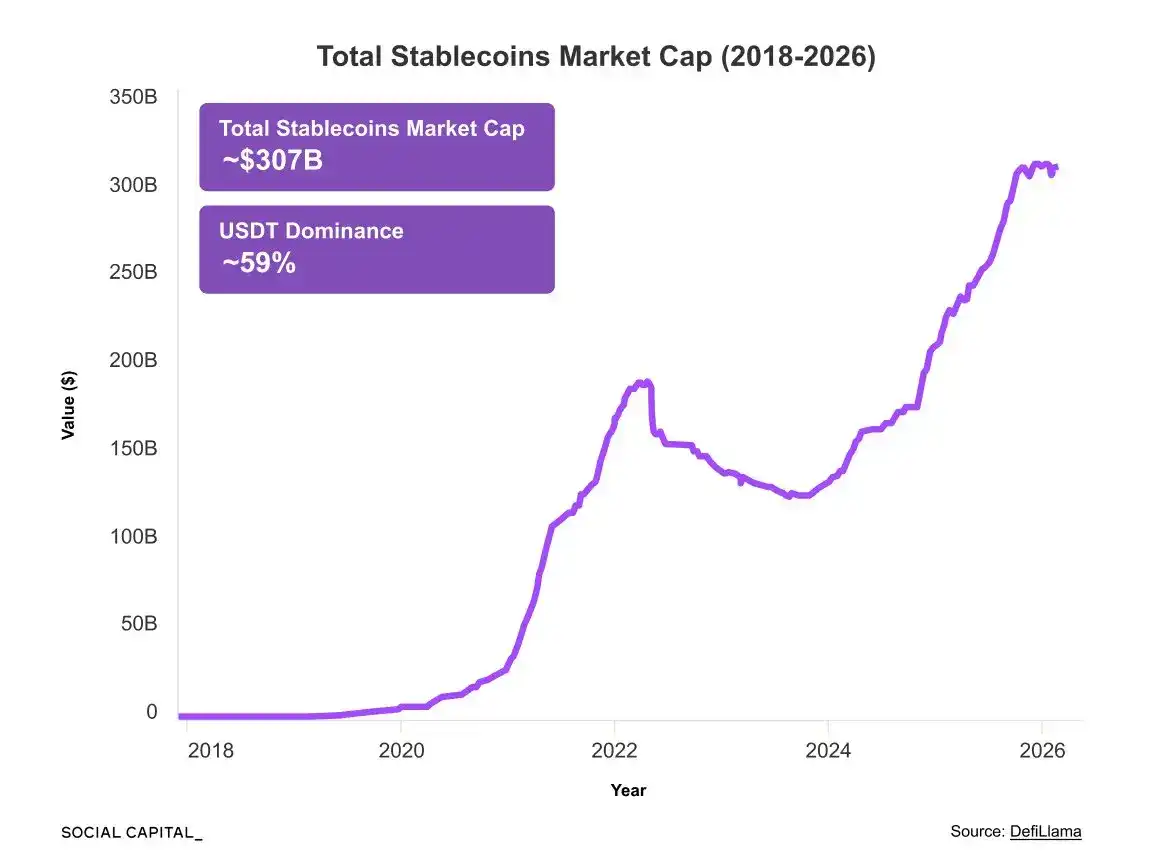
While stablecoins function differently from equity tokens, their rapid adoption shows that when tokenized financial instruments offer clear infrastructure advantages, they can achieve significant scale.

Equity tokens represent the next test: can tokenization expand from payments to the ownership of financial assets.

What are Equity Tokens?

Equity tokens are not just traditional stocks placed on a blockchain.

Traditional stocks represent ownership in a company.

An equity token is a blockchain-based asset that represents shares in a company or structured rights related to those shares, with ownership tracked and transferred via Distributed Ledger Technology (DLT).

Tokenized Equity Can Address Three Major Market Gaps 24/7

  1. 24/7 Trading: Markets are shifting from a 5-day (or shorter) weekly trading model to uninterrupted 24-hour trading.

Even today, approximately 11% of U.S. stock trading occurs outside regular trading hours.

A 24/7 market structure allows new information to be priced in more quickly during after-hours sessions and better accommodates a global shareholder base, as foreign investors currently hold about 15% of U.S. stocks.

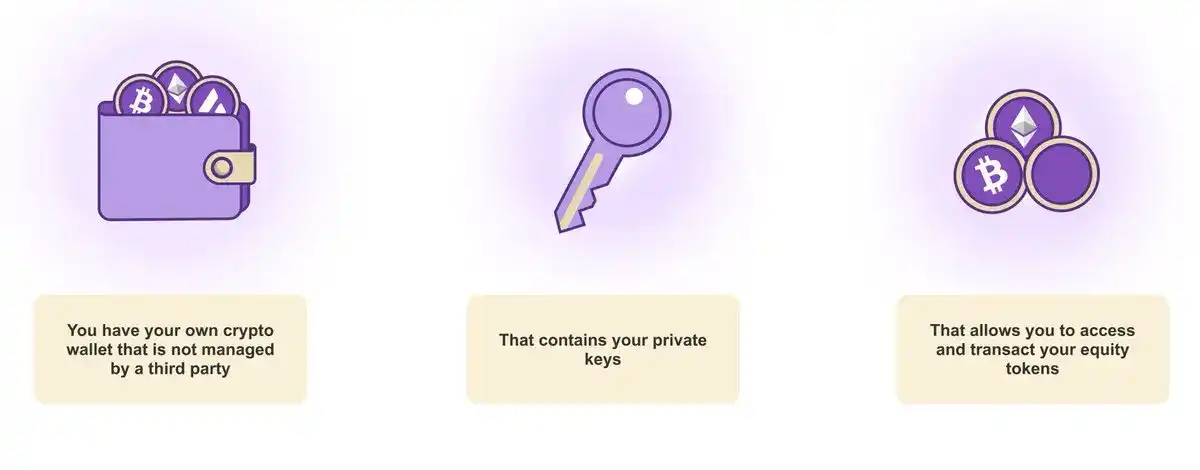
  1. Ownership: In traditional finance, equity ownership records are spread across multiple intermediaries, including brokers, clearing firms, and central securities depositories.

Tokenization reduces reliance on these layers and allows for ownership to be tracked directly on a shared ledger.

This transforms equity from a static record into a programmable financial asset.

Owners can use the asset as collateral for on-chain loans. They can use it to secure credit. They can also place it into automated liquidity pools to generate yield.

In traditional markets, similar operations typically require multiple intermediaries and additional settlement steps. Each intermediary interaction incurs brokerage fees and commissions, costs that are ultimately passed on to the equity asset holder.

Even a modest reduction in post-trade friction is estimated to save the stock industry $5 billion to $10 billion annually.
  1. Access Restrictions: While the first two advantages primarily apply to public market stocks, tokenization also addresses access restrictions in private markets.

Under current securities regulations, many private offerings are restricted to accredited investors. This typically requires an investor to have a net worth of $1 million (excluding primary residence), or an annual income of $200,000, or $300,000 jointly with a spouse.

Private companies must also control the number of shareholders to remain unlisted. U.S. regulations require companies to report to the SEC once they have more than 2,000 record shareholders or more than 500 non-accredited investors.

Furthermore, institutional venture capital funds often require limited partners to commit millions of dollars.

As a result, most investors have little access to these high-growth private companies before they enter the public markets.
极

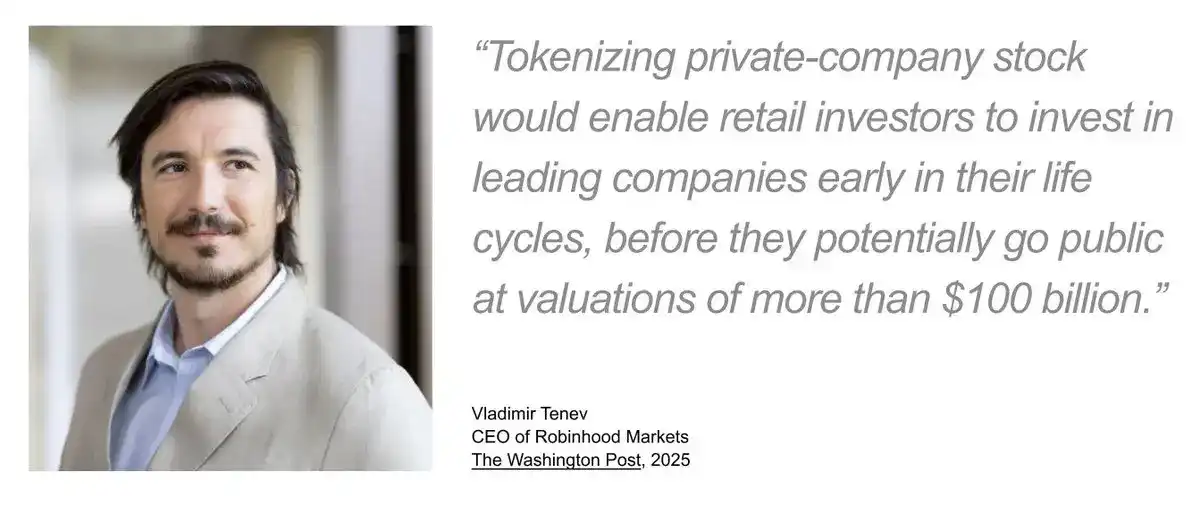
Equity tokenization promises to bridge this access gap.

Equity tokens can be issued through various structural models, but the most common method currently relies on a Special Purpose Vehicle (SPV).

In this structure, the SPV holds the underlying shares, and the tokens represent economic claims on that entity. This allows issuers to give investors exposure to investments in private companies, opportunities that were previously limited to venture capital firms and institutional investors.

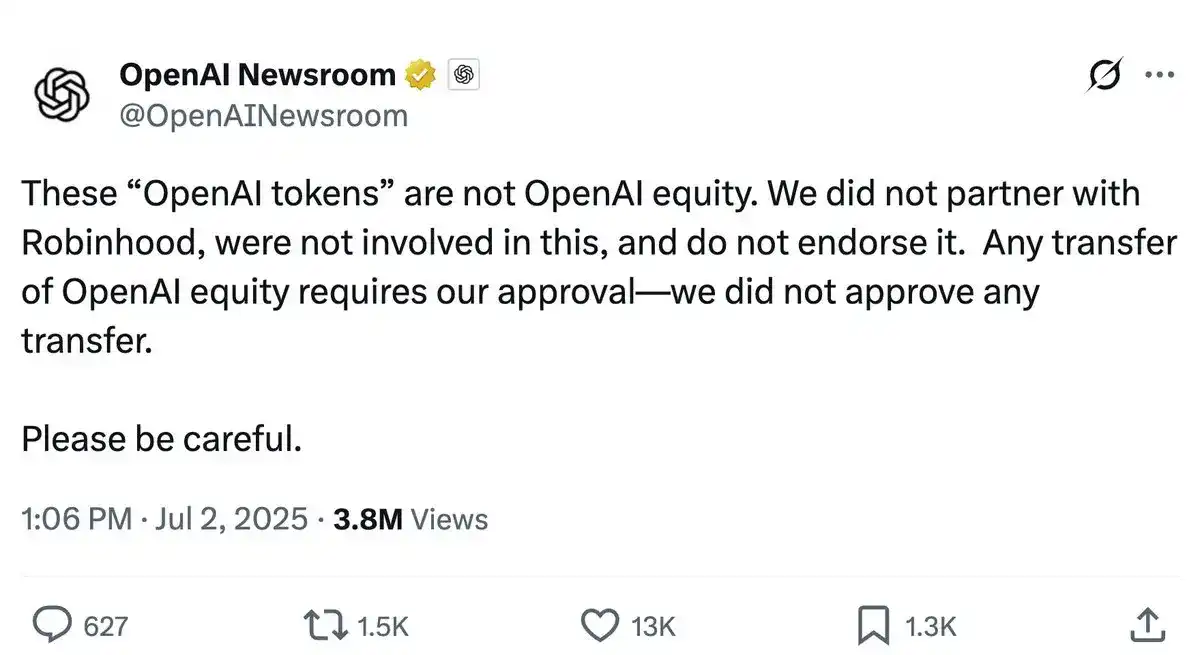
For example, Robinhood recently announced the rollout of tokens for OpenAI and SpaceX to eligible users in the EU.
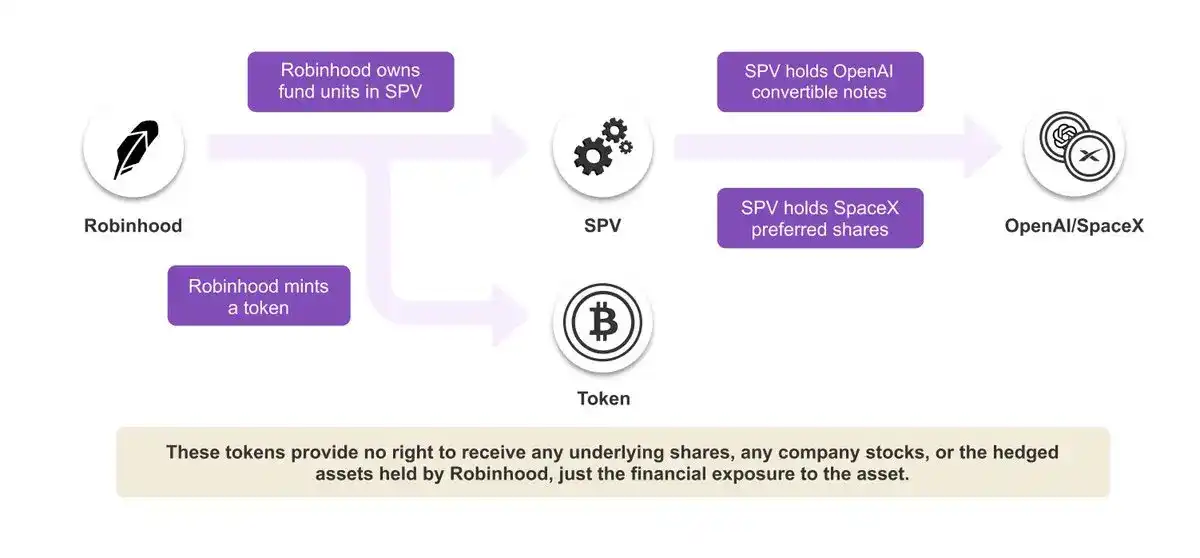
These tokens give investors exposure to two of the world's hottest private companies. However, they do not represent direct ownership of OpenAI or SpaceX shares. Instead, the tokens represent financial interests linked to an intermediary entity.

This highlights a core challenge of equity tokenization: the rights represented by the token are not always standardized.

Different issuers can design tokens with substantially different economic rights. In Robinhood's case, it is currently unclear whether the SpaceX token provides preferred stock rights, or if the token can convert to common stock should SpaceX eventually go public.

Preferred and common stock differ in liquidation priority, voting rights, and return characteristics. Without clear articulation of these terms, it is difficult for investors to price or compare tokens pegged to the same company.

Consequently, many tokenized private equity offerings provide economic exposure rather than direct ownership. Because the token sits at a different legal level than the underlying share, investors must understand the structure before assuming what they own.
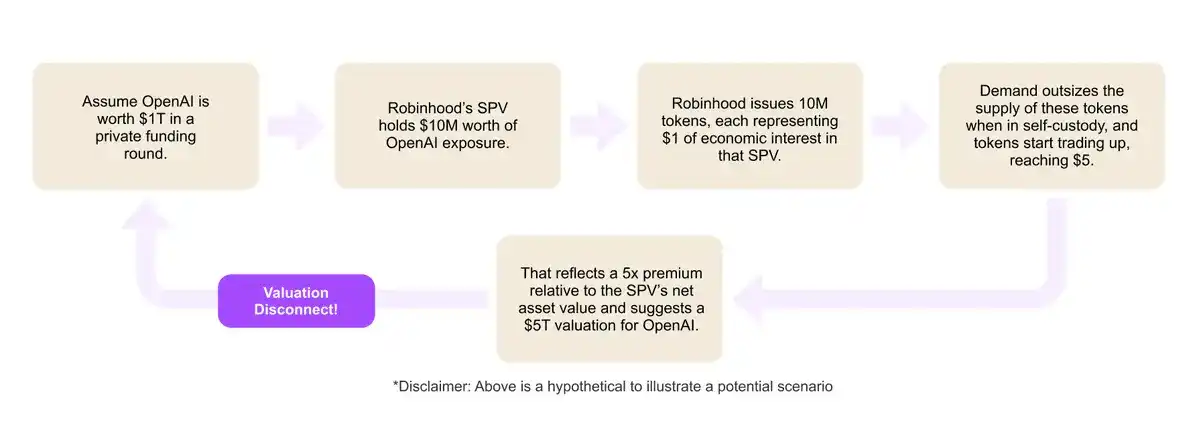
Despite these structural ambiguities, investor demand for access to private markets continues to grow. This is set against a backdrop where companies are also staying private for longer.

Surveys show that about 90% of Americans would be willing to allocate some of their retirement savings to private assets, with interest particularly strong among Gen Z and millennial investors.

Equity tokenization promises greater access to private markets, continuous liquidity, and new ways to structure financial ownership.


İlgili Sorular

QWhat are the three main market gaps that tokenized equity can address according to the article?

AThe three main market gaps are: 1) 24/7 trading, moving from limited weekly trading hours to continuous, around-the-clock markets. 2) Ownership, by reducing reliance on intermediaries and allowing for direct ownership tracking on a shared ledger, turning equity into a programmable financial asset. 3) Access restrictions, by solving the limitations in private markets that often exclude non-accredited investors from high-growth private companies.

QHow does the article define a stock token, and how is it different from a traditional stock?

AA stock token is defined as a blockchain-based asset that represents shares in a company or structured economic rights related to those shares, with ownership tracked and transferred via distributed ledger technology (DLT). It is different from a traditional stock because it is not merely a traditional stock placed on a blockchain; it represents a programmable financial asset on a shared ledger, reducing intermediary layers and enabling new financial uses like collateral for loans or placement in liquidity pools.

QWhat structural model is currently the most common for issuing equity tokens, as mentioned in the article?

AThe most common structural model for issuing equity tokens currently is through a Special Purpose Vehicle (SPV). In this structure, the SPV holds the underlying shares, and the tokens represent economic claims on that entity, providing investors exposure to private companies that were previously limited to venture capital firms and institutional investors.

QWhat core challenge does the article highlight regarding the rights represented by equity tokens?

AThe core challenge highlighted is that the rights represented by equity tokens are not always standardized. Different issuers can design tokens with substantially different economic rights, such as variations in liquidation priority, voting rights, and return characteristics. This lack of clarity makes it difficult for investors to price or compare tokens linked to the same company, as many offer economic exposure rather than direct ownership.

QWhat significant growth is cited in the article to demonstrate the shift towards real-world asset tokenization?

AThe article cites that since early 2025, the market capitalization of equity tokens has grown nearly 3.5 times. This expansion reflects a broader shift towards the tokenization of real-world assets and has occurred alongside the rise of stablecoins, which have grown more than tenfold in less than five years and become a primary settlement layer for on-chain financial activity.

İlgili Okumalar

South Korean Exchanges 'Battle' Regulators, Challenging the Boundaries of Enforcement and Legislation

South Korea's cryptocurrency industry is engaged in a rare, direct confrontation with regulators. The Financial Intelligence Unit (FIU), the primary anti-money laundering (AML) watchdog, has recently imposed heavy penalties on major exchanges like Upbit and Bithumb for alleged violations involving unregistered overseas VASPs and AML procedures. However, exchanges are now actively challenging these actions in court and through industry associations. In a significant shift, the Seoul Administrative Court ruled in favor of Upbit's operator, Dunamu, overturning part of an FIU-ordered business suspension. The court found the FIU's penalty criteria and justification insufficiently clear. Similarly, the court suspended the enforcement of a six-month business suspension against Bithumb pending a final ruling, citing potential irreversible harm to the exchange. Beyond legal battles, the industry is contesting proposed legislative amendments. The Digital Asset eXchange Alliance (DAXA) strongly opposes a draft rule that would mandate Suspicious Transaction Reports (STRs) for all crypto transfers over 10 million KRW (~$6,800). DAXA argues this "poison pill" clause violates legal principles and would overwhelm the STR system, increasing reports from 63,000 to an estimated 5.45 million annually for major exchanges, thereby crippling effective AML monitoring. This conflict highlights a structural tension in South Korea's crypto governance: comprehensive digital asset laws are still developing, while regulators rely heavily on AML enforcement. The industry's move from passive compliance to active legal and legislative challenges signifies a new phase, pressing for clearer rules and more proportionate enforcement. While short-term disputes may intensify, this clash could ultimately lead to a more mature and sustainable regulatory framework for South Korea's vibrant crypto market.

marsbit28 dk önce

South Korean Exchanges 'Battle' Regulators, Challenging the Boundaries of Enforcement and Legislation

marsbit28 dk önce

After 50x Storage Surge, Justin Sun Always Looks to the Next Decade

Sun Yuchen, known for his controversial stunts like a $30 million lunch with Warren Buffett (canceled due to a kidney stone) and eating a $6.2 million duct-taped banana, is often overshadowed by a significant fact: his decade-long track record of spotting major investment trends. In 2016, he famously advised young people to invest in Bitcoin, Nvidia, Tesla, and Tencent instead of buying property. A hypothetical $20,000 investment in Nvidia and Tesla from that list would now be worth over 50 million RMB. His latest major call was on November 6, 2025, predicting a "50x storage opportunity" tied to the AI boom, which materialized with Sandisk's stock surging nearly 50-fold by 2026. Looking ahead, Sun now focuses on the next frontier: Physical AI. He identifies four key areas: 1. **Embodied AI/Robotics**: He sees this reaching its "iPhone moment," with companies like UBTech and Galaxy General leading in commercialization. 2. **Drones**: Viewed as the first commercially viable form of Physical AI, revolutionizing sectors from warfare (e.g., AeroVironment's Switchblade) to logistics. 3. **Spatial Computing**: Beyond VR, it's about AI understanding physical space, a foundational technology for robotics and autonomous systems, exemplified by Apple's Vision Pro. 4. **Space Exploration**: After a 2025 suborbital flight with Blue Origin, Sun advocates for space as the ultimate frontier, discussing blockchain's potential role in space asset management and data transactions. His investment philosophy involves betting on entire, inevitable trends rather than single companies. For robotics, he sees Tesla (the body/manufacturer) and Nvidia (the brain/AI platform) as complementary plays. In defense drones, he highlights companies making tanks obsolete (AeroVironment) and those augmenting fighter jets (Kratos). For space, he participated in Blue Origin's flight and anticipates SpaceX's potential IPO to redefine the sector's valuation. Sun Yuchen's vision frames the next two decades not as a revolution in information flow (like the internet), but in the fundamental operation of the physical world through AI-powered robots, autonomous systems, and spatial intelligence, ultimately extending human and AI activity into space. While many still focus on conventional assets, he continues to look toward the next technological horizon.

marsbit1 saat önce

After 50x Storage Surge, Justin Sun Always Looks to the Next Decade

marsbit1 saat önce

The Billionaires Behind the Most Expensive Midterm Election in History

"The Most Expensive Midterm Elections and Their Billionaire Backers" This analysis details the unprecedented scale of spending in the 2026 midterm elections, highlighting the key billionaire donors shaping the political landscape. Jeff Yass, founder of Susquehanna International Group, has contributed over $81 million, ranking third among individual donors behind George Soros ($102.6M) and Elon Musk ($84.8M). Yass is a major donor to Trump's MAGA Inc. and supports school choice and various candidates. Overall, federal committees have raised over $4.7 billion this cycle, with political ad spending projected to reach $10.8 billion. Republican-aligned groups are significantly out-raising their Democratic counterparts. "Dark money" from undisclosed sources continues to grow. The core stakes involve control of Congress and policy direction for Trump's final term. Donors are also motivated by specific issues: Sergey Brin and Chris Larsen are funding opposition to a proposed California wealth tax and supporting crypto-friendly policies. Other top donors include OpenAI's Greg Brockman and his wife Anna ($50M total to MAGA Inc. and an AI-focused PAC), Richard Uihlein ($45.3M to conservative causes), venture capitalists Marc Andreessen and Ben Horowitz (each over $44M to crypto/AI PACs and MAGA Inc.), Miriam Adelson ($42.6M to GOP leadership PACs), Paul Singer ($33.9M), and Diane Hendricks ($25.8M to MAGA Inc.). The article notes that the peak fundraising period is still ahead, with major primaries approaching.

marsbit1 saat önce

The Billionaires Behind the Most Expensive Midterm Election in History

marsbit1 saat önce

The Largest IPO in History Is Approaching, Surpassing SpaceX, 28 Years of AI Self-Iteration, Countdown to Intelligence Explosion

"Anthropic Nears Trillion-Dollar IPO, Fueled by Explosive Growth and 2028 'Intelligence Explosion' Warning Anthropic is considering a deal valuing the AI company near $1 trillion, potentially leading to one of the largest IPOs ever and surpassing SpaceX. Its revenue has skyrocketed, with Annual Recurring Revenue (ARR) reaching $45 billion in May 2026—a 500% increase in just five months. This vertical growth curve is attributed to its key products, Claude Code and Cowork, dominating AI coding and enterprise collaboration. Beyond commercial success, co-founder Jack Clark issued a pivotal warning in an interview: there is a greater than 50% chance that by the end of 2028, AI systems will achieve recursive self-improvement—the ability to autonomously build a 'better version' of themselves, initiating an 'intelligence explosion.' This prophecy underpins the company's astronomical valuation, as the market prices in the potential for transformative and disruptive AI. Further signaling its ambition, Anthropic formed a $1.5 billion joint venture with Goldman Sachs and Blackstone, aiming to disrupt traditional consulting firms like McKinsey by deploying Claude AI for complex strategic work. This move tests AI's capacity to replace high-level cognitive labor, a precursor to its predicted autonomous evolution. The narrative presents a dual future: unprecedented economic opportunity alongside significant risks like economic restructuring and security threats. Anthropic's meteoric rise and Clark's 2028 prediction frame the coming years as a countdown to a potential technological singularity."

marsbit1 saat önce

The Largest IPO in History Is Approaching, Surpassing SpaceX, 28 Years of AI Self-Iteration, Countdown to Intelligence Explosion

marsbit1 saat önce

İşlemler

Spot
Futures

Popüler Makaleler

LINK Nasıl Satın Alınır

HTX.com’a hoş geldiniz! ChainLink (LINK) satın alma işlemlerini basit ve kullanışlı bir hâle getirdik. Adım adım açıkladığımız rehberimizi takip ederek kripto yolculuğunuza başlayın. 1. Adım: HTX Hesabınızı OluşturunHTX'te ücretsiz bir hesap açmak için e-posta adresinizi veya telefon numaranızı kullanın. Sorunsuzca kaydolun ve tüm özelliklerin kilidini açın. Hesabımı Aç2. Adım: Kripto Satın Al Bölümüne Gidin ve Ödeme Yönteminizi SeçinKredi/Banka Kartı: Visa veya Mastercard'ınızı kullanarak anında ChainLink (LINK) satın alın.Bakiye: Sorunsuz bir şekilde işlem yapmak için HTX hesap bakiyenizdeki fonları kullanın.Üçüncü Taraflar: Kullanımı kolaylaştırmak için Google Pay ve Apple Pay gibi popüler ödeme yöntemlerini ekledik.P2P: HTX'teki diğer kullanıcılarla doğrudan işlem yapın.Borsa Dışı (OTC): Yatırımcılar için kişiye özel hizmetler ve rekabetçi döviz kurları sunuyoruz.3. Adım: ChainLink (LINK) Varlıklarınızı SaklayınChainLink (LINK) satın aldıktan sonra HTX hesabınızda saklayın. Alternatif olarak, blok zinciri transferi yoluyla başka bir yere gönderebilir veya diğer kripto para birimlerini takas etmek için kullanabilirsiniz.4. Adım: ChainLink (LINK) Varlıklarınızla İşlem YapınHTX'in spot piyasasında ChainLink (LINK) ile kolayca işlemler yapın.Hesabınıza erişin, işlem çiftinizi seçin, işlemlerinizi gerçekleştirin ve gerçek zamanlı olarak izleyin. Hem yeni başlayanlar hem de deneyimli yatırımcılar için kullanıcı dostu bir deneyim sunuyoruz.

854 Toplam GörüntülenmeYayınlanma 2024.12.13Güncellenme 2025.03.21

LINK Nasıl Satın Alınır

Tartışmalar

HTX Topluluğuna hoş geldiniz. Burada, en son platform gelişmeleri hakkında bilgi sahibi olabilir ve profesyonel piyasa görüşlerine erişebilirsiniz. Kullanıcıların LINK (LINK) fiyatı hakkındaki görüşleri aşağıda sunulmaktadır.

活动图片












