I am not a gambler, nor do I understand the thrill of watching candlestick charts with a racing heart. But when CNN and CNBC announced that they were integrating digital odds from prediction markets into their news broadcasts, I felt as if we were being played by a new kind of "truth."
Crypto bros are evangelizing: traditional polls will be replaced, experts are the high priests of the old era, and only the odds built with real money can reflect the wisdom of the crowd and the truth of reality. However, the trading logic fostered by prediction markets aligns with the "beauty contest" described by Keynes—you no longer care about who is the most beautiful, you only care about "who others think is the most beautiful." The very concept of beauty is "deconstructed," much like Duchamp's urinal placed in an art museum. Prediction markets will continue to accelerate, lose control, until more and more清醒的人 start to "short" this frenzy, to "short" the narrative of prediction markets itself.

Exchanges and casinos are two distinctly separate worlds. Farmers worry about falling grain prices, downstream food processing plants worry about rising prices, so they come to the derivatives market to find someone willing to take on the risk. Because their needs differ, trading can flow.
Yet, in the context of prediction markets, such natural hedgers do not exist. This results in a market where, aside from market makers, there are only smart money with insider information and gamblers destined to be harvested: if a counterparty with an information advantage is willing to trade at that price, the trade is likely a loss for you. Once the "dumb money" is exhausted, liquidity quickly dries up. Since insider trading is allowed to exist on a large scale, prediction markets, without a constant influx of gamblers, are an unsustainable new Ponzi scheme.
In natural systems, the reading on a thermometer does not change the temperature; no matter how we bet, Halley's Comet will still return on schedule. But in social systems, probability itself has the power to "distort the stance of reality"; the greed of the observer can alter the observed reality.
Ethereum can ensure the "economic security" of its blockchain network through slashing mechanisms in staking, but prediction markets completely fail to ensure "social security." On the contrary, they even reward destruction.
If a billionaire heavily bets on an extreme event, they are effectively funding that outcome and using the market's probability signal to create panic or consensus. Massive capital can form a tremendous potential energy, coercing media coverage in reverse to influence public confidence, forcibly collapsing an outcome full of uncertainty into the form the bettor desires.
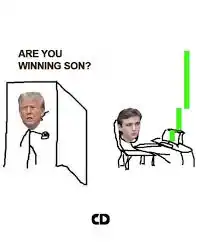
Kaito, which aimed to be an information distribution center, ended up becoming a broadcast station outputting only noise. Prediction markets tout themselves as telescopes to glimpse the future, yet they cannot stop themselves from becoming billboards that manufacture the future.
Many believe that, with relaxed regulations and an influx of capital, prediction markets are inevitably the next big trend. But things always go too far.
People are gradually realizing that we are at the peak of the "gambling culture" cycle.
Total financialization only brings nihilism. People will eventually grow tired of this high-frequency dopamine stimulation and return to the experience of life. We begin to turn off the screens, go hiking, touch real soil, read physical books, and build deep relationships beyond the screen.

"Shorting" the prediction market is not just going long on "human agency," it is also going long on "life."
Since we cannot return to the past, perhaps the only way out is to stop wasting energy at the virtual betting table and turn to step into the sunlight.