Shiba Inu drops 5% despite biggest token burn in 6 months – Here’s why!

ambcrypto2026-07-09 tarihinde yayınlandı2026-07-09 tarihinde güncellendi

Özet

Despite the Shiba Inu community executing its largest single-day token burn in six months, removing over 110 million SHIB from circulation, the token's price dropped approximately 5%. The article explains that while token burns reduce supply to create scarcity, the recent burn activity represents only a tiny fraction of SHIB's massive circulating supply of roughly 585.6 trillion tokens. Therefore, it fails to materially tighten supply. More significantly, weak overall demand in the memecoin sector is the primary driver. Capital has been flowing out of memecoins, with their share of the total altcoin market cap declining sharply. Consequently, SHIB's price remains more sensitive to broader memecoin market weakness and capital outflows than to its own deflationary token burn efforts.

Token burns often act as a mechanism to help a token diverge from broader market FUD.

The logic is simple: Burning tokens permanently removes them from circulation by sending them to dead wallets, reducing the liquid supply available in the market.

If demand stays the same or increases, this lower supply can create scarcity, supporting price and helping the token outperform the broader market.

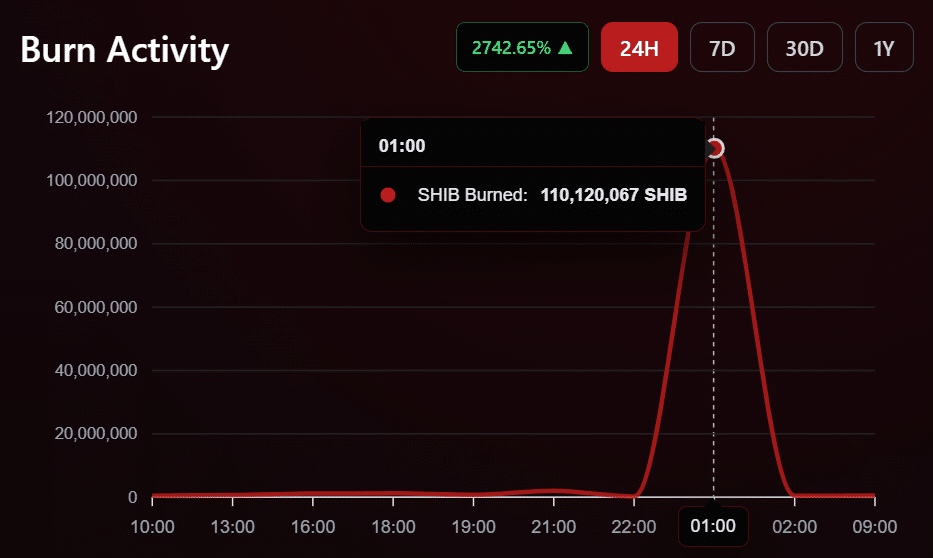
The Shiba Inu community appears to be testing this thesis in real time. As the chart below shows, more than 110 million SHIB were burned on the 8th of July, marking the biggest single-day burn in six months.

More importantly, weekly burns have now climbed to 152 million SHIB, suggesting the burn rate is accelerating despite broader memecoin weakness.
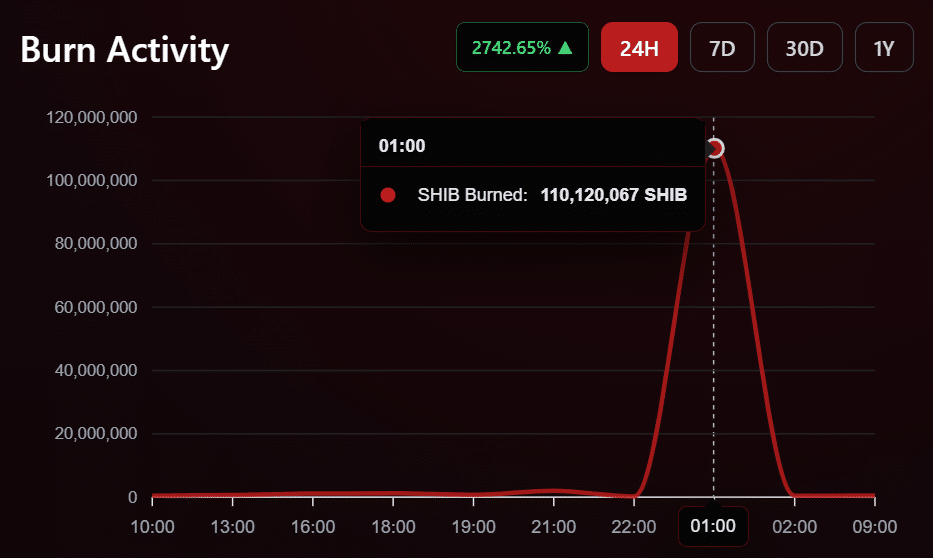
Source: Shiburn

However, the burns have yet to translate into any meaningful technical strength. SHIB is down around 4.57% on the daily chart, continuing to diverge from the typical scarcity-driven narrative.

The reason becomes clearer when looking at Shiba Inu’s [SHIB] supply dynamics.

Since launch, the SHIB community has burned more than 410 trillion SHIB, yet roughly 585.6 trillion tokens still circulate in the market.

In other words, the recent increase in burn activity removes only a tiny fraction of the total supply, failing to materially tighten the circulating supply. Without a meaningful pickup in demand, reduced supply alone is unlikely to reverse SHIB’s broader downtrend.

From a market perspective, this shifts the focus back to the broader memecoin sector. If sector-wide liquidity continues to weaken, deflationary tokenomics alone may not be enough to trigger a sustained FOMO rally.

Instead, SHIB is likely to remain more sensitive to broader memecoin capital flows than its own burn rate.

SHIB burn activity surges as memecoin weakness deepens

The recent 110 million SHIB burn wasn’t an isolated event.

Instead, it capped off a broader pickup in burn activity.

According to Shibburn data, the Shiba Inu community burned 152 million+ SHIB over the past week, lifting the weekly burn rate by 55.77%. Most of that increase came from the 110 million SHIB burned, marking the network’s biggest single-day burn in six months.

Even so, SHIB’s price continues to ignore the spike in burn activity.

The token is down 5%+ over the past week, showing that lower supply alone hasn’t been enough to shift market structure. The memecoin market tells the story.

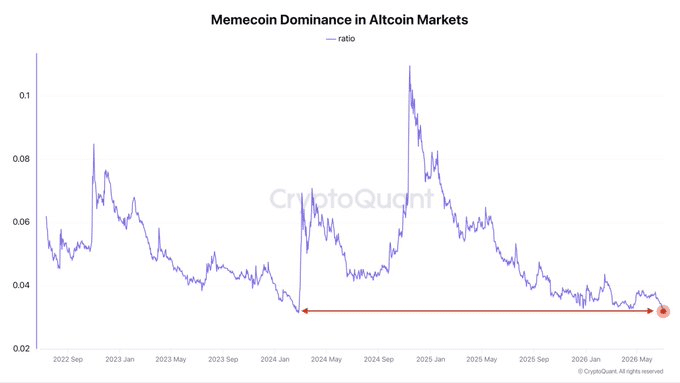
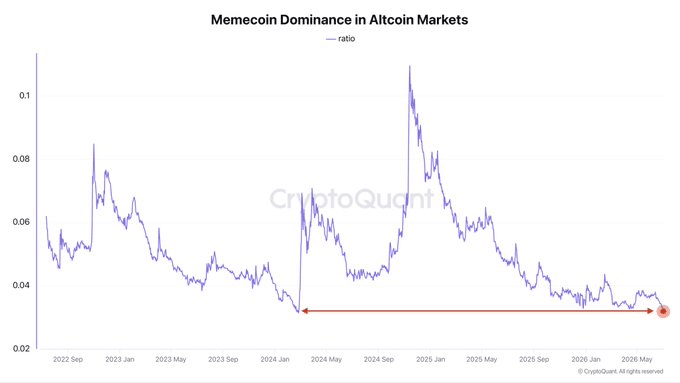
During the Q4 2024 rally, memecoins made up more than 10% of the total altcoin market cap. At press time, that share has dropped to just 3.7%, showing that capital has continued to leave the sector.
Source: CryptoQuant

From a supply-demand perspective, demand clearly remains the limiting factor.

While token burns continue to reduce supply at the margin, the ongoing outflow of capital from memecoins has more than offset that effect. Until liquidity returns to the sector, demand (not deflationary tokenomics) is likely to remain the primary driver of SHIB’s price.


Final Summary

  • SHIB burned 110 million tokens in its biggest burn in six months, but the price is still falling.
  • Weak memecoin demand continues to outweigh SHIB’s token burns.

İlgili Sorular

QWhat is the purpose of token burns in cryptocurrency, and how are they typically expected to affect the token's price?

AToken burns permanently remove tokens from circulation by sending them to dead wallets, reducing the liquid supply. If demand remains stable or increases, this reduced supply can create scarcity, which is expected to support or increase the token's price.

QWhat specific event related to Shiba Inu (SHIB) is highlighted in the article, and how did the token's price react to it?

AThe article highlights that over 110 million SHIB were burned on July 8th, marking the biggest single-day burn in six months. Despite this, SHIB's price dropped by approximately 5%.

QAccording to the article, why have the recent large token burns failed to support SHIB's price?

AThe burns have failed to support the price because they remove only a tiny fraction of SHIB's massive total circulating supply (585.6 trillion tokens). More importantly, weak demand due to capital outflow from the broader memecoin sector is outweighing the effect of the reduced supply.

QWhat data does the article provide to illustrate the weakness in the broader memecoin market?

AThe article states that memecoins' share of the total altcoin market cap has dropped from over 10% during the Q4 2024 rally to just 3.7% at press time, indicating significant capital has left the sector.

QWhat does the article conclude is the primary driver of SHIB's price in the current market environment?

AThe article concludes that demand, driven by broader memecoin capital flows and sector liquidity, is the primary driver of SHIB's price, not its deflationary tokenomics (burn rate) alone.

İlgili Okumalar

Glassnode: Cryptocurrency Market Entering Late-Stage Consolidation Phase

Bitcoin has now been trading below the realized price and short-term holder cost basis for nearly five months, indicating a prolonged period of undervaluation. The market exhibits late-stage accumulation characteristics. Long-term holders (LTHs) are the primary source of sell-side pressure, with their realized losses reaching a daily peak of $280 million, the highest since December 2022, and accounting for 43% of total on-chain realized losses. A sustained decline in this LTH selling is a crucial prerequisite for a meaningful reversal. Spot ETF flows, while moderating from June peaks, remain in a state of monthly net outflows. Daily trading volumes have collapsed roughly 80% from the October 2025 highs, reflecting weak institutional demand and lack of confidence. Derivatives markets show a cautious tilt towards bullishness, with the put/call ratio hitting a 2026 low and funding rates neutral. However, the options volatility skew remains in "put premium," indicating persistent demand for downside protection, even as the absolute cost of that protection has declined. The spot price currently trades approximately 6% below the $66,000 max pain level. In summary, key conditions for a market bottom are in place, including sustained undervaluation and significant LTH capitulation. However, definitive signals for a transition to a bull market—namely, a sustained drop in LTH realized losses, stabilization of ETF fund flows, and price reclaiming key on-chain cost bases—are not yet confirmed. The market is in the late stages of basing, awaiting these catalysts for a sustained recovery.

marsbit1 saat önce

Glassnode: Cryptocurrency Market Entering Late-Stage Consolidation Phase

marsbit1 saat önce

İşlemler

Spot
活动图片