Semiconductor Stock Rebound: Is the Technical Correction Over or a Trend Reversal?

marsbit2026-06-24 tarihinde yayınlandı2026-06-24 tarihinde güncellendi

Özet

The core of recent semiconductor stock volatility is not about daily price swings, but rather the market questioning whether AI-driven semiconductor pricing has entered a new phase. Following a sharp sell-off in Korean stocks on June 23rd, led by Samsung and SK Hynix, a subsequent rebound is seen more as a technical positioning adjustment rather than a confirmed trend reversal. The key variable is HBM (High Bandwidth Memory), essential for AI chips. Its supply-demand imbalance granted memory makers significant pricing power. The current market focus is on whether this dynamic remains strong enough to justify elevated valuations. All eyes are on Micron's upcoming earnings report. The critical factor is not whether results meet already high expectations, but whether the company's guidance confirms that AI memory pricing power, order visibility, and future margins are still expanding. Micron's outlook will serve as a crucial test for the broader AI semiconductor chain, including Samsung, SK Hynix, and other infrastructure players. The recent bounce appears to be a pre-earnings positioning repair. For it to evolve into a sustained uptrend, concrete evidence is needed that the AI infrastructure expansion cycle's fundamentals—particularly for high-end memory—remain robust and can continue to surpass elevated market expectations. The risk is that strong demand alone may not be sufficient if future guidance hints at peaking momentum or increasing supply-side pressures.

TL;DR

On June 23, the South Korean stock market experienced severe selling, with the Kospi closing down about 10%, trading suspended for 20 minutes at one point, and Samsung Electronics and SK Hynix both falling over 12%. A day later, according to media reports, Samsung Electronics rebounded by about 8.5% during intraday trading, and sentiment in Asian tech stocks showed some recovery.
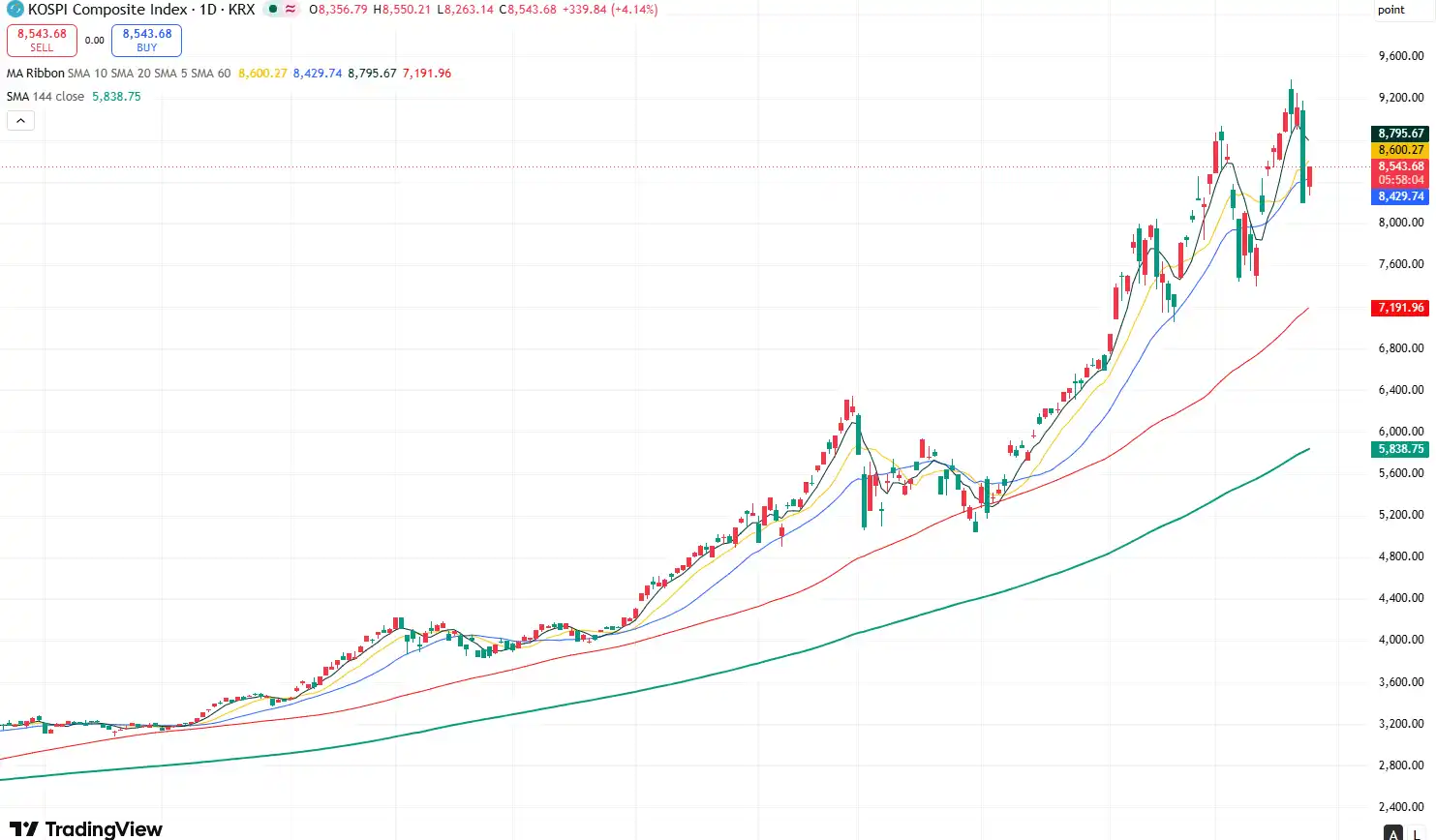
The core of this round of volatility is not the single-day rise and fall, but that semiconductor stocks have entered a new pricing phase after the crowding of AI trades. Over the past year, the expansion of AI infrastructure has linked South Korean memory stocks, U.S. stocks like Micron, NVIDIA, and TSMC on the same chain. As long as AI server expansion continues, high-end memory will remain tight, memory manufacturers' profit expectations will continue to be revised upward, and related semiconductor stocks will still be seen as beneficiaries of the same wave of AI capital expenditure cycle.

What the market now needs to confirm is whether this round of correction is merely a technical release or an early signal of a trend reversal. Samsung's potential shareholder return expectations have provided emotional repair for the Korean market, but a more direct stress test comes from the earnings season, especially from Micron. The company will announce its FY2026 Q3 financial results after the U.S. market closes on June 24, with the conference call scheduled for 14:30 Mountain Time. What investors are looking at is not whether the last quarter was good, but whether the pricing power of AI memory can continue to expand, thereby supporting the valuation of the entire semiconductor chain.

HBM (AI chip high-bandwidth memory) is the core variable in this round of market activity. AI chips need to process massive amounts of data in an extremely short time, regular memory isn't fast enough, making HBM a critical component for high-end GPUs and AI servers. Over the past two years, the supply shortage of HBM has given Micron, Samsung Electronics, and SK Hynix rare pricing power again, making memory stocks one of the most elastic segments in the AI semiconductor trade.

Strong demand has already been heavily traded by the market. Whether the rebound after the plunge can continue does not depend on "whether the AI story is still there," but on whether the semiconductor chain can continue to prove that order visibility, memory prices, subsequent guidance, and profit margins remain sufficiently strong. Micron is one verification point, but what the market truly cares about is whether this AI semiconductor theme can continue to bear the high expectations.

Post-Crash Rebound, More Like Position Repair

This round of volatility first reflects positioning, not a sudden disappearance of demand. Korean tech stocks performed strongly from 2025 to 2026, with AI memory becoming one of the market's most crowded themes. When heavyweight stocks like Samsung Electronics and SK Hynix come under simultaneous pressure, index-level declines can be amplified, and the entire Asian tech sector can easily be repriced in sync.

The selling on June 23 was precisely the concentrated release of this structure. Media reports indicated the Kospi closed down about 10%, with Samsung Electronics and SK Hynix both falling over 12%. For investors, this kind of drop already indicates one problem: AI semiconductor trading is no longer just about fundamentals; it has also become a positioning trade with high concentration and high expectations.

The rebound the next day cannot be directly interpreted as a bottom confirmation either. Samsung Electronics' rise partly stemmed from market expectations for potential shareholder returns. Samsung's previously announced shareholder return policy for 2024-2026 is to return 50% of its three-year free cash flow and maintain a fixed annual dividend of 9.8 trillion Korean Won. If 50% of the three-year free cash flow exceeds the total regular dividend amount, the company will return the balance.

Based on this, the market and media have estimated that if the chip super-cycle significantly boosts free cash flow, Samsung's potential total return or buyback capacity could reach about 90 trillion Korean Won. However, this is not a new buyback plan already announced by the company, merely a projection based on the existing policy framework. It can improve short-term risk appetite but cannot alone prove that AI semiconductor demand has not cooled.

Therefore, the rebound in Korean tech stocks looks more like positioning repair after a plunge, not confirmation that the trend has already turned upward again. For semiconductor stocks, the real issue isn't whether they can rebound, but whether they can find new fundamental support after rebounding. If it's only about shareholder return expectations, short covering, and sentiment repair, the rally may remain at the level of a technical rebound; if earnings reports continue to prove that AI server demand, HBM prices, and the capital expenditure chain are still strengthening, the market will reprice it as a continuation of the trend.

What can cut through the noise of sentiment are the upcoming earnings reports and conference calls. Micron is one of the more direct validators in this round of AI memory trading. It doesn't have Samsung's vast consumer electronics business, and its stock price more centrally reflects the memory cycle and AI server demand. Its earnings and guidance can answer the market's most pressing questions: Are AI server customers still scrambling for memory? Can prices still rise? Will capacity expansion begin to pressure future profit margins?

These questions don't belong only to Micron; they will also affect Samsung Electronics, SK Hynix, and broader AI infrastructure stocks. For the semiconductor stock rebound to upgrade from "technical covering" to "trend continuation," it requires the most sensitive link in the chain to continue providing strong signals.

Micron Needs to Prove Pricing Power Remains

The easiest numbers to see in the earnings report are revenue and EPS, but what's more important this time is whether the pricing logic behind these numbers can continue. For the entire semiconductor sector, Micron's significance lies not in the profitability of a single company, but in its ability to prove that AI memory supply and demand remain in a seller-favorable phase.

Micron's FY2026 Q2 revenue was $23.860 billion, with non-GAAP EPS at $12.20. The company's capital expenditure net for the quarter was $5.0 billion, and adjusted free cash flow was $6.9 billion. The company previously provided FY2026 Q3 guidance of revenue $33.5 billion, plus or minus $750 million, gross margin approximately 81%, non-GAAP EPS of $19.15, plus or minus $0.40.

This set of data explains why the market is willing to assign higher valuations to memory stocks. If HBM is pre-locked by customers and visibility is increased through long-term supply arrangements, memory manufacturers are no longer just traditional cyclical stocks but more like scarce suppliers in the expansion of AI infrastructure. Micron management and market reports have emphasized that HBM supply visibility is high, and high-end memory is transitioning from a common component to a strategic resource in AI capital expenditure.

For average investors, this can be understood as a supply-demand mismatch model. AI companies and cloud providers need to expand data centers, requiring more GPUs. GPUs need more HBM to perform. But HBM capacity expansion is slow, customer qualification cycles are long, and suppliers are concentrated, leading buyers to pre-commit volumes and sellers to gain stronger pricing power.

This is also why memory stocks affect broader semiconductor sentiment. NVIDIA represents AI computing demand, TSMC represents advanced process supply, while Samsung Electronics, SK Hynix, and Micron represent high-end memory constraints. When any of these links show changes in price, orders, or guidance, the market reassesses the pace of AI infrastructure expansion and profit distribution.

The key to Micron's earnings is not "whether this quarter remains strong," as the market already expects it to be strong. The incremental information lies in three areas: whether the Q3 results beat the company's previously high guidance, whether forward-quarter guidance continues to exceed the already elevated market expectations, and whether the shipment schedule for new products like HBM4 proceeds smoothly.

This is also why a good earnings report may not be enough. Over the past few quarters, the basis for AI memory stock gains has been consecutive beats. If Micron only meets expectations, or if the tone of the conference call shifts from supply tightness toward supply-demand balancing, the market may deem that valuation anchors need to be lowered. At that point, pressure wouldn't stay on MU stock alone but could spread to Samsung Electronics, SK Hynix, and other stocks traded as beneficiaries of the AI semiconductor cycle.

Strong Demand Also Brings Low Error Tolerance

Current evidence supports that demand has not yet been disproven, not that the cycle has ended. Micron's HBM supply visibility, strong performance last quarter, and continued expansion of AI infrastructure by cloud providers still point to the memory chain being in a high-activity phase. The rapid rebound in semiconductor stocks also indicates the market hasn't abandoned the AI demand theme.

But investors need to be wary of another layer of risk: strong fundamentals do not mean stock prices have no downside. Especially when valuations have baked in continued beats as the default assumption, the market's definition of bad news becomes harsher. In other words, semiconductor stocks might adjust not because demand disappears, but potentially because demand "doesn't get stronger."

In the past, the core risk for memory stocks was a downward price cycle. Now the risk is more complex. Customers are still ordering, but growth is no longer being revised upward—the stock may adjust first. HBM is still in short supply, but new capacity in 2027 cools price expectations—valuations may also drop first. Micron is still profitable, but rising capital expenditures compress future free cash flow—the market will similarly recalculate cycle quality.

This is precisely the key to judging whether it's a "technical correction ending" or a "trend reversal." A technical correction usually corresponds to release after positioning becomes crowded; as long as earnings and guidance continue to support the original logic, funds may return to the main theme. A trend reversal is different; it means the market begins to doubt future profit revision potential or believes the supply-demand relationship has shifted from extreme tightness toward balance.

The warning from the June 23 plunge lies here. It may not indicate that AI demand has peaked, but it shows the error tolerance of this trade chain has lowered. Foreign capital profit-taking in the Korean market, concentrated index weights, and crowded AI themes mean any signal not strong enough could be amplified into sector-wide volatility.

Samsung's potential shareholder returns should also be understood within this framework. Returning free cash flow benefits shareholders, but only if free cash flow can be sustainably generated. If chip profits continue to be revised upward, large dividends and buybacks will strengthen stock price support. If future capital expenditures intensify and cyclical profits are discounted anew, shareholder return expectations could also be downgraded.

So, this rebound looks more like a verification repair ahead of earnings. What investors are buying back is not certainty, but an option to wait for Micron and other semiconductor companies to provide stronger evidence. Only when fundamentals continue to exceed already high expectations does the rebound have a chance to shift from sentiment repair to trend continuation.

Valuation Anchor Lies in Guidance and 2027 Supply-Demand

After Micron's earnings release, the market's immediate reaction may still be to revenue, EPS, and gross margin, but what determines whether the AI semiconductor trade can continue expanding is management's tone regarding subsequent quarters.

If Q3 results beat guidance and forward guidance is revised upward again, it indicates customer orders, prices, and product mix are still improving, making the Korean tech stock plunge look more like a positioning clearance. Especially the HBM4 shipment schedule—if it proves Micron is increasing its share of high-end products—the market will continue to see it as a beneficiary of tight AI memory supply and also reinforce risk appetite for memory stocks like Samsung Electronics and SK Hynix.

Conversely, if management becomes cautious about 2027 supply-demand or capital expenditure rises faster than profit revisions, investors will reassess the quality of this cycle. The dangerous moment for the memory industry often isn't when demand disappears immediately, but when supply expansion begins to change future price expectations.

The current market's contradiction lies here: AI memory hasn't been disproven, but valuations have begun to demand higher-frequency, clearer evidence. Micron doesn't need to prove AI demand exists; the market already believes that. It needs to prove that demand intensity, supply constraints, and price elasticity are still sufficient to support the already high pricing.

This is also a common problem facing the entire semiconductor sector. NVIDIA, TSMC, memory manufacturers, and Asian tech stocks are all traded on the same AI infrastructure chain. As long as key links in the chain continue to beat expectations, the sector rebound can be interpreted as the correction ending; but if guidance starts turning cautious, or the market finds profit revisions can't keep up with valuations, the rebound may just be a technical repair before a trend weakens.

Until this answer emerges, the rebound in Asian tech stocks can only be seen as repair. For investors holding MU, Samsung Electronics, SK Hynix, and broader AI infrastructure stocks, daily ups and downs are not the main theme. Whether Micron can translate high supply visibility into higher guidance and strong demand into higher profit margins is the validation point for whether this semiconductor trade can continue.

Trend Kriptolar

İlgili Sorular

QWhat is the core issue behind the recent volatility in semiconductor stocks, according to the article?

AThe core issue is not a single day's price movement, but that semiconductor stocks, after becoming a crowded AI trade, have entered a new pricing phase. The market is trying to determine if the recent correction is just a technical release of pressure or an early signal of a trend reversal.

QWhy is Micron's upcoming earnings report considered a crucial test for the AI semiconductor trade?

AMicron's report is a key test because it can validate whether the pricing power for AI memory (especially HBM) can continue to expand, thereby supporting the valuation of the entire semiconductor chain. The market needs to see strong order visibility, memory prices, future guidance, and margins to confirm the trend.

QWhat is HBM, and why is it a central variable in the current semiconductor market rally?

AHBM (High Bandwidth Memory) is high-speed memory for AI chips. It's crucial because AI chips need to process massive data quickly, and regular memory isn't fast enough. HBM's supply shortage over the past two years has given memory makers like Micron, Samsung, and SK Hynix significant pricing power, making them high-leverage plays in the AI semiconductor trade.

QWhy does the article describe the post-crash rebound in South Korean tech stocks as more of a 'positioning repair' rather than a confirmed trend reversal?

AThe rebound is seen as positioning repair because the initial sell-off reflected high concentration and crowded positioning in the AI memory trade. The subsequent bounce was partly driven by expectations of potential shareholder returns from Samsung and short-covering, not necessarily new fundamental evidence of sustained AI demand strength.

QWhat are the two main scenarios the article presents for interpreting the semiconductor stock rebound, and what determines which scenario is correct?

AThe two scenarios are: 1) A technical correction ending, where strong earnings and guidance continue to support the original AI logic. 2) A trend reversal, where the market starts doubting future profit growth or sees the supply-demand balance shifting from extreme tightness towards equilibrium. The key determinant is whether upcoming reports (like Micron's) provide stronger-than-expected evidence on order visibility, pricing, and future guidance.

İlgili Okumalar

Chip Stocks Lead U.S. Market Decline: Is AI Trading Being Hit by Both Interest Rates and Returns?

Chip stocks led a broad decline in US markets, with the Nasdaq dropping 2.2% and the S&P 500 falling 1.4%. This selloff reflects a dual challenge for the once-high-flying AI hardware trade: rising interest rate expectations and growing investor impatience for clear returns from massive AI capital expenditures. The pressure was most acute on hardware leaders. Nvidia fell about 4%, dipping below a $5 trillion market cap, while Micron plunged 13.2% ahead of its earnings report. Declines across memory, storage, AI, and mobile chips indicated a sector-wide retreat. The selloff spread globally, with South Korea's KOSPI index dropping nearly 10% as key suppliers SK Hynix and Samsung recorded double-digit losses. Investors appeared to be taking profits from the most crowded trades first. Macro headwinds intensified as market expectations shifted toward a more aggressive Federal Reserve. Forecasts for multiple rate hikes in 2026 pressured high-valuation tech stocks, which rely on long-term growth projections that become less attractive as discount rates rise. Concurrently, investors are scrutinizing the profit potential of the immense AI spending by cloud giants like Alphabet, Amazon, and Meta. While these expenditures drive demand for chips and hardware, the market is now questioning whether AI services will generate sufficient returns to justify the ongoing costs. This adjustment is not necessarily a bubble burst but a recalibration. AI demand fundamentals remain, but the narrative of endless growth can no longer fully offset concerns over higher interest rates and a longer path to profitability. Near-term direction may hinge on Micron's upcoming earnings guidance and incoming inflation data, which will influence both the AI demand outlook and the Fed's policy path. The market is transitioning from blindly buying growth to demanding clearer visibility on returns.

marsbit47 dk önce

Chip Stocks Lead U.S. Market Decline: Is AI Trading Being Hit by Both Interest Rates and Returns?

marsbit47 dk önce

OpenAI's New Paper: How to Train an AI that "Doesn't Deteriorate Under Pressure"?

OpenAI's new paper "Reinforcement Learning Towards Broadly and Persistently Beneficial Models" explores training AI to maintain safe, helpful, and honest behavior even under pressure, in unseen scenarios, or after being fine-tuned for harmful purposes. Moving beyond simple rule-based "don'ts," the research focuses on cultivating "beneficial traits" like honesty, risk-awareness, corrigibility, and transparency. It investigates if reinforcement learning (RL), often prone to "reward hacking" where models exploit loopholes, can instead be used to instill robust, generalized positive behaviors. Researchers created a multi-domain synthetic dialogue dataset covering areas like healthcare and law. They trained a model by replacing 5% of standard RL data with "beneficial trait" data. This model outperformed the baseline in 83% of 53 evaluations, showing average gains of 9.1% in alignment, safety, and helpfulness. Crucially, improvements generalized: a model trained only on healthcare "good behavior" data also performed better in 17 out of 19 non-healthcare alignment tests. The paper also tests "alignment persistence." When subjected to adversarial prompts or harmful fine-tuning, the beneficial trait model showed greater resilience, with smaller performance drops and less "spillover" of bad behavior to unrelated tasks. While not a complete solution, this work suggests a shift from post-hoc correction to proactively shaping robust, principled AI behavior, a critical step for deploying models in high-stakes, complex decision-making scenarios.

marsbit50 dk önce

OpenAI's New Paper: How to Train an AI that "Doesn't Deteriorate Under Pressure"?

marsbit50 dk önce

Global Tech Stocks Plunge: Another Stress Test for the AI Bull Market

Global tech stocks plummeted in a sharp selloff on June 23, with South Korea's KOSPI index crashing nearly 10%, triggering a trading halt. The plunge was led by semiconductor giants Samsung and SK Hynix, dragging down major Asian and US tech indexes and levered ETFs. The immediate trigger was a confluence of three signals within 24 hours: 1) reports that SK Hynix was slowing HBM4 expansion, raising doubts about a key AI chip bottleneck; 2) profit-taking ahead of Micron's earnings report after its massive year-to-date rally; and 3) a warning from Korean regulators about the risks of single-stock leveraged ETFs. The selloff's severity was amplified by Korea's uniquely leveraged market structure: record-high retail margin debt, over $30 billion in volatile single-stock leveraged ETFs requiring daily rebalancing (which creates selling pressure during declines), and the surprising shift of the National Pension Service from a net buyer to a net seller. The event reignited debates about an AI bubble. Analysts differed on timing—some warned of imminent rupture, others saw a temporary liquidity-driven correction—but agreed that sky-high valuations, a shift to retail/leveraged buying, and rising rates created a fragile setup. The parallel steep drop in SpaceX's stock, alongside its massive debt raise for AI infrastructure, underscored a broader market shift from narrative-driven "infinite imagination" to a "return on investment" calculation phase. All eyes are now on Micron's upcoming earnings report, seen as a key test for the AI hardware trade's fundamental logic. A strong report could stabilize markets, while a miss could validate deeper fears. The episode serves as a stark warning: when a bull run becomes dependent on leveraged bets on a single narrative, a violent and rapid correction should not be a surprise. The core question for investors is how much drawdown they are willing to tolerate to stay invested.

marsbit1 saat önce

Global Tech Stocks Plunge: Another Stress Test for the AI Bull Market

marsbit1 saat önce

İşlemler

Spot
Futures

Popüler Makaleler

USDC(WORMHOLE) Nedir

USD Coin (Wormhole): Kapsamlı Bir İnceleme Giriş Hızla gelişen kripto para dünyasında, USD Coin (Wormhole), $USDC(Wormhole) olarak anılan, DeFi (Merkeziyetsiz Finans) alanında öncü bir çözüm olarak öne çıkmaktadır. Solana gibi çeşitli blok zinciri platformlarında faaliyet gösteren USD Coin (Wormhole), sadece ABD doları için dijital bir temsil değildir. Modern finansın yenilikçi ruhunu somutlaştırarak, gelişmiş Wormhole protokolü sayesinde farklı blok zinciri ekosistemleri arasında kesintisiz çapraz zincir işlemlerini ve artırılmış birlikte çalışabilirliği sağlamaktadır. USD Coin (Wormhole) Nedir? USD Coin (Wormhole), farklı blok zinciri ağları arasında sorunsuz işlemleri kolaylaştırmak için tasarlanmış, ABD dolarının tokenize edilmiş bir versiyonudur. Temel amacı, likiditeyi artırmak ve DeFi ekosisteminin işlevselliğini geliştirmektir. Güçlü bir çapraz zincir iletişim ağı kuran Wormhole protokolünden yararlanarak, kullanıcılar çeşitli platformlar arasında USDC tokenlerini zahmetsizce transfer edebilirler. Bu çapraz zincir yeteneği, kripto para kullanımında önemli bir ilerlemeyi işaret ederek, varlıkların farklı blok zincirleri arasında serbestçe akabileceği daha bağlı ve verimli bir ekosistem teşvik etmektedir. USD Coin (Wormhole)'un değer önerisi yalnızca ABD dolarına sabitlenmiş olmasında değil, ayrıca farklı blok zinciri ortamları arasındaki boşlukları kaplama yeteneğinde yatmaktadır. Bu yenilikçi yaklaşım, kullanıcılar ve geliştiriciler arasında daha yüksek bir katılım seviyesini teşvik ederek, merkeziyetsiz finans alanında yeni ve heyecan verici uygulamalar için bir yol açmaktadır. USD Coin (Wormhole)'un yaratıcısı kimdir? USD Coin (Wormhole)'un kökenleri, Jump Crypto tarafından geliştirilen Wormhole ağı ile iç içe geçmiş durumdadır. Spesifik bireysel yaratıcılara dair belgeler açıkça yer almamakla birlikte, Jump Crypto blockchain teknolojisinin ilerlemesine ve finansal uygulamalarını destekleme konusundaki katkılarıyla dikkat çekmektedir. Wormhole ağını oluşturarak, Jump Crypto, çapraz zincir varlık transferlerini teşvik etmede kritik bir rol oynamıştır ve kripto para kullanımının verimliliği ile çeşitliliğini artırmıştır. USD Coin (Wormhole)'un yatırımcıları kimlerdir? USD Coin (Wormhole)'un başarısı, kripto para alanındaki çeşitli önemli fon ve kuruluşların yatırımları ile desteklenmektedir. Ana yatırımcılar şunlardır: Coinbase Ventures: Sektördeki önde gelen kripto para borsalarından biri tarafından desteklenen tanınmış bir risk sermayesi kolu olan Coinbase Ventures, umut verici blok zinciri projelerine gerekli sermaye ve stratejik destek sağlamaktadır. Arrington XRP Capital: Dijital varlıklara özel bir yatırım firması olan Arrington XRP Capital, USD Coin (Wormhole) gibi yenilikçi projelerin potansiyelini görerek, geliştirilmesini desteklemek üzere yatırımlar yapmaktadır. Jump Trading: Jump Crypto'nun ana organizasyonu olan Jump Trading, sadece yatırım sağlamakla kalmayıp, ticaret teknolojisi ve piyasa dinamikleri konusundaki geniş uzmanlığı da Wormhole projesini güçlendirmek için sunmaktadır. USD Coin (Wormhole) Nasıl Çalışır? USD Coin (Wormhole)'un operasyonel çerçevesi, etkili çapraz zincir işlemleri kolaylaştıracak şekilde titizlikle tasarlanmıştır ve güvenliği ile verimliliği maksimumda tutar. İşleyişinin basit bir özeti şu şekildedir: Varlık Kilitleme: Bir kullanıcı, USDC'yi bir blok zincirinden diğerine transfer etmek istediğinde, önce tokenlerini kaynak blok zincirinde kilitler. Bu süreç, varlıkların güvenli olmasını ve daha sonra ya yakılmasını ya da taşınmasını sağlar. Token Bastırma: Tokenler kilitlendiğinde, varış blok zincirinde eşdeğer miktarda USDC bastırılır. Bu, kullanıcının yeni bir platformda fonlarına erişimini sağlayarak, Wormhole protokolünün sağladığı esnekliği yansıtır. Çapraz Zincir Transferi: Wormhole protokolü, tüm transfer sürecini etkin bir şekilde kolaylaştırır. USDC varış zincirinde bastırıldığında, kaynak zincirinde eşdeğer tokenlerin yakılmasını sağlar. Sonuç olarak, iki farklı blok zinciri ortamı arasında değer akışı sorunsuz bir şekilde gerçekleşir. Bu çapraz zincir metodolojisi, işlemlerin güvenli ve şeffaf kalmasını sağlayarak, farklı DeFi ekosistemleri içinde likiditeyi önemli ölçüde artırmaktadır. USD Coin (Wormhole) Zaman Çizelgesi USD Coin (Wormhole)'un evrimini anlamak, kripto para arenasındaki önemine dair hayati bir bağlam sunmaktadır. Projenin tarihindeki önemli dönemleri vurgulayan bir zaman çizelgesi: 2021: Wormhole projesi başlatılır, çapraz zincir varlık transferleri için bir çerçeve oluşturur ve USD Coin (Wormhole)'un geliştirilmesine zemin hazırlar. 2022: Wormhole ağı, 325 milyon dolarlık bir hırsızlıkla sonuçlanan önemli bir güvenlik ihlaliyle karşılaşır. Ancak, bu olay sonunda Jump Crypto tarafından ele alınır ve telafi edilir; bu da projenin güvenlik ve şeffaflık konusundaki kararlılığını sergiler. 2023: USD Coin (Wormhole), Circle'ın Çapraz Zincir Transfer Protokolü (CCTP) ile entegre olur, böylece çapraz zincir transfer yeteneklerini artırır ve DeFi ekosistemindeki yerini destekler. 2024: Wormhole ağının sürekli geliştirilmesi ve genişletilmesi devam eder, böylece USD Coin (Wormhole)'un kullanılabilirliğini ve erişimini artırmak ile operasyonel çerçevesini geliştirir. Ana Özellikler USD Coin (Wormhole)'un başarısı, onu diğer kripto para tekliflerinden ayıran birkaç ana özelliğe atfedilebilir: Çapraz Zincir Birlikte Çalışabilirlik USD Coin (Wormhole)'un merkezinde, birden çok blok zinciri ağı arasında kesintisiz transferleri kolaylaştırabilme yeteneği bulunmaktadır. Bu birlikte çalışabilirlik, merkeziyetsiz finans için bir taş temeli oluşturmakta, çeşitli platformların etkileşimde bulunmasına imkan tanıyarak finansal hizmetlerin evrimini hızlandırmaktadır. Güvenlik Wormhole, güvenli çapraz zincir işlemlerini sağlamak için düğüm doğrulayıcılarından oluşan iyi tasarlanmış bir Guardian Ağı kullanmaktadır. Bu kolektif denetim, dolandırıcılık riskini en aza indirir ve kullanıcıların varlıklarının çapraz zincir transferleri sırasında korunduğuna dair güvence sağlar. Likidite Artışı USD Coin (Wormhole), USDC'nin farklı blok zincirlerinde serbestçe dolaşmasına olanak tanıyarak, DeFi ekosisteminde likiditeyi artırır. Bu artan likidite, daha verimli ticareti teşvik edebilir, daha iyi fiyatlama stratejilerine katkıda bulunabilir ve çeşitli dijital varlıkları kapsayan genel piyasa dinamiklerini iyileştirebilir. Sonuç USD Coin (Wormhole), blok zinciri alanında merkeziyetsiz finansın (DeFi) yeteneklerini güçlendiren ve daha bağlantılı bir finansal ekosistem oluşturan önemli bir yeniliktir. Çapraz zincir işlemleri için sağlam bir çerçevenin yanı sıra güvenlik özellikleri ve saygın yatırımcılardan güçlü destekle, USD Coin (Wormhole) kripto paraların geleceğinde önemli bir rol oynamaya hazırdır. Dijital finans manzarası evrilmeye devam ederken, USD Coin (Wormhole) sadece blok zinciri ağları arasında etkileşim geleceğini kucaklamakla kalmaz, aynı zamanda tokenizasyon ve blok zinciri teknolojisinin, dijital dünyada değeri algılamamız ve kullanmamız biçimini dönüştürmedeki gücünü yeniden teyit eder. Çapraz zincir işlevselliğinin karmaşıklıklarını aşarak, finansal kapsayıcılığı ve yeniliği kripto para dünyasında sağlamak için sofistike bir yaklaşım sergilemektedir.

123 Toplam GörüntülenmeYayınlanma 2024.04.03Güncellenme 2024.12.03

USDC(WORMHOLE) Nedir

W$C Nedir

Dünya$tateCoin ($W$C): Gelişen Kriptopara Projesinin Kapsamlı İncelemesi Giriş Kriptoparaların sürekli evrimi göz önüne alındığında, Dünya$tateCoin ($W$C), web3 teknolojilerinin gücünü kullanarak kendine özgü bir dijital ekosistem yaratmayı amaçlayan bir proje olarak ortaya çıktı. Geleneksel çevrimiçi etkileşim modelleri önemli bir dönüşüm geçirirken, Dünya$tateCoin, internetin bu yeni üçüncü neslinde kendini daha iyi bir şekilde konumlandırmayı hedefliyor. Bu makale, Dünya$tateCoin'in karmaşık yönlerine dalarak projenin genel bir görünümünü, hedeflerini ve web3 alanındaki potansiyel etkisini sunacaktır. Dünya$tateCoin ($W$C) Nedir? Dünya$tateCoin ($W$C), web3 ortamında sorunsuz işlemleri kolaylaştırmak için tasarlanmış bir kriptoparadır. Kullanıcıların çeşitli web3 uygulamalarıyla etkileşime girdiği merkeziyetsiz bir platform oluşturmayı hedefleyen $W$C, kullanıcı deneyimini geliştirmeyi ve dijital hizmetlere erişimi artırmayı amaçlamaktadır. Proje, web3 manzarasında bütünleşik bir parça olmayı hedeflese de, belirli hedefleri ve kullanım durumlarıyla ilgili ayrıntılı bilgiler sınırlıdır; bu durum, hızla gelişen dijital bağlamda potansiyel rolü ve yararlılığı hakkında soru işaretleri yaratmaktadır. Web3'ün özü, merkeziyetsizlik ve kullanıcıların çevrimiçi etkileşimleri üzerindeki kontrolünü artırma etrafında dönmektedir. Dünya$tateCoin bu ilkelerle uyum sağlamayı amaçlamaktadır, ancak paranın belirli uygulamaları ve işlevsellikleri topluluk içinde hala tartışma aşamasındadır. Dünya$tateCoin ($W$C) Yaratıcısı Kimdir? Dünya$tateCoin'in kökenlerini araştırırken, yaratıcısı hakkında bilgi bulmak zor. Şu anda projeye dair bireyleri veya organizasyonları tanımlayan halka açık bir veri bulunmamaktadır. Bu belirsizlik, projenin güvenilirliği üzerinde bir gölge oluşturabilir, ancak kriptopara çerçevesindeki yenilik taahhüdü, gelecekte benimsenmesi için bir itici güç olabilir. Tanınabilir liderliğin eksikliği, kripto alanında güçlü bir topluluk kurmak için kritik olan güven ve şeffaflıkla ilgili engellere yol açabilir. Dünya$tateCoin ($W$C) Yatırımcıları Kimlerdir? Mevcut araştırmalar, Dünya$tateCoin ile ilgili belirli yatırımcılar veya destekleyici organizasyonlar hakkında bilgi vermemektedir. Gelişen kriptopara projelerinin hem gizli yatırımlar çekmesi hem de başlangıç aşamalarında minimalist bir finansal yapıda faaliyet göstermesi nadir değildir. Yatırım destekleri ve finansman yöntemleri etrafındaki belirsizlik, projenin sürdürülebilirliğini ve büyüme beklentilerini etkileyebilir. Kriptopara alanındaki yeni projeleri değerlendirirken, yatırımcılar genellikle finansal destek ve sağlam kuruluşlardan destekle ilgili şeffaflık ararlar. Bu bilgilerin olmaması, Dünya$tateCoin'in geleceğiyle ilgilenen potansiyel kullanıcılar ve paydaşlar için temkinli bir yaklaşım gerektirebilir. Dünya$tateCoin ($W$C) Nasıl Çalışır? Dünya$tateCoin'in operasyonel mekanikleri, web3 teknolojilerinin bir simgesi olan merkeziyetsizlik ilkelerine dayanmaktadır. Kullanıcılar arasında aracılar olmadan doğrudan işlemleri kolaylaştırarak, $W$C güveni ve verimliliği artırmak için tasarlanmıştır. Ancak, Dünya$tateCoin'i diğer kriptoparalardan ayıran benzersiz özellikler ve operasyonel çerçeveyi ayrıntılı şekilde açıklayan kapsamlı belgelerin eksikliği belirgin bir şekilde düşük. Bu bilgi eksikliği, $W$C'nin daha geniş web3 ekosistemi içindeki işleyişini ve kullanıcılara ve geliştiricilere ne tür benzersiz tekliflerle geldiğini anlamayı zorlaştırır. Yine de, merkeziyetsiz işlemlerin sağlanması için temel hedef, projenin sağlam mekanizmalar ve kullanıcı dostu arayüzler uygulama hedeflerini gerçekleştirmesi durumunda daha özgür bir finansal manzara vaad ediyor. Dünya$tateCoin ($W$C) Zaman Çizelgesi Dünya$tateCoin'in tarihi ilerlemesini kapsayan bir zaman çizelgesi oluşturmak, önemli olaylar ve dönüm noktaları hakkında belgelerin olmaması nedeniyle zorluklar doğurmaktadır. Ancak, projeye bir yol haritası oluşturan yaklaşık bir hipotetik aşama sırası hayal edilebilir: İlk Kavram (Tarih Bilinmiyor): Dünya$tateCoin çerçevesinin web3 teknolojileri bağlamında kavramsallaştırılması. Geliştirme Aşaması (Tarih Bilinmiyor): Teknik geliştirme ve kodlama süreçlerinin başlaması. Topluluk Katılımı (Tarih Bilinmiyor): Potansiyel kullanıcılar ve paydaşlarla iletişim kurarak proje için topluluk ilgisinin artırılması. Piyasa Lansman Hedefi (Tarih Bilinmiyor): Geliştirme ve test aşamalarının ilerlemesine bağlı olarak beklenen bir lansman tarihinin duyurulması. Bu aşamalarla ilgili doğrulanmış tarihler ve ayrıntılardaki eksiklik nedeniyle, paydaşların projenin iletişimleriyle güncellemeleri takip etmeleri gerekecektir. Dünya$tateCoin ($W$C) Hakkında Temel Konular Proje ilerledikçe, Dünya$tateCoin'in potansiyelini ve hedeflerini temsil eden bazı ana konu başlıkları ortaya çıkmaktadır: Merkeziyetsizlik: Kullanıcı etkileşimlerini doğrudan teşvik etmeyi amaçlayan projenin temel felsefesi. Web3 Entegrasyonu: Web3 ilkelerinin yansıtılması ve kullanıcılara çok sayıda dijital hizmete sorunsuz erişim sağlama hedefi. Dijital Para: İnternet tabanlı işlemleri kolaylaştıran bir para birimi olarak konumlanan Dünya$tateCoin, web3 pazarına ek likidite sağlamayı hedefliyor. Bilgi Kıtlığı Sorunu: Projenin temelleri, yaratıcıları ve operasyon yöntemleri hakkında ayrıntılı bilgi eksikliği, geliştiricilerden topluluk güvenini inşa etmek için daha fazla şeffaflık gerektirmektedir. Sonuç Dünya$tateCoin ($W$C), kriptopara ve web3 entegrasyonunun heyecan verici fakat belirsiz bir alanında konumlanmaktadır. Merkeziyetsiz bir ortam yaratmayı hedeflese de, yaratıcıları, yatırımcıları ve belirli işlevsellikleri hakkında sınırlı bilgi, potansiyel paydaşlar ve kullanıcılar için zorluklar oluşturmaktadır. Kriptopara dünyasında şeffaflık, katılım ve iyi yapılandırılmış iletişim, Dünya$tateCoin gibi projelerin başarısı için hayati öneme sahiptir. Manzara evrimini sürdürüyor oldukça, paydaşlar projenin web3 anlatısında nasıl yer bulacağını ve dijital ekosistemin devam eden dönüşümüne nasıl katkıda bulunacağını görmek için sabırsızlanacaklardır.

119 Toplam GörüntülenmeYayınlanma 2024.04.05Güncellenme 2024.12.03

W$C Nedir

W Nasıl Satın Alınır

HTX.com’a hoş geldiniz! Wormhole (W) satın alma işlemlerini basit ve kullanışlı bir hâle getirdik. Adım adım açıkladığımız rehberimizi takip ederek kripto yolculuğunuza başlayın. 1. Adım: HTX Hesabınızı OluşturunHTX'te ücretsiz bir hesap açmak için e-posta adresinizi veya telefon numaranızı kullanın. Sorunsuzca kaydolun ve tüm özelliklerin kilidini açın. Hesabımı Aç2. Adım: Kripto Satın Al Bölümüne Gidin ve Ödeme Yönteminizi SeçinKredi/Banka Kartı: Visa veya Mastercard'ınızı kullanarak anında Wormhole (W) satın alın.Bakiye: Sorunsuz bir şekilde işlem yapmak için HTX hesap bakiyenizdeki fonları kullanın.Üçüncü Taraflar: Kullanımı kolaylaştırmak için Google Pay ve Apple Pay gibi popüler ödeme yöntemlerini ekledik.P2P: HTX'teki diğer kullanıcılarla doğrudan işlem yapın.Borsa Dışı (OTC): Yatırımcılar için kişiye özel hizmetler ve rekabetçi döviz kurları sunuyoruz.3. Adım: Wormhole (W) Varlıklarınızı SaklayınWormhole (W) satın aldıktan sonra HTX hesabınızda saklayın. Alternatif olarak, blok zinciri transferi yoluyla başka bir yere gönderebilir veya diğer kripto para birimlerini takas etmek için kullanabilirsiniz.4. Adım: Wormhole (W) Varlıklarınızla İşlem YapınHTX'in spot piyasasında Wormhole (W) ile kolayca işlemler yapın.Hesabınıza erişin, işlem çiftinizi seçin, işlemlerinizi gerçekleştirin ve gerçek zamanlı olarak izleyin. Hem yeni başlayanlar hem de deneyimli yatırımcılar için kullanıcı dostu bir deneyim sunuyoruz.

184 Toplam GörüntülenmeYayınlanma 2024.12.10Güncellenme 2026.06.02

W Nasıl Satın Alınır

Tartışmalar

HTX Topluluğuna hoş geldiniz. Burada, en son platform gelişmeleri hakkında bilgi sahibi olabilir ve profesyonel piyasa görüşlerine erişebilirsiniz. Kullanıcıların W (W) fiyatı hakkındaki görüşleri aşağıda sunulmaktadır.

活动图片