Written by: Muyao Shen, Bloomberg
Compiled by: Saoirse, Foresight News
"Better Than Nothing"
The U.S. Securities and Exchange Commission (SEC) is trying to resurrect the once-booming initial coin offering (ICO) business. But the bigger challenge is finding takers for a product that investors have long since abandoned.
The proposal unveiled earlier this month would reopen public token sales to U.S. investors. Crypto startups could raise up to $5 million annually without completing a full SEC registration, with larger projects eligible for up to $75 million. Compared to the regulatory crackdown following the 2017 ICO frenzy, this proposal represents a significant policy shift.
However, today's product landscape and market are vastly different from the past.
The ICOs that grew wildly nearly a decade ago often required only a whitepaper, a crypto wallet, and investors betting that the newly issued token would keep rising. The SEC's proposed framework comes with disclosure obligations and carries substantial compliance costs.
There's another layer of uncertainty: the proposal simplifies the token fundraising process, but the regulatory rules for trading tokens after issuance remain complex.
The speculative sentiment that once feverishly chased hundreds of new coin varieties has now become highly selective. Bitcoin and a handful of leading tokens command the vast majority of attention in the crypto market; traders seeking higher and faster returns have turned to products like perpetual futures and prediction markets. Recently, some speculative capital has even flowed into AI-related stocks.
Regulators are addressing a problem that was more urgent several years ago: providing a legal path for legitimate crypto projects to raise funds from the public. But the market has already evolved.
Tom Schmidt, general partner at venture capital firm Dragonfly, referring to the stalled *CLARITY Act* in Congress, said, "This is clearly better than nothing, but the bill would have been more valuable if it had been passed years ago. The most urgent issues to be solved now are those the *CLARITY Act* was supposed to address, not fundraising channels."
VC Interest in Token Deals Fades
Since 2025, the scale of token-related deals by venture capital funds has sharply declined:
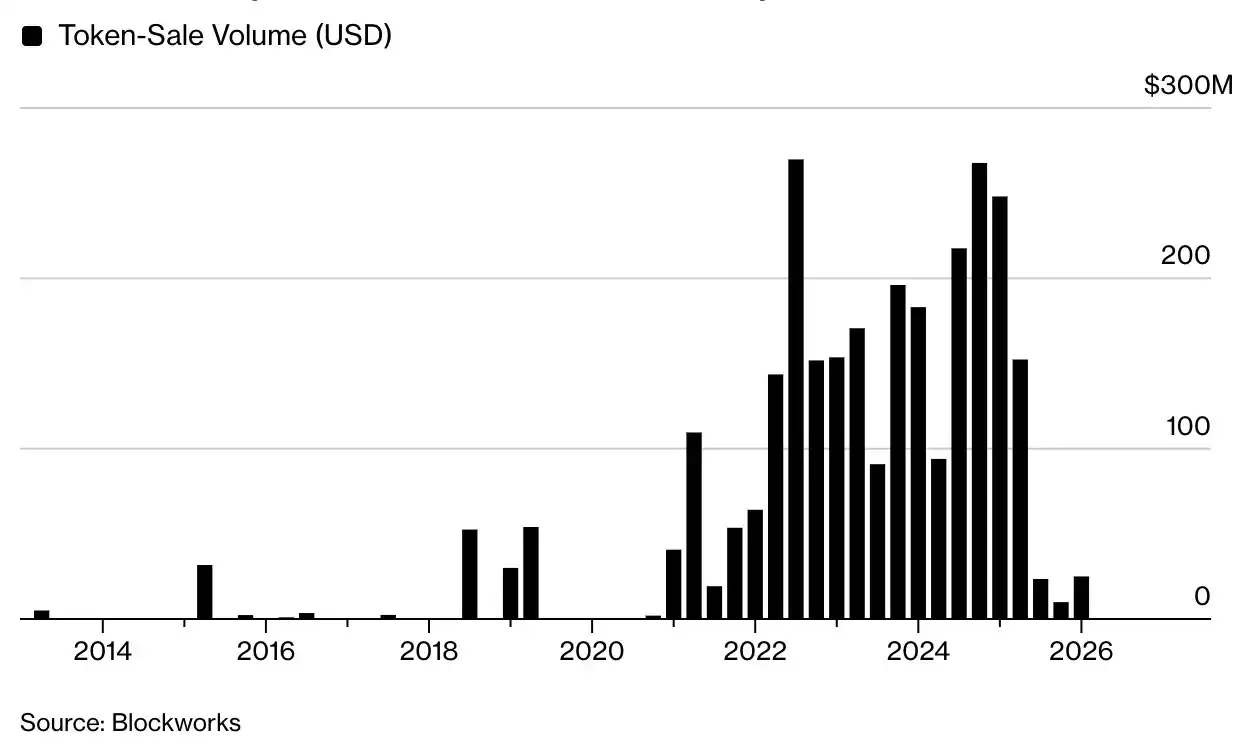
The ICO model allows crypto startups to raise funds by selling newly minted tokens directly to investors, typically in exchange for crypto assets like Bitcoin or Ethereum. At the industry's peak in January 2018, ICOs raised about $3 billion in a single month. This boom was built on cheap capital, limited supply, and market belief that 'someone would always be willing to buy any new coin at a higher price.' It ultimately collapsed under a cascade of price drops, regulatory lawsuits, project failures, and pump-and-dump scams.
Signs of receding interest are also evident among professional investors: the number of token deals by venture capital firms has plummeted. Many top industry VCs have expanded their investment scope beyond crypto, venturing into artificial intelligence, robotics, and other frontier technologies.
ICO Fundraising Plummets
Since the industry peaked in 2018, the number of ICO transactions has continued to decline:
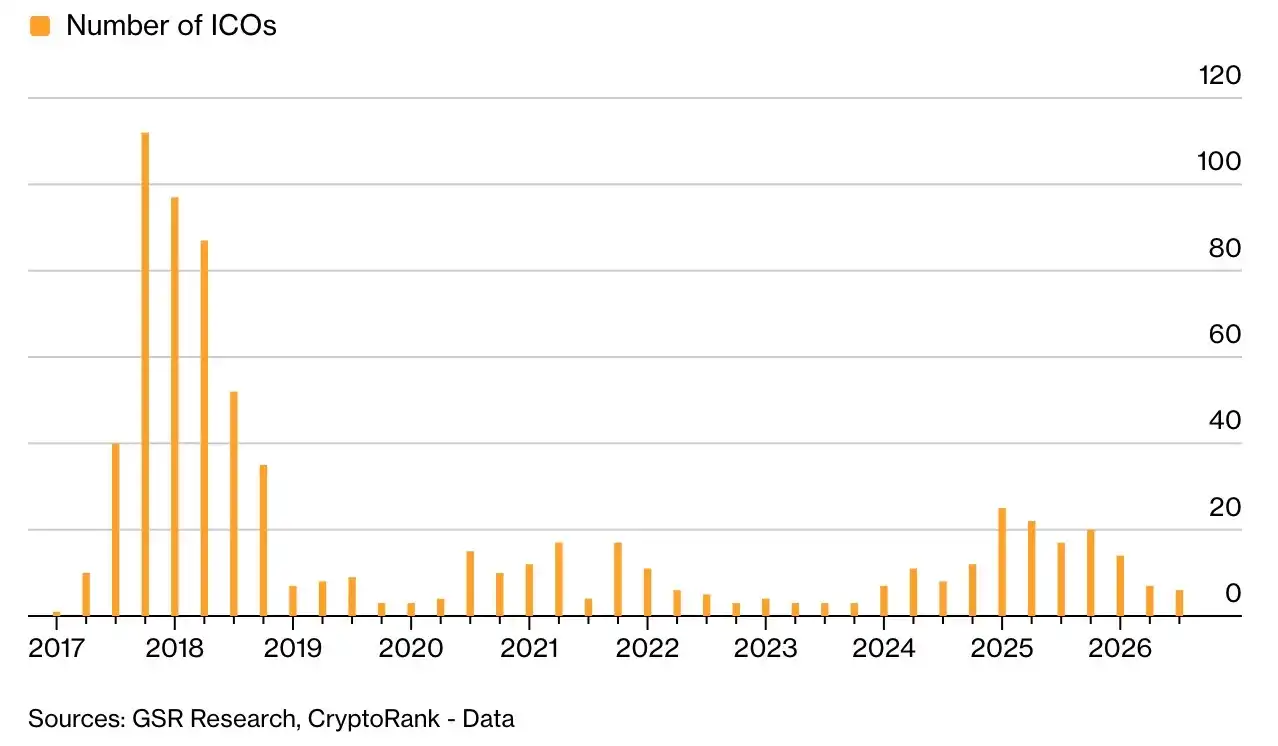
The changed market landscape means new tokens are competing for capital not just against thousands of crypto assets, but also against a growing number of speculative products with better liquidity and clearer narratives.
Despite this, some venture capital firms still view the SEC proposal as a significant reset.
Winnie Lau, partner at Strobe Ventures, said, "The market is in a sideways consolidation phase, and this proposal makes me cautiously optimistic about the future development of digital assets in the U.S. This is a step in the right direction, providing early-stage teams with a viable path to build token networks, raise funds, and innovate in the United States."
This regulatory change is particularly significant for projects that are not meme coins but genuinely want to launch products.
Cosmo Jiang, General Partner and Portfolio Manager at venture firm Pantera Capital, said, "The industry's past situation was very strange: launching meme coins was legal, but creating tokens that could actually generate value was illegal, which is completely contrary to a normal business society."
This corresponds to a far-reaching modification in the proposal: tokens would not be permanently bound by the investment contract at the time of issuance. Once the issuer completes or permanently ceases the managerial or entrepreneurial efforts promised to investors, that investment contract can be terminated.
However, legalizing utility token offerings does not mean the tokens themselves have investment value.
The crypto market has not fully recovered from last October's steep decline; even with recent token price rebounds, investors are not willing to part with money just because a project includes a token.
Carlos Guzman, research analyst at investment firm GSR, said, "An ICO in 2026 is no longer the same as an ICO in 2018. The era of raising capital with just a whitepaper and an idea is over."
Rebound Rally
Even after recent gains, gold has still outperformed Bitcoin this year:
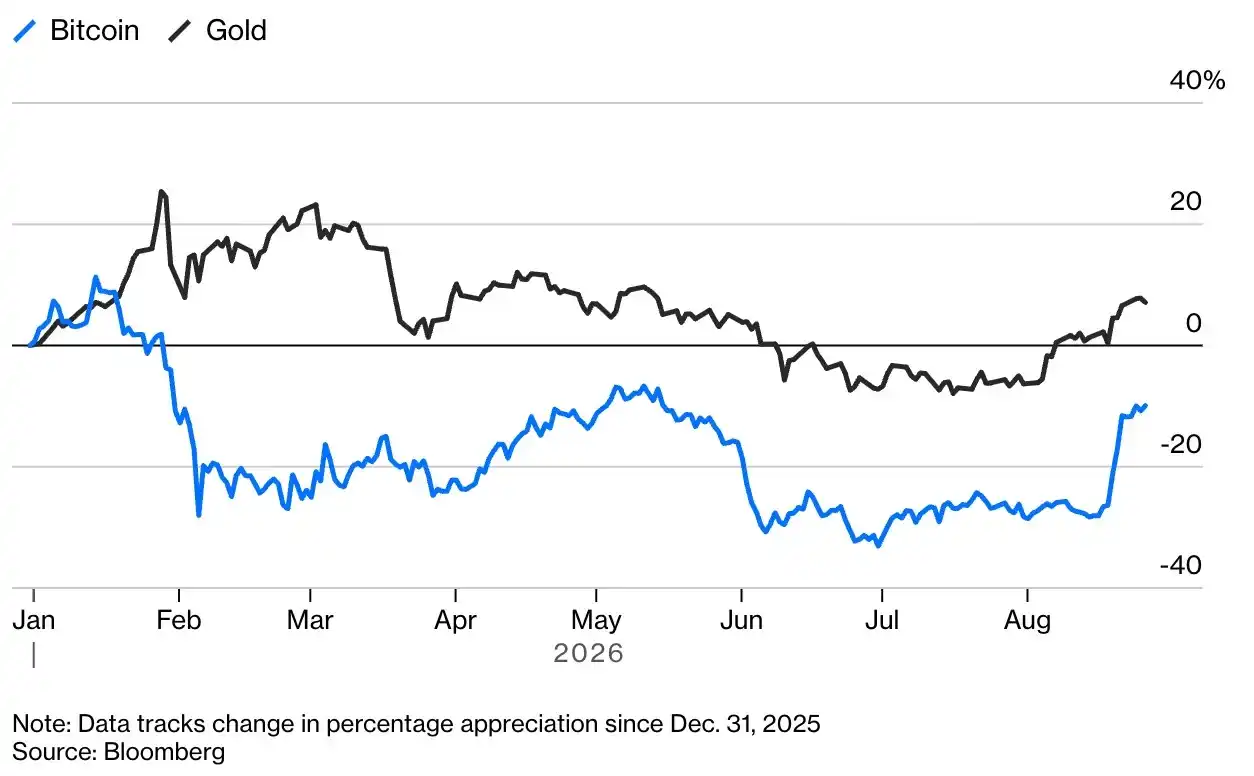
Note: Data shows asset performance since 2025-12-31
Bitcoin proponents have long called it digital gold and an inflation hedge, but this logic hasn't held true this year. Gold is up over 7% year-to-date in 2026; Bitcoin, even after a recent rebound, is still down nearly 10% for the year.