$SEA token delayed: OpenSea chooses market timing over a rushed launch

ambcrypto2026-03-17 tarihinde yayınlandı2026-03-17 tarihinde güncellendi

Özet

OpenSea has delayed the launch of its $SEA token, citing challenging market conditions across the crypto sector. CEO Devin Finzer emphasized that the token "only launches once," and the company prefers to wait for a more favorable environment rather than rushing the release during a period of weak market sentiment. To maintain user engagement, OpenSea is implementing several interim measures: cutting trading fees to 0% for 60 days, offering fee refunds to eligible users (who must forfeit earned "Treasures" points), and discontinuing its "Waves" rewards system in favor of a clearer timeline from the OpenSea Foundation. The decision reflects the current state of the NFT market, which, despite some recent growth, remains significantly smaller and less liquid than during its 2021 peak. With the broader crypto market also experiencing a slowdown—evidenced by the Fear and Greed Index lingering in the "fear" zone—OpenSea aims to launch $SEA only when both platform and market conditions improve.

In crypto, timing can make or break a project and can decide whether a new launch succeeds or fails. Many in the NFT community expected the 30th of March to be the launch day of OpenSea’s long-awaited $SEA token.

However, OpenSea CEO Devin Finzer has delayed the launch, saying,

Market conditions are challenging across crypto right now, and $SEA only launches once.

The reason behind the $SEA token delay

Elaborating on the issue, Finzer took to X and noted,

@openseafdn is pushing back the timeline. a delay is a delay. i’m not going to dress it up, and i know how it lands.

Instead of rushing the launch during a weak market, OpenSea is taking several steps to keep users engaged.

First, the platform will cut trading fees to 0% for 60 days starting on the 31st of March. This move aims to boost activity and attract users to its mobile app and perpetual Futures platform.

Second, OpenSea is offering fee refunds to users who traded during Rewards Waves 3 to 6. However, users who claim the refund must give up the “Treasures” points they earned.

Third, OpenSea will end the “Waves” rewards system. Instead, the company plans to move away from constant point-farming campaigns and follow a clearer timeline set by the OpenSea Foundation.

OpenSea CMO supports the decision

Standing in support of Finzer, Adam Hollander, CMO of OpenSea, added,

I’ve been a CEO before. the hardest decisions are those which are painful in the short-term and require deep conviction in your vision...there aren’t many CEOs who, when presented with the same situation, would decide to give back millions rebuild trust with their users.

That said, OpenSea’s decision to delay the $SEA token is closely linked to the current state of the NFT market. The industry has matured, but it has also become much smaller and less liquid compared to the 2021 boom.

The NFT market faces weak market sentiment

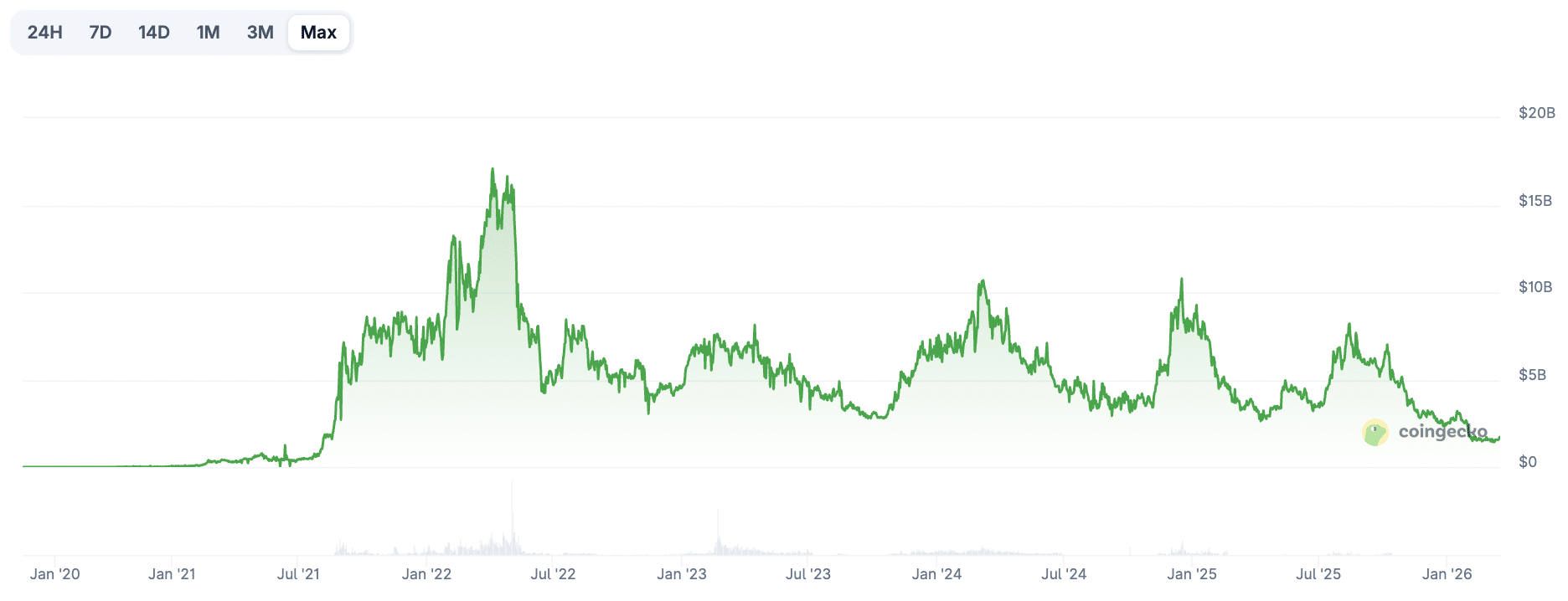
Presently, the global NFT market cap is around $1.75 billion, which is far below the levels seen during the peak of the NFT craze.
Source: Coingecko

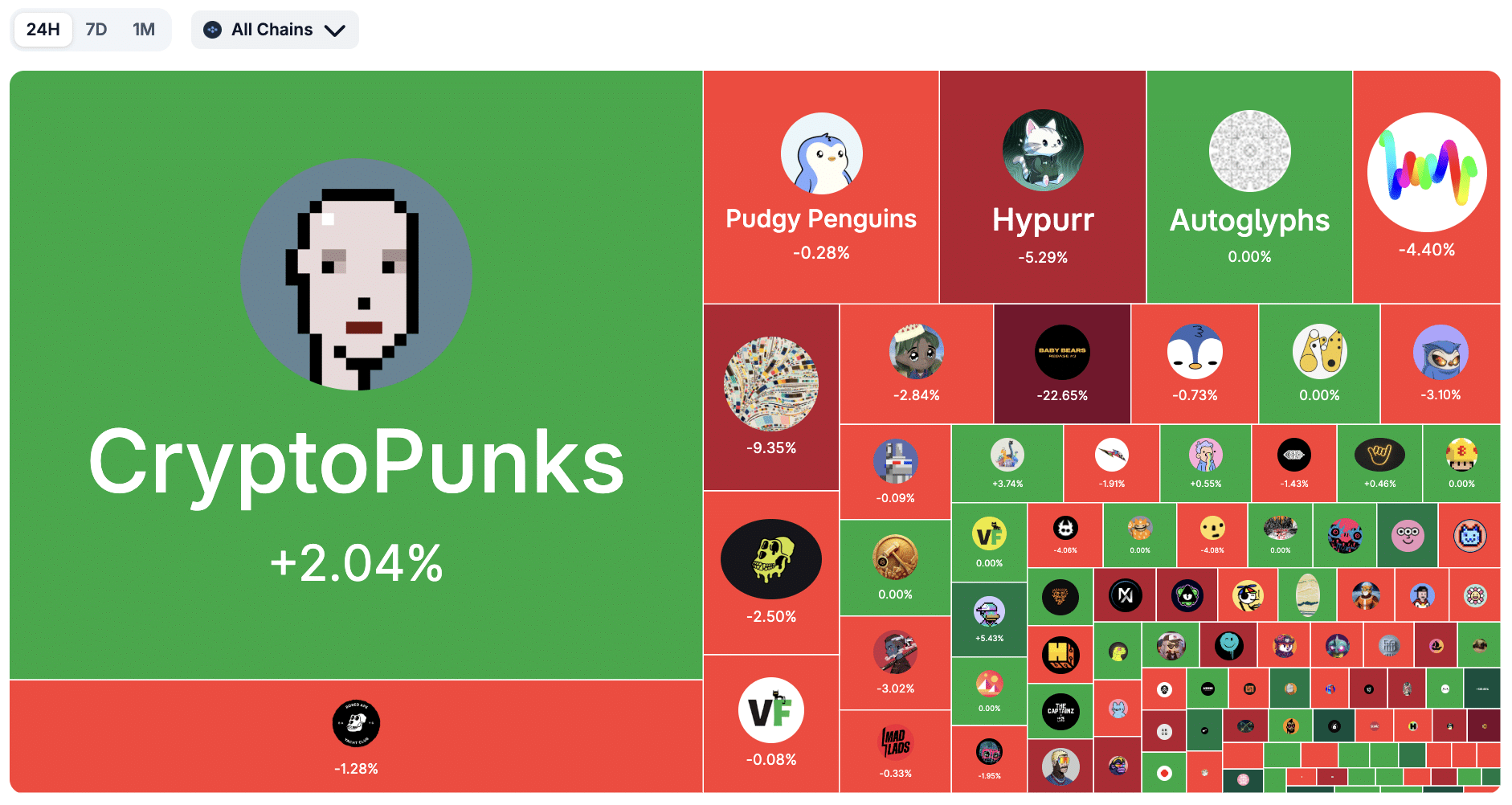
The NFT market cap has risen by about 4% in a day, but still, daily sales volume of around $1.73 million shows that trading activity is still limited.
Source: Coingecko

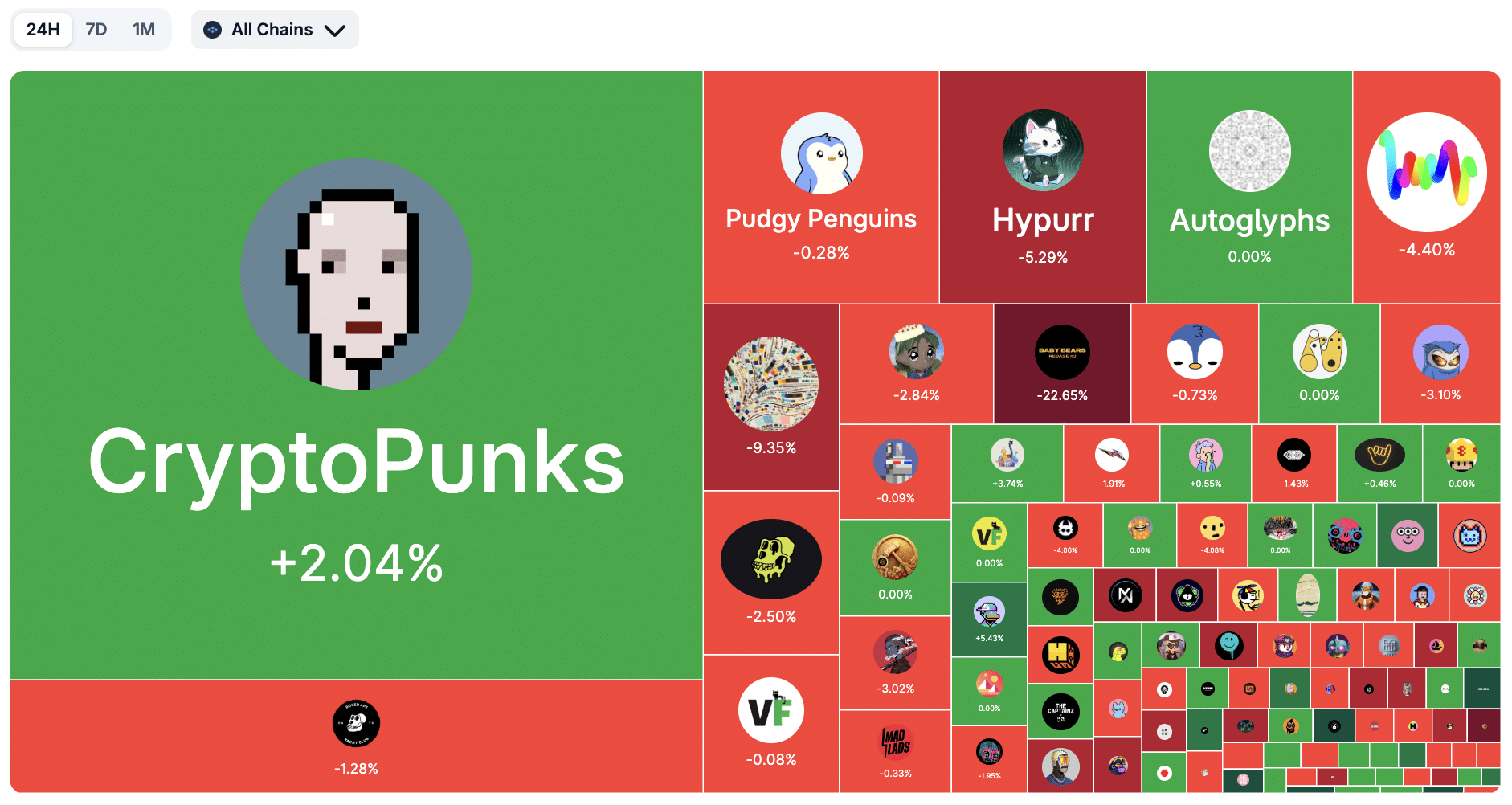
Although trading volume has increased by 39.1%, most activity remains concentrated in a few well-known NFT collections.

As a result, the market shows fast trading but limited depth, with only a small number of assets attracting strong demand.

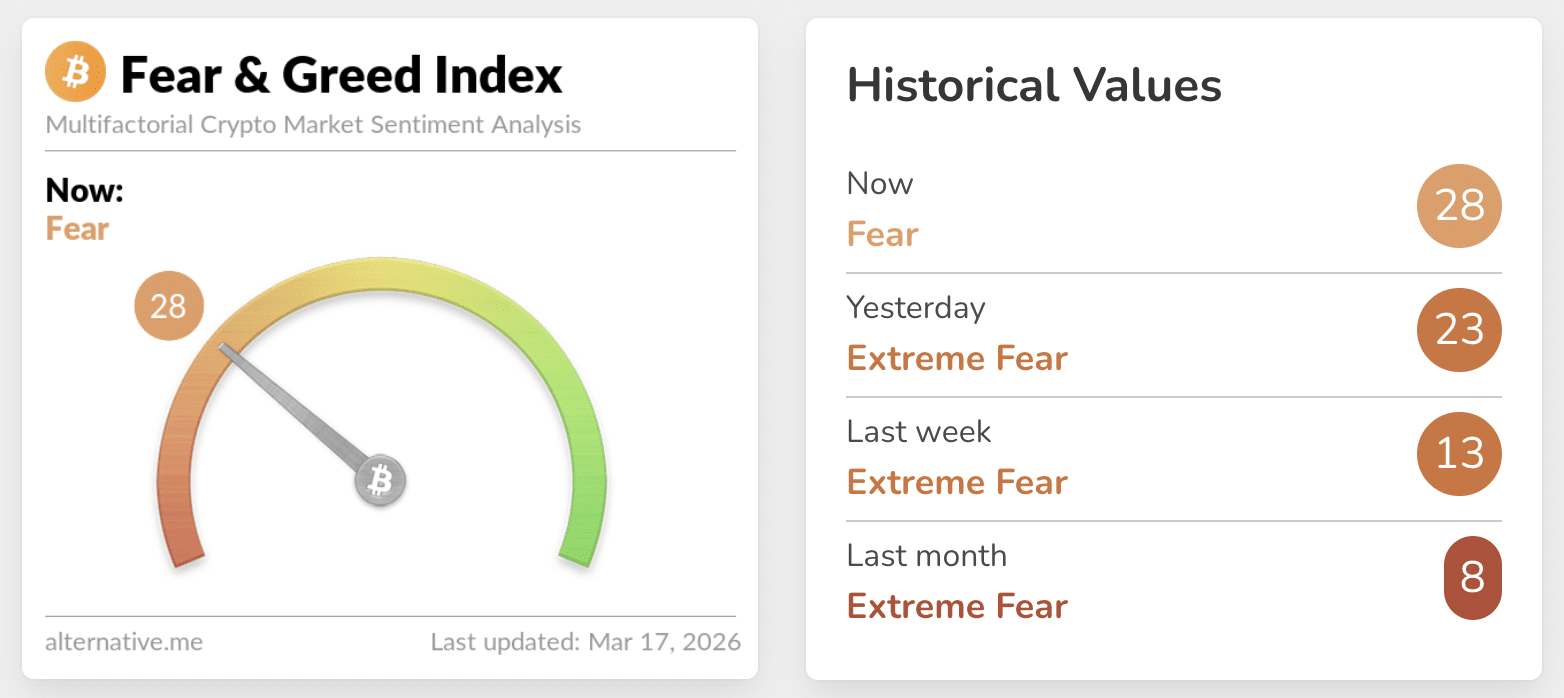
Well, this trend is not just limited to NFTs alone. The broader crypto market is also facing a slowdown. Notably, the crypto Fear and Greed Index reflects this cautious sentiment, remaining in the ‘fear’ zone, although it has slightly recovered from earlier ‘extreme fear’ levels.
Source: Alternative

By postponing the launch, the company may be trying to avoid releasing a major token during a period when there isn’t enough buying demand in the market.

Simply put, OpenSea plans to launch $SEA only when both the platform and market conditions improve.


Final Summary

  • OpenSea’s decision to delay the $SEA token shows the importance of launching a token when market demand is strong.
  • Compared to the boom of 2021, the NFT sector is now smaller and less liquid, forcing platforms to rethink their strategies.


İlgili Sorular

QWhy did OpenSea delay the launch of the $SEA token?

AOpenSea delayed the launch due to challenging market conditions across the crypto space, as the company believes the $SEA token only launches once and wants to ensure it happens when market demand is strong.

QWhat steps is OpenSea taking to keep users engaged during the delay?

AOpenSea is cutting trading fees to 0% for 60 days, offering fee refunds to users who traded during Rewards Waves 3 to 6 (in exchange for forfeiting 'Treasures' points), and ending the 'Waves' rewards system to follow a clearer timeline set by the OpenSea Foundation.

QHow does the current NFT market cap compare to its peak levels?

AThe current global NFT market cap is around $1.75 billion, which is far below the levels seen during the peak of the NFT craze in 2021.

QWhat does the Crypto Fear and Greed Index indicate about current market sentiment?

AThe Crypto Fear and Greed Index remains in the 'fear' zone, reflecting cautious sentiment in the broader market, though it has slightly recovered from earlier 'extreme fear' levels.

QHow did OpenSea's CMO justify the decision to delay the token launch?

AOpenSea's CMO Adam Hollander supported the decision, stating that it requires deep conviction in the company's vision and that few CEOs would choose to give back millions to rebuild trust with users despite short-term pain.

İlgili Okumalar

Google and Amazon Simultaneously Invest Heavily in a Competitor: The Most Absurd Business Logic of the AI Era Is Becoming Reality

In a span of four days, Amazon announced an additional $25 billion investment, and Google pledged up to $40 billion—both direct competitors pouring over $65 billion into the same AI startup, Anthropic. Rather than a typical venture capital move, this signals the latest escalation in the cloud wars. The core of the deal is not equity but compute pre-orders: Anthropic must spend the majority of these funds on AWS and Google Cloud services and chips, effectively locking in massive future compute consumption. This reflects a shift in cloud market dynamics—enterprises now choose cloud providers based on which hosts the best AI models, not just price or stability. With OpenAI deeply tied to Microsoft, Anthropic’s Claude has become the only viable strategic asset for Google and Amazon to remain competitive. Anthropic’s annualized revenue has surged to $30 billion, and it is expanding into verticals like biotech, positioning itself as a cross-industry AI infrastructure layer. However, this funding comes with constraints: Anthropic’s independence is challenged as it balances two rival investors, its safety-first narrative faces pressure from regulatory scrutiny, and its path to IPO introduces new financial pressures. Globally, this accelerates a "tri-polar" closed-loop structure in AI infrastructure, with Microsoft-OpenAI, Google-Anthropic, and Amazon-Anthropic forming exclusive model-cloud alliances. In contrast, China’s landscape differs—investments like Alibaba and Tencent backing open-source model firm DeepSeek reflect a more decoupled approach, though closed-source models from major cloud providers still dominate. The $65 billion bet is ultimately about securing a seat at the table in an AI-defined future—where missing the model layer means losing the cloud war.

marsbit3 saat önce

Google and Amazon Simultaneously Invest Heavily in a Competitor: The Most Absurd Business Logic of the AI Era Is Becoming Reality

marsbit3 saat önce

Computing Power Constrained, Why Did DeepSeek-V4 Open Source?

DeepSeek-V4 has been released as a preview open-source model, featuring 1 million tokens of context length as a baseline capability—previously a premium feature locked behind enterprise paywalls by major overseas AI firms. The official announcement, however, openly acknowledges computational constraints, particularly limited service throughput for the high-end DeepSeek-V4-Pro version due to restricted high-end computing power. Rather than competing on pure scale, DeepSeek adopts a pragmatic approach that balances algorithmic innovation with hardware realities in China’s AI ecosystem. The V4-Pro model uses a highly sparse architecture with 1.6T total parameters but only activates 49B during inference. It performs strongly in agentic coding, knowledge-intensive tasks, and STEM reasoning, competing closely with top-tier closed models like Gemini Pro 3.1 and Claude Opus 4.6 in certain scenarios. A key strategic product is the Flash edition, with 284B total parameters but only 13B activated—making it cost-effective and accessible for mid- and low-tier hardware, including domestic AI chips from Huawei (Ascend), Cambricon, and Hygon. This design supports broader adoption across developers and SMEs while stimulating China's domestic semiconductor ecosystem. Despite facing talent outflow and intense competition in user traffic—with rivals like Doubao and Qianwen leading in monthly active users—DeepSeek has maintained technical momentum. The release also comes amid reports of a new funding round targeting a valuation exceeding $10 billion, potentially setting a new record in China’s LLM sector. Ultimately, DeepSeek-V4 represents a shift toward open yet realistic infrastructure development in the constrained compute landscape of Chinese AI, emphasizing engineering efficiency and domestic hardware compatibility over pure model scale.

marsbit4 saat önce

Computing Power Constrained, Why Did DeepSeek-V4 Open Source?

marsbit4 saat önce

İşlemler

Spot
Futures
活动图片