Russia Advances Bill To Regulate Crypto Market, Eyes July 1st Implementation

bitcoinist2026-04-23 tarihinde yayınlandı2026-04-23 tarihinde güncellendi

Özet

Russia has advanced a key crypto bill, "On Digital Currency and Digital Rights," through its first parliamentary reading, aiming to establish a regulatory framework by July 1, 2026. The legislation recognizes digital assets as property and grants the Central Bank of Russia authority to license and oversee the market, permitting only licensed entities like exchanges and brokers to operate. It prohibits using crypto for domestic payments but allows it for cross-border settlements to bypass sanctions. The bill also introduces investor protection measures, including annual purchase limits for non-qualified investors and stricter oversight of mining activities.

Russia has advanced a key crypto bill on its first reading, as part of its efforts to establish a framework and fully bring the digital assets market out of the shadows in the next few months.

Russia Moves To Regulate Crypto Market By Summer

On Tuesday, the State Duma, the lower house of Russia’s legislature, advanced a key bill to legalize cryptocurrencies and establish a framework to regulate the digital assets in the country’s market.

According to the state news agency TASS, lawmakers passed the bill “On Digital Currency and Digital Rights” on its first reading, with 327 deputies voting in favor. The Russian government first introduced the draft in December 2025, seeking to establish the regulatory framework by summer 2026.

After clearing its first review, the bill still needs to clear the second and third readings in the State Duma. Then, it would proceed to the Federation Council, the upper chamber of the Federal Assembly, for consideration before reaching the President’s desk for signature. If passed, the bill will take effect on July 1, 2026, except for provisions with different effective dates, TASS reported.

The draft will recognize digital assets as property and grant the Central Bank of Russia (CBR) the authority to license, regulate, and oversee the local crypto market. Under the proposed legislation, only licensed professional participants supervised by the Bank of Russia will be allowed into the market.

“No anonymous exchanges or ‘black’ brokers. Exchanges, brokers, and depositories will receive licenses, and the Central Bank will monitor compliance. Transactions conducted through underground platforms will automatically be at risk of being blocked and of losing funds,” Kaplan Panesh, deputy chairman of the State Duma Committee on Budget and Taxes, explained.

The bill also defines the entities authorized to facilitate the circulation of crypto assets in the country, including exchanges, brokers, trust managers, and digital depositories holding the relevant licenses from the central bank.

The proposed draft establishes rules and requirements for authorized entities, and a simplified access procedure for entities already operating under the CBR’s experimental legal regime. It also introduces a simplified procedure for banks and brokers wanting to dive into crypto.

Discussing the regulation of crypto mining activities using Russian information infrastructure facilities, the deputy highlighted that “It is now a legal activity, but with clear rules: the use of only Russian infrastructure, and the reporting of equipment and currency produced.”

Digital Assets Allowed For Cross-Border Settlements

Notably, the bill will prohibit the use of crypto for paying for goods, services, or labor within the country, the report noted. However, it will allow its use for cross-border settlements to bypass sanctions restrictions.

“We have a national currency—the ruble—and it must remain the sole legal tender,” Deputy Panesh emphasized. “But we are making an exception for foreign trade. This allows Russian companies to settle accounts with foreign counterparties using cryptocurrency, bypassing sanctions restrictions. In effect, we are creating a legal instrument for cross-border settlements.”

The legislation will also introduce a tiered system that would limit the investor’s access depending on classification, aiming to “protect ordinary people from losing all their savings in a volatile market.”

As Bitcoinist previously reported, non-qualified investors would be limited to purchasing up to 300,000 rubles annually, worth around $3,800, in the most liquid cryptocurrencies after passing a knowledge test. Meanwhile, qualified investors would be able to purchase unlimited amounts of any digital asset after passing a risk-awareness test.

Panesh noted that the digital asset market in Russia has been in a gray area for years, creating risks for both citizens and the economy, adding that the legislation marks a crucial step for the local market.

“Now we are clearly defining: digital currency is property. This means it can be defended in court, included in the bankruptcy estate, and taken into account in divorce proceedings. This is a crucial step for the legal protection of millions of people who already own such assets,” he concluded.
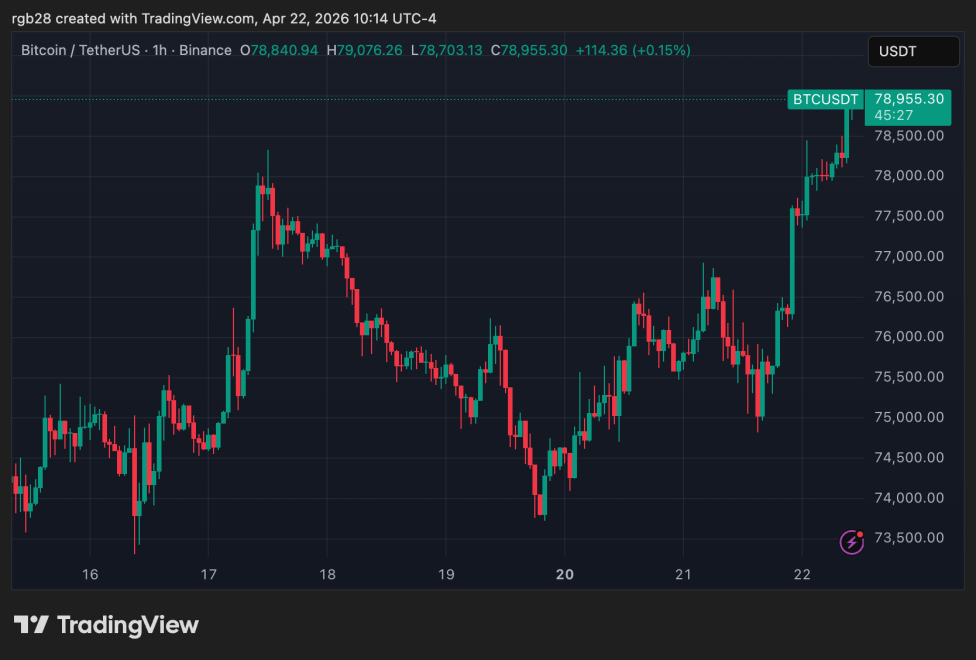
Bitcoin (BTC) trades at $78,955 in the one-week chart. Source: BTCUSDT on TradingView


İlgili Sorular

QWhat is the main purpose of the crypto bill advanced by Russia's State Duma?

AThe main purpose of the bill is to legalize cryptocurrencies and establish a regulatory framework to bring the digital assets market out of the shadows, recognizing crypto as property and granting the Central Bank of Russia authority to license, regulate, and oversee the market.

QBy what date is the bill expected to take effect if passed, and what is one key exception to this date?

AThe bill is expected to take effect on July 1, 2026, except for provisions that have different effective dates.

QHow does the bill propose to regulate the use of cryptocurrency for payments within Russia and for international trade?

AThe bill prohibits the use of cryptocurrency for paying for goods, services, or labor within Russia, but allows its use for cross-border settlements to bypass sanctions restrictions in foreign trade.

QWhat are the investment limits for non-qualified investors under the proposed tiered system?

ANon-qualified investors would be limited to purchasing up to 300,000 rubles (approximately $3,800) annually in the most liquid cryptocurrencies after passing a knowledge test.

QWhich government body will be granted the authority to license and oversee the local crypto market according to the bill?

AThe Central Bank of Russia (CBR) will be granted the authority to license, regulate, and oversee the local crypto market.

İlgili Okumalar

In Jinjiang, Fujian, a Storage Super Unicorn Lies Quiet

In Fujian's Jinjiang, a city known for sportswear, lies a quiet semiconductor giant: Fujian Jinhua Integrated Circuit Co. (JHICC). Once a promising domestic DRAM manufacturer alongside Yangtze Memory and ChangXin Memory Technologies (CXMT), its journey was derailed in 2018 when the U.S. placed it on an Entity List and filed criminal charges for alleged trade secret theft. This halted production for years. A turning point came in February 2024 when a U.S. federal court found JHICC not guilty. However, it had lost crucial time. While CXMT soared to become a top-valued A-share company in 2024, JHICC, with an estimated valuation of 80 billion RMB, was just restarting. Its current output is primarily customized DDR4 chips, not the advanced DDR5/HBM demanded for AI, but it still benefits from the broader memory chip upcycle. JHICC's story is tied to Chen Zhengkun, a veteran engineer who left Micron to lead the venture. Founded in 2016 with state-backed funding, JHICC partnered with Taiwan's UMC to develop DRAM technology. Rapid progress was cut short by the U.S. actions, which Micron initiated, partly due to its heavy reliance on the Chinese market. Post-sanctions, Chen's team worked to rebuild the production line with reduced reliance on U.S. technology. According to its records, JHICC achieved small-scale production and revenue growth under immense pressure. It now focuses on the stable "niche" DRAM market (e.g., TVs, routers) with a monthly capacity of ~40,000 wafers, aiming for 60,000 by 2026. It holds over 1,000 patents but remains on the Entity List. For Jinjiang, investing in JHICC was a bold industrial leap. The local government provided unwavering financial and logistical support during the crisis, helping the company survive. JHICC has become the anchor for a growing local semiconductor cluster. Though its scale lags behind domestic peers, JHICC's persistence symbolizes a hard-won foothold in a global market long dominated by Samsung, SK Hynix, and Micron. Having missed one boom, it seeks a place in the new AI-driven memory supercycle.

marsbit21 dk önce

In Jinjiang, Fujian, a Storage Super Unicorn Lies Quiet

marsbit21 dk önce

Must-Watch Events Next Week|CLARITY Act Could Face Senate Vote; SpaceX, Circle to Report Earnings (8.3-8.9)

**Summary: Key Events and Developments to Watch (August 3-9)** The upcoming week is marked by significant financial disclosures, key legislative deadlines, and notable product updates. **Major Financial Events:** Several companies are scheduled to release their Q2 2026 earnings. American Bitcoin (ABTC) will report on August 3, followed by SpaceX and Hut 8 Mining Corp. on August 4, and Circle on August 5. Notably, a significant portion of SpaceX shares (up to 12% of total shares) will be unlocked on August 6 following their earnings release. **Key Legislative Deadline:** The U.S. Senate faces an August 7 deadline to secure 60 votes for the CLARITY Act, a bipartisan bill aiming to establish a federal regulatory framework for cryptocurrencies. The Senate may hold a full vote on the bill during the week. **Economic Data:** The U.S. July Non-Farm Payrolls report will be released on August 7, providing crucial labor market data. **Technology & Product Updates:** * **Shutdowns:** DeFi portfolio tracker Zapper and wallet app Ctrl Wallet will cease operations on August 3. * **Upgrades:** LayerZero will deprecate its v1 relayers on August 3. XRP Ledger's new version 3.3.0, featuring five new functions, is expected next week. * **AI:** Elon Musk announced that the advanced Grok 4.6 AI model is set for release around August 7. * **Bitcoin:** The BIP-110 forced signaling for a potential Bitcoin network change is scheduled to begin around August 8. **Other Notable Events:** Chinese robotics firm Unitree Tech has set its preliminary price inquiry for its IPO for August 5. South Korean exchange Upbit will delist AQT and AERGO tokens on August 3.

marsbit2 saat önce

Must-Watch Events Next Week|CLARITY Act Could Face Senate Vote; SpaceX, Circle to Report Earnings (8.3-8.9)

marsbit2 saat önce

İşlemler

Spot
活动图片




