Reviewing Past Bitcoin Bull Markets: Why the Four-Year Cycle Occurs and Is It Over?

marsbit2025-12-16 tarihinde yayınlandı2025-12-16 tarihinde güncellendi

Özet

The article examines Bitcoin's four-year market cycles, traditionally aligned with its halving events, and questions whether this pattern still holds. It outlines the typical cycle phases: accumulation (low volatility, long-term buying), pre-halving bullish anticipation, a parabolic bull run with retail FOMO and leverage, and a sharp correction leading to a bear market. Bitcoin halvings, which reduce mining rewards by half every four years, are highlighted as a core mechanism for creating scarcity, similar to precious metals. Past cycles (2013, 2017, 2021) are reviewed, each driven by distinct catalysts (e.g., Mt. Gox collapse, ICO boom, COVID-19 stimulus) and ending with crashes exceeding 80%. Reasons for the cycle include the stock-to-flow model (measuring scarcity), market psychology/self-fulfilling prophecies, and global liquidity conditions. The current 2025 cycle is noted for unprecedented institutional involvement via ETFs and corporate treasuries, causing Bitcoin to hit new highs before the 2024 halving with less retail participation. Arguments for the cycle's end cite increased adoption by disciplined institutions (reducing volatility), Bitcoin's growing correlation with macro factors like Fed policy, and the diminishing impact of each halving. Key indicators to watch for cycle validation include post-halving price surges, large leverage unwinds, and retail altcoin speculation. The conclusion states that while historical patterns are evident, Bitcoin's evolution ...

Author: Arkham

Compiled by: Felix, PANews

Many market observers have described multi-year "cycles" in Bitcoin's price that coincide with Bitcoin's halving events. These patterns, collectively known as the "four-year cycle," have become significant psychological events influencing the mindset of crypto observers and traders. This article will explore the various stages of the four-year cycle and the circumstances of past Bitcoin cycles. Furthermore, it will discuss whether the Bitcoin cycle still exists.

The Typical Four-Year Cycle

Market observers believe the standard Bitcoin cycle begins with what is often called the "accumulation" phase. They speculate that this phase starts with the crash following the peak of the previous cycle. During this period, price volatility and on-chain activity are relatively low, and market sentiment tends to be neutral or negative. It's called the accumulation phase because long-term Bitcoin holders begin buying in significant quantities. Consequently, the price characteristic of this period is a gradual recovery.
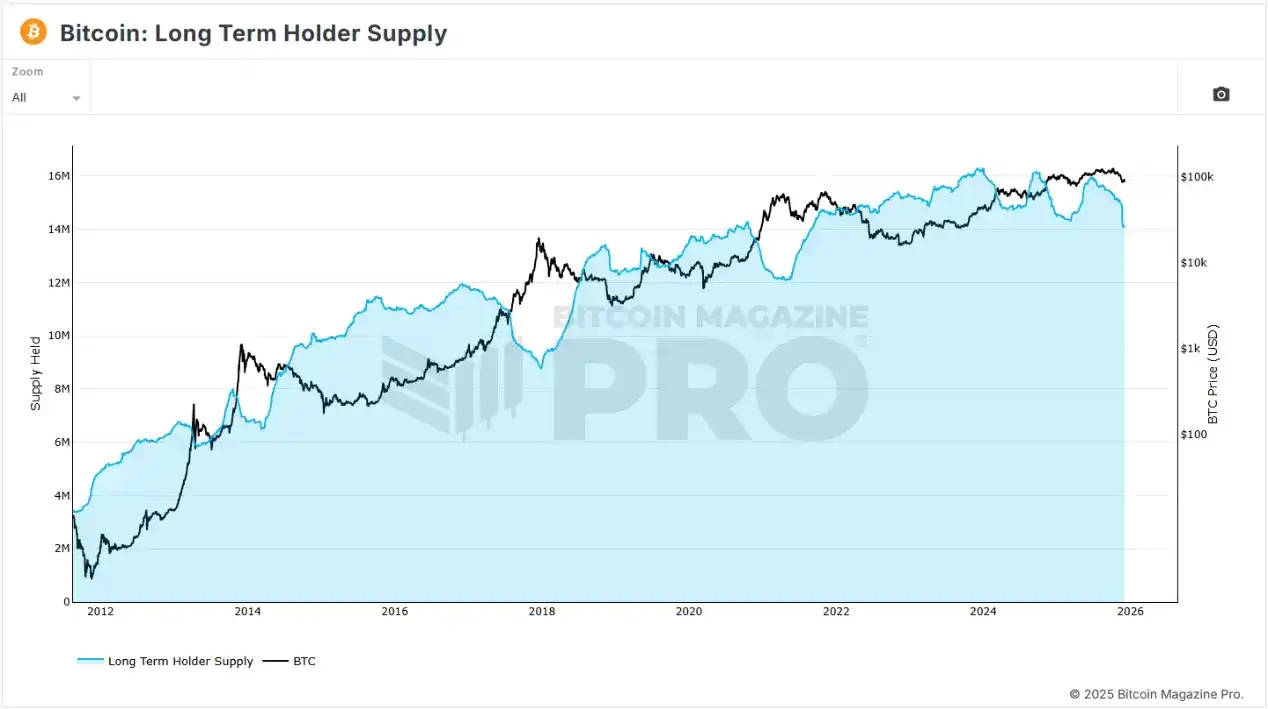
Bitcoin Price vs. Long-Term Holder Supply

On-chain analysis shows that some investors are steadily accumulating, but the majority of retail investors, still wary from the previous crash, remain uninterested in buying Bitcoin.

The accumulation phase typically lasts 12 to 15 months, after which the market cycle usually enters a new bull market. This often occurs before the halving, as the prices of Bitcoin and other crypto assets begin to rise in anticipation of the event. The market starts pricing in the positive impact of reduced future supply, and market sentiment also shifts from neutral to optimistic. Liquidity begins to recover, and media attention increases accordingly.
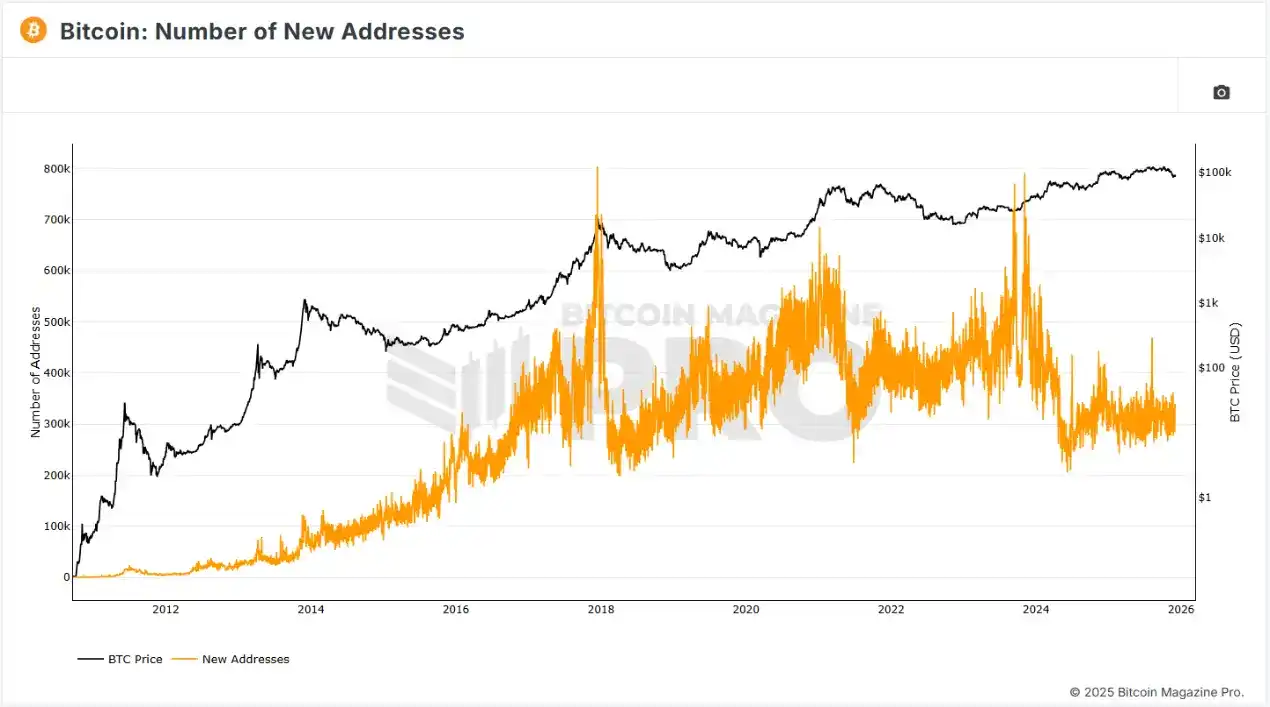
Bitcoin Price vs. New Addresses

Once the halving occurs, the bull market often experiences parabolic growth, with prices beginning to climb, sometimes slowly, sometimes explosively. Retail investors flood into the market, and traders start deploying large amounts of capital. Historically, this is when new all-time highs are often set, as a new wave of investors enters the market. Some investors increase leverage to chase the highs, leading to even more violent price fluctuations.

Past bull markets have lasted approximately 12-18 months, usually ending with a sharp price decline. Leveraged traders get liquidated, altcoins fall even more sharply, sentiment turns negative, and a bear market begins. In this phase of the cycle, many participants sell at a loss and cash out with their remaining funds. Eventually, the dust settles, and a market bottom slowly forms. Overall market activity and excitement have significantly decreased since the peak, but determined builders continue forward, quietly developing new products and innovations.

The Halving

To fully understand the theory of the four-year Bitcoin cycle, one must first thoroughly understand the concept of the halving and its impact on Bitcoin's price.

The Bitcoin halving is a significant event that halves the mining reward (paid in BTC) for adding new blocks to the Bitcoin blockchain. This occurs every 210,000 blocks, approximately every four years. In 2009, the reward for adding a new block was 50 Bitcoin per block. It has since been halved four times. The 2024 halving set the current new block mining reward at 3.125 Bitcoin. Assuming the four-year rhythm continues, halvings will persist until the total supply reaches its cap of 21 million coins, around the year 2140.

The halving is Satoshi Nakamoto's way of ensuring Bitcoin's scarcity. Bitcoin was born during the 2008 financial crisis, partly in response to central bank bailouts and the inflation caused by fiat money printing. Most governments and their associated fiat currencies constantly adjust monetary policy, making it difficult for holders to build long-term confidence in the value of their currency.

Bitcoin's halving mechanism mimics gold, making it scarcer. As gold deposits are depleted, mining gold becomes progressively harder, and Bitcoin achieves this mathematically. As the new supply of Bitcoin decreases, its scarcity increases. Historically, Bitcoin's price has typically risen following each halving, thanks to supply and demand dynamics. Therefore, some proponents argue that the transparency and consistency of the halving make Bitcoin an asset with strong store-of-value capabilities.

Review of Past Cycles

2013

Bitcoin was born in 2008, and 2013 marked its first cycle. It was primarily driven by the tech community of the time, such as internet forums and cryptography meetups. This cycle also garnered some early media attention, with reports on topics like the first real-world transaction using Bitcoin (buying two pizzas for 10,000 BTC) and "Is Bitcoin digital gold?".

In this cycle, Mt. Gox was the largest Bitcoin exchange. In 2014, Mt. Gox handled over 70% of global Bitcoin transactions. However, in 2014, Mt. Gox suspended trading and shut down its website, later revealing that 850,000 Bitcoin were missing. Since Mt. Gox was the primary source of Bitcoin liquidity, this event led to a significant drop in market trust in Bitcoin, causing an 85% price decline and initiating a bear market.

2017
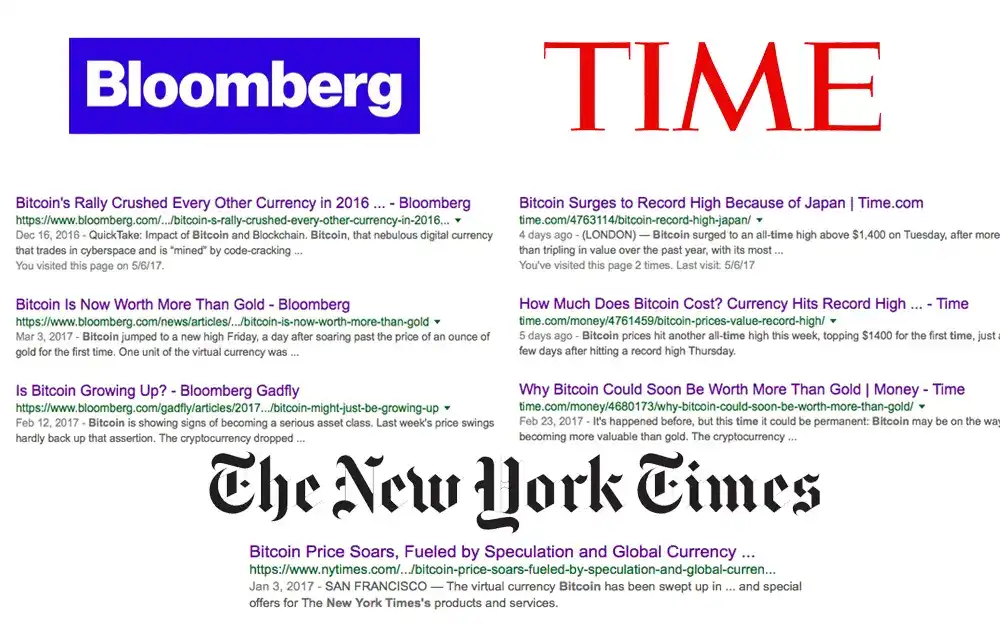
2017 was the cycle where Bitcoin gained popularity among retail investors. With the launch of Ethereum in 2015, smart contracts and their revolutionary potential entered the public consciousness. Ethereum's price skyrocketed from $10 to $1400 during this cycle. This period was also notorious for the ICO frenzy, with thousands of ERC-20 tokens launched, and investors pouring money into projects based solely on whitepapers. Bitcoin's price also exploded due to the influx of new investors, surging from $200 to $20,000 in two and a half years. The industry was frequently covered by mainstream media (see image above).

Ultimately, the ICO boom that drove Bitcoin's price up dramatically also became the catalyst for the crash. In ICOs, investors exchanged their Ethereum or Bitcoin for a new project's cryptocurrency. After accumulating large amounts of Ethereum, many projects began selling these tokens for cash, creating selling pressure. The U.S. SEC also began cracking down heavily on ICOs, labeling them "unregistered securities offerings" and filing lawsuits against numerous projects, many of which were Ponzi schemes and scams. In this environment, over-leveraged investors either panic-sold or were forced to sell as prices began to plummet, causing Bitcoin's price to crash by 84% to $3,200.

2021

The 2021 Bitcoin cycle coincided with the money printing during the COVID-19 pandemic. Governments worldwide sought to restart economies stalled by the pandemic, and fiscal stimulus was their solution. The surge in global liquidity pushed Bitcoin to new all-time highs in 2021. Another characteristic of this cycle was Bitcoin's transformation from an "internet currency" to a more significant "macro asset." Companies like Strategy and Tesla purchased billions of dollars worth of Bitcoin, while payment apps like PayPal and CashApp began supporting Bitcoin transactions. The 2020 DeFi summer and the 2021 NFT craze attracted massive retail participation in this cycle. Both retail and institutional investors jointly drove up cryptocurrency prices, with Bitcoin reaching a high of $69,000.

The end of this Bitcoin cycle stemmed from the collapse of several prominent protocols and companies within the industry. First, the depegging of the Luna stablecoin UST wiped out $60 billion in a short period. Companies and institutions like Voyager, Celsius, BlockFi, and Three Arrows Capital, with direct or indirect exposure to Luna, bets on market direction, and interconnections, ultimately declared bankruptcy. BlockFi subsequently restructured and received a line of credit from FTX. Finally, with the collapse of FTX, BlockFi also declared bankruptcy.

FTX and its affiliated trading firm Alameda were found to have engaged in massive fraud, forcing asset liquidation to repay users. The U.S. federal government also ended its stimulative monetary policy and began raising interest rates significantly, draining market liquidity. All these events contributed to a sharp drop in Bitcoin's price, which fell to $15,500 at the bear market bottom.

2025

The current 2025 cycle has witnessed increased institutional adoption, with major traditional financial institutions entering the space. The approval of spot Bitcoin ETFs in January 2024 allowed companies like BlackRock, Fidelity, and VanEck to offer Bitcoin as a standard investment product. Many companies have also adopted Strategy's Digital Asset Treasury (DAT) model, incorporating cryptocurrencies into their balance sheets. This cycle is unique in that Bitcoin reached a new high of $73,000 before the halving in April 2024. Additionally, institutions have become the primary drivers of price, with retail participation not yet reaching the levels of previous cycles.

Why Do Cycles Occur?

Stock-to-Flow Ratio

There are several potential reasons for the occurrence of the four-year Bitcoin cycle. A common explanation relates to the Stock-to-Flow ratio (S2F), a model often used to measure the scarcity of commodities like gold and silver.
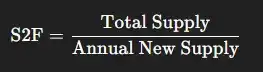
This model compares stock (existing supply) and flow (new annual supply). The higher the ratio, the scarcer the commodity. The S2F is applied to Bitcoin because of its fixed total supply and the fixed schedule of mining rewards. With each halving, Bitcoin's stock-to-flow ratio doubles, as the new supply is halved. Currently, Bitcoin's stock-to-flow ratio is approximately 110, while gold's is about 60, making Bitcoin the scarcer asset under the stock-to-flow model.

Psychological Factors

Another simple explanation involves psychology and self-fulfilling prophecies. Bitcoin's price is heavily influenced by narratives, herd behavior, and expectations about the future. Because Bitcoin lacks intrinsic value like traditional financial assets, its value depends primarily on people's expectations of its future worth. Consequently, Bitcoin's price is highly reflexive and more sensitive to halving expectations, rumors, and narratives. Because the four-year Bitcoin cycle has played out consecutively several times, investors are more inclined to trade Bitcoin based on the movements of past cycles, creating a self-fulfilling prophecy.

Liquidity

Others argue that Bitcoin's cycles are primarily determined by global liquidity. BitMEX founder Arthur Hayes, in his article "Long Live The King," pointed out that Bitcoin's four-year cycle is directly related to global liquidity and highlighted the influence of the US dollar and the Chinese yuan. Hayes explained that the 2013 peak was caused by money printing following the 2008 financial crisis, the 2017 peak was caused by the depreciation of the Japanese yen against the US dollar, and the 2021 peak was caused by post-COVID money printing.

Recently, surrounding topics like the end of Quantitative Tightening (QT, where the Fed reduces the number of assets on its balance sheet, thus reducing liquidity), the restart of Quantitative Easing policies, and falling interest rates, some claim that the 2025 Bitcoin cycle will not follow the previous pattern.

Retail vs. Institutions

The holdings of retail and institutional investors also play a significant role in driving Bitcoin cycles. Institutional investors are typically more disciplined, have longer investment horizons, and therefore buy during periods of fear, forming market bottoms. Retail investors, on the other hand, are more emotional and prone to buying due to FOMO (Fear Of Missing Out). Therefore, retail investors are more likely to chase price momentum and use leverage. Retail investors often create greater volatility within the cycle, especially in the later stages.

Why Some Say the Cycle is Over

There are several reasons why people claim the Bitcoin cycle is obsolete. A major reason is increased institutional participation through ETFs, corporate treasuries, hedge funds, etc. These financial entities behave differently from retail investors, buying on fixed schedules, using reasonable leverage, and managing risk prudently. This behavior dampens volatility, thereby smoothing out cyclical fluctuations.

Another potential reason is that the cryptocurrency market has grown significantly compared to earlier cycles. Bitcoin is increasingly correlated with macroeconomic factors like interest rates and Fed policy, weakening the impact of the halving on Bitcoin's price. The halving occurs every four years, whereas Fed policy has no similar fixed schedule. Furthermore, the importance of the halving itself is diminishing as its effect on the block reward decreases. The first halving reduced the reward from 50 BTC to 25 BTC, while the most recent halving only reduced it from 6.25 BTC to 3.125 BTC.

How to Tell if the Cycle is Over

Paying close attention to the development of the current cycle can help better determine whether the four-year cycle has become a thing of the past. Some key signs that might indicate this:

  • Past cycles typically experienced a price surge after the halving, generally within 12-18 months post-halving.
  • Past cycles ultimately ended with massive leverage wipeouts and cascading liquidations, leading to drops exceeding 70%.
  • If Bitcoin's price begins to perfectly align with changes in global liquidity, then Bitcoin has become a macro asset, not one based on a halving cycle.
  • Past cycles saw a surge in retail participation in the later stages, with altcoins experiencing parabolic rises. A lack of retail participation suggests the cycle is primarily driven by institutional buying, which could lead to reduced volatility and a flattened cycle.

Conclusion

Bitcoin has long followed the pattern of a four-year cycle. It slowly recovers from a bear market, enters the halving phase, followed by a sustained price surge, which then rapidly declines as leveraged traders suffer losses. Historically, various factors have contributed to this phenomenon, ultimately forming the familiar four-year cycle we know today. Nonetheless, Bitcoin has steadily evolved, finally becoming the behemoth it is today with a market capitalization of $1.8 trillion. The emergence of institutional investors, ETFs, and sovereign wealth funds means market participants have changed significantly since the first cycle. Bitcoin appears to be increasingly sensitive to macroeconomic factors, but its price movements are still influenced by some traditional factors, such as psychology and mining economics.

It is still unclear whether Bitcoin's cycle has completely ended, but each cycle is unique, and future cycles could very well be drastically different from the past. Understanding the historical evolution of this asset and its participants is key to understanding future cycles, but ultimately, only time will tell whether this pattern continues to exist or becomes a relic of history.

Related reading: Has the Bitcoin Four-Year Cycle Failed?

İlgili Sorular

QWhat are the typical stages of the Bitcoin four-year cycle as described in the article?

AThe typical Bitcoin four-year cycle consists of an accumulation phase (lasting 12-15 months with low volatility and gradual recovery), a pre-halving bull run (driven by anticipation of reduced supply), a parabolic bull market post-halving (with high leverage and volatility), and a sharp decline ending in a bear market.

QHow does the Bitcoin halving event contribute to its scarcity and potential price impact?

AThe Bitcoin halving reduces the mining reward for new blocks by half approximately every four years, decreasing the rate of new Bitcoin issuance. This mimics scarcity similar to precious metals like gold, and historically, reduced supply coupled with demand has led to price increases.

QWhat were the key catalysts for the end of the 2017 and 2021 Bitcoin cycles?

AThe 2017 cycle ended due to ICO projects selling accumulated Ethereum and Bitcoin for cash, causing sell pressure, combined with regulatory crackdowns by the SEC. The 2021 cycle ended due to the collapse of Luna (UST), bankruptcies of major firms like Celsius and FTX, and tightening monetary policy by the U.S. Federal Reserve.

QWhy do some analysts believe the Bitcoin four-year cycle might be ending?

AIncreased institutional participation (e.g., ETFs, corporate treasuries) may reduce volatility and dampen cyclical patterns. Bitcoin's growing correlation with macroeconomic factors like global liquidity and Fed policy, rather than halving events, could also diminish the cycle's significance.

QWhat indicators could suggest that the four-year cycle is no longer relevant?

AKey indicators include the absence of a post-halving price surge within 12-18 months, lack of massive leverage-driven drawdowns (over 70% declines), perfect alignment with global liquidity changes instead of halving events, and insufficient retail participation (e.g., no parabolic altcoin rallies) in later cycle stages.

İlgili Okumalar

Aave Is Surrendering the Throne of DeFi Lending Due to Its Own Stupidity

Aave, a leading DeFi lending protocol, is facing a severe crisis and losing its dominant market position due to its poor handling of a recent security incident. The crisis began when Kelp DAO suffered a hack resulting in a loss of $292 million in rsETH. In the aftermath, approximately $17.2 billion in funds flowed out of Aave as user panic escalated. The article criticizes Aave's crisis management as "extremely foolish." Instead of promptly offering reassurance or committing to cover the potential bad debt—estimated between $123.7 million and $230.1 million, which Aave could have afforded—the protocol initially deflected blame, emphasizing that its code was not at fault. This delay and lack of a clear guarantee led to widespread user anxiety, triggering a bank run-like scenario where users withdrew funds or borrowed aggressively from other pools, causing liquidity shortages. Meanwhile, Aave’s competitor Spark—a fork of Aave’s own code—has benefited significantly. Having removed support for rsETH months earlier, Spark avoided any losses from the incident and has since seen its TVL grow by nearly $2 billion, attracting major deposits such as over $1.24 billion from Justin Sun. Spark has actively capitalized on the situation, publicly criticizing Aave’s security reputation. Although Aave’s founder Stani eventually announced a relief plan named "DeFi United" with several partners and a personal donation, the damage to user trust and capital outflows may be irreversible. The article concludes that Aave is losing its throne in DeFi lending to aggressive competitors like Spark, Morpho, and Jupiter Lend.

Odaily星球日报32 dk önce

Aave Is Surrendering the Throne of DeFi Lending Due to Its Own Stupidity

Odaily星球日报32 dk önce

İşlemler

Spot
Futures

Popüler Makaleler

BITCOIN Nedir

HarryPotterObamaSonic10Inu (ERC-20)'yu ve Kripto Alanındaki Yerini Anlamak Son yıllarda, kripto para piyasası, hem ticaret yapanların hem de topluluk etkileşimi ve eğlence değeri arayanların ilgisini çeken meme coin'lerin popülaritesinde bir artış gördü. Bu benzersiz token'lar arasında, kripto para dokusuna kültürel referansları harmanlayan ilginç bir proje olan HarryPotterObamaSonic10Inu (ERC-20) bulunmaktadır. Bu makale, HarryPotterObamaSonic10Inu'nun temel yönlerini, mekanizmalarını, topluluk odaklı ethosunu ve daha geniş kripto manzarasıyla etkileşimini incelemektedir. HarryPotterObamaSonic10Inu (ERC-20) Nedir? Adından da anlaşılacağı gibi, HarryPotterObamaSonic10Inu, Ethereum blok zinciri üzerinde inşa edilen bir meme coin'dir ve ERC-20 standardı altında sınıflandırılmaktadır. Geleneksel kripto paraların pratik kullanılabilirlik veya yatırım potansiyeline odaklandığı durumların aksine, bu token eğlence değeri ve topluluğunun gücü üzerine kuruludur. Proje, bağlı kullanıcıların bir araya gelebileceği, fikirlerini paylaşabileceği ve çeşitli kültürel fenomenlerden ilham alan etkinliklere katılabileceği bir ortam yaratmayı hedeflemektedir. HarryPotterObamaSonic10Inu'nun dikkate değer özelliklerinden biri işlemlerde sıfır vergi olmasıdır. Bu çekici unsur, küçük ölçekli yatırımcıları caydırabilecek ek ücretlerden yoksun olarak ticareti ve topluluk katılımını teşvik etmeyi amaçlamaktadır. Coin'in toplam arzı bir milyar token olarak belirlenmiştir; bu, topluluk içinde önemli bir dolaşım sağlama niyetini göstermektedir. HarryPotterObamaSonic10Inu (ERC-20) Yaratıcısı HarryPotterObamaSonic10Inu'nun kökenleri bir miktar gizemlidir; yaratıcısı hakkında spesifik bilgilerin ne olduğu bilinmemektedir. Bu token'ın geliştirilmesi, belirli bir ekip veya açık bir plan eksikliği ile gerçekleşmiştir; bu durum, meme coin sektöründe oldukça yaygındır. Proje, topluluğunun heyecanı ve katılımına dayalı olarak organik bir şekilde ortaya çıkmıştır. HarryPotterObamaSonic10Inu (ERC-20) Yatırımcıları Dış yatırımlar ve destekler söz konusu olduğunda, HarryPotterObamaSonic10Inu da belirsiz kalmaktadır. Token, bilinen herhangi bir yatırım fonunu veya önemli bir kurumsal desteği listelememektedir. Bunun yerine, projenin can damarı, kolektif eylem ve kripto alanındaki katılım yoluyla büyüme ve sürdürülebilirlik sağlayan temel topluluğudur. HarryPotterObamaSonic10Inu (ERC-20) Nasıl Çalışır? Bir meme coin olarak, HarryPotterObamaSonic10Inu, genellikle varlık değerini yöneten geleneksel çerçevelerin dışında çalışmaktadır. Projenin nasıl çalıştığını tanımlayan birkaç özelliği vardır: Sıfır Vergi İşlemleri: İşlemlerde vergi ücreti olmadan, kullanıcılar gizli maliyet endişesi olmadan token'ı serbestçe alıp satabilirler. Topluluk Etkileşimi: Proje, topluluk etkileşimi üzerine kuruludur ve sosyal medya platformlarını kullanarak heyecan yaratarak katılımı kolaylaştırır. Tartışmalar, içerik paylaşımı ve katılım, projenin erişimini genişletmeye ve destekleyiciler arasında sadakat oluşturmaya yardımcı olan kritik unsurlardır. Pratik Kullanılabilirlik Yok: HarryPotterObamaSonic10Inu'nun mali ekosistem içinde somut bir kullanılabilirlik sunmadığı belirtilmelidir. Daha ziyade, eğlence ve topluluk etkinlikleri için bir token olarak sınıflandırılmaktadır. Kültürel Referans: Token, popüler kültürden unsurları zekice harmanlayarak ilgi çekmektedir ve hem meme meraklıları hem de kripto takipçileriyle bağlantı kurmaktadır. HarryPotterObamaSonic10Inu, meme coin'lerin, daha geleneksel kripto para projelerinden nasıl farklı çalıştığını örneklendirmektedir; bu projeler, utilitarist varlıklar yerine yenilikçi sosyal yapıların bir parçası olarak piyasaya girmektedir. HarryPotterObamaSonic10Inu (ERC-20) Zaman Çizelgesi HarryPotterObamaSonic10Inu'nun tarihi, birkaç dikkate değer kilometre taşı ile işaretlenmiştir: Oluşum: Token, birçok kripto meraklısının hayal gücünü yakalayan bir viral meme'den ortaya çıkmıştır. Spesifik yaratım tarihleri mevcut değildir ve bu onun organik yükselişini vurgulamaktadır. Borsa Listelemeleri: HarryPotterObamaSonic10Inu, topluluğun daha kolay erişim ve ticaret yapabilmesini sağlamak için çeşitli borsalarda yer bulmuştur. Topluluk Katılım İnisiyatifleri: Yarışmalar, sosyal medya kampanyaları ve hayranlar ile destekçilerden içerik üretimini içeren topluluk etkileşimini artırmayı amaçlayan devam eden etkinlikler. Gelecek Genişleme Planları: Projenin yol haritası, kültürel temalarına ilişkin bir NFT koleksiyonu, ticari ürünler ve bir e-ticaret sitesi başlatılmasını içermektedir; bu da topluluğun daha fazla katılımını sağlamayı ve ekosistemine daha fazla boyut kazandırmayı hedeflemektedir. HarryPotterObamaSonic10Inu (ERC-20) Hakkında Kilit Noktalar Topluluk Odaklı Doğası: Proje, kullanıcı katılımını geliştirme önceliği taşır ve böylece kullanıcıların sürecin en önünde yer almasını sağlar. Meme Coin Sınıflandırması: Eğlenceye dayalı kripto paranın doruk noktasıdır ve geleneksel yatırım araçlarından ayrılmaktadır. Bitcoin ile Doğrudan İlişki Yok: Ticker ismindeki benzeliğe rağmen, HarryPotterObamaSonic10Inu ayırt edicidir ve Bitcoin veya diğer yerleşik kripto paralarla herhangi bir ilişkisi yoktur. İşbirliğine Odaklanma: HarryPotterObamaSonic10Inu, sahipleri arasında işbirliği ve hikaye paylaşımı için bir alan oluşturmak üzere tasarlanmıştır ve bu da yaratıcılık ve topluluk bağlarını sağlamaktadır. Gelecek Beklentileri: Başlangıçta belirlendiği temalardan NFTs ve ticari ürünlere genişleme arzusu, projenin dijital kültürde daha ana akıma girebilmesi için bir yol haritası çizmektedir. Meme coin'ler, kripto para topluluğunun hayal gücünü çalmaya devam ederken, HarryPotterObamaSonic10Inu (ERC-20), kültürel bağları ve topluluk merkezli yaklaşımıyla öne çıkmaktadır. Geleneksel bir hizmet odaklı token modeliyle uyumlu olmasa da, özünde destekçileri arasında sağlanan neşe ve dostluğu vurgulayarak, giderek dijitalleşen bir çağda kripto paraların evrilen doğasını göstermektedir. Proje gelişmeye devam ettikçe, topluluk dinamiklerinin blockchain teknolojisi dünyasındaki seyrini nasıl etkilediğini izlemek önemli olacaktır.

1.4k Toplam GörüntülenmeYayınlanma 2024.04.01Güncellenme 2024.12.03

BITCOIN Nedir

BTC Nasıl Satın Alınır

HTX.com’a hoş geldiniz! Bitcoin (BTC) satın alma işlemlerini basit ve kullanışlı bir hâle getirdik. Adım adım açıkladığımız rehberimizi takip ederek kripto yolculuğunuza başlayın. 1. Adım: HTX Hesabınızı OluşturunHTX'te ücretsiz bir hesap açmak için e-posta adresinizi veya telefon numaranızı kullanın. Sorunsuzca kaydolun ve tüm özelliklerin kilidini açın. Hesabımı Aç2. Adım: Kripto Satın Al Bölümüne Gidin ve Ödeme Yönteminizi SeçinKredi/Banka Kartı: Visa veya Mastercard'ınızı kullanarak anında Bitcoin (BTC) satın alın.Bakiye: Sorunsuz bir şekilde işlem yapmak için HTX hesap bakiyenizdeki fonları kullanın.Üçüncü Taraflar: Kullanımı kolaylaştırmak için Google Pay ve Apple Pay gibi popüler ödeme yöntemlerini ekledik.P2P: HTX'teki diğer kullanıcılarla doğrudan işlem yapın.Borsa Dışı (OTC): Yatırımcılar için kişiye özel hizmetler ve rekabetçi döviz kurları sunuyoruz.3. Adım: Bitcoin (BTC) Varlıklarınızı SaklayınBitcoin (BTC) satın aldıktan sonra HTX hesabınızda saklayın. Alternatif olarak, blok zinciri transferi yoluyla başka bir yere gönderebilir veya diğer kripto para birimlerini takas etmek için kullanabilirsiniz.4. Adım: Bitcoin (BTC) Varlıklarınızla İşlem YapınHTX'in spot piyasasında Bitcoin (BTC) ile kolayca işlemler yapın.Hesabınıza erişin, işlem çiftinizi seçin, işlemlerinizi gerçekleştirin ve gerçek zamanlı olarak izleyin. Hem yeni başlayanlar hem de deneyimli yatırımcılar için kullanıcı dostu bir deneyim sunuyoruz.

7.3k Toplam GörüntülenmeYayınlanma 2024.12.12Güncellenme 2025.03.21

BTC Nasıl Satın Alınır

$BITCOIN Nedir

DİJİTAL ALTIN ($BITCOIN): Kapsamlı Bir Analiz DİJİTAL ALTIN ($BITCOIN) Tanıtımı DİJİTAL ALTIN ($BITCOIN), geleneksel değerli metallerin özelliklerini merkeziyetsiz teknolojilerin yeniliği ile birleştirmeyi amaçlayan Solana ağı üzerinde çalışan blockchain tabanlı bir projedir. Bitcoin ile aynı isme sahip olmasına rağmen, genellikle bir değer saklama aracı olarak algılandığı için “dijital altın” olarak anılmaktadır; DİJİTAL ALTIN, Web3 ortamında benzersiz bir ekosistem yaratmak için tasarlanmış ayrı bir tokendir. Hedefi, uygulanabilir bir alternatif dijital varlık olarak kendini konumlandırmaktır, ancak uygulamaları ve işlevleri ile ilgili ayrıntılar hala gelişmektedir. DİJİTAL ALTIN ($BITCOIN) Nedir? DİJİTAL ALTIN ($BITCOIN), Solana blockchain'inde kullanılmak üzere açıkça tasarlanmış bir kripto para tokenidir. Bitcoin'in yaygın olarak tanınan bir değer saklama rolü sağlamasının aksine, bu token daha geniş uygulamalara ve özelliklere odaklanıyor gibi görünmektedir. Dikkate değer yönler şunlardır: Blockchain Altyapısı: Token, yüksek hızlı ve düşük maliyetli işlemleri yönetme kapasitesi ile bilinen Solana blockchain'inde inşa edilmiştir. Arz Dinamikleri: DİJİTAL ALTIN'ın maksimum arzı 100 katrilyon token (100P $BITCOIN) ile sınırlıdır, ancak dolaşımdaki arzı ile ilgili ayrıntılar şu anda açıklanmamıştır. Kullanım Alanı: Kesin işlevler açıkça belirtilmemiş olsa da, token'ın merkeziyetsiz uygulamalar (dApps) veya varlık tokenizasyon stratejileri ile ilgili çeşitli uygulamalar için kullanılabileceğine dair işaretler bulunmaktadır. DİJİTAL ALTIN ($BITCOIN) Yaratıcısı Kimdir? Şu anda, DİJİTAL ALTIN ($BITCOIN) arkasındaki yaratıcıların ve geliştirme ekibinin kimliği bilinmemektedir. Bu durum, merkeziyetsiz finans ve meme coin fenomenleriyle uyumlu olan birçok yenilikçi proje arasında yaygındır. Böyle bir anonimlik, topluluk odaklı bir kültürü teşvik edebilirken, yönetişim ve hesap verebilirlik konusundaki endişeleri artırmaktadır. DİJİTAL ALTIN ($BITCOIN) Yatırımcıları Kimlerdir? Mevcut bilgiler, DİJİTAL ALTIN ($BITCOIN) için bilinen herhangi bir kurumsal destekçi veya önde gelen risk sermayesi yatırımı olmadığını göstermektedir. Proje, geleneksel finansman yolları yerine topluluk desteği ve benimsemeye odaklanan bir eşler arası modelde çalışıyor gibi görünmektedir. Faaliyetleri ve likiditesi esas olarak PumpSwap gibi merkeziyetsiz borsalarda (DEX'ler) yer almakta olup, bu da onun taban hareketine vurgu yapmaktadır. DİJİTAL ALTIN ($BITCOIN) Nasıl Çalışır DİJİTAL ALTIN ($BITCOIN) 'ın operasyonel mekanikleri, blockchain tasarımı ve ağ özellikleri temelinde açıklanabilir: Konsensüs Mekanizması: Solana'nın benzersiz tarih kanıtı (PoH) ile bir hisse kanıtı (PoS) modelini birleştirerek, proje ağın yüksek performansına katkıda bulunan verimli işlem doğrulamasını sağlar. Tokenomik: Belirli deflasyonist mekanizmalar kapsamlı bir şekilde detaylandırılmamış olsa da, geniş maksimum token arzı, henüz tanımlanmamış mikro işlemler veya niş kullanım durumlarına hitap edebileceğini ima etmektedir. Etkileşim: Solana'nın daha geniş ekosistemi ile entegrasyon potansiyeli bulunmaktadır; bu, çeşitli merkeziyetsiz finans (DeFi) platformlarını içermektedir. Ancak, belirli entegrasyonlarla ilgili ayrıntılar belirtilmemiştir. Önemli Olayların Zaman Çizelgesi DİJİTAL ALTIN ($BITCOIN) ile ilgili önemli kilometre taşlarını vurgulayan bir zaman çizelgesi: 2023: Token'ın Solana blockchain'inde ilk dağıtımı, sözleşme adresi ile işaretlenmiştir. 2024: DİJİTAL ALTIN, PumpSwap gibi merkeziyetsiz borsalarda işlem görmeye başladıkça görünürlük kazanır ve kullanıcıların bunu SOL karşısında ticaret yapmasına olanak tanır. 2025: Proje, topluluk odaklı etkileşimlere yönelik potansiyel ilgi ve ara sıra ticaret faaliyetleri görür, ancak şu ana kadar dikkate değer ortaklıklar veya teknik ilerlemeler belgelenmemiştir. Kritik Analiz Güçlü Yönler Ölçeklenebilirlik: Temel Solana altyapısı, yüksek işlem hacimlerini destekleyerek $BITCOIN'in çeşitli işlem senaryolarındaki faydasını artırabilir. Erişilebilirlik: Token başına potansiyel düşük ticaret fiyatı, perakende yatırımcıları çekebilir ve parçalı mülkiyet fırsatları sayesinde daha geniş katılımı kolaylaştırabilir. Riskler Şeffaflık Eksikliği: Kamuya açık olarak bilinen destekçilerin, geliştiricilerin veya bir denetim sürecinin olmaması, projenin sürdürülebilirliği ve güvenilirliği konusunda şüpheler doğurabilir. Piyasa Volatilitesi: Ticaret faaliyeti büyük ölçüde spekülatif davranışa dayanmakta olup, bu da yatırımcılar için önemli fiyat dalgalanmalarına ve belirsizliklere yol açabilir. Sonuç DİJİTAL ALTIN ($BITCOIN), hızla gelişen Solana ekosisteminde ilginç ama belirsiz bir proje olarak ortaya çıkmaktadır. “Dijital altın” anlatısını kullanmaya çalışırken, Bitcoin'in değer saklama rolünden ayrılması, amaçlanan faydasının ve yönetişim yapısının daha net bir şekilde tanımlanması gerekliliğini vurgulamaktadır. Gelecekteki kabul ve benimseme, mevcut belirsizliklerin giderilmesine ve operasyonel ile ekonomik stratejilerinin daha açık bir şekilde tanımlanmasına bağlı olacaktır. Not: Bu rapor, Ekim 2023 itibarıyla mevcut olan sentezlenmiş bilgileri kapsamaktadır ve araştırma döneminin ötesinde gelişmeler yaşanmış olabilir.

92 Toplam GörüntülenmeYayınlanma 2025.05.13Güncellenme 2025.05.13

$BITCOIN Nedir

Tartışmalar

HTX Topluluğuna hoş geldiniz. Burada, en son platform gelişmeleri hakkında bilgi sahibi olabilir ve profesyonel piyasa görüşlerine erişebilirsiniz. Kullanıcıların BTC (BTC) fiyatı hakkındaki görüşleri aşağıda sunulmaktadır.

活动图片














