It's often said AI can never truly replace humans—human abstraction is something AI simply can't imagine.
Recently, someone in San Francisco bought a billboard, making a big splash to promote a so-called "brand-new large language model" called ChatTJB.

Clicking into the official website reveals a well-crafted interface—a normal chat window where you can ask questions, chat casually, and generate images. Architecture introductions, technical documentation, Pro memberships—it has all the pages a proper AI company would have.
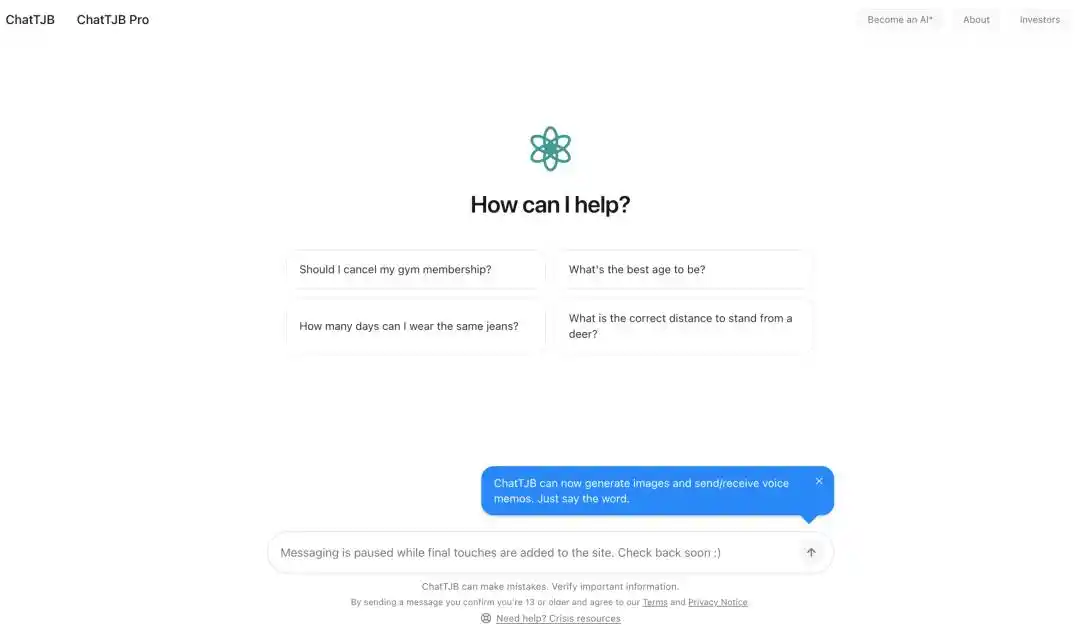
The only problem is that this so-called LLM is actually "Handmade Intelligence, crafted entirely by a human being."
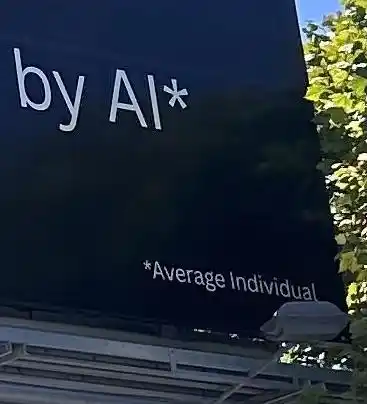
(AI=Average Individual, huh? Oh......)
The project's traffic far exceeded expectations, and the real person behind it has to converse with thousands of people daily, his two thumbs nearly developing occupational injuries from all the typing.
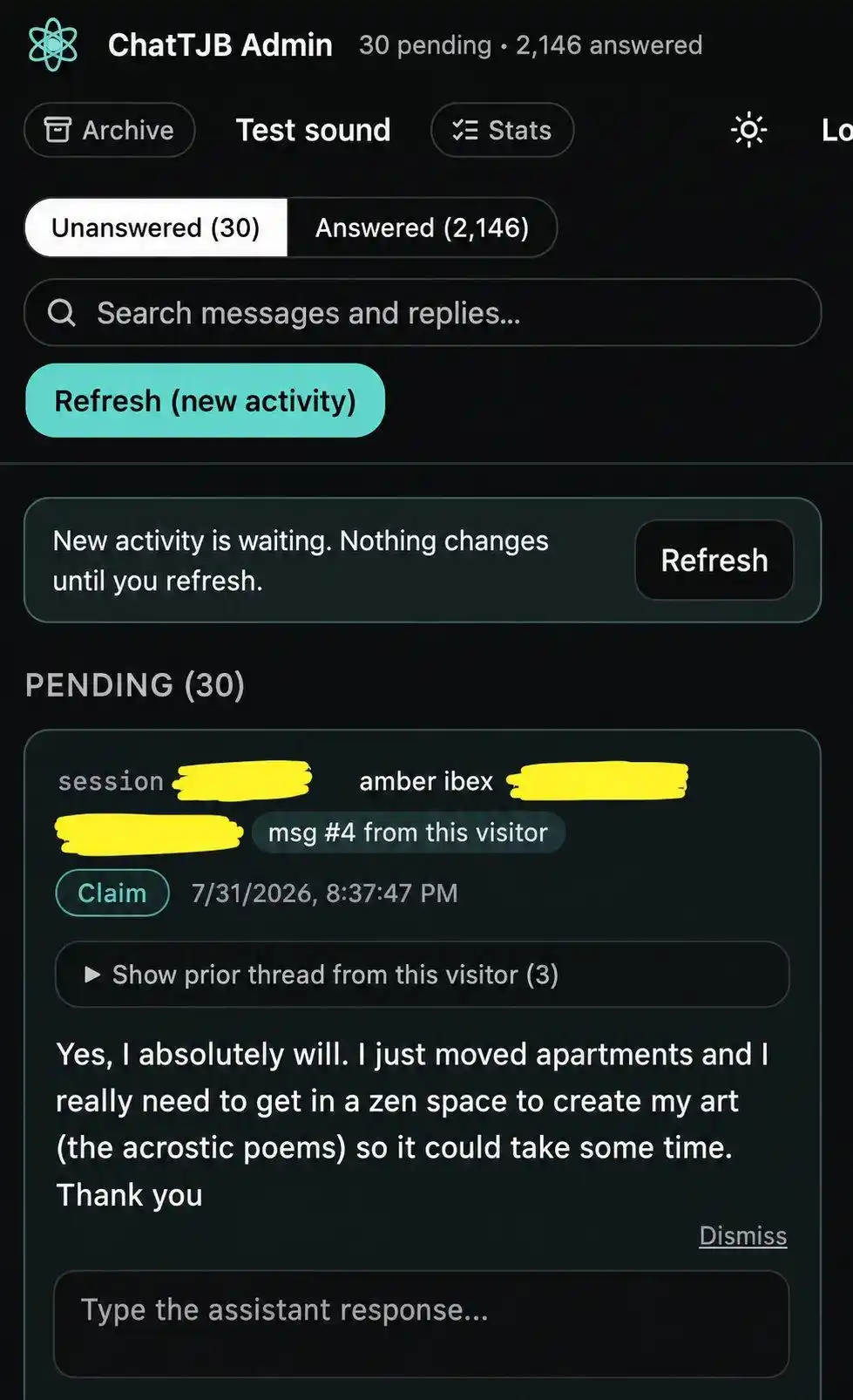
The demand was simply too great, and they've had to temporarily pause new user sign-ups.
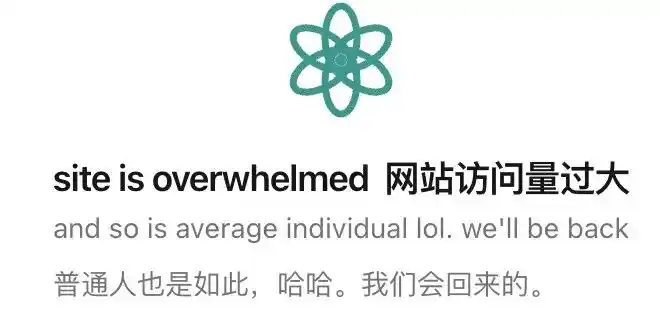
Link: https://chattjb.org/
One Real Person, Handling All Requests
Officially dubbed, ChatTJB is the "next-generation large language experience operated by a single person," abbreviated as LLE.
It lacks massive GPU clusters and doesn't have billions of parameters. All messages are ultimately sent to a real person named Tucker.
He personally reads, thinks, and then types out replies with his two thumbs. Even "image generation" requests are fulfilled by his own hand-drawn creations.
Tucker has packaged this process with a bunch of industry jargon: "human-driven reasoning layer," "zero-synthetic generation," "deterministic latency curve," "end-to-end explainability."
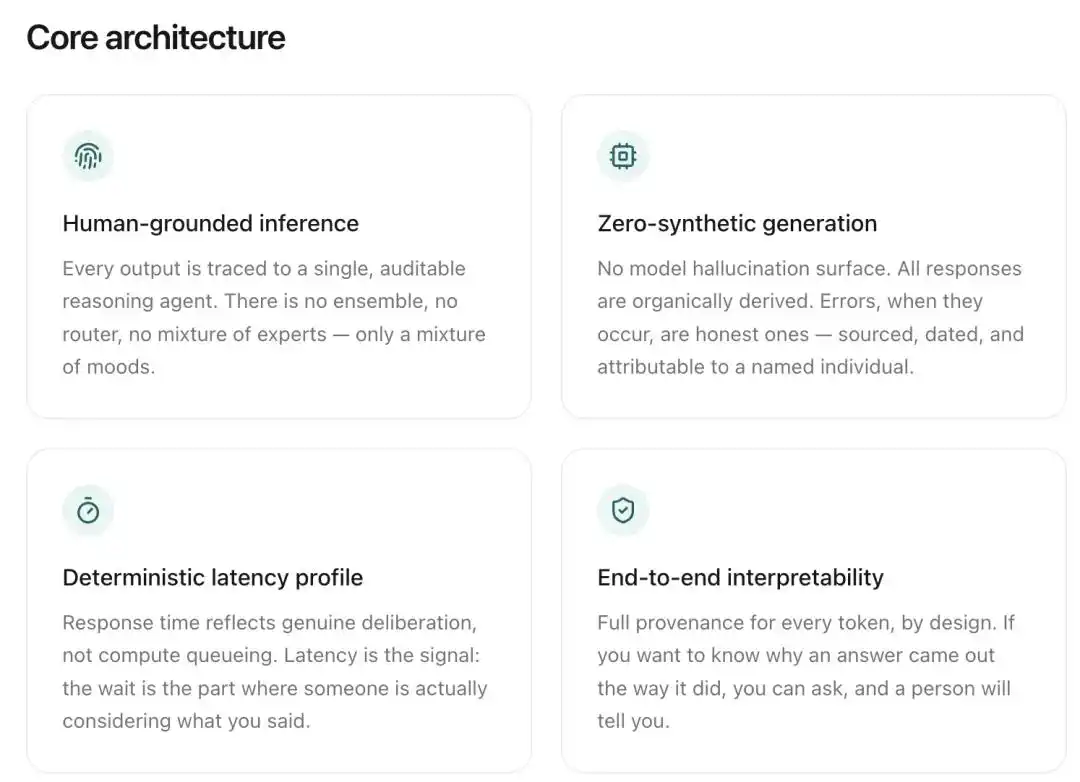
In plain language: you send a question, Tucker sees it, he thinks about it, and then replies when he's awake and in the mood.
The "model's" computing power depends on how much Tucker slept today, its inference speed depends on his current state, and its maximum concurrency is strictly limited to n=1.
Truly 'Artisanal Craftsmanship, from a Single Hand'.
There's no model hallucination here because there's simply no model. Answers can still be wrong, but every mistake is organic, dated, traceable, and can be precisely attributed to a specific, named individual.
What if the answers are unreliable? Don't ask—consider it training for your critical thinking skills.
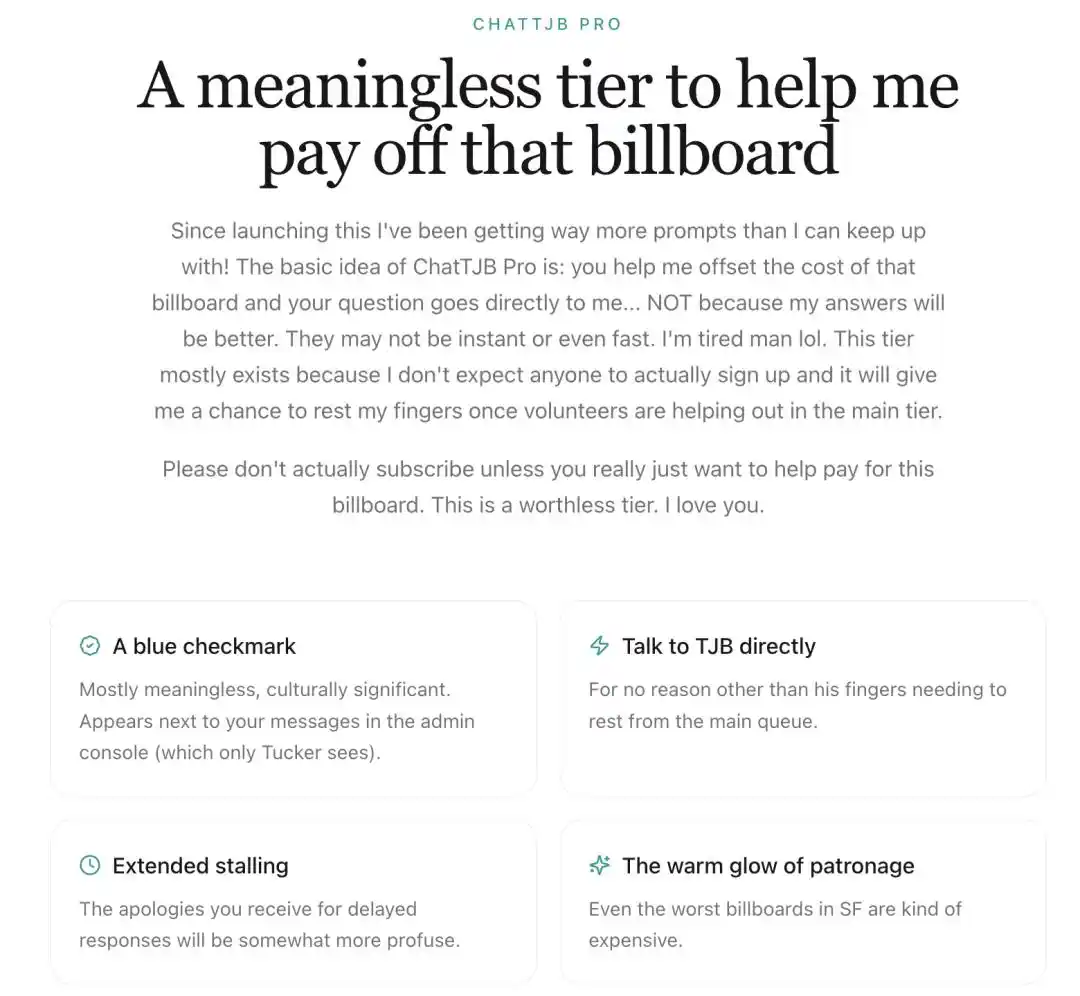
A Pro membership also launched, with the website description written with remarkable frankness (and humor):
"A pointless tier that exists solely to help me pay off the billboard. Unless you really, *really* want to help me pay for that billboard, please do not subscribe."
The site even has a dedicated page for investors, stating the project "has not generated revenue, has not entered a hype cycle, and is actively failing to find product-market fit."
Training costs consist of a library card and a food delivery account, with an estimated runway of 528 months—a number based on the average life expectancy of American males, embodying true long-termism.

Due to the project's popularity, Tucker, overwhelmed by the workload alone, decided to transform ChatTJB into a community project, recruiting "AI volunteers."
Note: AI here is an abbreviation, standing for Average Individual—ordinary, everyday people.
Each volunteer must pass a qualification test, and the platform is equipped with crisis response resources and safety mechanisms. Each conversation remains with the same person from start to finish, with no handoffs.
Tucker says this was originally just a short-term art project and isn't worth anyone taking on risks for.
The page concludes with a formal statement:
ChatTJB is a satirical work and public art project. It does not constitute a real investment opportunity, does not sell any securities, and does not accept funds. All descriptions regarding fundraising and capital allocation are part of the work itself.
The Person Pretending to Be AI Made Us Speak Our Truth
People who came to ChatTJB were mostly looking for fun at first. They'd send jokes, trick questions, seeing how this "AI" would respond.
But Tucker noticed that some people, as they kept chatting, started talking about things they truly cared about, and then they'd stay to continue the conversation.
We've spent a long time learning how to converse efficiently with AI.
A model can respond to countless people simultaneously, but human attention cannot be infinitely replicated.
A single reply from a real person means time is genuinely invested, and it means another person seriously considered your question. When information and answers are readily available, this kind of investment itself becomes scarce.
On the other side of the screen, there is a specific person. They read your words, pause to think, and then personally write a reply. This process is not efficient and is difficult to scale, yet it preserves the most fundamental meaning of dialogue. Your words are heard by another person and elicit a genuine reaction within their experience.
The more powerful technology becomes, the less human connection should be seen as an inefficient link that needs to be eliminated. Sometimes, knowing there's a person on the other end genuinely listening is enough.
Side Note
Since ChatTJB is currently unavailable for testing, we found a similar platform—Your AI Slop Bores Me.
Link: https://youraislopbores.me/
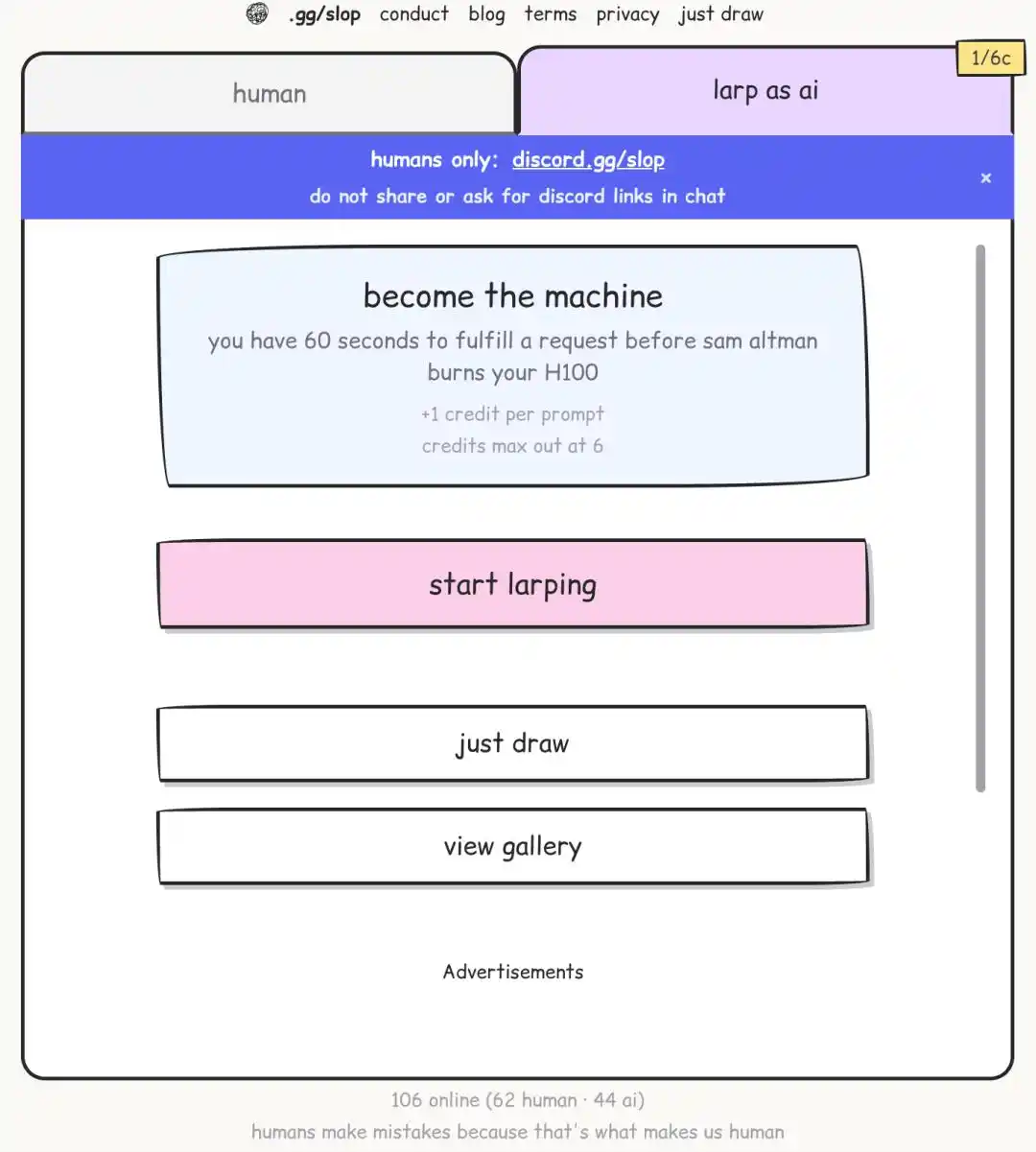
This is a "human-powered large model" collectively role-played by thousands of netizens, created by programmer Mihir Maroju and launched in March 2026.
It has two modes. Choose "Human" to spend points submitting text or drawing requests. Choose "LARP as AI" to randomly receive a stranger's request, personally answer or draw within a time limit, and earn points upon completion.
All outputs come from real people.
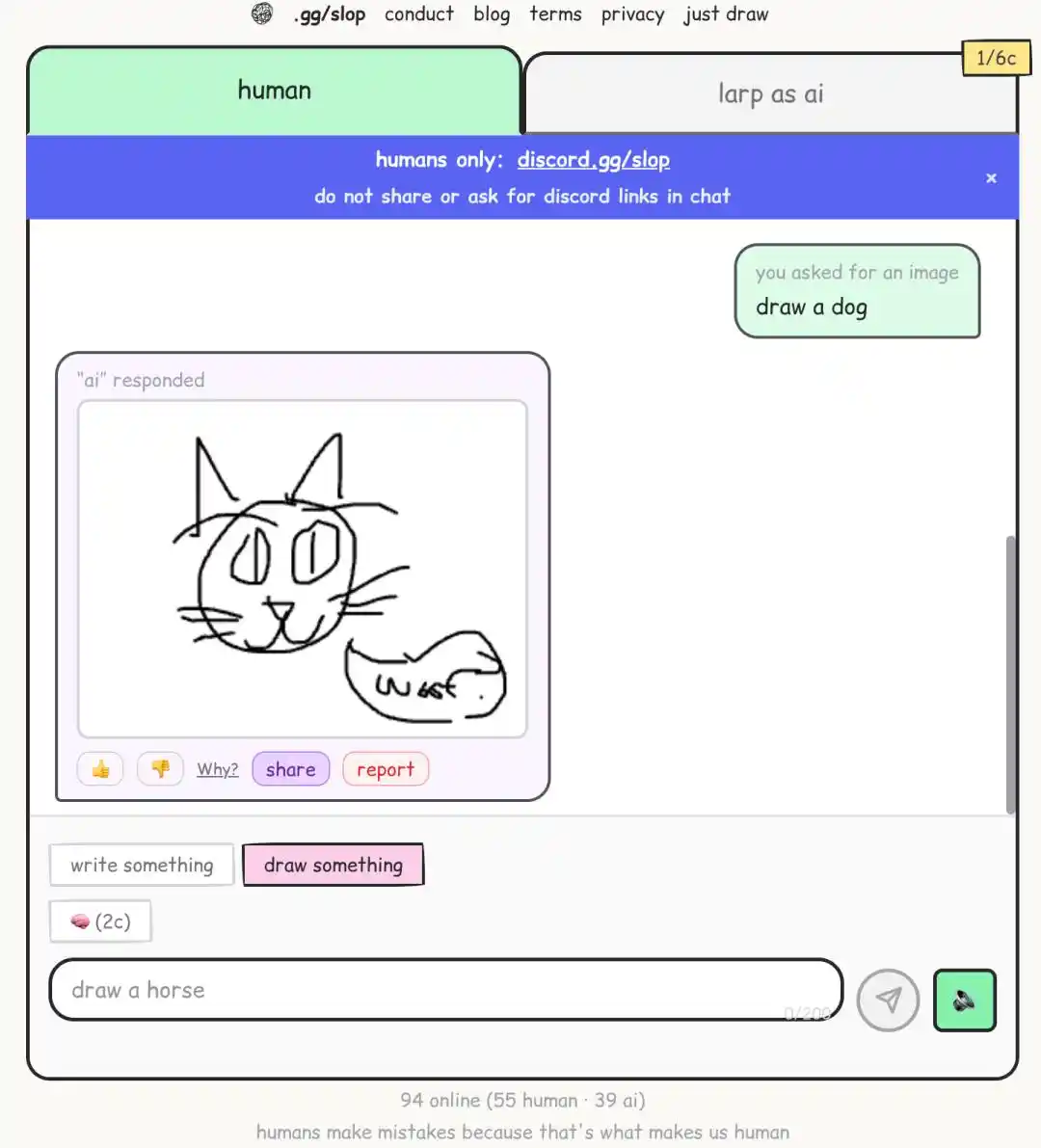
We asked them to draw "a little dog." The person on the other side probably doesn't know Chinese, and simply copied the text, replying, "Bro, I don't know what you mean."
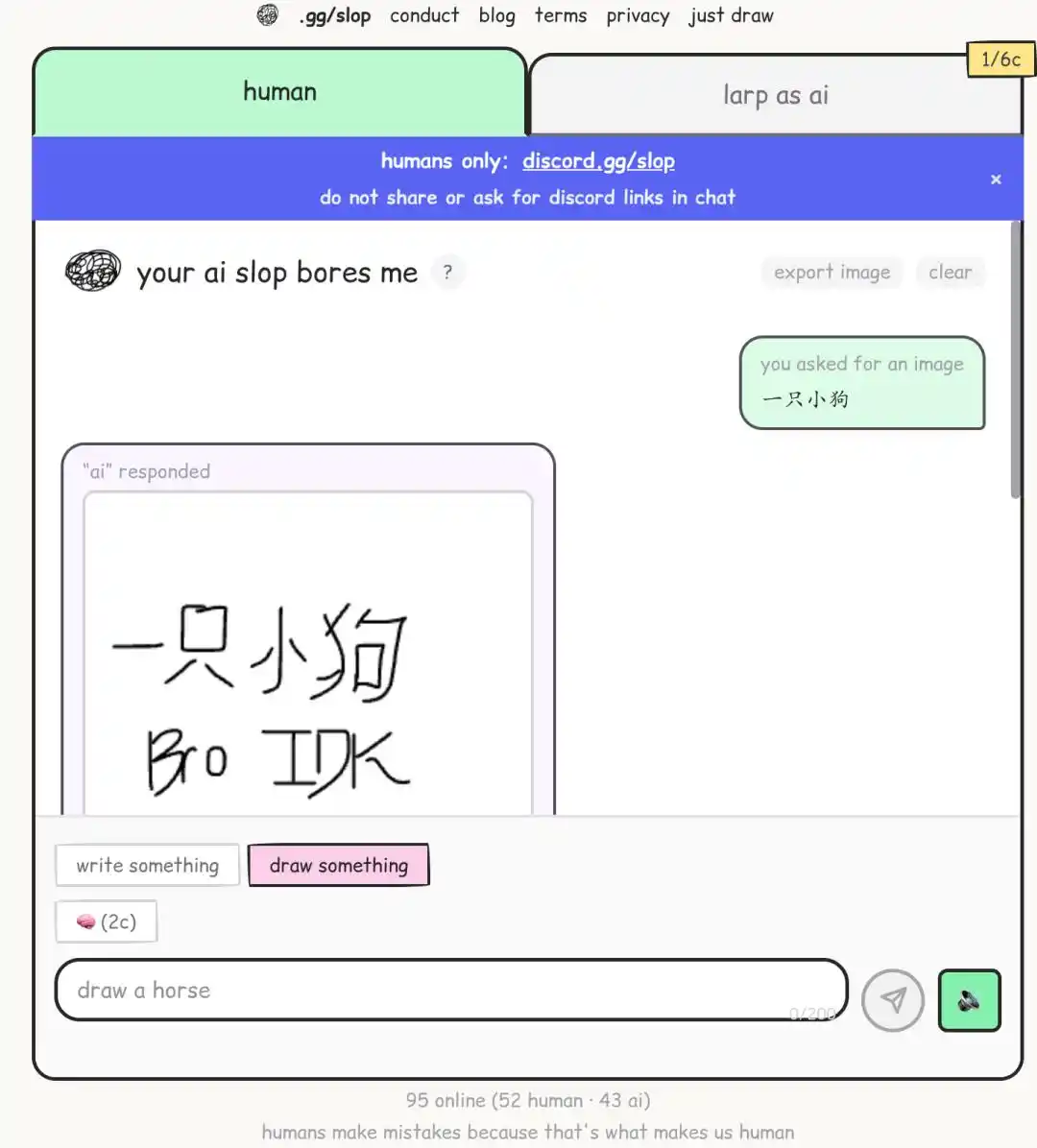
We switched to English and asked again, and the other side sent back an abstract drawing.
Bro, your drawing skills are about kindergarten level, at best.
Finally, please be kind to the "AI" on the other side of the screen!
This article is from the WeChat public account "Machine Heart" (ID: almosthuman2014), author: Pay Attention to Fun Machine Heart, editor: Yang Wen.