Reddit Discussion: After 11 Years in Crypto, RWA Is One of the Few Things That Doesn't Feel Like 'Old Wine in a New Bottle'

marsbit2026-05-29 tarihinde yayınlandı2026-05-29 tarihinde güncellendi

Özet

Reddit Discussion: After 11 Years in Crypto, RWA Feels Unlike the Usual 'Old Wine in a New Bottle' A user with experience since 2014 shares that, having witnessed major crypto cycles from ICOs to FTX, most new narratives are just rebranded old ideas. However, Real World Assets (RWA) feel genuinely different. It's not about moving existing on-chain capital but bringing yields from real-world assets onto the blockchain. While many projects are flawed, the underlying premise is stronger than most. The user outlines key checks before engaging with any RWA project: 1) Existence of a lending business *before* the token launch (citing examples like Maple and 8lends). 2) Clear, transparent handling of defaults, using Goldfinch's 2023 issues as a critical lesson about inevitable credit risk. They note a crucial distinction for newcomers: RWA lending involves slow recovery from real assets (taking months), unlike the instant liquidations of over-collateralized DeFi protocols like Aave. Ultimately, the hard part is the traditional credit work, not the blockchain. Commenters agree, emphasizing the importance of documented default procedures and teams with pre-token real-world credit experience. They observe that a project's response to its first default is more telling than any metrics dashboard, summarizing RWA as "old credit on a new rail."

Author: LateNeverr1

Compiled by: Deep Chao TechFlow

I started mining in 2014 and switched to ETH when it launched in 2015. I've seen it all since then: the DAO hack, the ICO craze, DeFi Summer, the Terra collapse, Celsius, FTX.

After enough cycles, you stop getting excited about "new" narratives. Most of them are just the same thing returning under a different name. Liquidity mining became points mining, ICOs became IDOs.

RWA feels different, and I don't say that lightly.

It's not just another way of moving capital around on-chain, but bringing yields from assets that have never been on-chain before onto the chain. This doesn't mean it solves all problems, many projects are vaporware, but the fundamentals behind this sector are more solid than most project whitepapers.

Things I check before touching any RWA project:

  • Whether the lending business existed before the token appeared. Maple's founders have a traditional credit background. 8lends was launched based on a platform that had been doing offline P2P lending for years. I value this more than tokenomics or headline APRs.
  • Whether defaults are explained clearly or covered up. The Goldfinch incident in 2023 was a lesson for the entire sector. Real credit risk will surface eventually, and anyone pretending it won't isn't worth your time.

I maintain small positions in a few projects just to observe their performance. Most of my holdings are still in ETH and validation nodes.

If you're new, one thing to understand clearly:

Over-collateralized lending like Aave involves instant liquidation, while RWA lending involves slow recovery from real-world assets, which can take months. These are two completely different types of risk.

Ultimately, it's largely about moving old-fashioned credit work onto a new track. The difficult part has never been the blockchain.

Selected Comments:

Careful_keklin: I entered in 2017, and after Celsius, my criteria for screening projects are similar to yours. The most important point for me is whether default scenarios are clearly documented somewhere or glossed over lightly. Most RWA protocols I checked in 2022-23 couldn't even explain their own recovery processes clearly, which speaks volumes. Goldfinch's outcome was inevitable for this model, not an exception.

be_boss: Completely agree, especially that "test of real business before the token." The ICO era relied on whitepapers, DeFi Summer on APY, 2022 on "we are compliant." The signature phrase of each cycle looks rigorous until the next one starts. Those that survive each round of shuffling are basically the teams that had credit businesses running off-chain before launching a token. That point about Goldfinch is spot on—default is the real stress test, not TVL. A team's reaction the first time something goes wrong says more than a year's worth of data dashboards. "Old credit on a new track" is so accurate; the smart contracts were never the hard part.

İlgili Sorular

QAccording to the article, why does the author, with 11 years of experience in crypto, find the RWA narrative unique compared to others?

AThe author finds RWA unique because it is not just another method of moving capital around on-chain. Instead, it introduces the yields of real-world assets that have never been on-chain before. This feels more substantive, even though many projects are still vaporware, as the concept is backed by more solid foundations than most project whitepapers.

QWhat are the two key things the author checks before engaging with any RWA project?

A1. Whether a lending business existed *before* the token was introduced. The author values projects where the founders have traditional credit backgrounds or where the platform was built on an existing offline P2P lending business. 2. How defaults are handled. The author looks to see if default scenarios are clearly explained and documented or if they are glossed over, citing the 2023 Goldfinch incident as a critical lesson for the sector.

QWhat core difference does the author point out between Aave-style lending and RWA lending regarding risk?

AAave-style lending uses over-collateralization with instant liquidation. In contrast, RWA lending involves slow recovery from real-world assets, which can take months. The author emphasizes that these two models represent completely different types of risk.

QSummarize the viewpoint of the commenter 'be_boss' regarding the evolution of project narratives across crypto cycles.

AThe commenter 'be_boss' agrees with the author's view that each crypto cycle has its own hallmark narrative that appears rigorous until the next cycle begins: ICOs relied on whitepapers, DeFi Summer on APY, and 2022 on claims of being 'compliant.' The survivors after each shakeout are typically teams that ran credit businesses offline *before* launching a token. The commenter also stresses that a team's reaction to its first default or crisis is a more telling test than a year's worth of dashboard data.

QWhat is the common sentiment expressed by both the author and the commenter 'Careful_keklin' about the Goldfinch incident and RWA protocols in general?

ABoth the author and the commenter view the Goldfinch incident not as an exception but as an inevitable outcome for the RWA model when real credit risk materializes. They criticize protocols that cannot clearly document their default scenarios or recovery processes, seeing this lack of transparency as a major red flag. The incident served as a critical lesson and stress test for the entire RWA sector.

İlgili Okumalar

A Nation Blocks Chips, a Giant Buys a Nuclear Power Plant: Why It's Time to Seriously Consider DeAI

**Title: Great Powers Blockade Chips, Giants Buy Nuclear Plants: Why It's Time to Seriously Consider DeAI** In May 2026, the US closed loopholes for Chinese firms to acquire advanced NVIDIA chips via overseas subsidiaries. That same month, Kenya halted a $1B geothermal data center project involving Microsoft, fearing its immense energy consumption. Meanwhile, Huawei announced mass production of its Ascend AI chip. These disparate events underscore a new reality: the competition for computing power ("compute") has escalated beyond the tech industry, becoming a geopolitical and infrastructural battleground. A new era of oligopoly is forming, with control over the AI stack—from GPU chips (NVIDIA) and cloud platforms (AWS, Azure, Google Cloud) to foundational models (OpenAI, Anthropic)—concentrating in a few Western "AI Octopus" corporations. This centralization creates systemic risks: pricing power and platform lock-in for users, infrastructure fragility, and a widening "compute divide" that threatens to marginalize nations without independent AI capacity. An "AI Iron Curtain" is deepening through export controls. In response, some nations like Saudi Arabia and the UAE are investing heavily to buy compute power, aiming to transition from oil to AI economies. The EU seeks to triple its compute capacity by 2030 to reduce dependency. However, the spending gap is vast, with four US tech giants alone planning ~$750B in AI capex for 2026. The race is increasingly constrained by energy, with AI tasks consuming up to 1000x more power than web searches, pushing firms to even acquire nuclear plants. This landscape is fueling interest in Decentralized AI (DeAI). It proposes a third way: using open protocols to coordinate a global network of idle GPUs, independent developers, and data centers, creating an AI infrastructure without a single controlling entity. Leveraging blockchain and cryptographic verification, DeAI aims to break market concentration, disperse energy demands, reduce geopolitical dependencies, and enhance transparency. While still nascent in performance and stability, DeAI's core promise is not immediate superiority but providing a crucial alternative architecture to resist monopoly, censorship, and centralized power. As specialized AI hardware costs fall and open-source models flourish, the window to build this foundation is open. The very existence of such competition serves as a vital check against the inevitable abuse of concentrated power.

marsbit35 dk önce

A Nation Blocks Chips, a Giant Buys a Nuclear Power Plant: Why It's Time to Seriously Consider DeAI

marsbit35 dk önce

Outpoll Review: A Prediction Market Platform Built for Active Traders

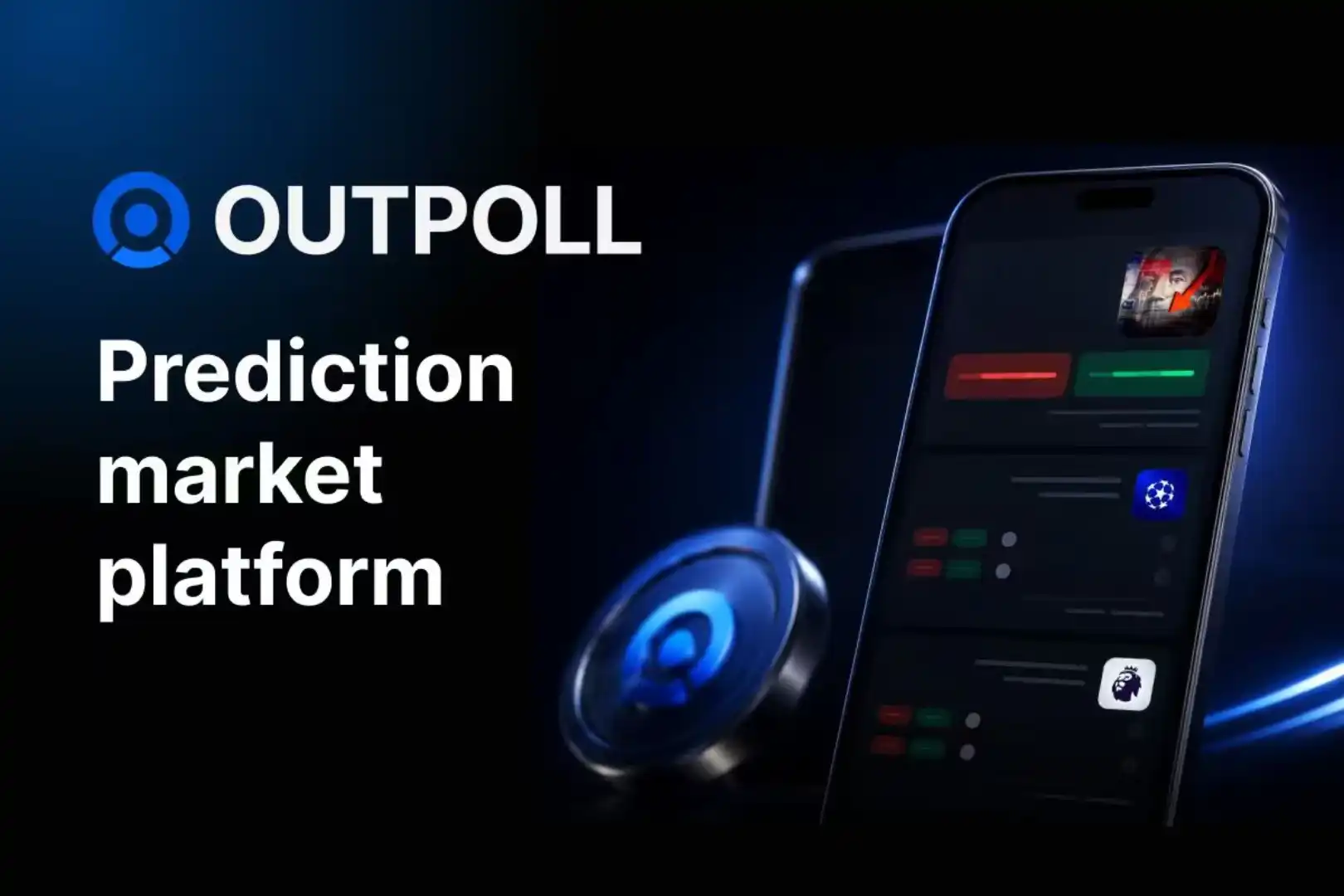
Outpoll Review: A Prediction Market Platform Built for Active Traders In recent years, prediction markets have grown from a niche sector to a mainstream arena, attracting billions in trading volume and institutional capital. However, the user experience and tools for traders have not kept pace. Outpoll, a new global prediction market platform, aims to fill this gap by providing enhanced trading infrastructure for active and professional traders. Built on standard prediction market principles, Outpoll allows users to trade on the outcome of specific events. It uses fully collateralized contracts with USDC settlement, charges a competitive 0.1% fee per trade, and provides clear settlement rules upfront to minimize disputes. A key focus for Outpoll is its professional-grade trading tools. The platform supports limit and market orders, as well as take-profit and stop-loss orders for open positions—features uncommon in prediction markets. For automated trading, Outpoll offers comprehensive REST and WebSocket APIs, enabling portfolio management, price arbitrage, and integration with existing tools. The platform also features a creator-led market model, where approved experts and community leaders can create and manage markets for niche topics under platform supervision. Its integrated interface combines news feeds directly with trading functions, allowing users to monitor events and manage positions seamlessly. Outpoll launched with a native Android app (available on Google Play) and plans an iOS version later this year. In summary, Outpoll distinguishes itself with trader-focused tools, practical APIs, transparent and collateralized markets, integrated news, and an expanding creator program. For active traders, its advanced order types and API access alone make it a platform worth watching. Outpoll is now globally accessible via outpoll.com and Google Play.

marsbit43 dk önce

Outpoll Review: A Prediction Market Platform Built for Active Traders

marsbit43 dk önce

Bitwise: Crypto Becomes a Contrarian Investment, Three Logics to Understand the Current Market

**Summary** Matt Hougan, Bitwise's CIO, analyzes the current crypto market through three key lenses, arguing it has shifted from a momentum-driven to a contrarian investment. **1) Crypto Becomes a Contrarian Play:** The market is weak, with major assets like Bitcoin and Ethereum down significantly. Capital has moved to hot sectors like AI, leaving crypto as an "unloved" asset class. This transforms crypto investing from trend-following to a test of patience and fundamental analysis. Investors now favor projects with solid fundamentals (e.g., Hyperliquid) over speculative ones. **2) Regulatory Overhang:** The uncertain fate of the U.S. CLARITY Act, a major crypto regulatory framework, is a key headwind. With its passage in 2024 seen as far from guaranteed (estimates range from 30-55%), institutional capital remains on the sidelines, choosing less risky alternatives like AI stocks. The market needs clarity—whether the bill passes or fails—more than any specific outcome to move decisively. **3) Capital Rotates to New Fundamentals:** This cycle differs from past bear markets where money fled to Bitcoin. Now, capital seeks smaller assets with strong use cases. While major cryptos fell in May 2024, tokens like Hyperliquid (+72%), Zcash (+50%), and XLM (+44%) rallied on their specific fundamentals. This rotation confirms the new contrarian, fundamentals-driven logic and signals the bear market may be in its later stages. **Conclusion:** Short-term pressure persists due to regulatory uncertainty and competition from AI narratives. Investing in crypto now requires a contrarian mindset—acting against the crowd and focusing on fundamental value. Patience and targeting high-quality projects based on their merits are essential for capturing long-term gains.

marsbit1 saat önce

Bitwise: Crypto Becomes a Contrarian Investment, Three Logics to Understand the Current Market

marsbit1 saat önce

ChatGPT Might Be Disappearing Soon

OpenAI announced at its "Intelligence at Work" event that its coding assistant, Codex, will be fully integrated into the ChatGPT app within weeks. This move marks a strategic shift from a conversational AI (Chat) towards a unified "agentic" platform capable of execution. Codex, originally launched to compete with Anthropic's Claude Code, has grown rapidly to 5 million weekly active users, with 20% being non-developers like analysts and designers. Its enterprise revenue now constitutes 40% of OpenAI's total. The integration is the first step in creating a super-app combining ChatGPT (interface), Codex (execution engine), and the Atlas browser (web access). OpenAI also unveiled new Codex features: specialized Agent plugins for six professional roles, an "Annotations" tool for direct document editing, and a "Sites" function to turn work into shareable web apps. Internally, this reflects a power shift; the Codex team now leads core product strategy. While the ChatGPT brand remains for its vast user base, the platform's future is focused on autonomous agents that perform tasks, not just chat. The article notes that competition with Claude Code pushed OpenAI's development, with Codex competing on cost-effectiveness and accessibility rather than raw coding quality. It concludes that the essence of "ChatGPT" is evolving from a chatbot into an AI agent platform, with the name potentially becoming a legacy symbol of its original function.

marsbit1 saat önce

ChatGPT Might Be Disappearing Soon

marsbit1 saat önce

İşlemler

Spot
Futures

Popüler Makaleler

ONE Nasıl Satın Alınır

HTX.com’a hoş geldiniz! Harmony (ONE) satın alma işlemlerini basit ve kullanışlı bir hâle getirdik. Adım adım açıkladığımız rehberimizi takip ederek kripto yolculuğunuza başlayın. 1. Adım: HTX Hesabınızı OluşturunHTX'te ücretsiz bir hesap açmak için e-posta adresinizi veya telefon numaranızı kullanın. Sorunsuzca kaydolun ve tüm özelliklerin kilidini açın. Hesabımı Aç2. Adım: Kripto Satın Al Bölümüne Gidin ve Ödeme Yönteminizi SeçinKredi/Banka Kartı: Visa veya Mastercard'ınızı kullanarak anında Harmony (ONE) satın alın.Bakiye: Sorunsuz bir şekilde işlem yapmak için HTX hesap bakiyenizdeki fonları kullanın.Üçüncü Taraflar: Kullanımı kolaylaştırmak için Google Pay ve Apple Pay gibi popüler ödeme yöntemlerini ekledik.P2P: HTX'teki diğer kullanıcılarla doğrudan işlem yapın.Borsa Dışı (OTC): Yatırımcılar için kişiye özel hizmetler ve rekabetçi döviz kurları sunuyoruz.3. Adım: Harmony (ONE) Varlıklarınızı SaklayınHarmony (ONE) satın aldıktan sonra HTX hesabınızda saklayın. Alternatif olarak, blok zinciri transferi yoluyla başka bir yere gönderebilir veya diğer kripto para birimlerini takas etmek için kullanabilirsiniz.4. Adım: Harmony (ONE) Varlıklarınızla İşlem YapınHTX'in spot piyasasında Harmony (ONE) ile kolayca işlemler yapın.Hesabınıza erişin, işlem çiftinizi seçin, işlemlerinizi gerçekleştirin ve gerçek zamanlı olarak izleyin. Hem yeni başlayanlar hem de deneyimli yatırımcılar için kullanıcı dostu bir deneyim sunuyoruz.

364 Toplam GörüntülenmeYayınlanma 2024.12.12Güncellenme 2026.06.02

ONE Nasıl Satın Alınır

Tartışmalar

HTX Topluluğuna hoş geldiniz. Burada, en son platform gelişmeleri hakkında bilgi sahibi olabilir ve profesyonel piyasa görüşlerine erişebilirsiniz. Kullanıcıların ONE (ONE) fiyatı hakkındaki görüşleri aşağıda sunulmaktadır.

活动图片