Reddit Discussion: After 11 Years in Crypto, RWA Is One of the Few Things That Doesn't Feel Like 'Old Wine in a New Bottle'

marsbit2026-05-29 tarihinde yayınlandı2026-05-29 tarihinde güncellendi

Özet

Reddit Discussion: After 11 Years in Crypto, RWA Feels Unlike the Usual 'Old Wine in a New Bottle' A user with experience since 2014 shares that, having witnessed major crypto cycles from ICOs to FTX, most new narratives are just rebranded old ideas. However, Real World Assets (RWA) feel genuinely different. It's not about moving existing on-chain capital but bringing yields from real-world assets onto the blockchain. While many projects are flawed, the underlying premise is stronger than most. The user outlines key checks before engaging with any RWA project: 1) Existence of a lending business *before* the token launch (citing examples like Maple and 8lends). 2) Clear, transparent handling of defaults, using Goldfinch's 2023 issues as a critical lesson about inevitable credit risk. They note a crucial distinction for newcomers: RWA lending involves slow recovery from real assets (taking months), unlike the instant liquidations of over-collateralized DeFi protocols like Aave. Ultimately, the hard part is the traditional credit work, not the blockchain. Commenters agree, emphasizing the importance of documented default procedures and teams with pre-token real-world credit experience. They observe that a project's response to its first default is more telling than any metrics dashboard, summarizing RWA as "old credit on a new rail."

Author: LateNeverr1

Compiled by: Deep Chao TechFlow

I started mining in 2014 and switched to ETH when it launched in 2015. I've seen it all since then: the DAO hack, the ICO craze, DeFi Summer, the Terra collapse, Celsius, FTX.

After enough cycles, you stop getting excited about "new" narratives. Most of them are just the same thing returning under a different name. Liquidity mining became points mining, ICOs became IDOs.

RWA feels different, and I don't say that lightly.

It's not just another way of moving capital around on-chain, but bringing yields from assets that have never been on-chain before onto the chain. This doesn't mean it solves all problems, many projects are vaporware, but the fundamentals behind this sector are more solid than most project whitepapers.

Things I check before touching any RWA project:

  • Whether the lending business existed before the token appeared. Maple's founders have a traditional credit background. 8lends was launched based on a platform that had been doing offline P2P lending for years. I value this more than tokenomics or headline APRs.
  • Whether defaults are explained clearly or covered up. The Goldfinch incident in 2023 was a lesson for the entire sector. Real credit risk will surface eventually, and anyone pretending it won't isn't worth your time.

I maintain small positions in a few projects just to observe their performance. Most of my holdings are still in ETH and validation nodes.

If you're new, one thing to understand clearly:

Over-collateralized lending like Aave involves instant liquidation, while RWA lending involves slow recovery from real-world assets, which can take months. These are two completely different types of risk.

Ultimately, it's largely about moving old-fashioned credit work onto a new track. The difficult part has never been the blockchain.

Selected Comments:

Careful_keklin: I entered in 2017, and after Celsius, my criteria for screening projects are similar to yours. The most important point for me is whether default scenarios are clearly documented somewhere or glossed over lightly. Most RWA protocols I checked in 2022-23 couldn't even explain their own recovery processes clearly, which speaks volumes. Goldfinch's outcome was inevitable for this model, not an exception.

be_boss: Completely agree, especially that "test of real business before the token." The ICO era relied on whitepapers, DeFi Summer on APY, 2022 on "we are compliant." The signature phrase of each cycle looks rigorous until the next one starts. Those that survive each round of shuffling are basically the teams that had credit businesses running off-chain before launching a token. That point about Goldfinch is spot on—default is the real stress test, not TVL. A team's reaction the first time something goes wrong says more than a year's worth of data dashboards. "Old credit on a new track" is so accurate; the smart contracts were never the hard part.

İlgili Sorular

QAccording to the article, why does the author, with 11 years of experience in crypto, find the RWA narrative unique compared to others?

AThe author finds RWA unique because it is not just another method of moving capital around on-chain. Instead, it introduces the yields of real-world assets that have never been on-chain before. This feels more substantive, even though many projects are still vaporware, as the concept is backed by more solid foundations than most project whitepapers.

QWhat are the two key things the author checks before engaging with any RWA project?

A1. Whether a lending business existed *before* the token was introduced. The author values projects where the founders have traditional credit backgrounds or where the platform was built on an existing offline P2P lending business. 2. How defaults are handled. The author looks to see if default scenarios are clearly explained and documented or if they are glossed over, citing the 2023 Goldfinch incident as a critical lesson for the sector.

QWhat core difference does the author point out between Aave-style lending and RWA lending regarding risk?

AAave-style lending uses over-collateralization with instant liquidation. In contrast, RWA lending involves slow recovery from real-world assets, which can take months. The author emphasizes that these two models represent completely different types of risk.

QSummarize the viewpoint of the commenter 'be_boss' regarding the evolution of project narratives across crypto cycles.

AThe commenter 'be_boss' agrees with the author's view that each crypto cycle has its own hallmark narrative that appears rigorous until the next cycle begins: ICOs relied on whitepapers, DeFi Summer on APY, and 2022 on claims of being 'compliant.' The survivors after each shakeout are typically teams that ran credit businesses offline *before* launching a token. The commenter also stresses that a team's reaction to its first default or crisis is a more telling test than a year's worth of dashboard data.

QWhat is the common sentiment expressed by both the author and the commenter 'Careful_keklin' about the Goldfinch incident and RWA protocols in general?

ABoth the author and the commenter view the Goldfinch incident not as an exception but as an inevitable outcome for the RWA model when real credit risk materializes. They criticize protocols that cannot clearly document their default scenarios or recovery processes, seeing this lack of transparency as a major red flag. The incident served as a critical lesson and stress test for the entire RWA sector.

İlgili Okumalar

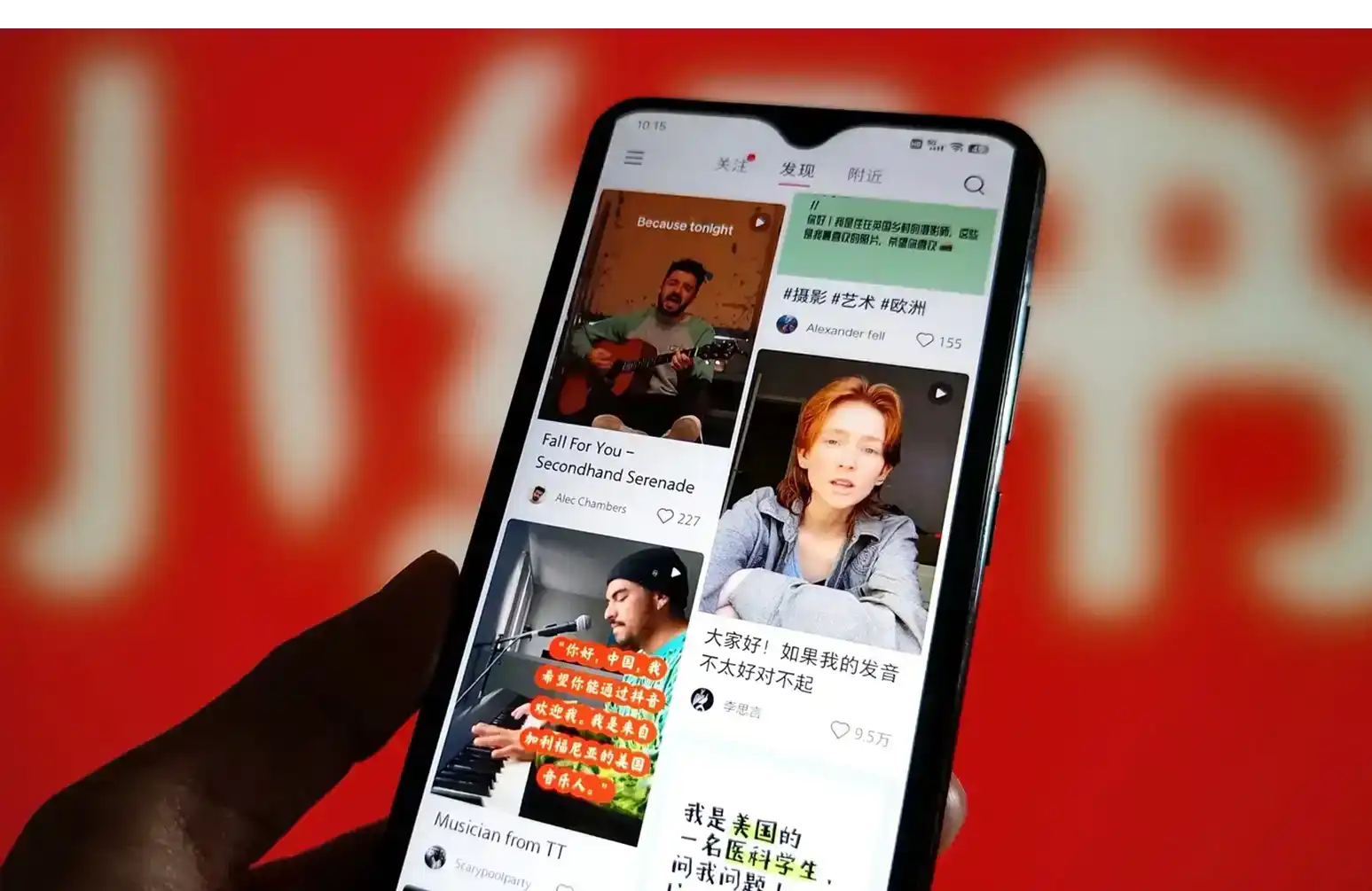
Xiaohongshu's Second Great Voyage, This Time Sailing Towards AI

Xiaohongshu's Second Voyage: Navigating Towards AI Since ChatGPT's emergence, Xiaohongshu's founder Mao Wenchao has been acutely aware of AI's potential threat, recognizing that the life advice people seek from chatbots overlaps directly with his platform's core business. Founded in 2013 as a PDF shopping guide for Chinese tourists, Xiaohongshu evolved into a massive community where millions share authentic, personal experiences—from product reviews to travel tips. This vast repository of "I've tried this" human judgment became its most valuable asset. However, the rise of AI, which delivers instant answers, challenges the very need for users to sift through numerous personal notes. Fearing its treasure trove of lived experience could become mere training data for others, Xiaohongshu is proactively adapting. In 2026, it established a dedicated AI division (Dots), launched RED Skill to turn user experiences into usable AI tools, and acquired the AI search product "Diandian." Its investments now extend to AI firms like MiniMax and hardware startups, moving upstream to address needs before they even become search queries. The platform's commercialization strategy is also evolving. With a newly acquired payment license and tools like the AIPS model to track consumer decision journeys, Xiaohongshu aims to seamlessly integrate recommendations with transactions, embedding commerce within AI-generated answers. Yet, a critical tension remains. While building smarter machines to organize and leverage its human experiences, Xiaohongshu must prevent AI from drowning out the authentic, flawed, and trustworthy "I've tried this" voices that built its community. Its core challenge is to harness AI's power without letting the map—the machine's perfect, synthesized answer—replace the territory of genuine human experience. This balance between technological advancement and preserving human trust defines its current journey and its future.

marsbit3 dk önce

Xiaohongshu's Second Great Voyage, This Time Sailing Towards AI

marsbit3 dk önce

SharpLink CEO: How to Understand Ethereum Developers Just Exceeded 1 Million?

SharpLink CEO reflects on the milestone of Ethereum surpassing 1 million historical developers, emphasizing that this figure represents the largest pool of technical talent ever assembled around an open, permissionless blockchain network. While approximately 232,000 developers remain active, the key question for the crypto industry is not which chain is fastest, but where the best builders choose to build long-term. Ethereum's advantage lies in a decade-long accumulation of infrastructure, standards, tools, liquidity, and a cohesive culture, making it the default operating system for programmable finance. This developer base is tackling complex challenges: the Glamsterdam upgrade aims to enhance scalability while preserving core principles; synchronous composability seeks to unify Rollup ecosystems; and significant efforts are underway for post-quantum security. Ethereum's deeper network effects stem from composability and shared standards (like the EVM and Solidity), creating a flywheel of more developers, tools, and liquidity. Three reinforcing strengths cement Ethereum's lead: credible neutrality (secured by ~900k validators), a modular architecture with interconnected Rollups, and a culture that attracts top researchers. The ecosystem is consolidating as the trusted coordination layer for internet-native finance, favored by large institutions valuing security and liquidity. The future of Ethereum is being built by this global community of founders and architects.

链捕手18 dk önce

SharpLink CEO: How to Understand Ethereum Developers Just Exceeded 1 Million?

链捕手18 dk önce

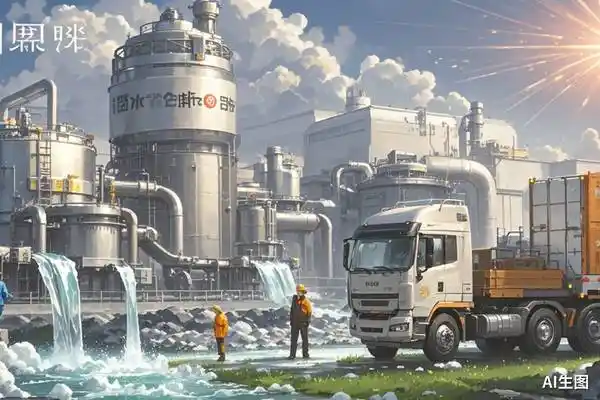
A Clod of Chinese Soil Chokes Two Japanese Giants

"Chinese Soil Chokes Japanese Giants" The production of a key electronic specialty gas, tungsten hexafluoride (WF6), vital for manufacturing AI chips, was halted by two leading Japanese producers—Kanto Denka and Central Glass. Their shutdown was not due to a technological failure but a sudden, critical shortage of a raw material they had long taken for granted: ultra-high-purity (6N-grade) tungsten powder, which is almost entirely sourced from China. Following a quiet Chinese export announcement in January 2026, tungsten powder shipments to Japan dropped to zero for months. Despite frantic efforts, Japanese companies found no viable alternative; imported powder was three times more expensive and lacked the required purity. Their existing stockpiles were exhausted by mid-2026. WF6 is essential for depositing tungsten into the microscopic contact holes of High Bandwidth Memory (HBM) chips, which are crucial for advanced processors like those from Nvidia. While Japanese firms had mastered producing ultra-pure WF6 gas, their entire supply chain relied on China's 6N tungsten powder—a dependency now revealed as a fatal vulnerability. China's dominance in this "soil" results from decades of painstaking R&D by companies like Xiamen Tungsten and China Tungsten & Hightech. They overcame immense technical hurdles, such as separating chemically similar molybdenum from tungsten, to achieve mass production of the world's purest tungsten powder. With their primary suppliers gone, Kanto Denka and Central Glass announced a permanent halt to WF6 production starting July 1, 2026. This immediately created a supply crisis for major semiconductor manufacturers like Samsung and SK Hynix, forcing them to urgently seek and certify new Chinese suppliers for WF6 itself. The reversal marks a dramatic shift: China has moved from exporting low-value raw materials to controlling the high-purity foundation of a critical global tech supply chain, upending a long-established industrial hierarchy.

marsbit49 dk önce

A Clod of Chinese Soil Chokes Two Japanese Giants

marsbit49 dk önce

İşlemler

Spot
Futures

Popüler Makaleler

ONE Nasıl Satın Alınır

HTX.com’a hoş geldiniz! Harmony (ONE) satın alma işlemlerini basit ve kullanışlı bir hâle getirdik. Adım adım açıkladığımız rehberimizi takip ederek kripto yolculuğunuza başlayın. 1. Adım: HTX Hesabınızı OluşturunHTX'te ücretsiz bir hesap açmak için e-posta adresinizi veya telefon numaranızı kullanın. Sorunsuzca kaydolun ve tüm özelliklerin kilidini açın. Hesabımı Aç2. Adım: Kripto Satın Al Bölümüne Gidin ve Ödeme Yönteminizi SeçinKredi/Banka Kartı: Visa veya Mastercard'ınızı kullanarak anında Harmony (ONE) satın alın.Bakiye: Sorunsuz bir şekilde işlem yapmak için HTX hesap bakiyenizdeki fonları kullanın.Üçüncü Taraflar: Kullanımı kolaylaştırmak için Google Pay ve Apple Pay gibi popüler ödeme yöntemlerini ekledik.P2P: HTX'teki diğer kullanıcılarla doğrudan işlem yapın.Borsa Dışı (OTC): Yatırımcılar için kişiye özel hizmetler ve rekabetçi döviz kurları sunuyoruz.3. Adım: Harmony (ONE) Varlıklarınızı SaklayınHarmony (ONE) satın aldıktan sonra HTX hesabınızda saklayın. Alternatif olarak, blok zinciri transferi yoluyla başka bir yere gönderebilir veya diğer kripto para birimlerini takas etmek için kullanabilirsiniz.4. Adım: Harmony (ONE) Varlıklarınızla İşlem YapınHTX'in spot piyasasında Harmony (ONE) ile kolayca işlemler yapın.Hesabınıza erişin, işlem çiftinizi seçin, işlemlerinizi gerçekleştirin ve gerçek zamanlı olarak izleyin. Hem yeni başlayanlar hem de deneyimli yatırımcılar için kullanıcı dostu bir deneyim sunuyoruz.

381 Toplam GörüntülenmeYayınlanma 2024.12.12Güncellenme 2026.06.02

ONE Nasıl Satın Alınır

Tartışmalar

HTX Topluluğuna hoş geldiniz. Burada, en son platform gelişmeleri hakkında bilgi sahibi olabilir ve profesyonel piyasa görüşlerine erişebilirsiniz. Kullanıcıların ONE (ONE) fiyatı hakkındaki görüşleri aşağıda sunulmaktadır.

活动图片