Özet
Ray Dalio argues that the world is in the early stages of a prolonged "world war" that is unlikely to end soon. This conflict is not a single declared war but a combination of multiple regional hot wars (e.g., Russia-Ukraine, Israel-Gaza, US-Iran) and non-shooting wars (economic, technological, capital, and geopolitical influence wars). These interconnected conflicts are reshaping global order, driven by shifting alliances, resource competition, and the weaponization of critical trade routes like the Strait of Hormuz.
Key powers are aligning into opposing blocs: China, Russia, Iran, and North Korea versus the US, Israel, Gulf states, Japan, and Australia. Dalio emphasizes that victory in such conflicts depends not on absolute strength but on which side can endure prolonged pain and resource depletion. He warns that the US, while powerful, is overextended globally and may struggle to manage multiple fronts simultaneously.
The current phase resembles historical pre-war periods (e.g., 1913–1914, 1938–1939), where economic and military tensions escalate into broader conflicts. Dalio urges observers to look beyond short-term events and focus on structural shifts: rising debt, internal political pressures, and the erosion of the US-led multilateral order into a "might-makes-right" system. He assesses a >50% probability of at least one major conflict escalating within five years, including scenarios in Ukraine, Korea, or the South China Sea.
Original Title: The Big Thing: We Are In A World War That Isn’t Going To End Anytime Soon
Original Author: Ray Dalio
Original Compilation: Peggy, BlockBeats
Editor's Note: While the market continues to price in short-term questions like "How long will the conflict last?" and "How high will oil prices go?", this article attempts to pull the perspective back to a longer time scale. Bridgewater Associates founder Ray Dalio believes that the current series of regional conflicts are piecing together into an as-yet unnamed "world-class conflict", whose evolutionary logic is closer to the cyclical stage on the eve of major historical wars.
{"@context":"https://schema.org","@type":"FAQPage","mainEntity":[{"@type":"Question","name":"According to Ray Dalio, what is the most important perspective to understand the current global situation?","acceptedAnswer":{"@type":"Answer","text":"The most important perspective is that we are in the early stages of a world war that will not end soon, and it is part of a larger 'Big Cycle' of structural changes in global order, rather than just focusing on short-term events."}},{"@type":"Question","name":"What does Dalio identify as the key factor in determining which side wins a prolonged conflict, rather than absolute strength?","acceptedAnswer":{"@type":"Answer","text":"The key factor is which side can endure pain and sustain the conflict better, as victory comes not from weakening the enemy but from making them surrender, and the ability to承受痛苦 (endure suffering) is crucial."}},{"@type":"Question","name":"How does Dalio describe the current shift in the world order?","acceptedAnswer":{"@type":"Answer","text":"The world order is shifting from one dominated by the US and its allies with rules-based multilateralism to a state with no single dominant power, where 'might makes right' prevails, resembling pre-1945 historical periods more than the post-war order."}},{"@type":"Question","name":"What are some of the indicators or signals that Dalio uses to track the progression into a conflict phase?","acceptedAnswer":{"@type":"Answer","text":"Indicators include the depletion of military and resource stockpiles, rising fiscal spending, debt, money printing, and capital controls, rival nations learning from each other's strengths and weaknesses through conflicts, and overextended dominant powers facing multiple distant conflicts simultaneously."}},{"@type":"Question","name":"Why does Dalio suggest that China might be less vulnerable in the context of a potential closure of the Strait of Hormuz?","acceptedAnswer":{"@type":"Answer","text":"Because China has a supportive relationship with Iran, likely ensuring oil passage to China; strong ties with Russia for alternative oil supplies; significant other energy sources like coal and solar; large oil reserves (90-120 days); and consumes 80-90% of Iran's oil output, strengthening its leverage."}}]}İlgili Sorular
QAccording to Ray Dalio, what is the most important perspective to understand the current global situation?
AThe most important perspective is that we are in the early stages of a world war that will not end soon, and it is part of a larger 'Big Cycle' of structural changes in global order, rather than just focusing on short-term events.
QWhat does Dalio identify as the key factor in determining which side wins a prolonged conflict, rather than absolute strength?
AThe key factor is which side can endure pain and sustain the conflict better, as victory comes not from weakening the enemy but from making them surrender, and the ability to承受痛苦 (endure suffering) is crucial.
QHow does Dalio describe the current shift in the world order?
AThe world order is shifting from one dominated by the US and its allies with rules-based multilateralism to a state with no single dominant power, where 'might makes right' prevails, resembling pre-1945 historical periods more than the post-war order.
QWhat are some of the indicators or signals that Dalio uses to track the progression into a conflict phase?
AIndicators include the depletion of military and resource stockpiles, rising fiscal spending, debt, money printing, and capital controls, rival nations learning from each other's strengths and weaknesses through conflicts, and overextended dominant powers facing multiple distant conflicts simultaneously.
QWhy does Dalio suggest that China might be less vulnerable in the context of a potential closure of the Strait of Hormuz?
ABecause China has a supportive relationship with Iran, likely ensuring oil passage to China; strong ties with Russia for alternative oil supplies; significant other energy sources like coal and solar; large oil reserves (90-120 days); and consumes 80-90% of Iran's oil output, strengthening its leverage.
İlgili Okumalar
Ethereum's Meme Season Is Back
The Ethereum meme season has reignited, sparked by Elon Musk's brief reply to a post about a girl's memorial Shiba Inu toy, Asteroid, which flew on a SpaceX mission. This triggered a 1,000%+ surge in the dormant $ASTEROID token within hours, causing Ethereum gas fees to spike over 10x and meme trading volume to surpass major DeFi protocols.
This wave features memes with real-world anchors:
- **Space-themed tokens** like $RISE (leveraging NASA imagery) and $FLOAT (inspired by SpaceX’s zero-gravity indicators) capitalized on the space narrative.
- **Event-driven memes** such as $CLUTCH (FIFA World Cup mascot) and $RIZO (a Tesla-associated hedgehog meme endorsed by Musk) gained traction.
- **Comic IP-based tokens** like $MYSTERY (Pepe creator’s early character) and $FLORK (from a popular webcomic) saw explosive gains, with derivatives ($FLORKY, $BABYFLORK) following.
- **Political memes** (e.g., $MAGA aliens variant, $BRITAIN) tapped into niche audiences with strong identity-driven narratives.
Unlike Solana’s fast-paced meme trading, Ethereum memes tend to build slower but denser narratives, benefiting from reduced gas fees post-EIP-4844 and concentrated attention. While most may fade, they reflect evolving cultural and speculative dynamics in crypto.
*Note: Mentioned tokens are highly speculative, unaudited, and not investment advice.*
marsbit28 dk önce
marsbit28 dk önce
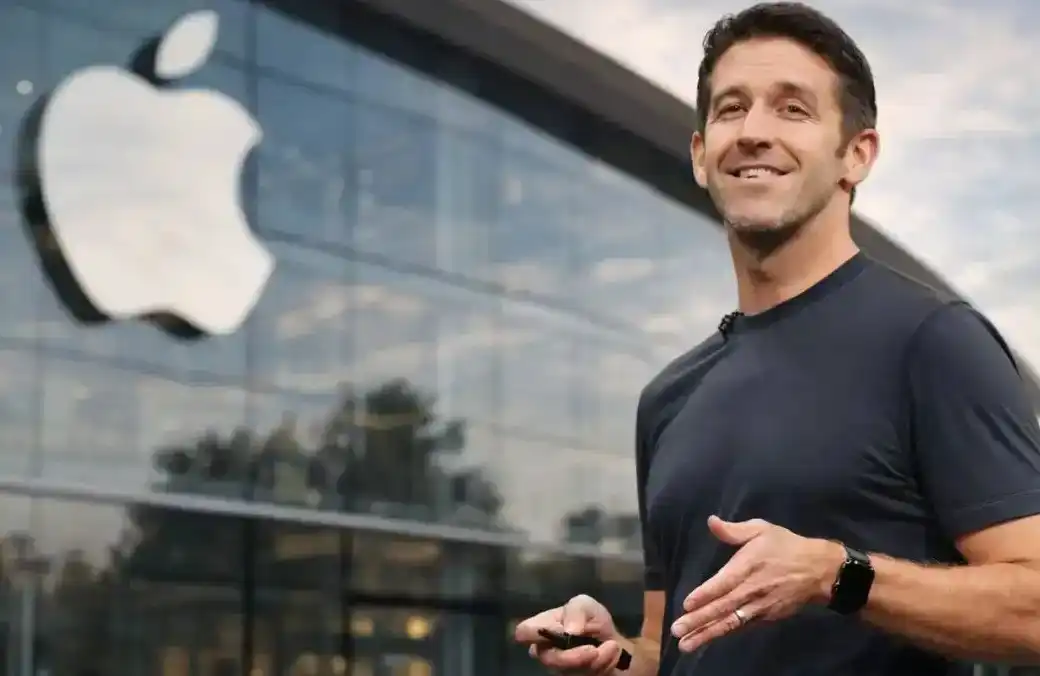
Can Apple Continue to Grow in the AI Era Without Cook?
Apple has named John Ternus, a 25-year company veteran and current head of hardware engineering, as its next CEO, effective September 1. He succeeds Tim Cook, who transitions to executive chairman. Ternus is characterized as a "systems-oriented" leader—a collaborative, decisive insider known for his deep understanding of Apple's products and unique functional organizational structure.
His career highlights include pragmatically updating the Mac Mini without costly redesigns, playing a key role in developing AirPods amidst internal tensions, and leading the transition of Macs to Apple's own silicon. However, he is not seen as a high-risk visionary like Steve Jobs or a supply-chain innovator like Cook.
Ternus takes charge as Apple faces significant challenges: the need to find its next major product beyond the iPhone and to catch up in the AI era, where competitors are ahead in conversational AI, and Siri is considered outdated. The central question is whether he can leverage Apple's hardware strength to build a new platform advantage or if the company will primarily optimize its existing ecosystem. His success hinges on making bold strategic bets in a shifting technological landscape.
marsbit38 dk önce
marsbit38 dk önce
Anthropic Removes Claude Code from Pro Plan, Developer Community Erupts, OpenAI Seizes the Opportunity to Strike
Anthropic has removed its coding agent, Claude Code, from the $20/month Pro plan, triggering strong backlash from the developer community. The change was reflected in updated pricing pages and documentation, which now state that Claude Code is only available to Max plan subscribers, starting at $100/month.
Anthropic’s growth lead, Amol Avasare, described the move as a "small-scale test" affecting only 2% of new users, but the broad updates to public documentation contradicted this claim. He later acknowledged that rising computational costs due to increased usage made the previous pricing structure unsustainable.
Developers expressed frustration on platforms like Hacker News, Reddit, and GitHub, with some calling it a reason to switch to local or open-source models like Llama or Mistral.
In response, OpenAI quickly emphasized that its competing product, Codex, remains available in both free and $20/month Plus plans, and reaffirmed its commitment to transparent communication with users. Google’s Gemini CLI remains free, adding further competitive pressure.
The incident highlights growing tension between AI service affordability and the high compute costs of advanced coding assistants.
marsbit38 dk önce
marsbit38 dk önce
IOSG Founder: The Most Dangerous Prisoner's Dilemma in DeFi History
IOSG Founder: DeFi's Most Dangerous Prisoner's Dilemma
A $230M bad debt remains unresolved, with Aave Collector holding over $200M in liquid assets and LayerZero recently raising $120M—both fully capable of covering the losses. Aave has lost $8.45B in TVL in under two days, while the entire DeFi ecosystem has bled $13.2B. The silence from all parties involved is exacerbating the crisis.
The author recalls the DeFi spirit of 2020, when MakerDAO faced collapse during the March 12 crash but took responsibility by auctioning MKR to cover bad debt. Today, in contrast, there is only silence. Users are withdrawing funds not just from Aave but from Spark and other DeFi protocols, voting with their feet. This loss of trust threatens the entire ecosystem.
This is not just Aave’s problem. Spark, MakerDAO, and all Ethereum DeFi protocols must coordinate. Trust, once broken, affects everyone. Time is critical—every hour of silence leads to more capital leaving permanently.
The author urges Aave’s Stani Kulechov, Vitalik Buterin, AaveDAO, KelpDAO, LayerZero, and RuneKek to communicate publicly and reassure the market. Silence is the worst option.
marsbit54 dk önce
marsbit54 dk önce
XRP Ledger Transactions Are Surging Again, Here Are The Numbers
XRP Ledger is experiencing a significant surge in activity, particularly in AccountSet transactions, which are used to configure account settings and indicate backend or institutional activity rather than simple transfers. These transactions recently hit an all-time high of over 120,000, reflecting infrastructure development. This is part of a broader increase in network usage, with daily transactions reaching nearly 3 million in 2026, up from around 1 million in mid-2025. The number of non-empty wallets has also surpassed 7.7 million. Despite this growth, the price of XRP remains below its 2025 peak, with analysts suggesting regulatory clarity, such as the CLARITY Act, may be needed for a price repricing.
bitcoinist59 dk önce
bitcoinist59 dk önce
Popüler Makaleler
HTX.com’a hoş geldiniz! WeStarter (WAR) satın alma işlemlerini basit ve kullanışlı bir hâle getirdik. Adım adım açıkladığımız rehberimizi takip ederek kripto yolculuğunuza başlayın. 1. Adım: HTX Hesabınızı OluşturunHTX'te ücretsiz bir hesap açmak için e-posta adresinizi veya telefon numaranızı kullanın. Sorunsuzca kaydolun ve tüm özelliklerin kilidini açın. Hesabımı Aç2. Adım: Kripto Satın Al Bölümüne Gidin ve Ödeme Yönteminizi SeçinKredi/Banka Kartı: Visa veya Mastercard'ınızı kullanarak anında WeStarter (WAR) satın alın.Bakiye: Sorunsuz bir şekilde işlem yapmak için HTX hesap bakiyenizdeki fonları kullanın.Üçüncü Taraflar: Kullanımı kolaylaştırmak için Google Pay ve Apple Pay gibi popüler ödeme yöntemlerini ekledik.P2P: HTX'teki diğer kullanıcılarla doğrudan işlem yapın.Borsa Dışı (OTC): Yatırımcılar için kişiye özel hizmetler ve rekabetçi döviz kurları sunuyoruz.3. Adım: WeStarter (WAR) Varlıklarınızı SaklayınWeStarter (WAR) satın aldıktan sonra HTX hesabınızda saklayın. Alternatif olarak, blok zinciri transferi yoluyla başka bir yere gönderebilir veya diğer kripto para birimlerini takas etmek için kullanabilirsiniz.4. Adım: WeStarter (WAR) Varlıklarınızla İşlem YapınHTX'in spot piyasasında WeStarter (WAR) ile kolayca işlemler yapın.Hesabınıza erişin, işlem çiftinizi seçin, işlemlerinizi gerçekleştirin ve gerçek zamanlı olarak izleyin. Hem yeni başlayanlar hem de deneyimli yatırımcılar için kullanıcı dostu bir deneyim sunuyoruz.
134 Toplam GörüntülenmeYayınlanma 2024.12.11Güncellenme 2025.02.23