‘Quietly rebuilding momentum’ – Scaramucci backs Polkadot despite low network activity

ambcrypto2026-03-22 tarihinde yayınlandı2026-03-22 tarihinde güncellendi

Özet

Anthony Scaramucci, founder of SkyBridge, has turned bullish on Polkadot, citing key catalysts that are "quietly rebuilding momentum" for the blockchain. These include recent regulatory clarity from the SEC, which classified DOT as a digital commodity, and a major tokenomics update that hard-capped the supply at 2.1 billion tokens and cut annual emissions by 53%. The launch of the 21Shares Spot DOT ETF was also noted, though it has seen minimal inflows since debuting. Despite these developments, Polkadot's network activity has declined significantly over the past two years, with weekly active addresses dropping from 16,000 to 5,000. The tokenomics changes briefly boosted trader sentiment, leading to an 18% price rally, but positive momentum faded at the $1.65 resistance level. If macroeconomic uncertainty continues, DOT could retreat to $1.23. While Scaramucci highlights bullish factors, Polkadot's adoption remains weak, and it is unclear how quickly recent upgrades will reignite growth and lift the token's value.

Anthony Scaramucci, founder of venture capital firm SkiBridge, has flipped bullish on Polkadot.

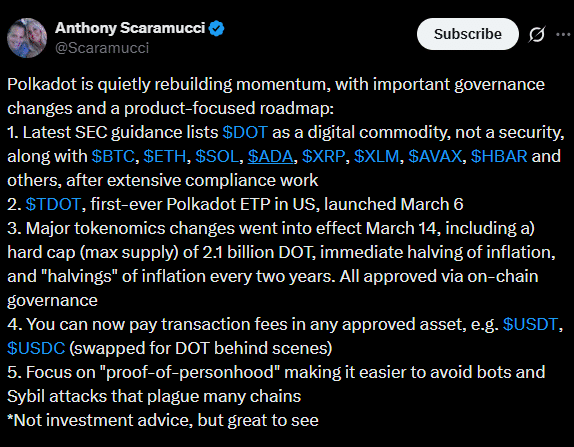
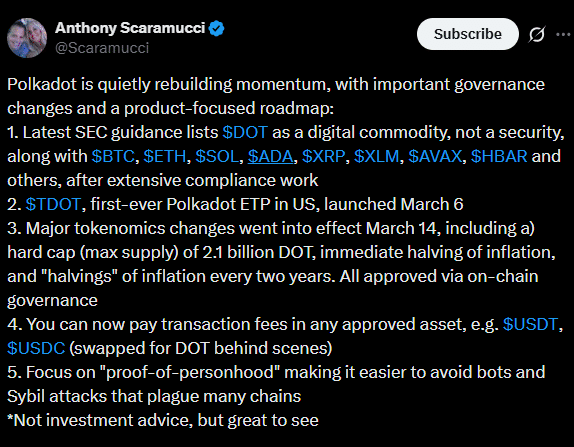
According to the crypto investor, the latest regulatory update and major tokenomics were some of the bullish catalysts that are ‘quietly rebuilding momentum’ for the chain.
Source: X

In the latest SEC guidance, DOT was categorized as a digital commodity like Bitcoin and Ethereum.

Beyond regulatory clarity, the recent tokenomics overhaul has hard-capped DOT supply at 2.1 billion. Additionally, the annual emissions were cut from 120 million DOT to 55 million DOT, marking a 53% cut.

The 21Shares Spot DOT ETF was another key catalyst, according to Scaramucci.

However, since the product debuted, it has only seen one day of inflow of $544.5K. For the rest of March, the Spot DOT ETF has seen zero flows, suggesting that the demand is not as strong as the analyst projected.

But the ETF demand isn’t the only thing lagging for DOT.

Polkadot network activity declining

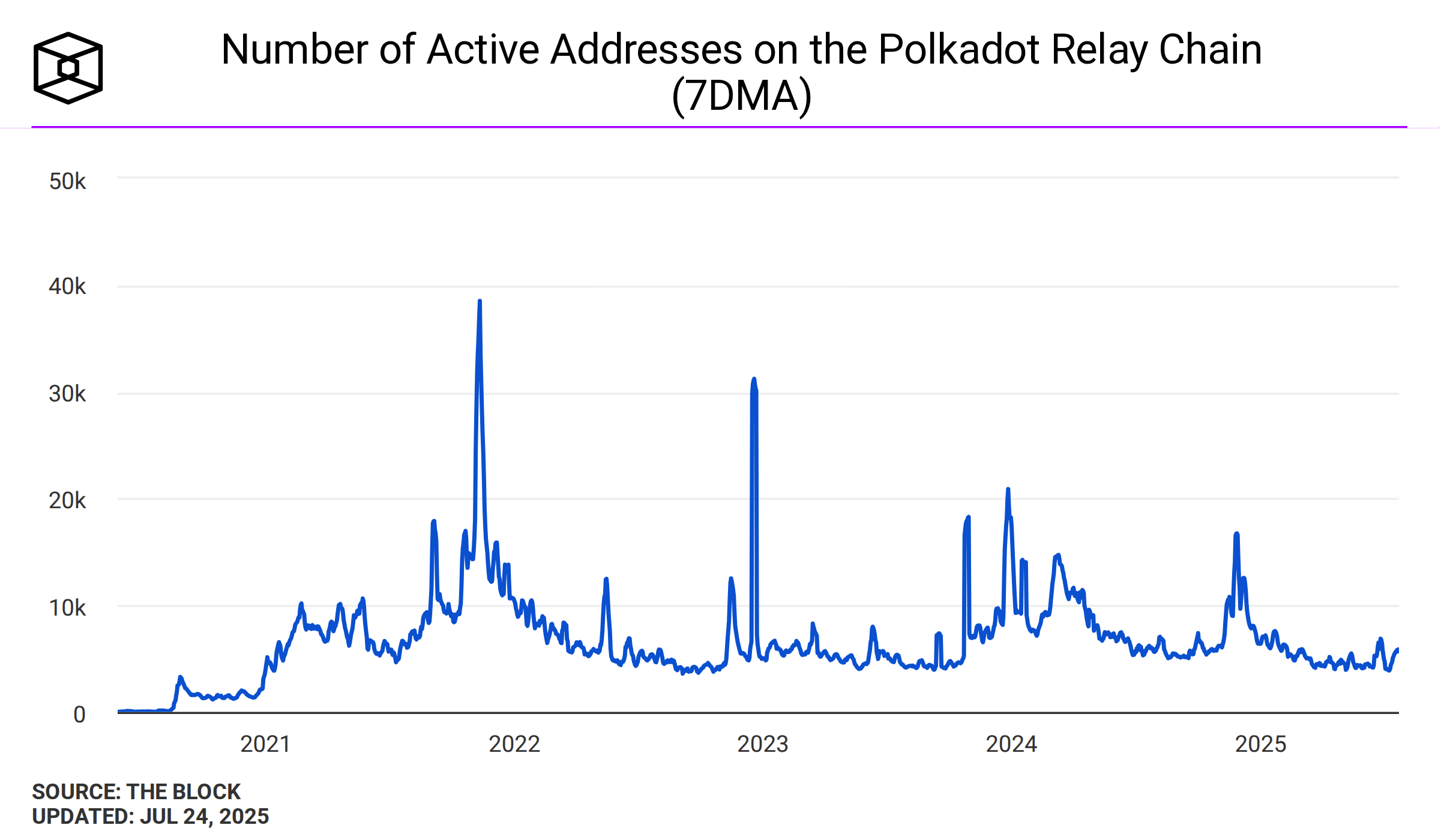
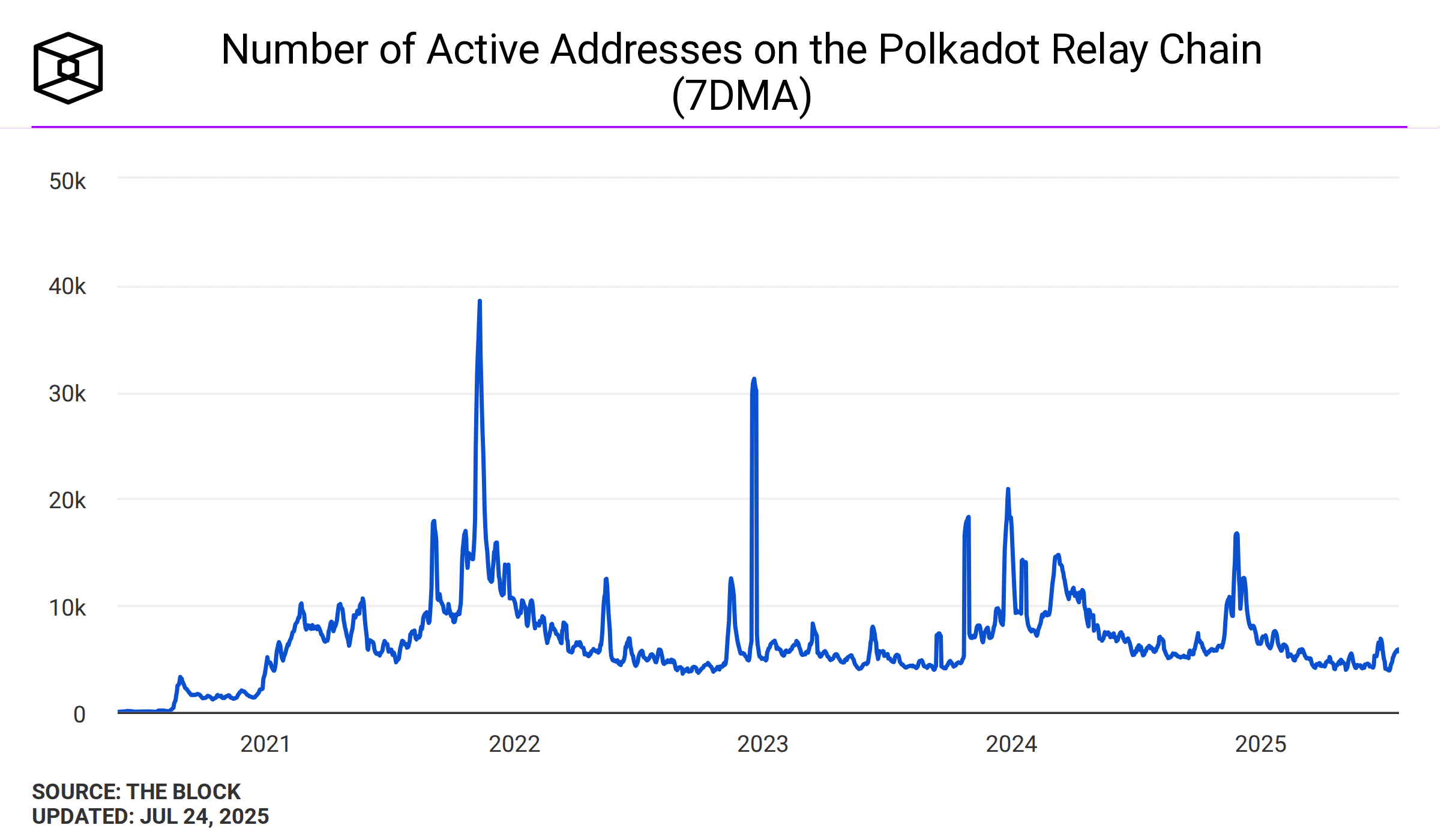
On the network activity and adoption, Polkadot has seen a significant loss in traction. Apart from the initial broader market hype and rally in late 2024, the chain’s adoption has been in a free fall.

This was illustrated by the drop in weekly average active addresses, slipping from 16K to 5K in the past two years.
Source: The Block

It remains to be seen whether the recent tokenomics overhaul will attract users again.

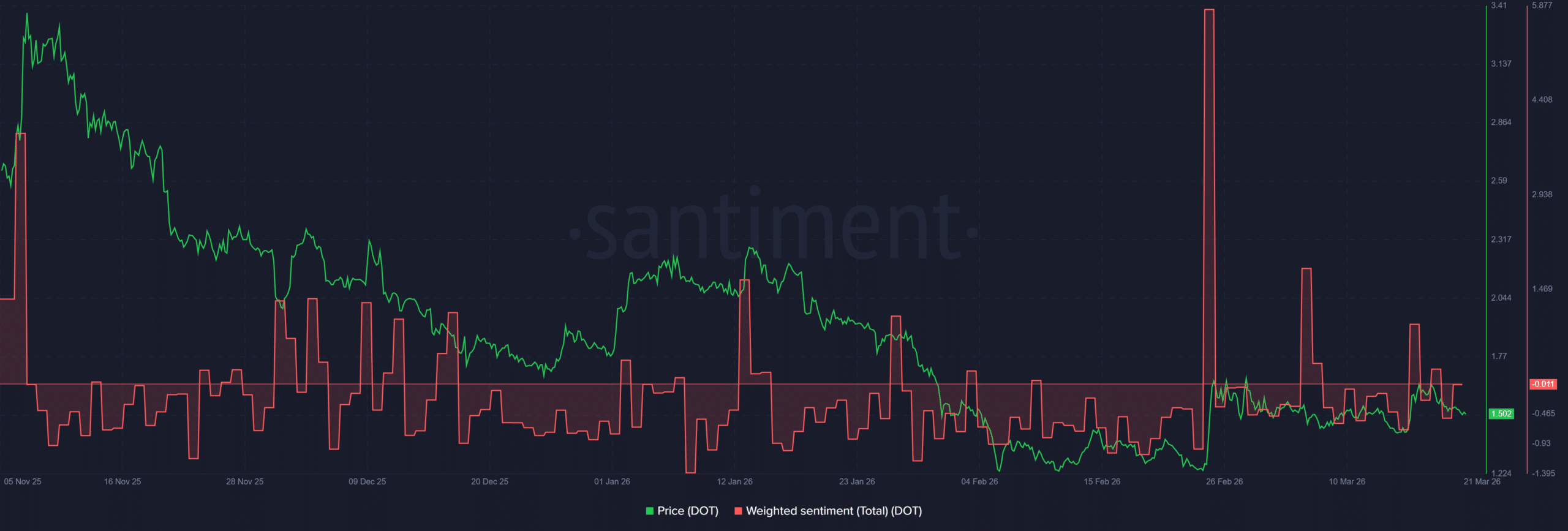
On market dynamics, DOT’s tokenomics and deflation push saw sentiment briefly flip positive before reverting to negative.
Source: Santiment

In other words, the changes temporarily tipped traders to go bullish on the altcoin. In fact, during the spike in positive sentiment, the altcoin rallied 18%. Put differently, the market welcomed the recent upgrades.

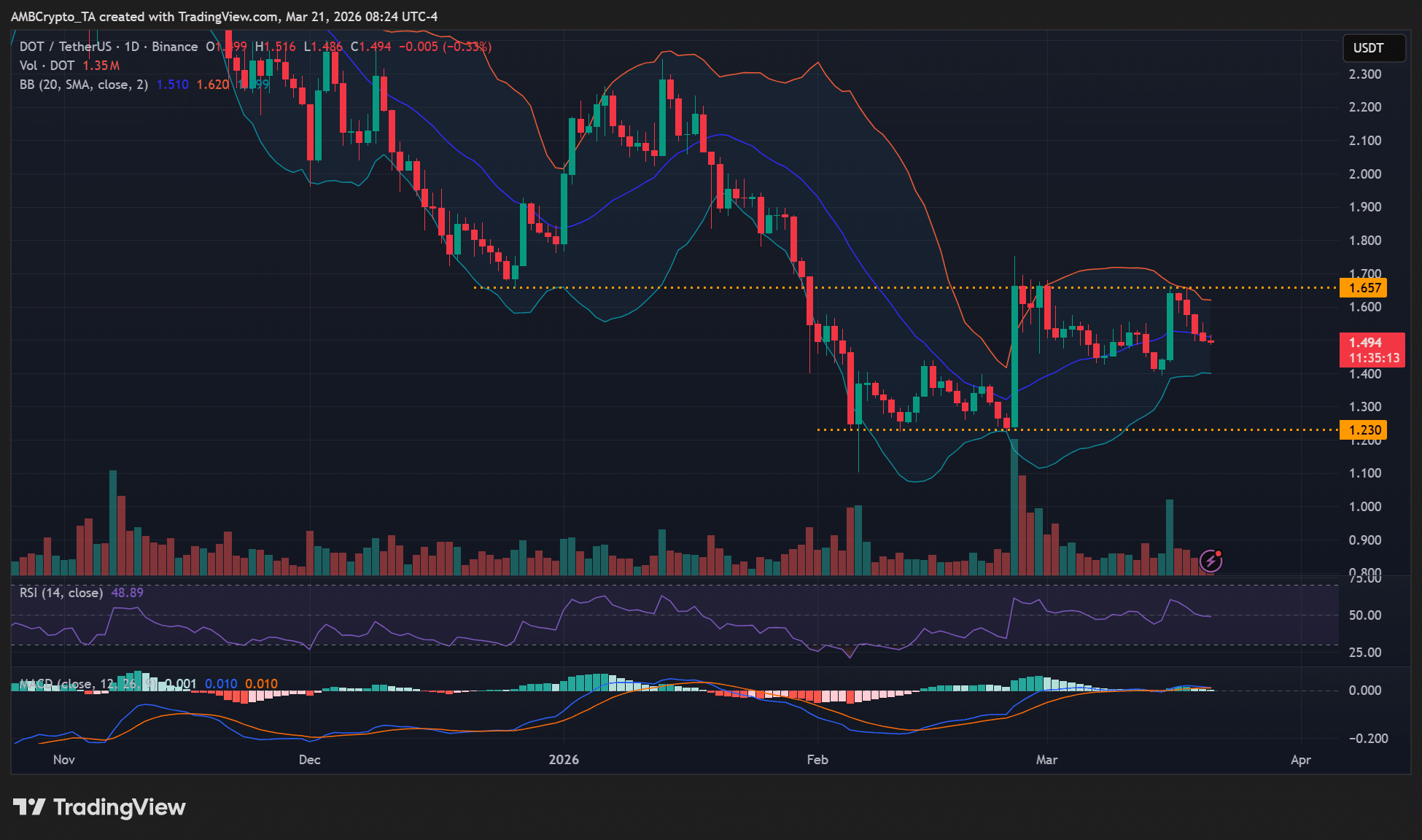
Meanwhile, the DOT rally faded at $1.65, a key roadblock in Q1 2026. If the ongoing macro uncertainty persists, DOT may extend the pullback to $1.23.
Source: DOT/USDT, TradingView

Overall, Scaramucci highlighted key bullish catalysts for the Polkadot chain and its native token. Even so, the chain’s traction has worsened in the past two years. It was unclear how fast the recent changes would reignite momentum and eventually lift DOT.


Final Summary

  • For SkiBridge’s Scaramucci, Polkadot’s bullish case was ‘quietly rebuilding momentum’ after recent upgrades.
  • The chain’s traction has declined in the past two years, but whether recent updates will help revive it remains to be seen.


İlgili Sorular

QWhat are the key bullish catalysts for Polkadot mentioned by Anthony Scaramucci?

AThe key bullish catalysts mentioned are the latest SEC guidance categorizing DOT as a digital commodity, the tokenomics overhaul that hard-capped DOT supply at 2.1 billion and cut annual emissions by 53%, and the launch of the 21Shares Spot DOT ETF.

QHow has Polkadot's network activity changed in the past two years according to the article?

APolkadot's network activity has significantly declined, with weekly average active addresses dropping from 16K to 5K over the past two years.

QWhat was the market reaction to Polkadot's recent tokenomics changes?

AThe tokenomics changes temporarily flipped market sentiment positive, resulting in an 18% price rally for DOT, though the positive sentiment eventually reverted to negative.

QWhat does the article say about the performance of the 21Shares Spot DOT ETF?

AThe ETF saw only one day of inflows totaling $544.5K since its debut and recorded zero flows for the rest of March, indicating weaker demand than projected.

QWhat are the key resistance and support levels mentioned for DOT's price?

AThe rally faded at the key resistance level of $1.65, and if macro uncertainty persists, DOT could extend its pullback to the support level of $1.23.

İlgili Okumalar

Agent Race Ends, Super Workbench Takes Over

The era of fragmented AI agents is ending. Over the past month, China's tech giants—Tencent, Alibaba, and ByteDance—have simultaneously shifted strategy: instead of launching new, standalone AI agents, they are consolidating their various agent projects into unified "super workbenches." Tencent integrated its QClaw teams into WorkBuddy, a strategic product hailed as a potential third flagship after QQ and WeChat. Alibaba is merging its QoderWork, Wukong, and MuleRun agents into a new "Qianwen Office" platform under DingTalk's leadership. ByteDance rebranded its TRAE SOLO coding agent to TRAE Work, signaling a broader focus on workflow collaboration. This convergence marks a pivotal industry consensus. The initial exploration phase, where companies rapidly built numerous overlapping agents for different scenarios, proved costly and inefficient. With open-source tools eroding technical barriers, competition has shifted from agent creation to resource consolidation and cost control. Historically, platform wars are won not by creating more products, but by simplifying them—as seen with browsers unifying web access and super-apps consolidating services. Now, the "super workbench" aims to become the unified AI entry point for work. This reflects a deeper market realization: the primary audience for AI is no longer just programmers (a market in the tens of millions) but all knowledge workers (a market of billions). The real opportunity lies in augmenting everyday tasks—managing emails, documents, data, and meetings—across the entire workday. The core battleground is becoming control over the primary AI entry point that employees use daily. Tencent's WorkBuddy leverages WeChat and Tencent Docs; Alibaba's Qianwen Office taps into DingTalk's organizational data; ByteDance's TRAE Work integrates with Feishu's workflows. Whoever owns this "super workbench" gains strategic control over orchestrating enterprise data and APIs. This shift is redefining enterprise software. Traditional SaaS applications, valued for their user interfaces, will recede into the background. Their core functionalities will be exposed as standardized "Skills" or APIs for the super workbench's agents to invoke. Software value will shift from selling user seats to charging based on API calls and outcomes delivered. The evolution of agents is moving through clear stages: first as novel standalone products, then as consolidated primary work entry points, and finally as pervasive, invisible capabilities embedded into the digital fabric. The recent moves by major tech firms signal the transition from the first stage into the second, accelerating toward the third. In the end, the most successful agent technology may become invisible—like electricity or the HTTP protocol—a fundamental, unnamed infrastructure powering work itself.

marsbit7 dk önce

Agent Race Ends, Super Workbench Takes Over

marsbit7 dk önce

Michael Saylor: 110 Reasons to Oppose BIP-110

Michael Saylor presents 110 arguments against Bitcoin Improvement Proposal (BIP) 110, a soft fork aimed at restricting certain non-monetary data storage uses (like inscriptions) on the Bitcoin blockchain. He acknowledges the proponents' valid concerns—such as node costs, fee pressure, and preserving Bitcoin's monetary focus—but fundamentally disagrees with the proposed solution. Saylor argues that BIP 110 represents a dangerous precedent of using consensus rules to enforce value judgments on transaction validity, moving away from Bitcoin's core principles of neutrality and permissionless innovation. His key objections are organized into eleven categories: 1) It violates neutrality and hard consensus by banning currently valid transactions. 2) It fails to meet the high burden of proof required for a consensus change, lacking concrete data on the alleged crisis. 3) Its seven bundled technical restrictions are overly broad, targeting generic script functionalities and blocking future upgrade paths. 4) It sacrifices compatibility and future optionality by closing off designed upgrade hooks. 5) Its temporary rules add significant complexity (grandfathering, expiry states) without sufficient justification. 6) The economic and security impacts, particularly on miner revenue and fee markets, are uncertain and unmodeled. 7) Superior, market-based tools (fee markets, relay/mining policies) already exist to manage blockchain load. 8) It stifles innovation by creating a chilling effect for developers. 9) Its modified activation mechanism (55% threshold, forced signaling) is aggressive and risks network splits. 10) The precedent it sets—using consensus to suppress disliked but legal uses—is more dangerous than the problem it aims to solve. 11) A better path exists: improving measurements, refining resource-based policies, and allowing market forces to work. Saylor concludes that Bitcoin's strength lies in its neutral rules, open markets, and hard consensus. Changing these foundational elements to target specific use cases is an unnecessary and risky "iatrogenic" intervention. He advocates for guarding Bitcoin's neutrality rather than acting as its redeemer.

marsbit22 dk önce

Michael Saylor: 110 Reasons to Oppose BIP-110

marsbit22 dk önce

İşlemler

Spot
活动图片

