Qubic Starts Dogecoin Mining Phase 2, Shifting Rewards Away From XMR

bitcoinist2026-04-16 tarihinde yayınlandı2026-04-16 tarihinde güncellendi

Özet

Qubic has entered phase 2 of its Dogecoin mining rollout, shifting miner rewards from Monero (XMR) to DOGE-based incentives. Starting with epoch 209, computors can operate in either XMR or DOGE mode, with only the higher-yielding contribution counted per index—effectively phasing out XMR if DOGE is more profitable. All block rewards are used for QUBIC buybacks, which are then distributed proportionally based on Dogecoin shares submitted. This transition, part of a three-phase plan announced in March, aims to fully migrate from XMR to DOGE, allowing parallel operation of DOGE mining (via Scrypt ASICs) and AI training (on CPUs/GPUs). Phase 2 introduces weekly reward windows, aligning with Qubic’s goal of scaling toward full-capacity dual-workstream operations.

Qubic has moved its Dogecoin mining rollout into phase 2, a step that begins redirecting miner economics away from Monero and toward DOGE-linked rewards. For Qubic, the change matters because phase 2 is where the migration stops being a live test and starts becoming a real incentive shift.

In an April 15 Discord update shared on X by community member Rayyan, Qubic tech lead Joetom said phase 2 began with epoch 209 and that, from this point, “each computor can operate in either legacy XMR mode or Doge mode.” He added: “For every computor index, only one contribution is counted: max(XMR, DOGE). This effectively replaces XMR participation if Doge yields a higher contribution. No dual counting.”

Qubic Activates Dogecoin Phase 2

The move lines up with the transition plan Qubic published ahead of launch. In its March 27 rollout note, the team described a three-phase migration from XMR to DOGE. Phase 1 was a testing period in which XMR revenue remained intact while Dogecoin mining ran on mainnet in a non-rewarded validation mode.

Phase 2 was framed as the decision point, where computors could opt into DOGE rewards while XMR began phasing out. Phase 3 is the end state: XMR removed, DOGE running at full production, and Qubic’s CPU and GPU resources returned to full-time AI training.

That broader architecture is central to Qubic’s pitch. Under the old model, the network alternated between Monero hashing and AI-related work. With Dogecoin, Qubic says the jobs can run in parallel because DOGE mining relies on Scrypt ASICs, while the network’s AI training stack runs on CPUs and GPUs. The result, in Qubic’s telling, is a cleaner division of labor and a path toward running both workstreams at full capacity rather than splitting general-purpose compute between them.

Joetom’s April 15 message also clarified how rewards are now being routed. “All block rewards are used for Qubic buybacks,” he wrote. “The acquired Qubic is distributed proportionally based on delivered Doge shares.”

He then outlined how accounting will evolve as the system scales: “Target state is a daily reward window from 12:00 to 12:00 UTC. All blocks mined within a window are allocated to shares submitted within the same window. Phase 2 starts with a weekly window aligned to epochs.”

That mechanism fits the buyback structure Qubic had already outlined publicly. The network has said DOGE mined through its system is sold, the proceeds are used to buy back QUBIC, and those tokens are then distributed to participants based on contribution.

The timing also tracks the roadmap. Qubic launched Dogecoin mining on April 1 and said the full migration from Monero would likely play out across roughly four weeks, with phase lengths flexible depending on stability and network conditions. Phase 2 arriving in mid-April suggests that schedule is broadly holding, even if reward windows and other parameters remain adjustable.

At press time, DOGE traded at $0.09618.
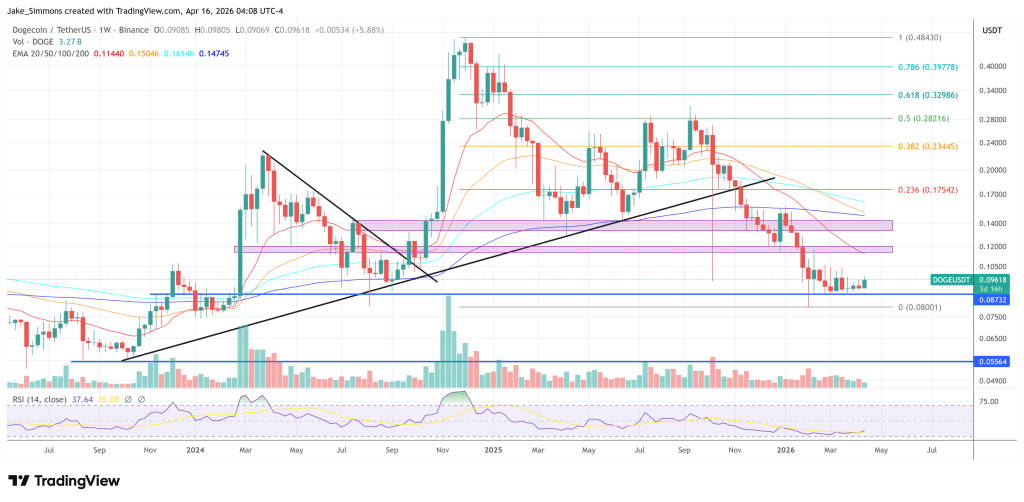
DOGE holds above key support, 1-month chart | Source: DOGEUSDT on TradingView.com

Trend Kriptolar

İlgili Sorular

QWhat is the main change introduced in Qubic's Dogecoin mining phase 2?

APhase 2 begins redirecting miner economics away from Monero (XMR) and toward DOGE-linked rewards, allowing computors to operate in either legacy XMR mode or Doge mode, with only the higher-yielding contribution being counted.

QHow does Qubic's reward distribution mechanism work in the new Dogecoin mining system?

AAll Dogecoin block rewards are used for Qubic buybacks. The acquired QUBIC tokens are then distributed proportionally to participants based on the Doge shares they delivered.

QWhat is the stated benefit of switching from Monero to Dogecoin mining for the Qubic network?

AThe switch allows Dogecoin mining (which relies on Scrypt ASICs) and AI training (which runs on CPUs and GPUs) to operate in parallel, creating a cleaner division of labor and enabling both workstreams to run at full capacity instead of splitting general-purpose compute between them.

QWhat are the three phases of Qubic's migration from XMR to DOGE mining?

APhase 1 was a testing period with XMR revenue intact. Phase 2 is the decision point where computors can opt into DOGE rewards while XMR phases out. Phase 3 is the end state with XMR completely removed and DOGE running at full production.

QHow does the reward window system work in the target state of phase 2?

AThe target state is a daily reward window from 12:00 to 12:00 UTC. All blocks mined within a window are allocated to shares submitted within that same window, though phase 2 starts with a weekly window aligned to epochs.

İlgili Okumalar

Conversation with Co-founder of Hyperdash: Why is Hyperliquid Still Severely Undervalued?

Interview Summary with Hanson Birringer, Co-founder of Hyperdash: Why Hyperliquid Remains Undervalued In an interview on *The Rollup*, Hanson Birringer, Co-founder and Chief Revenue Officer of Hyperdash—a trading data analytics platform for Hyperliquid—shared his investment thesis on the Hyperliquid ecosystem. He described Hyperliquid as a pure play on three key crypto super-trends: perpetual contracts, real-world assets (RWAs), and stablecoins. The platform is an open-source, decentralized, and high-performance financial system uniquely positioned to bridge traditional institutional capital with decentralized finance. Birringer highlighted Hyperliquid's leadership in perpetual DEX trading and its recent innovation of RWA perpetual contracts. He emphasized the significance of USDC becoming a core quoting asset, which, by allocating 90% of its backend yield from assets like US treasuries to a protocol buyback fund, creates substantial, programmatic buy pressure for the Hype token. He addressed regulatory challenges, noting that Hyperliquid's policy team is actively engaging with US regulators like the CFTC to establish clear rules for decentralized venues. Once achieved, regulated brokers could route orders directly to Hyperliquid's backend, tapping into its low-cost liquidity layer. Regarding revenue, Birringer was optimistic, citing the immense size of traditional financial markets. Even capturing a small fraction of global trading volume in products like RWA perpetuals could lead to exponential growth for the protocol. The recently launched Grayscale Hyperliquid ETF, seeded by their SPV (Hyper Holdings Global), provides a compliant on-ramp for institutional investors drawn to the clear "cash flow + token buyback" model. Finally, he discussed Hyperdash's acquisition of Imperator, enhancing its data and node infrastructure to serve both retail traders and traditional asset managers. His bullish case rests on Hyperliquid's potential to provide unprecedented global access to dollar-based capital markets. He struggled to articulate a bear case, seeing the long-term trends of internet adoption and financial inclusion as powerful tailwinds.

marsbit52 dk önce

Conversation with Co-founder of Hyperdash: Why is Hyperliquid Still Severely Undervalued?

marsbit52 dk önce

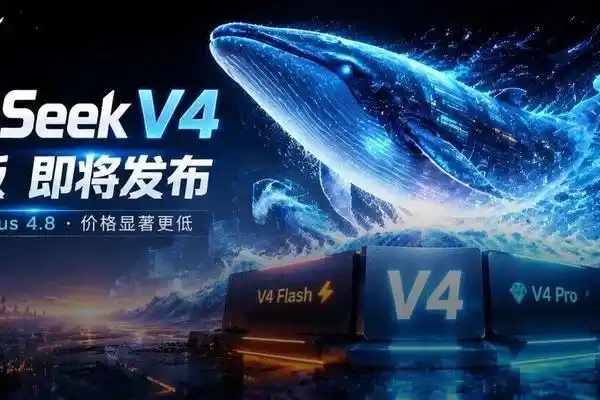
DeepSeek V4 'Full-Blooded Edition' Leaked, Could Be Released As Early As Tomorrow

The highly anticipated full release of DeepSeek V4 is imminent, expected to launch as early as tomorrow after nearly three months of waiting. A select group has already received access to the GA (General Availability) beta, which includes two versions: DeepSeek V4 Flash and DeepSeek V4 Pro. Early testers report that V4's overall performance is close to the level of Opus 4.8, with coding capabilities rivaling GPT-5.6 Sol. Its agent abilities are significantly enhanced, and 3D/SVG generation has improved notably. While it may not surpass the recently released Kimi K3 in performance, its expected price point is significantly lower. The official release will introduce a new "peak/off-peak" pricing model for its API. For example, deepseek-v4-pro will cost $0.87 per million output tokens during standard times and $1.74 during peak hours. The flash version is even more aggressive at $0.28/$0.56 per million tokens, with cached input tokens priced extremely low at $0.0028. This makes V4 a strong contender in terms of cost-effectiveness, potentially offering Opus-level capabilities at a fraction of the cost, continuing DeepSeek's reputation as a "price disruptor" in the AI market. Initial demos showcasing V4's capabilities have begun circulating, including generated 3D simulation games, HTML games blending elements of Minecraft and No Man's Sky, and classic games like a "Cut the Rope" clone. The final GA version is set to replace the older deepseek-chat and deepseek-reasoner models, which will be retired on July 24th.

marsbit1 saat önce

DeepSeek V4 'Full-Blooded Edition' Leaked, Could Be Released As Early As Tomorrow

marsbit1 saat önce

WEEX Labs Weekly Observation: The 'Power Restructuring' of AI Infrastructure and the 'Deep Dive Movement' into the Real Economy

WEEX Labs Weekly Review: AI Infrastructure's "Power Restructuring" and the "Deep Dive" into the Real Economy Mid-July 2026 marks a pivotal shift in the global AI industry. The allocation of computing power is transferring from cloud giants to compute resource owners, while the core value of AI is solidifying around its penetration into physical industry, moving beyond the race for model parameters. The era of fragmented model development is over, replaced by a capital-intensive, integrated chain driven by hard tech. Key developments this week include Meta's planned entry into the cloud computing market with "MetaCompute." This move by social media giants with massive GPU clusters challenges traditional cloud providers like AWS, integrating compute, models, and data into one-stop services, which will squeeze smaller rental providers and shift enterprise focus towards underlying model ecosystems. Chinese foundational models like DeepSeek-V4 and Tencent's Hy-3 are pushing towards "utility" status through open-source releases and extreme cost reductions via MoE architectures. This lowers entry barriers for enterprises, allowing them to focus resources on private deployment and deep business integration. Embodied intelligence, particularly humanoid robots, is transitioning from lab demos to real-world factory applications, driven by policies promoting large-scale, practical deployment in logistics and manufacturing. The value focus is shifting from spectacle to stable industrial data and real operational efficiency. Global governance, through forums like WAIC, is evolving from theoretical ethics to practical operational frameworks for "Sovereign AI," raising geopolitical compliance barriers and making auditability and data sovereignty core design requirements from the outset. WEEX Labs Insights: The current transformation shows AI's prosperity is deeply embedding into the fabric of global manufacturing. Strategic recommendations include: 1) leveraging open-source models for private, proprietary knowledge bases; 2) maintaining cloud provider diversity to avoid vendor lock-in from integrated model ecosystems; and 3) seeking opportunities in the "embodied infrastructure" supporting robots, such as data collection, industrial simulation, and factory AI adaptation services.

marsbit1 saat önce

WEEX Labs Weekly Observation: The 'Power Restructuring' of AI Infrastructure and the 'Deep Dive Movement' into the Real Economy

marsbit1 saat önce

Is WEEX TradFi Reliable? What You Should Know Before Your First Trade of U.S. Stock Tokens

In recent years, cryptocurrency users have expanded their focus beyond Bitcoin and Ethereum to include popular traditional financial (TradFi) assets like Nvidia, Apple, and Tesla stocks. This shift raises key questions: What do these TradFi assets represent on crypto trading platforms? How do they differ from traditional stock ownership? And how can users assess the reliability of platforms offering such products? TradFi products, such as those offered by WEEX TradFi (including NVDA, MSFT, AAPL, TSLA, and QQQ tokens), are blurring the lines between crypto and traditional markets. They allow users to trade based on the price movements of traditional assets within a familiar digital asset trading environment. However, it's crucial to understand that trading a "stock token" is not equivalent to owning the actual stock. Users are participating in price speculation, not gaining shareholder rights like dividends or voting. A key feature of these products is 7x24 trading, offering flexibility beyond traditional market hours. While convenient, this also introduces unique risks, such as potential liquidity gaps and volatility when underlying markets are closed. For users evaluating TradFi products, reliability hinges on transparency and risk management. Critical factors include understanding the product mechanism, how prices track the underlying assets, and the associated risks—especially when using leverage. Popular stocks and indices are still subject to company performance, macroeconomic shifts, and sector trends. Ultimately, TradFi represents a new gateway connecting crypto users to global markets. The future points toward integrated trading environments where the distinction between "crypto investor" and "traditional investor" fades. For newcomers, a platform's reliability stems not from promises, but from a clear understanding of the product, a comprehensive view of risks, and informed judgment of the platform's capabilities.

marsbit1 saat önce

Is WEEX TradFi Reliable? What You Should Know Before Your First Trade of U.S. Stock Tokens

marsbit1 saat önce

İşlemler

Spot

Popüler Makaleler

XMR Nasıl Satın Alınır

HTX.com’a hoş geldiniz! Monero (XMR) satın alma işlemlerini basit ve kullanışlı bir hâle getirdik. Adım adım açıkladığımız rehberimizi takip ederek kripto yolculuğunuza başlayın. 1. Adım: HTX Hesabınızı OluşturunHTX'te ücretsiz bir hesap açmak için e-posta adresinizi veya telefon numaranızı kullanın. Sorunsuzca kaydolun ve tüm özelliklerin kilidini açın. Hesabımı Aç2. Adım: Kripto Satın Al Bölümüne Gidin ve Ödeme Yönteminizi SeçinKredi/Banka Kartı: Visa veya Mastercard'ınızı kullanarak anında Monero (XMR) satın alın.Bakiye: Sorunsuz bir şekilde işlem yapmak için HTX hesap bakiyenizdeki fonları kullanın.Üçüncü Taraflar: Kullanımı kolaylaştırmak için Google Pay ve Apple Pay gibi popüler ödeme yöntemlerini ekledik.P2P: HTX'teki diğer kullanıcılarla doğrudan işlem yapın.Borsa Dışı (OTC): Yatırımcılar için kişiye özel hizmetler ve rekabetçi döviz kurları sunuyoruz.3. Adım: Monero (XMR) Varlıklarınızı SaklayınMonero (XMR) satın aldıktan sonra HTX hesabınızda saklayın. Alternatif olarak, blok zinciri transferi yoluyla başka bir yere gönderebilir veya diğer kripto para birimlerini takas etmek için kullanabilirsiniz.4. Adım: Monero (XMR) Varlıklarınızla İşlem YapınHTX'in spot piyasasında Monero (XMR) ile kolayca işlemler yapın.Hesabınıza erişin, işlem çiftinizi seçin, işlemlerinizi gerçekleştirin ve gerçek zamanlı olarak izleyin. Hem yeni başlayanlar hem de deneyimli yatırımcılar için kullanıcı dostu bir deneyim sunuyoruz.

264 Toplam GörüntülenmeYayınlanma 2024.12.10Güncellenme 2026.06.02

XMR Nasıl Satın Alınır

Tartışmalar

HTX Topluluğuna hoş geldiniz. Burada, en son platform gelişmeleri hakkında bilgi sahibi olabilir ve profesyonel piyasa görüşlerine erişebilirsiniz. Kullanıcıların XMR (XMR) fiyatı hakkındaki görüşleri aşağıda sunulmaktadır.

活动图片