Pump.fun Launches GitHub Creator Fee Sharing: Integrating 'Tipping' into the Meme Coin Factory's Funding Pipeline

marsbit2026-02-22 tarihinde yayınlandı2026-02-22 tarihinde güncellendi

Özet

Pump.fun, a prominent and controversial meme coin launch platform on Solana, has introduced a new feature allowing users to direct "creator fees" to any GitHub account via its mobile app. This update, presented as a way to support developers, is more than a simple tipping mechanism; it represents a strategic shift in the platform’s incentive structure and growth model. The platform enables users to create and trade tokens with extreme ease, leading to the minting of millions of mostly speculative meme coins. However, high failure rates and intense attention competition have posed significant challenges. By integrating GitHub—a core identity system for developers—Pump.fun aims to productize financial support for open-source contributors, incorporate external developers into its incentive flow, and build a narrative that shifts from pure speculation to “supporting builders.” This move is part of a broader trend toward social and community-oriented features, reflecting Pump.fun’s effort to evolve from a high-volume “token factory” into a sustainable ecosystem. Potential benefits include attracting new users and transactions, though risks remain around fee redistribution, speculative token dynamics, and increased regulatory and content moderation complexity. The update underscores Pump.fun’s attempt to balance growth, incentives, and narrative in the volatile meme coin market.

Author: 137Labs

On February 13, 2026, Pump.fun, one of the most controversial yet high-traffic projects in the Solana ecosystem, announced the launch of a new feature that may seem like a "small update" but could potentially influence its growth logic: Users can now allocate "creator fees" to any GitHub account through Pump.fun's mobile app. The team also previewed that more "social" features will be introduced soon.

To the uninitiated, this might look like "just another tipping option"; for Pump.fun, however, it is more of an upgrade to its fee distribution pipeline: shifting from a relatively fixed or limited profit-sharing model to a user-directed, externally-flowing capital allocation system. This isn't just a UI change—it's a change to the incentive structure.

1) What is Pump.fun: Lowering the Barrier to Token Creation to "As Easy as Posting"

Pump.fun, often abbreviated as Pump, is a crypto asset issuance and trading platform on Solana: users with little to no technical background can quickly create a token by uploading an image, filling in a name and ticker, and start trading immediately; once the token meets certain conditions, it can "graduate" to a decentralized exchange for further trading. The platform launched on January 19, 2024, founded by Noah Tweedale, Alon Cohen, Dylan Kerler, and others.

This product format directly led to one reality: the vast majority of tokens have no utility and are largely classified as meme coins. While "issuing tokens became as easy as posting," the supply of new tokens exploded; by January 2025, media reported that the platform had cumulatively issued "millions" of meme coins, described as one of the fastest-growing cases in crypto applications.

But the other side is straightforward: the failure rate of new tokens is extremely high, with most projects failing to sustain trading momentum, let alone enter more mature DeFi scenarios. This is the fundamental contradiction of Pump.fun—extremely low barriers bring massive supply, but also massive noise and attrition.

2) Controversy and Cost: When "Token Issuance + Livestreaming" Becomes an Attention Race

The most discussed chapter in Pump.fun's history is the "attention arms race" that formed after it introduced livestreaming in 2024: project teams tried every means to attract attention and create buzz for their tokens amidst the sea of new issuances. The result was that the platform faced significant criticism for content scale and risk issues, leading to the livestreaming feature being suspended and relaunched multiple times.

Meanwhile, regulatory pressure gradually became more explicit. For example, the platform once restricted UK users following warnings from British financial regulators; questions about whether it involves unregistered securities trading and whether investor protection is adequate have also been long-debated.

In other words, Pump.fun was never just a "tool"; it's more like a "issuance and trading factory" that blends financial speculation, social propagation, and anonymous culture. This also explains why every adjustment to "fees," "incentives," or "social structure" is magnified and interpreted by the market.

3) What This New Feature Changes: Connecting Creator Fees to "GitHub Identity"

The core of this update can be summarized in one sentence:

Users can now direct creator fees to any GitHub account (via the Pump.fun mobile app).

Its significance isn't in "whether it can be distributed," but in "to whom": when the distribution target expands from "on-chain wallets/roles within the project" to GitHub accounts, Pump.fun is essentially integrating the "identity system most commonly used by the developer world" into its incentive chain.

This could bring three potential changes:

Productizing support for developers: Many are willing to tip open-source contributors but lack a convenient path; Pump.fun embeds the "pay developers" button into high-frequency trading and token issuance scenarios.

Enabling external contributors to be included in incentives: It doesn't have to be project team members; anyone who contributes to tools, scripts, or community content could be "named" to receive a share of fees.

Stronger narrative propagation: Binding meme coin attention to open-source developers makes it easier to package "pure speculation" as "supporting builders," at least rhetorically.

And the official mention of "more social features to come" also hints that Pump.fun is pushing itself from a "token issuance trading desk" toward something more like a "content/community platform."

4) Why Now: From "Fee Design Experiments" to "More Market-Oriented Distribution"

The reason this update attracts attention is that it's not an isolated move, but rather a continuation and adjustment of Pump.fun's experiments with fee structures over the past period.

In Pump.fun's growth flywheel, "fees" have always been a key variable: the platform generates revenue through transaction fees and "graduation" mechanisms, then returns part of that revenue to the ecosystem in various forms to drive more issuance and trading. Discussions about "Dynamic Fees," "Project Ascend," and other schemes essentially address the same problem—how to make trading and issuance incentives more sustainable, rather than just exploding in a burst of hype.

Opening the profit-sharing valve to GitHub this time, while read as "supporting developers," can also be seen as a more pragmatic strategy: connecting a pipe to where developers are most concentrated, to see if it can attract new users, narratives, and capital.

5) Potential Impact: What Does It Mean for the Platform's and Tokens' "Capital Flow"?

From a business and financial structure perspective, the biggest variable of this feature is: will creator fees "spill over" from the original closed loop.

· If this mechanism primarily brings "new users, new projects, new trading volume," then the overall fee pool of the platform may expand, strengthening the flywheel, and Pump.fun can package it as a positive feedback loop for the "builder economy."

· But if it mainly "redistributes existing fees," siphoning off profits that stayed within the system, then the internal recycling intensity of the platform might be weakened, and the final effect may not be as optimistic as the narrative suggests.

Of course, short-term markets often buy into "stories": using GitHub as the recipient end itself strengthens the association between Pump.fun and "developers" / "open source," giving it an extra card in the narrative competition among similar issuance platforms.

6) Risks and Controversy Won't Vanish Automatically: More Socialization ≠ Lower Risk

It must be emphasized: distributing money to GitHub does not inherently equal a healthier ecosystem.

Pump.fun's core issues remain on the supply side: too many new tokens, extremely short lifecycles, and intense competition for attention, mechanisms that easily induce "soft rugs," "pump and dumps," and "short-term emotional trading." The platform can provide more information to aid judgment, but it cannot fundamentally eliminate speculative behavior.

If Pump.fun continues to push "more social features," it may become closer to a hybrid of "content platform + financial assets"—this would increase user stickiness, but also意味着 content moderation, risk warnings, and compliance pressures will become more complex.

7) Conclusion: A Pipe to GitHub, Behind It Lies Pump.fun's Next Phase Narrative

Allocating creator fees to GitHub accounts might seem like a "small update," but it reflects a clear trend for Pump.fun: moving from a pure "token issuance and trading infrastructure" to a product form with stronger social attributes, emphasizing identity and relationship chains.

The question it's trying to answer is actually simple: in the cycle where meme coin frenzy and fatigue coexist, how does Pump.fun transform itself from a "流量工厂 (traffic factory)" into a "sustainably operating ecological machine"?

And this GitHub pipeline—a conduit for "identity and developer assets"—might be its bet on redefining its own boundaries.

Trend Kriptolar

İlgili Sorular

QWhat is the core new feature announced by Pump.fun on February 13, 2026?

APump.fun announced that users can now allocate creator fees to any GitHub account through its mobile application.

QHow does Pump.fun's new feature change its incentive structure?

AIt shifts from a fixed or limited profit-sharing model to a user-directed, externally distributable fund flow system, allowing fees to be targeted outside the platform to GitHub identities.

QWhat is the primary product offering of Pump.fun on the Solana ecosystem?

APump.fun is a platform that allows users to easily create and trade tokens with minimal technical background, often resulting in the creation of meme coins, and facilitates their 'graduation' to decentralized exchanges under certain conditions.

QWhat potential risks does Pump.fun continue to face despite introducing features like GitHub fee allocation?

ARisks include high token failure rates, intense attention competition, potential for speculative behaviors like 'soft rugs' and pump-and-dump schemes, as well as ongoing regulatory and content governance challenges.

QWhy is the integration significant for Pump.fun's growth narrative?

AIt connects Pump.fun's incentive mechanism to GitHub, a key identity system for developers, potentially attracting new users, narratives, and capital by aligning meme coin activity with support for open-source contributors.

İlgili Okumalar

Early Investor of Unitree Bets on a Brain-Computer Interface Company

"Wabo Technologies, a brain-computer interface (BCI) startup, has secured new funding from Vertex Ventures (under Temasek), Hongtai Fund, Chengdu Future Industry Fund, and Huifengda Capital. Vertex Ventures is known for its early bet on Unitree Robotics. Inspired by the sci-fi film "Avatar," founder Zhang Xingzhi has pursued human-machine interaction for over a decade. He established Wabo in late 2025, coinciding with China's push for BCI as a future industry. Unlike companies focused solely on medical hardware, Wabo positions itself as a model company. Its core mission is to develop a "Human Neural Intent Model" that decodes EEG, EMG, and behavioral signals to understand a user's goals, confirmations, corrections, and stop intentions before physical action, translating them into standardized control signals for machines, robots, or smart devices. The young, full-stack team, backed by academic collaborators from Tianjin University and Fudan University, quickly attracted investors. The company had previously raised a seed round from Ceyuan Capital. Investors were impressed by Wabo's systematic capabilities in data collection, signal processing, and engineering, seeing potential beyond a single hardware product toward a reusable layer of human intent interpretation. Applications span medical rehabilitation, smart homes, embodied AI, and even space exploration, with Wabo partnering with Tianjin University on pioneering "space BCI" research. Wabo plans a dual-headquarters strategy, with Shanghai focusing on high-end R&D and model development, and Chengdu handling hardware, product development, and supply chain. The BCI sector in China is heating up, with over 30 financing deals in early 2026. Zhang believes future competition will center on who can build a sustainable data-model-scenario loop. He predicts industry consolidation within three years, with only companies that master this闭环 surviving. The vision from "Avatar" is inching closer to reality."

marsbit9 dk önce

Early Investor of Unitree Bets on a Brain-Computer Interface Company

marsbit9 dk önce

ChangXin Technology: A Cyclical Stock Standing Atop the Cycle Peak

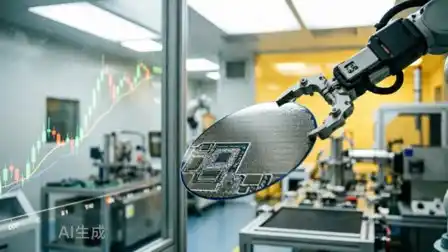
Changxin Technology: A Cyclical Stock at the Peak On July 27, 2026, Changxin Technology topped the A-share market with a market capitalization of 3.28 trillion yuan, surging 465% on its first trading day. The company, which lost 16.3 billion yuan in 2023, reported an estimated net profit of 50-57 billion yuan for the first half of 2026. Its dramatic reversal mirrors the volatile DRAM (Dynamic Random Access Memory) cycle. The DRAM industry is inherently cyclical, with booms and busts every 3-4 years. This is due to product standardization and a significant time lag in supply adjustment. When prices rise, manufacturers expand capacity, but new production takes 2-3 years to come online, often leading to oversupply and price crashes when demand cools. Changxin's performance perfectly tracks this cycle. It recorded deep losses in 2023-2024 during the industry downturn, turned its first annual profit in 2025, and saw profits skyrocket in Q1 2026. This surge is primarily price-driven. The AI boom has led major players like Samsung and SK Hynix to shift 70-80% of new capacity to high-margin HBM (High Bandwidth Memory), creating a severe shortage and price explosion in general-purpose DRAM markets where Changxin competes. However, a massive global capacity expansion is underway. The top three manufacturers have announced nearly $70 billion in capital expenditure for 2026. Changxin itself plans to expand from three to seven 12-inch wafer fabs. This investment will translate into significant new supply in 2-3 years. While DRAM prices are expected to remain high through 2026-2027, price growth is already slowing, and a potential downturn is forecast for around 2028 as new capacity ramps up. A key challenge for Changxin is catching up in the critical HBM segment. While it has delivered HBM3 samples, leaders are already mass-producing more advanced HBM3E. Success in HBM is crucial for gaining true cyclical resilience. In conclusion, Changxin is a commendable company that has broken foreign monopolies in DRAM. Its long-term growth narrative—driven by import substitution and AI—is valid. Yet, its current valuation of 5-6x forward P/E, typical for a cyclical stock at its peak, suggests much future growth is already priced in. AI may extend the current cycle but cannot eliminate the industry's inherent volatility. For investors, the critical question is preparedness for the inevitable downturn when the cycle turns.

marsbit14 dk önce

ChangXin Technology: A Cyclical Stock Standing Atop the Cycle Peak

marsbit14 dk önce

What If the CLARITY Act Ultimately Fails to Pass?

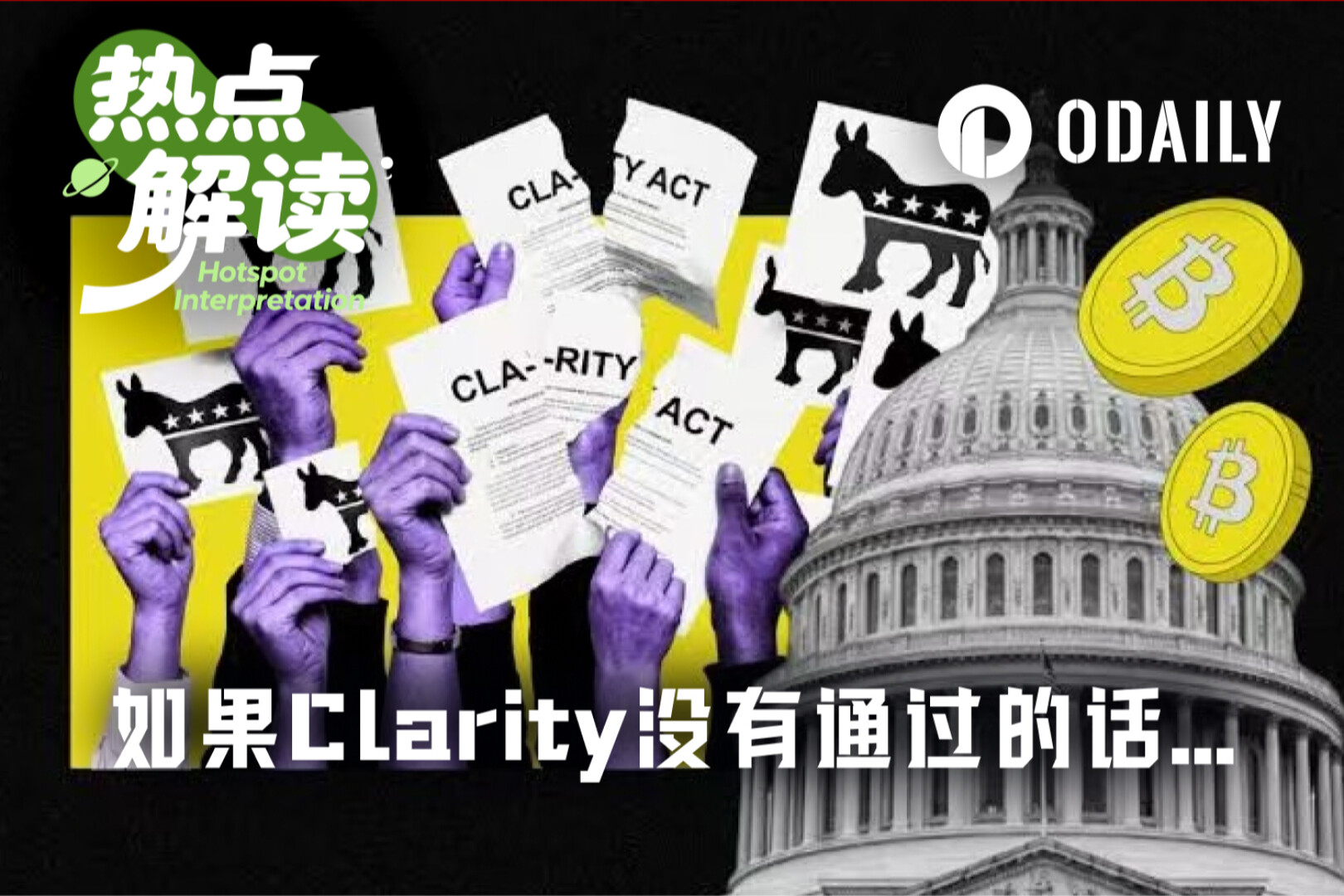
This article examines the potential consequences if the CLARITY Act, a major US crypto market structure bill, fails to pass in the Senate. Having cleared the House in July 2025 and a key committee in May 2026, the bill's passage into law this year is now considered uncertain, with prediction markets showing its probability dropping from 82% in February to 35%. The article analyzes three main areas of impact should the bill fail. First, for the crypto market, analysts believe a negative reaction is limited and partially priced in already, with Bitcoin's recent weakness attributed more to macro factors. The specific details of the failed bill would matter more than its failure alone. Second, for US stocks, Coinbase (COIN) could see short-term pressure, with analysts citing a potential drop to the $140-$160 range, though its long-term thesis is not solely tied to the bill. For Circle, failure might be neutral or even positive long-term, as a passed bill could invite more stablecoin competition. Bitcoin-treasury firms like Strategy (MSTR) are seen as more directly tied to Bitcoin's price than the legislation. Third, in Washington, the failure is framed within a broader political struggle. Democratic resistance is partly linked to concerns over former President Trump's crypto holdings, making the bill a political tool. If it fails in 2026, the industry would likely rely on existing frameworks like the GENIUS Act and agency-level rules. Missing the August window likely pushes any significant progress to 2027, a period of political reshuffling after midterm elections, making consensus harder to achieve.

Odaily星球日报1 saat önce

What If the CLARITY Act Ultimately Fails to Pass?

Odaily星球日报1 saat önce

SK Hynix Q2 Profit Soars Sixfold, Still 'Misses Expectations'; Secures Long-Term Agreements with 10 Clients, HBM4 to Accelerate Volume Ramp in Second Half

SK Hynix reported record-breaking Q2 2026 financial results, with operating profit soaring 557% year-over-year to 60.5 trillion won and revenue increasing 257% to 79.3 trillion won, driven by strong demand for AI server memory, HBM, and enterprise SSDs. The operating profit margin reached 76.3%. However, both figures fell short of analyst expectations, leading to a drop in its share price. The company attributed the earnings miss to three factors: a high sales mix of HBM, which limited upside from surging prices of general-purpose DRAM; a deceleration in memory price increases compared to Q1; and long-term supply agreements (LTAs) with major customers that lock in prices, reducing sensitivity to spot market gains. SK Hynix has signed LTAs with about 10 clients, covering roughly half of its sales. Despite the miss, the company remains optimistic about AI-driven demand. Its net profit of 93.9 trillion won was significantly boosted by a one-time gain from the partial sale of its Kioxia stake. Financially, it strengthened its cash position, ending the quarter with a net cash position of 69.4 trillion won. Looking ahead, SK Hynix plans capital expenditures at the high end of its 40-50 trillion won range for 2026 to expand capacity for HBM and advanced NAND products, including accelerating the mass production of HBM4 in the second half of the year.

marsbit1 saat önce

SK Hynix Q2 Profit Soars Sixfold, Still 'Misses Expectations'; Secures Long-Term Agreements with 10 Clients, HBM4 to Accelerate Volume Ramp in Second Half

marsbit1 saat önce

İşlemler

Spot

Popüler Makaleler

MEME 2.0 Nedir

Memecoin 2.0: Kripto Para Dünyasında $MEME 2.0'ın Yükselişi Giriş Kripto para dünyasının sürekli gelişen yapısında, yeni bir rakip olarak Memecoin 2.0 ortaya çıktı. $MEME 2.0 sembolüyle öne çıkan bu proje, meme coinlerinin kavramını heyecan verici bir yeni seviyeye taşıyor. Orijinal Memecoin'in bir yan ürünü olarak, bu proje, odağını geleneksel finansal teşviklerden, katılımcı ve eğlenceli bir deneyime kaydırarak kripto topluluğunun dikkatini çekmeyi başardı. Ethereum blockchain'inde faaliyet gösteren Memecoin 2.0, kripto alanında topluluk katılımını cesurca yeniden tanımlıyor. Memecoin 2.0, $MEME 2.0 Nedir? Memecoin 2.0, temelinde topluluk ruhunu ve meme kültürüyle ilişkilendirilen eğlenceyi öncelikli olarak benimseyen bir kripto para projesidir. Pratik kullanım alanlarına ve somut faydalara odaklanan geleneksel kripto paralardan farklı olarak, Memecoin 2.0 dijital para biriminin daha hafif yönünü benimseyerek kendini gösteriyor. Proje, herhangi bir fayda, yapılandırılmış bir yol haritası veya finansal getiri vaadi olmadan varlığını sürdürüyor ve bunun yerine memelere ve ortak keyfe odaklanmış canlı bir topluluk oluşturmayı hedefliyor. Bu sayede, çevrimiçi alanda meme kültürünün artan trendine hitap ederek dijital varlıklar dünyasında benzersiz bir oyuncu haline geliyor. Memecoin 2.0'ın Yaratıcısı, $MEME 2.0 Memecoin 2.0'ın kökenleri üzerine yapılan kapsamlı araştırmalara rağmen, yaratıcısının kimliği belirsizliğini koruyor. Bu anonimlik, birçok projenin sahne arkasında kalmayı tercih eden bireyler veya gruplar tarafından yönetildiği kripto topluluğunda alışılmadık bir durum değil. Yaratıcının kamuya açık bilgilere sahip olmaması, topluluk katılımına odaklanarak bireysel ünlülük yerine topluluğun önemini vurgulayan stratejik bir hamle olarak görülebilir. Memecoin 2.0 Yatırımcıları, $MEME 2.0 Memecoin 2.0 için yatırımcılar veya mali destek ile ilgili bilgiler sınırlıdır. Bu bilgi eksikliği projenin ya kendi kendini finanse ettiğini ya da geleneksel yatırım yapılarına kıyasla topluluğa odaklanmasının farklı bir destekçi türünü çektiğini öne sürebilir. Meme coinlerinin dünyası tipik olarak daha fazla taban katılımı içerdiği için bu yaklaşım, topluluk odaklı projelerin etikleriyle uyumlu bir yapı sergiliyor. Memecoin 2.0, $MEME 2.0 Nasıl Çalışır? Memecoin 2.0 tamamen Ethereum blockchain'inde faaliyet gösteriyor ve bu sayede güvenlik özelliklerinden ve ölçeklenebilirliğinden yararlanıyor. Ethereum'un güçlü yönlerinden faydalanarak, Memecoin 2.0 kullanıcı etkileşimleri için güvenli bir ortam sunarken, işlemlerin hem verimli hem de maliyet etkili olmasını sağlıyor. Memecoin 2.0'ın benzersiz özelliklerinden biri topluluk odaklı yapısıdır. $MEME 2.0 tokeninin değeri ve popülaritesi, kullanıcıların aktif katılımlarından geliyor, içsel faydadan ziyade. Bu tasarım, projenin kripto para biriminin eğlence yönüne odaklanmasını pekiştirerek, gülmenin ve topluluk etkileşiminin başarısını sağlayan gerçek para birimleri olduğunu ima eder. Ayrıca, proje, meme coinlerinin daha geniş ekosisteminin bir parçası olarak yer alıyor; burada her meme coininin değeri, kültür, trendler ve topluluk katılımına göre dalgalanıyor, geleneksel ekonomik prensiplerden ziyade. Memecoin 2.0'ın Zaman Çizelgesi, $MEME 2.0 Memecoin 2.0'ın evrimini ve kilometre taşlarını daha iyi anlamak için, tarihindeki önemli olayları vurgulayan bir zaman çizelgesi: 2024: Memecoin 2.0'ın ortaya çıkışı, orijinal Memecoin'in bir yan ürünü olarak kabul edilir ve Ethereum blockchain'inde faaliyet gösterirken meme coinlerinin gelişen bağlamında kendini konumlandırır. 13 Temmuz 2024: Memecoin 2.0, Ethereum ağında topluluk odaklı bir meme coin olarak resmi bir konum alır ve kullanıcıların katılımını ve büyümeye katkı sağlamasını teşvik eden eğlence odaklı yaklaşımını vurgular. Memecoin 2.0'a Dair Anahtar Noktalar, $MEME 2.0 Memecoin 2.0'ı tanımlayan birkaç kritik özellik: Topluluk Merkezli Yaklaşım: Memecoin 2.0'ın temel misyonu, memetik kültürden elde edilen ortak keyfi kullanarak eğlenceli ve katılımcı bir topluluk deneyimi yaratmaktır. Ethereum Üzerinde İnşa Edilmiş: Ethereum blockchain'inde faaliyet göstermek, projeye güvenlik ve ölçeklenebilirlik sağlayan temel bir altyapı sunar. Fayda veya Yol Haritası Yokluğu: Geleneksel kripto paralardan çarpıcı bir şekilde farklı olarak, Memecoin 2.0 herhangi bir faydalı özellik veya finansal getiri vaadinde bulunmamakta, topluluk katılımı ve sosyal etkileşime olan bağlılığını pekiştirmektedir. Memetik Kültüre Odağı: Mem fenomeninin mizahi ve kültürel yönlerini benimseyerek, Memecoin 2.0 kullanıcıların kripto ile çevrimdışı ve çevrimiçi etkileşimde bulunması için bir platform sağlar. Ek Bağlam: Meme Coinlerinin Önemi Meme coinler, kabaca mizah ve ticarete yönelik hafif bir yaklaşım tarafından yönlendirilen belirgin bir kripto para sınıfı olarak ortaya çıkmıştır. Bu paralar genellikle önemli bir fayda veya gelişim yol haritasından yoksundur ve kullanıcıları eğlence, topluluk etkileşimi ve kültürel relevans vaadiyle çeker. Daha geniş kripto ekosisteminde, meme coinler topluluk katılımının önemini yeniden canlandırırken, yalnızca kar odaklı yaklaşımlara karşı bir duruş sergiliyor. Memecoin 2.0 gibi projeler, eğlencenin finansal hedeflerle uyum sağlamasını sağlayarak, blockchain'i yaratıcılık ve sosyal etkileşim için bir oyun alanı haline getiriyor. Sonuç Memecoin 2.0, veya $MEME 2.0, topluluk katılımını katı finansal yapıların üzerinde önceliklendirerek yeni bir kripto para dalgasını temsil ediyor. Mizah ve sosyal etkileşime odaklanarak, meme kültürü etrafındaki ilgiden faydalanıyor. Ethereum blockchain'inde faaliyet göstererek, Memecoin 2.0, teknolojinin yeteneklerinden yararlanırken dijital para biriminin eğlence değerine olan bağlılığında kararlılığını koruyor. Kripto para alanı gelişmeye devam ederken, Memecoin 2.0, dijital varlıkların geleceğinin ortak deneyimlere, gülmelere ve sağlam topluluk bağlantılarına bağlı olabileceğinin bir kanıtı olarak hizmet ediyor. Kripto dünyası belirsiz olsa da, belki de neşe, geleneksel finansal kazanç kadar değerli olabilir.

200 Toplam GörüntülenmeYayınlanma 2024.04.04Güncellenme 2024.12.03

MEME 2.0 Nedir

MEME Nasıl Satın Alınır

HTX.com’a hoş geldiniz! Memeland (MEME) satın alma işlemlerini basit ve kullanışlı bir hâle getirdik. Adım adım açıkladığımız rehberimizi takip ederek kripto yolculuğunuza başlayın. 1. Adım: HTX Hesabınızı OluşturunHTX'te ücretsiz bir hesap açmak için e-posta adresinizi veya telefon numaranızı kullanın. Sorunsuzca kaydolun ve tüm özelliklerin kilidini açın. Hesabımı Aç2. Adım: Kripto Satın Al Bölümüne Gidin ve Ödeme Yönteminizi SeçinKredi/Banka Kartı: Visa veya Mastercard'ınızı kullanarak anında Memeland (MEME) satın alın.Bakiye: Sorunsuz bir şekilde işlem yapmak için HTX hesap bakiyenizdeki fonları kullanın.Üçüncü Taraflar: Kullanımı kolaylaştırmak için Google Pay ve Apple Pay gibi popüler ödeme yöntemlerini ekledik.P2P: HTX'teki diğer kullanıcılarla doğrudan işlem yapın.Borsa Dışı (OTC): Yatırımcılar için kişiye özel hizmetler ve rekabetçi döviz kurları sunuyoruz.3. Adım: Memeland (MEME) Varlıklarınızı SaklayınMemeland (MEME) satın aldıktan sonra HTX hesabınızda saklayın. Alternatif olarak, blok zinciri transferi yoluyla başka bir yere gönderebilir veya diğer kripto para birimlerini takas etmek için kullanabilirsiniz.4. Adım: Memeland (MEME) Varlıklarınızla İşlem YapınHTX'in spot piyasasında Memeland (MEME) ile kolayca işlemler yapın.Hesabınıza erişin, işlem çiftinizi seçin, işlemlerinizi gerçekleştirin ve gerçek zamanlı olarak izleyin. Hem yeni başlayanlar hem de deneyimli yatırımcılar için kullanıcı dostu bir deneyim sunuyoruz.

706 Toplam GörüntülenmeYayınlanma 2024.12.12Güncellenme 2026.06.02

MEME Nasıl Satın Alınır

Tartışmalar

HTX Topluluğuna hoş geldiniz. Burada, en son platform gelişmeleri hakkında bilgi sahibi olabilir ve profesyonel piyasa görüşlerine erişebilirsiniz. Kullanıcıların MEME (MEME) fiyatı hakkındaki görüşleri aşağıda sunulmaktadır.

活动图片