Prediction Markets = Market Manipulation? The Failure of Collective Wisdom and the Battle for Settlement Rights

marsbit2025-12-23 tarihinde yayınlandı2025-12-23 tarihinde güncellendi

Özet

This article examines the controversial nature of prediction markets, particularly Polymarket, through three case studies, arguing that they are vulnerable to manipulation, groupthink, and battles over settlement authority, rather than being pure expressions of collective wisdom. Case 1: "Who will HBO identify as Satoshi?" Despite leaked evidence and media reports confirming the documentary would identify Peter Todd, the price for "Len Sassaman" remained high due to the community's emotional preference for a more narratively satisfying outcome. This demonstrates how narrative and emotion can cause market prices to deviate from factual evidence. Case 2: "How many gifts will Santa deliver?" Traders discovered a hardcoded number in the NORAD website's source code and drove the price of that outcome above 90%. However, this turned the market into a bet on whether the developers would change the number before the deadline, highlighting how centralized control of information sources creates exploitable opportunities. Case 3: "Israel strikes Gaza" contract. In the final hours, a coordinated effort using unverified screenshots and sell orders crashed the price of "No" to 1-2%, creating a false narrative of an attack. The contract was controversially settled as "Yes," showcasing how narrative, capital, and control over the settlement process can be weaponized to manipulate outcomes. The analysis concludes that prediction markets are not neutral but are instead arenas where media n...

Prediction markets, the current hot topic. But when you dive deep, every time you press Yes/No, the gears of fate begin to turn.

This article attempts to analyze controversial topics on prediction markets (primarily Polymarket), exploring their manipulability within binary博弈 (game theory of binary outcomes).

Case Selection

<1> Who will HBO identify as Satoshi?

<2> How many gifts will Santa deliver in 2025

<3> Israel strikes Gaza by...?

And attempts to discuss potential market intervention methods from perspectives like psychology/group effects/house game theory/mass communication.

"Who is Satoshi" Bet: The Market Refuses to Believe the Truth

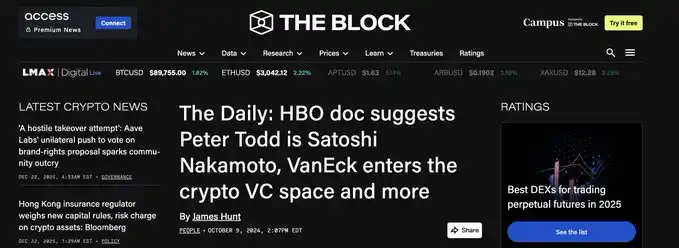
Around the release of HBO's "Money Electric: The Bitcoin Mystery," a contract on Polymarket became a classic example of "narrative diverging from fact": "Who will HBO identify as Satoshi?" (October 2024).
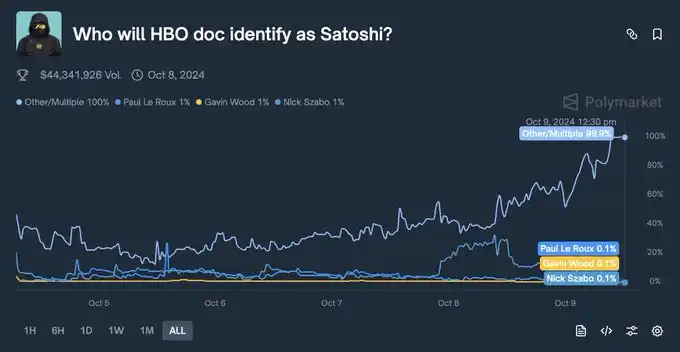
On the surface, this was a collective guessing game about the crypto world's ultimate unsolved case, with participants trying to bet on who the documentary would name as Bitcoin's creator: Len Sassaman, Hal Finney, Adam Back, or Peter Todd, who never appeared on any long conspiracy theory list.​

The vast majority of cryptocurrency community members, KOLs, and media firmly believed HBO would reveal the late cryptographer Len Sassaman. Because Len's life story fit the characteristics of Satoshi, and his tragic, legendary image aligned with HBO's narrative aesthetic.

And Len Sassaman's probability (Yes) soared to 68% - 70%.

The key lies in the timeline.

Some journalists and insiders who were invited to early media screenings began leaking clips on Twitter and dark web forums. The leaked clips and screenshots clearly showed director Cullen Hoback questioning another developer, Peter Todd, and attempting to portray him as Satoshi.

Peter Todd himself even posted on Twitter mocking the director, indirectly confirming he was a main subject of the documentary. At the same time, preview articles and headlines from multiple media outlets already used phrases like "doc identifies Peter Todd as Satoshi".​

Despite this, the most fascinating part emerged. Even with screenshots out, the price for Len Sassaman on Polymarket didn't crash, still holding at a high of 40%-50%!

Because the community refused to believe. People brainwashed each other in the comments: "This is just an HBO red herring," "Peter Todd is just a supporting character, the final big twist will definitely be Len."

At this point, opportunity arose. The odds for Peter Todd / Other options were extremely attractive (at one point only 10%-20%).

This was like "picking gold bars from the bargain bin."

——When and only when fact contradicts desire, Alpha is greatest.

People wanted it to be Len Sassaman so badly (because he is deceased, wouldn't dump Bitcoin, and has a poignant story). This emotional preference blinded rational judgment. In prediction markets, never bet on what you "hope" will happen, only bet on facts.

And the rules themselves stated: "who will HBO identify as Satoshi", not "who really is Satoshi".

Media narrative + emotional resonance. Just give the market a compelling enough story, and the price will willingly deviate from fact.

"Santa Code Gate": When Hardcoding Becomes an Option

The second incident seemed more lighthearted: the NORAD Santa Tracker project. Every Christmas, NORAD displays the "number of gifts Santa delivers" on a dedicated website. In 2025, this fun project became a guessing subject on Polymarket: "How many gifts will Santa deliver in 2025?"

Then, someone opened the browser console.

Technical traders found a hardcoded value precise to the single digit: 8,246,713,529 in the front-end JS/JSON files of noradsanta.org. This number was logically similar to the "gift count" from previous years, yet significantly lower than the reasonable range projected based on historical growth rates (8.4–8.5B), more like a temporary script filled in by a programmer rushing to meet a deadline.
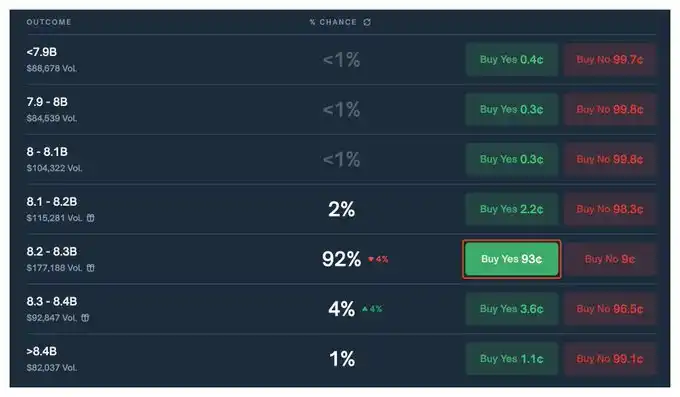
In the market's eyes, this hardcode was quickly interpreted as the "ultimate answer":

  • The corresponding "8.2–8.3B" range contract price surged from around 60% to over 90%;
  • Substantial funds saw this as cashing in on an "information advantage," treating the remaining few percentage points as arbitrage for the taking.

But the真正微妙的地方在于: once the leak was widely used by traders, the hardcode itself became a triggerable variable.

The NORAD website is centrally maintained; the developers have full authority to override the pre-written value at the last moment; when "lazy developer" and "hardcode fraud" become part of the social舆论 (public opinion), the maintainers even have an incentive to change the value in real-time to prove they are not a slapdash organization.

This means that for those who bought large positions in the "8.2–8.3B=Yes" at 0.93, what they were truly betting against was not how many gifts Santa "delivered," but whether a developer would change that string of numbers in the final commit before going live.

Structurally, this market allows multiple "intervention methods" to exert significant leverage on the price.

The NORAD website is centrally maintained; the developers have full authority to override the pre-written value at the last moment. When "lazy developer" and "hardcode fraud" become part of the social narrative, the maintainers even have an incentive to change the value in real-time to prove they are not a slapdash organization.

This means that for those who bought large positions in the "8.2–8.3B=Yes" at 0.93, what they were truly betting against was not how many gifts Santa "delivered," but whether a developer would change that string of numbers in the final commit before going live.

Here, the prediction market is no longer "predicting an objective random variable," but provides a derivative field for a small group controlling the system's switches to "bet on how their actions will be interpreted by the outside world." The person writing the front-end code naturally possesses the dual power of "spoiler +随时篡改 (tampering at any time)."

Technical players deploying code crawlers early can establish positions before most people are even aware the hardcode exists; media or influencers can indirectly influence whether the maintainers adjust their strategy by amplifying the narrative of the "hardcode scandal."

Here, the prediction market is no longer about predicting an objective random variable, but provides a derivative field for a small group controlling the system's switches to bet on how their actions will be interpreted by the outside world.

"Gaza Strike" Contract: The Scripted Kill in the Pre-Dawn Market

The third incident had the most real-world impact. Thanks to @ec_unoxx's summary, the trader is @poliedge100, Teacher Little Alligator.

A contract centered on "whether Israel would strike Gaza before a specific deadline"上演了一场 (staged) an extremely "scripted" price washout in the tail-end phase临近到期 (approaching expiration).

Initially, the market widely believed the probability of a large-scale strike before the deadline was limited, with the "No" price staying in the high range of 60%–80% for a long time. As time passed, "nothing happening" itself seemed to continuously reinforce the validity of "No".

Then came the familiar rhythm: pre-dawn hours +舆论攻势 (public opinion offensive) + panic selling.

  • In the platform's comments section, the "Yes" side began密集张贴 (intensively posting) unverified screenshots, local media links, even old news, creating a narrative atmosphere of "the strike has already happened, just the major media is slow to react."
  • Simultaneously, large sell orders appeared on the order book, actively breaking through (smashing through) the support for "No", pushing the price down to the "junk zone" of 1%–2%.

For holders极度依赖情绪 (extremely reliant on emotion) for information, this series of actions was enough to create an "endgame illusion":

"Since someone is selling off to escape, and the comments are all saying it happened, it must be that I missed the news."

While this panic was being manufactured, a small group of people坚持做事实核查 (persisting in fact-checking) came to a completely different conclusion from another direction:

  • Before the preset deadline, there was no sufficiently clear, consistently recognized by authoritative media, and符合合约规则定义的 (meeting the contract rule definition) evidence of an "airstrike";
  • From a textual rule perspective, "No" still had a high probability of being the final legitimate settlement result.
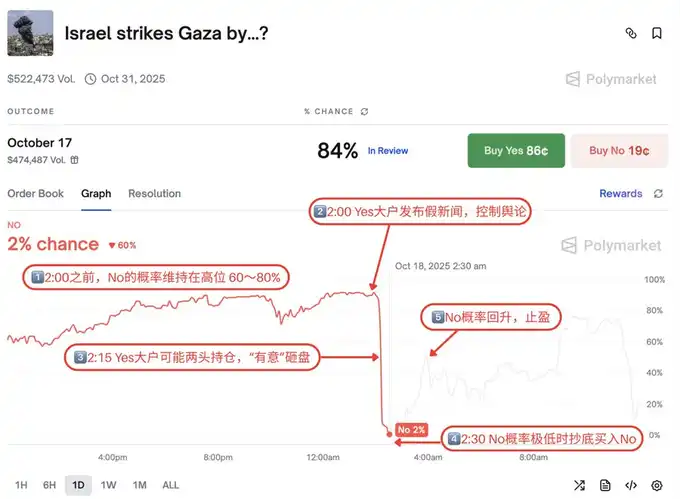
Thus, an asymmetric lottery ticket appeared again structurally:

  • The market price treated "No" as a 1% minor probability;
  • Textual evidence and rule interpretation suggested a现实概率 (realistic probability) far higher than 1%.

What truly sparked controversy was the scene after settlement:

  • After the tail-end session, someone proposed settling as "Yes", entering a limited dispute period;
  • Due to procedural reasons or insufficient resources from participating parties, this settlement direction was ultimately not successfully overturned;
  • The contract was最终锁定 (finally locked) as "Yes", and many who insisted on a textual rule interpretation could only argue afterwards "whether this conformed to the original rule design," but couldn't change the flow of funds.

This accident exposed the "greenhouse effect" of prediction markets极为赤裸 (extremely赤裸裸, nakedly):

  • Public opinion can cause price collapses in a short time;
  • Capital can create the false appearance of "smart money retreating" through self-directed selling;
  • Ultimate settlement power often lies in the hands of a very few parties with resources and organizational capacity.

This is no longer "deviation of collective wisdom," but a manipulation space formed by the amalgamation of narrative, capital, and rule interpretation power.

To summarize, in the three cases above, prediction markets present another picture:

  • For news initiators and media

Every prediction market can be seen as a real-time thermometer for narrative influence.

Documentary directors, PR teams, topic creators can all adjust their output rhythm by observing the order book: which candidates to continue hyping, which plots need more drama.

In some extreme cases, content creators can even "reverse" utilize the order book, writing market preferences back into the script.

  • For project parties / platforms

The ambiguity of rules, the choice of settlement sources, the design of dispute mechanisms, all directly affect "who profits from tail-end events."

Ambiguous oracles, broad discretionary power, equate to reserving a "gray space" that can be used by organized forces.

In this space, prediction markets are no longer passive "result registries," but active tools for liquidity momentum building.

  • For participants (retail investors / KOLs / communities)

Comment sections, social media, and various secondary interpretations constitute a整套 (complete set) of psychological leverage that can be exploited.

By集中发布 (centrally publishing) "seemingly authoritative" screenshots, links, out-of-context news headlines, actors can push prices from rational ranges into panic or frenzy zones in a short time.

In this structure, those with stronger discourse power (KOLs, big Vs, research accounts) naturally possess the ability to manipulate narratives.

  • For hackers and "system players"

Monitoring front-end code, data source updates, news APIs, even oracle mechanisms本身就可以成为 (can themselves become) systematic strategies.

Capturing hardcodes, configuration errors, rule edge cases in advance, and then building positions before the market reacts, is a form of high-leverage "structured alpha."

More aggressive players will directly research: how to legally or "edge" influence settlement information sources, making the world "appear" consistent with their position direction for a short time.

Finally, quoting @LeotheHorseman Teacher Horse Man's x pinned tweet:

The truthfulness of information feels irrelevant now (in both epistemological and practical senses), what people are willing to pay for is reality. Perhaps the most important proposition of the current era is how the pricing of information and the information of pricing interact with each other.


İlgili Sorular

QWhat is the main argument presented in the article about prediction markets like Polymarket?

AThe article argues that prediction markets are often susceptible to manipulation through narrative control, emotional bias, and the exploitation of rule ambiguities, rather than purely reflecting collective wisdom or objective reality.

QIn the HBO 'Who is Satoshi' market, why did the price for Len Sassaman remain high despite evidence pointing to Peter Todd?

AThe price remained high because the crypto community had a strong emotional preference for Len Sassaman (a deceased cryptographer with a tragic and compelling story) and collectively refused to believe the leaked evidence, dismissing it as an HBO 'red herring' or narrative misdirection.

QHow did the discovery of hardcoded data in the NORAD Santa tracker website create a unique risk for traders?

AIt created a risk because the market began betting on a fixed number, but the website's developers, who are centralized maintainers, had the power to change that number at the last minute, especially if public pressure about the lazy hardcoding made them want to prove they weren't incompetent.

QWhat three elements does the article identify as combining to form a 'manipulation space' in the Israel-Gaza contract case?

AThe three elements are narrative (spreading unverified information/rumors), capital (large sell orders to manipulate the market price), and the power to interpret rules (control over the final settlement decision).

QAccording to the article, what new role do prediction markets play for news creators and media organizations?

AThey act as a real-time thermometer for narrative influence, allowing directors, PR teams, and content creators to gauge public sentiment and potentially adjust their output or even 'write the narrative back into the script' based on market preferences.

İlgili Okumalar

Anthropic and OpenAI Have Single-Handedly Severed the Logic of Pre-IPO Stock Tokenization

The pre-IPO stock token market is experiencing significant turmoil following strong statements from AI giants Anthropic and OpenAI. Both companies have updated their official policies, declaring that any transfer of their company shares—including sales, transfers, or assignments of share interests—without prior board approval is "invalid" and will not be recognized in their corporate records. This means buyers in such unauthorized transactions would not be recognized as shareholders and would have no shareholder rights. A major point of contention is the use of Special Purpose Vehicles (SPVs), which are legal entities commonly used by pre-IPO token platforms to pool investor funds and indirectly acquire shares from employees or early investors. The companies explicitly state they do not permit SPVs to acquire their shares, and any such transfer violates their restrictions. They warn that third parties selling shares through SPVs, direct sales, forward contracts, or stock tokens are likely engaged in fraud or are offering worthless investments due to these transfer limits. This stance directly threatens the core model of many pre-IPO token platforms, which rely on SPV structures. The announcement revealed additional risks within this model, such as complex "SPV-within-SPV" layering that obscures legal transparency, increases management fees, and creates a chain reaction risk of invalidation. Following the news, tokens like ANTHROPIC and OPENAI on platforms like PreStocks fell sharply (over 20%). The market reaction highlights a divergence: while asset-backed pre-IPO tokens plummeted, purely speculative pre-IPO futures contracts, which are bilateral bets on future IPO prices with no claim to actual shares, remained relatively stable as they are unaffected by the transfer restrictions. The industry is split on the implications. Some believe the fundamental logic of pre-IPO token trading is broken if leading companies reject SPV-held shares, potentially causing a domino effect. Others, like Rivet founder Nick Abouzeid, argue that buyers of such unofficial tokens always knowingly accepted the risk of non-recognition by the company. The statements serve as a stark risk warning and a corrective measure for a market where valuations for some AI-related pre-IPO tokens had soared to irrational levels, far exceeding recent funding round valuations.

marsbit36 dk önce

Anthropic and OpenAI Have Single-Handedly Severed the Logic of Pre-IPO Stock Tokenization

marsbit36 dk önce

Anthropic and OpenAI Personally Sever the Logic of Pre-IPO Crypto-Stocks

The pre-IPO token market has been rocked by strong statements from Anthropic and OpenAI. Both AI giants have updated official warnings, declaring that any sale or transfer of their company shares without explicit board approval is "invalid" and will not be recognized on their corporate records. This directly targets Special Purpose Vehicles (SPVs), the common legal structure used by pre-IPO token platforms. These platforms typically use an SPV to acquire shares from employees or early investors, then issue blockchain-based tokens representing a claim on the SPV's economic benefits. Anthropic and OpenAI's position means that if an SPV's share purchase lacked authorization, the underlying asset could be deemed worthless, nullifying the token's value. Anthropic explicitly warned that any third party selling its shares—via direct sales, forwards, or tokens—is likely fraudulent or offering a valueless investment. The crackdown highlights risks in the popular SPV model, including complex multi-layered "Russian doll" SPV structures that obscure legal ownership, add fees, and concentrate risk. If one layer is invalidated, the entire chain could collapse. Following the announcements, tokens like ANTHROPIC and OPENAI on platforms like PreStocks fell sharply (over 20%). In contrast, purely speculative pre-IPO prediction contracts remained stable, as they involve no actual share ownership. The move is seen as a corrective measure amid a market frenzy where some pre-IPO token valuations (e.g., Anthropic's token hitting a $1.4 trillion implied valuation) far exceeded recent official funding rounds. Opinions are split: some believe this undermines the core logic of pre-IPO token trading if top companies reject SPVs, while others argue buyers always assumed this legal risk when accessing unofficial channels. The statements serve as a stark warning and a potential catalyst for market de-leveraging and clearer boundaries.

Odaily星球日报40 dk önce

Anthropic and OpenAI Personally Sever the Logic of Pre-IPO Crypto-Stocks

Odaily星球日报40 dk önce

The Waged Worker Driven to Poverty by AI Subscriptions

"AI Membership: The Hidden Cost Pushing Workers Toward 'Poverty'" The widespread corporate push for AI adoption is creating a hidden financial burden for employees. Companies, from giants like Alibaba to small firms, are mandating AI use, often tying token consumption to KPIs, but frequently refuse to cover the costs. Workers are forced to pay for subscriptions out of pocket to stay competitive and avoid being replaced. Front-end developer Long Shen spends up to 2000 RMB monthly on tools like Cursor and ChatGPT Plus, seeing it as a necessary 3% salary investment to handle 90% of his coding tasks. While it boosted his performance and led to promotions, he now faces idle time at work, pretending to be busy. Designer Peng Peng navigates strict company firewalls by using personal devices and accounts for AI image generation tools like Midjourney, spending hundreds monthly without reimbursement, while her boss demands faster, more numerous revisions. The pressure creates workplace anxiety and suspicion. Programmer Li Huahua, after a friend's experience of raised KPIs following AI success, fears being branded a "traitor" for using it yet worries about falling behind if she doesn't. The dynamic allows management to demand results without understanding the tools or covering expenses, treating employees like AI "agents." While some, like entrepreneur Jin Tu, find high value in paid AI, building entire systems and winning competitions, for most, it's a trap. Free tools like Kimi and Doubao are introducing fees, closing off alternatives. The initial efficiency gains individual advantage, but as AI becomes ubiquitous, the personal edge disappears, workloads increase, and a cycle of dependency begins. Workers like Long Shen realize they cannot maintain AI-generated code without AI, making stopping harder than continuing to pay. The tool promising liberation is instead becoming a compulsory, costly chain in the modern workplace.

marsbit1 saat önce

The Waged Worker Driven to Poverty by AI Subscriptions

marsbit1 saat önce

SK Hynix's Trillion-Won Empire: The Successors

"SK Hynix's Trillion-Won Empire and Its Heirs" explores the unconventional succession narrative within SK Group, South Korea's second-largest conglomerate, following SK Hynix's dramatic market rise. Unlike traditional chaebol scripts prioritizing the eldest son, ownership, and political marriages, Chairman Choi Tae-won's three children from his first marriage are charting distinct paths. The eldest daughter, Choi Yun-jeong, is considered the most visible candidate. With a background in biology, consulting, and a PhD, she holds executive roles at SK Bioscience and SK Inc.'s growth strategy unit, focusing on biopharma and new businesses. Her marriage is to an AI infrastructure entrepreneur, not a traditional chaebol heir. The second daughter, Choi Min-jeong, took a unique route by voluntarily serving as a South Korean naval officer, including a tour in the Gulf of Aden. She later worked on policy and strategy for SK Hynix in Washington D.C. before co-founding an AI-driven healthcare startup in San Francisco. She married a former U.S. Marine Corps officer, connecting the family to U.S. defense and policy networks. The son, Choi In-geun, who has Type 1 diabetes, followed a more classic preparatory path with a physics degree and a stint at SK E&S but left to join McKinsey's Seoul office. He remains publicly silent and holds no SK shares, defying the traditional "crown prince" archetype. Their paths unfold against the backdrop of their parents' high-profile, contentious divorce and a record-setting asset division lawsuit. The article argues that as SK Hynix becomes a geopolitical asset in the AI era, the conventional rules of chaebol inheritance are changing. The heirs are being groomed not simply to take over, but to navigate a complex global landscape defined by AI, biotech, geopolitics, and policy, forging legitimacy through their own expertise and networks rather than birth order alone.

marsbit1 saat önce

SK Hynix's Trillion-Won Empire: The Successors

marsbit1 saat önce

İşlemler

Spot
Futures

Popüler Makaleler

HOT Nasıl Satın Alınır

HTX.com’a hoş geldiniz! Holo (HOT) satın alma işlemlerini basit ve kullanışlı bir hâle getirdik. Adım adım açıkladığımız rehberimizi takip ederek kripto yolculuğunuza başlayın. 1. Adım: HTX Hesabınızı OluşturunHTX'te ücretsiz bir hesap açmak için e-posta adresinizi veya telefon numaranızı kullanın. Sorunsuzca kaydolun ve tüm özelliklerin kilidini açın. Hesabımı Aç2. Adım: Kripto Satın Al Bölümüne Gidin ve Ödeme Yönteminizi SeçinKredi/Banka Kartı: Visa veya Mastercard'ınızı kullanarak anında Holo (HOT) satın alın.Bakiye: Sorunsuz bir şekilde işlem yapmak için HTX hesap bakiyenizdeki fonları kullanın.Üçüncü Taraflar: Kullanımı kolaylaştırmak için Google Pay ve Apple Pay gibi popüler ödeme yöntemlerini ekledik.P2P: HTX'teki diğer kullanıcılarla doğrudan işlem yapın.Borsa Dışı (OTC): Yatırımcılar için kişiye özel hizmetler ve rekabetçi döviz kurları sunuyoruz.3. Adım: Holo (HOT) Varlıklarınızı SaklayınHolo (HOT) satın aldıktan sonra HTX hesabınızda saklayın. Alternatif olarak, blok zinciri transferi yoluyla başka bir yere gönderebilir veya diğer kripto para birimlerini takas etmek için kullanabilirsiniz.4. Adım: Holo (HOT) Varlıklarınızla İşlem YapınHTX'in spot piyasasında Holo (HOT) ile kolayca işlemler yapın.Hesabınıza erişin, işlem çiftinizi seçin, işlemlerinizi gerçekleştirin ve gerçek zamanlı olarak izleyin. Hem yeni başlayanlar hem de deneyimli yatırımcılar için kullanıcı dostu bir deneyim sunuyoruz.

79 Toplam GörüntülenmeYayınlanma 2024.12.11Güncellenme 2025.03.21

HOT Nasıl Satın Alınır

HOLO Nedir

HOLO'yu Anlamak: Merkeziyetsiz Uygulamaların Geleceği HOLO'ya Giriş, $holo Kripto para ve merkeziyetsiz teknolojilerin hızla gelişen dünyasında, HOLO, diğer adıyla Holo, dikkat çekici bir oyuncu olarak ortaya çıkmıştır. Bu yenilikçi proje, Holochain olarak bilinen temel mimarisi aracılığıyla merkeziyetsiz uygulamaların (DApp'ler) geliştirilmesini kolaylaştırmaktadır. Bugün bildiğimiz merkezi internet ile geleceğin merkeziyetsiz ekosistemi arasında bir köprü kurma vizyonu ile HOLO, DApp'leri günlük kullanıcılar için karmaşık kurulumlar ve teknik beceriler gerektirmeden erişilebilir hale getirmeyi hedeflemektedir. HOLO Nedir, $holo? HOLO'nun özünde, Holochain üzerinde inşa edilmiş DApp'leri barındırmak için tasarlanmış dağıtık bir platform bulunmaktadır. Geleneksel blok zinciri platformlarının aksine, Holochain her uygulamanın kendi kurallarına göre çalışmasına olanak tanıyarak benzersiz bir yaklaşım benimsemektedir. HOLO'nun misyonu, bu Holochain uygulamalarını (hApp'ler) kullanıcılarla tanıdık web teknolojileri aracılığıyla bağlamaktır. HOLO'nun temel amacı, kullanıcıların bu uygulamalara standart web tarayıcıları aracılığıyla doğrudan erişimini sağlayarak DApp'lere erişimi ve kullanımını demokratikleştirmektir. Bu erişilebilirlik, ortalama internet kullanıcıları için sürtünmeyi azaltmada anahtar bir rol oynamaktadır; böylece kullanıcılar, kripto paralar ve DApp kullanımı ile sıklıkla ilişkilendirilen karmaşıklıkları aşmadan yeni nesil uygulamaları kullanabilirler. HOLO'nun Yaratıcıları, $holo HOLO, yaratıcıları Arthur Brock ve Eric Harris-Braun'ın vizyonundan doğmuştur. Her ikisi de deneyimli geliştiriciler ve sözleşme kodlayıcıları olan bu kişiler, Aralık 2016'da MetaCurrency Projesi'nin bir parçası olarak projeye başlamışlardır. Bu girişim, başlangıçta bir eşler arası ekonomiyi teşvik etmeye yönelik araçlar ve teknolojiler geliştirmeye odaklanmıştır. Kodlama ve girişimcilik geçmişleri, merkeziyetsiz uygulama geliştirme ve barındırma zorluklarını ele almak için onları benzersiz bir şekilde konumlandırmıştır. HOLO'nun Yatırımcıları, $holo HOLO'daki bireysel yatırımcılarla ilgili spesifik detaylar kolayca bulunamasa da, projenin daha geniş kripto para topluluğundan önemli destek ve ilgi aldığı açıktır. Merkeziyetsiz uygulamaları barındırmadaki yenilikçi yaklaşımı ve destekleyici topluluğu, projeye olan ilgi ve yatırımı artırmıştır. HOLO, $holo Nasıl Çalışır? HOLO, Holochain tabanlı DApp'ler için depolama ve işlem gücü sağlayan geniş bir ekosistem oluşturarak çalışmaktadır. Bireyler, cihazlarını veya HoloPort gibi özel donanımları barındırma düğümleri haline getirerek, bilgisayarlarının kullanılmayan kaynaklarını etkili bir şekilde paraya dönüştürebilirler. HOLO'nun ana işlevsel bileşenleri şunlardır: Uygulama Sağlayıcı: Bu varlıklar, HOLO'dan barındırma kredileri satın alır ve bunlar bir rezerv hesabında tutulur. Bu mekanizma, DApp geliştiricilerinin uygulamalarını çalıştırmak için gerekli kaynakları güvence altına almasını sağlar. Barındırıcı: DApp'leri barındırmayı seçen bireyler veya organizasyonlar, kullanıcılardan gelen taleplere yanıt verirken imzalı hizmet kayıtları oluştururlar. Bu süreç, ağ üzerindeki tüm etkileşimlerin izlenmesini ve doğrulanmasını sağlar. Hizmet Kanıtı: HOLO'nun operasyonel bütünlüğünün kritik bir unsuru olan barındırıcılar, uygulama sağlayıcılara fatura sunar ve bunlar sağlanan hizmeti doğrular. Doğrulama sonrasında, barındırıcılar barındırma kredileri şeklinde tazminat alırlar. HoloFuel: Holo ağının yerel token'ı olarak hizmet veren HoloFuel, mikro işlemler için tasarlanmıştır. Bu token, platformun milyarlarca eşzamanlı işlemi sorunsuz bir şekilde desteklemesi için gerekli olan geniş işlem hacmini kolaylaştırır. Bu bileşenlerin birleşik sinerjisi, Holochain uygulamalarının faydasını ve erişimini artırarak sağlam ve merkeziyetsiz bir barındırma ortamı sağlar. HOLO'nun Zaman Çizelgesi, $holo HOLO'nun yolculuğu, kuruluşundan bu yana birkaç önemli dönüm noktası ile belirlenmiştir: Aralık 2016: Arthur Brock ve Eric Harris-Braun tarafından MetaCurrency Projesi'nin bir parçası olarak HOLO'nun kuruluşu. 2018: HoloToken (HOT) olarak bilinen bir ERC20 token'ının çıkarılması, projenin lansmanı sırasında HoloFuel ile değiştirilebilen bir “IOU” olarak hizmet etmiştir. Sürekli Gelişim: Holo ağı ve HoloFuel'in sürekli ilerlemeleri, testleri ve optimizasyonları, projenin merkeziyetsiz uygulama barındırma teknolojisinin ön saflarında kalmasını sağlamaktadır. HOLO'nun Benzersiz Özellikleri, $holo HOLO, kripto para ve merkeziyetsiz platformlar alanında, kendine özgü özellikleri ve üzerinde çalıştığı yenilikçi çerçeve sayesinde öne çıkmaktadır: Eşler Arası Barındırma: HOLO, herkesin bilgisayarlarını kullanarak DApp'ler için bir barındırıcı olma kapısını açar. Bu barındırmanın demokratikleşmesi, Airbnb gibi platformların geleneksel otel endüstrisini bozmasına benzer; bireylerin ekonomiye katılmalarını güçlendirir. Holochain Çerçevesi: HOLO'nun yeniliklerinin merkezinde Holochain çerçevesi bulunmaktadır. Gelecek nesil bir teknoloji olarak konumlanan Holochain, olağanüstü ölçeklenebilirlik, hızlı işlem hızları, mükemmel enerji verimliliği ve geleneksel blok zinciri teknolojilerine kıyasla maliyet etkinliği sunmaktadır. Mikro İşlemler için HoloFuel: HoloFuel, mikro işlemleri karşılamak üzere titizlikle tasarlanmıştır ve Holo ağının milyarlarca işlemi eşzamanlı olarak verimli bir şekilde yönetmesine olanak tanır. Bu yetenek, geliştiricilerin büyük ölçekte ekonomik olarak uygulanabilir uygulamalar yaratmalarını sağlayarak ana akım benimseme için hayati öneme sahiptir. Sonuç HOLO, merkeziyetsiz uygulamalar ve blok zinciri teknolojisi alanında önemli bir ilerlemeyi temsil etmektedir. Sağlam altyapısı, kullanıcı dostu yaklaşımı ve yenilikçi Holochain çerçevesi ile HOLO, webin geleceğinde kritik bir rol oynamaya hazırdır. Günlük internet deneyimlerini geliştirecek mi yoksa geliştiriciler ve kullanıcılar arasındaki dijital uygulamalarla etkileşimi yeniden tanımlayacak mı, bunu zaman gösterecek; ancak şu ana kadar kaydettiği ilerleme, merkeziyetsiz dijital ekonomiye doğru dünya ilerledikçe izlemeye değer bir durumdur. Proje geliştikçe, devam eden gelişmeleri ve topluluk katılımı, başarısının kritik bileşenleri olacak ve potansiyel olarak HOLO'yu merkeziyetsiz uygulamalar için ana akım bir platform haline getirecektir. Merkeziyetsiz teknolojilere olan ilginin artmasıyla birlikte, HOLO gibi projelerin önemi ve etkisi önümüzdeki yıllarda yalnızca artacaktır.

91 Toplam GörüntülenmeYayınlanma 2024.12.26Güncellenme 2024.12.26

HOLO Nedir

Tartışmalar

HTX Topluluğuna hoş geldiniz. Burada, en son platform gelişmeleri hakkında bilgi sahibi olabilir ve profesyonel piyasa görüşlerine erişebilirsiniz. Kullanıcıların HOT (HOT) fiyatı hakkındaki görüşleri aşağıda sunulmaktadır.

活动图片