Prediction Markets Don't Predict Truth, They Only Reward Those Who Bet Correctly

marsbit2026-01-18 tarihinde yayınlandı2026-01-18 tarihinde güncellendi

Özet

The article challenges the core narrative surrounding prediction markets, arguing they do not discover "truth" but merely reward those who bet correctly on future outcomes. It uses two key examples to illustrate this: the profitable bet on Venezuelan President Maduro's arrest, which suggests markets can monetize insider information rather than aggregate public knowledge, and the "Zelensky suit" market, where the outcome was manipulated by large token holders, revealing a failure of governance incentives. The piece contends that as prediction markets grow, attracting Wall Street capital and handling billions in volume, they face increased regulatory scrutiny. This is not due to inaccuracy, but because their accuracy can stem from problematic sources like privileged access. The author asserts that the fundamental activity is simply betting on narratives, and that dressing it up as a superior form of truth-discovery creates unrealistic expectations and philosophical dilemmas. The conclusion is that recognizing prediction markets as high-stakes betting tools, rather than epistemological engines, would lead to healthier development, clearer regulations, and more honest design.

Every time prediction markets get caught up in controversy, we keep circling around the same question without ever truly confronting it:

Are prediction markets really about truth?

Not accuracy, not utility, not whether they outperform polls, journalists, or trends on social media. But truth itself.

Prediction markets price events that haven't happened yet. They are not reporting facts; they are assigning probabilities to a future that is still open, uncertain, and unknowable. Somehow, we've started treating these probabilities as a form of truth.

For most of the past year, prediction markets have been basking in their victory lap.

They beat the polls, they beat cable news, they beat experts with PhDs and PowerPoints. During the 2024 U.S. election cycle, platforms like Polymarket reflected reality faster than almost any mainstream forecasting tool. This success solidified into a narrative: prediction markets are not only accurate, but superior—a purer way to aggregate truth, a more genuine signal of people's beliefs.

Then, January arrived.

A new account appeared on Polymarket, betting around $30,000 that Venezuelan President Nicolás Maduro would be ousted by the end of the month. At the time, the market gave that outcome a very low probability—single digits. It looked like a bad trade.

A few hours later, U.S. forces arrested Maduro and flew him to New York to face criminal charges. The account closed its position, profiting over $400,000.

The market was right.

And that's exactly the problem.

People often tell a comforting story about prediction markets:

Markets aggregate dispersed information. People with different views back their beliefs with money. As evidence accumulates, prices move. The crowd gradually converges on the truth.

This story assumes one crucial thing: the information entering the market is public, noisy, and probabilistic—like tightening polls, candidate gaffes, storms shifting, companies missing earnings.

But the Maduro trade wasn't like that. It felt less like reasoning and more like precise timing.

At that moment, prediction markets stopped looking like a clever forecasting tool and started to seem like something else: a place where proximity trumps insight, and access trumps interpretation.

If a market is accurate because someone knows something the rest of the world doesn't and can't, then the market isn't discovering truth; it's monetizing information asymmetry.

The importance of this distinction is far greater than the industry is willing to admit.

Accuracy can be a warning sign. When faced with criticism, prediction market proponents often repeat the same line: if there's insider trading, the market reacts earlier, thus helping everyone else. Insider trading speeds up the emergence of truth.

This argument sounds clean in theory, but in practice, its logic unravels.

If a market is accurate because it incorporates leaked military operations, classified intelligence, or internal government timelines, then it is no longer an information market in any publicly meaningful sense. It becomes a shadow venue for trading secrets. There is a fundamental difference between rewarding better analysis and rewarding proximity to power. Markets that blur this line will eventually attract regulatory scrutiny—not because they aren't accurate enough, but precisely because they are *too* accurate in the wrong way.
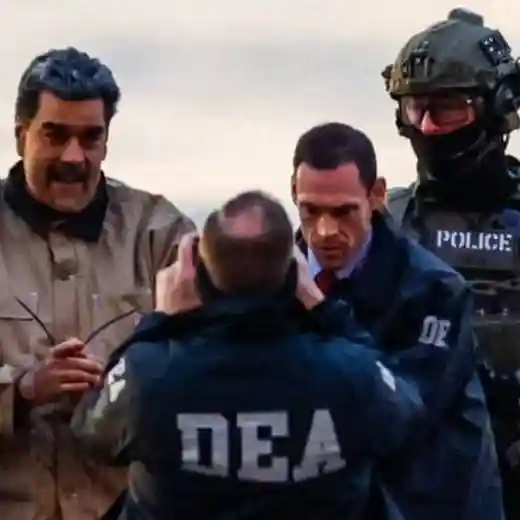
"They made over $100k a day on the Maduro play. I've seen this pattern too many times to doubt it: insiders always win. Polymarket just makes it easier, faster, more visible. Wallet 0x31a5 turned $34k into $410k in 3 hours."
What's unsettling about the Maduro incident isn't just the scale of the payoff, but the context in which these markets are exploding.

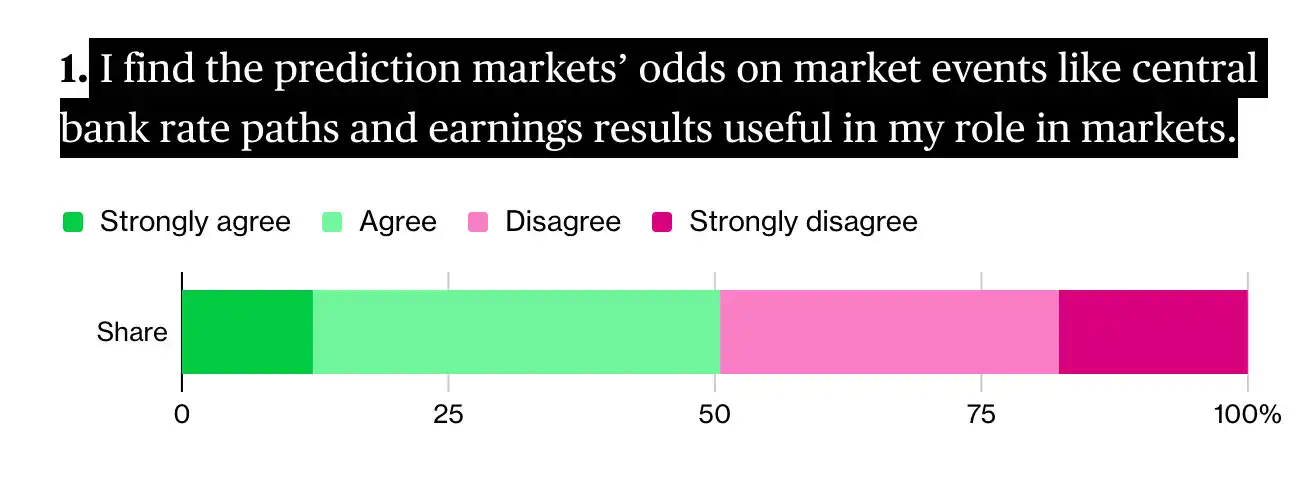
Prediction markets have evolved from fringe novelties to a standalone financing ecosystem taken seriously by Wall Street. According to a Bloomberg Markets survey last December, traditional traders and financial institutions see prediction markets as financial products with staying power, though they also acknowledge these platforms expose the blurry line between gambling and investing.

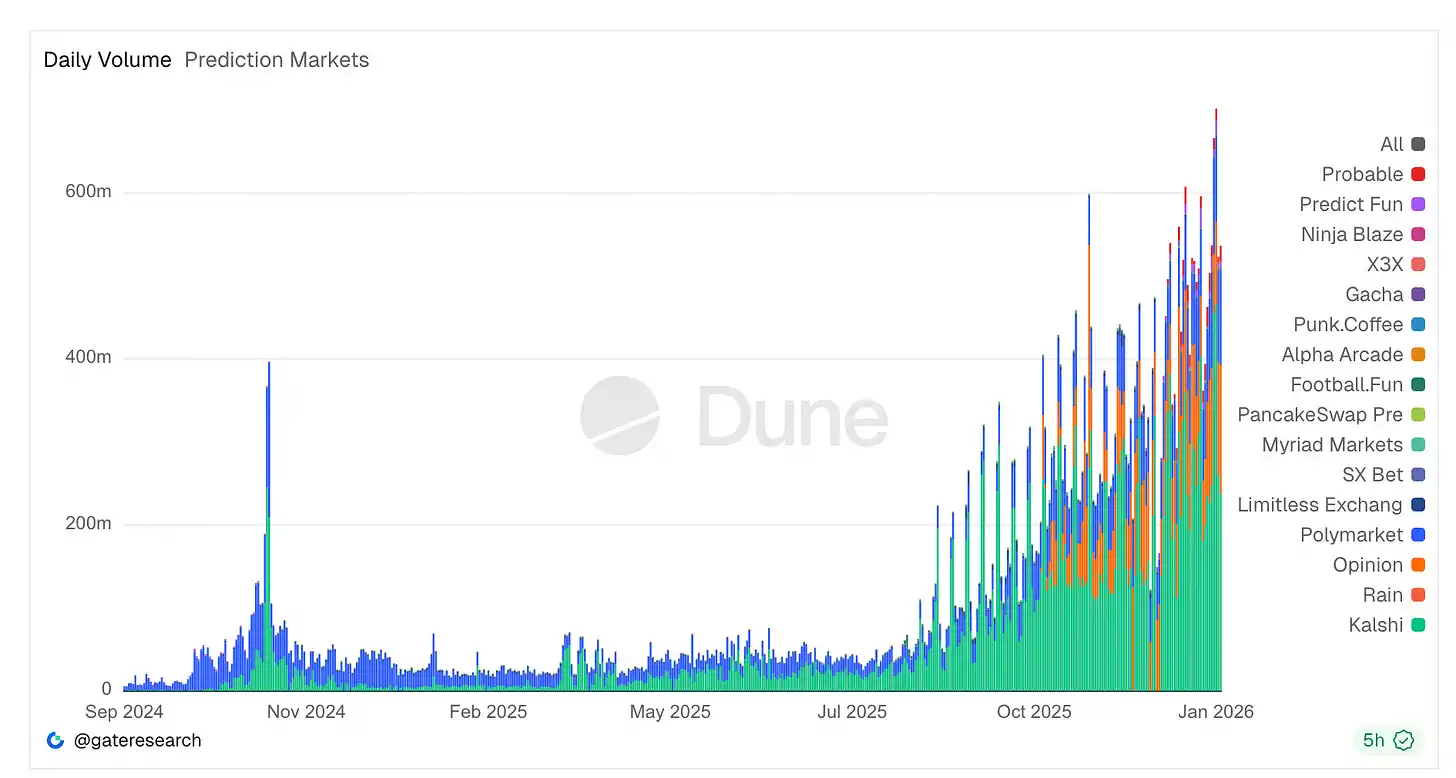
Trading volume is surging. Platforms like Kalshi and Polymarket now handle tens of billions in annual notional volume—Kalshi alone processed nearly $24 billion in 2025, with daily records constantly刷新 (refreshed) as political and sports contracts attract liquidity on an unprecedented scale.

Despite scrutiny, daily trading activity hit an all-time high of around $700 million. Regulated platforms like Kalshi dominate volume, while crypto-native platforms hold cultural centrality. New terminals, aggregators, and analytical tools emerge weekly.
This growth has also attracted heavyweight financial capital. The owner of the New York Stock Exchange committed up to $2 billion in strategic trades to Polymarket's corporate entity, valuing it around $9 billion, signaling Wall Street's belief that these markets can compete with traditional trading venues.

Yet, this boom is colliding with regulatory and ethical ambiguity. Polymarket, which was banned early on for operating unregistered and paid a $1.4 million CFTC fine, only recently regained conditional U.S. approval. Meanwhile, lawmakers like Rep. Ritchie Torres have introduced bills specifically aimed at banning government insiders from trading following the Maduro payoff, arguing the timing of such bets looks more like an opportunity for front-running than informed speculation.

Yet, despite legal, political, and reputational pressure, market participation hasn't declined. In fact, prediction markets are expanding from sports betting into more areas like corporate earnings metrics, with traditional gambling firms and hedge fund desks now staffing experts for arbitrage and pricing inefficiencies.

Taken together, these developments suggest prediction markets are no longer on the fringe. They are deepening ties to financial infrastructure, attracting professional capital, and spurring new laws, all while their core mechanism remains fundamentally a bet on an uncertain future.

The Overlooked Warning: The Zelensky Suit Incident

If the Maduro incident exposed the insider problem, the Zelensky suit market revealed a deeper issue.

In mid-2025, Polymarket opened a market betting on whether Ukrainian President Volodymyr Zelensky would wear a suit by July. It attracted massive volume—hundreds of millions of dollars. It seemed like a joke market but turned into a governance crisis.

Zelensky appeared in a black coat and trousers by a well-known menswear designer. The media called it a suit. Fashion experts called it a suit. Anyone with eyes could see what happened.

But the oracle vote determined: not a suit.

Why?

Because: a few large token holders had bet huge sums on the opposite outcome, and held enough voting power to push through a resolution in their favor. The cost of buying the oracle was even lower than their potential payout.

This wasn't a failure of the decentralized ideal, but a failure of incentive design. The system worked exactly as its rules were written—a human-led oracle is only as honest as the 'cost of lying.' In this case, lying was clearly cheaper.

It's easy to dismiss these events as edge cases, growing pains, or temporary glitches on the path to a more perfect prediction system. But I think that reading is wrong. These aren't accidents; they are the inevitable result of three elements combining: financial incentives, ambiguous rule wording, and not-yet-mature governance mechanisms.

Prediction markets don't discover truth; they arrive at a settlement outcome.

What matters isn't what most people believe, but what the system ultimately deems a valid result. That determination often sits at the intersection of semantic interpretation, power plays, and money plays. And when significant money is involved, that intersection quickly gets crowded.

Once you understand this, controversies like these cease to be surprising.

Regulation Doesn't Come from Nowhere

The legislative response to the Maduro trade was predictable. A bill moving through Congress would ban federal officials and staff from trading on political prediction markets while possessing material non-public information. This isn't radical; it's basic rules.

The stock market figured this out decades ago. Government officials shouldn't profit from privileged access to state power—this is a non-controversial view. Prediction markets are just discovering it now because they've insisted on pretending to be something else.

I think we've overcomplicated this.

Prediction markets are places where people bet on outcomes that haven't happened yet. If the event goes their way, they make money; if not, they lose money. Everything else we say about it is post-hoc.

It doesn't become something else just because the interface is cleaner or the odds are expressed as probabilities. It doesn't become more serious just because it runs on a blockchain or economists find the data interesting.

The incentives are what matter. You get paid not for having insight, but for correctly predicting what happens next.

I think what's unnecessary is our persistent effort to make this activity sound nobler. Calling it prediction or information discovery doesn't change the risk you're taking or why you're taking it.

To some extent, we seem reluctant to simply admit: people basically want to bet on the future.

Yes, they do. And that's fine.

But we should stop pretending it's anything else.

The growth of prediction markets is fundamentally driven by demand for betting on 'narratives'—whether elections, wars, cultural events, or reality itself. This demand is real and enduring.

Institutions use it to hedge uncertainty, retail uses it to act on beliefs or for entertainment, and the media sees it as a barometer. None of this requires dressing up the activity.

In fact, it's this disguise that creates friction.

When platforms brand themselves as 'truth machines' and claim the moral high ground, every controversy feels like an existential crisis. When a market settles in a disturbing way, the event gets elevated into a philosophical dilemma, rather than what it is—a dispute over settlement terms in a high-stakes betting product.

This misalignment of expectations stems from the dishonesty of the narrative itself.

I'm not against prediction markets.

They are one relatively honest way humans express belief amidst uncertainty, often surfacing unsettling signals faster than polls. They will continue to grow.

But we do ourselves a disservice by romanticizing them into something more lofty. They are not epistemological engines; they are financial instruments tied to future events. Recognizing this distinction is what will make them healthier—clearer regulation, sharper ethics, and more sensible design will all follow from it.

Once you admit you're operating a betting product, you stop being surprised when betting behavior shows up.


İlgili Sorular

QWhat is the core argument the article makes about prediction markets and truth?

AThe article argues that prediction markets do not actually predict or discover truth; they simply reward people who bet correctly on future outcomes. They are financial instruments for betting on uncertain events, not epistemological engines for uncovering objective reality.

QHow does the article use the example of the Nicolas Maduro bet to illustrate its point?

AThe Maduro bet example shows that the market's accuracy was not due to the aggregation of public information but to an insider with privileged, non-public knowledge. This demonstrates that markets can monetize information asymmetry rather than discover a shared, public truth.

QWhat problem did the 'Zelenskyy suit' market reveal about prediction markets?

AThe 'Zelenskyy suit' market revealed a critical flaw in governance and incentive design. A small group of large token holders, who had bet heavily against the outcome, used their voting power to manipulate the oracle's resolution for their own financial gain, showing that the system can be gamed when lying is cheaper than losing.

QAccording to the article, what is the fundamental nature of prediction markets that we should acknowledge?

AThe fundamental nature of prediction markets is that they are platforms for people to place bets on future events. They are driven by the human desire to wager on narratives, and this activity should be recognized as betting, not dressed up as a more noble pursuit of 'information discovery' or 'truth.'

QWhat does the article suggest is the consequence of misrepresenting prediction markets as 'truth machines'?

AMisrepresenting prediction markets as 'truth machines' creates a dangerous expectation mismatch. It turns every market controversy into an existential philosophical crisis about truth, rather than a more mundane dispute over the settlement rules of a high-stakes betting product. This dishonesty hinders clearer regulation, ethical guidelines, and better product design.

İlgili Okumalar

South Korean Exchanges 'Battle' Regulators, Challenging the Boundaries of Enforcement and Legislation

South Korea's cryptocurrency industry is engaged in a rare, direct confrontation with regulators. The Financial Intelligence Unit (FIU), the primary anti-money laundering (AML) watchdog, has recently imposed heavy penalties on major exchanges like Upbit and Bithumb for alleged violations involving unregistered overseas VASPs and AML procedures. However, exchanges are now actively challenging these actions in court and through industry associations. In a significant shift, the Seoul Administrative Court ruled in favor of Upbit's operator, Dunamu, overturning part of an FIU-ordered business suspension. The court found the FIU's penalty criteria and justification insufficiently clear. Similarly, the court suspended the enforcement of a six-month business suspension against Bithumb pending a final ruling, citing potential irreversible harm to the exchange. Beyond legal battles, the industry is contesting proposed legislative amendments. The Digital Asset eXchange Alliance (DAXA) strongly opposes a draft rule that would mandate Suspicious Transaction Reports (STRs) for all crypto transfers over 10 million KRW (~$6,800). DAXA argues this "poison pill" clause violates legal principles and would overwhelm the STR system, increasing reports from 63,000 to an estimated 5.45 million annually for major exchanges, thereby crippling effective AML monitoring. This conflict highlights a structural tension in South Korea's crypto governance: comprehensive digital asset laws are still developing, while regulators rely heavily on AML enforcement. The industry's move from passive compliance to active legal and legislative challenges signifies a new phase, pressing for clearer rules and more proportionate enforcement. While short-term disputes may intensify, this clash could ultimately lead to a more mature and sustainable regulatory framework for South Korea's vibrant crypto market.

marsbit55 dk önce

South Korean Exchanges 'Battle' Regulators, Challenging the Boundaries of Enforcement and Legislation

marsbit55 dk önce

After 50x Storage Surge, Justin Sun Always Looks to the Next Decade

Sun Yuchen, known for his controversial stunts like a $30 million lunch with Warren Buffett (canceled due to a kidney stone) and eating a $6.2 million duct-taped banana, is often overshadowed by a significant fact: his decade-long track record of spotting major investment trends. In 2016, he famously advised young people to invest in Bitcoin, Nvidia, Tesla, and Tencent instead of buying property. A hypothetical $20,000 investment in Nvidia and Tesla from that list would now be worth over 50 million RMB. His latest major call was on November 6, 2025, predicting a "50x storage opportunity" tied to the AI boom, which materialized with Sandisk's stock surging nearly 50-fold by 2026. Looking ahead, Sun now focuses on the next frontier: Physical AI. He identifies four key areas: 1. **Embodied AI/Robotics**: He sees this reaching its "iPhone moment," with companies like UBTech and Galaxy General leading in commercialization. 2. **Drones**: Viewed as the first commercially viable form of Physical AI, revolutionizing sectors from warfare (e.g., AeroVironment's Switchblade) to logistics. 3. **Spatial Computing**: Beyond VR, it's about AI understanding physical space, a foundational technology for robotics and autonomous systems, exemplified by Apple's Vision Pro. 4. **Space Exploration**: After a 2025 suborbital flight with Blue Origin, Sun advocates for space as the ultimate frontier, discussing blockchain's potential role in space asset management and data transactions. His investment philosophy involves betting on entire, inevitable trends rather than single companies. For robotics, he sees Tesla (the body/manufacturer) and Nvidia (the brain/AI platform) as complementary plays. In defense drones, he highlights companies making tanks obsolete (AeroVironment) and those augmenting fighter jets (Kratos). For space, he participated in Blue Origin's flight and anticipates SpaceX's potential IPO to redefine the sector's valuation. Sun Yuchen's vision frames the next two decades not as a revolution in information flow (like the internet), but in the fundamental operation of the physical world through AI-powered robots, autonomous systems, and spatial intelligence, ultimately extending human and AI activity into space. While many still focus on conventional assets, he continues to look toward the next technological horizon.

marsbit1 saat önce

After 50x Storage Surge, Justin Sun Always Looks to the Next Decade

marsbit1 saat önce

The Billionaires Behind the Most Expensive Midterm Election in History

"The Most Expensive Midterm Elections and Their Billionaire Backers" This analysis details the unprecedented scale of spending in the 2026 midterm elections, highlighting the key billionaire donors shaping the political landscape. Jeff Yass, founder of Susquehanna International Group, has contributed over $81 million, ranking third among individual donors behind George Soros ($102.6M) and Elon Musk ($84.8M). Yass is a major donor to Trump's MAGA Inc. and supports school choice and various candidates. Overall, federal committees have raised over $4.7 billion this cycle, with political ad spending projected to reach $10.8 billion. Republican-aligned groups are significantly out-raising their Democratic counterparts. "Dark money" from undisclosed sources continues to grow. The core stakes involve control of Congress and policy direction for Trump's final term. Donors are also motivated by specific issues: Sergey Brin and Chris Larsen are funding opposition to a proposed California wealth tax and supporting crypto-friendly policies. Other top donors include OpenAI's Greg Brockman and his wife Anna ($50M total to MAGA Inc. and an AI-focused PAC), Richard Uihlein ($45.3M to conservative causes), venture capitalists Marc Andreessen and Ben Horowitz (each over $44M to crypto/AI PACs and MAGA Inc.), Miriam Adelson ($42.6M to GOP leadership PACs), Paul Singer ($33.9M), and Diane Hendricks ($25.8M to MAGA Inc.). The article notes that the peak fundraising period is still ahead, with major primaries approaching.

marsbit1 saat önce

The Billionaires Behind the Most Expensive Midterm Election in History

marsbit1 saat önce

The Largest IPO in History Is Approaching, Surpassing SpaceX, 28 Years of AI Self-Iteration, Countdown to Intelligence Explosion

"Anthropic Nears Trillion-Dollar IPO, Fueled by Explosive Growth and 2028 'Intelligence Explosion' Warning Anthropic is considering a deal valuing the AI company near $1 trillion, potentially leading to one of the largest IPOs ever and surpassing SpaceX. Its revenue has skyrocketed, with Annual Recurring Revenue (ARR) reaching $45 billion in May 2026—a 500% increase in just five months. This vertical growth curve is attributed to its key products, Claude Code and Cowork, dominating AI coding and enterprise collaboration. Beyond commercial success, co-founder Jack Clark issued a pivotal warning in an interview: there is a greater than 50% chance that by the end of 2028, AI systems will achieve recursive self-improvement—the ability to autonomously build a 'better version' of themselves, initiating an 'intelligence explosion.' This prophecy underpins the company's astronomical valuation, as the market prices in the potential for transformative and disruptive AI. Further signaling its ambition, Anthropic formed a $1.5 billion joint venture with Goldman Sachs and Blackstone, aiming to disrupt traditional consulting firms like McKinsey by deploying Claude AI for complex strategic work. This move tests AI's capacity to replace high-level cognitive labor, a precursor to its predicted autonomous evolution. The narrative presents a dual future: unprecedented economic opportunity alongside significant risks like economic restructuring and security threats. Anthropic's meteoric rise and Clark's 2028 prediction frame the coming years as a countdown to a potential technological singularity."

marsbit2 saat önce

The Largest IPO in History Is Approaching, Surpassing SpaceX, 28 Years of AI Self-Iteration, Countdown to Intelligence Explosion

marsbit2 saat önce

İşlemler

Spot
Futures
活动图片