Prediction Market Giants Clash as Competition Between Kalshi and Polymarket Heats Up

marsbit2026-04-02 tarihinde yayınlandı2026-04-02 tarihinde güncellendi

Özet

The competition between US-based prediction market platforms Kalshi and Polymarket has intensified, with both companies exchanging sharp public criticisms. Kalshi, which is regulated by the CFTC, launched an ad campaign in Washington, D.C., with slogans such as "We don’t do death markets," directly targeting Polymarket’s offshore operations and its controversial contracts related to military conflicts and sensitive events. Kalshi accused Polymarket of being "irresponsible, dangerous, and non-compliant," while Polymarket responded by calling for fact-based discussions and emphasizing its commitment to market integrity. The dispute highlights fundamental differences in their regulatory approaches and comes amid growing scrutiny over insider trading and ethical concerns in the prediction market industry, which has seen combined weekly volumes nearing $6 billion.

Written by: Yash Roy, Bloomberg

Compiled by: Saoirse, Foresight News
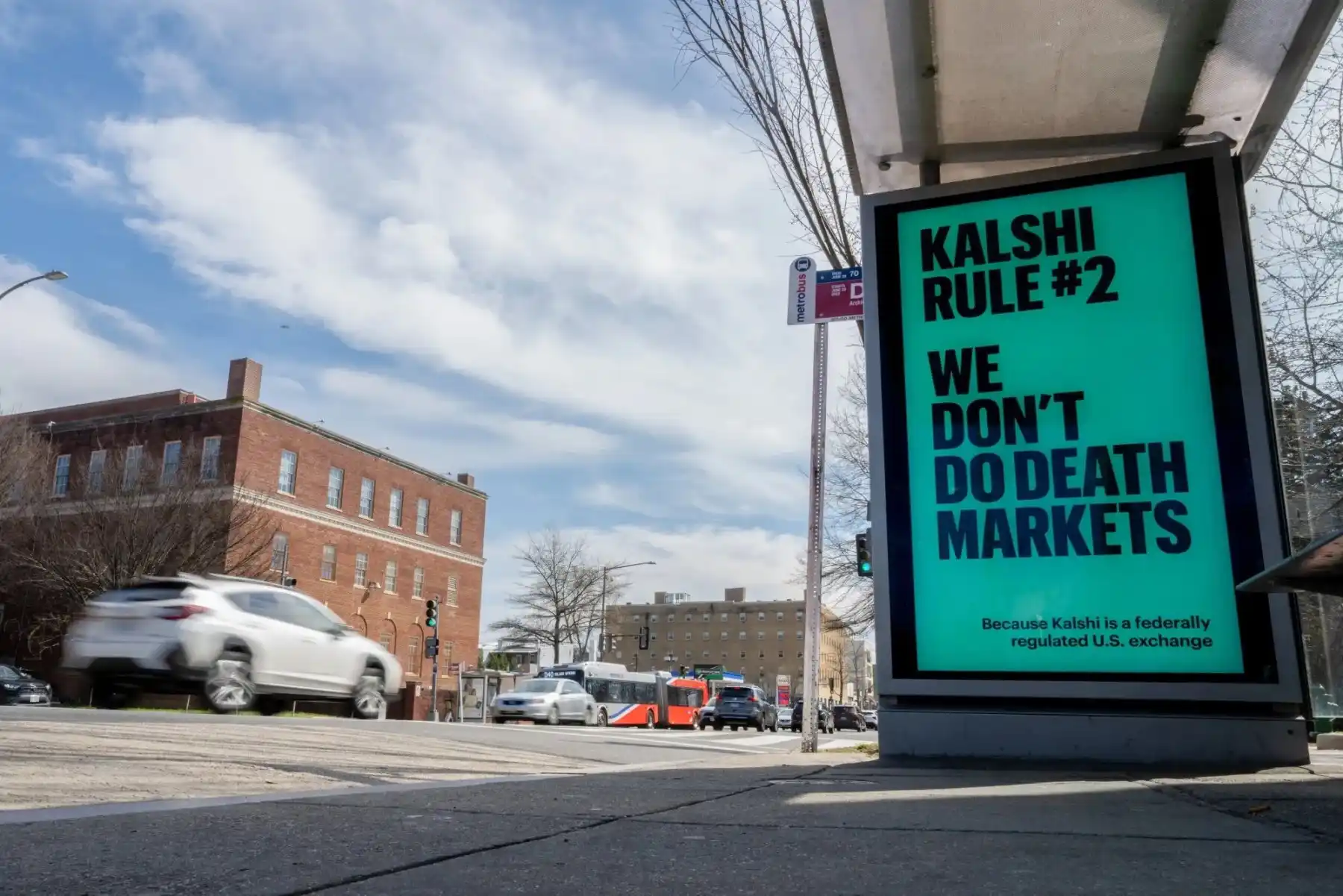
This is an advertisement placed by the American prediction market platform Kalshi at a Washington bus stop in March. With the slogan 'We Don't Do Death Markets,' it emphasizes its own federally regulated compliance to attack its competitor Polymarket's unregulated overseas operations and sensitive contracts related to military conflicts. Photographer: Daniel Hoyle / Bloomberg

As competition in the prediction market industry intensifies and this emerging field faces strict regulatory scrutiny in Washington, Kalshi and Polymarket are exchanging heavy accusations in a fierce confrontation.

The two platforms have frequently clashed before, but recent conflicts have escalated completely — Kalshi launched a highly targeted advertising campaign, and its employees have publicly criticized Polymarket, with the rhetoric from both sides becoming increasingly heated.

Benjamin Freeman, who is responsible for political and election markets at Kalshi, posted on social media on Monday, stating: 'Polymarket's irresponsible, dangerous, and allegedly违规的行为 (non-compliant behavior) is threatening the survival of legitimate prediction markets in the United States.'

This accusation quickly sparked a fierce war of words between the two companies.

Polymarket responded in a statement: 'We welcome competition but believe discussions should be based on facts. Misleading the public only harms the entire industry and its participants.'

Kalshi spokesperson Elisabeth Diana directly retorted: 'It's laughable to hear this from a company whose vast majority of trading volume is on an unregulated overseas platform, with rules that even allow for 'death markets'.'

(Note: Death Markets is a general term in the prediction market industry for trading contracts that directly/indirectly bet on events related to death, military conflicts, assassinations, etc., also known as 'assassination markets.')

This internal strife erupts at a critical time when Polymarket and Kalshi are vying for the leading position in the rapidly growing prediction market industry. This industry provides Americans with a new way to bet on various events, from sports games to election outcomes. According to data compiled by a user on Dune Analytics, the two startups have recently set new records in weekly trading volume, with their combined nominal trading volume recently approaching $6 billion.

Prediction Market Trading Volume Reaches Billions
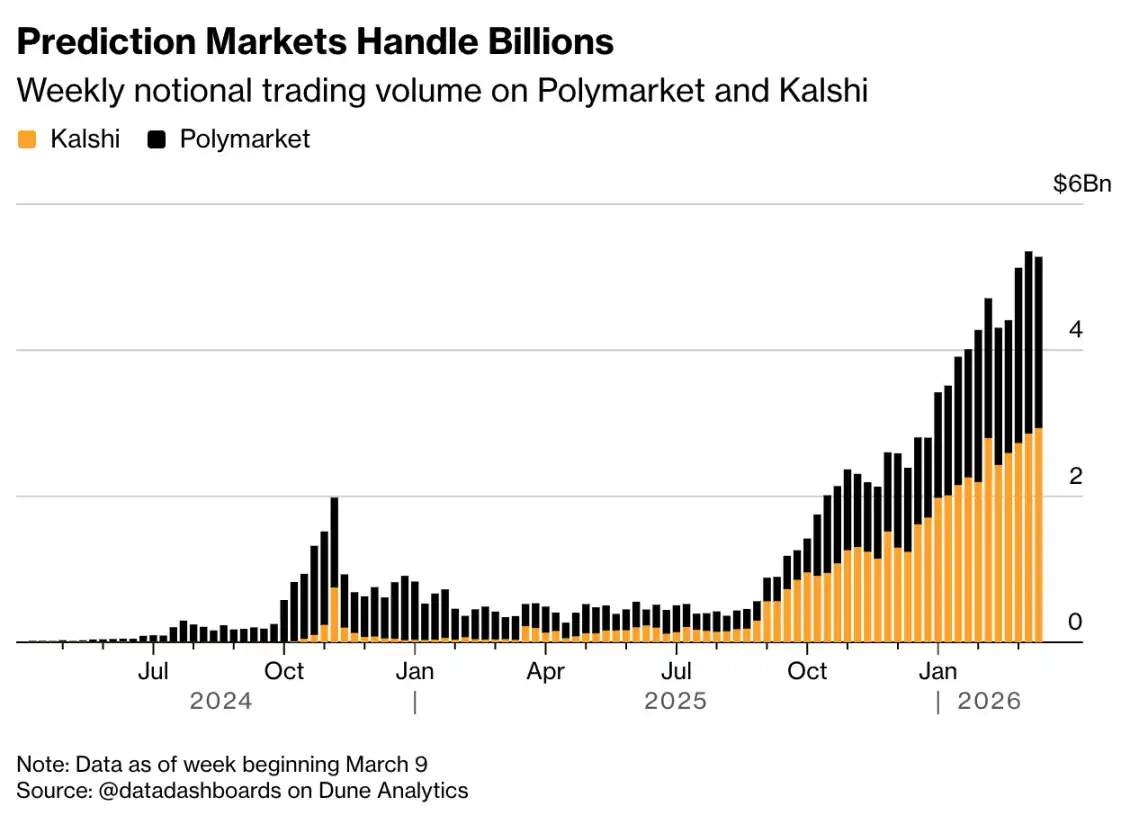
Weekly nominal trading volume of Polymarket and Kalshi. Note: Data is for the week ending March 9th. Source: @datadashboards on Dune Analytics

The core of the dispute lies in the fundamental differences in the establishment models and operating rules of the trading platforms. The Kalshi platform is headquartered in the United States and is regulated by the U.S. Commodity Futures Trading Commission (CFTC); Polymarket's main trading platform is based overseas.

Polymarket leverages its overseas operational advantage to list contracts related to military conflicts, including those involving Iran. Kalshi directly states that such products are both unethical and illegal.

One of Kalshi's advertisements bluntly states: 'We Don't Do Death Markets.'

Earlier this week, this set of marketing ads from Kalshi, in the form of a 'platform rules list,' began appearing at bus stops and subway stations in Washington.

One of them reads: 'Rule 1: We ban insider trading because Kalshi is a federally regulated U.S. exchange.' In the eyes of industry observers, the subtext of this statement is obvious: Polymarket's main platform is not under the jurisdiction of U.S. regulators.
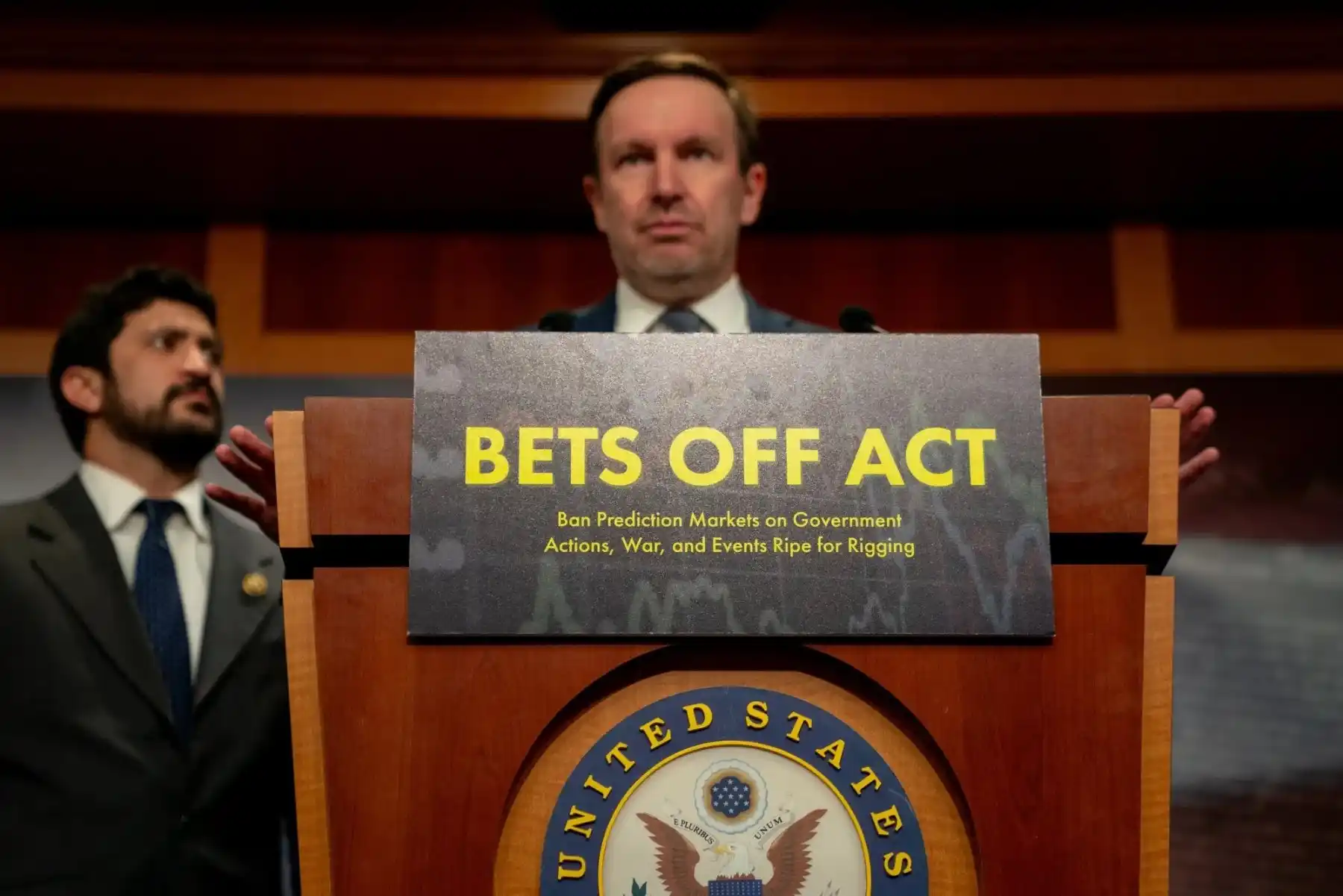
'BETS OFF Act' signage, Representative Greg Casar and Senator Chris Murphy speak at a press conference regarding the 'Betting on Events with Security and Federal Functions Off-Limits (BETS OFF) Act'. Photographer: Stephanie Reynolds / Bloomberg

Following allegations that insider information was used to improperly bet on U.S. military actions in Iran and Venezuela, Congress has turned its focus to the issue of insider trading in prediction markets. In response, Kalshi has taken a tougher stance, imposing fines, suspending trading, and other penalties on users it deems to have violated rules; Polymarket has been relatively permissive, though with increased regulatory attention, the platform recently announced its own insider trading rules.

Kalshi spokesperson Diana said: 'We want to make these significant differences clear. Many people in the market currently conflate Kalshi and Polymarket and confuse the different paths we have taken regarding regulatory compliance.'

In addition to its overseas main platform, Polymarket also has a U.S.-regulated platform, which is still in the testing phase. The company stated in a declaration that both platforms enforce 'the same strict market integrity standards, including prohibitions on insider trading and market manipulation, active monitoring of trading, and ongoing communication and cooperation with regulators and law enforcement agencies.'
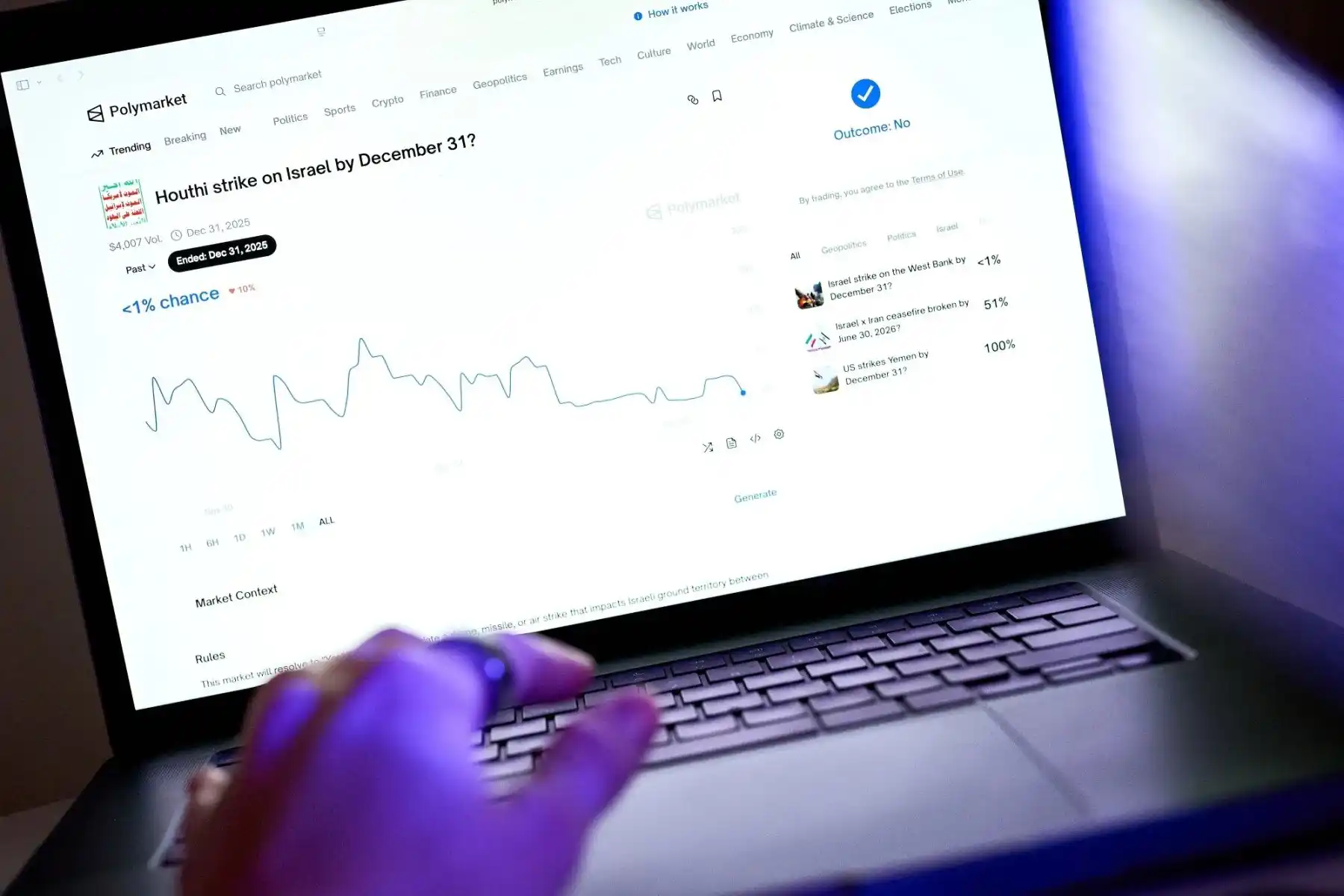
A trade on the Polymarket website regarding whether the Houthis will attack Israeli territory. Photographer: Gabby Jones / Bloomberg

Just a few months ago, Kalshi co-founder Luana Lopes Lara was still trying to ease tensions between the two rivals. In a social media post last October, she expressed hope that the industry could move beyond 'destructive infighting' and develop together.

Now, that vision seems largely shattered.

The conflict became even more difficult to reconcile after Kalshi advisor and former U.S. Commodity Futures Trading Commissioner Brian Quintenz joined the fray. In response to reports that prosecutors are investigating insider trading, Brian Quintenz publicly hinted on social media this week that the investigation should focus on Polymarket. When contacted by Bloomberg News, he declined to comment further.


İlgili Sorular

QWhat is the main point of contention between Kalshi and Polymarket?

AThe core dispute revolves around their operational models and regulatory compliance. Kalshi, a US-based platform regulated by the CFTC, criticizes Polymarket for its primarily offshore, unregulated main platform and for offering controversial 'death market' contracts related to military conflicts.

QWhat specific advertising campaign did Kalshi launch against Polymarket?

AKalshi launched a targeted ad campaign in Washington, D.C., bus and metro stations. One ad stated, 'We don't do death markets,' emphasizing its federal regulation and taking a direct shot at Polymarket's offshore operations and sensitive contracts.

QHow did Polymarket respond to the allegations from Kalshi?

APolymarket responded with a statement saying, 'We welcome competition, but believe discussions should be based on facts,' and argued that misleading the public harms the entire industry and its participants. They also stated that both their offshore and US-regulated platforms maintain the same strict market integrity standards.

QWhat recent legislative focus is mentioned in the article that impacts prediction markets?

AThe article mentions that Congress has turned its focus to the issue of insider trading in prediction markets, particularly following allegations that people used inside information to bet on U.S. military actions in Iran and Venezuela. This has led to the proposed 'BETS OFF Act'.

QWhat was the reported combined recent trading volume for Kalshi and Polymarket?

AAccording to user-compiled data on Dune Analytics, the two startups recently set new weekly trading volume records, with their combined nominal trading volume approaching $6 billion.

İlgili Okumalar

In Conversation with Ray Dalio: We Are Currently in an AI Bubble, with 1% of My Portfolio in Bitcoin

Ray Dalio, founder of Bridgewater Associates, warns in an interview that the current AI boom shows classic bubble characteristics, which could lead to significant economic downturns as seen in past cycles like 1929 or 2000. He explains that speculative enthusiasm, fueled by debt and overvaluation, often precedes a crash when rising rates or taxation force asset sales, causing widespread losses and recession. Dalio also outlines his "Big Cycle" theory, describing an approximate 80-year pattern where widening wealth gaps, massive government deficits, and shifting geopolitical power (like China's rise) create internal conflict and global instability. He emphasizes that we are in a late-cycle, transitional phase where traditional powers like the US and UK face decline. For personal wealth protection, Dalio advises diversification beyond cash into assets like stocks, bonds, real estate, and particularly gold, which he prefers over Bitcoin. While he holds about 1% of his portfolio in Bitcoin as a non-printable hard asset, he views gold as more secure from technological or governmental threats. Regarding AI's impact, Dalio believes it will disproportionately benefit capital owners, worsening inequality by replacing both physical and cognitive labor. He suggests that human intuition and emotional intelligence, combined with AI, will be key for future workers. On taxation, Dalio argues that wealth taxes are impractical and risk triggering asset sell-offs, reducing productive investment. He points to the UK as a cautionary example of debt, low productivity, and political strife. Geopolitically, Dalio foresees a more regionalized world, with the US showing weakness in prolonged conflicts like with Iran, akin to past imperial declines. The ideal outcome, he suggests, is coexisting powerful blocs (e.g., Americas, China-Asia Pacific) without major war.

marsbit16 dk önce

In Conversation with Ray Dalio: We Are Currently in an AI Bubble, with 1% of My Portfolio in Bitcoin

marsbit16 dk önce

Daily 7.2 Trillion KRW: Foreign Capital's Record Net Buying on Friday! Wall Street Says Headwinds for Korean Stock Fund Flows Have Subsided

South Korean stock market sees a dramatic shift in fund flows. On July 31, foreign investors made a record net purchase of approximately KRW 7.2 trillion in KOSPI stocks, marking a fundamental reversal from the persistent large-scale net outflows seen in previous months. This contributed to a significant narrowing of foreign net selling in July to KRW 9.8 trillion, down sharply from KRW 48.4 trillion in June and KRW 44.5 trillion in May. Simultaneously, domestic institutional pressure eased. South Korean pension funds and asset managers turned to a net buying position in July, purchasing KRW 1.0 trillion worth of KOSPI shares, contrasting with net sales in May and June. Market volatility is expected to be dampened by new financial regulations. Effective July 31, the Financial Services Commission tightened access for retail investors to single-stock leveraged ETFs by raising the minimum cash deposit requirement. Trading volumes for these products subsequently dropped to about 50% of their monthly average. Citigroup Research maintains its year-end KOSPI target of 10,000 points. The firm cites several supportive factors: the substantial easing of headwinds from capital outflows, a robust fundamental outlook for the semiconductor sector, historically low market valuations, strong economic fundamentals, and the potential for policy support from financial authorities if needed.

marsbit16 dk önce

Daily 7.2 Trillion KRW: Foreign Capital's Record Net Buying on Friday! Wall Street Says Headwinds for Korean Stock Fund Flows Have Subsided

marsbit16 dk önce

Thanks to Dice Rolls, Bitcoin Keys Are Stored Offline, But Not Everyone Will Do It

The article discusses using dice rolls to generate secure Bitcoin wallet seeds, providing entropy independent of potentially flawed hardware random number generators. It explains that each fair dice roll offers about 2.585 bits of entropy, with around 50 rolls needed for a standard 12-word seed phrase and 99+ recommended for higher security. This method gained attention after a vulnerability was revealed in some Coldcard hardware wallets, where a faulty firmware RNG (dating back to 2021) compromised generated keys. The analysis notes that while a dice-generated main seed was safe from this specific flaw, other Coldcard functions (like creating paper wallets, backup keys, or passwords) could still be vulnerable if they used the defective RNG. The piece argues that while dice-based entropy is technically robust, the manual process is error-prone, tedious, and unrealistic for most new users, who might make mistakes in recording or inputting rolls. It concludes that while manual entropy generation should remain an option for advanced users, the long-term goal is to develop reliable, user-friendly hardware and software that securely generates randomness without requiring specialized knowledge. Coldcard users are advised to check their firmware version and replace any secondary secrets (like paper wallet keys) created with vulnerable devices, while also considering multi-signature setups with devices from different manufacturers for added security.

cryptonews.ru5 saat önce

Thanks to Dice Rolls, Bitcoin Keys Are Stored Offline, But Not Everyone Will Do It

cryptonews.ru5 saat önce

İşlemler

Spot
活动图片




