Polymarket Faces New Roadblock As Dutch Regulator Bans Prediction Activity — Details

bitcoinist2026-02-22 tarihinde yayınlandı2026-02-22 tarihinde güncellendi

Özet

Polymarket's Dutch operations, under the entity Adventure One, have been ordered to cease all activities by the Netherlands Gambling Authority (Ksa) for offering unlicensed prediction markets, which the regulator classifies as illegal gambling. The platform faces potential fines of up to $840,000 per week for non-compliance. This action is the latest regulatory challenge for Polymarket, creating a conflict between US federal approval and state-level scrutiny. The news coincides with a recent parliamentary proposal in the Netherlands to introduce a controversial 36% tax on unrealized gains from cryptocurrencies and other investments, a move critics warn could drive investors out of the country.

According to recent reports, the Dutch arm of the prediction markets platform Polymarket has been asked to cease its activities in the Netherlands. This order comes as the latest regulatory blow dealt to the prediction market platform in recent weeks.

Dutch Regulator Threatens Polymarket With $840,000 Fine

In a notice dated Tuesday, February 17, the Netherlands Gambling Authority ordered Polymarket’s Dutch arm, Adventure One, to “cease its activities immediately” or risk incurring up to $840,000 in fines per week. According to the Dutch regulator, Adventure One offered illegal bets, including on the local elections, to residents without a license.

While prediction markets do not particularly fall into the traditional gambling category, the Netherlands Gambling Authority has classified them as betting. The regulator revealed that it contacted Polymarket about its activities on the Dutch market, but have seen no corrective action or response from the prediction markets company.

Netherlands Gambling Authority’s director of licensing and supervision, Ella Seijsener, said in the notice:

Prediction markets are on the rise, including in the Netherlands. These types of companies offer bets that are not permitted in our market under any circumstances, not even by license holders. Besides the social risks of these kinds of predictions (for example, the potential influence on elections), we conclude that this constitutes illegal gambling. Anyone without a Ksa license has no business in our market. This also applies to these new gambling platforms.

This restriction in the Netherlands marks the latest stumbling block for Polymarket in terms of regulation over the past few months. Despite receiving approvals from the United States Commodity Futures Trading Commission (CFTC), individual state authorities have placed significant scrutiny on the activities of prediction market platforms.

This has led to an issue of jurisdiction, as the CFTC chair criticized the state-level scrutiny which undermines their federal authority over prediction markets.

Dutch Unrealized Gains Tax On Crypto Rolls On

This crackdown on prediction markets comes just a week after the Dutch House of Representatives advanced a proposal to introduce a 36% capital gains tax on most liquid investments, including cryptocurrencies. This controversial bill, if passed, would see profits made from interest-bearing financial instruments, equity investments, cryptocurrencies, and savings accounts be subject to tax, whether realized or not.

The proposal of this capital gains tax led to interesting reactions, with several crypto analysts noting that the legislation will drive investors out of the Netherlands. “To be honest, the fact that there’s the unrealized gains tax for Bitcoin in the Netherlands is the dumbest thing I’ve seen in a long time. The amount of people willing to flee the country is going to be bananas,” analyst Michaël van de Poppe said on X.
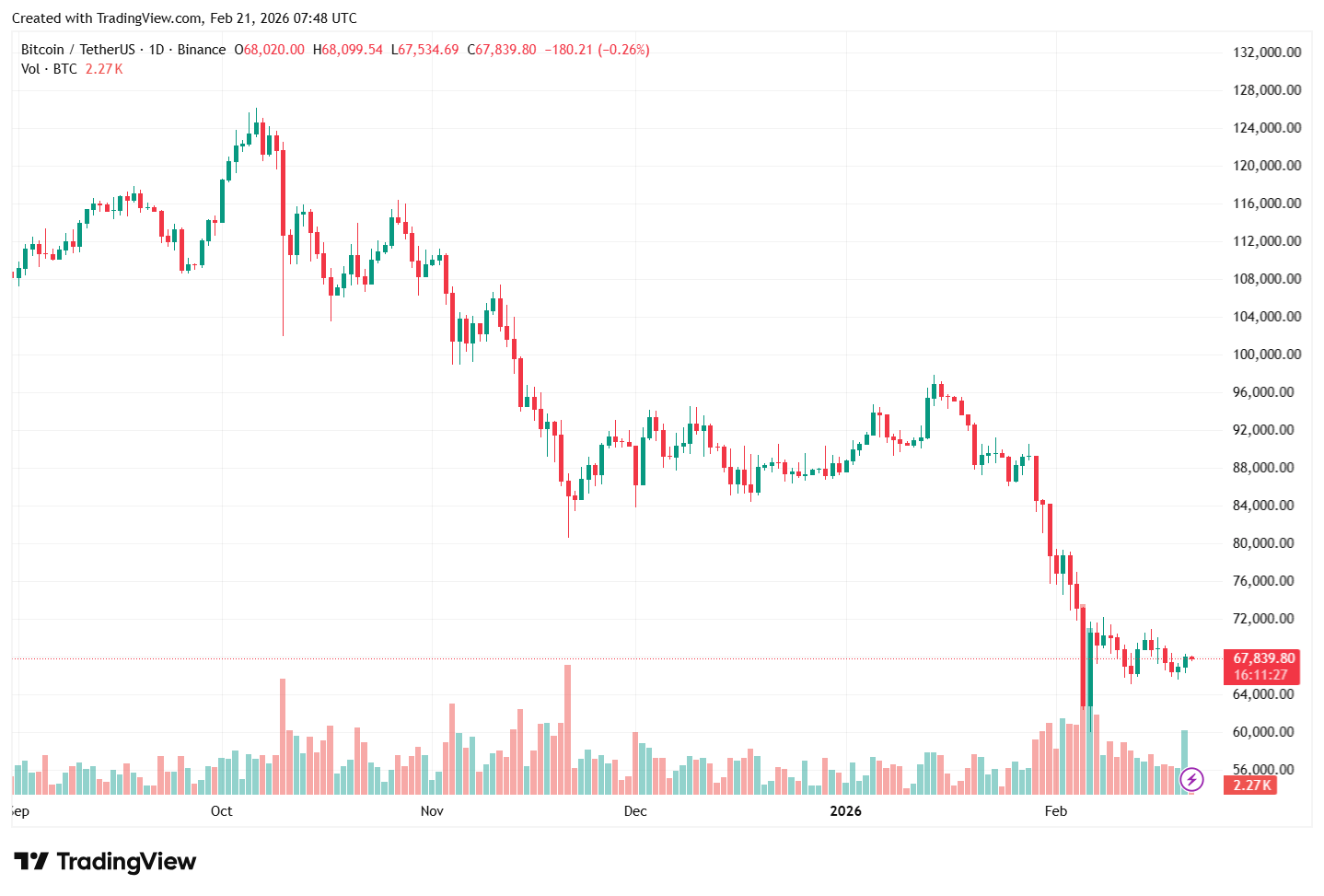
The price of BTC on the daily timeframe | Source: BTCUSDT chart on TradingView


İlgili Sorular

QWhat action did the Dutch Gambling Authority take against Polymarket's Dutch arm, Adventure One?

AThe Dutch Gambling Authority ordered Adventure One to cease its activities immediately or face fines of up to $840,000 per week.

QWhat was the primary reason given by the Dutch regulator for banning Polymarket's activities?

AThe regulator classified Polymarket's prediction markets as illegal gambling, stating they offered bets that are not permitted in the Dutch market without a license, including on events like local elections.

QHow did the director of licensing, Ella Seijsener, justify the crackdown on prediction markets?

AElla Seijsener stated that prediction markets offer illegal bets, pose social risks such as potential influence on elections, and constitute illegal gambling that requires a license to operate in the Netherlands.

QWhat recent tax proposal in the Netherlands has also impacted the crypto space?

AThe Dutch House of Representatives advanced a proposal to introduce a 36% capital gains tax on most liquid investments, including cryptocurrencies, taxing both realized and unrealized gains.

QWhat concern did crypto analyst Michaël van de Poppe raise about the proposed Dutch tax on unrealized crypto gains?

AMichaël van de Poppe called the tax 'the dumbest thing I’ve seen in a long time' and predicted that it would cause a significant number of people to flee the country.

İlgili Okumalar

Kicked Out of PayPal, Musk Aims for a Comeback in the Crypto Market

Elon Musk's X (formerly Twitter) has launched its "Smart Cashtags" feature, generating approximately $1 billion in trading volume within days of its April 2026 pilot launch. The feature allows users to click on stock or crypto tickers (or even full Solana token contract addresses) in posts to view real-time price charts and discussions without leaving the app. Initially available to iPhone users in the US and Canada, with a partnership in Canada enabling direct trading via the Wealthsimple app. This move is part of Musk's broader "Everything App" vision, spearheaded by the upcoming X Money platform. Analysts, such as Mizuho's Dan Dolev, see this as a potential disruptor to the US payments market, even prompting a downgrade of PayPal's stock. X Money's beta offers services like 6% APY on deposits, cashback, and P2P transfers, with speculation it may later incorporate crypto trading and stablecoin settlements for faster transactions. However, the ambitious plan faces significant regulatory scrutiny. Senator Elizabeth Warren has questioned the sustainability of the high 6% yield and raised concerns over X's banking partner, Cross River Bank, which has a history of regulatory violations. Additional risks involve the "GENIUS Act," which may create loopholes for stablecoin issuance without full FDIC insurance coverage, potentially leaving users unprotected. The integration of social trading on a platform with over 500 million users could inject new liquidity and retail interest into the crypto market. Yet, it also amplifies risks like herd mentality and the blurring of lines between entertainment and financial speculation. Musk's return to finance, after his ouster from PayPal, hinges on balancing innovation with regulatory compliance.

marsbit39 dk önce

Kicked Out of PayPal, Musk Aims for a Comeback in the Crypto Market

marsbit39 dk önce

İşlemler

Spot
Futures
活动图片